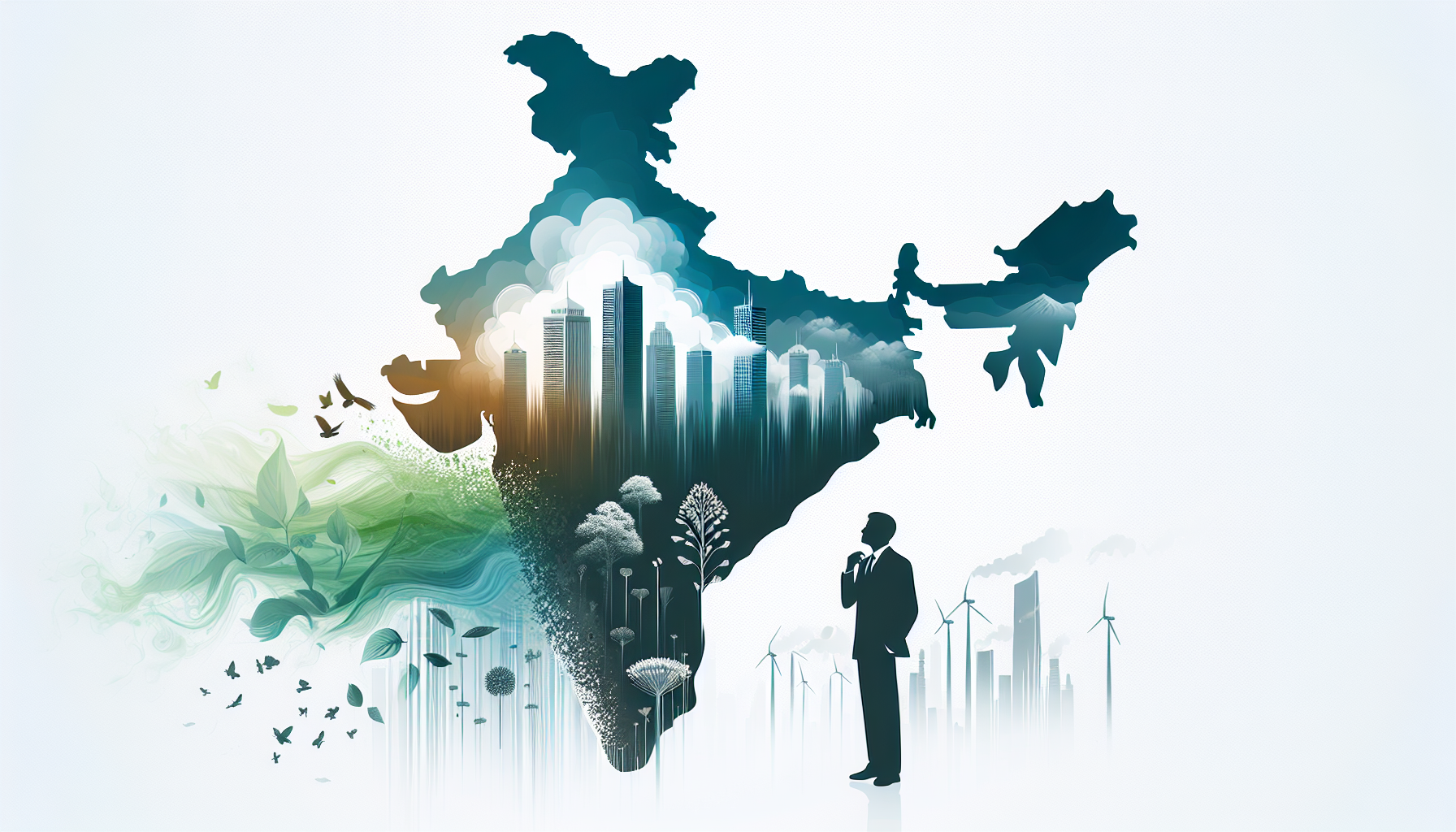
Climate change in India is no longer a distant environmental concern; it is a present economic, social, and public health challenge affecting more than 1.4 billion people across radically different climates, from Himalayan glaciers to coastal deltas and arid plains. In practical terms, climate change refers to long-term shifts in temperature, rainfall, sea levels, and extreme weather patterns driven largely by human-caused greenhouse gas emissions. For India, the issue matters because the country combines high climate exposure with dense population, heavy dependence on monsoon rainfall, long coastlines, rapid urbanization, and development needs that are still pressing. I have worked on climate content and policy analysis for Indian markets, and the pattern is consistent: climate risk in India is never just about weather. It affects food prices, electricity demand, water security, migration, insurance losses, disease burdens, and infrastructure planning all at once.
India is central to any serious discussion of climate change by country because it is both highly vulnerable and strategically important to the global response. It is the world’s most populous country, one of the largest energy consumers, and a major voice in international climate negotiations. At the same time, its per capita emissions remain far below those of many industrialized economies, creating a policy tension that shapes every national climate debate: how to expand energy access and industrial growth without locking in high emissions. Key terms help frame the conversation. Mitigation means reducing emissions or enhancing carbon sinks. Adaptation means adjusting systems, infrastructure, and behavior to cope with impacts that are already happening or unavoidable. Resilience refers to the ability of communities and institutions to absorb shocks and recover quickly. Loss and damage describes harms that cannot be fully prevented through mitigation or adaptation, such as land lost to sea-level rise.
The evidence in India is visible and measurable. Heatwaves are becoming more frequent and more dangerous, with temperatures crossing 45 degrees Celsius in several states during severe summer periods. Intense rainfall events are increasing even where seasonal rainfall trends remain uneven, which means cities can face urban flooding despite annual water scarcity. Glaciers in the Hindu Kush Himalaya are retreating, affecting long-term river systems. Coastal erosion and salinity intrusion threaten homes, farms, and freshwater supplies. These shifts are not isolated anomalies. They fit observed scientific trends reported by the Intergovernmental Panel on Climate Change, the India Meteorological Department, and the Ministry of Earth Sciences. As a hub for climate change by country, this article explains India’s main climate challenges, the sectors at risk, the policy framework shaping responses, and the practical lessons that connect India to wider global climate strategy.
Why India Is Exceptionally Climate-Vulnerable
India’s climate vulnerability comes from geography, demographics, and economic structure acting together. The country has a coastline of more than 7,500 kilometers, glacier-fed river systems, drought-prone interiors, floodplains, and some of the world’s fastest-growing cities. A large share of livelihoods still depends directly or indirectly on climate-sensitive sectors such as agriculture, fisheries, forestry, construction, and informal outdoor labor. When climate stress hits, exposure is high, but so is sensitivity. A failed monsoon does not only reduce farm yields; it also lowers rural incomes, slows consumption, increases debt, and affects food inflation nationally.
Heat is one of the clearest examples. In Ahmedabad, deadly heat events pushed local authorities to create one of South Asia’s best-known Heat Action Plans, combining early warnings, public awareness, worker protections, and hospital preparedness. That model has influenced other Indian cities because heat in India is not just a comfort issue. It lowers labor productivity, especially for construction workers, street vendors, and agricultural laborers. It raises peak electricity demand through cooling. It worsens dehydration, kidney stress, and cardiovascular risk. Extreme heat also intersects with urban inequality: households in informal settlements often have tin roofs, low ventilation, unreliable power, and limited access to green space.
Water stress reveals another dimension. India receives substantial annual rainfall overall, but its timing and distribution are highly uneven. Much of the country depends on the southwest monsoon, and small deviations can have major consequences. Groundwater over-extraction has already created chronic vulnerability in states such as Punjab, Haryana, and parts of Rajasthan. Climate change compounds this by altering recharge patterns and increasing evaporation. In practice, that means more years where farmers, utilities, and cities face shortages even after episodes of intense rain. The result is a cycle of drought, flash flooding, and infrastructure strain rather than a simple shift toward either wetter or drier conditions.
Major Climate Impacts Across Sectors
Agriculture is often the first sector people mention, and rightly so. Indian farming remains highly exposed to monsoon variability, heat stress, pest shifts, and water scarcity. Wheat yields can decline when high temperatures occur during grain filling, while rice cultivation faces risks from both flooding and drought depending on region. Horticulture is also vulnerable; mango flowering, grape quality, and apple production in hill states can all be disrupted by changing temperature patterns. Farmers adapt through crop diversification, altered sowing dates, micro-irrigation, and drought-resistant seed varieties, but adoption remains uneven because of cost, information gaps, and fragmented landholdings.
Public health impacts are broad and often underestimated. Heat-related illness is the most visible, but climate change also affects vector-borne disease patterns, air quality interactions, nutrition, and mental health after disasters. Warmer temperatures and shifting rainfall can influence mosquito breeding and disease transmission risks, including dengue in urban areas. Flooding can contaminate water supplies and increase diarrheal disease. Crop losses can reduce diet quality in poor households. In my experience reviewing state-level climate plans, health sections are improving, yet implementation still lags because local health systems are stretched even before climate shocks intensify.
Infrastructure is another critical pressure point. Indian cities including Mumbai, Chennai, Bengaluru, and Delhi face combinations of heat stress, drainage overload, water scarcity, and power demand spikes. Urban flooding has become a recurring sign of climate vulnerability interacting with poor land-use planning. Encroachment on wetlands, inadequate stormwater systems, and unplanned construction amplify the damage from short, intense rainfall events. Transport networks, telecom systems, and substations often fail not because a hazard is unprecedented, but because design standards did not account for changing climate extremes. Climate-resilient infrastructure therefore means more than stronger concrete; it includes better risk maps, updated drainage calculations, backup power, and protection of natural buffers.
| Sector | Main Climate Risk | Indian Example | Typical Response |
|---|---|---|---|
| Agriculture | Heat, erratic monsoon, drought | Wheat stress in north India | Climate-resilient seeds, micro-irrigation |
| Cities | Flooding, heatwaves | Mumbai floods, Ahmedabad heat | Drainage upgrades, heat action plans |
| Coasts | Sea-level rise, cyclones, salinity | Sundarbans erosion | Mangrove restoration, resilient housing |
| Energy | Peak cooling demand, water stress | Summer grid pressure | Solar, storage, efficiency |
Regional Hotspots: Himalaya, Coasts, Plains, and Cities
The Himalayan region is one of India’s most climate-sensitive areas. Glacier retreat, altered snowfall, and changing runoff patterns threaten downstream water security over the long term. Mountain ecosystems are fragile, and infrastructure expansion in steep terrain increases landslide and flood risks when extreme rain occurs. Uttarakhand and Himachal Pradesh have seen repeated disasters where intense rainfall, slope instability, and construction pressures combined into severe losses. These are warnings that climate adaptation in mountain regions must include ecosystem protection, land-use discipline, and hydropower risk reassessment, not just emergency response.
India’s coastal states face a different but equally serious set of challenges. Cyclones in the Bay of Bengal and Arabian Sea have shown how warming oceans can increase storm intensity and rainfall. Odisha has improved disaster preparedness considerably since the 1999 super cyclone, using evacuation systems, shelters, and better early warnings to reduce mortality. That is an important success story. But lower death tolls do not eliminate economic losses, damaged livelihoods, or repeated displacement. In the Sundarbans, sea-level rise, erosion, and salinity intrusion are gradually reshaping settlement patterns and agriculture. In cities such as Chennai and Mumbai, coastal flooding interacts with drainage failures and land subsidence in ways that make adaptation costly and urgent.
The Indo-Gangetic Plain is a hotspot for heat, air pollution, and agricultural stress. Summer heat extremes are intensified by urban expansion and local land-surface changes, while winter air pollution can compound respiratory health burdens. This is where climate change and environmental management overlap strongly. Cleaner transport, better building design, agricultural residue management, and distributed renewable energy can deliver both climate and public health benefits. Those co-benefits matter in India because policies that solve multiple problems at once tend to gain more support and scale faster.
Urban India deserves its own focus because the country will add millions more urban residents in coming decades. Many municipal systems are already under strain. Bengaluru’s water crisis, Chennai’s alternating flood and drought cycles, and Delhi’s heat and pollution burdens show that climate resilience is now a core urban governance issue. The practical agenda is clear: protect lakes and wetlands, enforce zoning, expand permeable surfaces, cool buildings through design and materials, strengthen public transit, and integrate climate risk into master plans. Cities that treat climate resilience as a side project usually pay more later in disaster recovery and lost productivity.
India’s Climate Policy, Energy Transition, and Global Role
India’s climate response has evolved from a narrow environmental agenda into a broader development strategy. The National Action Plan on Climate Change created missions on solar energy, energy efficiency, sustainable habitat, water, Himalayan ecosystems, and related themes. State Action Plans followed, though quality and implementation vary. Internationally, India’s nationally determined contributions under the Paris Agreement emphasize emissions intensity reduction, non-fossil power capacity expansion, and creation of additional carbon sinks. The direction is clear: India is not choosing between development and climate action; it is trying to align them under real fiscal and political constraints.
The energy transition is central to that effort. India has expanded solar rapidly through utility-scale parks, rooftop programs, and competitive auctions. The International Solar Alliance, launched with France, reflects India’s attempt to shape the global clean energy agenda rather than simply respond to it. Wind power remains important, and green hydrogen is emerging as a strategic industrial priority for sectors such as steel, refining, and fertilizer. At the same time, coal still plays a major role in electricity generation and energy security. That is the core tradeoff. India needs reliable, affordable power for growth, but long-lived coal assets can increase future transition costs and local pollution burdens.
In practice, the strongest path forward is not ideological. It is system planning. India needs faster grid modernization, interstate transmission expansion, battery storage, demand response, and distribution company reform so renewable energy can scale without reliability losses. Energy efficiency is equally important and often cheaper. The Bureau of Energy Efficiency’s appliance standards and the UJALA LED program showed how policy design can cut demand at scale. Electric mobility, especially two-wheelers and buses, can reduce urban emissions and oil dependence if charging networks and procurement models improve. For readers exploring climate change by country, India offers a crucial lesson: large developing economies can accelerate clean energy, but success depends on institutions, finance, and grid capability, not targets alone.
What Effective Adaptation Looks Like in India
Adaptation works best in India when it is local, data-driven, and tied to everyday governance rather than framed as a separate climate exercise. Heat action plans are effective because they convert forecasts into practical measures such as school advisories, work-hour adjustments, cooling centers, and emergency medical coordination. Climate-smart agriculture programs work when extension services help farmers interpret weather data, choose suitable seed varieties, and access credit or insurance. Coastal adaptation works better when it combines embankments with mangrove restoration and livelihood planning, because hard infrastructure alone can fail or shift risk elsewhere.
Insurance and finance are also part of the response, though they remain underdeveloped. Crop insurance schemes can cushion losses, but claim settlement, basis risk, and farmer trust remain problems. Urban resilience financing is difficult because municipalities often lack strong balance sheets and project preparation capacity. Better climate adaptation in India will require stronger local institutions, more granular risk mapping, and integration of climate data into transport, housing, water, and health budgets. The main takeaway is simple: India cannot climate-proof everything at once, but it can reduce risk significantly by prioritizing vulnerable districts, upgrading standards, and scaling proven models. To understand climate change by country, study India closely, then follow the connected country pages across this hub.
India’s climate story is defined by exposure, complexity, and agency. The country faces severe risks from heatwaves, erratic monsoons, glacier loss, coastal hazards, water stress, and urban flooding, yet it is also building one of the world’s most consequential responses through renewable energy growth, disaster preparedness, efficiency programs, and local adaptation planning. The central insight is that climate change in India is not a single issue. It is a multiplier of existing development pressures and a test of whether policy can protect vulnerable communities while supporting economic growth.
For governments, businesses, researchers, and readers using this page as a climate change by country hub, India offers both warning signs and practical lessons. Effective response depends on combining mitigation with adaptation, national targets with local implementation, and infrastructure investment with ecosystem protection. If you want a clearer picture of how climate risk and climate action vary across nations, use this article as your starting point and continue through the related country pages in this hub.
Frequently Asked Questions
1. Why is climate change such a major issue for India?
Climate change is a major issue for India because it affects nearly every part of the country’s economy, environment, and public health at the same time. India is home to more than 1.4 billion people and includes highly diverse regions, from the Himalayan mountain system and fertile river basins to dry inland plains and densely populated coastal zones. That geographic diversity makes the country especially vulnerable to shifting temperatures, unpredictable rainfall, melting glaciers, sea-level rise, heatwaves, floods, droughts, and stronger storms. In other words, climate change in India is not just about weather becoming slightly warmer; it is about long-term changes that can disrupt food production, water security, livelihoods, migration patterns, and infrastructure.
Agriculture is one of the clearest examples. A large share of India’s population still depends directly or indirectly on farming, and many crops are closely tied to the timing and intensity of the monsoon. When rainfall arrives late, falls unevenly, or comes in intense bursts, farmers face crop losses, lower yields, and higher debt. At the same time, extreme heat can reduce labor productivity, strain electricity systems, and increase health risks, especially for outdoor workers, older adults, and low-income households with limited access to cooling. Urban areas are also under pressure, as cities face heat island effects, flooding from intense rainfall, water shortages, and rising energy demand.
Climate change is also a development challenge. India is still working to expand housing, transport, industry, and reliable energy access while reducing poverty and improving resilience. That means the country must manage two goals at once: adapting to worsening climate impacts and pursuing economic growth in a cleaner, more sustainable way. For India, climate change is therefore not a distant environmental topic. It is a present-day challenge that touches national planning, public health, disaster management, food systems, energy policy, and long-term economic stability.
2. How is climate change affecting agriculture, water resources, and food security in India?
Climate change is affecting Indian agriculture by making growing conditions less predictable and more extreme. Farming in many parts of the country depends heavily on seasonal rainfall, especially the monsoon, and even small changes in rainfall patterns can have serious consequences. Some regions are seeing delayed monsoons, shorter rainy periods, long dry spells between rain events, or sudden heavy downpours that damage crops and wash away topsoil. Rising temperatures also put stress on key crops such as wheat, rice, pulses, and oilseeds, particularly during sensitive growth stages. Heat stress can reduce yields, increase pest pressure, and raise irrigation demand at exactly the time when water availability may already be under strain.
Water security is closely linked to this problem. India relies on a combination of monsoon rainfall, rivers, groundwater, reservoirs, and Himalayan glacier-fed systems. Climate change can disrupt all of these. Glacier retreat in the Himalayas may alter downstream river flows over time, while erratic rainfall can lead to both floods and droughts in the same region across different months. Groundwater, which supports irrigation and drinking water for millions, is already under stress in many states, and climate variability can make recharge less reliable. Urban areas face additional pressure as population growth, poor drainage, and water mismanagement combine with climate-related extremes.
Food security is threatened not only through lower agricultural output but also through price volatility and supply chain disruption. If harvests fail or transportation is interrupted by floods or heat, food prices can rise, affecting poor households most severely. Nutritional security can also suffer if climate impacts reduce the availability of fruits, vegetables, pulses, and other important foods. This is why climate-resilient agriculture has become such an important policy focus in India. Measures such as drought-resistant crop varieties, improved irrigation efficiency, better weather forecasting, diversified cropping systems, soil conservation, water harvesting, and crop insurance are increasingly seen as essential tools for protecting farmers and maintaining food security in a changing climate.
3. What are the biggest climate-related risks facing Indian cities and public health?
Indian cities are on the front line of climate change because they concentrate people, infrastructure, economic activity, and environmental stress in one place. One of the most visible risks is extreme heat. As average temperatures rise and heatwaves become more frequent or intense, cities experience even harsher conditions because concrete, asphalt, and limited green cover trap heat. This urban heat island effect can make nighttime temperatures dangerously high, reducing the body’s ability to recover. For low-income communities living in dense settlements with poor ventilation, limited water supply, and little access to cooling, heat can quickly become a life-threatening public health issue.
Flooding is another major urban threat. Many Indian cities are vulnerable to intense rainfall events that overwhelm drainage systems, flood roads and homes, disrupt public transport, contaminate water supplies, and damage hospitals, schools, and power infrastructure. Coastal cities face an added layer of risk from sea-level rise, storm surges, and coastal erosion. When extreme rainfall, poor land-use planning, wetland loss, and drainage failures occur together, the human and economic costs can be severe. Informal settlements are often hit the hardest because they may be located near floodplains, low-lying zones, or unstable land and may lack strong housing and sanitation systems.
The public health effects of climate change extend well beyond heatstroke or flood injuries. Hotter conditions can worsen cardiovascular and respiratory illnesses, while waterlogging and changing rainfall patterns can increase the spread of vector-borne diseases such as dengue and malaria in some areas. Floods can trigger outbreaks of waterborne disease by damaging sanitation systems and contaminating drinking water. Air quality can also interact with climate factors, amplifying health burdens for people with asthma, lung disease, or other chronic conditions. In response, many experts stress the need for heat action plans, stronger public health surveillance, climate-informed urban planning, resilient hospitals, expanded green spaces, early warning systems, and improved access to safe water, sanitation, and emergency services.
4. What is India doing to respond to climate change?
India’s response to climate change includes both mitigation, which means reducing emissions, and adaptation, which means preparing for and reducing the damage from climate impacts that are already happening. On the mitigation side, India has expanded its focus on renewable energy, especially solar and wind power, and has made clean energy a central part of national planning. The country has also promoted energy efficiency, electric mobility, cleaner cooking options, and broader efforts to reduce the emissions intensity of economic growth. These measures are important because India’s development needs are large, and the challenge is to expand access to energy and infrastructure without locking in high-carbon systems for decades.
At the policy level, India has developed climate action frameworks that address sectors such as energy, water, agriculture, forests, and sustainable habitat. State governments have also prepared climate action plans tailored to local vulnerabilities, since the risks in a Himalayan state are very different from those in a drought-prone or coastal state. India has highlighted the importance of lifestyle changes, sustainable consumption, forest and ecosystem restoration, and climate justice in international discussions. Climate justice is especially important in the Indian context because the country argues that developing nations should be able to grow while also receiving support, finance, and technology to transition more sustainably.
Adaptation is equally important. India has invested in disaster warning systems, cyclone preparedness, water conservation, climate-resilient farming, afforestation, and programs to strengthen local resilience. In some regions, this includes building embankments, restoring mangroves, improving drought management, promoting micro-irrigation, and expanding insurance or social protection mechanisms for vulnerable communities. The overall picture is one of a country trying to balance development, energy demand, poverty reduction, and environmental protection at the same time. That balance is difficult, but it is central to India’s climate response, and it is why the country’s strategy includes both immediate practical measures and long-term structural change.
5. What more needs to be done to help India adapt to and reduce climate change?
Much more needs to be done, especially in the areas of implementation, financing, local planning, and protection for vulnerable communities. India already has many strong policy directions, but climate action becomes truly effective only when national goals are translated into reliable state, district, and city-level systems. That means strengthening local data, improving climate risk mapping, integrating climate concerns into infrastructure planning, and ensuring that roads, buildings, power systems, drainage networks, and water supplies are designed for future extremes rather than past averages. Climate resilience needs to become a standard part of development planning, not a separate afterthought.
Adaptation must also be more inclusive. Small farmers, fisher communities, informal workers, tribal populations, women, children, the elderly, and low-income urban residents often face the highest climate risks while having the fewest resources to cope. Effective climate policy therefore needs social protection as well as technical solutions. That can include crop insurance, livelihood diversification, public cooling centers, health preparedness, improved housing, resilient public transport, and better access to finance for communities and local governments. Education and public awareness also matter, because households and businesses are more likely to prepare effectively when climate risks are clearly communicated and early warnings are trusted and accessible.
On the mitigation side, India will need to continue scaling clean energy, modernizing the grid, improving storage capacity, reducing dependence on highly polluting fuels, and investing in low-carbon transport