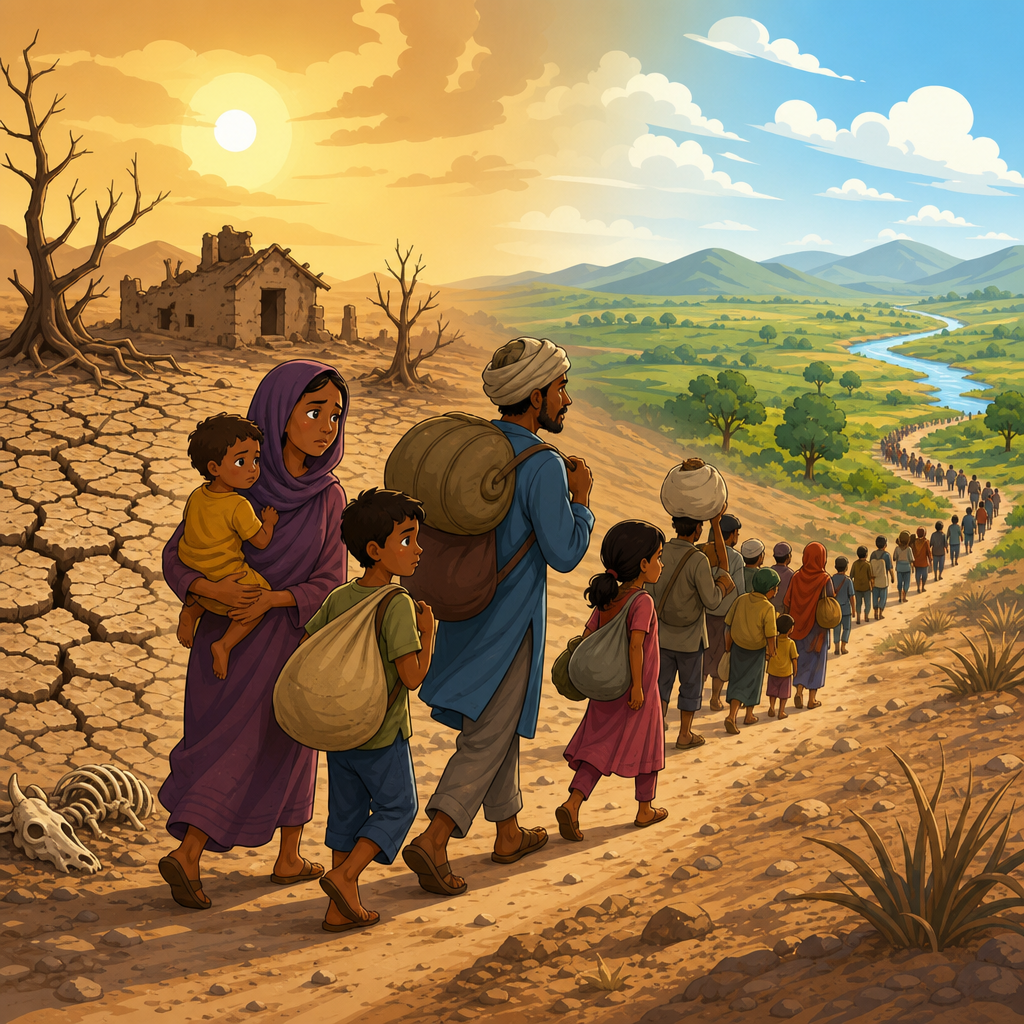

Climate displacement is no longer a future scenario debated in policy circles; it is a present governance challenge reshaping housing, borders, disaster planning, public health, and national security. The term climate-induced migration describes the movement of people driven partly or primarily by climate-related hazards such as sea-level rise, coastal erosion, extreme heat, drought, flooding, wildfire, and stronger storms. Some people move temporarily after a disaster, others relocate seasonally as livelihoods fail, and others undertake permanent resettlement when homes, freshwater, or arable land become untenable. In practice, governments must distinguish among evacuation, planned relocation, internal displacement, cross-border movement, and labor migration, because each triggers different legal tools, budget lines, and administrative responsibilities.
This distinction matters because climate displacement rarely happens for one reason alone. In my work reviewing disaster recovery and adaptation plans, the most effective governments avoid treating migration as a simple environmental issue. A family leaving a delta region may be responding to repeated flood losses, crop failure, insurance withdrawal, school disruption, and debt all at once. That complexity makes climate-induced migration a hub issue within environmental disasters: it links emergency management, infrastructure resilience, land-use regulation, social protection, labor policy, immigration law, and development finance. It also raises a practical question citizens and officials increasingly ask: how are governments responding to climate displacement in ways that are lawful, humane, and financially realistic?
Responses vary widely, but they generally fall into five categories: reducing displacement risk where people live, supporting mobility as adaptation, protecting displaced people after movement occurs, planning permanent relocation when return is unsafe, and cooperating internationally when climate pressures cross borders. Countries from Bangladesh to Fiji, and cities from Jakarta to New York, are testing different combinations. Some responses are proactive, such as buyout programs or elevated infrastructure. Others are reactive, such as post-disaster shelter systems and emergency cash aid. Understanding these approaches is essential for policymakers, advocates, businesses, and households because climate displacement is accelerating, and the quality of government response will determine whether migration becomes a managed transition or a recurring humanitarian crisis.
Why climate displacement is rising and who is most affected
Climate displacement is increasing because hazards are becoming more frequent, more intense, or more damaging when they interact with exposed populations and fragile infrastructure. Sea-level rise turns ordinary high tides into chronic flooding. Extreme heat reduces labor productivity and can make outdoor work dangerous for months each year. Drought undermines rain-fed agriculture and drinking water supplies. Wildfires destroy housing stock and leave long recovery periods in places where rebuilding costs are already high. The Internal Displacement Monitoring Centre has repeatedly documented tens of millions of new disaster displacements globally in severe weather years, with floods and storms accounting for the largest share. Most disaster displacement is internal, meaning people move within their own country, often from rural areas to cities that are already under strain.
Vulnerability is unevenly distributed. Low-income households, renters, informal settlement residents, Indigenous communities, small-island populations, and workers dependent on climate-sensitive sectors face the greatest risk. A wealthy homeowner may absorb repeated losses through savings, insurance, and remote work. A tenant in an uncooled apartment, or a farmer reliant on a single rainy season, has fewer buffers. Governments that respond well start with this distributional reality. They use hazard maps, census data, and social vulnerability indices to identify who is likely to be displaced, where they may go, and what support they will need on arrival. Without that targeting, public spending often protects high-value property while leaving the most mobile and least protected households to bear the largest losses.
How national governments are adapting laws, plans, and institutions
National governments are responding first through policy integration. Climate displacement sits awkwardly across ministries, so countries are creating interagency mechanisms that link environment, interior, housing, agriculture, labor, and finance departments. National adaptation plans increasingly include migration scenarios, relocation guidelines, and resilience investments intended to reduce forced movement. Good policy frameworks answer three direct questions: who is at risk, which agency leads before and after displacement, and how will support be funded over multiple years rather than one disaster cycle.
Legal reform is harder because existing refugee law generally does not classify people fleeing climate impacts alone as refugees under the 1951 Refugee Convention. As a result, governments are using alternative legal routes. Some expand temporary protection after disasters, issue humanitarian visas, or allow labor mobility pathways for affected populations. Others strengthen internal displacement laws based on disaster risk management and human rights obligations. The Kampala Convention in Africa, while regional and focused on internal displacement, has influenced thinking by clarifying state duties to prevent displacement and assist affected people. Courts are also shaping the field. The UN Human Rights Committee’s Teitiota decision did not create refugee status for climate migrants, but it signaled that returning people to life-threatening climate conditions could, in extreme cases, violate human rights protections.
Administrative capacity matters as much as legal language. In countries I have studied, the biggest implementation failures come from fragmented data systems, weak land records, and unclear authority over relocation sites. A relocation policy on paper means little if ministries cannot identify available land, verify tenure, coordinate utility connections, or compensate households transparently. Governments making progress tend to build dedicated units for managed retreat or post-disaster housing, supported by geospatial tools, social registries, and procurement rules that allow faster rebuilding without sacrificing accountability.
Preventing forced movement through risk reduction and adaptation
The most effective response to climate displacement is often reducing the need for it. Governments do this by investing in adaptation that protects people in place when staying remains safe and economically viable. Core measures include flood defenses, drainage upgrades, heat action plans, drought-resistant agriculture, wildfire fuel management, water storage, and resilient public housing. Early warning systems are especially important. The World Meteorological Organization has emphasized that timely multi-hazard alerts save lives and reduce asset losses, which in turn lowers long-term displacement pressure. Bangladesh is a frequently cited example: improved cyclone shelters, community warning networks, and evacuation planning have cut mortality dramatically compared with past disasters, even though exposure remains high.
Land-use regulation is another decisive tool. When governments continue permitting housing in floodplains, eroding coasts, or wildfire-prone interfaces, they effectively subsidize future displacement. Stronger zoning, updated building codes, and infrastructure standards can reduce repeated losses, but they also create political conflict because they constrain development and lower some land values. That tradeoff is real. Still, the evidence is clear: rebuilding the same vulnerability in the same place increases fiscal pressure on governments and emotional strain on households. Smart adaptation policy therefore combines physical protection with limits on new exposure.
| Government response | What it does | Example | Main limitation |
|---|---|---|---|
| Early warning systems | Alerts households before floods, storms, or heat events | Bangladesh cyclone preparedness programs | Less effective where trust or communications are weak |
| Protective infrastructure | Reduces direct hazard impacts on homes and services | Sea walls, levees, urban drainage upgrades | Expensive and sometimes shifts risk elsewhere |
| Buyouts and managed retreat | Moves households out of repeatedly damaged areas | Post-flood property acquisitions in the United States | Slow administration and uneven compensation |
| Planned relocation | Resettles communities where return is unsafe | Village relocation efforts in Fiji | Livelihood and cultural disruption |
| Humanitarian visas or temporary protection | Allows cross-border stay after climate shocks | Disaster-related migration pathways in some Pacific contexts | Usually temporary and narrow in scope |
Managing displacement after disasters: housing, services, and recovery
When displacement happens, governments are judged on practical delivery. Emergency shelter is only the first step. Effective response requires registration systems, cash assistance, healthcare continuity, school access, legal aid, and a path either to safe return or stable relocation. After major floods and storms, households often spend months or years in temporary accommodation because rebuilding is delayed by insurance disputes, contractor shortages, debris removal, or unresolved title. Governments that treat temporary housing as a short bridge frequently underperform; those that plan for medium-term recovery from day one usually do better.
Cash assistance is one of the most useful tools because displaced households have diverse needs. Unconditional grants let families prioritize rent, transport, medicine, or replacing work equipment. However, cash works best when markets are functioning and host areas have housing supply. In tight housing markets, governments must pair assistance with rental support, modular housing, or rapid repair programs. New Zealand’s post-disaster recovery framework and several U.S. state buyout programs show both sides of the equation: financial support is essential, but without housing stock and clear timelines, people remain stuck in limbo.
Host communities also need support. Internal migration often flows toward nearby towns and secondary cities, not just capitals. Those local governments may suddenly face pressure on water systems, clinics, schools, transport, and waste services. Smart national policy therefore channels funding to receiving areas, not only places of origin. This is one lesson that repeatedly emerges in climate-induced migration planning: displacement is a systems issue, and underfunding destination communities simply moves instability from one district to another.
Planned relocation and managed retreat: when staying is no longer viable
Some places cannot be made safe at reasonable cost. In those cases, governments are turning to planned relocation or managed retreat. The distinction matters. Managed retreat often refers to policies that move people and infrastructure away from high-risk areas over time, frequently using buyouts or zoning changes. Planned relocation is broader and usually involves a coordinated resettlement process for households or entire communities. Both are politically difficult because land is tied to identity, memory, employment, and cultural practice. Yet avoiding the issue can be more damaging than confronting it.
Fiji is often referenced because it has developed relocation guidelines for communities threatened by sea-level rise, erosion, and flooding. The process has highlighted crucial principles: relocation should be voluntary where possible, community-led, culturally informed, and linked to livelihoods, schools, water, and land tenure at the new site. Similar lessons appear in Alaska, where erosion and thawing permafrost threaten several Indigenous villages. Engineering solutions may buy time, but some settlements face costs so high and risks so persistent that relocation becomes the only durable option. In these cases, success depends less on the move itself than on whether governments secure consent, preserve social networks, and fund long-term development after resettlement.
Buyout programs illustrate another challenge. In the United States, federally supported acquisitions after repetitive flooding can reduce future losses and restore floodplains, but the process is often slow, paperwork-heavy, and inequitable. Homeowners with clear titles are better positioned than renters or residents of informal housing. If governments want managed retreat to be fair, they must include tenants, informal occupants, and small businesses, not just property owners with legal and financial advantages.
Cross-border movement, regional cooperation, and future policy direction
Most climate displacement today is internal, but cross-border movement is becoming more important where livelihoods collapse, storms repeatedly destroy homes, or small-island communities face severe long-term threats. Governments are responding cautiously because immigration law is politically sensitive. Rather than creating a single global category for climate migrants, many states are experimenting with narrower tools: temporary protected status after disasters, bilateral labor agreements, free-movement arrangements, and humanitarian discretion in visa decisions. In the Pacific, regional mobility pathways are especially important because they can turn crisis-driven migration into planned mobility with jobs, remittances, and legal status.
International finance will shape the next decade of response. Adaptation funding, loss-and-damage mechanisms, disaster risk financing, and development bank lending all influence whether people can remain safely, move with support, or rebuild elsewhere. Governments also need better metrics. Counting only emergency evacuations misses slow-onset displacement caused by salinization, heat stress, groundwater depletion, or declining crop yields. Better data should track repeated movement, destination pressures, housing outcomes, and whether relocation actually improves safety and income over time.
The central lesson is straightforward: climate-induced migration cannot be handled as a narrow border issue or a one-off disaster problem. Governments that perform best combine risk reduction, legal protection, social support, and long-range land and housing policy. They recognize that some people need help staying, some need help moving, and some need both at different times. For readers following environmental disasters, this makes climate displacement a core subtopic worth watching closely. It reveals how prepared a government really is for a warmer, less stable world. To go deeper, explore related articles on disaster recovery, managed retreat, heat risk, flood resilience, and environmental justice, then assess how your own community plans for movement before the next crisis arrives.
Frequently Asked Questions
What is climate displacement, and how is it different from other forms of migration?
Climate displacement refers to the movement of people whose homes, livelihoods, safety, or access to basic services are disrupted by climate-related hazards such as flooding, sea-level rise, extreme heat, drought, wildfires, stronger storms, and coastal erosion. It is different from many traditional migration categories because it often does not fit neatly into existing legal or policy frameworks. Some people are forced to flee suddenly after a cyclone or wildfire, while others relocate gradually as repeated crop failure, water scarcity, or chronic inundation make daily life unsustainable. In many cases, climate pressures overlap with poverty, conflict, weak infrastructure, and political instability, which makes it difficult to separate climate causes from economic or social ones.
Governments increasingly treat climate displacement as a governance issue rather than only a humanitarian one. That is because it affects housing markets, urban planning, labor systems, border management, public health, education, and disaster response. Unlike voluntary migration undertaken mainly for opportunity, climate-induced movement is often constrained, reactive, and shaped by unequal access to resources. Some people can relocate early and safely, while others become trapped in dangerous areas because they cannot afford to move. This is why policymakers are paying more attention not only to where people go, but also to who is able to move, under what conditions, and with what support.
How are governments responding to climate displacement today?
Governments are responding through a mix of adaptation planning, disaster preparedness, relocation programs, housing policy, and migration management. At the local level, many authorities are updating flood maps, strengthening building codes, improving evacuation systems, and investing in resilient infrastructure to reduce the need for displacement in the first place. At the national level, governments are beginning to include population movement in climate adaptation plans, emergency management strategies, and long-term development frameworks. This can include funding for temporary shelter, buyout programs in high-risk areas, support for community relocation, and rebuilding standards designed to reduce future losses.
Some governments are also creating more structured pathways for internal relocation when repeated disasters make rebuilding impractical. In coastal or riverine areas, this may involve planned retreat from highly exposed zones, land acquisition for safer settlement, and coordination across agencies responsible for housing, transport, schools, and health care. In countries facing cross-border pressures, the response may include humanitarian visas, temporary protection measures, or regional agreements that allow people affected by disasters to enter or remain lawfully for a defined period. Even so, many responses remain fragmented. One of the biggest challenges is that climate displacement cuts across policy silos, so effective action requires coordination among environmental agencies, interior ministries, city governments, public health systems, and social service providers.
Do people displaced by climate change have legal protection under international law?
Legal protection remains one of the most difficult issues. Under current international refugee law, most people displaced by climate-related hazards do not automatically qualify as refugees unless they also face persecution on protected grounds such as race, religion, nationality, political opinion, or membership in a particular social group. That means many climate-displaced people fall into legal gray areas, especially when they cross borders. They may clearly be in danger, but the law often does not recognize them under traditional asylum frameworks.
In response, some governments and regional bodies are exploring alternative legal tools. These include temporary protected status, humanitarian parole, disaster-related visas, and broader migration agreements that can offer lawful stay or entry after climate-linked events. There has also been growing international discussion around human rights obligations, especially in cases where returning a person to a place facing severe environmental degradation would expose them to life-threatening conditions. While these developments matter, the legal landscape is still uneven and often reactive. For now, protection depends heavily on national policy choices, regional cooperation, and whether governments are willing to adapt existing legal systems to realities that older frameworks were never designed to address.
Why is planned relocation so challenging for governments?
Planned relocation is often presented as a logical solution when places become too dangerous to inhabit, but in practice it is socially, politically, and financially complex. Moving a community is not the same as building houses elsewhere. Governments have to consider land rights, cultural identity, Indigenous sovereignty, employment, education access, transportation, health care, and social cohesion. If relocation is poorly designed, it can deepen poverty, disrupt support networks, and create long-term resentment. People may lose access to fishing grounds, farmland, religious sites, or ancestral territory, even if the new location is physically safer.
There are also governance challenges around consent and timing. Move too early, and communities may feel forced off their land before they believe it is necessary. Move too late, and repeated disasters may leave people with fewer resources and less ability to relocate safely. Funding is another major barrier. Many governments have money for emergency response after disasters, but far less for proactive relocation planning that includes land purchase, infrastructure, compensation, and long-term livelihood support. The most effective approaches tend to be community-led, transparent, and phased over time, with residents directly involved in decisions about where they go, how relocation is financed, and how cultural and economic continuity will be preserved.
What will effective government policy on climate displacement need to include in the future?
Effective future policy will need to move beyond emergency response and address climate displacement as a long-term structural issue. That means integrating mobility into climate adaptation, urban development, housing supply, labor policy, public health planning, and national security assessments. Governments will need better data on who is moving, why they are moving, and which regions are likely to face the highest displacement pressures. Early warning systems, social protection programs, and resilient infrastructure investments can help reduce forced movement, while safe migration pathways and relocation support can make mobility less chaotic and less harmful when movement becomes unavoidable.
Strong policy will also need an equity lens. Climate displacement does not affect everyone equally. Low-income households, renters, rural communities, small island populations, older adults, and marginalized groups often face the highest risks and the fewest options. Governments that respond effectively will need to prioritize affordable housing, accessible insurance or compensation mechanisms, public health readiness, and community participation in decision-making. International cooperation will also be essential, particularly where cross-border movement increases. In practical terms, the most credible government responses will be those that recognize a simple reality: climate displacement is not only about movement after disaster, but about whether institutions can protect dignity, rights, and stability in a world where environmental change is already reshaping where and how people live.