Bioaccumulation is the gradual buildup of chemicals in a living organism faster than the organism can break them down, excrete them, or safely store them, and it is dangerous because even tiny exposures can become biologically significant over time. In environmental chemistry, this concept connects molecular behavior, ecosystem health, human exposure, and public policy, which is why it belongs at the center of any serious overview of the field. When I explain environmental chemistry to clients or students, I start here because bioaccumulation turns abstract chemistry into something tangible: a trace contaminant in water can become a high dose in fish tissue, wildlife organs, or the human food supply.
Environmental chemistry examines how substances move through air, water, soil, sediment, and living systems. It asks where contaminants come from, how they transform, what makes them mobile or persistent, and how they affect organisms. Bioaccumulation sits alongside key ideas such as persistence, solubility, volatility, partitioning, oxidation-reduction, speciation, sorption, and degradation. These terms matter because the danger is not determined by toxicity alone. A chemical can be highly toxic but short-lived, or moderately toxic yet persistent enough to concentrate over months or years. The second scenario often creates the broader environmental problem.
Two related terms are often confused. Bioaccumulation refers to chemical uptake from all sources, including water, food, soil, and air. Bioconcentration is narrower and means uptake directly from the surrounding environment, usually water, through skin or gills. Biomagnification goes one step further: concentrations increase at higher trophic levels in a food web. That is why top predators, including tuna, eagles, seals, and humans, can carry the greatest burden. Understanding those distinctions helps explain why regulators monitor not just emissions, but also sediments, tissues, and food products.
This matters because the chemicals most associated with bioaccumulation often stay in the environment for years and travel long distances. Some are industrial compounds, some are metals, and some are pesticides or combustion byproducts. Their effects include endocrine disruption, neurotoxicity, immune impairment, reproductive harm, developmental delays, and cancer risk. The issue is not limited to obvious pollution disasters. Low-level, chronic contamination is harder to detect and often more important for long-term public health. A strong grasp of bioaccumulation provides the foundation for understanding environmental chemistry as a whole, from chemical fate and transport to risk assessment and pollution control.
How bioaccumulation works in environmental chemistry
At the chemical level, bioaccumulation depends on a contest between uptake and elimination. Organisms absorb substances through ingestion, respiration, and direct contact. They eliminate them through metabolism, growth dilution, excretion, and in some species shedding, molting, lactation, or egg production. If uptake consistently exceeds elimination, body concentration rises. I have seen this play out in monitoring data where water samples showed contamination in parts per trillion, yet fish tissue measurements were thousands of times higher because exposure was continuous and elimination was slow.
Chemical properties largely determine that outcome. Lipophilic compounds dissolve more easily in fats than in water, so they tend to partition into fatty tissues. Persistent organic pollutants such as polychlorinated biphenyls, dioxins, and many organochlorine pesticides fit this pattern. A common screening metric is the octanol-water partition coefficient, usually expressed as log Kow. Higher log Kow values often indicate stronger tendency to enter lipids and bioaccumulate, although the relationship is not perfect because metabolism, molecular size, and ionization also matter. Persistence is equally important. A chemical that degrades quickly may never remain available long enough to build up in tissue.
Environmental conditions influence the process too. Temperature affects metabolic rates and partitioning. pH changes the speciation of metals and acidic or basic organic compounds, which can alter bioavailability. Dissolved organic carbon can bind contaminants and reduce immediate uptake, while sediments can act as both sinks and delayed sources. In aquatic systems, methylmercury is the classic example of a dangerous transformation. Inorganic mercury released from industry or natural sources can be converted by microorganisms into methylmercury, a form that is much more bioavailable and more likely to accumulate in fish and shellfish.
Biology adds another layer. Species differ in diet, habitat, lipid content, lifespan, and detoxification capacity. Bottom-feeding fish may have different exposure profiles than open-water predators. Juveniles can be more vulnerable than adults because development is sensitive to chemical disruption. Long-lived animals often accumulate larger burdens simply because they are exposed longer. This is why environmental chemistry is never just about the contaminant itself. It is about the interaction between molecular properties, environmental media, and organism physiology.
Which substances bioaccumulate most and where they come from
The substances most likely to bioaccumulate generally share one of two characteristics: they are persistent hydrophobic organics, or they are metals and metalloids that organisms cannot easily regulate or excrete. Persistent hydrophobic organics include PCBs, dioxins, furans, DDT and related breakdown products, polybrominated diphenyl ethers used as flame retardants, and per- and polyfluoroalkyl substances, though PFAS behavior varies by chain length and functional group. Long-chain PFAS such as PFOS and PFOA have shown strong persistence and human half-lives measured in years, which makes chronic exposure a major concern even when environmental levels appear low.
Among metals, mercury, especially methylmercury, is the clearest example of severe bioaccumulation. Cadmium can build up in kidneys and liver. Lead accumulates in bone and affects neurological development. Arsenic is more complicated because toxicity depends strongly on chemical form, with inorganic species generally more hazardous than many organic forms found in seafood. Selenium illustrates the nuance environmental chemists must keep in view: it is an essential nutrient at low levels but toxic at elevated concentrations, particularly to aquatic reproduction.
Sources are diverse. Legacy contaminants remain in soils, sediments, transformers, old building materials, and landfills decades after bans or restrictions. Current sources include industrial discharges, mining and smelting, municipal wastewater, landfill leachate, stormwater runoff, atmospheric deposition, firefighting foams, manufacturing emissions, and agricultural applications. Incineration and combustion can release compounds that later deposit far from their original source. That long-range transport explains why bioaccumulative pollutants have been detected in remote regions including the Arctic, where they affect Indigenous food systems and wildlife that never lived near major factories.
The table below summarizes common bioaccumulative contaminants, typical sources, and primary health concerns.
| Contaminant | Common sources | Why it accumulates | Main concerns |
|---|---|---|---|
| Methylmercury | Coal combustion, mining, atmospheric deposition | Bioavailable form enters aquatic food webs efficiently | Neurodevelopmental harm, cardiovascular effects |
| PCBs | Legacy electrical equipment, sediments, old materials | Persistent and strongly lipophilic | Cancer risk, immune and endocrine effects |
| Dioxins | Combustion, industrial processes | Persistent, fat-soluble, slow elimination | Developmental, reproductive, carcinogenic effects |
| DDT/DDE | Legacy pesticide residues | Stable breakdown products remain in ecosystems | Eggshell thinning, endocrine disruption |
| PFOS/PFOA | Firefighting foam, manufacturing, wastewater | Extreme persistence and long human half-lives | Immune, liver, cholesterol, developmental effects |
| Cadmium | Mining, fertilizers, industrial releases | Slow excretion from kidney and liver tissues | Kidney damage, bone effects |
Why bioaccumulation is dangerous for wildlife and food webs
Bioaccumulation is dangerous because ecological damage often appears first in the organisms at the top of food webs and in the most sensitive life stages. A contaminant stored in plankton can move to small fish, then to larger fish, then to birds, marine mammals, or people. Each step can increase exposure because predators eat many contaminated prey items over time. This is not a theoretical chain. It is exactly how methylmercury becomes concentrated in swordfish and how persistent organics have accumulated in seals, polar bears, and birds of prey.
One of the best-known examples is DDT. Its breakdown product DDE accumulated in predatory birds and interfered with calcium metabolism, causing eggshell thinning and reproductive failure. Populations of bald eagles, peregrine falcons, and brown pelicans declined sharply before restrictions helped them recover. That history matters because it showed that chemical concentrations too low to cause immediate mortality could still destabilize entire populations through chronic, sublethal effects. Environmental chemistry therefore pays close attention to endpoints such as fertility, hatch success, growth, hormone balance, and behavior, not just death rates.
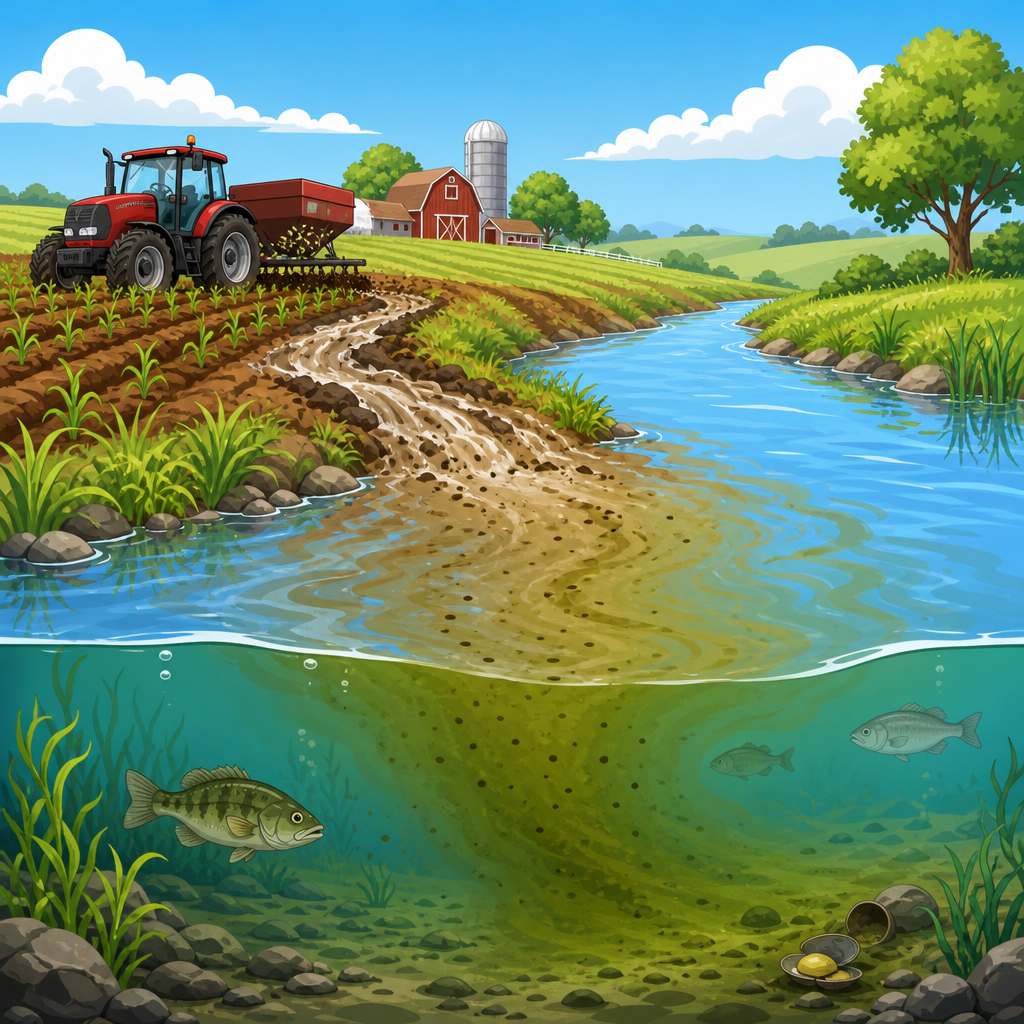
Aquatic ecosystems are especially vulnerable. Contaminants partition into sediments, are ingested by benthic organisms, and move upward through fish communities. Lakes and estuaries can become long-term reservoirs when contaminated sediments remain undisturbed for decades. In field investigations, tissue monitoring often reveals risk more clearly than water sampling because organism burdens integrate exposure over time. A single clean water sample does not mean the system is safe if fish still show elevated tissue concentrations from seasonal pulses or sediment contact.
Food-web effects can also change ecosystem structure. If pollutants impair reproduction in predators, prey populations may surge. If invertebrates are more sensitive than fish, nutrient cycling and decomposition can shift. These indirect effects are why bioaccumulation is both a toxicology issue and an ecology issue. The danger is not only what a pollutant does inside one body, but what repeated accumulation does to population resilience, species interactions, and ecosystem function.
Human health, exposure routes, and risk assessment
For humans, diet is usually the main route of exposure to bioaccumulative contaminants, particularly through seafood, animal fats, and in some regions game meat or locally caught fish. Workers may also be exposed through industrial contact, and communities near contaminated water bodies or waste sites can face added risks from dust, soil, and drinking water. Infants and fetuses deserve special attention because certain chemicals cross the placenta or enter breast milk. A dose that produces little effect in an adult can disrupt neurological or endocrine development during critical windows.
Health impacts differ by contaminant. Methylmercury is strongly associated with impaired fetal brain development, which is why fish consumption advisories focus heavily on pregnant people and young children. PCBs affect the immune system, thyroid regulation, and development. Dioxins activate the aryl hydrocarbon receptor and are linked to cancer and reproductive effects. PFAS have been associated with altered cholesterol, reduced vaccine response, liver effects, and developmental outcomes, though the strength of evidence varies by compound. The unifying principle is duration. Repeated low doses can matter more than rare high doses when a contaminant persists in the body.
Risk assessment combines hazard, dose-response, exposure, and uncertainty analysis. In practice, agencies compare estimated intake with reference doses, cancer slope factors, or tissue screening values. They account for meal frequency, body weight, contaminant concentration, and population sensitivity. Advisories are not simple yes-or-no judgments. They balance nutritional benefits of foods such as fish against contaminant risks. That is why guidance often recommends lower-mercury species like salmon, sardines, or trout instead of high-mercury predators like shark, king mackerel, tilefish, or some tuna species.
No measurement should be interpreted in isolation. Environmental chemists use water data, sediment data, air deposition, tissue concentrations, and sometimes stable isotope analysis to understand pathways. The goal is to identify not just whether exposure exists, but which source and pathway matter most. That distinction determines whether the right solution is emission control, sediment remediation, fish consumption guidance, product substitution, or tighter wastewater treatment.
How scientists measure, manage, and reduce bioaccumulation
Measuring bioaccumulation requires careful sampling and analytical chemistry. Laboratories use methods such as gas chromatography-mass spectrometry for many organic pollutants, liquid chromatography-tandem mass spectrometry for PFAS, and cold vapor atomic fluorescence or inductively coupled plasma mass spectrometry for mercury and other metals. Quality assurance matters as much as instrumentation. Blanks, duplicates, matrix spikes, certified reference materials, detection limits, and chain-of-custody procedures determine whether data are defensible enough for regulation or litigation.
Scientists also use models. Bioconcentration factors, bioaccumulation factors, and trophic magnification factors estimate how concentrations change from medium to organism and across food webs. Fugacity-based models help predict partitioning among air, water, soil, sediment, and biota. None of these tools replaces field evidence, but together they support screening, prioritization, and remedy design. In my experience, the most reliable assessments combine chemistry, tissue monitoring, and a realistic understanding of local food habits rather than relying on default assumptions alone.
Management starts with source control. Bans on PCB production, restrictions on DDT, tighter mercury emissions standards, and phased changes in PFAS use demonstrate that prevention works better than trying to clean every contaminated river or estuary afterward. When contamination is already present, options include sediment capping, dredging, monitored natural recovery, wastewater treatment upgrades, stormwater controls, contaminated soil removal, and habitat management. Each remedy has tradeoffs. Dredging can remove mass but resuspend contaminants if poorly executed. Capping isolates sediments but requires long-term monitoring and protection from disturbance.
Individuals can reduce risk by following local fish advisories, varying seafood choices, trimming fat from certain animal foods where appropriate, and paying attention to drinking water notices for PFAS or metals. Communities and businesses can go further by supporting green chemistry, safer product substitution, industrial pretreatment, and transparent environmental monitoring. If you want a practical way to understand environmental chemistry, start by tracking one contaminant from source to organism to regulation. Bioaccumulation makes that journey visible, and once you see it clearly, the logic of pollution prevention, exposure reduction, and ecosystem protection becomes impossible to ignore.
Frequently Asked Questions
What is bioaccumulation in simple terms?
Bioaccumulation is the process by which a chemical gradually builds up inside a living organism because it enters the body faster than the body can break it down, eliminate it, or safely store it. In practical terms, that means even very small exposures can become a serious issue if they happen repeatedly over time. A fish, bird, mammal, or person does not need to be exposed to a large dose all at once for harm to occur. Instead, low-level contact through food, water, soil, air, or consumer products can slowly raise the concentration of a substance in tissues such as fat, blood, liver, or muscle.
This concept matters because the body is not equally effective at handling every chemical. Some substances are metabolized and excreted quickly, while others are persistent, fat-soluble, or chemically stable enough to remain in the body for long periods. When that happens, internal concentrations can rise far above the levels found in the surrounding environment. That is why bioaccumulation is such an important idea in environmental chemistry: it explains how trace contamination in the environment can translate into meaningful biological exposure inside living systems.
Why is bioaccumulation dangerous to animals and humans?
Bioaccumulation is dangerous because it can turn repeated tiny exposures into biologically significant doses. A substance may appear harmless when measured at very low levels in water, sediment, or food, but if it accumulates in tissue over weeks, months, or years, the actual dose experienced by the organism can become much higher than expected. That internal buildup can interfere with normal biological functions, including hormone signaling, reproduction, growth, immune response, nervous system function, and organ health.
For wildlife, the danger often extends beyond the individual organism. Contaminants that accumulate in prey species can move through the food web and place predators at even greater risk. Birds of prey, large fish, and marine mammals are especially vulnerable because they consume many contaminated organisms over time. In humans, concern is greatest for chemicals linked to chronic effects such as developmental problems, neurological damage, endocrine disruption, and certain cancers. The long-term nature of exposure is what makes bioaccumulation so important for risk assessment and public health policy. It is not just about whether a chemical is toxic in theory; it is about whether real-world exposure patterns allow that chemical to build up to harmful levels over time.
How is bioaccumulation different from biomagnification?
Bioaccumulation and biomagnification are related, but they are not the same thing. Bioaccumulation happens within a single organism. It describes the increase in concentration of a chemical in that organism over time as exposure continues and elimination remains slow. A fish absorbing mercury from water and food faster than it can eliminate it is an example of bioaccumulation.
Biomagnification, by contrast, happens across trophic levels in a food web. It refers to the increase in contaminant concentration as one organism eats another. Small organisms may contain some amount of a persistent chemical, but predators that eat many of those organisms can end up with even higher concentrations, and top predators often have the highest levels of all. In other words, bioaccumulation is the buildup inside an organism, while biomagnification is the increase from one level of the food chain to the next. Understanding both terms is essential in environmental chemistry because together they explain how contamination can move from molecules in the environment to major ecological and human health consequences.
What kinds of chemicals are most likely to bioaccumulate?
Chemicals most likely to bioaccumulate tend to share a few important properties. They are often persistent, meaning they do not break down easily in the environment or inside the body. Many are also lipophilic, or fat-loving, which allows them to dissolve into fatty tissues rather than remain in water where they might be excreted more readily. Others may bind strongly to proteins or tissues, making them difficult for the body to remove. The key idea is that the chemical’s structure and behavior determine whether exposure remains temporary or becomes an accumulating burden.
Common examples include mercury, especially in the form of methylmercury, polychlorinated biphenyls (PCBs), dioxins, and certain pesticides such as DDT. Some PFAS compounds, often called “forever chemicals,” are also a major concern because of their persistence and potential to remain in the body for long periods. Not every chemical with environmental presence will bioaccumulate, and not every bioaccumulative chemical behaves in exactly the same way. That is why environmental chemists look closely at molecular stability, solubility, metabolism, and tissue distribution when evaluating chemical safety. These details help determine whether a substance presents a short-term exposure issue or a long-term accumulation hazard.
Why is bioaccumulation important in environmental chemistry and public policy?
Bioaccumulation sits at the center of environmental chemistry because it links chemical properties to real biological and ecological outcomes. It is one thing to know that a compound exists in water, soil, or air; it is another to understand whether it will enter organisms, persist in tissue, and move through ecosystems. That connection is what makes environmental chemistry so practical. The field is not only about identifying pollutants, but also about predicting how those pollutants behave, where they travel, how long they last, and what they do once living systems are exposed.
From a public policy standpoint, bioaccumulation helps regulators decide which chemicals need stricter monitoring, use limits, cleanup standards, or outright bans. A substance that accumulates over time can pose risks even when environmental concentrations seem low, so policies based only on immediate toxicity may miss the bigger picture. Bioaccumulation data also shape fish consumption advisories, industrial discharge rules, contaminated site management, and product safety regulations. For clients, communities, and decision-makers, this concept provides a more realistic view of environmental risk. It explains why long-term exposure matters, why persistence matters, and why preventing release at the source is often far more effective than trying to manage harm after accumulation has already occurred.