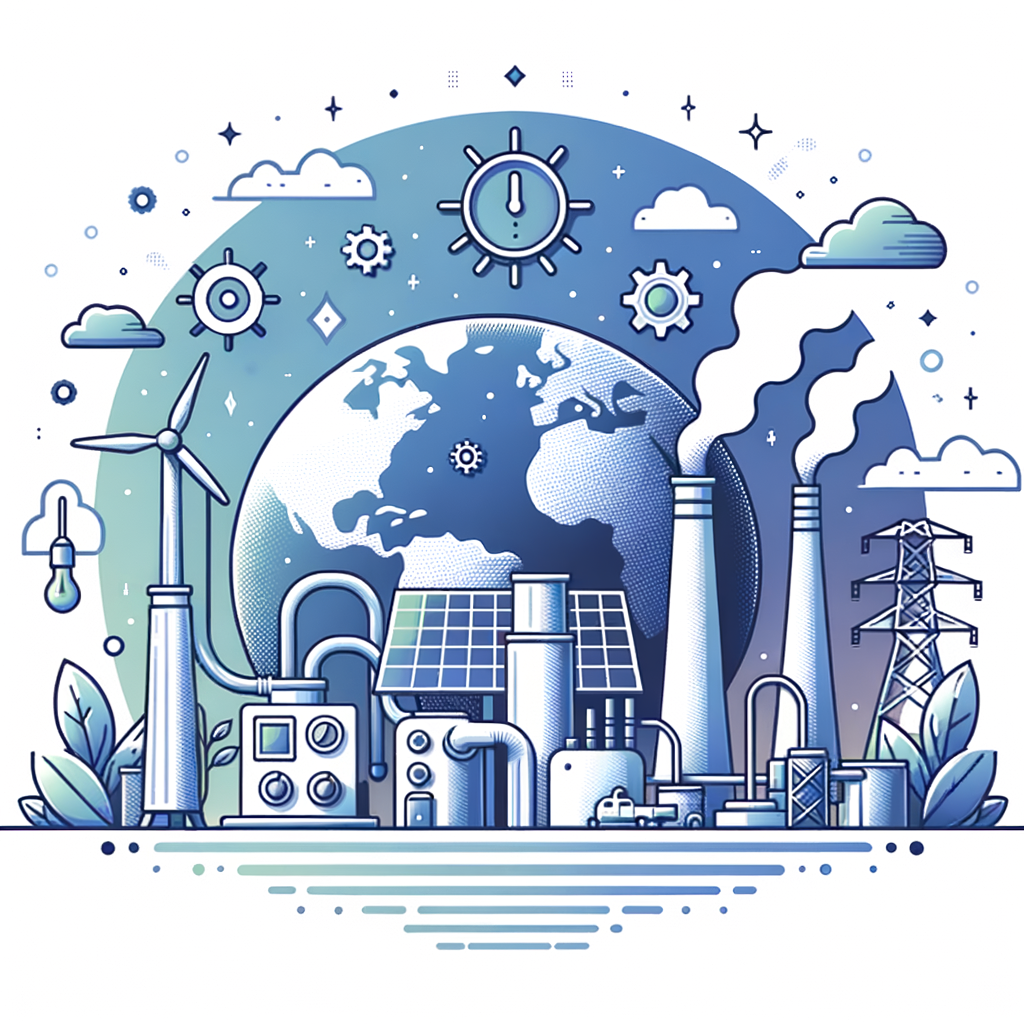
Carbon dioxide (CO2)—a colorless, odorless gas—is both vital to life on Earth and a significant player in our planet’s warming. It is a natural component of the Earth’s atmosphere, constituting a small but crucial part of a complex system that regulates climate through the greenhouse effect. This process is essential for maintaining the planet’s habitable temperature, but discrepancies in the balance of greenhouse gases, particularly CO2, have significant ramifications. Human activities over the past century have profoundly altered the concentration of carbon dioxide in the atmosphere. This alteration comes predominantly through the burning of fossil fuels like coal, oil, and natural gas, as well as deforestation and other land use changes. These activities have resulted in unprecedentedly high levels of carbon dioxide, contributing to global warming and associated climate impacts. Understanding carbon dioxide’s role in Earth’s warming involves examining its interaction with energy, its natural cycle, and the anthropogenic factors that accelerate its atmospheric presence.
CO2 plays a central role in the greenhouse effect, which is a natural phenomenon where certain greenhouse gases trap heat within the Earth’s atmosphere, preventing it from escaping into space. While the greenhouse effect is critical for sustaining life by keeping Earth’s surface warm, excess CO2 intensifies this effect, leading to increased global temperatures and subsequent climate change. Such warming impacts ecosystems, weather patterns, and human societies, thereby demanding a thorough examination of CO2‘s role in climate dynamics. The relationship between carbon dioxide and Earth’s warming also connects to global sustainability efforts, as mitigation strategies target reducing CO2 emissions. Thus, by investigating the multifaceted role of carbon dioxide, we can better understand the broader picture of climate change, its potential consequences, and the measures needed to address this global challenge.
Carbon Dioxide and the Greenhouse Effect
Carbon dioxide’s primary atmospheric role is its function within the greenhouse effect. This natural process begins when solar energy reaches Earth. Around 30% of this energy is reflected back into space by clouds and the Earth’s surface. The remaining 70% is absorbed by the land, oceans, and atmosphere, warming the planet. This heat is then radiated back towards space as infrared energy. Greenhouse gases, including CO2, water vapor, methane, and nitrous oxide, absorb and re-radiate some of this infrared energy, preventing it from escaping entirely from the atmosphere. This trapping of heat is what warms the surface of our planet.
CO2 is particularly efficient at maintaining this energy loop, despite its relatively low concentration. It can absorb infrared energy at several wavelengths, making it an effective heat trapper, much like putting a heat-absorbing blanket around the Earth. The molecular structure of carbon dioxide gives it this ability to absorb heat, then emit energy, which influences the thermal dynamic balance essential to Earth’s climate. Without such gases, Earth’s average surface temperature would be significantly lower, unable to sustain the current balance of biological and ecological systems. However, elevated levels of CO2 amplify this effect, leading to more retained heat and, therefore, a warmer planet, stressing the importance of understanding and managing our carbon emissions.
Human Contributions to Atmospheric CO2
Human activity over the industrial age has dramatically increased carbon dioxide levels beyond historical natural variations. The primary drivers of this surge are fossil fuel combustion, deforestation, industrial processes, and various forms of land use change. Burning fossil fuels for energy and transport releases significant CO2 quantities, as does cement production, which involves chemical reactions that release CO2. Additionally, deforestation not only releases stored carbon dioxide when trees are cut or burned but also reduces the planet’s capacity to absorb CO2 effectively.
Industrial agriculture further exacerbates CO2 release, where soil disturbances in conventional farming practices lead to increased CO2 emissions. These anthropogenic activities have collectively transformed CO2 from a natural component of the atmospheric cycle into a force driving profound climatic shifts. Modern data show atmospheric CO2 concentrations have risen from pre-industrial levels of about 280 parts per million (ppm) to over 410 ppm today, a spike unprecedented in millennia. Such milestones indicate how significantly human activities have altered the natural carbon balance and underscore the urgency in addressing these emissions to prevent further climate disruption.
Impact of Rising Carbon Dioxide on Climate
The overwhelming consensus among scientists is that increased carbon dioxide levels contribute significantly to climate change. Global temperature rise is a direct consequence of higher CO2 concentrations. Between higher atmospheric temperatures and cascading effects—like ice melt, rising sea levels, and altered precipitation patterns—the impacts on both the natural world and human societies are profound. For instance, melting polar ice contributes to sea-level rise, threatening coastal cities and ecosystems. Increased atmospheric CO2 also drives ocean warming and acidification, the latter due to CO2 dissolving in seawater to form carbonic acid. This acidification disrupts marine life, particularly organisms with calcium carbonate shells or skeletons, posing risks to fisheries critical for food security around the world.
Moreover, heightened temperatures and changing weather patterns lead to more frequent and intense weather events, such as hurricanes, droughts, and floods. These changes have far-reaching impacts on agriculture, water resources, and biodiversity. Crops may fail amid new climate regimes, freshwater availability becomes unpredictable, and species struggle to adapt to rapid temperature fluctuations and habitat shifts. Understanding CO2’s role in these processes is key to developing strategies to adapt to and mitigate impacts through policy, technological innovation, and changes in consumption patterns and energy sourcing.
Efforts to Reduce Carbon Dioxide Emissions
Given the central role of CO2 in global warming, strategies to reduce carbon emissions are crucial. International agreements like the Paris Accord aim to limit temperature rise through commitments to reduce greenhouse gas emissions. Countries pledge to set national targets and invest in renewable energy sources, such as solar, wind, and hydroelectric power, to transition away from fossil fuels. These efforts also include advancements in carbon capture and storage (CCS) technologies, which aim to trap and store CO2 emissions from industrial activities before they reach the atmosphere.
On a personal and local level, emissions reduction efforts involve improving energy efficiency, adopting more sustainable transportation methods, and enhancing conservation efforts. Urban planning can reduce emissions by encouraging public transport, cycling, and walking, along with the development of energy-efficient infrastructure. Public engagement and awareness campaigns play an essential role in transforming energy use behaviors and fostering an informed populace that supports necessary policy changes. However, achieving significant reductions in CO2 emissions requires an integrated approach that aligns individual actions with broader systemic changes at regional and global scales.
Future Outlook and Challenges
The path to stabilizing Earth’s climate involves maintaining a delicate balance between emissions, technological advancements, and natural carbon sinks. As technology progresses, there is hope that sustainable innovations can increasingly mitigate CO2‘s warming effect. Emerging technologies like direct air capture, improved battery storage for renewable energy, and developments in nuclear fusion could revolutionize our energy systems. Concurrently, enhancing natural carbon sinks through reforestation and soil health initiatives complements technological solutions, as healthy forests and soils can sequester significant CO2 quantities.
However, this technological optimism must be tempered with the acknowledgment of substantial socio-economic and political challenges. The transition away from fossil fuels involves overcoming vested interests, substantial infrastructure changes, and addressing economic disparities accentuated by energy shifts. Further, climate change impacts are not distributed equally, affecting vulnerable communities disproportionately. Thus, equity and accessibility must be central to climate policies, ensuring that solutions are inclusive and just. Continued research, collaboration across sectors and borders, and concerted policy efforts are essential to overcoming these challenges and ensuring a sustainable future. The role of carbon dioxide in Earth’s warming is a critical focal point for understanding and addressing climate change effectively.
Conclusion
Carbon dioxide is a central character in the story of Earth’s climate. Though vital for life, its role in trapping heat makes it a key driver of global warming when concentrations rise beyond natural levels. Human activities have accelerated CO2 emissions, disrupting the balance maintained for millennia, thereby amplifying the greenhouse effect and leading to a host of environmental and societal changes. These alterations manifest as rising global temperatures, shifting weather patterns, and resulting stress on natural and human systems. Addressing the challenges presented by increased carbon dioxide concentrations requires a comprehensive approach, combining technological innovation, policy initiatives, and changes in societal behavior.
Yet the future is not devoid of hope. Current initiatives, both on global and local scales, aim to curtail emissions and enhance Earth’s natural capacity to absorb carbon. There is a substantial need for the continued development and deployment of renewable energy technologies, supported by international cooperation and equitable policies that consider the needs of all communities. By focusing on reducing CO2 emissions, investing in sustainable practices, and fostering global collaboration, humanity can work toward stabilizing the climate, ensuring ecological sustainability, and protecting future generations from the most severe impacts of climate change. The role of carbon dioxide in Earth’s warming underscores the urgent, collective effort needed to achieve these goals and sustain a stable environment.
Frequently Asked Questions
1. What is the role of carbon dioxide in the Earth’s atmosphere?
Carbon dioxide (CO2) plays a crucial role in the Earth’s atmosphere as part of the greenhouse gases, which include water vapor, methane, nitrous oxide, and ozone. CO2 is fundamental in regulating the Earth’s climate by trapping heat from the sun. This process, known as the greenhouse effect, is essential for keeping our planet warm enough to support life. Despite constituting only about 0.04% of the atmosphere, CO2 is responsible for a significant portion of the warming effect. It’s like a thermal blanket, allowing sunlight to enter and reflecting heat back to the Earth’s surface. Without CO2 and other greenhouse gases, our planet would be vastly different—far colder and largely inhospitable for today’s climate-dependent life forms.
2. How does carbon dioxide contribute to global warming?
Carbon dioxide contributes to global warming through its role as a dominant greenhouse gas. When humans burn fossil fuels such as coal, oil, and natural gas for energy or engage in deforestation and other land-use changes, CO2 is released into the atmosphere in large quantities. This increase in CO2 concentration enhances the natural greenhouse effect, retaining more heat and thus warming the planet. The more CO2 in the atmosphere, the thicker the ‘blanket’ becomes, trapping more heat and causing global temperatures to rise. This warming effect can lead to disruptions in weather patterns, increased frequency of extreme weather events, melting polar ice, sea level rise, and various ecological and socio-economic impacts.
3. Why do human activities lead to an increase in carbon dioxide levels?
Human activities are leading to an increase in atmospheric carbon dioxide levels primarily due to the burning of fossil fuels and deforestation. When fossil fuels like coal, oil, and natural gas are burned for energy, they release large amounts of CO2 into the atmosphere. This is because these fuels contain carbon that was stored for millions of years and is now rapidly being released in a geological blink of an eye. Additionally, deforestation contributes to rising CO2 levels because trees, which naturally absorb CO2 through the process of photosynthesis, are cut down and often burned, releasing stored carbon back into the atmosphere. Industrial processes and certain agricultural practices also release CO2 and other greenhouse gases, compounding the atmospheric load of these heat-trapping gases.
4. Can the increase in carbon dioxide have impacts other than global warming?
Yes, the increase in atmospheric carbon dioxide has several other impacts beyond just global warming. One significant effect is ocean acidification. As CO2 levels increase in the atmosphere, more of it gets absorbed by the world’s oceans, where it reacts with seawater to form carbonic acid. This process lowers the pH of the ocean, resulting in acidification, which can harm marine life, particularly organisms like corals, snails, and shellfish that rely on calcium carbonate for their shells and skeletons. Furthermore, higher CO2 levels can affect plant growth and agricultural productivity. While plants require CO2 for photosynthesis, too much can lead to imbalances, and changes in temperature and precipitation associated with CO2-induced climate change can affect crop yields adversely.
5. How can we mitigate the impact of carbon dioxide on global warming?
To mitigate the impact of carbon dioxide on global warming, a multi-faceted approach is required. First, we need to reduce the burning of fossil fuels, which is the largest source of CO2 emissions, by transitioning to renewable energy sources like solar, wind, and hydropower. Increasing energy efficiency in transportation, buildings, and industry can also reduce emissions. Capturing and storing carbon emissions through technologies like carbon capture and storage (CCS) can help address emissions from industries difficult to decarbonize. Enhanced reforestation and afforestation, along with conservation of existing forests, can increase carbon sequestration, drawing CO2 out of the atmosphere naturally. Policies that encourage sustainable land use and promote low-carbon agriculture are vital too. Lastly, individual actions, such as reducing waste, using energy wisely, and supporting sustainable practices, all play a critical role in addressing CO2’s impact on global warming.