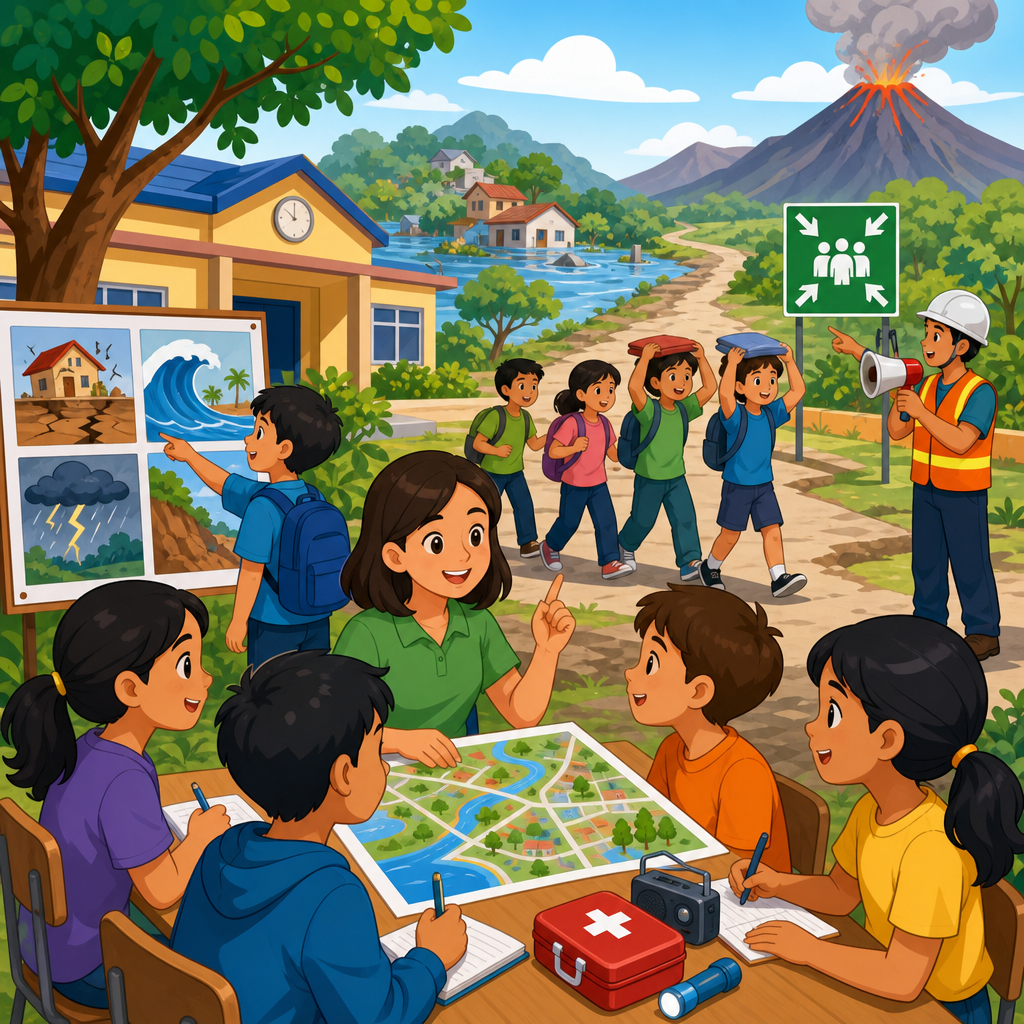

Case studies of successful disaster mitigation projects show how disaster preparedness moves from abstract planning to measurable protection of lives, infrastructure, and local economies. In this context, disaster mitigation means actions taken before a hazard strikes to reduce long term risk, while disaster preparedness covers the planning, training, communication, and resource coordination that allow communities to act quickly when danger appears. I have worked on preparedness content and post incident reviews for public sector and infrastructure organizations, and the same lesson repeats across floods, earthquakes, wildfires, storms, and heat emergencies: success depends on systems built before the headline event. This hub article explains what strong preparedness looks like, why mitigation projects succeed or fail, and which real world examples offer practical models for agencies, businesses, schools, and households building a complete disaster preparedness strategy.
What disaster preparedness includes in practice
Disaster preparedness is broader than stocking supplies or issuing evacuation maps. A complete program combines hazard identification, vulnerability assessment, land use policy, resilient construction, early warning systems, emergency operations planning, training, public education, continuity planning, mutual aid agreements, and recovery financing. Standards from FEMA, the Sendai Framework for Disaster Risk Reduction, the National Incident Management System, and ISO 22320 all point to the same principle: preparedness works best when governance, communication, and physical mitigation reinforce one another. For a subtopic hub under environmental disasters, that matters because no single article on floods, wildfire, hurricanes, drought, or earthquakes can stand alone. Readers need the connective framework that links all hazards through shared preparedness disciplines.
Preparedness also matters financially. According to the National Institute of Building Sciences, mitigation investments often return multiple dollars for every dollar spent through reduced damage, business interruption, and emergency response costs. The exact ratio varies by project type, but the pattern is consistent enough to guide policy. A seawall without evacuation planning leaves people exposed. An alert system without trusted public messaging fails in the moment. A hazard map without zoning enforcement becomes a shelf document. The strongest case studies therefore combine engineered defenses, operational readiness, and community participation. That integrated view is what makes disaster preparedness a true hub topic: it connects every hazard specific action to the larger goal of resilience.
Flood mitigation case study: the Netherlands Room for the River program
The Netherlands offers one of the clearest examples of successful disaster mitigation because it shifted from a narrow flood control mindset to a risk reduction strategy that gives water more space. After severe river floods in the 1990s, Dutch authorities expanded the Room for the River program across multiple river branches. Instead of relying only on higher dikes, the program lowered floodplains, relocated levees inland, created side channels, removed obstacles, and redesigned landscapes to safely convey peak river discharge. This is important because hard barriers alone can increase catastrophic consequences if overtopped or breached. By reducing hydraulic pressure across the system, the Dutch approach lowered flood levels while improving spatial quality.
From a preparedness perspective, the project succeeded because it was not just engineering. It required national funding, local consultation, long term hydrologic modeling, and clear governance across water boards and municipalities. Residents understood where flood storage areas would operate. Planners integrated transportation, ecology, and urban design. Agencies practiced coordinated decision making before high water events. In plain terms, the project made emergency management easier because the landscape itself absorbed part of the threat. For communities considering river flood mitigation, the lesson is direct: use updated flood maps, plan around watershed behavior rather than municipal boundaries, and combine structural defenses with room to store or redirect water.
Storm surge and coastal resilience case study: Bangladesh cyclone preparedness
Bangladesh has transformed cyclone risk management through a combination of shelters, forecasting, volunteer networks, and public education. Decades ago, cyclones killed hundreds of thousands of people in the country. Mortality from later major storms dropped dramatically because preparedness improved at scale. The Cyclone Preparedness Programme, supported by the government and the Bangladesh Red Crescent Society, trained tens of thousands of volunteers, many working at community level to deliver warnings, support evacuation, and assist vulnerable residents. At the same time, Bangladesh expanded multipurpose cyclone shelters, improved embankments in selected areas, and strengthened forecasting and last mile communication.
This case study is especially useful because it shows that successful disaster mitigation projects are not always the most expensive civil works. The most effective element was often organized human action. A forecast only saves lives when people receive it, trust it, and know where to go. In villages I have reviewed in preparedness documentation, the practical details mattered: shelters placed within reachable distance, women volunteers included in outreach, warning messages delivered in simple language, and drills that reduced hesitation. For coastal communities elsewhere, the takeaway is clear. Preparedness should answer basic questions in advance: Who issues the warning, through which channel, in what language, with what trigger for evacuation, and how are older adults, children, and disabled residents assisted?
Earthquake mitigation case study: Japan building codes and early warning
Japan demonstrates how strict building standards and operational preparedness reduce earthquake losses even when hazards cannot be prevented. The country’s modern seismic building codes, enforced through design review and construction practice, have significantly improved life safety compared with older building stock. Base isolation, energy dissipation devices, ductile detailing, and retrofitting of public facilities all contribute to better performance. The 2011 Great East Japan Earthquake caused devastating tsunami impacts, but many buildings designed to modern seismic requirements withstood shaking that would have caused broader collapse elsewhere. That distinction matters: earthquake preparedness is not one intervention. It is a layered system that separates shaking risk, tsunami risk, fire following earthquake risk, and infrastructure continuity risk.
Japan’s earthquake early warning system adds another preparedness layer. Because seismic waves travel at different speeds, alerts can provide seconds of notice before strong shaking arrives in some locations. That short interval is enough to stop trains, pause factory lines, open elevator doors, and prompt protective action. The system does not prevent damage, and false alarms or limited lead time are real constraints, but it demonstrates how monitoring, communications, and public education work together. Communities outside Japan can adapt the underlying lesson even without national scale technology: identify critical facilities, retrofit essential buildings first, train people for drop cover and hold on, secure nonstructural hazards such as shelving and equipment, and establish continuity plans for power, data, and transport disruption.
Wildfire mitigation case study: Australia and community defensible space programs
Wildfire preparedness has evolved sharply in Australia after repeated bushfire disasters. One of the most practical mitigation strategies has been the use of defendable space, fuel management, tougher building requirements in high risk zones, and public warning systems tied to fire danger ratings. In states with severe exposure, planning regulations and building standards now address ember attack, radiant heat, and vegetation proximity. Properties built or retrofitted with enclosed eaves, protected vents, noncombustible materials, and maintained clearance zones perform better than unprepared homes. Fire agencies also emphasize neighborhood level preparedness because one neglected property can increase risk for an entire street.
The key lesson from successful projects in wildfire zones is that preparedness must be specific to fire behavior. Generic emergency plans are not enough. Residents need to know trigger points for leaving early, road network constraints, shelter in place limitations, and how smoke affects visibility and health. Communities that conduct seasonal fuel reduction, maintain evacuation routes, map water points, and run pre season communication campaigns consistently achieve better outcomes than those relying on ad hoc response. The limits are also important to state clearly. During extreme fire weather, no amount of household preparation guarantees structure survival. That is why land use planning, utility vegetation management, and coordinated evacuation policy are as important as individual action.
Urban heat and early warning case study: Ahmedabad Heat Action Plan
Heat is one of the deadliest environmental hazards, yet it often receives less preparedness investment than storms or floods. Ahmedabad, India, changed that after a deadly 2010 heat wave by launching one of South Asia’s first comprehensive Heat Action Plans. The plan used temperature thresholds, public alerts, agency coordination, worker guidance, hospital readiness, cool roof promotion, and targeted outreach for vulnerable populations. It translated weather information into practical actions, such as adjusting outdoor work hours, opening cooling spaces, and advising residents on hydration and symptom recognition. This is an excellent mitigation case study because it turned a silent hazard into a managed public health risk.
For cities building disaster preparedness programs, heat planning offers a template for scalable action. It is relatively affordable compared with major infrastructure projects, but it requires disciplined coordination among meteorological services, health departments, emergency managers, labor agencies, schools, and media outlets. The most successful heat mitigation projects use neighborhood data to identify where older adults, low income residents, informal workers, and areas with little tree cover face the highest exposure. They also measure outcomes, including excess mortality, hospital admissions, and warning reach. That evidence based approach helps justify future investments in shade, cooling centers, reflective surfaces, and urban greening.
Common features of successful disaster mitigation projects
Across these case studies, the same design principles appear repeatedly. Successful projects start with credible risk data, translate that data into clear decisions, and then sustain the work through governance and funding. They prioritize vulnerable populations instead of assuming one message fits everyone. They use drills, maintenance, and after action reviews so plans remain operational. They also accept tradeoffs. A levee can shift risk downstream if not modeled carefully. A shelter network can fail if access roads flood. An alert system can create warning fatigue if thresholds are poorly calibrated. The goal is not perfect safety. It is lower exposure, lower vulnerability, faster response, and quicker recovery.
| Preparedness element | What successful projects do | Example |
|---|---|---|
| Risk assessment | Use updated hazard maps and scenario planning | River modeling in the Netherlands |
| Public warning | Deliver simple, trusted messages through multiple channels | Bangladesh cyclone volunteers |
| Protective infrastructure | Build or retrofit for specific hazard mechanisms | Japan seismic design standards |
| Community action | Train residents before the crisis and define triggers | Australian wildfire readiness |
| Health preparedness | Link forecasts to operational actions for vulnerable groups | Ahmedabad heat planning |
These patterns are useful for every audience within disaster preparedness. Local governments should review hazard mitigation plans, capital programs, and public communication protocols together rather than in separate silos. Businesses should connect enterprise risk management, supply chain continuity, backup power, and workforce safety. Schools and hospitals should assess facility resilience, transportation dependencies, and shelter or relocation procedures. Households should build go bags, understand insurance limits, know evacuation routes, and sign up for official alerts. If you are building a preparedness hub, those are the internal pathways readers usually need next: flood readiness, earthquake retrofits, wildfire home hardening, hurricane evacuation planning, emergency kits, continuity planning, and climate adaptation for critical infrastructure.
How to apply these lessons to your own preparedness planning
Start with a hazard specific risk assessment, not a generic emergency checklist. Identify the hazards most likely in your area, estimate who and what is exposed, and rank critical functions that must continue. Then match mitigation options to the actual failure modes. Flood zones may need elevation, drainage upgrades, or relocation. Seismic regions may need retrofits and nonstructural bracing. Wildfire areas may need defensible space, ember resistant construction, and redundant evacuation routes. Heat prone cities may need cooling centers and worker protection protocols. Next, define decision points: who declares evacuation, when facilities close, how alerts are issued, and how you verify that vulnerable people received assistance.
Finally, test the plan. Tabletop exercises, full scale drills, equipment inspections, and post exercise reviews reveal weak links faster than any written policy. The best disaster mitigation projects improve over time because leaders treat preparedness as an operating system, not a binder. The case studies above prove that disaster preparedness saves lives when communities invest before impact, coordinate across agencies, and tailor action to local risk. Use these examples as a framework for your environmental disasters strategy, then go deeper into each hazard specific topic and update your own plan this year. Preparedness is most effective when the next step happens before the next warning.
Frequently Asked Questions
What do successful disaster mitigation case studies usually demonstrate?
Successful disaster mitigation case studies usually show that risk reduction works best when communities invest before a disaster occurs, not after. In practical terms, these projects demonstrate how early action can reduce deaths, injuries, property damage, service disruption, and long term economic losses. The strongest examples do more than describe a hazard and a response. They connect a specific risk, such as flooding, wildfire, earthquakes, hurricanes, or landslides, to a targeted set of mitigation measures and then document measurable outcomes.
For example, a strong case study may show how levee improvements, wetland restoration, stormwater upgrades, defensible space programs, seismic retrofits, or stricter building codes reduced exposure and improved resilience. It often explains what conditions existed before the project, why action was needed, who funded and managed the effort, how the community was engaged, and what changed afterward. That includes both physical results, such as fewer flooded homes or stronger public buildings, and operational results, such as faster evacuations, better warning systems, and stronger coordination among agencies.
Just as importantly, successful case studies reveal that mitigation and preparedness are closely connected. Mitigation reduces the underlying risk, while preparedness ensures people know what to do when a threat emerges. A flood barrier, for instance, is more effective when paired with evacuation planning, public communication systems, staff training, and emergency drills. Together, these elements turn a community’s strategy from a static plan into a functioning protective system. That is why the best case studies are useful not only as success stories, but also as practical models for future policy, funding decisions, and local planning.
How is disaster mitigation different from disaster preparedness in real world projects?
In real world projects, disaster mitigation and disaster preparedness are different but deeply interconnected parts of risk management. Disaster mitigation focuses on reducing long term vulnerability before a hazard strikes. These are the structural, environmental, regulatory, and planning actions that lower the severity of future impacts. Examples include elevating homes in flood prone areas, reinforcing bridges against earthquakes, restoring coastal dunes, updating land use rules, hardening utility systems, and relocating critical infrastructure out of high risk zones.
Disaster preparedness, by contrast, is about readiness to act when danger becomes immediate. It includes emergency plans, public education, warning protocols, communication systems, evacuation routes, interagency coordination, resource staging, and training exercises. Preparedness answers the operational question of how people and institutions respond under pressure, while mitigation answers the strategic question of how to reduce the damage in the first place.
Case studies of successful projects often show that the two are most effective when designed together. A city may install flood control infrastructure as a mitigation measure, but without preparedness elements such as monitoring systems, emergency messaging, shelter coordination, and transportation planning, people can still face major harm during an extreme event. Likewise, a community may conduct excellent drills and evacuation planning, but if buildings remain highly vulnerable, the physical losses can still be devastating. The most credible project examples prove that resilience comes from combining risk reduction with readiness, creating communities that are both harder to damage and better able to respond.
What types of disaster mitigation projects are most often highlighted as successful examples?
The most frequently highlighted successful projects are those with clear risks, visible interventions, and measurable outcomes. Flood mitigation projects are among the most common because their results can often be quantified in terms of reduced inundation, fewer damaged properties, and lower recovery costs. These projects may include drainage improvements, detention basins, floodwalls, elevated structures, buyout programs, green infrastructure, watershed management, and wetland restoration. They are especially compelling when a later storm tests the system and shows a clear reduction in losses compared with earlier events.
Wildfire mitigation projects are also widely cited, particularly in areas where urban development meets fire prone landscapes. Successful examples often involve fuel reduction, prescribed burns, defensible space programs, home hardening, utility management, vegetation mapping, and public education campaigns. What makes these case studies persuasive is their ability to demonstrate how coordinated mitigation can slow fire spread, improve firefighter access, and increase structure survival.
Seismic retrofits, coastal resilience initiatives, drought planning, heat mitigation, and storm hardening projects are also commonly featured. Schools, hospitals, transportation corridors, water systems, and power infrastructure often appear in case studies because they are critical assets whose failure can create cascading consequences. The strongest examples are not always the largest or most expensive projects. They are the ones that clearly show how a focused investment reduced vulnerability, supported continuity of services, and protected both lives and local economic stability. This is why successful case studies are so valuable to planners, emergency managers, and policymakers: they translate resilience from theory into replicable action.
How do experts measure whether a disaster mitigation project was truly successful?
Experts typically evaluate success by looking at both direct and indirect outcomes over time. The most obvious measure is reduced damage during a hazard event. If a project was designed to prevent flooding, for example, experts will examine whether flood depths were lower, whether fewer homes or businesses were affected, and whether roads, utilities, and public services remained operational. For wildfire projects, they may assess fire behavior, structure loss, evacuation performance, and emergency access. For seismic mitigation, they often look at whether buildings remained safe to occupy, whether injuries were prevented, and how quickly normal functions resumed.
Cost effectiveness is another major metric. Many successful case studies show that the money spent on mitigation produced far greater savings in avoided losses, emergency response costs, recovery expenses, and business interruption. This is one reason these projects are often used to support public funding decisions. Experts also study social outcomes, such as whether vulnerable populations were better protected, whether emergency messaging reached residents effectively, and whether displacement was reduced. A project that protects infrastructure but leaves communication gaps or inequitable access may not be considered fully successful.
Long term resilience indicators matter as well. These include improvements in policy, institutional coordination, maintenance practices, and public awareness. A project may be judged successful not only because it performed well in one event, but because it changed how a community manages risk in the future. In the best case studies, success is documented through pre and post project comparisons, hazard modeling, loss estimates, after action reviews, and local testimony. The combination of technical data and lived experience provides the clearest picture of whether the project delivered meaningful and lasting protection.
What lessons can communities learn from case studies of successful disaster mitigation projects?
Communities can learn several important lessons from these case studies, and one of the biggest is that timing matters. Waiting until after repeated disasters usually increases both the cost and the human toll. Successful projects often began with early recognition of a risk, strong local leadership, and the willingness to act before a crisis forced action. These examples remind communities that mitigation is not just an engineering decision. It is also a policy, funding, communication, and governance challenge that requires sustained commitment.
Another major lesson is that local context is critical. Strategies that work in one region may need to be adapted elsewhere based on geography, infrastructure, social conditions, and available resources. A coastal town facing storm surge, for instance, will approach mitigation differently than a mountain community at risk of landslides or a city dealing with extreme heat. The most useful case studies do not encourage copying projects exactly. Instead, they show how communities assessed their risks, set priorities, built partnerships, and matched solutions to local realities.
Perhaps the most practical lesson is that success usually depends on integration. The strongest projects combine mitigation, preparedness, public engagement, and long term maintenance. They involve emergency managers, planners, engineers, public officials, community organizations, and residents rather than relying on a single department or one time investment. They also recognize that resilience is not finished when construction ends or a plan is written. Ongoing training, communication updates, monitoring, and maintenance are what keep a project effective over time. That is why case studies are so powerful: they show that real protection comes from coordinated systems, not isolated actions.