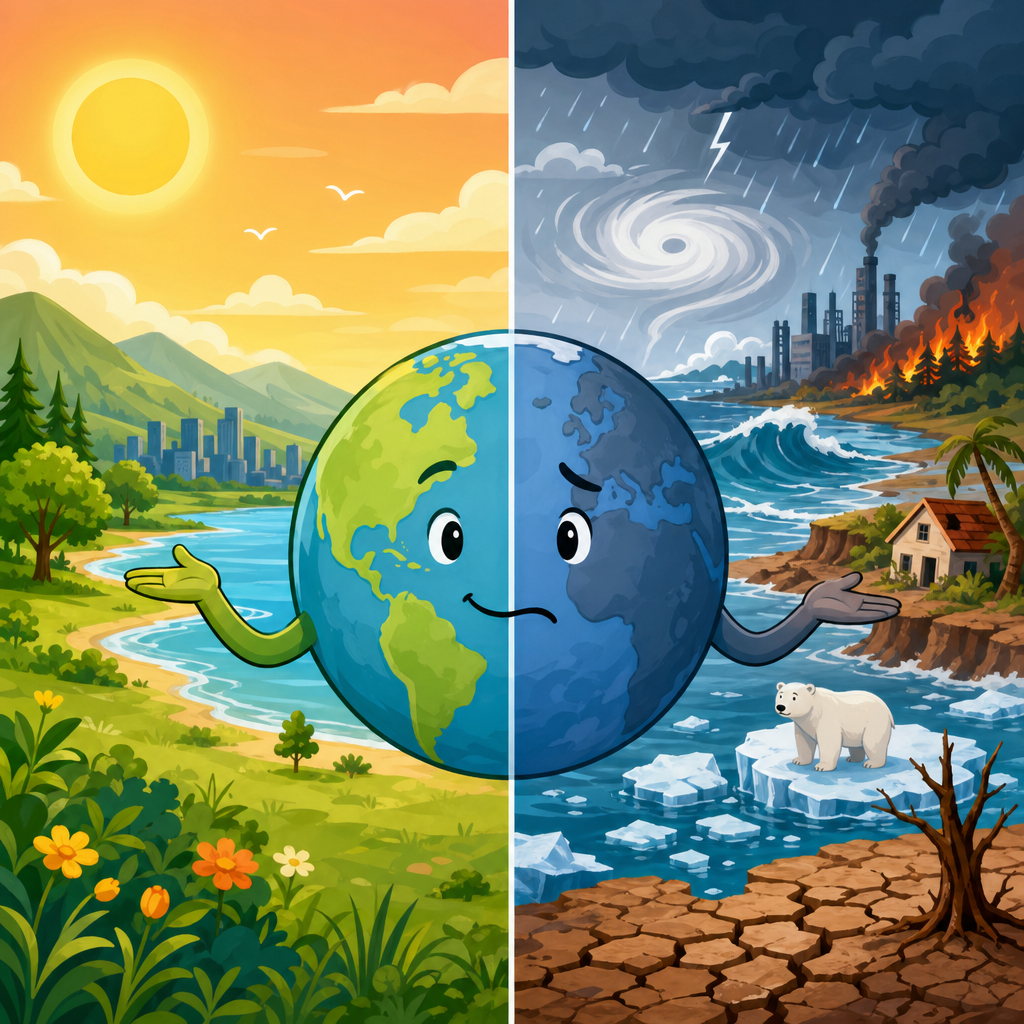
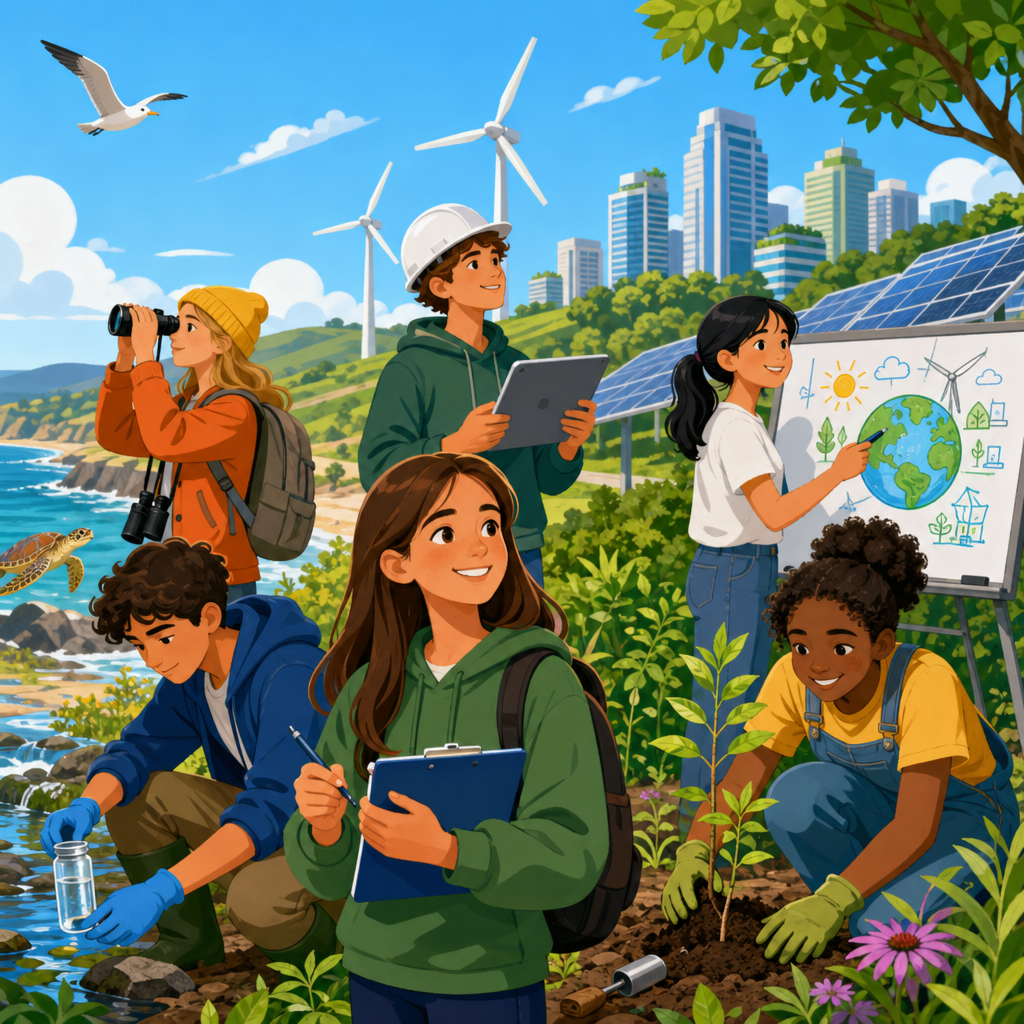
Climate careers for environmentally passionate teens are no longer a niche idea; they are a practical pathway into one of the fastest-changing parts of the global economy and a natural extension of youth and climate activism. In this context, climate careers include jobs in science, policy, law, education, design, finance, agriculture, clean energy, journalism, and community organizing that directly reduce emissions, strengthen resilience, protect ecosystems, or help the public understand climate risk. Youth and climate activism refers to the ways young people raise awareness, influence institutions, shape local decisions, and build solutions through campaigns, school groups, volunteering, digital media, and civic participation. I have worked with students, nonprofit teams, and sustainability programs that sit at this intersection, and the pattern is clear: teens who start with activism often discover concrete career paths much earlier than their peers. That matters because climate change is not only an environmental issue. It affects public health, housing, food systems, infrastructure, insurance, labor markets, and national security. A well-informed teen can move from concern to action, then from action to expertise, and eventually into a role that creates measurable impact.
This hub article explains how youth and climate activism connects to real jobs, what skills matter most, which career tracks are growing, and how teens can build experience before college. It also answers practical questions students and parents often ask: Do you need a science degree to work on climate? Can activism help with university applications or internships? Which industries are hiring, and which roles are genuinely mission-aligned? The short answer is that there is no single climate profession. The climate workforce is a broad ecosystem. Some people measure methane leaks, some write city adaptation plans, some design heat pumps, some litigate against polluters, and some organize neighbors around bus access or flood protection. For teens, that range is good news. You do not need to fit one stereotype to belong in this field. You need curiosity, evidence-based thinking, communication skills, and the willingness to keep learning in a problem space that changes quickly.
Why youth climate activism matters
Youth and climate activism matters because it changes both culture and policy while giving young people an unusually strong foundation for future work. In the past decade, student strikes, school sustainability committees, Indigenous youth leadership, local air quality campaigns, and digital advocacy have pushed climate from a specialist topic into mainstream public debate. These efforts have influenced school district decarbonization plans, city tree-planting programs, single-use plastic policies, and campus fossil fuel divestment discussions. Activism teaches a set of transferable skills that employers value: public speaking, coalition building, data gathering, event planning, media literacy, stakeholder mapping, and persuasive writing. When a teen helps organize a community forum on extreme heat, they are practicing project management. When they prepare comments for a local planning meeting, they are learning public policy. When they run an awareness campaign on food waste, they are building communications experience.
Activism also helps teens understand that climate action happens at many scales. National laws matter, but so do school procurement choices, building codes, transit routes, and utility regulations. That systems view is essential in climate careers. Employers in sustainability consulting, environmental nonprofits, clean technology startups, and municipal government consistently look for candidates who can connect technical facts to human outcomes. A student who understands why lower-income neighborhoods face greater flood risk, or how urban tree cover reduces heat exposure, already thinks in a way the field needs. The most effective youth activists are not just loud; they are informed, credible, and solution-oriented. Those traits translate directly into long-term professional value.
Climate career paths teens should know
The climate economy includes far more than environmental science. One major path is clean energy, where jobs range from solar project development and wind operations to battery engineering, grid modernization, and energy efficiency auditing. Another is climate policy, which includes legislative research, regulatory analysis, and local government planning. Climate adaptation and resilience is growing quickly as communities respond to heat waves, wildfire smoke, sea-level rise, and heavier rainfall. That field needs urban planners, emergency managers, civil engineers, landscape architects, and public health specialists. Conservation and ecosystem restoration remain important too, especially in forestry, wetlands, regenerative agriculture, and water management. Climate communication is another expanding area, with roles in journalism, documentary production, educational content, and social media strategy for nonprofits or public agencies.
There are also career tracks that many teens overlook. Climate finance includes carbon accounting, risk analysis, sustainable investing, and disclosure reporting under frameworks used by major companies and investors. Climate law includes permitting, litigation, environmental justice advocacy, and compliance. Sustainable business roles include supply chain decarbonization, life-cycle assessment, responsible sourcing, and product design. Data-focused students can move into geospatial analysis, emissions modeling, remote sensing, or climate risk analytics. Hands-on learners may prefer skilled trades linked to electrification, building retrofits, EV charging infrastructure, HVAC optimization, or ecosystem restoration crews. None of these paths is abstract. They are active labor markets shaped by policy incentives, corporate transition plans, and the need for communities to adapt to worsening climate impacts.
| Career area | What the work involves | Useful teen experiences | Common next step |
|---|---|---|---|
| Clean energy | Solar, wind, batteries, energy efficiency, grid projects | STEM clubs, energy audits, maker projects | Engineering, technician training, policy studies |
| Climate policy | Research, advocacy, public comments, legislative support | Debate, student government, local campaigns | Public policy, political science, law |
| Resilience and adaptation | Heat plans, flood mitigation, public health preparedness | Community mapping, volunteering, science fairs | Planning, civil engineering, public health |
| Conservation and restoration | Habitat protection, forestry, soil, water, biodiversity | Field volunteering, citizen science, gardening | Environmental science, ecology, natural resources |
| Climate communication | Journalism, campaigns, education, visual storytelling | School media, podcasts, blogs, presentations | Communications, journalism, education |
Skills that turn concern into opportunity
The strongest climate candidates combine technical literacy with practical communication. For teens, that starts with climate basics: greenhouse gases, mitigation versus adaptation, energy systems, land use, and environmental justice. You do not need a graduate-level understanding, but you should be able to explain why methane is a potent short-lived climate pollutant, how electrification lowers emissions when grids get cleaner, or why extreme heat is a public health issue. Beyond content knowledge, employers and university programs notice evidence of execution. Can you organize a team, meet deadlines, summarize findings, and present a recommendation? If yes, you are already ahead.
Digital and analytical skills are especially valuable. Spreadsheet fluency, basic statistics, mapping tools, presentation design, and research methods appear in many climate roles. Students interested in data can explore QGIS, Excel, Google Sheets, or introductory Python. Those interested in storytelling should practice interviewing, fact-checking, and visual communication. Students who lean toward policy should learn how public comments work, how to read local agendas, and how budgets affect climate promises. I have seen teens stand out in applications simply by documenting a school waste audit properly, citing emissions factors carefully, and translating results into a realistic proposal. Accuracy matters. So does humility. Climate work often involves uncertainty, tradeoffs, and imperfect information. People who can stay rigorous without becoming paralyzed are the ones who grow fastest.
How teens can build experience now
Teens do not need to wait for university to start building a climate career. The most effective first step is to choose one local problem and work on it long enough to learn how change actually happens. That problem might be cafeteria food waste, bike safety near school, classroom energy use, tree canopy loss, creek pollution, or heat risk at bus stops. Start with a baseline. Measure what exists. Then identify stakeholders, constraints, and decision-makers. This approach mirrors professional practice more closely than generic awareness campaigns. It also creates stronger portfolio material for applications, scholarships, and internships.
Useful early experiences include citizen science projects, nature center volunteering, internships with local government, nonprofit youth boards, school newspaper reporting on sustainability, and competitions such as science fairs or engineering challenges. Students can join organizations like the Sunrise Movement, Fridays for Future groups, Junior Achievement sustainability programs, 4-H environmental projects, or local watershed associations, depending on what exists nearby. They can also create original work: a neighborhood heat map, a podcast interviewing environmental justice leaders, a compost pilot, or a guide to home energy savings for families. The key is not to collect random activities. It is to build a coherent track record. A teen who can say, “For two years I studied stormwater runoff in my town, mapped flooding around our school, presented findings to the council, and helped secure rain garden funding,” has a compelling story grounded in action.
Education routes and job market realities
One of the most common misconceptions is that every climate career requires an environmental science degree. In reality, climate work is spread across many academic routes. Engineers help decarbonize buildings, grids, and transport. Economists analyze policy incentives and transition costs. Lawyers handle permitting, litigation, and compliance. Public health professionals address heat stress, wildfire smoke, and disease patterns. Journalists explain scientific findings and expose greenwashing. Finance professionals assess transition risk, sustainability disclosures, and capital allocation. Skilled trades workers install heat pumps, improve insulation, and maintain renewable energy systems. For some roles, a bachelor’s degree is essential. For others, certifications, apprenticeships, or associate programs are a faster route into paid work.
Labor market demand is real, but it is uneven. Clean energy jobs have expanded in many regions due to solar deployment, battery manufacturing, grid investment, and building electrification. Resilience planning is also growing as cities and insurers respond to repeated disasters. At the same time, nonprofit advocacy roles can be competitive and sometimes underpaid early on. Students should understand that mission and stability do not always align perfectly in entry-level jobs. A smart strategy is to build portable skills that work across sectors. If you can analyze data, manage projects, write clearly, and understand climate policy, you can move between government, private firms, startups, and nonprofits as opportunities change. That flexibility is a strength, not a compromise.
Turning activism into long-term impact
The best youth and climate activism does more than raise awareness; it trains future problem-solvers who understand both urgency and implementation. Teens who care deeply about the climate should treat every campaign, volunteer role, or school project as a chance to practice professional habits: verify facts, document results, listen to affected communities, and propose solutions that can actually be adopted. Over time, those habits turn passion into credibility. They also protect against burnout, which is common when young people feel responsible for fixing an enormous problem alone. No one career solves climate change. Progress comes from thousands of coordinated roles across science, infrastructure, policy, communication, and community leadership.
That is the central lesson of this youth and climate activism hub. Your first step does not need to be perfect, but it should be specific. Learn the issue, pick a lane, build evidence, and stay engaged long enough to see how systems respond. Climate careers for environmentally passionate teens are real, diverse, and increasingly important because every sector is being reshaped by climate risk and climate solutions. If you are a student, start a project you can measure. If you are a parent or educator, help a teen find mentors, field experiences, and trusted information. Small beginnings often lead to serious expertise, and serious expertise is how lasting climate action gets done.
Frequently Asked Questions
1. What counts as a climate career for teens who care about the environment?
A climate career is much broader than many teens first assume. It does not only mean becoming a climate scientist or working in a laboratory. Climate-related work includes any role that helps reduce greenhouse gas emissions, prepares communities for climate impacts, protects ecosystems, improves public understanding, or supports a cleaner and more resilient economy. That means environmentally passionate teens can find meaningful pathways in clean energy, environmental engineering, sustainable agriculture, public policy, climate law, journalism, education, urban planning, green building design, conservation, transportation, finance, data analysis, and community organizing.
For example, someone who loves science might pursue atmospheric science, ecology, hydrology, or renewable energy research. A teen who enjoys debate and advocacy might be drawn to climate policy, environmental law, or nonprofit campaigning. A creative student could thrive in sustainability communications, documentary filmmaking, product design, or architecture focused on energy efficiency. A teen interested in business might explore sustainable investing, corporate sustainability, or supply chain decarbonization. Even careers in technology, such as software development or GIS mapping, can play a major role in tracking emissions, managing resources, and helping communities respond to climate risks.
The key idea is that climate work is interdisciplinary. It sits at the intersection of the environment, economics, public health, justice, infrastructure, and innovation. For teens, this is encouraging because it means they do not have to fit one narrow mold to make an impact. If they care deeply about the planet, there is a strong chance their interests and talents can connect to a climate-focused profession.
2. Do teens need to study science to build a successful climate career?
No. Science is important in the climate field, but it is far from the only route. Many of the most influential climate careers depend on communication, leadership, planning, law, finance, design, and education as much as technical research. Climate challenges affect every part of society, so solving them requires people with many different strengths. Teens who are not interested in advanced science classes should not assume that the climate field is closed to them.
There are plenty of non-laboratory roles that shape climate progress in concrete ways. Lawyers help enforce environmental protections and guide climate litigation. Policy professionals draft regulations, advise elected officials, and design public programs. Journalists explain complex climate issues to the public and hold institutions accountable. Teachers and educators help young people understand sustainability and civic responsibility. Community organizers build local momentum for resilience projects, public transit, clean air initiatives, and environmental justice. Designers and architects create lower-carbon buildings, products, and systems. Finance professionals help direct money toward renewable energy, adaptation, and sustainable business models.
That said, even teens pursuing non-science paths benefit from basic climate literacy. Understanding core ideas such as emissions, adaptation, resilience, biodiversity, environmental justice, and energy systems makes it easier to contribute effectively in any role. A student does not need to become a scientist, but it helps to understand the problem well enough to communicate, advocate, or make decisions responsibly. In practice, the strongest climate professionals often combine one primary skill set with a solid understanding of environmental issues.
3. How can teens start preparing now for a future in climate work?
Teens can start in practical, low-pressure ways long before choosing a college major or first job. One of the best first steps is to learn how climate issues connect to real industries and communities. Reading credible climate news, following environmental organizations, listening to experts, and exploring case studies can help teens see how the field works beyond headlines. It is useful to understand both the science of climate change and the real-world systems involved, including energy, food, transportation, housing, water, public health, and local government.
Hands-on experience matters too. Students can join or create environmental clubs, participate in local cleanup or restoration projects, volunteer with conservation groups, attend city council or school board meetings, work in community gardens, or help organize campus sustainability campaigns. These activities build practical skills such as teamwork, communication, project management, problem-solving, and public speaking. They also help teens discover what kind of climate work feels most meaningful to them.
Academically, it helps to choose courses that match both interest and future direction. Science and math classes can support careers in research, engineering, or energy systems. Writing, government, economics, art, computer science, and media classes can support pathways in policy, law, communications, design, and technology. Internships, summer programs, youth advisory councils, mentorships, and informational interviews can be especially valuable because they expose teens to real professionals and workplaces. Even small steps, such as building a portfolio of climate writing, creating a sustainability project, or learning mapping and data tools, can make a big difference over time.
Most importantly, teens should focus on building transferable skills rather than trying to map out an entire career immediately. Curiosity, credibility, collaboration, resilience, and a willingness to keep learning are all highly valuable in a field that is evolving quickly.
4. Are climate careers stable and realistic, or are they too idealistic?
Climate careers are increasingly realistic, practical, and economically significant. They are tied to some of the biggest transitions happening in the global economy, including the expansion of renewable energy, energy-efficient construction, climate risk planning, sustainable transportation, environmental compliance, resilient agriculture, and corporate emissions reporting. Governments, businesses, schools, utilities, nonprofits, research institutions, and media organizations all need people who can respond to climate-related challenges and opportunities. This means climate work is not just a passion-driven niche; it is becoming part of mainstream workforce development.
In many sectors, demand is rising because climate pressures are no longer abstract. Communities need flood planning, wildfire preparedness, heat response strategies, and water management. Companies are facing pressure from regulations, investors, and consumers to track emissions and improve sustainability practices. Utilities are hiring for grid modernization and clean energy implementation. Farms are adapting to changing weather patterns. Cities are investing in public transit, green infrastructure, and building efficiency. All of this creates jobs across skill levels and educational backgrounds.
Of course, stability varies by role, industry, and region. Some nonprofit or advocacy jobs may depend on funding cycles, while government, infrastructure, utilities, engineering, and compliance roles may offer more predictable career paths. The smartest approach is to think of climate work as a broad labor market rather than one job title. Teens can improve their long-term prospects by developing skills that are both mission-aligned and widely useful, such as analysis, communication, project coordination, technical literacy, community engagement, or policy research. In that sense, climate careers are not unrealistic at all. They are a growing response to real economic, environmental, and social needs.
5. What are the best climate career options for teens who want to make a real difference?
The best climate career is not simply the most visible or the most activist-facing one. It is the role where a teen’s skills, values, and long-term motivation line up with meaningful impact. For one person, that may be renewable energy engineering, where they help design systems that reduce fossil fuel dependence. For another, it may be climate journalism, where they make complex issues understandable and keep the public informed. Someone else may make a major difference in environmental law, sustainable agriculture, urban planning, education, public health, or community resilience work.
Impact can happen at different levels. Some roles influence large systems, such as government policy, utility planning, or international climate finance. Others improve lives more directly and locally, such as organizing heat preparedness programs, restoring wetlands, helping schools lower emissions, or supporting neighborhoods facing pollution and climate risk. Teens should also understand that highly effective climate work often happens behind the scenes. A data analyst, grant writer, planner, educator, or operations manager can be just as important as a public spokesperson.
A useful way to evaluate options is to ask a few practical questions: What problems do I most want to help solve? Do I enjoy research, building, persuading, teaching, designing, writing, analyzing, or organizing? Do I want to work outdoors, in communities, in government, in media, in business, or in technical settings? What kind of impact feels sustainable for me over time? Climate work can be emotionally demanding, so it helps to choose a path that matches both passion and temperament.
Ultimately, there is no single “best” climate career for every environmentally passionate teen. The strongest path is usually one that combines personal strengths with real-world usefulness. When teens choose a direction that fits how they think, work, and communicate, they are far more likely to stay engaged and make a lasting contribution.