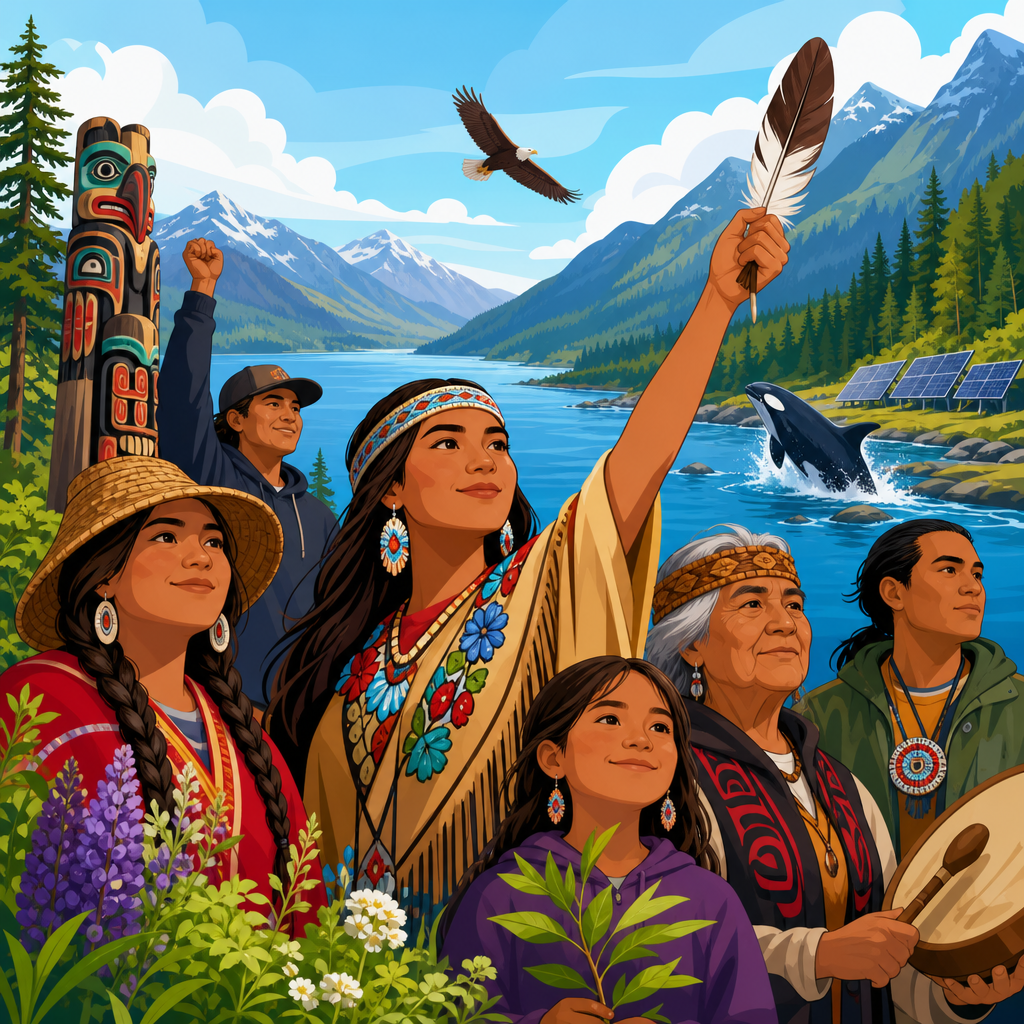
Collaborations between scientists and Indigenous communities are reshaping how environmental policy, conservation, and land stewardship work in practice. At the center of these partnerships is a simple truth: Indigenous peoples hold deep, place-based knowledge developed through long relationships with specific ecosystems, while scientists contribute tools for measurement, modeling, and formal analysis. When these ways of knowing are brought together respectfully, the result is often better ecological understanding and stronger environmental decision-making. This matters especially in the broader field of Indigenous environmental rights, where questions of land tenure, consent, governance, biodiversity protection, climate adaptation, and cultural survival are inseparable.
Indigenous environmental rights refer to the collective and individual rights of Indigenous peoples to maintain relationships with lands, waters, species, and sacred places; to govern traditional territories; to participate in decisions that affect them; and to protect the ecological foundations of their cultures and livelihoods. International standards have clarified these rights. The United Nations Declaration on the Rights of Indigenous Peoples affirms self-determination, free, prior, and informed consent, and rights connected to lands, territories, and resources. The International Labour Organization’s Convention 169, though not universally ratified, also establishes duties around consultation and recognition. In many countries, constitutional law, treaty law, case law, and statutes add further layers of protection, though enforcement remains uneven.
I have seen that the strongest collaborations do not treat Indigenous knowledge as anecdotal data to validate Western science. They start from shared governance, clear consent protocols, and respect for Indigenous law. That distinction is crucial. A wildlife monitoring project, marine protected area plan, or climate resilience strategy can appear collaborative while still extracting knowledge or sidelining community authority. Good partnerships instead address who defines the problem, who owns the information, who benefits from the work, and who decides what happens next. As a hub topic within environmental policy and law, Indigenous environmental rights therefore require both legal literacy and practical understanding of collaboration models that work on the ground.
Why Indigenous environmental rights are central to environmental policy
Indigenous environmental rights are not a niche issue within environmental policy; they are foundational to how land and resource governance operates across much of the world. Indigenous peoples manage or hold tenure rights over significant portions of Earth’s remaining biodiversity-rich areas. Studies frequently cited by the Food and Agriculture Organization, the World Resources Institute, and the Intergovernmental Science-Policy Platform on Biodiversity and Ecosystem Services show that lands governed by Indigenous peoples often maintain equal or better biodiversity outcomes than adjacent protected areas managed solely by states. That pattern is not accidental. It reflects stewardship systems built on reciprocal obligations, seasonal observation, harvesting limits, cultural protocols, and long-term accountability to future generations.
From a legal perspective, environmental rights in Indigenous contexts overlap with human rights, property rights, procedural rights, and cultural rights. A proposed mine, pipeline, dam, logging concession, carbon offset project, or marine zoning rule can trigger all of these at once. If a community is not consulted, consent is not obtained where required, sacred sites are disturbed, or subsistence harvesting is undermined, the issue is not only ecological damage. It is also a rights violation. Courts in Canada, Colombia, New Zealand, Australia, and parts of Latin America have increasingly recognized this connection, although standards and remedies differ by jurisdiction.
For policymakers, this means environmental regulation cannot rely on technical impact assessments alone. It must account for Indigenous jurisdiction, treaty obligations, customary tenure, data sovereignty, language preservation, and cumulative effects. For scientists, it means research design has legal and ethical consequences. Baseline studies can influence permits. Species surveys can affect access restrictions. Climate vulnerability assessments can shape relocation planning or adaptation funding. In other words, collaborations between scientists and Indigenous communities are not peripheral research exercises. They are often upstream drivers of environmental law and policy outcomes.
What effective scientist–Indigenous community collaboration looks like
Effective collaboration begins before fieldwork. The first stage is relationship building, usually led through community leadership, elders, land guardians, resource managers, or tribal environmental departments rather than individual researchers approaching knowledge holders informally. The parties define goals together, identify risks, set communication norms, and establish whether the project should proceed at all. In the most credible models, there is a written research agreement covering consent, compensation, confidentiality, publication review, data storage, intellectual property, and dispute resolution. Principles associated with Indigenous data sovereignty, including OCAP in Canada and CARE internationally, are often used alongside standard research ethics review.
Methodologically, strong projects use braided knowledge systems rather than forcing one framework into another. For example, salmon monitoring may combine Indigenous observations about run timing, water temperature, predator behavior, and spawning habitat with acoustic telemetry, stream gauges, and genetic stock identification. Fire management may combine cultural burning practices with fuel-load analysis, remote sensing, and weather modeling. Coastal mapping may pair oral histories, sea-ice knowledge, and travel routes with GIS, LiDAR, and bathymetric surveys. The scientific tools are valuable, but they are most useful when they answer questions communities actually need answered.
Power sharing is the test that separates partnership from symbolism. If scientists control funding, methods, interpretation, and publication while communities provide access and local knowledge, the collaboration is thin. If communities co-design objectives, hire local field teams, approve outputs, and use findings for their own governance purposes, the collaboration has substance. In my experience, the turning point usually comes when budgets include community staff time, translation, youth training, and long-term monitoring capacity rather than one-off consultation meetings.
| Collaboration element | Weak practice | Strong practice |
|---|---|---|
| Project design | Researchers define questions before contacting the community | Questions are co-developed with leadership and knowledge holders |
| Consent | Individual interviews treated as sufficient permission | Collective consent protocols and community approvals are documented |
| Knowledge use | Traditional knowledge extracted into reports without controls | Use, storage, and sharing rules are governed by agreement |
| Benefits | Short-term data collection with no local capacity built | Training, paid roles, equipment, and lasting monitoring systems remain |
| Decision-making | Scientists interpret results alone | Findings are reviewed jointly and tied to community priorities |
Legal frameworks, consent, and governance in Indigenous environmental rights
The legal backbone of collaboration is consent and governance. Free, prior, and informed consent is often misunderstood as a public meeting followed by a signature. In practice, it requires time, accessible information, culturally appropriate processes, and a genuine ability to say no. “Free” means without coercion or manipulation. “Prior” means before authorization or irreversible activity. “Informed” means communities receive understandable details about risks, benefits, timelines, alternatives, and uncertainties. “Consent” means a decision through the community’s own institutions, not merely stakeholder outreach.
National law may not always require consent in every case, but environmental policy increasingly moves in that direction, especially where Indigenous title, treaty rights, or self-government are recognized. Canadian law, for example, includes a duty to consult and accommodate, while modern treaties and some co-management boards create more specific environmental governance structures. In New Zealand, Treaty of Waitangi principles influence freshwater management and resource decisions. In the United States, tribal sovereignty, federal trust responsibilities, and statutes such as the National Historic Preservation Act create consultation duties, though tribes often argue these remain too procedural and too late in project timelines.
Governance also extends to information. Sensitive ecological knowledge can reveal sacred sites, medicinal plant locations, burial grounds, or species harvesting areas. If mapped carelessly, that information can create new risks from looting, overuse, or state restriction. This is why data governance clauses are not administrative details. They are central rights protections. Many communities now require controlled access databases, restrictions on geolocation precision, and community review before any public release. Scientists who ignore these requirements do not merely create bad relationships; they may compromise cultural heritage and legal claims.
Where collaborations are delivering real environmental results
Real-world collaborations show why this hub topic deserves close attention. In northern Australia, Indigenous ranger programs have combined traditional burning with satellite imagery and fire-scar mapping to reduce late dry season wildfires, protect habitat, and lower emissions. These programs have informed carbon market methodologies and biodiversity management while supporting employment and language continuity on Country. The success comes not from adding Indigenous participation to a standard fire program, but from recognizing cultural fire as a governance practice with measurable ecological benefits.
In the Arctic, Inuit communities have worked with sea-ice scientists to improve travel safety, wildlife monitoring, and climate observation. Community-based monitoring records ice thickness, freeze-up timing, unusual currents, and wildlife distribution in ways that standardized datasets alone often miss. Because Arctic change is rapid and locally variable, this knowledge can materially improve adaptation planning. Similar work in Alaska and northern Canada has shaped infrastructure decisions, emergency response planning, and marine shipping assessments.
Fisheries management offers another strong example. On the Pacific coast of North America, tribal and First Nations fisheries departments have long combined harvest records, habitat surveys, spawning counts, and oral histories to advocate for salmon restoration. In some watersheds, Indigenous guardian and stewardship programs now collect data used in co-management, enforcement, and habitat rehabilitation. These efforts matter legally as well as ecologically, because fisheries are often tied to treaty rights and food sovereignty. Data generated through collaboration can support stronger habitat protections, challenge underestimation of cumulative impacts, and guide restoration spending to places communities prioritize.
Collaborations also matter in protected areas. Fortress conservation models that exclude Indigenous peoples have repeatedly failed both ethically and ecologically. In response, Indigenous Protected and Conserved Areas, tribal parks, and co-managed reserves are gaining traction. These models align biodiversity goals with Indigenous jurisdiction rather than displacing it. Scientists contribute biodiversity inventories, invasive species analysis, and monitoring protocols, but governance authority remains central. Where this works well, conservation is not imposed on a landscape; it is carried out through long-standing stewardship systems.
Challenges, risks, and the standards that improve outcomes
Not every collaboration succeeds, and it is important to be candid about common failures. Token consultation remains widespread. Communities are often approached after funding is secured and research questions are fixed. Timelines may ignore seasonal harvesting, ceremony periods, or governance processes. Academic incentives reward publication speed, while communities may need slower review and collective discussion. There can also be internal complexity within communities, including differences among elders, elected leaders, hereditary leaders, youth, and technical staff. Outsiders who treat Indigenous communities as politically uniform usually make avoidable mistakes.
Another recurring problem is epistemic imbalance. Scientists may claim to integrate knowledge systems while privileging only data that fit conventional models or peer-reviewed formats. Oral histories, qualitative observations, or spiritually grounded stewardship rules can be recast as cultural background rather than evidence. That weakens both justice and analysis. In environmental assessment, cumulative effects are a classic example. Community members may describe gradual losses in access, species abundance, language use, and ceremonial practice that are real impacts but poorly captured by narrow project-by-project metrics. Better collaborations expand the frame instead of trimming community evidence to fit existing templates.
Several standards and tools help improve practice. Community-based participatory research offers a well-developed approach to shared design and benefit. Indigenous research methodologies provide guidance on relational accountability and reciprocity. For spatial information, participatory GIS can be useful when paired with strong data controls. For biodiversity and climate work, co-production frameworks, guardian programs, and long-term monitoring agreements are especially effective. The practical lesson is consistent: collaborations are strongest when rights, governance, and funding are designed into the project from the start rather than added as ethics language after methods are chosen.
How this hub connects the wider Indigenous environmental rights landscape
As a hub within environmental policy and law, collaborations between scientists and Indigenous communities connect to every major issue in Indigenous environmental rights. Land rights and title determine who has authority over territory. Consultation and consent shape project approval. Cultural heritage law affects sacred sites and knowledge protection. Water law influences access, allocation, and pollution standards. Climate policy affects adaptation finance, relocation, and carbon projects. Conservation law determines whether Indigenous stewardship is recognized or displaced. Environmental justice ties all of this to health, livelihoods, and political power.
The practical value of this topic is that collaboration often becomes the mechanism through which rights are either respected or undermined. A well-designed partnership can produce stronger evidence for tribal water claims, habitat restoration, cumulative effects assessment, wildfire resilience planning, or protected area governance. A poorly designed one can legitimize extraction, expose sensitive knowledge, and create the appearance of consultation without actual authority. Anyone working in environmental policy, law, science, philanthropy, or advocacy should therefore treat collaboration not as a soft skill, but as institutional design with legal consequences.
The clearest takeaway is simple: Indigenous environmental rights are strongest when collaboration is grounded in consent, co-governance, and long-term stewardship rather than one-way knowledge extraction. Scientists bring valuable tools, but durable environmental outcomes depend on respecting Indigenous authority, legal rights, and knowledge systems on their own terms. If you are building policy, designing research, or evaluating a project, start with governance, ask who decides, and follow the standards that communities set.
Frequently Asked Questions
What do collaborations between scientists and Indigenous communities actually involve?
These collaborations bring together two valuable knowledge systems to better understand and care for the environment. Indigenous communities often hold generations of place-based knowledge about local ecosystems, seasonal patterns, wildlife behavior, fire regimes, water flows, and land stewardship practices. Scientists contribute methods such as field monitoring, data analysis, mapping, laboratory testing, and predictive modeling. When these strengths are combined, the partnership can produce a more complete picture of ecological change than either approach could provide alone.
In practice, collaboration can take many forms. It may include co-designing research questions, jointly collecting environmental data, integrating oral histories with climate records, developing conservation plans, or shaping policy recommendations together. Strong partnerships typically go beyond simply “consulting” Indigenous communities. They involve shared decision-making, respect for Indigenous governance, clear agreements about data ownership and consent, and recognition that Indigenous knowledge is not just a source of information but a living system tied to culture, responsibility, and relationship with the land.
Why is Indigenous knowledge so important in environmental science and conservation?
Indigenous knowledge is important because it is rooted in long-term observation of specific places. Many Indigenous communities have maintained close relationships with their lands and waters over centuries, noticing subtle changes in animal migration, plant health, weather patterns, soil conditions, and ecosystem balance. This depth of local insight can reveal patterns that short-term scientific studies may miss, especially in remote or rapidly changing environments.
It also matters because it often includes practical stewardship strategies developed through experience. Controlled burning, seasonal harvesting rules, watershed care, habitat protection, and species monitoring are just a few examples of practices that have supported ecological resilience over time. In conservation, this means Indigenous knowledge can improve management decisions, help identify early signs of environmental stress, and support more adaptive policies. Rather than being treated as secondary to science, it is increasingly recognized as essential for understanding ecosystems in a fuller, more grounded way.
How can scientists work respectfully with Indigenous communities?
Respectful collaboration begins with relationship-building, not data collection. Scientists need to approach communities with humility, patience, and a willingness to listen. That means recognizing Indigenous nations and communities as rights holders and knowledge holders, not just stakeholders in a project. Researchers should seek free, prior, and informed consent, learn local protocols, and involve community leaders, Elders, and knowledge keepers from the beginning of the work.
Respect also requires practical commitments. Research goals should be developed together, benefits should be shared, and communities should have a meaningful role in interpreting results and deciding how information is used. Issues like intellectual property, confidentiality, cultural sensitivity, and data sovereignty must be addressed clearly. In many successful partnerships, community members are hired as research partners, youth are included in training opportunities, and findings are returned in forms that are useful locally, not only in academic publications. The core principle is that collaboration should strengthen community priorities rather than extract knowledge for outside institutions.
What are the main benefits of combining Indigenous knowledge with scientific methods?
The biggest benefit is better decision-making. Scientific tools can measure trends, test hypotheses, and model future scenarios, while Indigenous knowledge offers context, history, and fine-scale understanding of how a place functions over time. Together, they can improve environmental monitoring, restoration efforts, wildlife management, climate adaptation planning, and conservation policy. This combined approach often leads to solutions that are both more accurate scientifically and more practical on the ground.
Another major benefit is resilience. Environmental challenges such as biodiversity loss, wildfires, drought, and climate change are complex, and they rarely respond well to one-size-fits-all strategies. Collaborative approaches can produce responses that are more locally tailored and socially legitimate. They also help build trust between institutions and communities, support cultural continuity, and create opportunities for intergenerational learning. In many cases, these partnerships do more than improve research outcomes; they help reshape environmental governance so that it reflects both evidence and lived responsibility to place.
What challenges can arise in these partnerships, and how can they be addressed?
One common challenge is unequal power. Academic institutions and government agencies often control funding, timelines, publication systems, and policy access, which can leave Indigenous communities with limited influence unless the partnership is intentionally structured to be equitable. Another challenge is the history of extractive research, where outside experts took knowledge, samples, or data without proper consent or benefit to the community. This legacy can create understandable mistrust and means that strong collaboration must be earned, not assumed.
There can also be differences in communication styles, priorities, timelines, and ways of validating knowledge. Scientific institutions may favor written documentation and standardized methods, while Indigenous knowledge may be shared orally, relationally, and in ways that are not meant for public disclosure. Addressing these challenges requires clear agreements, long-term commitment, cultural competency, and shared governance over the project. It also requires recognizing that not all knowledge should be translated into scientific terms to be respected. The strongest partnerships are those that protect Indigenous authority, value different ways of knowing on their own terms, and create structures where collaboration is genuinely reciprocal.