Environmental violations often come to light because ordinary residents notice a foul discharge, illegal dumping, excessive smoke, fish kills, or land clearing that does not look right. Knowing how citizens can report environmental violations matters because agencies depend on timely, credible public information to enforce environmental policy and law. In practice, I have seen community complaints trigger inspections, sampling, permit reviews, and, in serious cases, civil penalties or criminal investigations. A well-documented report can protect drinking water, air quality, wildlife habitat, and public health far faster than waiting for a scheduled inspection.
An environmental violation is conduct that breaks a statute, regulation, permit condition, consent order, or local ordinance designed to protect natural resources or human health. Common examples include unauthorized wastewater discharges, hazardous waste mismanagement, open burning, asbestos mishandling, illegal wetland filling, stormwater runoff from construction sites, and releases from underground storage tanks. Reporting does not require a law degree. It requires accurate observation, basic documentation, and knowing which agency has jurisdiction. In the United States, that may involve the Environmental Protection Agency, a state environmental department, a county health department, a local code office, or a wildlife agency.
This hub article explains EPA and government agencies in the context citizens need most: who regulates what, when to call local officials first, what information agencies need to act, how anonymous complaints work, and what happens after a report is filed. It also addresses a common question: should you call 911? If there is an immediate threat to life, a fire, an explosion, acute chemical exposure, or a dangerous spill on a roadway or into a water supply, emergency services come first. For nonemergency violations, the most effective reports are specific, factual, and routed to the right office on the first attempt.
Citizens also need realistic expectations. Agencies do not investigate every complaint the same way. Response time depends on severity, evidence, jurisdiction, staffing, and whether the issue is ongoing or historic. Some matters are resolved quickly through a warning notice or permit correction. Others require chain-of-custody sampling, records review, and multiple site visits. The good news is that residents can materially improve the odds of action by documenting conditions carefully and understanding the roles of federal, state, tribal, and local regulators before making the report.
Which agencies handle environmental complaints
The EPA is the best-known environmental regulator, but it is not the only one and often not the first responder. Most day-to-day enforcement in delegated programs is handled by state agencies. Under federal environmental statutes such as the Clean Water Act, Clean Air Act, Resource Conservation and Recovery Act, and Safe Drinking Water Act, states can receive authority to run permitting and enforcement programs that meet federal standards. That means a complaint about air emissions from a factory may be handled by a state department of environmental protection, while a drinking water concern may go to a state primacy agency or local water utility regulator.
Local governments also matter. County health departments often respond to septic failures, illegal dumping affecting neighborhoods, nuisances involving sewage, and some public health threats. Municipal stormwater departments may investigate illicit discharges to storm drains. Fire departments or hazardous materials teams may handle immediate spill response. Building departments may enforce asbestos rules during demolition or dust controls on construction sites. Wildlife agencies may address illegal destruction of habitat, poaching-related pollution, or protected species impacts. On tribal lands, tribal environmental departments may be the primary authority, sometimes alongside federal agencies depending on program status and treaty or jurisdictional considerations.
When citizens ask where to report environmental violations, the practical answer is to match the problem to the regulated medium or activity. Air complaints involve smoke, odors, particulate matter, opacity, open burning, and stack emissions. Water complaints involve discharges to rivers, lakes, wetlands, drains, and groundwater. Waste complaints involve trash, hazardous waste, medical waste, used oil, and illegal disposal. Land use complaints may involve wetlands, stream buffers, erosion, sediment control, and protected habitat. If you are unsure, start with the state environmental agency complaint line or EPA regional office directory, then ask for the exact program office.
How to identify the violation before you report it
You do not need to prove a violation, but you should separate observations from assumptions. Agencies act faster when a complaint states what was seen, heard, smelled, or photographed and avoids speculation about motives. For example, “milky discharge entering the creek from an outfall behind 214 River Road at 8:15 a.m.” is stronger than “the company is poisoning the stream.” Useful identifiers include the facility name, street address, nearest intersection, permit number if visible, outfall label, truck number, business hours, and whether the conduct is ongoing, intermittent, or one-time.
Time is critical. Inspectors want the date and time because some violations occur only during rain events, overnight shifts, or maintenance activities. In stormwater cases, muddy runoff from a construction site may be visible only during active rainfall. In air cases, opacity violations may occur during startup or shutdown. In waste cases, illegal dumping often happens at predictable times. I have seen otherwise strong complaints stall because the report lacked a time window or clear location. A pin dropped on a map, a nearby landmark, and the direction of flow or wind can make the difference between an actionable lead and an unverified allegation.
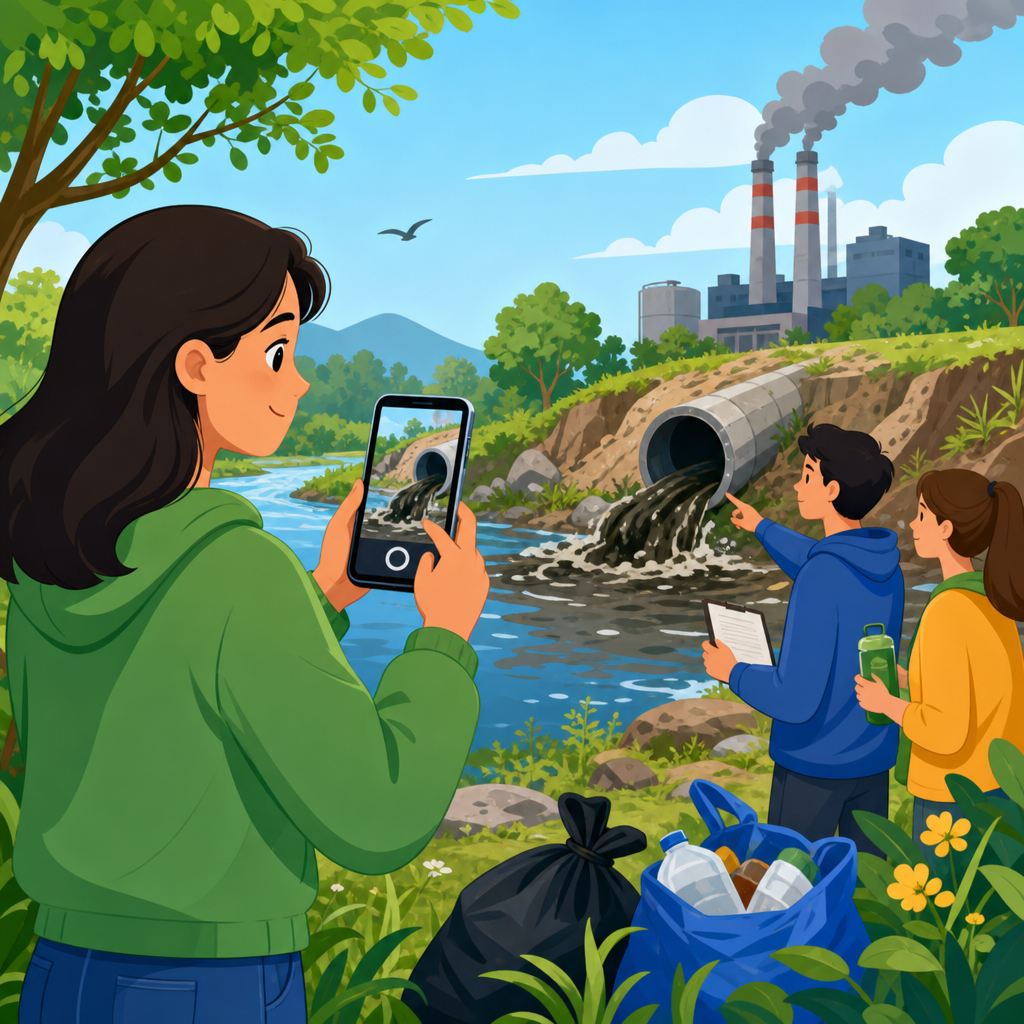
Photos and video help, but they must be gathered safely and legally. Stay off private property unless you have permission, and never put yourself near chemicals, unstable ground, smoke plumes, or moving equipment. Do not collect samples unless you are trained and authorized; improperly handled samples can be unsafe and usually are not usable for enforcement. Instead, document visible conditions from a public place, note weather, and preserve original files with timestamps. If there is an odor, describe it plainly, such as sulfur, solvent, sewage, petroleum, or rotten eggs, rather than simply saying “bad smell.”
What information agencies need to act
The strongest environmental complaint contains five elements: who, what, where, when, and impact. Agencies need the suspected violator, the activity, the exact location, the timing, and the observed or potential harm. Include whether pollutants reached a storm drain, creek, wetland, roadside ditch, school, home, well, or park. If people experienced symptoms such as dizziness, eye irritation, breathing trouble, headaches, nausea, or skin burns, say so and indicate whether medical care was sought. Health symptoms do not prove causation, but they help agencies assess urgency and coordinate with health officials.
Contact information increases the chance of follow-up. Anonymous reports are accepted by many agencies, especially through hotlines, but unnamed complaints can be harder to verify because investigators cannot ask clarifying questions. If retaliation is a concern, ask whether your identity can be kept confidential under state public records rules or whistleblower protections. Some records may still become disclosable later, particularly in litigation. Workers reporting violations by an employer should consider occupational safety and whistleblower channels as well, including the U.S. Department of Labor where retaliation statutes apply.
| Complaint element | What to include | Why it matters |
|---|---|---|
| Location | Street address, GPS pin, outfall number, nearest landmark | Lets inspectors find the source quickly |
| Timing | Date, exact time, duration, weather conditions | Helps verify intermittent or rain-related violations |
| Activity | Discharge, dumping, burning, excavation, storage, transport | Routes the complaint to the correct program office |
| Evidence | Photos, video, notes, license plate, visible color or odor | Supports probable cause for inspection |
| Impact | Affected creek, well, neighborhood, school, wildlife, symptoms | Determines urgency and enforcement priority |
If the source may be federally regulated, mention any known permit or program details. Examples include a National Pollutant Discharge Elimination System permit for wastewater or stormwater, a Title V air permit, a hazardous waste generator identification number, or a public water system identification number. Citizens can often find these through state databases, EPA ECHO, local planning records, or signs posted at construction entrances. Naming a permit is not required, but it signals that the report is informed and may help the agency cross-check compliance history, self-monitoring reports, and prior violations.
How to report to EPA, state, and local agencies
For most nonemergency complaints, start with the state environmental agency’s online complaint portal or enforcement hotline because states handle many delegated programs directly. Use EPA when the issue involves a federal facility, multi-state impacts, tribal or cross-jurisdictional concerns, a program the state does not run, or when you believe a state response is inadequate. EPA regional offices maintain complaint pathways, and the national Environmental Violations and other tips channels can route information internally. Local agencies are often the fastest option for sewage backups, illegal dumping in neighborhoods, and storm drain discharges within city systems.
Choose the reporting method based on urgency and complexity. Phone calls work best for active releases, fish kills, visible dumping in progress, strong odors, or any condition likely to disappear quickly. Online forms are better for organized submissions with photos and a full chronology. Email can be useful when an agency contact has already requested supplemental documentation. Keep your complaint concise but complete. One clear page of facts with attached images is better than a long narrative without dates or locations. If multiple agencies may have jurisdiction, submit parallel reports and note that you have done so.
After submission, save the complaint number, the date, and the office contacted. Ask whether the issue has been assigned to an inspector and whether additional information is needed. Some agencies will not share much during an open investigation, but they can often confirm receipt. If there is no response within a reasonable period and the issue is ongoing, follow up politely with the complaint number and a short update. Repeated, documented reports about the same recurring problem can build a stronger enforcement record than one broad complaint made without details.
What happens after a citizen files a complaint
Once a report is received, the agency usually triages it by risk and jurisdiction. Immediate threats may be referred to emergency response staff, local hazmat units, or the National Response Center for oil and hazardous substance releases. Other complaints are screened to determine whether the alleged activity falls under a permit, a rule, or another agency’s authority. Inspectors may review maps, aerial imagery, discharge monitoring reports, self-reported emissions data, prior inspection files, or complaint history before visiting the site. In some programs, agencies must document why a complaint was closed without inspection.
An investigation can include a site inspection, interviews, record requests, sampling, and photographs. Inspectors may look for permit exceedances, unpermitted activities, poor housekeeping, missing secondary containment, failed erosion controls, or bypass lines. If a violation is confirmed, the response can range from a notice of violation to an administrative order, penalty, supplemental environmental project where authorized, permit modification, injunctive relief, or referral for civil or criminal enforcement. Serious knowing violations, false statements, and concealment can escalate matters quickly. Most cases, however, are resolved through compliance orders that require correction and proof of completion.
Citizens often ask whether they will be told the outcome. Policies vary. Some agencies provide closure letters or inspection summaries, while others release information only through public records systems, online enforcement databases, or permit files. EPA’s ECHO database can help track certain facilities, permits, inspections, and enforcement histories, though it does not capture every local action. State agency websites may post notices of violation, consent orders, and settlement agreements. If the matter affects a neighborhood, local public meetings, water board agendas, or planning commission records can also reveal how the issue was resolved.
Special cases: spills, environmental justice, and repeat offenders
Some complaints deserve special handling. Oil sheens, chemical releases, pipeline incidents, train derailments, and major hazardous substance spills may need immediate reporting to 911, the state spill line, and the National Response Center. Fish kills should be reported quickly to state environmental or wildlife agencies because evidence degrades fast. Drinking water contamination concerns may require contacting the utility, state drinking water program, and local health department on the same day. Suspected lead exposure, asbestos disturbance, or mold in public housing may also trigger housing, labor, school, or health agency involvement beyond environmental regulators alone.
Environmental justice concerns arise when pollution burdens fall repeatedly on communities already facing cumulative impacts, language barriers, limited transportation, or health disparities. In those cases, reporting should include details about nearby homes, schools, clinics, and sensitive populations such as children, older adults, and people with asthma. Agencies increasingly use screening tools and cumulative impact frameworks to prioritize inspections in overburdened areas. Community groups can strengthen a complaint by filing coordinated observations, requesting language access, and documenting patterns over time rather than isolated events. A recurring odor near a school bus stop is not merely a nuisance; it can become a documented exposure concern.
Repeat offenders require persistence and organized records. If the same facility has multiple odor episodes, sediment discharges, or waste handling problems, maintain a log with dates, times, weather, photos, and prior complaint numbers. Consistent logs reveal patterns that single incidents do not. Public records requests can uncover past notices of violation, permit limits, and compliance schedules, which help residents ask better questions. If agency action appears stalled, citizens can escalate through ombuds offices, elected representatives, public comment periods, or, in limited situations, citizen suit provisions under environmental statutes after meeting legal notice requirements and consulting qualified counsel.
Citizens play a practical enforcement role when they report environmental violations accurately, promptly, and to the right agency. The core steps are simple: observe carefully, document facts, identify the location, choose the agency with jurisdiction, and follow up with your complaint number. EPA and government agencies work best when the public provides usable information, especially for problems that inspectors are unlikely to witness during routine visits. Strong reports do not need technical jargon, but they do need specificity, timing, and evidence gathered safely from lawful vantage points.
The main benefit of understanding this process is that it turns concern into action. Instead of assuming someone else will notice polluted runoff, illegal dumping, smoke, or a suspicious spill, residents can trigger the formal systems designed to investigate and correct those harms. That matters for neighborhoods, streams, schools, drinking water sources, and wildlife habitat. It also improves accountability because recurring complaints create records that agencies, courts, journalists, and communities can review over time. Better reporting leads to better enforcement, and better enforcement prevents avoidable damage.
If you see a possible environmental violation, document what you can safely observe and report it today to the appropriate local, state, or federal office. Save the case number, keep a simple log, and encourage neighbors to report their own observations rather than relying on a single complaint. As a hub within Environmental Policy & Law, this page gives you the framework to act; the next step is using it when a real-world problem appears in front of you.
Frequently Asked Questions
What kinds of environmental violations can citizens report?
Citizens can report a wide range of suspected environmental violations, especially when something appears unsafe, unlawful, or clearly out of the ordinary. Common examples include illegal dumping of trash, chemicals, oil, sewage, or construction debris; unusual discharges into storm drains, creeks, rivers, lakes, or wetlands; excessive smoke, dust, odors, or visible air emissions from a facility; fish kills or distressed wildlife; unauthorized land clearing, dredging, or filling near protected waters; and hazardous materials being stored or handled improperly. Residents may also notice violations related to noise, open burning, leaking fuel tanks, spills from trucks or industrial sites, and work occurring without visible erosion controls at construction sites.
It is important to remember that citizens do not need to prove a violation before making a report. Environmental agencies are responsible for determining whether the activity violates a permit, regulation, or statute. What matters most is that the report is made in good faith and includes specific observations. If something looks wrong, smells unusual, creates visible pollution, or causes harm to land, air, water, or wildlife, it is generally worth reporting. Timely public reports often help agencies investigate faster and prevent additional damage.
What information should I gather before reporting an environmental violation?
The most useful reports are clear, factual, and specific. Before contacting an agency, gather as much objective information as you safely can. That typically includes the exact location of the suspected violation, the date and time you observed it, what you saw, smelled, or heard, how long it lasted, and whether it appears ongoing or repeated. If possible, note nearby landmarks, street addresses, GPS coordinates, business names, license plate numbers, vehicle descriptions, weather conditions, and the direction a discharge, smoke plume, or odor was moving.
Photos and videos can be especially valuable when they are taken legally and safely from a place you are allowed to be. Write down your observations as soon as possible so details are not forgotten. If other people witnessed the same event, note that as well. However, do not trespass, approach hazardous materials, touch unknown substances, or place yourself in danger to collect evidence. Agencies would rather receive a prompt report with basic accurate details than a delayed report because someone tried to investigate beyond what was safe. Good documentation helps inspectors decide whether to conduct a site visit, collect samples, review permits, or coordinate with emergency responders.
Where should I report an environmental violation?
The right place to report depends on the type of incident and how urgent it is. If there is an immediate threat to health or safety, such as a major chemical spill, active fire, explosion risk, strong toxic fumes, or a spill entering a drinking water source, call emergency services first. For non-emergency environmental complaints, reports are often made to a state environmental protection agency, a local health department, a county environmental office, a city code enforcement department, or a specialized pollution hotline. Some issues, such as illegal filling of wetlands, discharges into navigable waters, or pesticide misuse, may also fall under federal agency jurisdiction.
Many agencies now offer multiple reporting channels, including online complaint forms, hotlines, email addresses, and mobile apps. If you are unsure which agency has authority, start with the state environmental regulator or local government office and ask for referral guidance. It is usually better to report to one credible agency promptly than to delay while trying to identify the perfect office. Agencies regularly route complaints internally or to partner agencies when needed. In more serious cases, one citizen report can trigger coordination among environmental inspectors, public health officials, wildlife authorities, and law enforcement.
Can I report anonymously, and will the agency keep my identity confidential?
In many jurisdictions, citizens can report environmental violations anonymously, but policies vary by agency. Anonymous reports are often accepted through hotlines or web forms, especially when the goal is to alert inspectors quickly. That said, providing your name and contact information can make the report more effective because investigators may need follow-up details, clarification about timing, or help identifying the exact location. A report with a reachable witness can be easier to verify and may carry more practical value during an inspection.
Confidentiality is more complicated. Some agencies will try to protect complainant information to the extent allowed by law, but records may still become subject to public records requests, litigation, or enforcement proceedings. If confidentiality is important to you, ask the agency directly how complaint information is handled before submitting sensitive details. In workplace or landlord-related situations, people sometimes worry about retaliation. In those cases, documenting facts carefully and asking about anonymous or confidential reporting options is especially important. The key is to make an informed choice: anonymity may reduce follow-up opportunities, while identified reports may strengthen the investigation.
What happens after I file a report, and should I follow up?
After a report is filed, the receiving agency typically reviews the complaint, assesses the level of urgency, and determines whether the issue falls within its jurisdiction. Depending on the circumstances, officials may log the complaint, compare it against permits or prior violations, conduct a site inspection, take photographs, interview witnesses, collect water or soil samples, inspect records, or coordinate with other agencies. If the evidence supports enforcement, the outcome may range from a warning notice or required cleanup to permit action, administrative orders, civil penalties, or, in severe cases, criminal investigation.
Not every complaint leads immediately to visible action, and that does not necessarily mean the report was ignored. Some investigations take time, particularly when sampling, technical review, or legal process is involved. It is a good idea to keep a copy of what you submitted, note any complaint or case number, and follow up if the problem continues or worsens. Continued observations can be useful, especially if the violation is recurring. Effective citizen reporting is not about making legal conclusions; it is about giving agencies timely, credible information they can act on. In many real-world situations, that initial public complaint is what starts the inspection and enforcement process.