
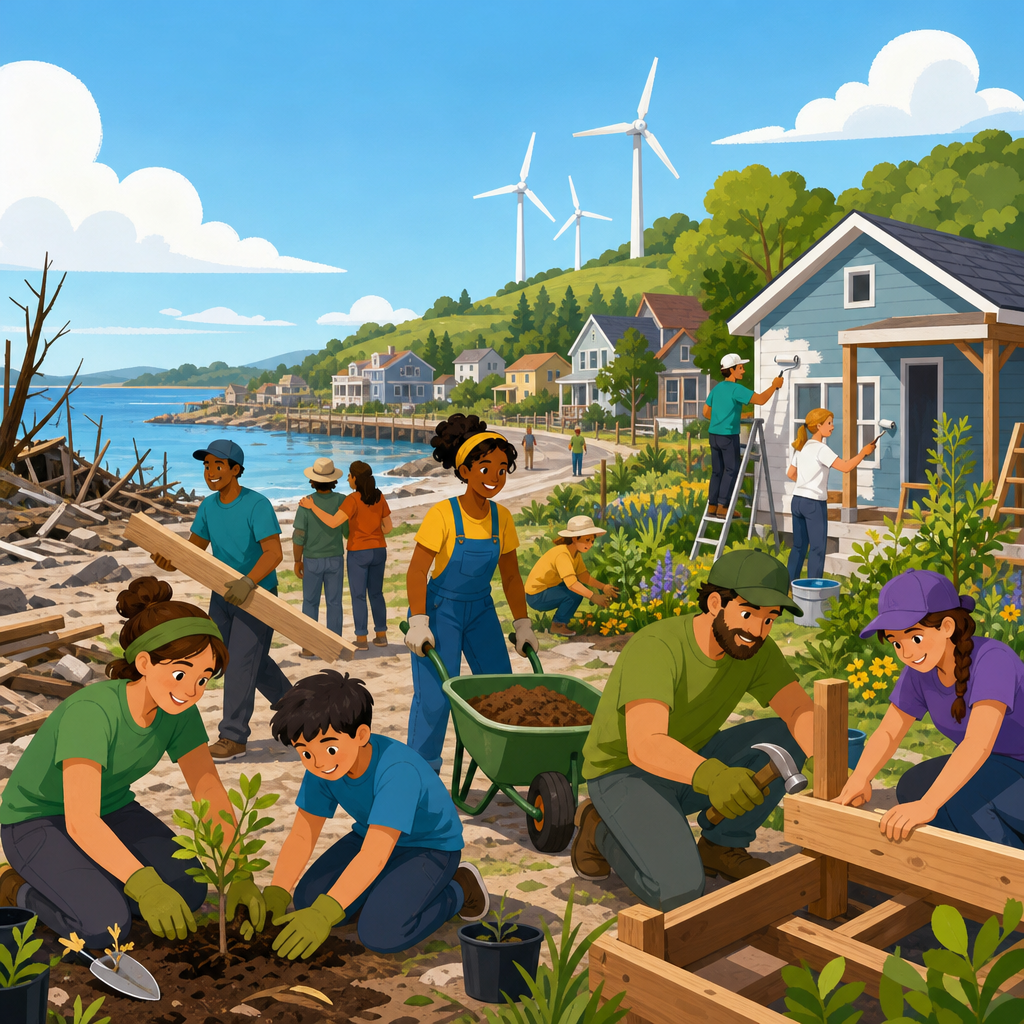
Environmental catastrophes do not end when floodwaters recede, smoke clears, or emergency crews leave. The harder phase begins afterward, when residents, local governments, insurers, engineers, health workers, and community groups must decide how to restore homes, livelihoods, ecosystems, and trust. Recovery and resilience efforts are the coordinated actions that help a community move from immediate survival to long term stability while reducing the damage from the next disaster. In practice, that means repairing critical infrastructure, replacing housing, restoring schools and clinics, reopening businesses, rebuilding wetlands and forests, and strengthening the social networks that hold daily life together.
I have worked on disaster recovery planning sessions where the first public meeting was packed with people asking the same urgent questions: Who pays for rebuilding, how long will it take, and how do we avoid repeating the same losses? Those questions define the subject. Communities rebuild after environmental catastrophes through a mix of emergency relief, public funding, insurance, local leadership, technical planning, and persistent resident participation. The process matters because environmental disasters are increasing in cost and complexity. Heat waves strain power grids, wildfires destroy entire neighborhoods, storms overwhelm drainage systems, and drought reshapes regional economies. A community that rebuilds poorly can lock in future risk; a community that rebuilds well can emerge safer, healthier, and more economically secure.
This hub article explains recovery and resilience efforts comprehensively. It covers the stages of rebuilding, the institutions involved, the funding sources that make projects possible, and the practical decisions that shape outcomes on the ground. It also addresses common tradeoffs. Fast rebuilding is important, but speed alone can reproduce vulnerability. Retreat from high risk areas can save lives, yet it can also disrupt culture, property values, and tax bases. Gray infrastructure such as levees and seawalls can protect urban cores, while nature based solutions such as dunes, marshes, floodplains, and urban tree canopies often provide broader benefits at lower long term cost. Effective recovery is never one project. It is a portfolio of choices made over years, guided by evidence, public accountability, and a clear understanding of local conditions.
The first phase: stabilization, damage assessment, and clear governance
The first rebuilding phase starts before debris is fully removed. Communities need a stabilization period that restores basic services and establishes a decision structure. Emergency shelters, potable water, temporary clinics, waste collection, road access, and power restoration are immediate priorities. At the same time, officials begin rapid damage assessment, typically using field inspections, satellite imagery, utility data, and geospatial mapping. Accurate assessments matter because they determine eligibility for aid, influence insurance claims, and guide where temporary resources should go first.
Good governance in this stage is simple but decisive. Someone must own the recovery process, define lines of authority, publish timelines, and communicate in plain language. In the United States, local emergency management offices often coordinate with FEMA, state agencies, school districts, public works departments, and nonprofit partners. Internationally, equivalent roles may be handled by municipal governments, civil defense agencies, or ministries of public works. The lesson is universal: fragmented leadership slows rebuilding. When residents hear conflicting messages about permits, debris removal, or relocation options, distrust grows and participation falls.
Successful communities create recovery task forces early and include technical experts alongside neighborhood representatives. After Hurricane Sandy, several municipalities combined hazard mapping with public workshops to identify where rebuilding should be elevated, hardened, or redirected. After major wildfire seasons in California, counties that set up one stop permit centers reduced confusion for homeowners navigating inspections, ash cleanup, septic review, and utility reconnection. A stable governance framework does not solve every problem, but it gives recovery a visible spine.
Housing recovery determines whether a community actually returns
Housing is usually the central bottleneck in disaster recovery. If people cannot return safely and affordably, schools lose enrollment, businesses lose customers, employers lose workers, and municipal revenues weaken. The challenge is not only rebuilding units; it is rebuilding the right mix of owner occupied housing, rentals, workforce housing, and temporary options for displaced residents. In many disasters, lower income renters face the longest displacement because aid systems are often easier to navigate for insured homeowners than for tenants with limited savings.
Permanent housing recovery works best when inspections, financing, and code requirements are coordinated. Elevation standards in flood zones, ignition resistant materials in wildfire areas, and wind resistant roof connections in hurricane regions can sharply cut future losses. The International Building Code and International Residential Code provide recognized baselines, but local adaptation is essential. A coastal city may prioritize freeboard and flood vents, while a mountain town recovering from fire may require ember resistant vents, defensible space, and hardened eaves.
Real world examples show the stakes. After the 2018 Camp Fire in Paradise, California, rebuilding was slowed by debris removal logistics, contractor shortages, and insurance gaps, but updated standards for fire resistant construction became part of the path forward. After repeated flooding in the U.S. Midwest, some towns used voluntary buyouts to move households out of the highest risk areas and convert land to open space. That approach reduces repetitive losses, yet it requires careful design so residents are not scattered without support. Housing recovery is not complete when walls go up. It is complete when households can return, remain, and recover financially.
Infrastructure recovery should restore service and reduce future risk
Infrastructure is the skeleton of community recovery. Roads, bridges, transit lines, power systems, water treatment plants, sewers, telecommunications, schools, and hospitals all influence whether residents can resume daily life. Rebuilding damaged infrastructure to its previous condition may be politically tempting because it appears faster. In practice, that approach often recreates the same failure points. Strong recovery programs use hazard data, lifecycle costing, and redundancy planning to rebuild systems that can withstand future shocks.
Consider drinking water systems after floods or wildfires. Floods can contaminate wells and treatment facilities with sewage, sediment, and chemicals. Wildfires can damage plastic service lines and create volatile organic compound contamination in distribution networks. Rebuilding requires more than repair crews. It may involve source testing, pipe replacement, backflow prevention, backup generators, and revised emergency operating procedures. Similar principles apply to electric grids. Utilities increasingly harden substations, underground selected lines, add sectionalizing devices, and improve vegetation management because restoration speed alone is not enough.
Nature based infrastructure belongs in the same conversation as concrete and steel. Restored wetlands can absorb storm surge, permeable pavement can reduce urban runoff, urban forests can lower heat stress, and floodplain reconnection can ease pressure on levees. The U.S. Army Corps of Engineers, NOAA, and many regional water authorities now incorporate these methods because they provide co benefits such as habitat, recreation, and water quality. Communities rebuild more intelligently when infrastructure planning considers performance during the next event, not just replacement cost after the last one.
Money, timelines, and accountability shape every recovery effort
Funding is often the difference between a recovery plan on paper and a rebuilt community on the ground. Most projects rely on blended financing: insurance payouts, household savings, philanthropy, local capital budgets, state grants, national disaster funds, and development bank or bond financing for large public works. The challenge is that each source follows different rules, timelines, and documentation standards. Delays are common when households lack clear title, businesses cannot prove interruption losses, or local governments do not have the staff capacity to manage grant compliance.
Experienced recovery managers build administrative capacity as aggressively as they build structures. Grant management software, procurement controls, public dashboards, and independent audits are not bureaucratic extras; they are core recovery tools. Residents need to see what has been funded, what is delayed, and why. This is especially important after high profile disasters, when public skepticism about contracting, aid distribution, and political favoritism can undermine cooperation.
| Recovery component | Typical funding sources | Main risk if mishandled |
|---|---|---|
| Home repair and rebuilding | Insurance, grants, low interest loans, savings | Unequal access and long displacement |
| Public infrastructure | Municipal budgets, national aid, bonds, utilities | Rebuilding old vulnerabilities |
| Business recovery | Credit lines, grants, insurer payouts, tax relief | Permanent local job loss |
| Ecosystem restoration | Conservation funds, mitigation grants, philanthropy | Short term fixes without resilience gains |
Timelines must also be realistic. Debris removal may take months, housing years, and watershed or coastal restoration even longer. Communities that publish phased milestones generally retain more public trust than those promising rapid completion without a credible delivery plan.
Public health, mental health, and social cohesion are part of rebuilding
Disaster recovery is often framed as a construction problem, but it is equally a health and social recovery process. Environmental catastrophes leave behind mold exposure, smoke inhalation, contaminated water, heat stress, disrupted medication access, and chronic stress. Mental health impacts can persist for years, especially among children, older adults, first responders, and people who lost homes or family members. Rebuilding efforts that ignore these effects produce weaker long term outcomes, even if physical reconstruction appears successful.
Community health recovery starts with continuity of care. Clinics need backup records, temporary facilities, and mobile outreach. Public health departments need clear risk communication about boil water notices, ash exposure, debris burning, food safety, and vector control. After major floods, for example, standing water increases mosquito breeding and damaged homes create mold risks that can worsen asthma. After wildfires, fine particulate pollution can trigger cardiovascular and respiratory illness far beyond the burn zone.
Social cohesion matters just as much. In practice, neighborhoods recover faster when residents know one another, trust local institutions, and can organize mutual aid. Faith groups, tenant associations, volunteer networks, and schools often become recovery anchors because they already have relationships that government agencies must build from scratch. I have seen recovery meetings become dramatically more productive when officials stop treating residents as passive recipients and start involving them in prioritization, design review, and outreach. The result is better information, fairer decisions, and stronger compliance with difficult measures such as relocation or zoning changes.
Economic recovery depends on jobs, small businesses, and local institutions
A community is not rebuilt when structures are repaired but the local economy remains hollowed out. Employers need workers to return, and workers need homes, transport, childcare, and reliable utilities. Small businesses are especially vulnerable because they often operate with thin cash reserves, limited insurance coverage, and heavy dependence on local foot traffic. If they close permanently, residents lose services and municipalities lose sales tax revenue, which then weakens public recovery capacity.
Strong economic recovery plans focus on both business continuity and economic diversification. Immediately after a disaster, bridge loans, payroll support, temporary commercial space, and expedited permitting can keep firms alive. Over the longer term, communities benefit from reducing dependence on a single exposed industry. A town reliant on tourism, timber, fishing, or one major industrial employer may need workforce retraining, supply chain adaptation, and targeted redevelopment incentives after a catastrophe changes local conditions.
Examples are instructive. Coastal communities hit by severe storms often pair waterfront protection with downtown revitalization grants so restaurants, repair shops, and service businesses can reopen quickly. Agricultural regions recovering from drought may invest in water efficient irrigation, crop switching, groundwater monitoring, and value added processing to preserve income. Economic recovery is not separate from resilience. It is resilience, because a broader and more adaptable local economy can absorb future shocks with less social damage.
Long term resilience means land use reform, ecosystem restoration, and continuous learning
The final stage of rebuilding is not really final. Long term resilience is an ongoing commitment to safer land use, stronger institutions, and routine adaptation as climate risks evolve. This is where communities decide whether to rebuild in place, elevate, floodproof, harden, or retreat. Those choices are politically difficult because they affect property rights, tax revenue, cultural identity, and access to opportunity. Still, avoiding them is costlier. Repetitive loss properties, repeatedly damaged roads, and chronic emergency spending are signs that recovery has failed to address root risk.
Land use reform is often the most powerful resilience tool. Updated hazard maps, stricter setbacks, revised zoning, conservation easements, and acquisition of high risk parcels can prevent future losses before they occur. Ecosystem restoration reinforces that strategy by restoring the natural systems that moderate hazards. Barrier islands, mangroves, dunes, river corridors, peatlands, and urban green space all reduce exposure when they are protected and managed well. These measures also improve biodiversity, recreation, and public health.
Continuous learning turns one disaster into better preparedness for the next. After action reviews, revised emergency plans, improved warning systems, mutual aid agreements, backup communications, and community drills all belong to recovery and resilience efforts. Communities that rebuild well document what worked, what failed, and what must change institutionally. That habit is the difference between recovery as replacement and recovery as transformation.
Communities rebuild after environmental catastrophes through disciplined planning, fair funding, resilient construction, ecosystem repair, and sustained public participation. The process begins with stabilization and damage assessment, but it succeeds only when housing, infrastructure, health, and local economies recover together. The strongest recovery and resilience efforts do not chase speed at the expense of safety. They use clear governance, trusted communication, modern building standards, and risk informed investment to reduce future losses.
The central lesson is straightforward. Rebuilding is not just about replacing what was destroyed; it is about correcting the vulnerabilities that allowed the disaster to cause so much harm in the first place. That may mean elevating homes, redesigning drainage, hardening power systems, restoring wetlands, relocating from the most dangerous sites, or supporting renters and small businesses as deliberately as property owners. It always means listening to residents, publishing transparent decisions, and treating recovery as a long term civic project rather than a short term construction program.
As the hub for recovery and resilience efforts within environmental disasters, this guide should help you evaluate any local rebuilding plan with sharper questions: Who benefits first, what risk is being reduced, how is progress measured, and will the community be safer five years from now? Use those questions to assess policy, support effective projects, and push for recovery that truly builds resilience.
Frequently Asked Questions
What does community rebuilding actually involve after an environmental catastrophe?
Community rebuilding is much broader than repairing damaged buildings or reopening roads. After a flood, wildfire, hurricane, toxic spill, or severe storm, recovery usually moves through several overlapping stages: restoring essential services, assessing physical and environmental damage, securing housing, rebuilding infrastructure, supporting public health, and helping residents regain income and stability. Local governments often work alongside emergency managers, engineers, utilities, insurers, schools, public health agencies, nonprofit organizations, and neighborhood leaders to coordinate these efforts.
Effective rebuilding also includes decisions about what should be restored as it was, what should be redesigned, and what should be relocated or strengthened. For example, a community may rebuild homes with higher flood elevations, install fire-resistant materials, expand drainage systems, or create buffer zones such as wetlands and green space. At the same time, recovery must address less visible losses, including trauma, displacement, interruptions to education, business closures, and the breakdown of trust in institutions. In that sense, rebuilding is both a physical process and a social one. The goal is not only to return to normal, but to create a safer, healthier, and more resilient community for the future.
How long does it take for a community to recover from a major disaster?
Recovery timelines vary widely, but in most cases true rebuilding takes years rather than months. Utilities may be restored quickly, and debris may be cleared within weeks, yet housing repairs, insurance disputes, infrastructure reconstruction, environmental remediation, and economic recovery often unfold much more slowly. The length of recovery depends on the scale of damage, the speed of funding, the capacity of local government, the strength of community networks, and whether the disaster triggered long-term problems such as contamination, population displacement, or repeated hazards.
It is also important to understand that recovery is rarely linear. A town may reopen schools and businesses while many families are still living in temporary housing. Roads may be repaired before mental health services are adequately funded. Some neighborhoods may recover faster than others because they have better access to insurance, transportation, legal help, or political influence. This uneven pace is one reason recovery planning must include clear priorities, transparent communication, and long-term monitoring. Communities that rebuild well usually treat recovery as a sustained public effort, not a short-term cleanup project. They plan for several phases, adjust as conditions change, and recognize that resilience is built over time through repeated investments in people, infrastructure, and preparedness.
Why is equity so important in disaster recovery and resilience planning?
Equity matters because environmental catastrophes do not affect all residents in the same way. Low-income households, renters, older adults, people with disabilities, immigrants, and communities that were already underserved often face greater risks before, during, and after a disaster. They may live in more hazard-prone areas, have less savings, lack adequate insurance, depend on public transit, or struggle to access aid programs that require extensive paperwork, internet access, or legal documentation. If recovery plans ignore these realities, rebuilding can deepen existing inequalities rather than solve them.
Equitable recovery means designing policies and assistance programs so that people with the greatest barriers receive meaningful support. That can include multilingual outreach, accessible shelters and public meetings, legal assistance for claims and tenancy issues, grants for households that cannot afford upfront repair costs, and targeted investments in neighborhoods that historically received less infrastructure protection. It also means including residents directly in decision-making instead of relying only on top-down planning. When community members help shape rebuilding priorities, officials are more likely to understand local needs, cultural ties, health concerns, and economic realities. In practical terms, equity strengthens recovery because it reduces displacement, improves trust, and helps the entire community become more stable and better prepared for future disasters.
What roles do local governments, nonprofits, and residents each play in rebuilding?
Local governments typically lead the formal recovery structure. They oversee damage assessments, land-use decisions, building permits, infrastructure repair, hazard mitigation plans, and coordination with state and national agencies. Public officials also help secure funding, manage contractors, enforce updated building standards, and communicate timelines and safety information to the public. Their role is especially important in setting long-term policy, because rebuilding choices made by local leaders can determine whether a community becomes safer or remains vulnerable to the same hazards.
Nonprofits, faith-based groups, mutual aid networks, and community organizations often fill critical gaps that government systems cannot address quickly enough. They may distribute food, provide temporary housing support, offer case management, help residents navigate aid applications, deliver mental health services, and advocate for excluded groups. Residents themselves are not passive recipients of aid; they are central to successful recovery. They contribute local knowledge, identify urgent needs, check on neighbors, rebuild social networks, support local businesses, and hold institutions accountable. In the strongest recovery efforts, these groups do not work in isolation. Instead, they form partnerships built on regular communication, shared data, public transparency, and community participation. That coordinated approach helps reduce duplication, reach vulnerable households faster, and create recovery plans that reflect real conditions on the ground.
How can rebuilding after a disaster reduce damage from the next environmental catastrophe?
The most effective recovery efforts treat rebuilding as an opportunity to lower future risk. This is the core of resilience planning: using the post-disaster period to repair what was damaged while also making systems stronger, smarter, and better adapted to likely threats. Depending on the hazard, that may mean elevating homes, relocating structures away from floodplains, hardening power systems, improving stormwater management, restoring dunes or wetlands, widening evacuation routes, updating wildfire defensible-space rules, or strengthening building codes for heat, wind, and seismic stress. These measures can significantly reduce losses when the next event occurs.
Resilience also depends on non-structural improvements. Communities can improve emergency communication, create better early warning systems, maintain backup power for critical facilities, expand public health surveillance, and develop continuity plans for schools, clinics, and businesses. Just as importantly, they can use recovery data to identify where failures occurred, such as which neighborhoods flooded first, which populations were hardest to reach, and which infrastructure systems broke down under pressure. When those lessons are incorporated into planning and budgeting, recovery becomes more than restoration; it becomes risk reduction. The communities that rebound most successfully are usually the ones that combine engineering upgrades with social support, environmental restoration, public engagement, and long-term policy reform.


