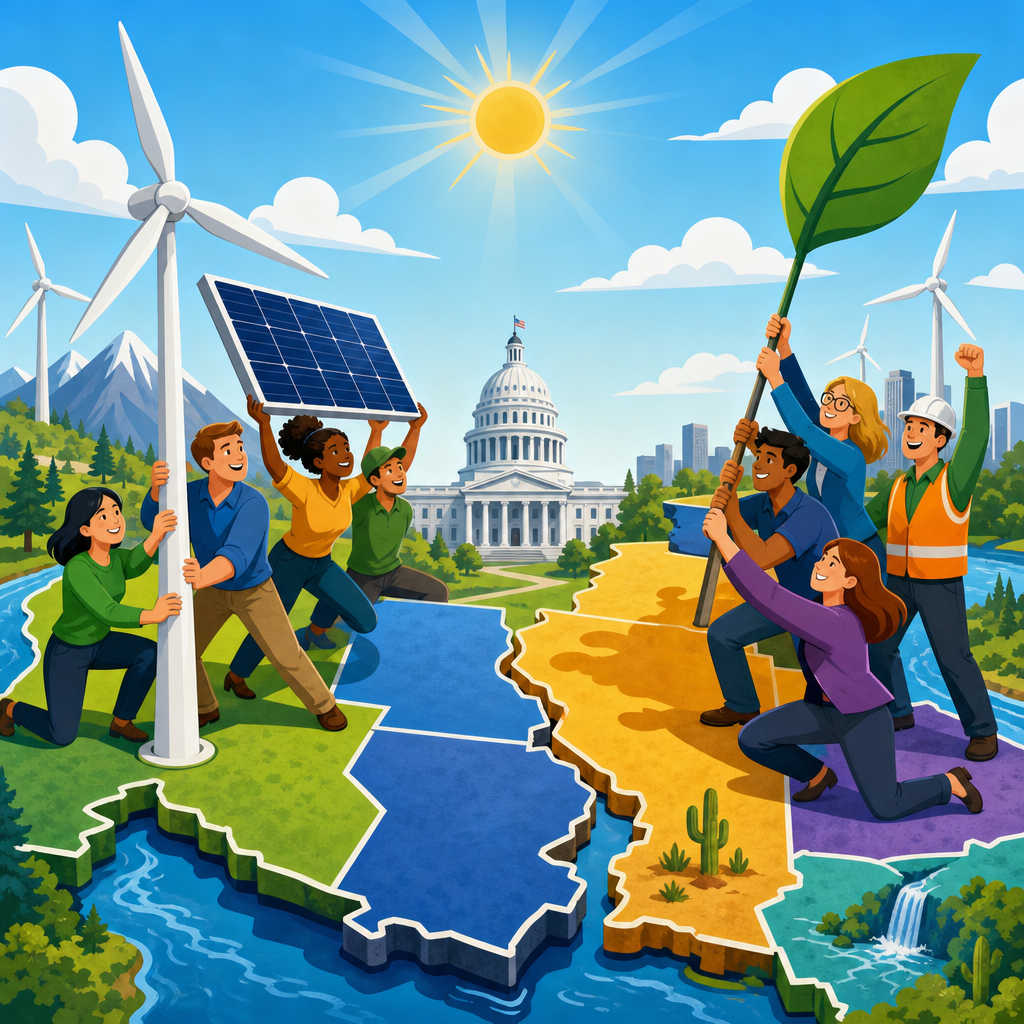
Political polarization affects environmental progress by turning questions about energy, land, water, and public health into identity conflicts rather than practical policy choices. In the environmental policy and law field, polarization means elected officials, voters, media ecosystems, advocacy groups, and even corporations increasingly sort themselves into opposing camps that distrust each other’s motives and reject compromise. Environmental progress, by contrast, refers to measurable improvements in outcomes such as lower emissions, cleaner air and water, stronger conservation, faster climate adaptation, and more predictable regulatory systems. I have worked on environmental policy communications long enough to see a consistent pattern: when debates become tribal, even widely supported reforms stall, agencies become cautious, and businesses delay investment because they cannot rely on stable rules.
This matters because environmental problems do not wait for political cycles to settle. Greenhouse gases accumulate, aging water infrastructure leaks, wildfire risk grows, and habitat loss compounds over time. The legal architecture that governs these issues is also unusually dependent on continuity. Permitting systems, emissions standards, public utility regulation, zoning, federalism, and administrative law all require long timelines, technical expertise, and durable compliance. When polarization hardens, policy debates shift away from evidence and toward symbolic battles over regulation, personal freedom, regional identity, and economic resentment. The result is not only slower lawmaking. It is a weaker capacity to maintain, update, and enforce environmental rules across administrations, courts, and markets.
As a hub for policy debates and reforms within environmental policy and law, this article maps how polarization changes the way environmental decisions are made. It explains where the conflict comes from, how it shapes legislation and regulation, why courts and agencies become central battlegrounds, and which reforms still work in divided systems. It also highlights the practical questions readers usually ask: Why do popular environmental goals produce gridlock? Why do laws swing so sharply after elections? What role do states, cities, utilities, and private capital play when national politics freezes? And what reforms can lower conflict without lowering standards? Answering those questions is essential for anyone tracking climate policy, conservation law, energy transition strategy, or public-sector reform.
Why polarization turns environmental issues into governance problems
Environmental policy often begins with broad agreement on ends and sharp disagreement on means. Most people want safe drinking water, lower disaster risk, affordable energy, and a healthy local environment. Polarization changes that ordinary bargaining problem into a legitimacy problem. Opposing sides no longer argue only about cost, timing, or technology. They begin to question whether the other side is acting in good faith at all. In practice, that means carbon pricing is framed as social engineering, conservation rules are described as attacks on rural livelihoods, and environmental justice measures are portrayed either as overdue corrections or as politically selective enforcement.
Several structural factors intensify this pattern. First, environmental benefits are often long term and diffuse, while compliance costs are immediate and concentrated. A refinery, utility, farm sector, or homebuilding lobby can quickly organize around a visible cost. The public benefits, such as fewer asthma cases or lower cumulative emissions, arrive gradually and are spread widely. Second, environmental law is technically complex. That complexity creates room for strategic messaging, selective use of uncertainty, and oversimplified narratives. Third, environmental regulation frequently crosses jurisdictional lines. Federal agencies, state legislatures, local land-use boards, tribal governments, courts, and international markets all affect outcomes, so conflicts can be relocated rather than resolved.
Once polarization deepens, routine policy maintenance becomes difficult. Updating appliance standards, transmission permitting, methane rules, endangered species recovery plans, or National Environmental Policy Act procedures should be ordinary governance. Instead, each change becomes a proxy fight over the size of government and the distribution of economic pain. I have seen even highly technical rulemakings generate campaign-style messaging because parties know environmental symbolism mobilizes donors and voters. That pressure pushes lawmakers toward absolutist positions, discourages agencies from experimenting, and rewards litigation over compromise.
Legislative gridlock and the rise of fragmented reform
The clearest effect of polarization is legislative gridlock. Major environmental laws in the United States, including the Clean Air Act, Clean Water Act, and Endangered Species Act, were enacted in periods when cross-party bargaining was more common. Today, comprehensive reform is rarer. Congress still funds agencies and passes targeted incentives, but durable framework legislation is difficult because members fear primary challenges and activist backlash more than they value cross-party dealmaking. As a result, environmental progress often comes through narrower measures, omnibus packages, budget reconciliation, state initiatives, agency rules, and procurement policy rather than broad statutory modernization.
This fragmented reform has real consequences. First, it creates policy asymmetry. Tax credits for clean energy may pass because they can be framed as industrial policy and job creation, while carbon pricing or comprehensive permitting reform fails because it requires visible tradeoffs. Second, it encourages unstable coalitions. A law built on temporary incentives and executive implementation can accelerate deployment, but it may lack the bipartisan legitimacy needed for long-term certainty. Third, it leaves outdated statutes carrying new burdens. Agencies then stretch old legal language to address modern problems, which invites court challenges and accusations of overreach.
A practical example is climate policy. In highly polarized systems, lawmakers often agree more easily on subsidies than on binding caps. That is why tax incentives for wind, solar, batteries, hydrogen, carbon capture, and electric vehicles can advance even when comprehensive emissions legislation cannot. Incentives matter, but they do not replace siting reform, transmission buildout, building codes, or reliable carbon accounting. The result is a mixed policy landscape: investment rises, yet infrastructure bottlenecks, litigation, and local opposition still slow emissions cuts. Polarization does not stop all progress. It changes the form progress takes, often making it less coherent and less durable.
Administrative law, courts, and regulatory whiplash
When legislatures cannot act, agencies become the primary engines of environmental change. That shift expands the importance of administrative law. Regulators use existing statutory authority to set emissions standards, define wetlands, review infrastructure permits, manage public lands, and enforce disclosure requirements. In polarized politics, every major rule is treated as a test case for executive power. Businesses, states, and advocacy groups plan not only for compliance but for litigation. Courts then become central policymakers, deciding whether agencies interpreted statutes reasonably, followed procedural requirements, and stayed within constitutional limits.
Regulatory whiplash is the predictable result. One administration tightens methane standards; the next weakens them; the next restores and expands them. Definitions of waters protected under federal law shift repeatedly. Power plant rules are proposed, challenged, revised, and replaced. Companies with long asset lifetimes cannot make efficient decisions when compliance assumptions change every four years. Utilities, manufacturers, and developers generally prefer clear rules, even strict ones, to uncertainty. I have heard general counsel say privately that the worst outcome is not tough regulation but unstable regulation, because capital planning depends on consistent expectations.
Recent judicial trends make this dynamic even more significant. Courts have shown greater skepticism toward broad agency interpretations on questions with major economic and political significance. That means future environmental progress depends more heavily on precise statutory drafting, stronger administrative records, and narrower rule design. The days when agencies could assume substantial deference are fading. Polarization amplifies this legal reality because every ambitious rule is framed as a constitutional showdown. That does not make environmental regulation impossible. It means durable progress increasingly requires better legislation, cleaner procedural work, and more attention to institutional design.
How state and local governments both accelerate and complicate progress
Polarization at the national level often shifts environmental action to states and cities. This can be productive. States set renewable portfolio standards, zero-emission vehicle requirements, building efficiency codes, and climate adaptation plans. Cities influence transit, zoning, stormwater management, urban heat mitigation, and waste systems. Regional electricity markets and public utility commissions can also move policy faster than Congress. California’s vehicle standards, the Regional Greenhouse Gas Initiative in the Northeast, and state-level methane controls all show how subnational action can create momentum when federal politics is deadlocked.
But decentralized action also creates unevenness. A company operating in ten states may face conflicting definitions, timelines, and compliance systems. Communities with strong tax bases can invest in resilience infrastructure, while poorer jurisdictions struggle to maintain basic water systems. Local politics can also be deeply polarized. Wind and transmission projects, for example, may be supported in principle but blocked in specific counties over land use, viewsheds, wildlife concerns, or distrust of outside developers. In other words, moving decisions closer to the ground can improve responsiveness, but it does not automatically reduce conflict.
| Policy arena | How polarization shows up | Typical effect on environmental progress |
|---|---|---|
| Federal legislation | Party-line voting, stalled committees, symbolic amendments | Few comprehensive reforms, reliance on incentives and stopgap deals |
| Agency rulemaking | Executive reversals, procedural challenges, litigation campaigns | Regulatory whiplash and slower compliance investment |
| State policy | Divergent standards across regions, interstate rivalry | Innovation in some states, fragmentation nationally |
| Local land use | Neighborhood opposition, distrust of developers, culture-war framing | Delays to housing, transit, renewables, and transmission |
| Courts | High-stakes statutory and constitutional disputes | Narrower agency discretion and greater need for legislative clarity |
The practical lesson is that environmental reform now depends on multilevel governance. Effective strategies align federal funding, state implementation, local permitting, and private-sector execution. Polarization undermines that alignment by encouraging each level to signal opposition to the others. Yet some of the most durable progress I have seen comes from designing policies that respect local concerns while preserving clear statewide or national goals. Transmission corridors with community benefit agreements, resilience grants tied to measurable performance, and utility regulation that rewards reliability and decarbonization together are examples of reforms that can survive divided politics.
Media ecosystems, public trust, and the politics of evidence
Environmental policy is unusually sensitive to trust because most citizens cannot personally verify the underlying science, legal constraints, or engineering tradeoffs behind every issue. They depend on institutions: universities, agencies, courts, professional societies, utilities, public health departments, and journalism. Polarization weakens those intermediaries by sorting audiences into information silos. The same wildfire, flood map, refinery rule, or climate assessment can be described either as objective risk management or as partisan narrative construction. Once that happens, evidence alone rarely resolves disputes.
This helps explain why simply “following the science” is not enough as a political strategy. Science can clarify physical reality, but policy still involves distributional choices. Who pays for grid upgrades? Which communities host transmission lines or solar fields? How quickly should internal combustion vehicles phase down in areas with weak charging infrastructure? What level of uncertainty justifies precaution? When leaders pretend those tradeoffs do not exist, they create openings for backlash. In my experience, public trust improves when policymakers state the benefits clearly, quantify the costs honestly, and explain why a chosen burden-sharing model is fair.
Plain language matters here. Compare two ways of discussing a methane rule. A polarized message says the government is punishing producers or, from the opposite direction, finally confronting reckless polluters. A credible policy explanation says methane is a potent greenhouse gas, leaks waste saleable product, infrared monitoring and leak detection technologies are available, and rules should target high-emitting equipment while preserving compliance flexibility for smaller operators. The second framing gives citizens and businesses something concrete to evaluate. It does not eliminate disagreement, but it reduces the space for pure symbolic combat.
Reforms that can reduce polarization without weakening environmental standards
Not every solution requires ideological consensus. Some reforms work because they improve process quality, investment certainty, or local legitimacy across partisan lines. The first is policy durability through clearer statutes. Laws that define objectives, timelines, cost-containment mechanisms, and implementation authority precisely are harder to undo and easier for courts to uphold. The second is permitting reform that addresses both clean energy deployment and community review. Faster timelines, better agency staffing, programmatic environmental reviews, and early consultation can reduce delay without eliminating scrutiny. The third is benefit design. Voters are more likely to support environmental measures when they see concrete gains such as lower household energy bills, cleaner buses, flood protection, workforce training, or revenue recycling.
There is also a strong case for place-based policy. Communities do not experience the energy transition uniformly. A coal region facing plant closures, a coastal city financing seawalls, and an agricultural county confronting groundwater depletion need different policy tools. Polarization hardens when national messages flatten those differences. Transition assistance, ratepayer protections, and local fiscal replacement can lower resistance because they recognize that environmental progress has winners and losers in the short term, even when long-term public benefits are clear.
Finally, institutions matter. Independent public utility commissions, transparent environmental impact processes, interoperable emissions data, and consistent enforcement standards all reduce the temptation to relitigate every issue politically. Durable progress is usually boring in the best sense: stable definitions, reliable measurements, clear appeal routes, and steady funding. If readers are evaluating reforms within environmental policy and law, that is the core test to apply. Ask not only whether a proposal is ambitious, but whether it can survive elections, litigation, implementation friction, and local conflict. Environmental progress depends on that staying power. The next step is to use this hub to explore the linked debates in detail, from climate regulation and permitting to conservation, energy markets, and environmental justice.
Frequently Asked Questions
1. What does political polarization mean in the context of environmental progress?
In the environmental context, political polarization happens when debates over energy, land use, water quality, climate risk, conservation, and public health stop being treated as practical policy questions and instead become markers of political identity. Rather than asking which policies most effectively reduce pollution, protect ecosystems, strengthen resilience, or support economic stability, people and institutions often sort into opposing camps and judge proposals based on who supports them. That shift matters because environmental progress usually depends on long-term planning, trust in scientific and technical expertise, and willingness to negotiate among competing interests.
Polarization shows up across the entire policy ecosystem. Elected officials may avoid compromise because their primary voters view cooperation as betrayal. Media outlets may frame environmental issues in ways that reinforce conflict rather than clarify tradeoffs. Advocacy groups may harden their positions to energize supporters. Corporations may align publicly with one side or the other depending on regulatory risk, consumer pressure, or investor expectations. As distrust grows, even modest reforms can become politically toxic. In that environment, progress slows because every proposal is interpreted through a partisan lens, even when the underlying goals, such as cleaner air, safer drinking water, or more reliable infrastructure, benefit broad segments of the public.
2. How does political polarization slow down or block environmental policy?
Political polarization slows environmental policy in several concrete ways. First, it makes legislation harder to pass. Many environmental problems require coordinated action over many years, but polarized political systems reward short-term messaging over durable agreement. Lawmakers may reject policy ideas associated with the opposing party even when those ideas address well-documented environmental harms. As a result, bills stall, regulatory updates are delayed, and agencies are left with outdated tools for modern challenges such as extreme weather, grid transition, groundwater depletion, or emerging contaminants.
Second, polarization increases policy instability. One administration may impose stricter emissions standards, habitat protections, or clean energy incentives, only for the next administration to weaken or reverse them. That back-and-forth creates uncertainty for businesses, local governments, utilities, farmers, and communities trying to plan investments. Environmental progress often depends on predictable rules that encourage innovation and compliance over time. When rules change sharply with each election cycle, stakeholders may delay action, litigate more aggressively, or abandon long-range planning altogether.
Third, polarization shifts attention away from measurable outcomes and toward symbolic conflict. Instead of evaluating whether a policy reduces asthma rates, improves watershed health, lowers cleanup costs, or preserves biodiversity, public debate may focus on whether the policy represents government overreach, corporate favoritism, elitism, or cultural threat. That dynamic makes it harder to build broad support for technically sound solutions. Even when everyone agrees a problem exists, they may remain trapped in a cycle of mutual suspicion that prevents implementation.
3. Why do environmental issues become identity conflicts instead of practical policy debates?
Environmental issues become identity conflicts when they are tied to deeper disagreements about culture, geography, economic change, and trust in institutions. Energy policy, for example, is not only about emissions or electricity prices. For many communities, it is also about jobs, regional pride, local control, and whether people feel respected by national decision-makers. Land and water disputes can similarly trigger powerful views about property rights, federal authority, rural livelihoods, tribal sovereignty, and urban versus rural priorities. Once those broader identities become attached to environmental questions, compromise becomes much more difficult because people feel they are defending not just a policy preference but their way of life.
Media and political incentives intensify this pattern. Simplified conflict tends to draw more attention than nuanced discussion of permitting reform, watershed management, methane leakage, or administrative procedure. Political actors often benefit from casting environmental debates as moral contests between heroes and villains rather than as difficult governance problems involving tradeoffs. Social media can magnify this by rewarding outrage, certainty, and group loyalty. Over time, people may come to assume that the other side is acting in bad faith, which undermines the trust needed for evidence-based policymaking.
The result is that even shared interests can be obscured. Most people want safe water, healthy communities, stable food systems, and reduced exposure to environmental hazards. But when those goals are packaged within partisan narratives, agreement on ends does not automatically translate into agreement on means. That is why environmental law and policy often become battlegrounds for broader social conflict rather than spaces for practical problem-solving.
4. What are the real-world consequences of polarization for environmental law, regulation, and public health?
The real-world consequences are significant and often measurable. In environmental law and regulation, polarization can lead to prolonged litigation, weak enforcement, fragmented standards, and delayed responses to known risks. Agencies may spend years defending rules in court rather than implementing them. Legislatures may fail to update statutes to reflect new science or changing conditions. Local, state, and federal governments may work at cross-purposes, creating a patchwork of requirements that is harder to enforce and more expensive to navigate. This slows improvements in air quality, water treatment, waste management, habitat restoration, and climate adaptation.
Public health can also suffer. Environmental progress is not an abstract concept; it includes cleaner air that reduces respiratory illness, safer drinking water that prevents long-term exposure to toxins, stronger flood protections that reduce injuries and displacement, and better land management that limits wildfire smoke and erosion. When polarization delays action, communities can face higher health burdens, especially those already vulnerable because of income, geography, age, or existing health conditions. The costs are often unevenly distributed, with frontline communities experiencing the most immediate harm while political systems remain deadlocked.
There are economic consequences as well. Businesses and investors generally prefer regulatory clarity. When polarization produces constant reversals and legal uncertainty, it can discourage infrastructure upgrades, clean technology deployment, and long-term resource planning. That means missed opportunities for job creation, efficiency gains, and resilience improvements. In short, polarization does not merely change the tone of environmental debate; it can directly affect whether environmental protections are enacted, sustained, enforced, and translated into healthier communities.
5. Can environmental progress still happen in a polarized political climate?
Yes, environmental progress can still happen in a polarized climate, but it usually requires different strategies than those used in periods of stronger bipartisan trust. One effective approach is to focus on outcomes that are tangible, local, and broadly shared. People may disagree in abstract ideological terms, yet still support projects that reduce flood risk, modernize water systems, improve forest management, lower household energy costs, or clean up contaminated sites. Framing issues around public health, reliability, cost savings, disaster preparedness, and stewardship can sometimes create common ground where partisan branding would otherwise shut down discussion.
Progress is also more likely when policymakers build durable coalitions that include local governments, industry, farmers, labor, public health experts, conservation groups, and community organizations. Broad coalitions can reduce the perception that environmental policy belongs to only one political tribe. In legal and regulatory settings, stability matters too. Policies that are carefully designed, clearly justified, and grounded in strong administrative records are often better positioned to survive political and judicial challenges. Incremental progress, while sometimes frustrating, can be more durable than sweeping changes that trigger immediate backlash and reversal.
Finally, trust-building is essential. That means acknowledging tradeoffs honestly, respecting regional differences, using clear evidence, and avoiding the assumption that disagreement always reflects bad motives. Polarization thrives when people believe they are being ignored, manipulated, or punished. Environmental progress becomes more achievable when decision-makers demonstrate that policy can be both effective and fair. Even in a divided political environment, practical gains are possible if environmental issues are approached as governance challenges with real-world consequences rather than as tests of partisan loyalty.