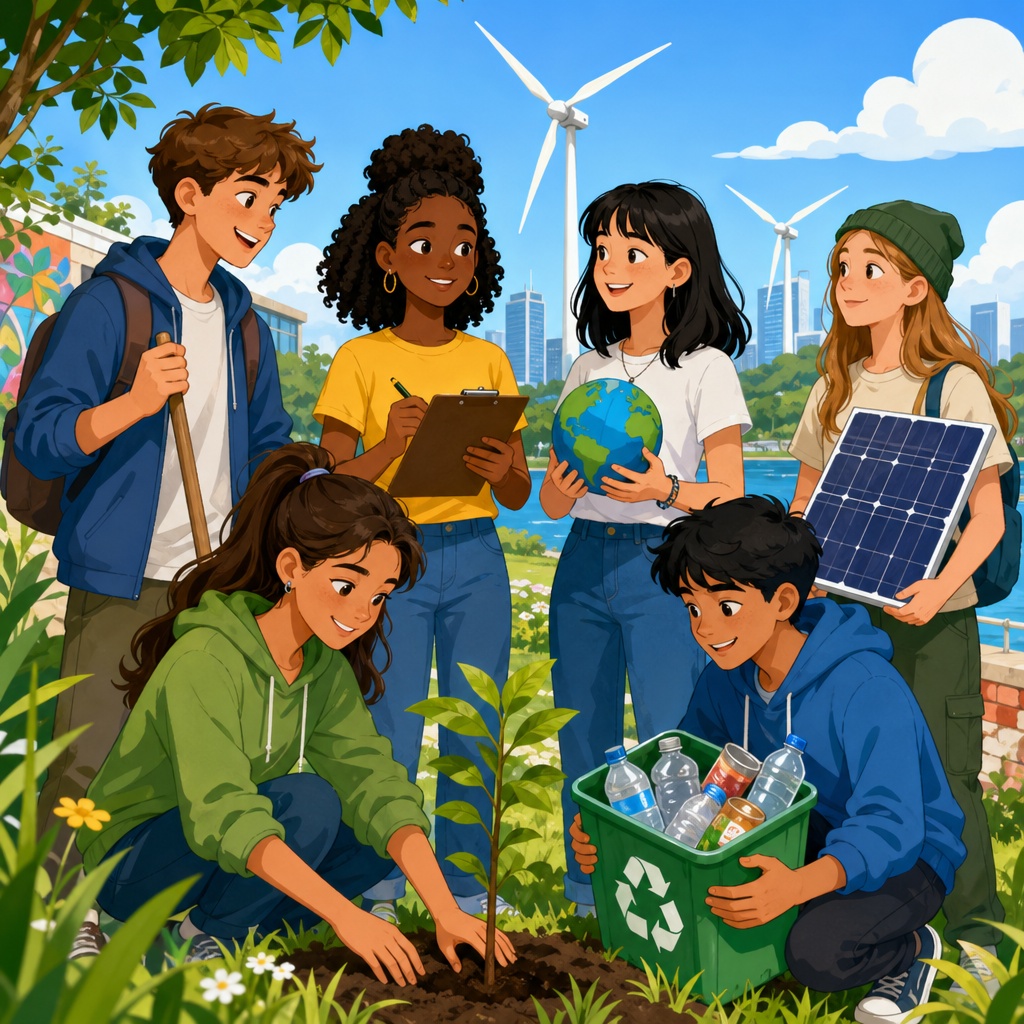
Teen climate action matters because adolescents are old enough to understand systems, old enough to influence peers and adults, and young enough to shape habits that last for decades. When I have worked with school clubs, youth councils, and local campaign groups, the same pattern appears: teens want practical ways to help, not vague encouragement. Empowering teens to take climate action means giving them knowledge, agency, tools, and adult support so they can reduce emissions, advocate for policy, build community resilience, and protect their own wellbeing. Youth and climate activism includes individual behavior change, campus organizing, local government engagement, digital storytelling, mutual aid, and career exploration. This matters because climate change affects health, education, housing, food systems, and future employment, while young people are already experiencing heat waves, wildfire smoke, flooding, and anxiety about the future. Effective support turns concern into informed action. The goal is not to place the burden of solving climate change on teenagers. The goal is to help them participate meaningfully, safely, and strategically in a collective response. That starts with understanding why youth voices carry unique power and how adults, schools, and communities can help channel that power into measurable results.
Youth and climate activism has become a defining civic movement because young people can connect lived experience with moral clarity. They often notice immediate impacts before institutions respond, whether that means canceled sports during extreme heat, asthma triggered by pollution, or neighborhoods lacking trees and cooling centers. Teens also understand digital communication ecosystems better than many adults, which gives them unusual leverage in shaping public narratives. At the same time, they need structure. Climate science involves carbon budgets, adaptation, mitigation, environmental justice, and policy tradeoffs. Productive activism requires more than passion. It requires credible information, realistic goals, consent and safety practices, coalition building, and follow-through. A strong youth climate hub therefore needs to answer several questions clearly: what climate action counts, how teens can start, which strategies create the biggest impact, how schools and families should help, and how to avoid burnout. The most effective answer is broad but practical. Teens can act at home, in school, in local politics, online, and through future study or work. Some actions cut personal emissions. Others influence institutions with far larger footprints. Both matter, but they do not carry equal weight. Empowerment comes from teaching that distinction and helping teens spend effort where it changes systems as well as daily behavior.
Why teens are central to climate action
Teenagers are central to climate action because they are stakeholders in the longest time horizon and credible messengers in community settings where trust is often local. In practice, I have seen school board members dismiss abstract climate data, then respond when students document classroom temperatures above safe comfort levels during heat events. Youth advocacy can make climate risk visible in human terms. This is especially important for climate justice. Low income communities and communities of color often face higher exposure to air pollution, flood risk, and urban heat. Teens living in these areas can describe overlapping realities that technical reports summarize but rarely personalize. Their testimony strengthens public meetings, grant applications, and local journalism. Research supports this influence. The United Nations has repeatedly emphasized youth participation in sustainable development, and organizations such as UNICEF frame climate change as a child rights issue affecting health, education, and protection. That framing matters because it shifts climate from a distant environmental topic to a present governance responsibility. Teens also bring network effects. One engaged student can recruit classmates, teachers, parents, coaches, and neighborhood groups. In campaigns, that multiplier is powerful. A small team of students can move a school district toward composting, tree planting, bus electrification, or building efficiency upgrades if they present evidence, allies, and a workable ask.
What climate action actually looks like for teens
Climate action for teens falls into four practical categories: personal habits, school and community projects, civic advocacy, and public communication. Personal habits include eating lower carbon meals more often, reducing food waste, using transit or biking when safe, saving energy at home, and buying fewer fast fashion items. These choices are useful because they build awareness and credibility, but they are not the whole story. School and community projects often create bigger ripple effects. Students can organize waste audits, native planting days, repair events, clothing swaps, and cafeteria campaigns for reusable serviceware. Civic advocacy means speaking to decision makers about budgets, zoning, transit, school facilities, disaster preparedness, and clean energy procurement. Public communication includes student journalism, social media explainers, art, podcasts, and presentations that help others understand what is at stake and what can be done. The strongest youth climate programs combine all four. A student who learns to calculate a household carbon footprint may also notice that the school’s old HVAC system wastes far more energy than any one family can save. That insight is empowering. It teaches leverage. Good youth climate activism starts small enough to begin this week, but grows toward institutional change where the largest gains are possible.
How to help teens start with credible climate knowledge
Empowerment begins with climate literacy. Teens need accurate, age-appropriate explanations of greenhouse gases, fossil fuels, feedback loops, adaptation, and resilience. They should know that carbon dioxide, methane, and nitrous oxide trap heat, that energy, transport, agriculture, industry, and buildings all contribute emissions, and that local impacts differ by geography. The most reliable starting points are the Intergovernmental Panel on Climate Change, NASA Climate, NOAA Climate.gov, the U.S. Environmental Protection Agency, and national meteorological agencies outside the United States. In workshops, I have found that teens respond best when science is paired with place. Instead of only discussing global temperature averages, show local floodplain maps, air quality data, tree canopy maps, utility bills, or school energy use. This makes climate change concrete. It also reduces misinformation. Teens should learn how to evaluate sources, distinguish peer reviewed evidence from opinion, and recognize misleading claims such as “individual action is pointless” or “technology alone will fix everything.” Both are incomplete. A useful teaching approach is to connect cause, impact, and solution in one sequence. For example, vehicle emissions worsen air pollution and warming; that raises asthma risk and heat stress; better transit, safer biking routes, and cleaner buses reduce harm. When teenagers understand this chain, they can explain climate action confidently and persuasively.
High-impact actions teens can take at school and in their community
The most effective youth climate activism targets institutions, because schools, municipalities, and local businesses control purchasing, buildings, transport, and land use. A school campaign can ask for an energy audit, LED retrofits, better insulation, water bottle refill stations, electrified maintenance equipment, solar feasibility studies, compost collection, or climate risk planning for heat and storms. In one district I advised, students collected cafeteria waste data for two weeks, presented findings to administrators, and helped pilot sorting stations. Contamination dropped once peer volunteers explained the bins during lunch. Community action can include mapping dangerous hot spots around bus stops, supporting tree equity plans, volunteering in wetland restoration, or testifying for safer bike lanes that reduce car dependence. The best projects are specific, measurable, and realistic. Instead of demanding that a city “solve climate change,” ask for three cooling shelters, twenty more shade trees near a school corridor, or public reporting on municipal building energy use. These asks are easier to track and harder to ignore.
| Action area | Example teen-led project | Why it matters | Typical metric |
|---|---|---|---|
| School energy | Push for LED lighting and HVAC tune-ups | Cuts electricity use and costs | kWh saved per year |
| Waste | Run a cafeteria compost pilot | Reduces landfill methane | Pounds diverted weekly |
| Transport | Advocate for bike racks and safer crossings | Lowers car trips and improves safety | Student mode share |
| Urban heat | Map shade gaps and request tree planting | Protects health during heat waves | Tree canopy increase |
Turning concern into civic advocacy and policy influence
Policy advocacy is where youth climate activism can produce outsized impact. Teens can attend city council meetings, school board sessions, planning hearings, and state legislative forums. They can submit public comments, ask questions during budget discussions, and meet elected officials with a one page brief. Effective briefs include a problem statement, evidence, a specific ask, estimated benefits, and a short personal story. For example, students concerned about diesel bus emissions can cite asthma impacts, identify available federal or state funding for electric school buses, and request a fleet transition plan with public milestones. This is more persuasive than broad protest alone. Protest still has value. Marches, strikes, and rallies can attract media attention and signal urgency. But policy wins usually require a second phase: negotiation, coalition work, and persistence after headlines fade. Teens should learn how decisions are actually made in their area. Who controls school facilities? Which committee handles transportation? When are budget votes scheduled? This procedural knowledge is a major source of power. It helps youth groups time campaigns well, recruit relevant allies, and frame demands in language institutions understand, including health, cost savings, risk reduction, and educational benefits.
Digital activism, storytelling, and media literacy
Online platforms give teens fast ways to mobilize support, but digital activism works best when it connects to offline goals. A strong climate post does one of three things: explains a local issue clearly, invites people to a specific action, or documents a concrete result. Endless doom scrolling does not build movements. Strategic storytelling does. Teens can create short videos on extreme heat safety, infographics on school waste, photo essays about flooding, or interviews with elders about changes in seasons and storms. These formats humanize climate impacts and widen participation beyond students who attend meetings. Media literacy is equally important. Climate misinformation often spreads through selective statistics, false solutions, and emotionally manipulative content. Teens should verify claims before reposting, use primary sources where possible, and avoid oversimplified graphics that hide uncertainty or tradeoffs. They also need digital safety practices, especially when speaking publicly. That includes managing privacy settings, moderating comments, documenting harassment, and knowing when adults should intervene. Good digital activism builds credibility over time. A student account that consistently posts accurate, local, useful information can influence journalists, nonprofits, and public agencies far more than an account built only on outrage.
How adults, schools, and organizations can support without taking over
Teen climate action succeeds when adults provide scaffolding without controlling the agenda. In schools, that means giving students access to meeting space, modest budgets, faculty sponsorship, transportation when needed, and pathways to administrators who can make decisions. It also means integrating climate topics across subjects. Science classes can cover energy systems and impacts, civics can examine public policy, math can analyze emissions data, and language arts can strengthen persuasive writing for advocacy. Outside school, families can support attendance at public meetings, help teens evaluate claims, and model practical behavior changes at home. Nonprofits and municipal agencies can offer training in facilitation, public speaking, climate justice, and project management. The key is respect. Adults should not use teens as symbolic messengers for plans already set. Young people quickly recognize tokenism. They need real roles in defining priorities, gathering evidence, and presenting solutions. Safeguarding matters too. Organizers should consider transportation, accessibility, consent for photos, protest safety, and emotional support after difficult events such as disaster response or hostile public hearings. The strongest intergenerational teams share labor honestly: adults handle legal, financial, and logistical barriers; teens shape messaging, priorities, and peer outreach.
Preventing burnout and building long-term leadership
Climate concern can motivate action, but chronic overwhelm can end it. Teens need to hear a balanced message: the crisis is serious, action is necessary, and no individual must carry it alone. Burnout prevention should be built into every youth climate group. Set achievable goals, divide roles, celebrate progress, and rotate leadership so the same few students are not responsible for everything. Encourage rhythms of action and recovery. After a major event or campaign push, hold a debrief, acknowledge emotions, and decide what comes next before momentum collapses. Mental health support matters, especially after disasters, smoke events, or frightening news cycles. Protective factors include community, practical competence, time outdoors, and visible wins. Leadership development also matters because teens graduate. Strong groups document contacts, timelines, budgets, and lessons learned so new students can continue the work. They mentor younger members early rather than waiting until seniors leave. Finally, empowerment should include future pathways. Teens interested in climate action can explore careers in engineering, public health, urban planning, conservation, environmental law, journalism, building trades, and emergency management. Activism is not separate from a life path. For many young people, it is the beginning of informed citizenship and meaningful work.
Empowering teens to take climate action means treating them as capable participants in a shared public project, not as spectators and not as substitutes for adult responsibility. The most effective youth and climate activism combines credible knowledge, practical skills, institutional strategy, and emotional support. Teens can reduce waste, improve school operations, influence local policy, tell compelling stories, and build coalitions that reach far beyond a single classroom or social feed. Their power grows when adults provide access, safety, resources, and respect without taking ownership away. The central lesson is simple: start with local, measurable actions, then connect those wins to larger systems. A waste audit can lead to district policy. A heat mapping walk can lead to tree planting and cooling plans. A student speech can open budget conversations that produce cleaner transportation or more resilient buildings. Climate action becomes sustainable when young people can see how effort turns into evidence, evidence turns into advocacy, and advocacy turns into change. If you support a teen, help them choose one concrete project, find one trusted source, and bring one ally. That is how lasting youth climate leadership begins today.
Frequently Asked Questions
Why is it so important to empower teens to take climate action?
Teens are in a uniquely powerful position when it comes to climate action. They are old enough to understand how environmental systems, public policy, consumer behavior, and community choices are connected, but they are also young enough to build lifelong habits that can influence the rest of their lives. This combination makes adolescence one of the most important stages for climate engagement. When teens learn how energy use, transportation, food systems, waste, and local policies affect the climate, they are able to move beyond abstract concern and begin making practical, informed choices.
Teen climate action also matters because adolescents influence far more than their own behavior. They shape peer culture at school, influence household decisions at home, and often bring fresh urgency to conversations that adults have postponed. In many communities, teens are effective messengers because they can connect climate issues to daily life in a direct, relatable way. They may be the ones encouraging a family to reduce food waste, asking a school to improve recycling systems, or speaking at a local meeting about safer bike routes and cleaner transportation.
Most importantly, empowerment is what turns concern into action. Many teens already care deeply about climate change, but concern alone can become frustration if they are not given realistic avenues to contribute. When adults provide reliable information, hands-on opportunities, leadership roles, and meaningful support, teens are much more likely to stay engaged and feel capable of making a difference. That sense of agency is essential. It helps young people see that climate action is not just a distant political issue, but something they can participate in right now through personal choices, community projects, and civic involvement.
What are the best practical ways for teens to take climate action in everyday life?
The most effective everyday climate actions for teens are the ones that are realistic, repeatable, and connected to the systems around them. Personal choices do matter, especially when they become consistent habits. Teens can start by looking at high-impact areas such as transportation, food, energy use, and waste. Walking, biking, carpooling, or using public transportation when possible can reduce emissions in a meaningful way. Choosing more plant-based meals, wasting less food, using reusable items, and being more mindful about overconsumption are also practical steps that add up over time.
That said, everyday climate action should not be framed only as a matter of individual responsibility. Teens are often most effective when they combine personal habits with group influence. For example, a student can reduce single-use plastic personally, but they can have a much larger impact by helping a school club push for refill stations, composting programs, or more sustainable cafeteria options. A teen can save energy at home by turning off lights and unplugging devices, but they can also encourage their family to improve insulation, switch to efficient appliances, or rethink transportation choices.
It is also helpful to focus on actions that build momentum rather than perfection. Teens do not need to do everything at once. A good approach is to choose a few manageable areas, track progress, and look for opportunities to involve others. Joining an environmental club, volunteering with a local cleanup effort, helping organize a clothing swap, or supporting a community garden are all examples of practical actions that create visible results. The key is to help teens see that climate action works best as a combination of daily habits, shared efforts, and long-term commitment rather than one-time gestures.
How can parents, teachers, and other adults support teen climate action without taking over?
Adults play a critical role in teen climate action, but the most effective support comes from partnership rather than control. Teens need accurate information, encouragement, access to resources, and room to lead. Parents, teachers, and mentors can begin by listening carefully to what teens care about most. Some young people are interested in school sustainability, some are drawn to community organizing, and others care more about conservation, food systems, or climate justice. When adults take those interests seriously, teens are more likely to stay motivated and develop confidence in their own voice.
One of the best ways adults can help is by turning vague support into practical support. That might mean helping students find credible sources, connect with local organizations, apply for youth council positions, start a club, plan an event, or prepare to speak at a school board or city council meeting. Adults can also help teens set realistic goals, break large projects into manageable steps, and navigate obstacles such as limited budgets, transportation barriers, or school procedures. These forms of support strengthen teen leadership instead of replacing it.
It is equally important for adults to avoid dismissing teen efforts as symbolic or expecting young people to solve problems alone. Teens should not be burdened with fixing systemic issues without institutional support. Adults have more access to decision-makers, funding, and policy processes, so part of their responsibility is to open doors and use their influence constructively. The goal is not to speak for teens, but to make sure they are heard, taken seriously, and given the tools they need to act effectively. When adults combine guidance with trust, teens are much more likely to develop the skills and resilience needed for long-term climate engagement.
How can teens make a bigger impact beyond individual lifestyle changes?
Individual choices are a valuable starting point, but the biggest climate impacts often come from collective action and systems change. Teens can make a larger difference by working in groups, identifying local issues, and focusing on institutions that shape daily life. Schools, city governments, transportation systems, and community organizations all make decisions that affect emissions, resource use, and public awareness. When teens learn how these systems operate, they can advocate for changes that reach far beyond one person’s habits.
For example, a teen concerned about waste can do more than recycle at home. They can help organize an audit of school waste, present the findings to administrators, and advocate for composting, recycling improvements, or reduced packaging in cafeterias. A teen interested in transportation can gather student feedback about unsafe walking or biking routes and bring that information to local officials. Others may work on voter education, climate awareness campaigns, tree planting initiatives, energy-saving projects, or public comments on local planning decisions. These efforts teach practical civic skills while creating measurable community benefits.
Teens can also increase their impact by building partnerships. Collaborating with teachers, nonprofits, neighborhood groups, and local leaders often leads to stronger results than working alone. Learning how to communicate clearly, use evidence, organize events, and follow up consistently is just as important as passion. Climate action is most effective when it is strategic. Encouraging teens to think in terms of goals, stakeholders, timelines, and outcomes helps them move from good intentions to meaningful influence. In this way, teens become not just participants in climate action, but emerging leaders who can shape how their communities respond to environmental challenges.
How do you keep teens motivated and hopeful about climate action when the issue feels overwhelming?
Climate change can feel emotionally heavy, especially for teens who are highly aware of the scale and urgency of the problem. That is why motivation and hope need to be built intentionally. The most helpful approach is not false reassurance, but grounded encouragement. Teens should know that the problem is serious, while also hearing clearly that action matters and progress is possible. Hope grows when young people can see a connection between what they do and what changes as a result. Even small wins, such as improving recycling at school, organizing a successful event, or getting adults to listen, can reinforce a sense of agency.
It also helps to shift the focus from trying to solve everything at once to contributing meaningfully where possible. Overwhelm often comes from feeling personally responsible for a global crisis. Teens are more likely to stay engaged when they understand that climate action is shared work and that no one person has to carry it alone. Encouraging teamwork, celebrating progress, and recognizing effort can prevent burnout. Supportive groups, whether at school or in the community, give teens a place to process emotions, exchange ideas, and remember that they are part of something larger than themselves.
Finally, long-term motivation grows when climate action is connected to values, relationships, and real-world skills. Teens stay engaged when they see that this work is not only about preventing harm, but also about building healthier communities, cleaner air, fairer systems, and more resilient neighborhoods. They are especially empowered when they develop skills such as public speaking, organizing, research, collaboration, and problem-solving along the way. Those experiences create confidence and purpose. When teens are supported with realistic goals, strong networks, and meaningful opportunities to lead, climate action becomes more than a source of worry; it becomes a path toward contribution, growth, and hope.