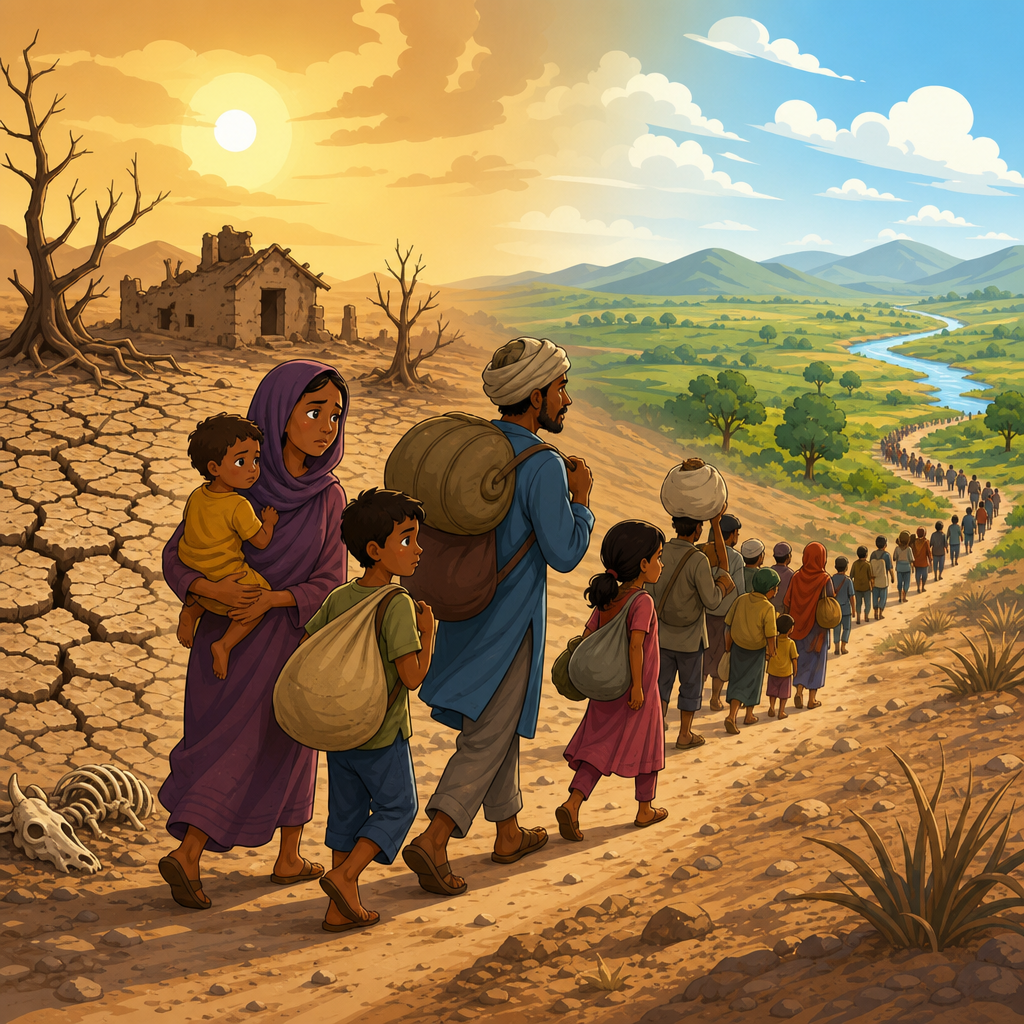

Migration hotspots sit at the intersection of environmental stress, insecurity, and human survival, making climate-induced migration one of the most consequential issues within environmental disasters today. Climate-induced migration refers to the movement of people driven partly or primarily by climate hazards such as drought, sea-level rise, extreme heat, flooding, crop failure, and stronger storms. In practice, movement is rarely caused by climate alone. Families leave when repeated hazards destroy livelihoods, when water systems fail, when food prices rise, when public services weaken, and when conflict or political exclusion turns stress into crisis. I have worked on disaster risk and displacement planning, and the clearest lesson is that migration usually begins long before a border crossing. It starts with debt, lost harvests, damaged homes, unsafe neighborhoods, and the calculation that staying has become more dangerous than leaving.
This topic matters because the scale is already large and rising. The World Bank’s Groundswell reports have warned that, without strong climate and development action, tens of millions of people could become internal climate migrants across regions including Sub-Saharan Africa, South Asia, and Latin America by 2050. The Internal Displacement Monitoring Centre documents millions of new disaster displacements each year, often exceeding conflict displacements in annual totals. Yet numbers alone can mislead. A flooded city may trigger evacuation for days, while a decade-long drought may push young workers to migrate seasonally, then permanently. Understanding migration hotspots means identifying where climate exposure, weak institutions, poverty, and violence overlap. It also means recognizing that migration can be adaptation, distress, or displacement, depending on whether people move with resources and rights or under coercive conditions.
What makes a migration hotspot
A migration hotspot is a place where environmental hazards combine with social vulnerability and political fragility to produce sustained out-migration, repeated displacement, or high pressure on receiving areas. Exposure is the first ingredient. Low-lying deltas, arid farming zones, wildfire-prone landscapes, and informal urban settlements face repeated shocks. Vulnerability is the second. Communities dependent on rain-fed agriculture, pastoralism, fisheries, or precarious urban labor have little margin for recovery after crop losses or disasters. Governance is the third. Where land rights are insecure, infrastructure is underbuilt, disaster warning systems are weak, or security institutions are abusive, climate stress more easily becomes displacement.
Conflict connections are central but often misunderstood. Climate change does not mechanically cause war, yet it acts as a threat multiplier. In places with existing grievances, competition over water, pasture, food, or jobs can intensify. In my experience reviewing displacement cases, the pattern is consistent: a hazard hits, incomes fall, local mediation mechanisms fray, and armed actors exploit the vacuum. The result may be rural flight to cities, cross-border refuge, or cyclical movement between camps and home areas. Hotspots therefore include both origin zones and destination zones. A drought-stricken district may send migrants out, while a nearby city receiving thousands of newcomers may become a secondary hotspot because housing, water, sanitation, and social cohesion come under pressure.
How climate hazards translate into migration decisions
People do not migrate because a thermometer rises by a certain amount. They migrate because climate hazards alter livelihoods, health, and safety. Drought lowers yields, kills livestock, depletes household savings, and raises food prices. Extreme heat reduces labor productivity, especially in construction, agriculture, and factory settings without cooling. Floods and storms destroy homes, roads, schools, and clinics, making daily life unworkable. Sea-level rise salinizes groundwater and cropland in coastal zones, turning once-productive land into a source of repeated loss. These impacts accumulate. A family may first sell assets, then borrow, then send one member to work elsewhere, then relocate entirely after the next failed season.
Migration decisions are also shaped by age, gender, wealth, and legal status. Younger adults often move first because they have greater mobility and labor market flexibility. Women may face stronger barriers to safe movement, yet they often shoulder the greatest burden when men migrate for work and remittances become uncertain. The poorest households can become trapped populations, unable to afford transport, housing deposits, documentation, or smugglers’ fees. That is why climate-induced migration includes both movement and immobility. Some people leave because they can no longer survive at home. Others remain in high-risk areas because they cannot finance an exit, despite severe danger.
Regions where climate and conflict pressures converge
Several global regions illustrate how climate-induced migration becomes concentrated. In the Sahel, recurrent drought, rainfall variability, desertification pressures, population growth, and armed violence interact across Mali, Niger, Burkina Faso, and neighboring states. Pastoral corridors are disrupted, crop calendars become less reliable, and insecurity limits access to fields and markets. In the Horn of Africa, prolonged drought followed by intense flooding has devastated livelihoods in Somalia, Ethiopia, and Kenya. Conflict, weak state capacity, and dependence on pastoralism and rain-fed farming amplify movement. In South Asia, Bangladesh faces cyclones, river erosion, flooding, and salinity intrusion, while parts of India and Pakistan confront extreme heat, groundwater stress, and flood risk. These pressures push both rural-urban migration and cross-border concern, especially in dense delta regions.
Central America’s Dry Corridor offers another clear example. Repeated droughts and erratic rainfall in Guatemala, Honduras, El Salvador, and Nicaragua have undermined maize and bean production, while gang violence, weak governance, and limited rural opportunity shape onward migration decisions. In the Middle East and North Africa, water scarcity, heat, and agricultural decline interact with conflict and political instability, notably in Syria, Iraq, and Yemen. Coastal and delta cities worldwide, from Lagos to Karachi to Alexandria, are also emerging hotspots because they attract displaced rural populations while facing flooding, heat stress, and infrastructure overload themselves.
| Region | Main climate pressure | Conflict or governance factor | Typical migration pattern |
|---|---|---|---|
| Sahel | Drought, rainfall variability, land degradation | Armed groups, weak rural security, land disputes | Rural flight to towns, cross-border movement, seasonal migration turning permanent |
| Horn of Africa | Multi-season drought, sudden floods | Conflict, fragile institutions, pastoral route disruption | Displacement to camps, urban migration, regional movement |
| South Asia | Cyclones, floods, heat, salinity, river erosion | High density, uneven planning, labor informality | Village-to-city migration, temporary displacement, repeat relocation |
| Central America Dry Corridor | Drought, crop failure, erratic rainfall | Violence, poverty, limited state support | Internal migration, international labor migration, family separation |
| Middle East and North Africa | Water scarcity, heat, agricultural stress | Conflict, political instability, service collapse | Urban displacement, cross-border refuge, protracted displacement |
Urbanization, receiving areas, and secondary risk
Climate-induced migration is often imagined as a rural exodus, but the immediate destination is usually a town or city, not another country. That matters because urban receiving areas can absorb newcomers only when housing, water, transport, schools, and jobs keep pace. Too often they do not. New arrivals settle in floodplains, steep hillsides, reclaimed wetlands, or peripheral districts with weak drainage and insecure tenure. This creates secondary disaster risk. A family escaping crop failure may reach a city only to face heat exposure, informal labor exploitation, and flood-prone shelter. I have seen municipal plans treat migration as a temporary anomaly, when in reality it is a structural feature of climate adaptation. Cities that ignore inflows end up converting environmental stress in one location into urban crisis in another.
Good planning can change that trajectory. Risk-informed zoning, inclusive service delivery, labor market integration, and portable social protection reduce pressure on both migrants and host communities. Early investment is cheaper than emergency response. For example, expanding water networks, storm drainage, and rental housing regulation in secondary cities often costs far less than rebuilding after informal settlements are repeatedly flooded. When governments align climate adaptation with urban planning, migration becomes more manageable and less destabilizing.
Why the climate-conflict link requires careful analysis
The connection between climate and conflict should be approached with precision. Claims that climate change directly causes war are too simplistic and can lead to poor policy. The stronger finding from research is that climate hazards increase the likelihood of instability when institutions are weak, inequality is high, and livelihoods depend heavily on natural resources. The IPCC has repeatedly described climate change as a factor that exacerbates existing vulnerabilities. That framing is useful because it directs attention toward measurable mechanisms: reduced water availability, grazing pressure, food inflation, income shocks, displacement, and weakened state legitimacy after failed response.
Syria is frequently cited in this debate. A severe drought from 2006 to 2010 contributed to agricultural collapse and rural distress, and many people moved toward cities already strained by economic and political pressures. Serious analysts do not say the drought caused the civil war by itself. They note that environmental stress interacted with governance failures, inequality, and repression. The lesson for migration hotspots is practical: monitor compound risk rather than search for a single trigger. Areas with repeated hazards, excluded populations, and weak conflict resolution systems deserve priority attention because they are where climate shocks most often become displacement crises.
Policy responses that reduce forced migration
The most effective response is not stopping movement at any cost. It is reducing distress migration, protecting displaced people, and enabling safe mobility as adaptation. That starts with adaptation in place where feasible: drought-resistant crops, groundwater management, heat action plans, mangrove restoration, flood defenses, resilient housing, and forecast-based financing. It continues with livelihood diversification through cash transfers, insurance, public works, climate-smart agriculture, and access to credit. When households have options, they are less likely to move under duress.
Protection frameworks matter just as much. Most people displaced by disasters remain within their own countries, so national law, disaster management systems, and social protection determine outcomes. The Sendai Framework, the UN Guiding Principles on Internal Displacement, and loss and damage discussions under the UN climate process all shape better practice, even where legal categories remain imperfect. Planned relocation may be necessary in some coastal or river-eroding areas, but it only works when communities participate, land tenure is secured, and livelihoods are rebuilt, not merely moved. Cross-border movement is harder because international refugee law does not specifically recognize climate migrants as a separate class. In practice, governments rely on humanitarian visas, temporary protection, labor pathways, and regional agreements. The gap between risk and legal protection remains one of the field’s biggest weaknesses.
How to track climate-induced migration hotspots
Identifying hotspots requires combining environmental, social, and mobility data rather than relying on a single map. Useful indicators include rainfall anomalies, soil moisture, vegetation stress, cyclone paths, flood recurrence, sea-level trends, crop yields, food prices, conflict events, urban growth, rental costs, and school enrollment shifts. Analysts commonly use data from the Internal Displacement Monitoring Centre, IOM’s Displacement Tracking Matrix, FAO early warning systems, FEWS NET, Copernicus, NASA, and national census or household surveys. The key is triangulation. Satellite evidence may show drying conditions, but household surveys reveal who is sending migrants, who is trapped, and where remittances are cushioning shock.
For hub-level understanding, readers should distinguish sudden-onset displacement from slow-onset migration, internal from cross-border movement, and voluntary adaptation from forced movement. They should also watch receiving areas, not only origin zones. A district with modest hazard exposure can still become a hotspot if it absorbs large numbers of displaced people without services or jobs. That broader view is essential for anyone studying environmental disasters because migration is not a side effect. It is one of the main ways climate risk reorganizes economies, settlements, and political stability.
Climate-induced migration is best understood as a chain reaction linking hazard, vulnerability, governance, and mobility. Migration hotspots emerge where those pressures overlap and persist, especially in the Sahel, Horn of Africa, South Asia, Central America, and fragile urban coastal zones. The central insight is not that climate automatically produces conflict, but that climate stress can intensify existing tensions, weaken livelihoods, and push people toward movement that is costly, risky, and sometimes unavoidable. At the same time, migration can serve as adaptation when people move safely, legally, and with support.
For policymakers, researchers, and community leaders, the main benefit of studying migration hotspots is sharper action. It helps target adaptation funds, strengthen early warning, protect internal displacement, plan cities for population inflows, and design legal pathways that reduce chaos. For readers using this hub on climate-induced migration, the next step is simple: examine each linked subtopic through the hotspot lens. Ask what hazard is changing, who is most exposed, what governance gap exists, and whether movement is chosen or forced. That is how environmental disasters become legible, and that is how better responses begin.
Frequently Asked Questions
What are migration hotspots, and why are they so important in the context of climate and conflict?
Migration hotspots are places where environmental stress, social fragility, and human mobility converge with unusual intensity. These areas may include drought-prone farming regions, low-lying coastal zones threatened by sea-level rise, river basins exposed to repeated flooding, or conflict-affected communities where climate shocks worsen already difficult living conditions. They matter because they reveal how climate hazards do not act in isolation. Instead, drought, extreme heat, failed harvests, water scarcity, and severe storms often combine with poverty, weak infrastructure, political instability, and insecurity to push families toward displacement or migration.
What makes these hotspots especially significant is that they show the real-world connection between environmental disasters and human survival. A community can often cope with a single bad season, but repeated shocks erode savings, strain food systems, increase competition over land and water, and weaken trust in institutions. In places already affected by violence or fragile governance, climate stress can intensify tensions and make it harder for people to remain safely where they are. Understanding migration hotspots helps policymakers, researchers, and humanitarian organizations identify where risks are accumulating and where early intervention can reduce suffering before movement becomes a crisis.
Is climate change directly causing migration, or are people moving because of a combination of pressures?
In most cases, people are moving because of a combination of pressures rather than climate change alone. Climate hazards such as drought, flooding, stronger storms, sea-level rise, crop failure, and extreme heat often serve as powerful stress multipliers. They damage livelihoods, reduce food production, destroy homes, interrupt local economies, and increase health risks. But whether a family decides to move usually depends on additional factors such as income, access to water, debt, conflict, land rights, safety, public services, and the presence or absence of social support networks elsewhere.
This is why climate-induced migration is best understood as part of a larger system of vulnerability. Two households facing the same hazard may respond very differently depending on their resources and security. One family may adapt by changing crops, finding temporary work, or rebuilding after a flood. Another may have no buffer left after repeated losses and may decide to send one member away for work or leave entirely. Conflict can accelerate this process by disrupting markets, limiting access to land, blocking aid, or making normal adaptation impossible. So while climate change is often a major driver, migration usually emerges from overlapping environmental, economic, and political pressures that together make staying untenable.
How do climate hazards and conflict reinforce each other in migration hotspots?
Climate hazards and conflict reinforce one another by placing pressure on the same basic systems people need to survive: water, food, land, livelihoods, governance, and physical security. For example, prolonged drought can reduce crop yields and pasture availability, forcing farmers and herders into tighter competition over scarce resources. Flooding can destroy roads, markets, and irrigation systems, limiting access to food and income. Extreme heat can reduce labor productivity and worsen health conditions. When institutions are weak or conflict is already present, these shocks can deepen grievances, intensify local disputes, and make recovery much more difficult.
It is important to be precise here: climate change does not automatically create violence. However, in fragile settings, it can increase the likelihood that tensions worsen. Armed conflict, in turn, reduces a community’s ability to adapt to climate stress. People may be unable to farm safely, repair infrastructure, access humanitarian relief, or move seasonally as they once did. As a result, households are squeezed from both sides: environmental conditions become harsher while insecurity narrows their options. This feedback loop is one reason migration hotspots are so complex. Movement may be a survival strategy, but it may also expose people to new risks, including exploitation, unsafe routes, overcrowded cities, and further instability in destination areas.
Who is most vulnerable to climate-induced migration and displacement?
The people most vulnerable to climate-induced migration are usually those with the fewest resources to prepare, adapt, or recover. This often includes smallholder farmers, pastoralists, fishing communities, low-income urban residents living in informal settlements, Indigenous communities, and households in conflict-affected or politically marginalized regions. Vulnerability is not only about exposure to hazards; it is also about capacity. Families with limited savings, insecure land tenure, poor access to insurance or credit, and weak public services have far fewer options when drought, flooding, storms, or saltwater intrusion begin to undermine daily life.
Women, children, older adults, people with disabilities, and displaced populations already living in precarious conditions can face especially severe risks. They may have less access to safe transport, information, legal protections, health care, and income opportunities during displacement. In many cases, the poorest people are not the most mobile but the least able to move safely, meaning they can become trapped in high-risk areas even as conditions deteriorate. That is a crucial point in this discussion: climate mobility includes not only those who leave, but also those who want to move and cannot. Effective responses must account for both patterns, because vulnerability is shaped as much by inequality and exclusion as by the climate hazard itself.
What can governments and international organizations do to reduce climate-related migration pressures in hotspot regions?
Reducing climate-related migration pressures requires a practical mix of adaptation, disaster risk reduction, peacebuilding, and social protection. Governments can invest in early warning systems, drought preparedness, flood defenses, heat action plans, climate-resilient agriculture, water management, and stronger public infrastructure. They can also expand safety nets such as cash assistance, crop insurance, public health support, and livelihood diversification programs so that families are not forced into crisis decisions after each shock. In hotspot regions, these measures work best when they are paired with conflict-sensitive planning, local participation, and better access to land, services, and legal protection.
International organizations also have a major role to play by financing resilience in high-risk areas, supporting humanitarian response, improving data on displacement, and helping countries design policies for internal migration, planned relocation, and urban preparedness. Just as importantly, they can encourage cooperation across sectors that too often operate separately, such as climate adaptation, development, and peacebuilding. Not all migration should be treated as a failure; in some cases, safe and well-supported mobility can be a legitimate adaptation strategy. The real goal is to reduce forced, desperate, and dangerous movement by giving people meaningful choices. When communities have resources, security, and pathways to adapt, they are far less likely to be pushed into displacement by the combined pressures of climate stress and conflict.