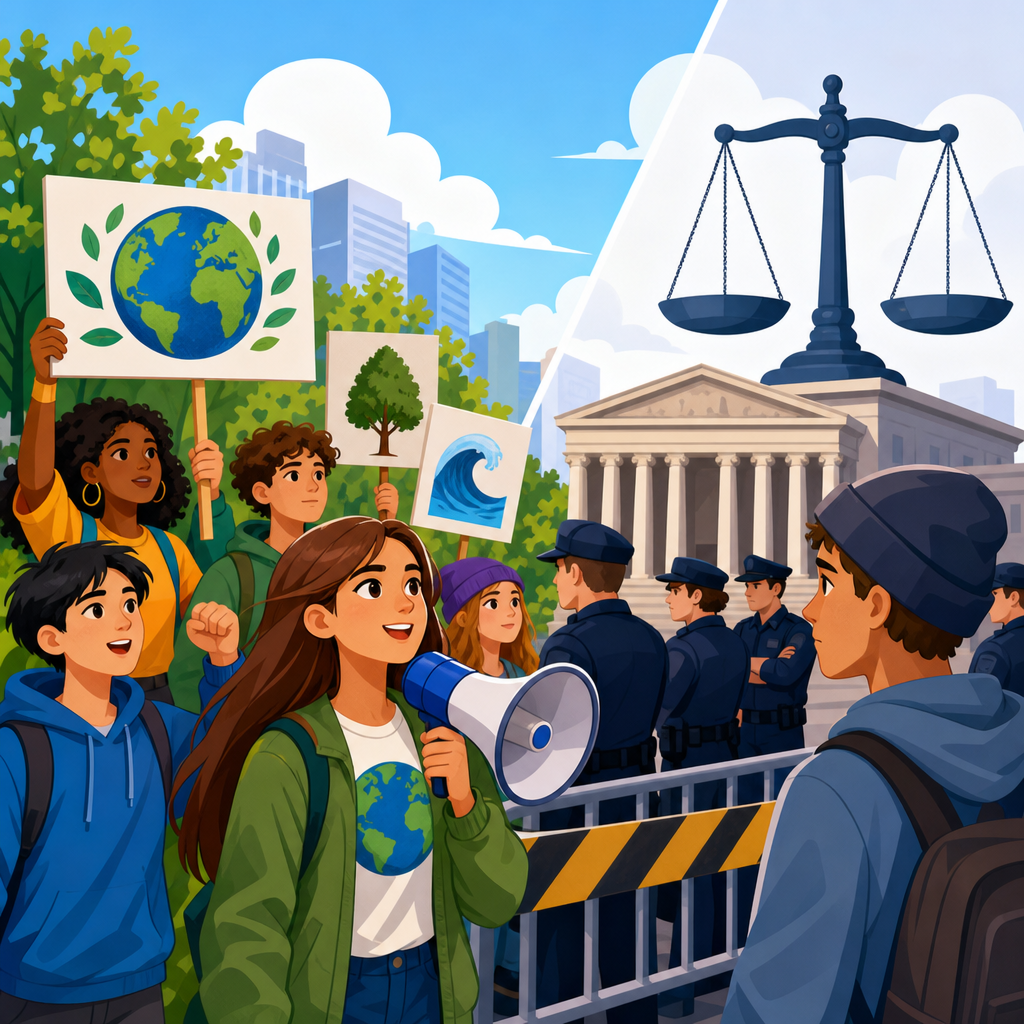
The debate over EPA authority and enforcement power sits at the center of modern environmental policy because it determines how aggressively the United States controls pollution, protects public health, and balances federal oversight against state discretion. The Environmental Protection Agency, created in 1970, is the primary federal regulator responsible for implementing major environmental statutes passed by Congress, including the Clean Air Act, Clean Water Act, Safe Drinking Water Act, Resource Conservation and Recovery Act, Toxic Substances Control Act, and Comprehensive Environmental Response, Compensation, and Liability Act. In practice, EPA authority means the legal power to write regulations, set standards, issue permits, monitor compliance, investigate violations, and bring administrative, civil, or sometimes criminal enforcement actions. Enforcement power refers to the agency’s ability to make those laws meaningful through inspections, penalties, corrective orders, and referrals to the Department of Justice.
I have worked with environmental compliance teams that treated EPA authority not as an abstract constitutional question but as a daily operational reality. A permit limit, a consent decree, or a hazardous waste inspection can alter capital budgets, plant design, recordkeeping systems, and community relations overnight. That practical dimension explains why the debate is so persistent. Supporters of strong EPA authority argue that nationwide pollution problems require national rules, technical expertise, and credible enforcement. Critics argue that the agency sometimes stretches ambiguous statutes, imposes heavy costs, and intrudes on powers better left to Congress or the states. Courts, regulated industries, environmental groups, state attorneys general, and communities all shape this conflict.
As a hub topic under Environmental Policy & Law, EPA and Government Agencies includes more than the EPA alone. It also involves Congress, which writes statutes and controls appropriations; the White House and Office of Management and Budget, which review major rules; the Department of Justice, which litigates many federal enforcement cases; state environmental agencies, which often run delegated programs; tribal governments, which have distinct authority under several statutes; and courts, which interpret the limits of agency action. Understanding how these institutions interact is essential because environmental regulation in the United States is built on cooperative federalism, technical standard setting, and judicial review. The core debate is not simply whether pollution should be controlled. It is who decides, by what authority, under what evidence, and with what consequences for industry, public health, and democratic accountability.
How EPA Authority Is Built in Federal Law
EPA authority begins with statutes enacted by Congress. Congress does not regulate every smokestack, discharge pipe, pesticide label, or chemical formulation directly. Instead, it delegates authority to the EPA to implement broad legislative commands through regulations, permits, and enforcement programs. The Clean Air Act, for example, requires the EPA to set National Ambient Air Quality Standards for pollutants that endanger public health or welfare and to regulate hazardous air pollutants from major sources. The Clean Water Act similarly authorizes technology-based effluent limits, water quality standards, and the National Pollutant Discharge Elimination System permit framework. These laws are detailed, but they still leave room for scientific judgment and policy choice.
That delegation is the source of both EPA strength and controversy. Environmental statutes are often complex because pollution control depends on toxicology, atmospheric chemistry, hydrology, engineering feasibility, and risk assessment. Congress typically establishes goals, factors, and procedures, then relies on the agency to translate them into enforceable requirements. The agency must build an administrative record, analyze costs where the statute allows or requires it, respond to public comments, and justify decisions under the Administrative Procedure Act. In my experience reviewing rulemakings, the quality of that record often determines whether a regulation survives judicial scrutiny. A well-supported rule cites monitoring data, peer reviewed science, statutory language, and implementation history; a weak rule invites challenge from every side.
The EPA’s authority also depends on delegation to states. Most major federal environmental programs are implemented through state agencies once the EPA approves state plans or delegated permitting programs. That means a facility may interact more often with a state department of environmental quality than with EPA headquarters. However, the federal agency retains oversight power, can object to deficient permits, can withdraw state program approval in severe cases, and can bring its own enforcement actions. This layered structure is one reason debates over authority are so difficult. Business groups may prefer state flexibility, while environmental advocates may distrust uneven state enforcement. Both positions have real evidence behind them.
Why Enforcement Power Matters More Than Written Rules
A regulation without enforcement is often just a paper standard. EPA enforcement power gives environmental law practical force by increasing the cost of noncompliance and rewarding companies that invest in proper controls. The agency uses several tools: inspections, information requests, notices of violation, administrative compliance orders, penalty assessments, permit objections, emergency orders, and referrals for civil or criminal prosecution. Criminal cases usually involve knowing violations, false statements, tampering with monitoring equipment, or illegal hazardous waste handling. Civil enforcement more commonly addresses excess emissions, unauthorized discharges, deficient monitoring, or permit violations.
When I have seen enforcement work effectively, it has usually combined data, inspection findings, and a realistic settlement strategy. Continuous emissions monitoring systems under the Clean Air Act, discharge monitoring reports under the Clean Water Act, and hazardous waste manifests under RCRA create evidence trails. EPA and state inspectors compare those records with site conditions, operational logs, maintenance histories, and laboratory analyses. If violations are found, the agency can seek injunctive relief requiring equipment upgrades, corrective action, supplemental environmental projects in older practice, or stipulated penalties for future violations. The point is not punishment alone. Strong enforcement changes behavior across an industry because facilities watch what happens to their peers.
Critics of aggressive enforcement raise legitimate concerns. Penalties can be substantial, and negotiated settlements may pressure companies to accept terms even when legal questions are unresolved. Smaller municipalities and businesses often argue that federal mandates outpace local budgets. There is also a recurring argument that the EPA uses guidance documents, informal expectations, or expansive interpretations to achieve outcomes not clearly required by statute. Yet under-enforcement has costs too. Communities near refineries, landfills, chemical plants, and wastewater systems bear those costs through degraded air, unsafe water, and long term health risks. In environmental law, enforcement choices are distributional choices. They determine who pays for pollution control and who absorbs pollution impacts.
Courts, Constitutional Limits, and the Modern Challenge to Agency Power
The sharpest debates over EPA authority now play out in court. Judges review whether the agency acted within statutory limits, followed required procedures, and provided a reasoned explanation supported by the record. Recent Supreme Court decisions have signaled greater skepticism toward broad agency interpretations of old statutes used to address major economic or political issues. The practical result is that the EPA must tie ambitious regulatory actions closely to clear congressional authorization. Cases involving greenhouse gas regulation, wetlands jurisdiction, power plant emissions, and administrative adjudication have all tested where that line sits.
One landmark example is Massachusetts v. EPA, decided in 2007, in which the Supreme Court held that greenhouse gases fit within the Clean Air Act’s broad definition of air pollutant and that the EPA had to ground any refusal to regulate in the statute. That decision opened the door for federal climate regulation. Another major decision, West Virginia v. EPA in 2022, limited the agency’s ability to use a generation-shifting approach under Section 111(d) of the Clean Air Act without clearer congressional direction. Together, these cases show the tension clearly. Courts may confirm that the EPA has authority over a problem while still limiting the methods it can use.
The table below outlines several recurring legal pressure points affecting EPA and government agencies.
| Issue | What Is Being Debated | Practical Effect |
|---|---|---|
| Statutory delegation | How much discretion Congress gave the EPA | Shapes whether broad rules survive challenge |
| Federalism | Whether states or federal regulators should lead implementation | Affects consistency, speed, and local flexibility |
| Major questions doctrine | Whether an issue is too consequential for implied agency power | Restricts expansive interpretations of older laws |
| Administrative procedure | Whether the agency built an adequate record and explained its choices | Determines whether rules are upheld or remanded |
| Enforcement discretion | How selectively the EPA pursues violations | Influences deterrence and perceptions of fairness |
For regulated entities, these legal debates are not academic. A court decision can change permit obligations, technology investments, emissions strategies, and litigation exposure across an entire sector. Utilities, manufacturers, agriculture interests, developers, and municipalities all track these cases closely because they can reset compliance planning for years.
How Other Government Agencies Shape EPA Power
The EPA rarely acts alone. Congress shapes agency power through authorizing statutes, oversight hearings, budget appropriations, and Congressional Review Act resolutions. If lawmakers want stronger regulation, they can expand statutory mandates, increase funding, and tighten deadlines. If they want restraint, they can narrow language, reduce appropriations, or prohibit certain uses of funds. Budget control matters more than many observers realize. Even when legal authority exists on paper, limited staffing can weaken inspections, scientific review, and permit processing.
The White House also plays a significant role. Major EPA rules are typically reviewed by the Office of Information and Regulatory Affairs within the Office of Management and Budget under Executive Order 12866 and related directives. That review examines cost-benefit analysis, policy consistency, and interagency concerns. Agencies such as the Department of Energy, Department of the Interior, Department of Agriculture, and Department of Transportation often weigh in because environmental rules affect power generation, mining, farming, fuel standards, and infrastructure. In administrations with strong deregulatory goals, this review can narrow or delay EPA action. In administrations prioritizing climate and environmental justice, it can accelerate rulemaking and strengthen coordination.
The Department of Justice is indispensable to federal enforcement. Although the EPA has administrative enforcement authority, many major civil and criminal cases proceed through DOJ, especially when the government seeks injunctive relief in federal court or prosecutes environmental crimes. State attorneys general play parallel roles in state enforcement and often sue the EPA either to compel stronger rules or to block them. Tribal governments add another dimension, particularly where treatment-as-state provisions allow tribes to administer certain programs or where federal trust responsibilities affect permitting and consultation. The result is an ecosystem of institutions rather than a single regulator issuing commands from Washington.
Key Policy Fault Lines: Climate, Water, Chemicals, and Environmental Justice
The most intense conflicts over EPA authority tend to cluster around four issues: climate regulation, water jurisdiction, chemical safety, and environmental justice. Climate is contentious because greenhouse gas controls can reshape electricity markets, vehicle standards, methane management, and industrial operations. Water jurisdiction remains disputed because defining “waters of the United States” determines whether wetlands and smaller tributaries need federal permits under the Clean Water Act. Chemical regulation raises hard questions about proof, risk, confidential business information, and the pace of review under the amended Toxic Substances Control Act. Environmental justice concerns push the agency to consider cumulative burdens on communities that have historically faced higher exposure to pollution.
Each area reveals a familiar pattern. Supporters of broad EPA authority argue that fragmented or delayed action leaves serious harms unaddressed. Opponents argue that the agency sometimes moves faster than statutory text permits or uses enforcement to make policy indirectly. From my work with compliance and permitting records, I have seen that both legal precision and practical implementation matter. A rule can be environmentally important and still vulnerable if the agency skips analytical steps. Conversely, a narrow legal win for opponents can create uncertainty for states and facilities that need clear standards.
The debate over EPA authority and enforcement power will not disappear because it reflects a durable feature of American government: Congress writes broad laws, agencies apply expertise, courts police boundaries, and politics influences every stage. The sensible approach is neither blind deference nor blanket hostility. It is disciplined governance. The EPA should act decisively where statutes authorize action, build rigorous records, enforce consistently, and acknowledge economic and technical constraints honestly. States should implement delegated programs credibly rather than treating federal baselines as optional. Courts should demand legal clarity without pretending that pollution control can be managed through legislative detail alone.
For readers using this page as a hub within Environmental Policy & Law, the key takeaway is that EPA and Government Agencies must be understood as a system of shared power. The EPA sets national direction, but Congress, the White House, DOJ, states, tribes, and courts all shape what environmental protection looks like in practice. If you want to follow this field well, track not only headline rules and court cases but also budgets, guidance, permitting trends, and enforcement data. That is where authority becomes real. Use this hub as your starting point, then explore the connected topics on climate rules, water permitting, hazardous waste, chemical regulation, and federal-state enforcement to build a complete picture.
Frequently Asked Questions
What gives the EPA its authority to regulate pollution and enforce environmental laws?
The EPA’s authority comes primarily from Congress. While the agency was established in 1970 through executive action, its real regulatory and enforcement power is grounded in federal statutes enacted by lawmakers. These include cornerstone laws such as the Clean Air Act, Clean Water Act, Safe Drinking Water Act, Resource Conservation and Recovery Act, and Superfund law. Each of these statutes directs the EPA to set standards, issue rules, monitor compliance, and take enforcement action when regulated parties violate the law. In practical terms, Congress writes the broad legal framework, and the EPA fills in the technical details needed to make those laws workable in the real world.
That authority is not unlimited. The EPA must operate within the boundaries of the statutes Congress has passed, follow administrative procedures when writing regulations, and justify its decisions with evidence and legal reasoning. Courts also play a major role by reviewing whether the agency exceeded its authority, acted arbitrarily, or interpreted the law in a way that conflicts with congressional intent. This is why debates over EPA power often turn on legal interpretation: supporters argue the agency needs flexibility to address evolving environmental threats, while critics argue that major policy decisions should come directly from Congress rather than from agency rulemaking.
Why is there so much debate over how much enforcement power the EPA should have?
The debate is intense because EPA enforcement sits at the intersection of public health, economic regulation, federalism, and constitutional structure. On one side, strong enforcement is seen as essential for making environmental laws meaningful. Without inspections, penalties, permit oversight, and the ability to bring civil or even criminal cases, pollution limits could become largely voluntary. Advocates of robust EPA enforcement argue that consistent federal oversight protects communities from hazardous emissions, contaminated water, unsafe waste disposal, and uneven state enforcement. They also point out that pollution often crosses state lines, making a national regulator especially important.
On the other side, critics worry that the EPA can become too aggressive, too expansive in its interpretation of statutes, or too burdensome for industries, farmers, energy producers, and local governments. Some argue that states are better positioned to understand local conditions and should have wider discretion in implementing environmental programs. Others raise separation-of-powers concerns, saying federal agencies should not be allowed to make sweeping policy choices without clear direction from Congress. That is why the controversy is not just about pollution control itself; it is also about who should make policy, how much deference agencies deserve, and how to balance environmental protection with economic and political accountability.
How do courts influence the scope of EPA authority and enforcement power?
Courts are central to defining what the EPA can and cannot do. When the agency issues a regulation, interprets a statutory term, denies a permit, or pursues enforcement, those actions can be challenged in court by states, businesses, trade groups, environmental organizations, or other affected parties. Judges then examine whether the EPA acted within the authority Congress granted, followed required procedures, and supported its decisions with an adequate factual record. In many of the most important environmental cases, the real question is not whether pollution should be regulated, but whether the specific mechanism chosen by the EPA is legally permissible.
In recent years, the judiciary has shown increasing skepticism toward broad assertions of administrative power, especially in cases involving major economic or political consequences. That has made EPA authority a particularly active battleground. Courts may uphold the agency when statutes clearly authorize action, but they may also strike down rules if they conclude the EPA has stretched older laws too far to address new issues. This judicial scrutiny affects enforcement as well, because it can limit the tools available to the agency or require more precise statutory support before the EPA can impose major obligations. As a result, court decisions do not just resolve individual disputes; they shape the long-term balance between federal regulators, Congress, and the states.
What is the role of states in environmental enforcement, and how does that affect the EPA’s power?
States play a major role in environmental governance, and many federal environmental laws are designed around a cooperative federalism model. Under that approach, the EPA sets national standards and oversees implementation, but states can often administer permitting programs, conduct inspections, and enforce compliance directly if they meet federal requirements. This structure reflects a compromise: it preserves baseline national protections while allowing states to tailor administration to local industries, geography, and environmental conditions. In many areas, state agencies are the front-line regulators that businesses and municipalities deal with most often.
This shared system is one reason the debate over EPA power can become so complicated. When states enforce environmental laws aggressively, critics of federal intervention often argue that EPA involvement should be more limited. But when some states are less willing or less able to act, supporters of strong federal oversight contend that the EPA must step in to prevent inconsistent protection and unfair competitive advantages. The EPA can object to deficient state permits, withdraw program approval in extreme situations, or bring its own enforcement actions when state efforts are inadequate. So the issue is not simply federal versus state authority; it is about how much independence states should have before national environmental goals are undermined.
How does the debate over EPA authority affect businesses, communities, and environmental policy in practice?
In practical terms, the scope of EPA authority affects nearly every major environmental policy outcome. For businesses, it influences permitting requirements, compliance costs, enforcement risk, reporting obligations, and long-term investment planning. A broader view of EPA authority may lead to stricter emissions standards, tighter water discharge limits, expanded monitoring, and more aggressive penalties for violations. A narrower view may reduce immediate regulatory burdens but can also create uncertainty if courts, states, and future administrations interpret the law differently. Companies often want predictability as much as they want flexibility, which is why legal fights over EPA power can have significant economic consequences beyond the regulated activity itself.
For communities, especially those located near industrial facilities, power plants, refineries, landfills, or contaminated sites, the debate can directly affect air quality, drinking water safety, and exposure to toxic substances. Strong EPA enforcement may help ensure that pollution controls are actually implemented and that violations are corrected before they cause broader harm. For policymakers, the argument shapes how the nation responds to long-standing challenges like smog, hazardous waste, and contaminated waterways, as well as emerging issues such as climate-related regulation and cumulative pollution burdens. Ultimately, the debate over EPA authority is really a debate over governance: how forcefully the federal government should act to protect environmental quality, how much flexibility states and industries should retain, and how the law should adapt to scientific and economic change.