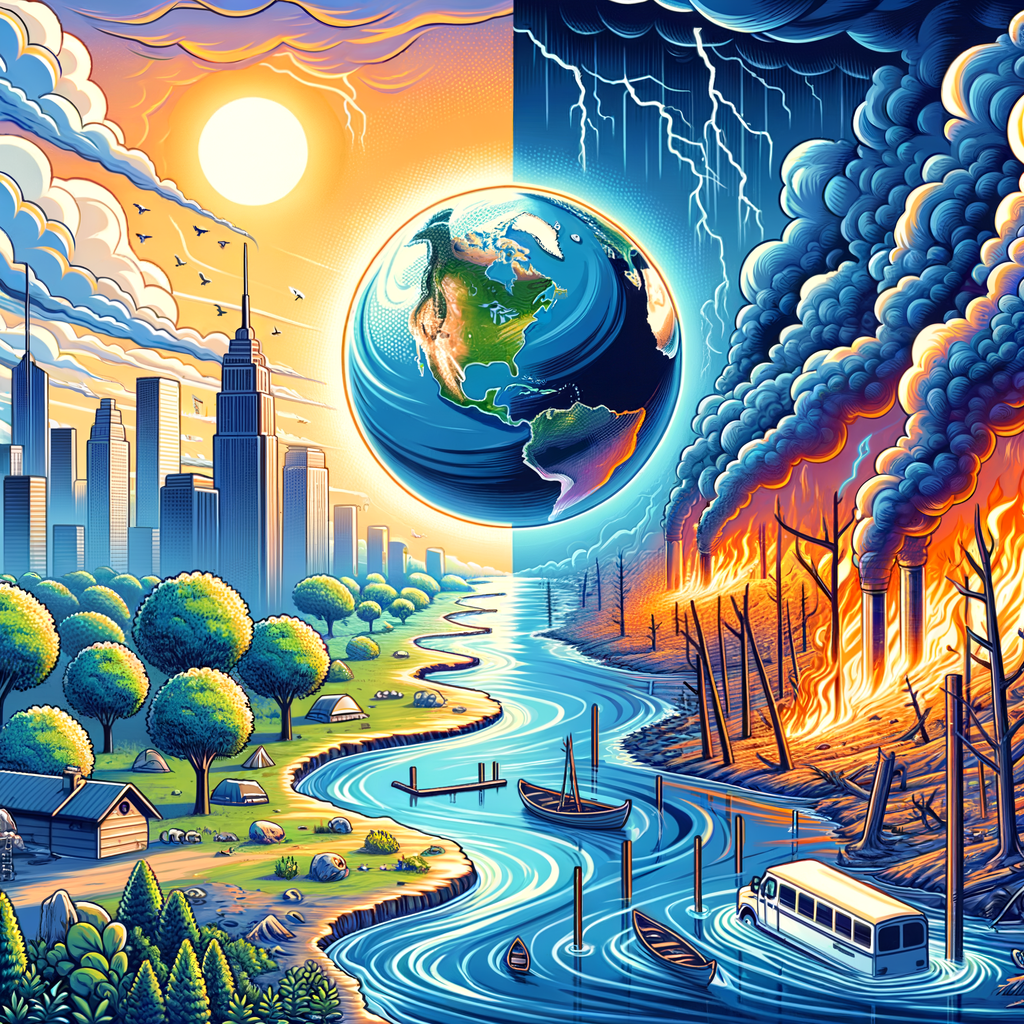
Climate change is a global phenomenon that has far-reaching effects on various aspects of the natural world, including ocean currents and storms. As the Earth’s average temperatures continue to rise, largely due to anthropogenic activities, its oceans are not only becoming warmer but also more stratified. This warming has significant repercussions for oceanic circulation patterns and the frequency, intensity, and destructiveness of storms. The interconnection between these oceanic changes and climate dynamics is of paramount importance because it plays a crucial role in regulating weather patterns, influencing marine ecosystems, and impacting human populations living along coastlines. By analyzing how climate change is affecting ocean currents and storm behaviors, we can better understand future climate scenarios and develop strategies to mitigate negative outcomes. This investigation explores the profound impacts of climate change on ocean currents and storms and why understanding these effects is pivotal for adapting to and mitigating climate change.
Oceans are the heart of the Earth’s climate system because of their ability to absorb vast quantities of heat from the atmosphere. A warming ocean influences the behavior of ocean currents, which are instrumental in distributing heat and nutrients around the globe. These currents, including the Gulf Stream, the California Current, and others, are driven by a combination of wind, Earth’s rotation, and differences in water densities. These ocean currents significantly affect regional climates and weather patterns, shaping environments from the Arctic to the tropics. Meanwhile, changes in ocean temperature and salinity can disrupt these currents, leading to broader climatic and environmental shifts. Storms, including hurricanes and typhoons, receive additional energy from warmer oceans, which can lead to increased storm intensity, greater rainfall, and elevated storm surges. These changes hold substantial implications for biodiversity, human livelihoods, and economic structures worldwide.
Impacts on Ocean Currents
Ocean currents play a pivotal role in the Earth’s climate by regulating energy distribution and marine biodiversity. These currents are primarily driven by wind, water temperature, salt content, and the Earth’s rotation. However, climate change is disrupting these traditional factors, leading to significant transformations in current patterns. One of the most critical consequences of global warming is the intensification and alteration of thermohaline circulation, often referred to as the “global conveyor belt.” This system of deep-ocean currents facilitates the distribution of heat and nutrients worldwide.
One notable current, the Atlantic Meridional Overturning Circulation (AMOC), which includes the Gulf Stream, has shown signs of weakening. This weakening is attributed to the influx of fresh meltwater from glaciers and ice sheets in Greenland, altering salinity levels and density-driven aspects of ocean circulation. If the AMOC continues to weaken, it could lead to drastic climate changes, particularly in Europe and North America, with potential cooling in these regions despite global temperatures rising. The disruption of such currents could also impact tropical weather patterns, potentially leading to shifts in ecosystems and changes in fishery distributions.
Additionally, ocean stratification increases due to climate change, affecting nutrient mixing and deep-water upwelling, vital for marine food chains. With increased ocean stratification, surface waters heat and freshwater influx decreases, hindering the mixing processes that deliver nutrients from the depths to the surface. This change could severely impact marine life and fisheries, further pressuring food security across human populations reliant on these marine resources.
Consequences for Storm Formation and Intensity
As ocean temperatures rise, the potential energy available to storms also increases. This is particularly true for tropical cyclones, which derive their energy from warm sea surface temperatures. The correlation between warmer oceans and more powerful storms is well-documented, and current trends show a marked increase in the intensity and duration of storms. Higher sea surface temperatures lead to more evaporation, which in turn feeds cyclone development, exacerbating storm intensity and causing heavier rainfall.
Recent years have seen some of the most powerful storms on record, including hurricanes such as Katrina, Maria, and Dorian. Increases in storm surge intensity, combined with rising sea levels due to melting polar ice and thermal expansion of seawater, further compound the risk of severe coastal flooding. Approximately 40% of the global population resides within 100 kilometers of the coast, making these areas exceptionally vulnerable to storm-related impacts.
Moreover, while it is challenging to link any singular storm event directly to climate change, there is a clear trend of more intense storms over the decades. The warmer climate not only intensifies hurricanes and typhoons but also changes their tracks, with some areas seeing increased frequencies and others new storm occurrences. Additionally, increased atmospheric moisture supports higher precipitation rates during storms, leading to record levels of rainfall, flooding, and landslides.
Implications for Human and Environmental Systems
The combined effects of altered ocean currents and intensified storms have profound implications for human and natural systems. Coastal communities are particularly at risk due to increased incidents of flooding, storm surges, and erosion. Infrastructure, homes, and industry in these areas face greater threats as storms become more intense and frequent. Economically, the increased frequency of intense storms leads to higher insurance costs, greater disaster response expenditures, and significant impacts on tourism, which is often a vital industry for coastal regions.
Environmental systems are equally at risk. Coral reefs, often considered the ‘rainforests of the sea,’ suffer greatly due to warming oceans and increased storm activity. Storms physically damage reefs, while warmer waters contribute to coral bleaching events, threatening the biodiversity and viability of these ecosystems. Changes in current patterns also affect marine traffic, with potential implications for trade, fishing, and conservation efforts in areas with dynamic current fluctuations.
Furthermore, changes in ocean currents and storm behavior contribute to altered patterns of nutrient distribution and thermal stratification. These changes affect fisheries, impacting not only biodiversity but also food security and livelihoods, particularly in developing nations reliant on ocean resources.
Mitigation and Adaptation Strategies
Understanding and addressing the effects of climate change on ocean currents and storms require comprehensive strategies. Cities and communities near coastlines are increasingly investing in infrastructure resilience, such as sea walls, flood barriers, and early warning systems, to mitigate the impacts of intensified storms. Urban planning that considers rising sea levels and potential flood zones is becoming increasingly important to reduce vulnerability.
On a larger scale, combating climate change itself is paramount. Efforts to reduce greenhouse gas emissions through policy changes, technological innovations, and international agreements, such as the Paris Agreement, are vital to limiting global warming and its associated impacts on oceanic systems. Renewable energy investments, reforestation projects, and advancements in carbon capture technologies are all critical components of this strategy.
Research and monitoring of ocean currents and climate patterns are essential for developing effective response strategies. Enhanced modeling of oceanic and atmospheric systems can improve our understanding of climate dynamics, aiding in more accurate forecasts and better preparation for extreme weather events.
Conclusion
In conclusion, climate change exerts a profound effect on ocean currents and storm patterns, with significant implications for both human societies and natural ecosystems. The weakening of critical ocean currents, like the AMOC, and the intensification of storms due to elevated ocean temperatures demonstrate the interconnected nature of climate systems. These changes pose a range of challenges, from coastal infrastructure resilience to the protection of marine biodiversity and the sustainability of global fisheries.
Addressing these challenges calls for a multifaceted approach that includes mitigation of climate change through reduced emissions and enhanced adaptation strategies to minimize harm. Coastal regions must invest in resilient infrastructure, while global efforts to curb emissions are vital to reducing the driving forces behind these changes. Enhanced scientific research and international cooperation will play crucial roles in mitigating the impacts of climate change on ocean currents and storm intensity, helping societies adapt to an uncertain future.
The need for urgent and comprehensive action has never been more apparent. As we continue to witness the impacts of climate change, it becomes increasingly crucial to understand the complex interactions between climate and marine systems. Preparing for future scenarios requires not only scientific and technological advancements but also global commitment and strategic planning, ensuring that both human and environmental systems can adapt to the changing realities of a warming planet.
Frequently Asked Questions
1. How does climate change affect ocean currents?
Climate change significantly impacts ocean currents through the alteration of water temperature and salinity levels. As global temperatures increase, the ocean’s surface waters warm up. This warming disrupts the natural temperature gradient that drives ocean currents. Warmer water is less dense and rises, leading to a slower or altered flow in established currents. Additionally, climate change increases freshwater input into the oceans from melting polar ice caps and glaciers, which changes the salinity and density of seawater. This can weaken major currents like the Gulf Stream, which has a knock-on effect on global climate patterns, weather systems, and marine biodiversity.
2. How are storms influenced by climate change and changing ocean currents?
Climate change affects storms primarily through increases in ocean temperature. Warmer water feeds more energy into storm systems, making them more intense and potentially more destructive. This is particularly evident with hurricanes and typhoons, which draw strength from the warm ocean waters. Changing ocean currents due to climate shifts further impact the path and intensity of storms. As these currents alter, so do the distribution of heat and moisture in the atmosphere, which can increase the frequency and strength of storms in areas unaccustomed to such extreme weather. Additionally, altered currents can impact the migration patterns and habitats of marine life, which in turn can affect the ecosystems that rely on them.
3. In what ways do altered ocean currents affect global weather patterns?
Altered ocean currents can profoundly affect global weather patterns by redistributing heat and moisture around the planet. For instance, if the Gulf Stream slows down or shifts, it could lead to colder climates in Western Europe despite the overall increase in global temperatures. The reorganization of heat distribution could also contribute to longer droughts or wetter monsoon seasons in other regions. These changes could disrupt agriculture, freshwater availability, and increase the frequency and severity of extreme weather events like flash floods or prolonged droughts. Moreover, altered currents can contribute to shifts in climate zones, affecting biodiversity and human livelihoods.
4. How does ocean stratification, influenced by climate change, affect marine ecosystems?
Ocean stratification refers to the layering of ocean water based on density, which is affected by temperature and salinity. As climate change warms surface waters, stratification intensifies, creating a stronger barrier between the nutrient-rich deep waters and the nutrient-poor surface waters. This division inhibits the natural mixing process that brings up essential nutrients to marine life, affecting the entire marine food web from phytoplankton, which form the base of this web, to large predators. Without adequate nutrients, primary productivity decreases, impacting fish populations and marine biodiversity. Stratification can also create ‘dead zones’ with low oxygen levels, threatening marine life that cannot adapt to such environments.
5. What role do human activities play in exacerbating the effects of climate change on ocean currents and storms?
Human activities are a central factor in the exacerbation of climate change effects on ocean currents and storms. The burning of fossil fuels, deforestation, and various industrial processes release significant amounts of greenhouse gases into the atmosphere. These activities increase global temperatures, leading to the warming of ocean waters and contributing to ocean acidification and stratification. The by-product of warmer, more acidic oceans is the weakening of critical ocean currents, potentially leading to the stronger storms we are witnessing more often. Moreover, urbanization and poor land management practices increase surface runoff that can alter the salinity of ocean waters, further affecting the behavior of currents and intensity of storms. Consequently, mitigating these activities is crucial in addressing climate changes’ impacts on our oceans and atmosphere.