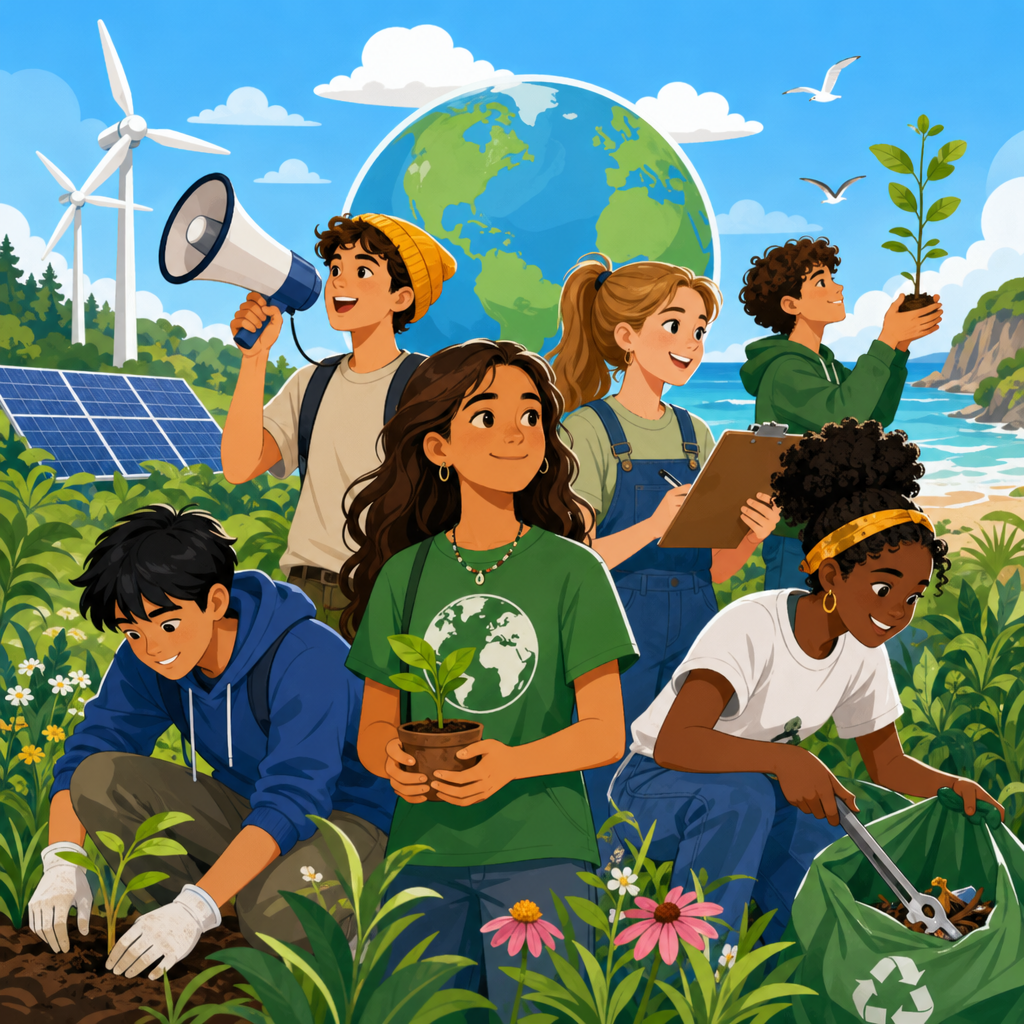
Youth-led environmental organizations are reshaping climate action by pairing urgency with practical organizing, policy pressure, and community education. In this hub on youth and climate activism, the focus is not only on who these groups are, but on how they operate, why they matter, and which organizations are setting the pace globally. Youth-led means young people are not just participating as volunteers; they are defining strategy, leading campaigns, speaking to institutions, and building durable networks. Environmental organizations in this context include grassroots movements, advocacy coalitions, mutual-aid centered groups, legal campaign platforms, and international education networks working on climate change, biodiversity loss, pollution, and environmental justice. After years of tracking climate campaigns and reviewing youth movement strategy, one pattern is clear: the most effective groups combine moral clarity with disciplined execution.
This matters because climate policy timelines and political timelines rarely align. Young organizers understand that the costs of delay will fall heavily on their generation, so they have pushed climate change from a technical issue into a public accountability issue. They have influenced municipal policy, school divestment campaigns, fossil fuel debates, adaptation planning, and court cases. They have also expanded the conversation beyond carbon targets to include labor, racial equity, Indigenous sovereignty, public health, and loss and damage. For readers exploring youth and climate activism, this article serves as a hub: it identifies leading organizations to watch, explains the strategies they use, and shows how their work connects to wider climate change debates. If you want to understand where climate activism is headed, start with the groups young people are building now.
Why youth-led climate activism has become a defining force
Youth climate activism has become central because it answers three questions directly. Who will live longest with climate disruption? Young people. Who can mobilize quickly across borders? Networked youth movements. Who can frame climate change as a fairness issue rather than a niche environmental topic? Again, youth organizers. Since the late 2010s, student strikes, digital campaigns, citizen assemblies, shareholder pressure, and local justice work have moved from isolated actions to coordinated ecosystems. This evolution matters. The strongest youth-led environmental organizations are no longer judged only by rally size; they are judged by policy outcomes, coalition depth, member retention, and their ability to translate public attention into institutional change.
In practice, youth organizers often outperform larger legacy institutions in message discipline and speed. They are fluent in social platforms, but the most credible groups are not merely online brands. They maintain volunteer systems, media protocols, training programs, legal support relationships, and policy demands that can survive beyond a viral moment. Many also anchor climate change in lived experience. A youth campaign in a flood-prone city may combine heat mapping, public transit advocacy, and emergency preparedness. A university-based divestment network may pair financial research with student referendums and trustee engagement. This blend of storytelling and structure is what makes youth and climate activism such a powerful subtopic within the broader climate change landscape.
What makes a youth-led environmental organization worth watching
Not every visible group has lasting influence, so it helps to use clear criteria. First, leadership must be genuinely youth-driven, with young people holding decision-making authority rather than serving as symbolic spokespeople. Second, the organization should have a replicable model, such as school chapters, local hubs, policy toolkits, or campaign training that allows growth without losing direction. Third, it should define measurable goals. Strong examples include ending new fossil fuel approvals, securing city-level climate adaptation funding, winning campus divestment votes, or increasing youth representation in formal negotiations. Fourth, it should demonstrate coalition literacy by working with scientists, labor groups, frontline communities, and legal advocates where needed.
Fifth, the group should show resilience. I look closely at whether an organization can sustain action between major climate summits or media spikes. Groups worth watching typically publish demands, train new leaders, and document campaign outcomes. They know when protest is the right tool and when negotiation, litigation support, or administrative advocacy is more effective. There is also a strategic difference between broad awareness movements and specialist organizations. Both matter. Awareness movements can change the public agenda, while specialist groups often win targeted outcomes in finance, policy, or local planning. The organizations below stand out because they move beyond symbolic activism and shape the terms of climate change debate in concrete ways.
Top youth-led environmental organizations to watch
Several organizations consistently stand out for scale, originality, and influence. Fridays for Future remains the most globally recognized youth climate network, known for school strikes that transformed climate change into a mainstream political issue in dozens of countries. Its local chapters vary in focus, but its enduring contribution is agenda-setting: it made climate inaction politically visible. Sunrise Movement, based in the United States, is one of the clearest examples of youth-led organizing tied to electoral strategy and policy design. It helped move climate policy into the center of national political debate through demands associated with a Green New Deal framework, while also investing heavily in leadership development and local hubs.
Zero Hour deserves attention for integrating climate justice language early and consistently, especially around the experiences of young people from marginalized communities. Its emphasis on intersectionality influenced how many later youth campaigns communicated. The Sustainable Ocean Alliance focuses on ocean health, entrepreneurship, and youth innovation, proving that climate activism is not limited to protest; it can also include venture support, policy programs, and science-backed marine solutions. Earth Uprising has built a strong digital-native model that connects climate education, storytelling, and organizing, particularly useful for mobilizing younger audiences across countries. Youth Climate Leaders, Mock COP, and other summit-adjacent networks are also important because they train young negotiators and policy communicators who can engage directly with institutions.
| Organization | Primary Focus | Why It Stands Out |
|---|---|---|
| Fridays for Future | Mass mobilization and public pressure | Global strike model shifted climate change into mainstream politics |
| Sunrise Movement | Policy advocacy and electoral organizing | Built youth power around major national climate policy demands |
| Zero Hour | Climate justice and youth leadership | Centered equity and frontline perspectives in national campaigns |
| Sustainable Ocean Alliance | Ocean solutions and innovation | Links youth leadership with entrepreneurship and marine policy |
| Earth Uprising | Digital organizing and climate education | Reaches global youth audiences through accessible campaign storytelling |
Other organizations deserve close monitoring because they operate effectively at regional or issue-specific levels. Extinction Rebellion Youth branches in some countries have brought civil disobedience tactics into youth organizing, though results vary and tactics can be polarizing. The British organization Students Organising for Sustainability has helped connect campus sustainability efforts with student leadership pipelines. The Australian Youth Climate Coalition has long shown how national youth movements can influence public debate, train campaigners, and connect local action with federal policy conversations. In the Global South, many youth-led organizations receive less media attention despite doing some of the most advanced work on adaptation, food systems, water security, and climate finance accountability. Those groups often understand the climate crisis as an immediate development issue rather than a future risk.
How these groups create real-world impact
The best youth-led environmental organizations create impact through a mix of narrative power and institutional leverage. Public demonstrations remain important because they attract attention, recruit new members, and signal urgency. But by themselves, marches rarely produce policy change. Effective organizations turn visibility into leverage by targeting decisions, budgets, permits, procurement rules, elections, or corporate commitments. Sunrise Movement, for example, did not stop at protest optics. It invested in canvassing, media training, and policy framing that influenced how elected officials discussed jobs, infrastructure, and climate change. Campus divestment groups have used a similar logic, pressuring universities not just with moral arguments but with financial analysis of stranded asset risk and long-term portfolio exposure.
Training is another major differentiator. Organizations with durable influence teach members how to facilitate meetings, speak to journalists, analyze legislation, de-escalate conflict, and map power. Those skills are the infrastructure of youth and climate activism. Groups also create impact by localizing climate change. A global slogan becomes meaningful when translated into a school district electrification campaign, a city tree-canopy equity plan, or a fight against petrochemical expansion in a specific neighborhood. Many youth-led organizations now work closely with climate scientists, public health experts, and environmental justice advocates to ensure demands are credible. That credibility matters when movements move from the street into hearings, consultations, and closed-door negotiations.
Key trends shaping the future of youth and climate activism
Five trends are defining the next phase. First is the shift from awareness to implementation. Young organizers increasingly ask not whether leaders accept climate science, but whether governments are funding grid upgrades, transit, building retrofits, adaptation, and resilience. Second is the rise of climate justice as a default frame. Groups now routinely discuss heat inequality, displacement, air pollution, and historical responsibility, not only emissions. Third is legal and procedural sophistication. Youth plaintiffs and movement-aligned legal teams have supported landmark climate litigation in multiple jurisdictions, and even when cases do not fully succeed, they can force disclosure and reframe state duties.
Fourth is diversification of tactics. Some organizations focus on elections, others on mutual aid during fires or floods, others on green entrepreneurship, and others on international advocacy around climate finance and loss and damage. This diversity is healthy because climate change is not one problem with one venue for action. Fifth is the tension between speed and sustainability. Fast growth can exhaust volunteers, create governance problems, and blur strategy. The organizations most worth watching are addressing burnout with leadership rotation, clearer decision structures, and better political education. They are learning that building youth power requires not only passion but systems that let people contribute for years, not months.
How to evaluate, support, and learn from these organizations
If you want to follow youth-led environmental organizations seriously, look past follower counts. Read their campaign pages, demands, annual reports, and coalition partners. Check whether they name specific targets, timelines, and decision-makers. A credible organization should be able to answer basic questions: What change are you seeking? Who has the authority to deliver it? What evidence supports your demand? How are young members trained and protected? It is also worth noting funding transparency and governance. Grassroots energy matters, but groups handling donations, partnerships, or legal risk need sound operations. Strong internal practice usually correlates with stronger external results.
Support can take several forms. Readers can donate, volunteer specialized skills, attend local actions, amplify campaigns responsibly, or connect youth groups with schools, researchers, and community organizations. Educators can invite organizers to speak about climate change in ways that connect science with civic action. Journalists can quote youth leaders not just as emotional witnesses but as policy actors. For people building their own initiatives, the lesson from successful youth and climate activism is straightforward: choose a winnable target, ground demands in evidence, build alliances early, and create leadership pathways so the work outlasts its founders. These organizations are worth watching because they are already shaping public priorities. Follow their campaigns, learn from their methods, and support the groups turning climate concern into measurable change.
Frequently Asked Questions
What makes an environmental organization truly youth-led?
A youth-led environmental organization is one where young people are doing far more than supporting events or showing up for campaigns. They are setting priorities, shaping strategy, making decisions, representing the organization publicly, and often building the structure of the movement itself. In practical terms, that means youth leaders may be planning direct actions, coordinating volunteers, meeting with policymakers, running communications, developing educational resources, and deciding how the group responds to local and global environmental issues. This distinction matters because youth-led groups often bring a different sense of urgency, creativity, and accountability to climate and environmental work. They are not simply reacting to decisions made by older institutions; they are asserting their own political voice and designing campaigns around the future they expect to inherit. When evaluating which organizations to watch, it helps to look at who holds leadership roles, who determines campaign goals, and whether young organizers have real authority rather than symbolic visibility.
Why are youth-led environmental organizations becoming so influential worldwide?
Youth-led environmental organizations are gaining global influence because they combine moral clarity with practical organizing. Young leaders are often able to communicate the stakes of the climate crisis in direct, compelling terms, but their impact goes beyond powerful messaging. Many of these organizations are building sophisticated campaigns that connect public education, grassroots mobilization, policy advocacy, and media pressure. They are especially effective at turning climate concern into participation, whether through strikes, digital campaigns, mutual aid efforts, local restoration projects, or legislative advocacy. Their influence also reflects the fact that young people are increasingly trusted messengers on long-term environmental issues. They speak from lived stakes, and that gives weight to their demands in public conversations about energy, justice, biodiversity, pollution, and adaptation. Globally, youth-led groups are also forming networks across countries, allowing local struggles to inform international agendas. That ability to link community-based work with global visibility is one reason these organizations continue to shape how climate action is discussed and pursued.
How do top youth-led environmental organizations typically operate?
Most leading youth-led environmental organizations operate through a mix of decentralized organizing, campaign-based leadership, and strong public engagement. Some are structured as grassroots networks with local chapters, while others function as advocacy organizations with a central team coordinating research, strategy, partnerships, and media outreach. In either model, successful groups usually build around a clear mission and a few focused methods of impact. These may include organizing climate strikes, lobbying for policy change, training young activists, producing educational content, partnering with schools and communities, or holding corporations and institutions accountable through public campaigns. What sets the strongest organizations apart is their ability to turn urgency into systems. They recruit and train new leaders, create toolkits and communication frameworks, establish decision-making processes, and build coalitions that extend their reach. Many also understand that environmental action cannot be separated from equity, public health, and economic justice, so their operations often reflect a broader approach to social change. Rather than relying on a single moment of attention, the most effective youth-led groups build durable infrastructure that can sustain organizing over time.
Which qualities should readers look for when identifying youth-led environmental organizations to watch?
Readers should look for organizations that demonstrate leadership depth, strategic clarity, measurable impact, and the ability to grow beyond a single viral moment. A strong youth-led environmental organization usually has clearly defined campaigns, credible spokespersons, and evidence that it can mobilize people consistently. It is also worth paying attention to whether the group is influencing policy conversations, changing institutional behavior, expanding public understanding, or building new leaders in communities that are often overlooked. Another important quality is adaptability. The environmental landscape changes quickly, and organizations worth watching are often those that can respond to emerging issues without losing focus. They may shift from protest to policy advocacy, from awareness campaigns to local implementation, or from national messaging to community resilience work as conditions demand. Transparency and inclusion also matter. The most promising groups are not only energetic; they are thoughtful about who gets represented, how decisions are made, and how environmental action connects to justice. When an organization combines bold vision with practical results, it usually signals that its influence is likely to grow.
Why do youth-led environmental organizations matter beyond climate awareness?
These organizations matter because they are not just raising awareness; they are helping redefine leadership, civic participation, and public accountability in the environmental movement. Awareness is important, but on its own it rarely changes policy, investment, infrastructure, or behavior at scale. Youth-led groups often push beyond awareness by creating pressure points that institutions cannot easily ignore. They bring environmental issues into schools, city councils, legislatures, international forums, and everyday public life. They also help translate large, complex issues into concrete action, whether that means demanding clean energy commitments, organizing community-based environmental education, resisting pollution in frontline neighborhoods, or advocating for adaptation measures that protect vulnerable populations. Just as importantly, youth-led organizations are building a pipeline of future movement leaders. The skills young organizers develop through coalition-building, negotiation, media engagement, and campaign strategy often carry into long-term public leadership. In that sense, these groups are not only responding to today’s environmental crises. They are shaping the people, frameworks, and expectations that will influence environmental governance for years to come.