
Famous industrial accidents have repeatedly reshaped environmental policy by exposing how a single equipment failure, design flaw, or management lapse can contaminate coastlines, poison rivers, destroy livelihoods, and force governments to rewrite the rules for oil spills and industrial accidents. In this hub article, I will map the landmark disasters that changed regulation, explain the policy mechanisms they triggered, and show how these events still influence corporate risk management, emergency planning, and environmental enforcement today.
Within the broader Environmental Disasters topic, oil spills and industrial accidents refers to sudden, human-caused events that release hazardous substances at a scale large enough to harm ecosystems, public health, or economic activity. The category includes tanker groundings, offshore well blowouts, refinery explosions, pipeline ruptures, chemical plant leaks, mine tailings failures, and toxic gas releases. Although each event has unique technical causes, the policy pattern is remarkably consistent: an accident reveals a preventable weakness, public outrage follows, investigators identify systemic failures, and lawmakers respond with stricter liability, monitoring, safety, and cleanup requirements.
This subject matters because environmental policy is often written in reaction to catastrophe rather than in anticipation of it. I have worked on environmental content and compliance research long enough to see the same lesson repeat across sectors: companies tend to optimize for production until an accident makes neglected risks visible. The result is that many of the protections now considered standard, from double-hulled tankers to stronger process safety audits and emergency response planning, were not adopted widely until after mass damage occurred. Understanding these turning points helps readers evaluate today’s risks in offshore drilling, petrochemicals, shipping, mining, and energy transport.
It also matters because this subtopic acts as a hub. If you are researching oil spills and industrial accidents, you are usually trying to answer a practical question: which disasters changed the law, what rules came from them, and where are the remaining gaps? The cases below provide those answers. They connect technical failure to policy reform and show why environmental law now blends prevention, preparedness, response, remediation, and long-term liability instead of relying on cleanup alone.
Torrey Canyon, Santa Barbara, and the birth of modern spill governance
The modern era of oil spill policy is often traced to the 1967 grounding of the supertanker Torrey Canyon off the coast of Cornwall and the 1969 Santa Barbara offshore blowout in California. Torrey Canyon released roughly 100,000 tons of crude oil, fouling shores in the United Kingdom and France. Governments at the time lacked a coordinated framework for marine spill response, compensation, or international tanker standards. The cleanup itself became a warning sign; authorities used detergents and bombing runs in ways that caused additional ecological damage, underscoring how unprepared public agencies were for large marine pollution events.
Santa Barbara had an even more direct effect on U.S. environmental policy. The blowout at Union Oil’s Platform A discharged an estimated three million gallons of oil into the Santa Barbara Channel, coating beaches and killing birds, fish, and marine mammals. Public reaction was intense because the spill occurred near affluent coastal communities and generated vivid television images. In policy terms, Santa Barbara helped catalyze the political momentum that produced the National Environmental Policy Act of 1969, expanded federal scrutiny of offshore drilling, and energized the creation of the U.S. Environmental Protection Agency in 1970. It also strengthened the modern environmental movement by linking local ecological damage to national governance failures.
These early accidents established two ideas that still define oil spill regulation. First, pollution from industrial accidents is not only a private operational issue; it is a public governance issue requiring state capacity, legal authority, and technical readiness. Second, response planning is not enough without prevention. Better navigation, safer drilling controls, baseline environmental review, and transparent permitting became recognized as policy essentials rather than optional precautions.
Seveso and Bhopal transformed chemical accident regulation
If oil spills taught governments about marine pollution and emergency response, chemical disasters showed that industrial accidents could create invisible, long-duration hazards reaching far beyond a facility fence line. In 1976, a runaway reaction at a plant near Seveso, Italy released a toxic cloud containing dioxin, especially TCDD, contaminating nearby communities and forcing evacuations, animal culls, and extensive soil management. The event directly led to the European Community’s Seveso Directive, one of the most influential industrial safety laws ever enacted. Its central policy innovation was to regulate hazardous installations based on the quantities and types of dangerous substances stored onsite, requiring operators to identify major accident hazards, implement safety management systems, and coordinate with land-use planners and emergency services.
Bhopal, India, in 1984 remains the deadliest industrial gas leak in history. Water entered a methyl isocyanate tank at the Union Carbide pesticide plant, triggering an exothermic reaction and releasing toxic gas over densely populated neighborhoods. Immediate death estimates vary, but thousands died within days, and long-term mortality and morbidity affected many more. The disaster became a global case study in how poor maintenance, disabled safety systems, inadequate worker training, weak oversight, and unsafe siting can converge into mass casualty environmental harm.
Bhopal’s policy legacy was extensive. India enacted the Environment Protection Act of 1986 and later strengthened rules on hazardous waste, chemical storage, and emergency preparedness. Globally, Bhopal influenced community right-to-know principles, chemical inventory disclosure, and process safety regulation. In the United States, it accelerated reforms that contributed to OSHA’s Process Safety Management standard and the EPA Risk Management Program, both designed to prevent catastrophic releases through hazard analysis, operating procedures, mechanical integrity programs, management of change controls, and emergency planning. In plain terms, Bhopal changed policy by making it unacceptable for companies handling acutely hazardous chemicals to rely on informal practices or undocumented assumptions.
Exxon Valdez and the legal architecture of oil spill liability
The 1989 Exxon Valdez spill in Alaska is the defining U.S. oil spill case because it transformed liability, vessel standards, and contingency planning. When the tanker struck Bligh Reef in Prince William Sound, it released about 11 million gallons of crude oil into a sensitive marine environment. The location amplified the damage: cold waters slowed natural degradation, shorelines were difficult to access, and fisheries, seabirds, sea otters, and local communities suffered long-term losses. I still use Exxon Valdez as the clearest example of why spill response capacity has to match geographic reality, not just paper compliance.
The major legislative response was the Oil Pollution Act of 1990. That law imposed stronger liability for responsible parties, required vessel and facility response plans, expanded federal cleanup authority, created the Oil Spill Liability Trust Fund, and mandated the phase-in of double-hulled tankers for many operations in U.S. waters. It also reinforced the natural resource damages framework, allowing trustees to seek compensation not only for cleanup costs but for ecological injury and restoration. This was a profound shift. Before Exxon Valdez, many companies treated spill risk mainly as a cleanup expense; after OPA 90, they had to account for broader restoration liability and much more formal preparedness expectations.
The spill also changed industry practice beyond statutory text. Tanker escort rules tightened in key areas, pilotage practices were revisited, incident command systems became more standardized, and drills became central to compliance. The lesson policymakers drew was simple: when high-consequence transportation systems fail, prevention and response must be regulated together. That principle still underpins marine oil spill governance around the world.
Deepwater Horizon, offshore drilling reform, and harder questions about systemic risk
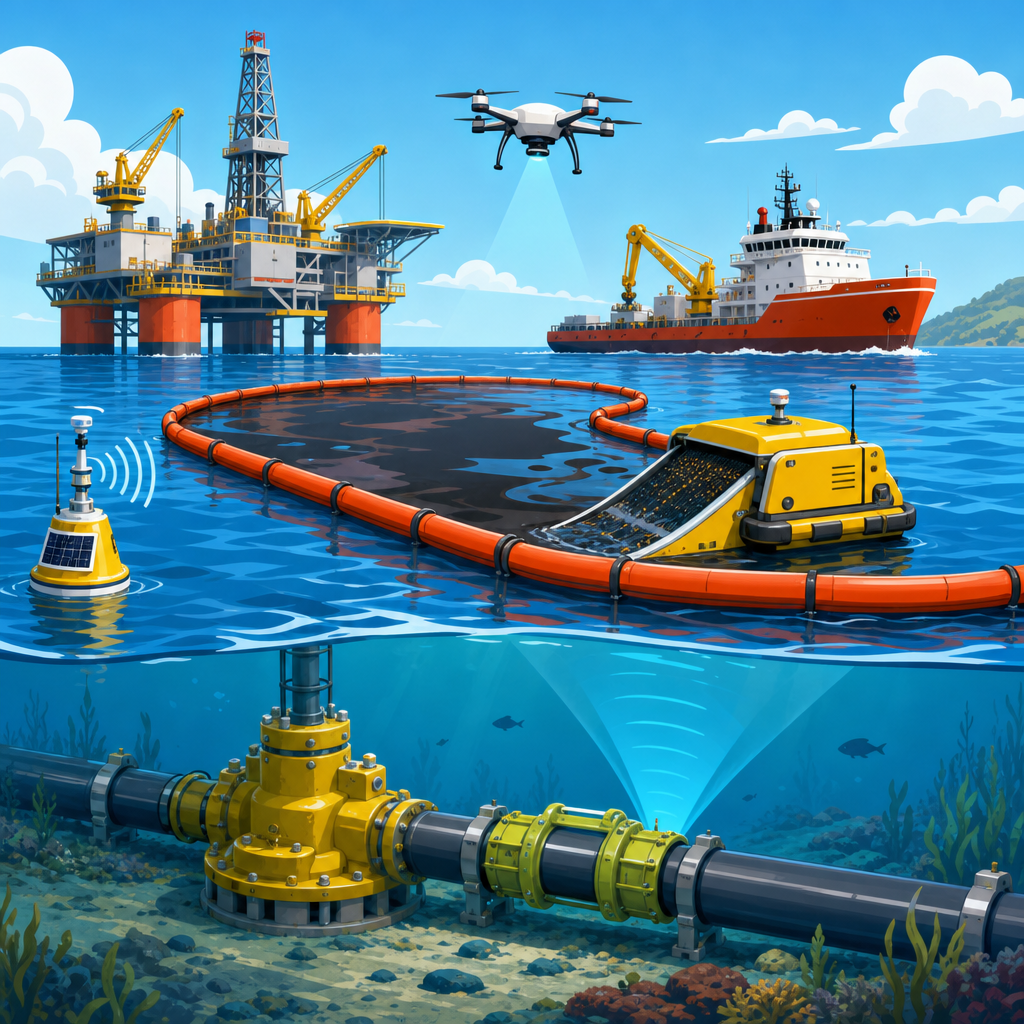
The 2010 Deepwater Horizon disaster in the Gulf of Mexico was not just a large oil spill; it was a systems failure involving well design, cementing, negative pressure test interpretation, blowout preventer performance, contractor coordination, and regulatory oversight. The Macondo well blowout killed 11 workers and released an estimated 4.9 million barrels of oil, making it the largest marine oil spill in U.S. history. Unlike a tanker spill, this was a prolonged subsea release, which complicated source control, skimming, dispersant use, shoreline protection, and ecological assessment across multiple states.
Its policy effects were immediate and structural. The former Minerals Management Service was reorganized, separating leasing, revenue collection, and safety enforcement functions to reduce conflicts. New offshore drilling rules addressed well integrity, cement barriers, blowout preventers, real-time monitoring, workplace safety, and safety and environmental management systems. Investigations by the National Commission on the BP Deepwater Horizon Oil Spill and Offshore Drilling, the U.S. Chemical Safety Board, and other bodies emphasized that the disaster grew from normalized risk-taking rather than one freak malfunction.
For environmental policy, Deepwater Horizon mattered because it forced regulators to confront low-probability, high-impact failures in complex offshore systems. It also elevated the importance of baseline ecological data, damage assessment science, and long-term restoration funding. BP ultimately committed tens of billions of dollars in penalties, cleanup, and restoration settlements, including funds under the RESTORE Act framework for Gulf recovery. The broader policy lesson was that frontier extraction requires independent verification, redundant barriers, and a regulator technically capable of challenging operator assumptions in real time.
| Accident | Year | Main pollutant | Key policy change |
|---|---|---|---|
| Santa Barbara blowout | 1969 | Crude oil | Stronger offshore review and momentum for modern U.S. environmental governance |
| Seveso | 1976 | Dioxin | Hazard-based industrial accident directives in Europe |
| Bhopal | 1984 | Methyl isocyanate | Process safety, emergency planning, and chemical disclosure reforms |
| Exxon Valdez | 1989 | Crude oil | Oil Pollution Act, stronger liability, response plans, double hulls |
| Deepwater Horizon | 2010 | Crude oil | Offshore drilling oversight reform and tougher well-control rules |
Refinery explosions, pipeline failures, and why process safety became environmental policy
Not every environmentally significant industrial accident begins with a dramatic spill at sea. Onshore explosions and pipeline ruptures have also driven major reforms. The 2005 Texas City refinery explosion killed 15 workers and injured more than 170. While remembered primarily as an occupational safety disaster, its causes, including overfilled equipment, poor alarm management, outdated infrastructure, and weak safety culture, highlighted how process safety failures can quickly become environmental emergencies. Investigations by the U.S. Chemical Safety Board pushed companies and regulators toward stricter auditing, inherently safer design discussions, and board-level accountability for major accident risk.
Pipeline incidents reinforce a parallel lesson: leak detection and integrity management are environmental policy issues, not merely engineering details. The 2010 Enbridge Line 6B spill near Marshall, Michigan released more than 800,000 gallons of diluted bitumen into the Kalamazoo River system. Cleanup became one of the costliest inland oil spill responses in U.S. history because submerged oil complicated recovery. The National Transportation Safety Board criticized the operator’s control room response and compared the organizational failures to those seen in other major accidents. In practical policy terms, the spill increased pressure for better crack detection, valve placement, control room management, public reporting, and understanding how unconventional crude behaves in water.
These examples broaden the definition of environmental policy. It is not limited to emissions permits or cleanup standards. It includes maintenance regimes, alarm philosophy, management of change, operator training, contractor oversight, integrity testing, and emergency communications. When those systems fail, pollution is often the downstream result. Effective policy therefore treats environmental protection and major hazard control as inseparable.
What these accidents teach policymakers and companies now
Across oil spills and industrial accidents, the same policy design principles appear again and again. First, liability must be substantial enough to change behavior before an accident, not merely assign costs afterward. Second, transparency matters; public disclosure of hazardous inventories, incident histories, and response capabilities improves accountability. Third, independent oversight is essential because self-reporting alone rarely catches normalized deviance. Fourth, emergency preparedness must be realistic, site-specific, and exercised under difficult scenarios, including bad weather, power loss, and contractor failure. Fifth, environmental restoration needs long-term funding because ecological recovery can take decades.
There are also limits to policy that deserve honest recognition. Rules can become overly prescriptive and encourage checklist compliance instead of risk thinking. Smaller operators may struggle with the cost of sophisticated monitoring or redundant systems. Regulators can be underfunded, fragmented, or politically constrained. New technologies, such as ultra-deepwater drilling, larger chemical inventories, and aging pipeline networks, often outpace existing standards. Still, the historical record is clear: after major accidents, stronger governance reduces recurrence when rules are enforced and when companies build genuine safety culture rather than perform compliance for auditors.
For readers using this page as a hub within Environmental Disasters, the main takeaway is that famous industrial accidents changed environmental policy by expanding the focus from cleanup to prevention, preparedness, liability, disclosure, and restoration. Torrey Canyon and Santa Barbara exposed the need for modern spill governance. Seveso and Bhopal proved that chemical risk requires systematic hazard management. Exxon Valdez rewrote oil spill liability and preparedness in the United States. Deepwater Horizon showed that complex offshore systems demand independent technical oversight and stronger barrier management. Refinery and pipeline disasters confirmed that process safety is environmental protection in operational form.
Those changes still shape the way governments permit projects, inspect facilities, assess damages, and require emergency planning. They also shape how responsible companies operate. The organizations that learn from history invest in mechanical integrity, scenario-based drills, competent staffing, transparent reporting, and leadership attention to low-frequency, high-consequence risk. If you are exploring oil spills and industrial accidents more deeply, use this article as your starting point, then continue into case-specific analyses of spills, blowouts, leaks, explosions, and cleanup policy to see how these hard lessons apply to today’s environmental decisions.
Frequently Asked Questions
Which industrial accidents had the biggest impact on environmental policy?
Several disasters stand out because they did more than cause immediate damage; they permanently changed how governments regulate hazardous industries. The 1969 Santa Barbara oil spill helped energize the modern environmental movement in the United States and contributed to the political momentum behind stronger federal oversight, including the creation of the Environmental Protection Agency and landmark laws such as the National Environmental Policy Act. The 1978 Amoco Cadiz spill off the coast of France pushed Europe to improve tanker safety standards and sharpen rules on liability for maritime pollution. The 1984 Bhopal gas tragedy in India exposed the catastrophic consequences of weak process safety, poor maintenance, and inadequate emergency planning, influencing chemical safety regulation and public pressure for stronger right-to-know laws worldwide.
The 1986 Chernobyl disaster transformed nuclear regulation by demonstrating that environmental contamination can cross national borders and last for decades. It accelerated international agreements on notification, emergency cooperation, and reactor safety culture. The 1989 Exxon Valdez spill in Alaska led directly to the U.S. Oil Pollution Act of 1990, which tightened spill response planning, increased liability, and required double-hull tankers. More recently, the 2010 Deepwater Horizon blowout in the Gulf of Mexico triggered major reforms in offshore drilling oversight, well-control rules, and corporate risk management expectations. What connects all of these events is that they made hidden risks visible. Once the public saw the scale of ecological damage and institutional failure, lawmakers had both the pressure and the evidence needed to toughen environmental policy.
How do industrial accidents actually lead to new environmental laws and regulations?
Major accidents often trigger policy change through a predictable sequence. First comes the disaster itself: a spill, explosion, leak, or blowout causes immediate harm to workers, nearby communities, wildlife, water, air, or coastlines. Then investigators begin identifying what went wrong. In many cases, the problem turns out not to be a single bad decision, but a chain of failures involving equipment design, deferred maintenance, weak inspection systems, poor operator training, inadequate emergency response, and flawed management incentives. Once those failures become public, pressure builds from affected residents, journalists, courts, scientists, and advocacy groups.
That pressure usually produces formal inquiries, legislative hearings, and technical reviews. Policymakers then translate the findings into regulatory mechanisms such as stricter permitting, mandatory risk assessments, better containment standards, spill response plans, reporting obligations, stronger penalties, and clearer liability rules. Sometimes agencies are reorganized because the old structure was too close to industry or unable to enforce rules effectively. In other cases, lawmakers create compensation funds, require companies to prove financial responsibility, or impose technology upgrades such as double hulls, blowout preventers, leak detection systems, and secondary containment. Just as important, accidents often shift policy culture. They change what regulators consider unacceptable risk and what the public expects from operators. In that sense, industrial disasters do not just create new rules; they redefine the baseline for environmental accountability.
Why was the Exxon Valdez spill so important for environmental policy in the United States?
The Exxon Valdez spill in 1989 became a defining moment because it demonstrated how a single tanker accident could devastate a sensitive ecosystem and expose major weaknesses in spill prevention and response. When the tanker ran aground in Prince William Sound, millions of gallons of crude oil spread through one of the most ecologically rich marine environments in North America. The spill killed wildlife, disrupted fisheries, harmed Indigenous and local communities, and revealed that existing cleanup capacity was nowhere near adequate for a disaster of that scale. Public outrage was intense, not only because of the environmental destruction, but because the response appeared slow, fragmented, and unprepared.
The most important policy result was the Oil Pollution Act of 1990. That law significantly reshaped U.S. environmental regulation related to oil transport and spill preparedness. It increased liability for polluters, required vessel and facility response plans, expanded federal authority over cleanup, and strengthened standards for tanker operations. It also accelerated the move toward double-hull tankers, a major engineering and risk-reduction measure designed to lower the chance of catastrophic releases after collisions or groundings. Beyond the statute itself, Exxon Valdez changed industry behavior. It pushed companies to take worst-case discharge planning more seriously, sharpened the focus on contractor readiness and equipment staging, and reinforced the idea that environmental risk is not just a compliance issue but a core operational issue. Even decades later, the spill remains a benchmark case in how environmental disaster can force durable legal and institutional reform.
What did Deepwater Horizon change about offshore drilling regulation and corporate risk management?
The Deepwater Horizon disaster in 2010 changed offshore policy because it showed that high-tech energy production can still fail catastrophically when complex systems, human judgment, and organizational incentives break down at the same time. The blowout on the Macondo well killed 11 workers and released enormous quantities of oil into the Gulf of Mexico over a prolonged period. The event was not simply an isolated mechanical failure. Investigations highlighted deeper problems involving well design decisions, cementing issues, pressure test interpretation, blowout preventer reliability, emergency preparedness, and fragmented oversight. In other words, the disaster revealed a systemic failure in both engineering controls and safety culture.
In response, the U.S. government overhauled offshore oversight. Regulators reorganized the former Minerals Management Service, separating leasing and revenue functions from safety and environmental enforcement to reduce conflicts of interest. New and revised rules addressed well integrity, blowout preventers, real-time monitoring, containment readiness, safety and environmental management systems, and stronger documentation of risk controls. The disaster also had a major influence on corporate governance. Offshore operators faced heightened expectations to identify low-probability, high-consequence hazards, verify critical barriers independently, and plan for worst-case scenarios in a more realistic way. Deepwater Horizon helped cement a broader policy lesson that still shapes industrial regulation today: compliance alone is not enough if companies do not actively manage systemic risk, challenge unsafe assumptions, and build decision-making processes that account for uncertainty and cascading failure.
How do these famous accidents still influence environmental policy and business decisions today?
The legacy of famous industrial accidents is still visible in modern environmental policy because the rules created after each disaster rarely remain limited to that one industry or incident. Policymakers and regulators use these events as case studies when updating standards for emergency planning, hazardous materials handling, water protection, offshore drilling, pipeline integrity, chemical storage, and corporate disclosure. For example, the lessons of oil spills continue to shape vessel design rules, incident command structures, shoreline protection planning, and restoration funding. Chemical disasters such as Bhopal continue to inform process safety management, community right-to-know requirements, land-use debates, and expectations for transparency about hazardous inventories near populated areas. Nuclear accidents continue to influence international monitoring, cross-border notification, evacuation planning, and long-term contamination policy.
For businesses, these events matter because they changed what counts as responsible risk management. Companies now face greater scrutiny from regulators, insurers, investors, lenders, and local communities. A firm cannot assume that meeting the minimum written standard will shield it from legal, financial, or reputational damage after an incident. Stakeholders increasingly expect robust safety culture, independent auditing, scenario planning, supply chain resilience, maintenance discipline, and credible crisis communication. In practical terms, the accidents that changed environmental policy also changed boardroom priorities. They helped make environmental risk a strategic issue tied to operational continuity, social license to operate, and long-term corporate value. That is why these disasters remain so relevant: they are not just historical turning points, but ongoing reference points for how governments and companies try to prevent the next major environmental catastrophe.