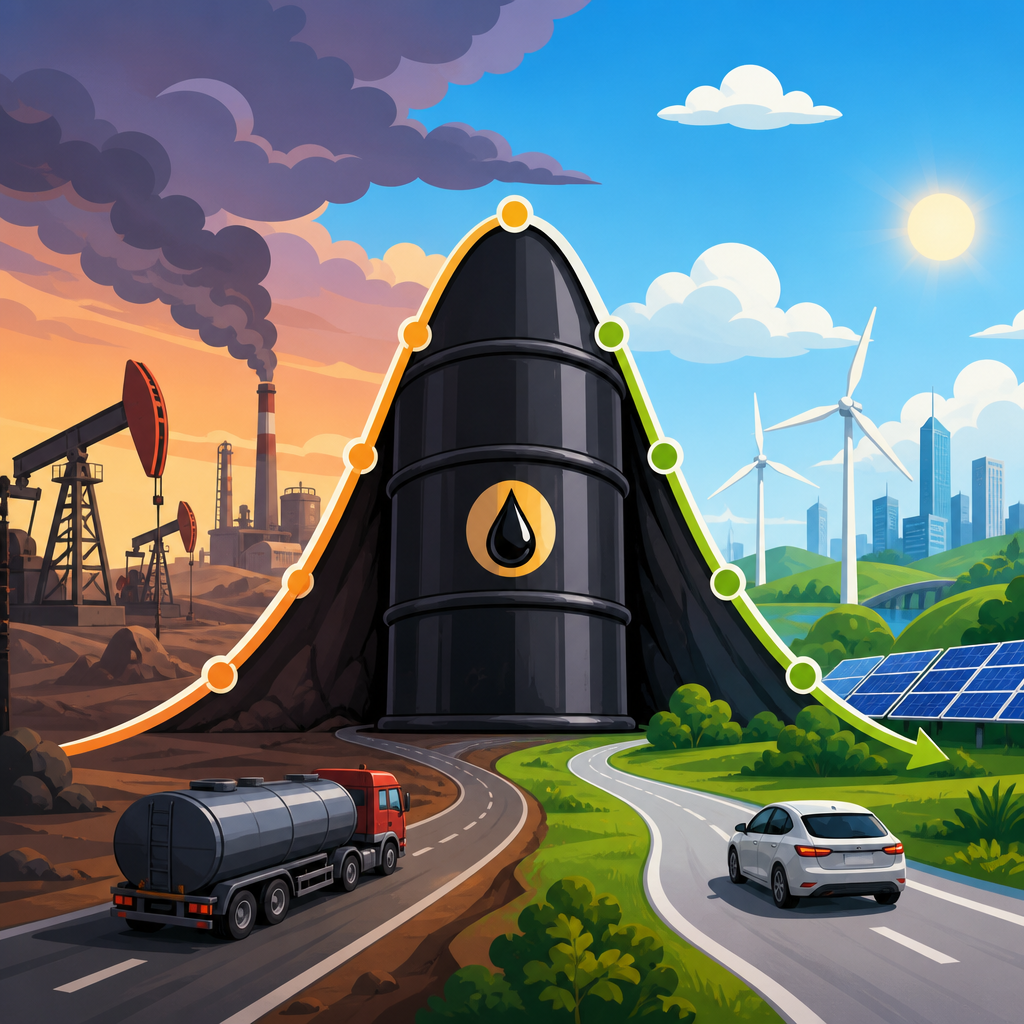
Biomass energy turns recently living material into usable heat, electricity, or fuel, and it sits at the center of any serious discussion about renewable vs. nonrenewable resources. In environmental science, biomass includes wood, crop residues, manure, food scraps, paper waste, algae, and specially grown energy crops. Unlike coal, oil, and natural gas, biomass can be replenished on human timescales if forests, soils, and farms are managed responsibly. That distinction matters because resource categories shape climate policy, land use decisions, power system planning, and household choices about heating, transportation, and waste disposal.
When I explain biomass to students or clients, I start with a practical definition: a renewable resource is replaced naturally fast enough to support continued use, while a nonrenewable resource forms so slowly that extraction depletes a finite stock. That sounds simple, but biomass reveals the nuance. A forest can be renewable if harvest stays below regrowth and soil carbon is protected. The same forest becomes effectively nonrenewable if clear-cutting outpaces recovery, habitats collapse, and the carbon debt from burning wood takes decades to repay. In other words, renewability depends not only on the material itself but on time, scale, and management.
Biomass energy matters because it can convert wastes into value, reduce landfill methane, support rural economies, and provide energy forms that wind and solar do not directly replace, especially high-temperature heat, dispatchable power, and liquid transport fuels. It also matters because it is contested. Burning biomass releases carbon dioxide immediately, creates air pollutants if poorly controlled, and can compete with food production or biodiversity conservation. Strong environmental science does not treat biomass as automatically clean or automatically harmful. It evaluates feedstocks, conversion pathways, emissions, efficiency, and land impacts together.
As a hub within renewable vs. nonrenewable resources, this article covers the full picture: how biomass energy works, the main technologies, where biomass is used, how it compares with fossil fuels, and what determines whether a project is genuinely sustainable. The key terms are worth defining up front. Feedstock is the raw biological material used for energy. Conversion is the process that turns feedstock into heat, power, gas, or liquid fuel. Carbon neutrality is the idea that emitted carbon can be balanced by new biological growth, though the timing of that balance is critical. Lifecycle assessment measures total impacts across growing, harvesting, transport, processing, use, and disposal.
How Biomass Energy Works
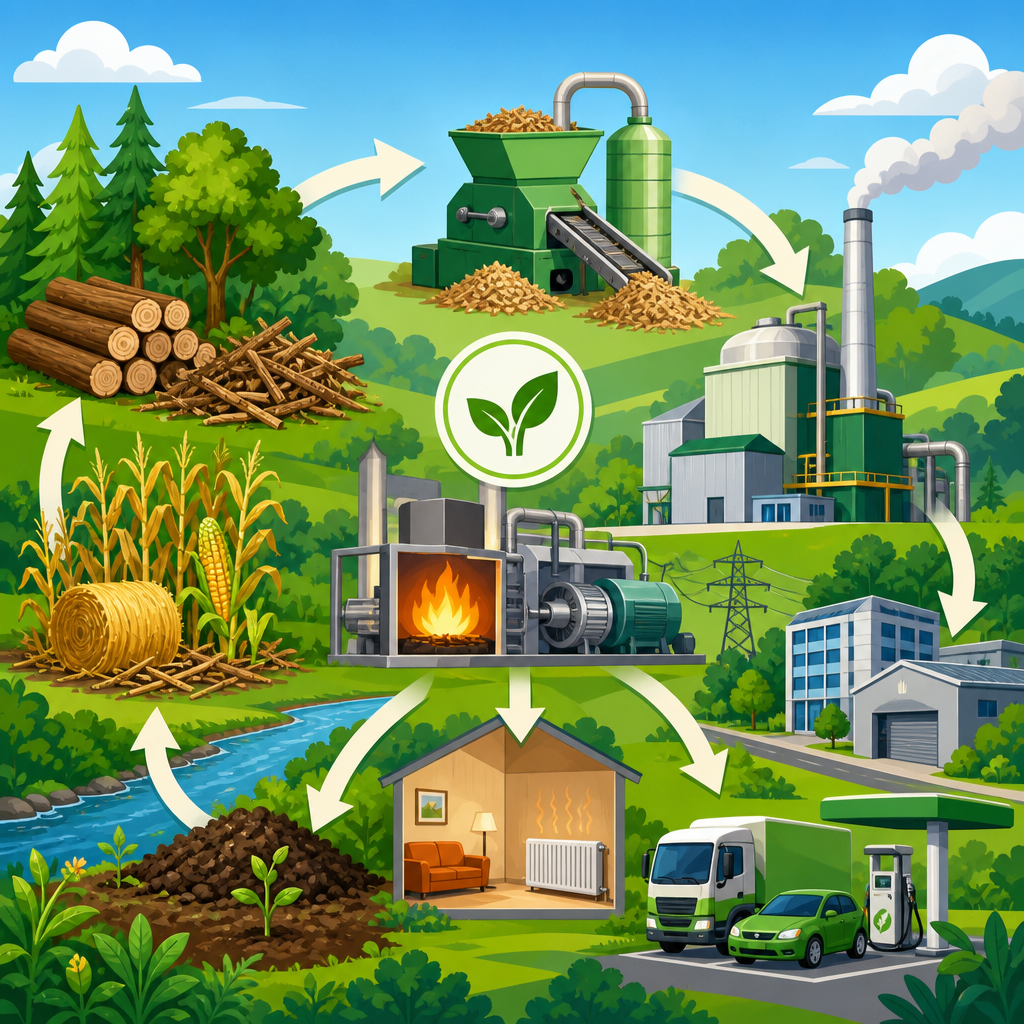
Biomass energy works by capturing the chemical energy stored through photosynthesis. Plants use sunlight to turn carbon dioxide and water into carbohydrates, lignin, oils, and other organic compounds. When that biomass is burned, digested, fermented, or gasified, the stored chemical bonds are broken and energy is released. The process is different from solar panels, which convert sunlight directly to electricity, but the origin of the energy is still the sun. In practice, the route from plant matter to useful energy depends on moisture content, composition, scale, and the final energy service required.
The simplest pathway is direct combustion. Dry wood chips, pellets, crop residues, or bagasse from sugarcane mills are burned in a boiler. The heat produces steam, the steam spins a turbine, and the turbine drives a generator. In district heating or industrial settings, that same heat can warm buildings or power manufacturing processes. Modern biomass plants use controlled combustion temperatures, staged air supply, particulate filters, and continuous emissions monitoring. Those details matter because efficiency and air quality depend less on the label biomass and more on engineering quality and fuel preparation.
Wet biomass usually follows a different route because water makes direct burning inefficient. Animal manure, sewage sludge, and food waste often go into anaerobic digesters, sealed tanks where microorganisms break down organic matter without oxygen. The resulting biogas typically contains methane and carbon dioxide. After cleaning to remove hydrogen sulfide, moisture, and contaminants, biogas can fuel engines, microturbines, boilers, or be upgraded into biomethane for pipeline injection and vehicle fuel. Many wastewater treatment plants use this approach to lower operating costs while managing waste more safely.
Liquid biofuels come from biochemical conversion. Yeast can ferment sugars from corn or sugarcane into ethanol, while vegetable oils, used cooking oil, and animal fats can be processed into biodiesel or renewable diesel. More advanced systems break down cellulose from grasses, wood, or agricultural residues into fermentable sugars. These cellulosic pathways are technically harder because lignocellulosic biomass is structurally tough, but they avoid some food-versus-fuel concerns. Across all routes, pretreatment, logistics, and moisture management often determine economic success more than the core chemistry does.
Major Biomass Technologies and Their Uses
In the field, biomass technologies are usually grouped by output: heat, electricity, gas, or liquid fuel. Direct heat remains the most common use globally because it is straightforward and efficient when applied close to the fuel source. Wood pellets in residential stoves, wood chips in school or hospital boilers, and bagasse-fired systems in sugar mills are familiar examples. Combined heat and power, often called CHP or cogeneration, is especially effective because it uses one fuel source to produce electricity and capture otherwise wasted heat. Well-designed CHP systems can reach overall efficiencies above 70 percent, much higher than many standalone power plants.
Gasification is a more advanced thermochemical process. Instead of fully burning biomass, a gasifier heats it with limited oxygen to produce syngas, mainly carbon monoxide, hydrogen, carbon dioxide, and some methane. That gas can be cleaned and used in engines, turbines, or as a feedstock for chemicals and fuels. Pyrolysis is related but occurs without oxygen and produces bio-oil, syngas, and biochar. Biochar is attracting attention because it can improve some soils and store carbon for long periods, though results vary by feedstock, temperature, and soil type. These technologies promise flexibility but require tight process control and reliable fuel quality.
Biogas systems have expanded rapidly because they solve two problems at once: waste treatment and energy production. On dairy farms, manure digesters reduce odors and can cut methane emissions that would otherwise escape from lagoons. In cities, landfill gas capture systems draw methane from decomposing waste and use it to generate power. In Europe, biomethane upgraded from digester gas increasingly fuels buses and trucks. The engineering is mature, but economics depend heavily on feedstock collection, gate fees, renewable gas incentives, and whether a facility can use both the gas and the digestate left after digestion.
| Technology | Main Feedstocks | Primary Output | Common Uses |
|---|---|---|---|
| Combustion | Wood chips, pellets, bagasse, straw | Heat and electricity | Boilers, CHP plants, district heating, industry |
| Anaerobic digestion | Manure, food waste, sewage sludge | Biogas or biomethane | Farm energy, wastewater plants, vehicle fuel |
| Fermentation | Corn, sugarcane, cellulosic biomass | Ethanol | Transport fuel blending |
| Gasification or pyrolysis | Wood residues, crop residues | Syngas, bio-oil, biochar | Power, fuels, chemicals, carbon management |
Transport fuels deserve separate attention because they show both the promise and the limitations of biomass. Ethanol blends such as E10 are widespread, and Brazil’s sugarcane ethanol system is often cited because sugarcane delivers relatively high energy returns and bagasse can power the mills themselves. Biodiesel from soybean oil, rapeseed oil, or waste fats can reduce petroleum use in diesel engines, while renewable diesel is chemically closer to fossil diesel and works in existing infrastructure more easily. Aviation and shipping are harder sectors to decarbonize, so sustainable biomass-derived fuels may remain important there even as electric vehicles expand on roads.
Where Biomass Energy Is Used Around the World
Biomass is used in homes, farms, factories, utilities, and transport networks, but the form varies widely by region. In many lower-income countries, traditional biomass such as firewood and charcoal is still used for cooking and heating. That use is significant in energy statistics, yet it often brings severe indoor air pollution and deforestation pressures when stoves are inefficient and fuel harvesting is unmanaged. Modern biomass energy is different. It relies on cleaner combustion devices, engineered fuels, emissions controls, and regulated supply chains. Distinguishing traditional use from modern bioenergy is essential for accurate environmental analysis.
In North America and Northern Europe, wood pellets and wood chips commonly heat schools, municipal buildings, and industrial sites. Sweden, Finland, and Denmark integrate biomass into district heating systems, often using forestry residues and CHP. In the United States, the forest products industry has long used bark, black liquor, and wood residues to generate process heat and electricity onsite. Pulp and paper mills are a strong example of resource efficiency because they turn byproducts into energy instead of treating them only as waste. Universities and hospitals also use biomass boilers where a dependable local fuel supply exists.
Agricultural regions provide another major use case. Sugar industries in Brazil, India, and Thailand burn bagasse after juice extraction, making sugar mills partially energy self-sufficient and, in many cases, exporters of electricity to the grid. Livestock operations in Germany, the United States, and China use anaerobic digesters to manage manure and produce biogas. Food processors can digest wastewater and organic residues. Municipalities capture landfill gas or process separated food waste. These applications work best when feedstocks are concentrated, disposal costs are high, and operators have a stable demand for heat, power, or upgraded gas.
Biomass also appears in co-firing, where coal plants substitute part of their fuel with biomass, often wood pellets. Utilities have used co-firing to reduce net fossil carbon emissions without replacing entire plants immediately. However, the climate benefit depends on pellet sourcing, transport distance, and what happens to the land where the wood originated. Long shipping routes do not automatically erase benefits, but they increase scrutiny. I have seen projects succeed when they relied on genuine residues and transparent accounting, and fail public trust when supply chains were opaque or based on whole trees marketed too casually as carbon neutral.
Biomass in Renewable vs. Nonrenewable Resource Science
Biomass belongs in the renewable resource category only when biological regrowth, ecosystem integrity, and resource management support repeated use without long-term depletion. That is the scientific test. Fossil fuels are nonrenewable because they formed over millions of years from ancient organic matter under heat and pressure. Burning them releases carbon that has been locked underground on geological timescales. Biomass, by contrast, cycles carbon through living systems over years to decades. Yet the shorter cycle does not guarantee low impact. Timing, land management, and alternative land uses all shape the outcome.
The most useful comparison is not biomass versus fossil fuels in the abstract, but one feedstock and one technology versus a realistic alternative. Sawdust burned in an efficient industrial boiler generally has a stronger environmental case than coal because the material is a residue and the system displaces fossil heat. Corn ethanol is more mixed because fertilizer use, land intensity, nitrous oxide emissions, and processing energy affect results. Landfill gas capture can deliver large climate benefits because methane is a potent greenhouse gas. Dedicated energy crops on degraded land may be beneficial, while conversion of old-growth forest to fuel production is clearly damaging.
Lifecycle assessment is the standard tool for evaluating these tradeoffs. A robust assessment counts emissions from cultivation, fertilizer production, harvesting, drying, processing, transport, combustion, and land-use change. It also examines noncarbon impacts such as particulate matter, water use, soil erosion, and biodiversity loss. Frameworks used by the Intergovernmental Panel on Climate Change, the International Energy Agency, and many national regulators all emphasize accounting boundaries because results change when key factors are omitted. In policy debates, the sharpest disagreements often come from different assumptions about forest regrowth rates, displaced products, and whether a feedstock is truly a residue.
That is why the phrase carbon neutral should be used carefully. Biomass combustion emits carbon dioxide at the smokestack, often at rates comparable to or higher than coal per unit of delivered electricity if moisture is high and efficiency is low. The climate rationale rests on regrowth or avoided waste emissions balancing those releases over time. If repayment takes a century, the benefit is weak for near-term climate goals. If the feedstock is landfill methane or a mill residue that would decompose quickly anyway, the climate case can be much stronger. Good resource science always asks: renewable under what conditions, over what time frame, and compared with what alternative?
Benefits, Limits, and What Good Biomass Looks Like
The strongest benefit of biomass energy is its versatility. It can provide dispatchable power, storable fuel, industrial heat, and waste management in one portfolio. It can support energy security by using local materials, create markets for residues, and lower methane emissions from landfills or manure storage. For regions with large forestry or agricultural sectors, biomass can complement wind and solar rather than compete with them directly. I have found that the best projects are not oversized power stations chasing fuel from long distances; they are right-sized systems matched to local residues, a year-round heat load, and clear environmental controls.
The limits are equally important. Biomass can worsen air pollution if combustion equipment is outdated or poorly operated. Fine particulate matter, nitrogen oxides, volatile organic compounds, and carbon monoxide are all concerns, especially in household settings using old stoves or open fires. Large fuel demand can intensify logging pressure, reduce deadwood habitat, remove nutrients that would otherwise return to soil, and increase truck traffic. Energy crops can compete with food, water, and habitat. These are not side issues. They are central constraints that determine whether biomass remains a genuinely renewable resource instead of sliding toward ecological depletion.
Good biomass projects share several traits: sustainable feedstock sourcing verified by credible certification or traceability systems, high conversion efficiency, modern emissions controls, short transport distances where possible, and full lifecycle accounting. Standards and programs such as Forest Stewardship Council certification, Sustainable Biomass Program frameworks, EPA emissions rules, and European sustainability criteria exist because sourcing and plant design matter. The practical lesson is simple. Biomass works best when it uses wastes and residues first, serves hard-to-electrify needs second, and never treats renewability as a blank check. To evaluate any project, ask where the material comes from, how fast it regrows, what else that land could support, and whether cleaner alternatives already exist.
Biomass energy is an important part of environmental science because it exposes the real meaning of renewable vs. nonrenewable resources. A resource is not sustainable merely because it once grew in a field or forest. It becomes renewable when harvest stays within ecological limits, carbon impacts are measured across the full lifecycle, and technology converts the material efficiently with controlled pollution. Used well, biomass turns residues, wastes, and organic byproducts into reliable heat, power, gas, and fuel. Used poorly, it can lock in emissions, damage ecosystems, and weaken public confidence in renewable energy policy.
The main takeaway is that biomass is neither a climate cure-all nor a category to dismiss. Its value depends on feedstock quality, conversion method, location, and time horizon. Direct use of local residues in efficient boilers or CHP, manure and food-waste digestion, and carefully sourced biomethane often deliver the clearest benefits. Projects based on unsustainable harvesting, weak emissions controls, or vague carbon claims deserve skepticism. If you are building out your understanding of renewable and nonrenewable resources, use biomass as the case study that connects energy, land, waste, air quality, and climate into one system.
Start by comparing one biomass pathway with one fossil alternative using lifecycle thinking, then follow the feedstock from source to end use. That approach will make every related topic in environmental science clearer, from deforestation and methane to circular economy design and decarbonization strategy. Explore the rest of this resource hub to deepen that comparison and evaluate renewable energy with sharper scientific judgment.
Frequently Asked Questions
What is biomass energy, and how does it work?
Biomass energy is energy made from organic materials that were recently living, such as wood, crop residues, manure, food scraps, paper waste, algae, and specially grown energy crops. The basic idea is that these materials store energy from the sun through photosynthesis. When biomass is burned directly or converted into other fuels, that stored energy is released and used for heat, electricity, or transportation fuel.
There are several common ways biomass is turned into useful energy. Direct combustion is the simplest: wood pellets, wood chips, or agricultural residues are burned in boilers or furnaces to produce heat or steam, which can also drive turbines to generate electricity. Biomass can also be processed into biogas through anaerobic digestion, where microorganisms break down organic waste in low-oxygen conditions and produce methane-rich gas. In addition, crops such as corn, sugarcane, or cellulosic plants can be converted into liquid biofuels like ethanol and biodiesel.
What makes biomass especially important in environmental science is that it comes from materials that can be replaced on human timescales. That does not automatically make every biomass system sustainable, but it does distinguish biomass from fossil fuels, which form over millions of years and are effectively nonrenewable on a human timeline. Whether biomass energy is truly renewable depends on how the feedstock is grown, harvested, transported, and replaced.
Is biomass energy renewable or nonrenewable?
Biomass is generally considered a renewable energy resource because it comes from plants, organic waste, and other recently living material that can be replenished relatively quickly. Forests can regrow, crops can be replanted, and food or yard waste is continually produced. This ability to renew the resource within years or decades is the main reason biomass is placed in the renewable category rather than grouped with coal, oil, and natural gas.
However, the full answer is more nuanced. Biomass is only renewable when it is managed responsibly. If forests are harvested faster than they regrow, if soils are degraded by removing too much crop residue, or if energy crops replace food production or damage ecosystems, the system becomes far less sustainable. In those cases, biomass may still technically come from organic matter, but its environmental benefits are reduced or even undermined.
This is why biomass often sits at the center of discussions about renewable vs. nonrenewable resources. The source material itself may be renewable, but the renewability of the energy system depends on land use, forest management, emissions controls, transportation distances, and long-term resource planning. In practice, waste-based biomass and well-managed agricultural or forestry systems tend to offer the strongest case for biomass as a renewable energy source.
Where is biomass energy used most often?
Biomass energy is used in a wide range of settings, from homes and farms to industrial plants and utility-scale power facilities. One of the most common uses is space heating and water heating, especially in areas where wood, pellets, or agricultural residues are readily available. Residential pellet stoves, wood boilers, and district heating systems all rely on biomass to provide dependable thermal energy.
Biomass is also widely used in industry. Paper mills, sawmills, food-processing plants, and agricultural operations often generate organic waste on-site, and many of them use that waste as fuel. This can lower disposal costs while producing heat and electricity for manufacturing processes. Combined heat and power systems are especially common in industrial biomass applications because they improve overall efficiency by producing both usable heat and electricity from the same fuel source.
Another major area of use is transportation fuel. Ethanol is blended into gasoline in many countries, and biodiesel is used in diesel engines either in blended form or, in some cases, as a primary fuel. Biogas from landfills, wastewater treatment plants, and livestock operations can also be upgraded to renewable natural gas and used in vehicles or injected into gas pipelines. Altogether, biomass is one of the most versatile renewable resources because it can supply heat, power, and fuel across multiple sectors.
What are the main advantages and disadvantages of biomass energy?
One major advantage of biomass energy is that it can make use of materials that might otherwise be wasted. Food scraps, manure, crop residues, wood waste, and paper waste can all become useful energy sources instead of ending up in landfills or decomposing unused. Biomass can also support local economies by creating markets for agricultural and forestry byproducts, and it offers a renewable alternative to fossil fuels when managed carefully.
Another benefit is flexibility. Unlike some renewable resources that mainly produce electricity, biomass can provide heat, electricity, and liquid or gaseous fuels. It can also be stored and used when needed, which helps with energy reliability. In some cases, biomass facilities can use existing power plant or fuel infrastructure with modifications, making it easier to integrate into current energy systems.
At the same time, biomass has important disadvantages. Burning biomass releases carbon dioxide and air pollutants, including particulate matter and nitrogen oxides, especially if combustion technology is outdated or poorly controlled. There can also be concerns about land use, deforestation, water consumption, habitat loss, and competition with food production if biomass crops are not planned responsibly. In short, biomass can be beneficial, but its value depends heavily on feedstock choice, technology, emissions controls, and sustainable resource management.
Does biomass energy help reduce greenhouse gas emissions?
Biomass energy can help reduce greenhouse gas emissions, but the outcome depends on the entire life cycle of the fuel. The reason biomass is often described as lower-carbon than fossil fuels is that plants absorb carbon dioxide from the atmosphere while they grow. When biomass is later burned or converted into fuel, that carbon is released again, creating a shorter carbon cycle than the one associated with fossil fuels, which add long-stored carbon to the atmosphere.
Even so, biomass is not automatically carbon neutral in every situation. Emissions can come from harvesting, processing, drying, transporting, and converting the biomass, and those steps may involve diesel fuel, electricity, fertilizers, or other inputs. If forests are cleared unsustainably or if carbon-rich soils are disturbed, the climate impact can become significant. On the other hand, using landfill waste, manure, sawdust, or other residues that would otherwise emit methane or be discarded can produce much better emissions outcomes.
The most accurate way to evaluate biomass is through life-cycle analysis. This looks at the total environmental impact from resource production through end use. Well-designed biomass systems using waste materials, efficient equipment, and sustainable land management can reduce net greenhouse gas emissions compared with fossil fuels. Poorly managed systems may offer limited climate benefits or, in some cases, create additional environmental burdens. That is why responsible sourcing and modern technology are essential in any serious biomass energy strategy.