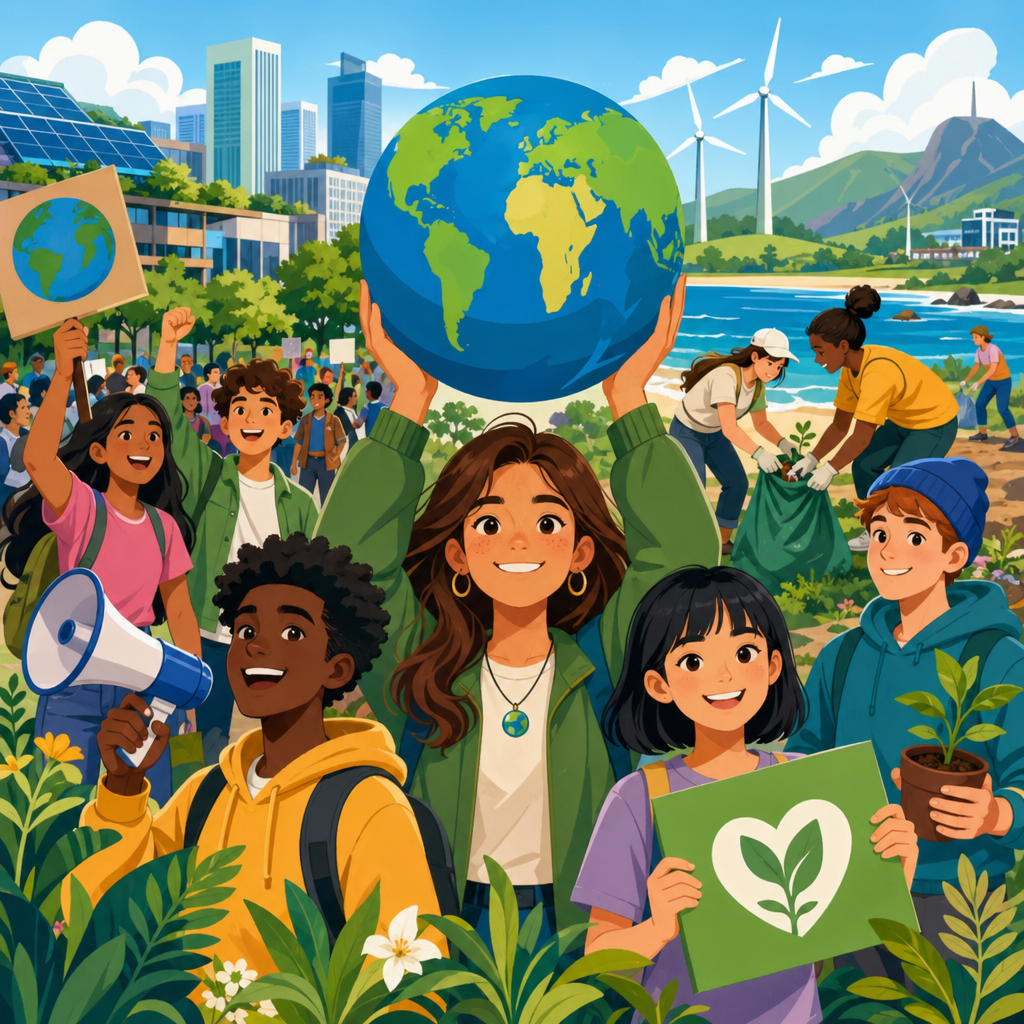
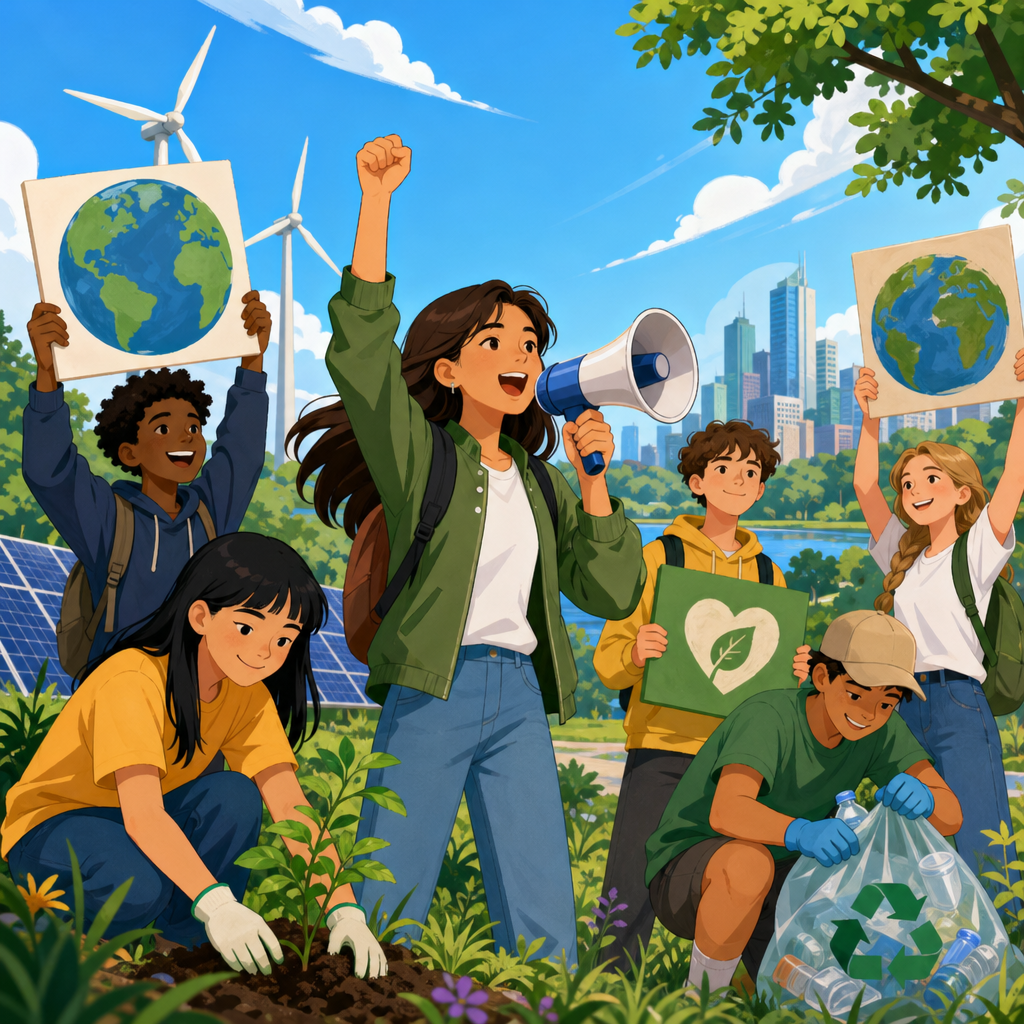
Youth climate activism has become one of the most influential forces in the global response to climate change, reshaping public debate, pressuring institutions, and turning a scientific warning into a lived political movement. In practical terms, youth and climate activism refers to organized efforts led by teenagers and young adults to demand faster emissions cuts, cleaner energy, climate justice, and accountability from governments, corporations, and international bodies. I have worked with climate communicators, student organizers, and policy teams, and the pattern is consistent across countries: young people are often the first to connect abstract climate data to immediate questions about education, health, jobs, housing, and their future security. That matters because climate change is not a distant environmental issue. It is a systemic risk affecting heat exposure, food systems, water access, disaster losses, public health, biodiversity, and economic stability. Young people are leading the climate change movement not simply because they are passionate, but because they will live longest with today’s policy decisions and because they increasingly understand how to translate moral urgency into public action.
The rise of youth-led climate action did not happen in a vacuum. It emerged from decades of environmental advocacy, but it accelerated when younger generations combined digital organizing, school-based networks, local campaigning, and highly visible public protests. Terms such as climate justice, intergenerational equity, adaptation, mitigation, and just transition are now common in youth organizing spaces because young activists have pushed the conversation beyond carbon alone. Climate justice means recognizing that the impacts of warming fall unevenly, often hitting low-income communities, Indigenous peoples, small island states, and the Global South hardest despite their lower historical emissions. Intergenerational equity means current decision-makers have an obligation not to impose irreversible damage on future generations. A just transition means moving away from fossil fuels in a way that protects workers and communities. These concepts explain why youth activism resonates: it links science, ethics, and policy in plain language. As a hub topic within climate change, youth and climate activism connects to carbon emissions, renewable energy, environmental education, mental health, green jobs, sustainable cities, and climate policy, making it essential for anyone trying to understand where public pressure for climate action is heading next.
Why young people became the face of climate action
Young people became central to climate activism because they recognized a basic mismatch between the scale of the threat and the speed of the official response. The Intergovernmental Panel on Climate Change has repeatedly shown that limiting warming requires rapid, sustained, and large-scale reductions in greenhouse gas emissions. Yet in many countries, national pledges still do not align with pathways consistent with 1.5°C. Students and young workers saw that gap clearly. In meetings I have attended with school organizers and nonprofit campaign teams, the same frustration surfaced again and again: leaders spoke about net zero decades from now while approving new fossil fuel infrastructure today. Youth activists transformed that frustration into a simple public argument: if the science is urgent, policy must be urgent too.
Another reason youth leadership expanded so quickly is that climate change directly shapes the milestones that define early life. Extreme heat disrupts schools. Wildfire smoke affects sports, commuting, and respiratory health. Floods damage homes, transport systems, and local economies. Agricultural disruption affects food prices that younger families and students feel immediately. Climate anxiety is also real. Studies in journals such as The Lancet Planetary Health have documented high levels of distress among young people who believe governments are failing them. Effective activism channels that anxiety into agency. Marches, school strikes, municipal campaigns, voter drives, and campus sustainability initiatives give young people a way to move from fear to collective action. That emotional shift is one reason youth climate movements have endured beyond single news cycles.
How youth climate activism works in practice
Youth-led climate movements succeed when they combine narrative, organization, and achievable demands. Public attention often focuses on rallies, but the deeper work happens in planning sessions, coalition meetings, policy briefings, media training, and local partnerships. Groups such as Fridays for Future, Sunrise Movement, Zero Hour, and numerous regional student coalitions use a layered strategy. They create memorable public moments, then connect those moments to specific asks such as clean electricity targets, public transit investment, fossil fuel divestment, methane reduction rules, climate education standards, or adaptation funding for vulnerable communities. The most effective campaigns do not just say leaders must “do more.” They define what doing more looks like.
Digital media has amplified youth climate activism, but successful organizers do not rely on virality alone. Social platforms help recruit volunteers, share scientific explainers, coordinate protests, and spotlight local stories that legacy media might miss. However, online attention fades quickly unless there is offline structure behind it. I have seen student groups make real gains when they used messaging apps for rapid coordination, spreadsheets for volunteer management, and shared policy documents for consistency. They learned to brief supporters before city council hearings, prepare concise testimony, and follow up after public commitments were made. In other words, youth climate leadership is increasingly professional in its methods even when it remains grassroots in spirit.
| Area of action | Typical youth strategy | Real-world result |
|---|---|---|
| Schools and universities | Strikes, curriculum advocacy, campus divestment campaigns | Greater climate literacy, sustainability targets, investment scrutiny |
| Local government | Public comments, petitions, coalition lobbying, turnout at hearings | Transit funding, bike infrastructure, resilience planning, building standards |
| National policy | Mass mobilizations, voter outreach, media campaigns | Pressure for clean energy laws, emissions targets, oversight |
| Corporate accountability | Boycotts, shareholder pressure, brand campaigns, transparency demands | Net-zero disclosures, supply-chain reviews, reputational risk management |
| Courts and legal advocacy | Youth plaintiffs, rights-based cases, amicus support | Higher scrutiny of government duty, stronger legal climate arguments |
Major forms of youth leadership: protest, policy, and culture
Street protest remains the most visible form of youth climate activism because it creates moral clarity. School strikes became globally recognized after Greta Thunberg’s protest outside the Swedish parliament in 2018 helped catalyze a wider movement. The significance of these actions was not only the size of the crowds. It was the framing: students argued that attending class while leaders ignored climate science made little sense. That message traveled because it was concrete and easy to understand. Similar tactics appeared worldwide, from European capitals to African cities, Latin American networks, Pacific island communities, and North American suburbs. Public demonstrations helped climate change compete with other urgent news and reminded officials that young voters and future voters were watching.
Policy engagement is less visible than protest but often more durable. Youth leaders now serve on advisory councils, testify before legislatures, meet with regulators, and contribute to climate plans at city and state level. In the United States, young advocates played a notable role in building momentum for large-scale clean energy and climate investment. In Europe, youth groups have pushed for stronger targets, transport reform, and reduced fossil fuel dependence. In countries highly exposed to climate risk, youth organizers frequently emphasize adaptation and loss-and-damage concerns alongside emissions cuts. The policy lesson is straightforward: youth activism is no longer outside the system looking in; increasingly, it operates both outside and inside institutions.
Cultural leadership is a third dimension that is often underestimated. Young activists shape language, values, and norms. They have made phrases like climate emergency and climate justice part of mainstream conversation. They also influence consumer expectations around fast fashion, food waste, aviation, and corporate sustainability claims. Musicians, athletes, creators, and student journalists expand the movement by making climate action socially legible, not just technically necessary. When culture shifts, policy becomes easier. People support what they can imagine, and youth communicators are often better than formal institutions at making climate futures feel immediate and personal rather than abstract and remote.
Climate justice and the diversity of youth voices
Any serious article about youth and climate activism must emphasize that young people are not a single bloc. Their priorities differ by geography, income, race, disability, exposure to pollution, and vulnerability to climate hazards. A student in a coastal city worried about sea-level rise may organize around resilience and insurance access. A young person in a drought-prone agricultural region may focus on water security. An urban activist living near highways or industrial sites may connect climate policy to asthma, air quality, and environmental racism. Indigenous youth often center land stewardship, sovereignty, and protection of ecosystems from extractive industries. These are not side issues. They are core to understanding how the climate change movement actually operates.
The concept of climate justice gives youth activism its breadth and staying power. It explains why campaigns increasingly address housing, public transit, disaster recovery, labor standards, food systems, and energy affordability. For example, replacing coal with renewable power reduces emissions, but if low-income households cannot afford efficient housing or electricity upgrades, the benefits are uneven. A just transition asks who pays, who benefits, and who gets consulted. The strongest youth-led campaigns answer those questions directly. They build alliances with labor groups, public health advocates, frontline communities, faith organizations, and scientists. That coalition model is more complex than a protest-only strategy, but it is also more effective because it turns climate action from a niche concern into a broad civic agenda.
What youth climate movements have already achieved
Youth activism has already changed the climate landscape in measurable ways. First, it has raised issue salience. Climate change now receives more sustained media and political attention than it did before the late 2010s youth mobilization wave. Second, it has shifted institutional behavior. Many schools, cities, universities, pension funds, and companies accelerated sustainability commitments under pressure from younger stakeholders. Divestment campaigns, while uneven in direct financial impact, succeeded in stigmatizing fossil fuel expansion and framing it as a governance and reputational risk. Third, youth litigation has opened a new front. Cases brought by young plaintiffs in several countries have argued that governments have a duty to protect fundamental rights threatened by climate inaction. Even where plaintiffs do not fully win, these cases influence legal reasoning and public expectations.
There are limits, and honest analysis should acknowledge them. Protest does not automatically produce legislation. Corporate pledges can lack credible implementation. Some climate branding is performative. Youth groups also face burnout, funding constraints, leadership turnover, and unequal access to media attention. Organizers from the Global South and frontline communities often point out, correctly, that the most covered voices are not always the most affected. Still, from my experience observing campaigns over time, youth activism has achieved something foundational: it has narrowed the distance between climate science and democratic pressure. That bridge is essential. Scientific reports diagnose the problem, but sustained public organizing is what forces institutions to respond.
How young people can participate effectively now
The most effective way for young people to join the climate change movement is to match passion with a practical lane of action. Not everyone needs to lead marches. Some are better at research, design, community outreach, data analysis, fundraising, or local policy work. Start by identifying the level where your effort can matter most: school, campus, neighborhood, city, workplace, or online community. Then choose a focused issue such as public transit, tree canopy, school energy efficiency, climate curriculum, plastic reduction, or renewable procurement. Specific goals attract broader support than vague appeals. Learn the decision-making process, find allies, gather evidence, and make a clear ask.
It also helps to think long term. Durable youth climate activism depends on skills: meeting facilitation, media literacy, scientific interpretation, coalition building, budgeting, and strategic communication. Read local climate plans. Track government consultations. Use trusted tools such as the IPCC reports, UNEP Emissions Gap Report, IEA energy analysis, NASA climate data, and municipal resilience assessments. Ask what policy is proposed, how it will be funded, who benefits, and how success will be measured. That mindset turns activism into leadership. Youth are leading the climate change movement because they are not waiting for permission. They are learning the systems, exposing the gaps, and organizing around solutions. If you want to be part of that momentum, start local, stay informed, and commit to one concrete action this month.
Frequently Asked Questions
Why have young people become such powerful leaders in the climate change movement?
Young people have emerged as some of the most effective leaders in the climate change movement because they speak from both urgency and lived consequence. Climate change is not an abstract future problem for today’s youth; it is a defining condition of their adulthood. They are inheriting a world shaped by rising temperatures, more frequent extreme weather, ecological disruption, and widening inequality linked to environmental harm. That reality gives their advocacy unusual moral clarity. When young activists call for stronger climate action, they are not simply commenting on policy choices; they are defending their right to a stable future.
Another reason youth leadership has become so influential is that younger generations are often willing to challenge institutions more directly than established political actors. Youth activists have helped move climate change out of the narrow language of technical reports and into public life as an issue of justice, accountability, and democratic responsibility. Through school strikes, public demonstrations, local organizing, digital campaigns, and testimony in courts and legislatures, they have changed the tone of the global conversation. Their message is clear: incremental action is not enough when science shows the scale of the crisis.
Young leaders have also proven highly skilled at building broad coalitions. Many youth climate organizations connect environmental concerns with labor rights, racial justice, Indigenous sovereignty, public health, and economic fairness. This wider framing has helped the climate movement reach audiences that may not have responded to environmental messaging alone. In that sense, youth leadership is powerful not only because it is passionate, but because it is strategic, organized, and increasingly sophisticated in how it communicates and mobilizes support.
How are youth activists influencing governments, corporations, and international climate policy?
Youth activists are influencing major institutions by combining public pressure with clear policy demands. Rather than only raising awareness, many youth-led movements now focus on concrete outcomes such as stronger emissions targets, faster transitions away from fossil fuels, investment in renewable energy, climate adaptation funding, and legal accountability for polluters. This shift has made their activism harder for decision-makers to dismiss. Governments, businesses, and international bodies are being asked not just to acknowledge climate change, but to demonstrate measurable action.
At the government level, youth organizers often use protests, petitions, town hall interventions, local campaigns, and direct engagement with elected officials to keep climate issues visible and politically costly to ignore. In some countries, youth movements have helped elevate climate policy during elections, push cities toward sustainability commitments, and pressure national leaders to adopt more ambitious targets. Their influence is especially strong when they connect public mobilization with policy literacy, showing that they understand not just the science of climate change, but also the legislative and regulatory tools needed to address it.
Corporations are also responding to youth pressure, particularly because younger consumers and workers increasingly expect environmental responsibility. Activists have targeted companies over emissions, greenwashing, fossil fuel financing, supply chain impacts, and weak sustainability promises. In response, some firms have strengthened climate disclosures, revised brand messaging, or accelerated clean energy commitments. Internationally, youth voices have become more visible at major summits and climate negotiations, where they challenge slow diplomacy and call attention to the gap between promises and implementation. Even when they are not formal negotiators, they shape media narratives, public expectations, and the legitimacy of the process itself.
What makes youth climate activism different from earlier environmental movements?
Youth climate activism builds on earlier environmental efforts, but it stands out in several important ways. First, it operates with a heightened sense of immediacy. Previous environmental campaigns often focused on conservation, pollution control, or protection of specific ecosystems. Today’s youth climate movement certainly values those goals, but it is centered on a planetary emergency that cuts across every sector of society. Young activists tend to frame climate change as a systemic crisis involving energy, transportation, food systems, housing, finance, and global inequality all at once.
Second, youth-led climate activism is deeply shaped by digital communication. Social media has allowed young organizers to scale messages rapidly, coordinate global actions, share educational resources, and elevate local struggles to international attention. A demonstration in one city can inspire parallel action across continents within days. This interconnectedness has helped create a movement that feels both local and global, with shared language around urgency, justice, and accountability.
Third, many youth activists place climate justice at the center of their work. They argue that climate change does not affect everyone equally and that the communities least responsible for emissions often face the greatest harm. This has made the movement more explicitly political and intersectional than some earlier forms of environmental advocacy. Issues such as colonialism, displacement, income inequality, racial discrimination, and intergenerational fairness are not treated as side topics; they are woven into the movement’s core analysis. As a result, youth climate activism is not just asking how to reduce emissions, but also what a fair and democratic transition should look like.
What challenges do young climate activists face as they try to create lasting change?
Despite their visibility and influence, young climate activists face serious obstacles. One of the biggest is the gap between public attention and institutional response. Youth movements can generate headlines, inspire large demonstrations, and shift public opinion, yet still encounter governments and corporations that delay, dilute, or deflect action. This can create frustration, especially when scientific warnings grow more urgent while policy progress remains uneven. Many young organizers are pushing against systems that are slow by design and heavily influenced by entrenched economic interests.
Another major challenge is being underestimated because of age. Young people are often praised for their passion but not always respected for their expertise. This can lead to tokenism, where youth are invited to speak symbolically without being given meaningful decision-making power. At the same time, many youth leaders are balancing activism with school, work, family responsibilities, and financial constraints. Unlike well-funded institutions, grassroots youth organizations often operate with limited resources, making sustained organizing more difficult.
There is also an emotional burden that comes with climate activism. Many young people experience climate anxiety, grief, anger, and burnout, especially when they are constantly exposed to evidence of environmental harm and political inaction. Effective movements need not only strong messaging and organizing capacity, but also structures of care, mentorship, and long-term support. Even with these challenges, youth activists continue to adapt. They are building stronger networks, learning policy strategy, using legal tools, and creating community-based models of leadership that can endure beyond any single protest moment.
How can communities, schools, and adults support youth leadership in climate action?
Supporting youth leadership in climate action starts with taking young people seriously as civic actors, not just as students or future voters. Communities and adults can make a meaningful difference by listening to youth concerns, inviting them into real decision-making spaces, and responding to their ideas with action rather than symbolism. When schools, local governments, nonprofits, and community organizations include young people in planning processes, advisory groups, sustainability initiatives, and public forums, they help turn youth participation into lasting influence.
Schools can play a particularly important role by integrating climate education across subjects, not only in science classes but also in history, economics, civics, and public health. Young people are better equipped to lead when they understand both the causes of climate change and the policy choices tied to it. Schools can also support student clubs, climate projects, debate programs, and partnerships with local environmental groups. Importantly, educational institutions should create environments where civic engagement is encouraged rather than treated as a distraction from learning.
Adults can help by offering resources, mentorship, and institutional access without taking over youth-led work. That means helping with funding, transportation, meeting space, media training, legal guidance, and connections to policymakers, while still respecting the independence and priorities of young organizers. Communities can also support youth activism by adopting practical local measures such as clean energy programs, public transit improvements, tree planting, resilience planning, and equitable sustainability policies. In the strongest examples, support for youth climate leadership goes beyond encouragement; it translates into shared responsibility, where adults recognize that young people should not have to carry the burden of climate advocacy alone.