
Long-term environmental monitoring after nuclear events is the disciplined process of measuring radiation, contamination pathways, ecosystem recovery, and human exposure over years or decades after an accident, weapons test, or deliberate release. In practice, it reaches far beyond checking a Geiger counter at the site boundary. It includes repeated sampling of air, soil, surface water, groundwater, crops, livestock, sediments, forests, and seafood, then comparing results against health-based limits, background radiation, and historical trends. When I have worked on environmental risk communication projects, the hardest lesson to explain was that the emergency phase ends quickly, but the monitoring phase can last for generations because radionuclides move, decay, concentrate, and re-enter food chains in uneven ways.
A nuclear disaster is any event that causes significant radioactive release to the environment, whether from a reactor accident, fuel-cycle facility failure, transport incident, or military activity. The best-known examples are Chernobyl in 1986 and Fukushima Daiichi in 2011, but the field also draws lessons from Three Mile Island, Kyshtym, weapons testing in the Pacific, and legacy contamination at uranium mining and processing sites. Long-term monitoring matters because initial dose estimates rarely answer the public’s most important questions: Is my water safe, can local farms sell food, what happens after heavy rain, are forests still contaminated, and when can communities return? Good monitoring turns those questions into measurable indicators and transparent decisions.
This hub article covers nuclear disasters comprehensively by focusing on what must be monitored, how programs are designed, which tools produce defensible data, and how results guide cleanup and recovery. It also acts as a gateway topic for more specialized work on radiation health effects, food safety, waste management, decontamination, and community resettlement. The central principle is straightforward: long-term environmental monitoring is not simply data collection. It is the evidence base for public health protection, land-use decisions, compensation, remediation, and trust. If the monitoring design is weak, every later decision inherits that weakness. If it is rigorous, consistent, and understandable, communities and regulators can make difficult choices with far less uncertainty.
What Long-Term Monitoring Must Measure After a Nuclear Disaster
Long-term environmental monitoring after a nuclear event must track three things at the same time: radionuclides, pathways, and exposure. Radionuclides are the specific radioactive isotopes released, such as iodine-131, cesium-134, cesium-137, strontium-90, plutonium isotopes, and tritium. Pathways describe how those isotopes move through air, water, soil, sediment, plants, animals, and buildings. Exposure is the human consequence, measured as external dose from contaminated surfaces and internal dose from inhalation or ingestion. In the first weeks, short-lived isotopes like iodine-131 dominate urgent health protection decisions, especially around milk and leafy vegetables. Over the long term, cesium-137 often becomes the principal driver of land contamination because its half-life is about 30 years and it binds to soils while still cycling through forests, mushrooms, and game.
Monitoring plans should therefore include ambient gamma dose rate surveys, laboratory gamma spectrometry, alpha and beta analyses where relevant, and media-specific sampling schedules. Surface water can show rapid changes after runoff events. Groundwater may remain stable for years and then shift as hydrogeology changes. Agricultural soils need depth-specific sampling because plowing, erosion, and fixation to clay minerals alter bioavailability. Forests require special attention because leaf litter, wood, fungi, and wild animals can retain contamination long after cropland levels fall. Marine monitoring near coastal releases must include seawater, sediments, seaweed, demersal fish, and migratory species. The common mistake is assuming one sampling method can represent the whole environment. It cannot. Each medium has different transport behavior, detection limits, and practical constraints.
Baseline and trend analysis are equally important. Background radiation varies naturally with geology, altitude, and building materials, so a raw number means little without context. A robust program compares post-event measurements with pre-event baselines where available, regional reference areas, and established intervention levels from national regulators and organizations such as the International Atomic Energy Agency, the International Commission on Radiological Protection, and the World Health Organization. Long-term data series also reveal when contamination is declining due to decay and weathering, when it is being redistributed by floods or wildfires, and when a local hotspot requires targeted remediation rather than broad restrictions. That distinction saves money and reduces unnecessary disruption.
How Monitoring Networks Are Designed for Decades, Not Days
The design of a long-term monitoring network begins with conceptual site modeling. This means identifying the source term, release timing, meteorology, deposition pattern, watershed structure, land use, food production systems, and population behavior. After Fukushima, for example, location mattered as much as distance because wind shifts and rainfall created patchy deposition. Some areas farther away received more fallout than closer areas. A monitoring network built only on concentric circles around a reactor would have missed critical hotspots. In my experience, the most reliable plans combine fixed stations for trend continuity with mobile surveys for hotspot detection and seasonal resampling for pathways that change throughout the year.
Sampling density should reflect both risk and decision needs. Areas with schools, drinking-water intakes, intensive farming, fisheries, or planned resettlement deserve denser coverage than uninhabited zones. Frequency also changes over time. Air and drinking water may require continuous or weekly checks early on, then monthly or quarterly sampling once concentrations stabilize. Soil, sediment, and biota often need seasonal or annual campaigns because their dynamics are slower. Chain of custody, laboratory accreditation, duplicate samples, field blanks, and interlaboratory comparisons are not administrative details; they are what make results defensible in court, compensation claims, and public hearings.
Program governance matters just as much as instrumentation. Effective networks define who samples, who pays, who owns the data, how methods change over time, and how the public can access results. If one ministry tracks food, another tracks rivers, a utility tracks groundwater, and a university runs research plots, data standards must be harmonized or trends become impossible to compare. Metadata should record coordinates, depth, moisture, weather, land use, instrument type, calibration date, and minimum detectable activity. Without that information, a dataset may look large but still be weak. Long-term monitoring succeeds when consistency is treated as a scientific requirement, not a bureaucratic preference.
Core Tools, Methods, and Data Quality Standards
The main tools used in nuclear disaster monitoring are well established. High-purity germanium detectors provide precise gamma spectrometry for identifying cesium, cobalt, iodine, and other gamma emitters in environmental samples. Sodium iodide detectors are useful for screening and field surveys but are less specific. Liquid scintillation counting is commonly used for tritium. Radiochemical separation followed by beta counting or mass spectrometry is needed for nuclides like strontium-90 and plutonium isotopes that cannot be adequately characterized by simple field instruments. For broad-area assessment, vehicle-based gamma surveys, drones with radiation payloads, aerial surveys, and satellite-linked geographic information systems help map contamination patterns quickly and repeatedly.
Quality assurance determines whether these tools produce credible conclusions. Laboratories should operate under recognized quality systems such as ISO/IEC 17025, use reference materials, document uncertainty, and report detection limits clearly. Environmental samples are messy matrices, not clean calibration sources. Moisture content, grain size, organic matter, and sample geometry can distort measurements if methods are inconsistent. A rise from 20 to 28 becquerels per kilogram may be meaningful in one context and meaningless in another if uncertainty overlaps. The public deserves plain-language reporting, but analysts must still preserve the technical details that explain confidence, comparability, and limitations.
| Monitoring target | Typical methods | Why it matters long term |
|---|---|---|
| Ambient dose rate | Fixed stations, handheld meters, vehicle surveys | Tracks external exposure, hotspot persistence, and resettlement suitability |
| Soil contamination | Core sampling, gamma spectrometry, depth profiling | Shows long-lived deposition, erosion risk, and crop transfer potential |
| Water and sediment | Grab samples, automatic samplers, lab radiochemistry | Reveals transport through watersheds and delayed downstream contamination |
| Food and biota | Market basket testing, farm sampling, fish and game analysis | Directly informs ingestion dose and trade restrictions |
| Internal contamination | Whole-body counters, bioassay, dose reconstruction | Validates whether environmental controls are reducing real human uptake |
Data management is now a major discipline within environmental disasters response. Modern programs rely on GIS databases, version control, validated dashboards, and open data portals. That may sound secondary to field science, but it shapes public understanding and policy speed. If residents can search their village, crop type, or fishing zone and see trends over time, mistrust drops. If data are scattered across PDFs and inconsistent maps, rumors fill the gap. The strongest nuclear disaster monitoring programs treat communication outputs as part of the measurement system itself.
Lessons From Chernobyl, Fukushima, and Other Nuclear Disasters
Chernobyl and Fukushima remain the two most instructive case studies for long-term environmental monitoring because they involved different reactor types, release patterns, and governance settings, yet both demonstrated the persistence of environmental contamination. After Chernobyl, iodine-131 drove acute concern, but cesium-137, strontium-90, and transuranic elements determined much of the long-term land management challenge. Large exclusion zones were established, and extensive monitoring showed that forests became long-term reservoirs of contamination. Even decades later, wild berries, mushrooms, and game in some regions still exceed food limits because forest ecosystems recycle radionuclides efficiently. Fires in contaminated forests can remobilize radionuclides into smoke and ash, creating renewed monitoring needs long after the original event.
Fukushima demonstrated the value of dense measurement networks, rapid food testing, and public data release, while also showing how difficult marine and groundwater pathways can be to explain. The Japanese government and TEPCO deployed extensive fixed monitors, airborne surveys, and food inspection programs. Many agricultural products returned to market because testing was systematic and strict, not because concern vanished. Rice cultivation offers a useful example. Soil contamination alone did not predict grain contamination; potassium management and field conditions affected cesium uptake. Monitoring therefore had to link radiological measurements with agronomy. Coastal fisheries faced similar complexity because seawater concentrations, sediment contamination, species behavior, and consumer perception all mattered.
Other nuclear disasters and legacy sites broaden the lesson set. Three Mile Island had a far smaller environmental release, yet the event transformed expectations for transparency and independent oversight. Weapons testing sites in Kazakhstan, the Marshall Islands, and Nevada showed that long-term monitoring must account for cultural practices, traditional foods, and land rights, not just dose averages. Uranium mining and milling legacies add another dimension: radioactive contamination often coexists with heavy metals and acid drainage, requiring integrated environmental monitoring rather than a narrow radiation-only approach. Across all cases, one conclusion holds: the environment does not recover on a political timetable. Monitoring must follow ecological and human realities, even when public attention fades.
From Measurements to Decisions: Food Safety, Cleanup, and Community Recovery
The practical value of long-term monitoring is that it informs decisions people live with every day. Food safety programs use repeated testing to decide whether crops, milk, meat, fish, mushrooms, or wild game can be sold and consumed. Drinking-water monitoring determines treatment needs and source protection. Land surveys guide decontamination options such as topsoil removal, high-pressure washing, vegetation management, sediment control, or restrictions on forest access. Dose reconstruction combines environmental data with behavior patterns to estimate whether residents, workers, and children are within reference levels. Without long-term monitoring, authorities are forced to rely on assumptions, which usually leads either to avoidable exposure or excessive restrictions.
Cleanup decisions also depend on understanding when natural attenuation is enough and when active remediation is justified. Cesium contamination on paved urban surfaces may decline relatively quickly due to weathering and cleaning, while contamination in organic forest soils can persist. Removing topsoil from farmland can reduce transfer to crops, but it creates waste volumes that must be stored safely. Dredging contaminated sediment may reduce one exposure pathway while increasing short-term turbidity and worker dose. The right choice depends on measured conditions, not generalized fear. Monitoring provides that discrimination and helps prioritize limited budgets.
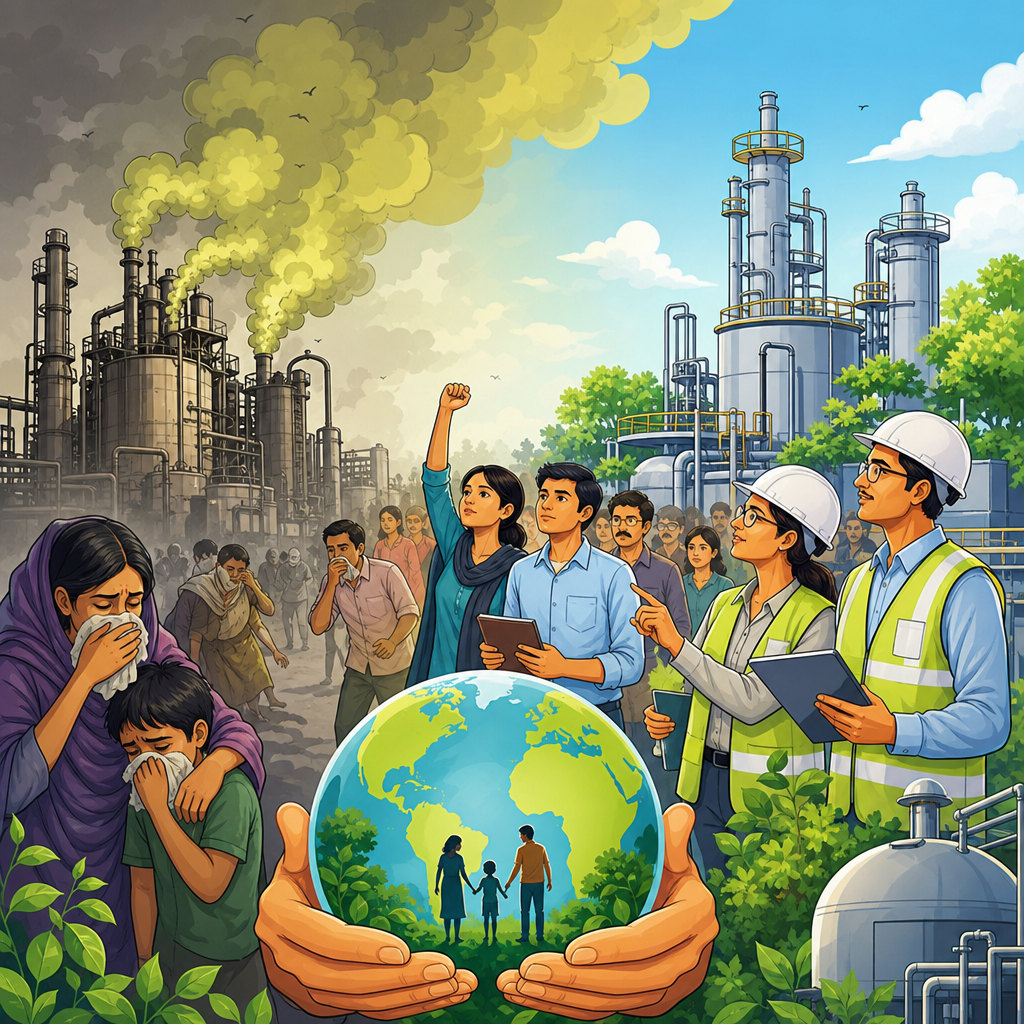
Community recovery depends on trust as much as technical accuracy. Residents need to know what is being measured, how often, by whom, and what action levels trigger intervention. Participatory monitoring can help. In several post-accident settings, local people used personal dosimeters, community maps, and supervised food testing to understand their own exposure more realistically. That does not replace accredited laboratory work, but it can complement it by improving literacy and legitimacy. For a sub-pillar hub on nuclear disasters, this is the key point: long-term environmental monitoring connects every major topic in the field, from radiation science and ecosystem damage to regulation, cleanup, compensation, and resettlement.
Long-term environmental monitoring after nuclear events is the foundation of responsible recovery because it replaces fear, speculation, and one-time surveys with sustained evidence. It defines where contamination remains, how radionuclides move, which foods and waters are safe, and whether remediation is working. The most effective programs measure multiple media, use accredited methods, publish understandable data, and adapt to changing pathways such as floods, fires, forest cycling, and groundwater transport. Lessons from Chernobyl, Fukushima, weapons test sites, and fuel-cycle legacies show that monitoring must continue long after headlines disappear, because the environmental life of a nuclear disaster is often measured in decades.
For readers exploring nuclear disasters as part of the broader environmental disasters topic, this hub provides the framework that ties the subtopic together. Every specialized article under this cluster should connect back to the same core question: what does the evidence show over time, and how should that evidence guide protection of people and ecosystems? Use this page as your starting point for deeper reading on radiation pathways, food safety controls, cleanup strategies, waste storage, exposure assessment, and community return. If you manage environmental risk, public policy, research, or site communications, build your next decision on long-term monitoring data rather than assumptions.
Frequently Asked Questions
What is long-term environmental monitoring after a nuclear event, and why does it continue for so many years?
Long-term environmental monitoring after a nuclear event is the ongoing, systematic measurement of radioactive contamination and its movement through the environment over extended periods of time. It typically begins soon after an accident, weapons test, or intentional release, but unlike emergency response monitoring, it does not end when immediate danger appears to decline. The purpose is to understand how radionuclides behave in real-world conditions as they settle into soil, migrate into groundwater, accumulate in sediments, enter crops and livestock, move through forests and fisheries, and potentially contribute to chronic human exposure.
This kind of monitoring lasts for years or even decades because radioactive contamination does not remain static. Some radionuclides decay quickly, while others persist for long periods and continue to circulate through environmental pathways. Weather, flooding, wildfire, erosion, seasonal farming, land-use changes, and ecological processes can all redistribute contamination long after the original event. A site that appears stable in one year may show new patterns later due to changing hydrology, soil disturbance, or food chain uptake. Long-term programs are designed to capture those changes through repeated sampling and trend analysis rather than isolated measurements.
Just as importantly, extended monitoring supports public health decision-making. Authorities use the data to determine whether food is safe, whether drinking water remains within health-based limits, whether cleanup efforts are working, and whether certain areas require ongoing restrictions or remediation. It also helps communities, regulators, researchers, and policymakers distinguish between short-term spikes and sustained risks. In other words, long-term monitoring is not simply about measuring radiation levels; it is about building an evidence base that guides recovery, land management, health protection, and public trust over time.
What environmental samples are usually tested in a long-term monitoring program?
A robust long-term monitoring program looks at much more than air readings or site-boundary radiation checks. It usually includes repeated sampling of multiple environmental media to understand how contamination moves and where it may concentrate. Common sample types include ambient air, airborne dust, precipitation, soil at different depths, surface water, groundwater, river and lake sediments, marine sediments, vegetation, crops, pasture grass, forest products, livestock feed, milk, meat, fish, shellfish, and sometimes wildlife species that are important for subsistence or ecological assessment.
The reason for this wide scope is that radionuclides travel through interconnected pathways. For example, contamination deposited on soil may later be taken up by crops, washed into streams, stored in reservoir sediments, or resuspended as dust during dry and windy conditions. Forests can retain radionuclides in leaf litter, wood, fungi, and game animals for long periods, while aquatic systems can transfer contamination into fish and seafood. Groundwater monitoring is especially important where infiltration could affect drinking water supplies. In agricultural regions, sampling of milk, leafy vegetables, grains, and animal products can be critical because these are direct human exposure routes.
Sampling plans are usually tailored to local geography, climate, land use, and diet. A coastal region may emphasize seafood and estuarine sediments, while a farming area may prioritize irrigation water, crops, and livestock. A forested area may require long-term study of mushrooms, wild berries, timber, and wildfire-related remobilization. Effective programs also account for seasonal variability, because contamination levels in certain foods or environmental compartments can rise and fall throughout the year. By testing the right materials on a repeated schedule, scientists can identify patterns, detect emerging risks, and provide practical guidance to affected communities.
How do scientists track contamination pathways and human exposure over time?
Scientists track contamination pathways by combining direct environmental measurements with models, maps, and exposure assessments. The process starts with repeated sampling from key media such as soil, water, sediment, crops, livestock, and biota. Laboratory analysis identifies which radionuclides are present, in what concentrations, and how those concentrations change over time. Researchers then compare results across locations and time periods to see whether contamination is decaying in place, moving downhill with runoff, collecting in wetlands, entering food chains, or being redistributed by human activity such as farming, dredging, forestry, or construction.
To understand human exposure, monitoring programs look closely at the pathways by which radionuclides can reach people. These may include external exposure from contaminated ground, inhalation of dust or smoke, ingestion of contaminated water, and consumption of affected food products. Scientists often estimate dose by combining environmental measurements with information about local habits and land use, such as time spent outdoors, reliance on private wells, local fishing practices, hunting, gathering wild foods, or eating homegrown produce. This is especially important because exposure risk can vary significantly between populations even when environmental measurements are similar.
Over the long term, data interpretation becomes as important as data collection. Experts compare findings to baseline conditions, regulatory thresholds, intervention criteria, and historical trends. Geographic information systems, hydrological studies, food-chain transfer models, and dose reconstruction tools help reveal how contamination behaves across landscapes and over time. In some cases, personal dosimetry, whole-body counting, or biomonitoring may be used to complement environmental surveillance. The goal is to move beyond a simple question of “Is radiation present?” and answer more practical, risk-based questions such as “Where is it going, who might be exposed, how much, and what actions are needed now?”
How are monitoring results used to guide cleanup, land use, and food safety decisions?
Monitoring results are central to nearly every long-term recovery decision after a nuclear event. They help authorities determine whether contamination levels are decreasing naturally, remaining stable, or concentrating in certain areas or products. If soil measurements remain elevated, for example, land managers may recommend topsoil removal, soil amendment strategies, restricted cultivation, or controlled access. If sediments show persistent contamination, dredging, containment, or shoreline management may be considered. If forest monitoring reveals long-term radionuclide retention, agencies may need special guidance for timber harvesting, wildfire response, and collection of wild foods.
Food safety is one of the most visible applications of long-term monitoring. Repeated testing of crops, milk, meat, fish, shellfish, and other locally produced foods allows regulators to compare contamination levels against health-based limits and consumption standards. When results exceed action levels, authorities can impose temporary or long-term restrictions on sale, harvest, grazing, fishing, or distribution. Just as important, ongoing testing can demonstrate when products are safe again, which supports livelihoods as well as public confidence. Without a strong monitoring record, both unnecessary alarm and false reassurance become more likely.
Long-term data also inform land-use planning and community recovery. Governments may use monitoring trends to decide whether certain areas can be reoccupied, whether infrastructure projects are appropriate, or whether sensitive uses such as schools, agriculture, or drinking water development should be limited. Cleanup programs rely on environmental data to verify that remediation has actually reduced risk rather than simply moved contamination from one place to another. In this sense, monitoring is not a passive scientific exercise. It is an operational tool that shapes policy, protects health, prioritizes resources, and provides a measurable basis for long-term environmental stewardship.
What makes long-term environmental monitoring credible and trustworthy to the public?
Credibility depends on consistency, transparency, scientific rigor, and meaningful communication. A trustworthy program uses validated sampling methods, accredited laboratories, clear quality assurance procedures, and repeatable protocols so that results from different years and locations can be compared reliably. It also defines in advance what will be sampled, how often samples will be collected, which radionuclides will be analyzed, what detection limits apply, and how data will be interpreted against health-based benchmarks. When methods shift over time, those changes should be documented so the public can understand whether differences in results reflect real environmental change or simply a change in technique.
Transparency is equally important. Communities are far more likely to trust monitoring efforts when raw data, summaries, maps, and explanations are made publicly accessible in plain language. People want to know not only the measured numbers, but also what those numbers mean for drinking water, food, recreation, farming, fishing, and day-to-day life. Credible programs explain uncertainty honestly, avoid overstating conclusions, and acknowledge where more data are needed. They also present trends over time rather than isolated readings, because a single result without context can easily be misunderstood.
Public trust grows further when local communities are treated as participants rather than passive recipients of information. That may include community advisory groups, independent review, split-sample verification, citizen monitoring partnerships, and focused outreach to farmers, fishers, Indigenous communities, and others with unique exposure pathways. Long-term monitoring after nuclear events often unfolds in environments shaped by fear, economic disruption, and understandable skepticism. The most trusted programs recognize that technical competence alone is not enough. They pair sound science with openness, responsiveness, and a sustained commitment to answering the practical concerns people have about health, livelihoods, and the future of their environment.