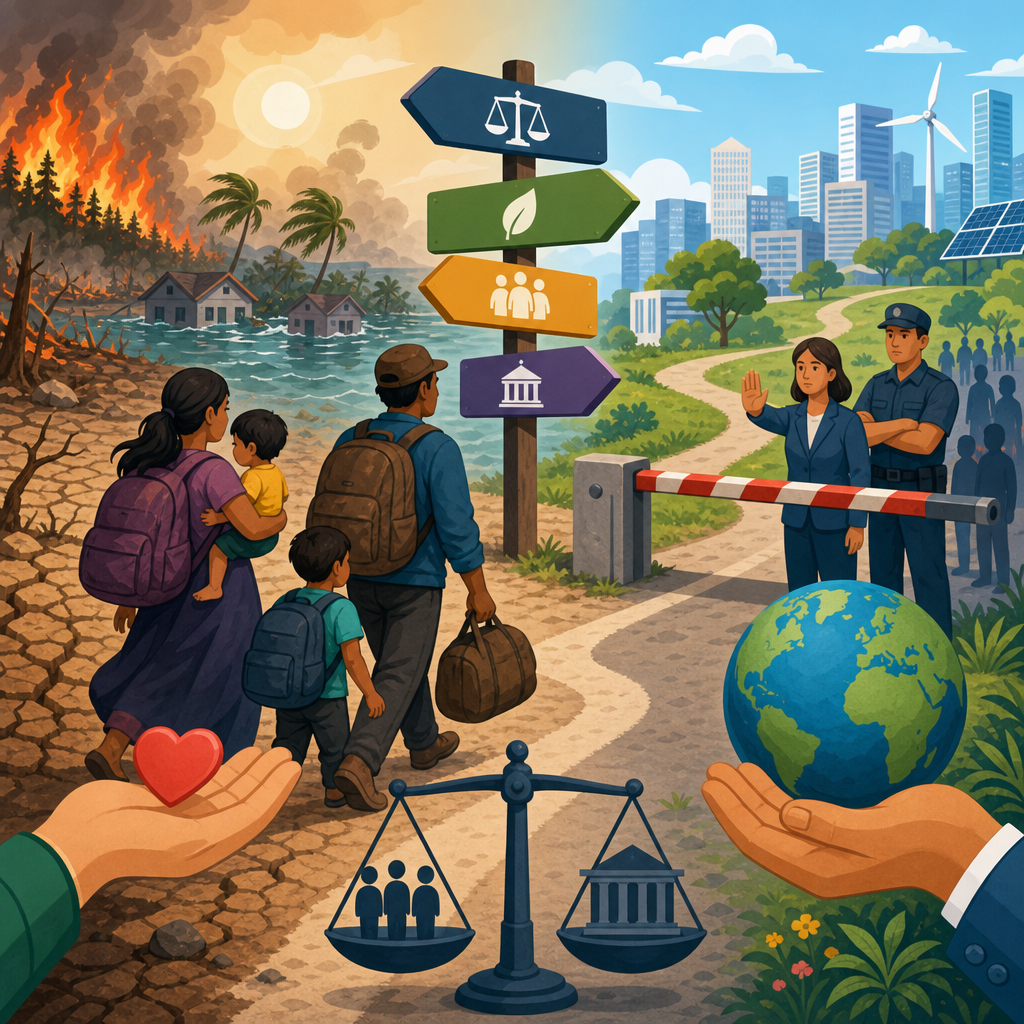

Nuclear power sits at the center of one of the hardest environmental debates: can a technology associated with catastrophic accidents also be essential to a low-carbon future? The answer requires more than slogans. It requires looking at climate science, reactor engineering, public health, waste management, energy economics, and the long shadow cast by major nuclear disasters. As someone who has worked with energy and risk communication projects, I have seen how quickly this discussion collapses into false choices. Nuclear power is neither a magical fix nor an inherently unacceptable threat. It is a high-consequence, highly regulated energy source that delivers very low operational carbon emissions while carrying accident, waste, and security risks that must be managed over decades.
To evaluate whether nuclear power should be part of a green future, it helps to define a few terms. Nuclear fission is the process used in commercial nuclear plants today: atoms such as uranium-235 split, release heat, and produce steam that drives turbines to generate electricity. A green future usually means an energy system that sharply cuts greenhouse gas emissions, reduces air pollution, protects ecosystems, and remains reliable and affordable. Nuclear disasters are severe events involving reactor core damage, radiation release, or long-term environmental contamination. The three defining civilian nuclear disasters are Three Mile Island in the United States in 1979, Chernobyl in the Soviet Union in 1986, and Fukushima Daiichi in Japan in 2011. Each exposed different technical and institutional failures, and each still shapes public opinion and regulation.
This topic matters because climate change is accelerating, electricity demand is growing, and many countries need firm low-carbon power that can run when wind and solar output falls. At the same time, communities reasonably ask what happens when nuclear systems fail, where radioactive waste goes, how much plants cost, and whether money would be better spent on renewables, storage, and modern grids. This hub article covers the full nuclear disasters landscape within the broader environmental disasters topic, while answering the larger question behind it: if the goal is a cleaner and safer energy system, where does nuclear fit?
Why Nuclear Power Is Back in the Climate Conversation
Nuclear power is back on policy agendas because it produces large amounts of electricity with very low lifecycle greenhouse gas emissions. Assessments from the Intergovernmental Panel on Climate Change and other major research bodies consistently place nuclear in a low-emissions range comparable to wind and below fossil fuels by a wide margin. In practical terms, a reactor can supply continuous power for months between refueling outages, which gives grids a stable source of electricity during heat waves, cold snaps, and periods of low renewable output. France built much of its electricity system around nuclear and for decades maintained relatively low power-sector emissions as a result. Sweden also combined nuclear and hydropower to achieve a low-carbon grid faster than many peers.
That reliability is why supporters argue nuclear should remain part of a green future. Decarbonization is not only about annual energy totals. It is also about capacity value, system stability, and the ability to maintain power under stressed conditions. Grid operators care about frequency control, inertia, reserve margins, and winter reliability. Nuclear plants contribute to several of those needs, although some older reactors are less flexible than newer designs. In countries phasing out coal, nuclear can prevent backsliding into gas dependence. That happened in some markets where reactors closed before replacement clean capacity and transmission were ready.
Still, climate value alone does not settle the question. Nuclear plants take a long time to permit and build in many Western markets, often face cost overruns, and must maintain an extraordinary safety culture. The green argument for nuclear therefore depends on context: existing plants that can operate safely often provide immediate climate benefits, while new projects must compete with rapidly falling costs for solar, wind, batteries, and efficiency. The strongest case is usually system-specific, not ideological.
What Nuclear Disasters Actually Teach
Nuclear disasters are central to any honest assessment. Three Mile Island Unit 2 suffered a partial core meltdown after equipment malfunctions and operator errors. The accident caused intense public alarm, but health studies found no broad population-level radiation effects attributable to the event. Its lasting impact was procedural: control room design, operator training, emergency planning, and human factors engineering all changed substantially afterward. I still point to Three Mile Island when explaining that a near-catastrophe can transform regulation even when off-site impacts are limited.
Chernobyl was different in scale and mechanism. The RBMK reactor design had dangerous instability characteristics at low power, lacked a full containment structure, and was operated during a flawed safety test under unsafe conditions. The explosion and fire released large amounts of radioactive material across Europe. Two workers died that night, and acute radiation syndrome killed many emergency responders and plant staff within weeks. The United Nations Scientific Committee on the Effects of Atomic Radiation and the World Health Organization have linked the most clearly documented long-term health consequence to thousands of thyroid cancer cases, especially among those exposed as children to iodine-131 through contaminated milk. Chernobyl is the clearest case that reactor design flaws, weak safety culture, and opaque governance can turn an industrial accident into a continental environmental disaster.
Fukushima Daiichi again changed the lesson. After a massive earthquake and tsunami in March 2011, flooding disabled backup power systems needed to cool reactors. Core damage, hydrogen explosions, evacuations, and contaminated water management followed. Radiation releases were significant, though generally far below Chernobyl. Reviews by Japan’s National Diet and international agencies concluded that the disaster was not merely natural; it was also institutional, shaped by inadequate hazard assumptions, regulatory complacency, and weak severe-accident preparation. One painful lesson from Fukushima is that evacuation itself can cause serious harm, especially for elderly and medically vulnerable people. Disaster planning must weigh radiation risk against the health risks of displacement, stress, and interrupted care.
Comparing Benefits and Risks in Plain Terms
The nuclear debate often becomes more productive when risks are compared across the whole energy system. Fossil fuels cause routine harm every day through air pollution, mining accidents, methane leaks, and climate impacts. Coal combustion also releases radioactive materials and toxic heavy metals into the environment, though in very different concentrations and pathways than a nuclear accident. Nuclear power, by contrast, concentrates risk into low-probability, high-consequence events. That makes it psychologically and politically distinct, even if overall mortality per unit of electricity generated is lower than for coal and oil in many published comparisons.
A fair comparison must also distinguish normal operation from disaster scenarios. During normal operation, commercial nuclear plants tightly control radioactive materials, monitor emissions continuously, and operate under layers of engineered and procedural defense. The public concern is not the baseline state; it is the possibility of a severe accident, sabotage, or long-term waste mismanagement. That concern is reasonable. The response is not dismissal but rigorous risk reduction, transparent oversight, and credible emergency planning.
| Issue | Main benefit | Main risk or limitation | Real-world example |
|---|---|---|---|
| Climate impact | Very low operational carbon emissions | Long build times can delay near-term cuts | France’s low-carbon electricity mix |
| Reliability | Steady output supports grid stability | Large units can create replacement challenges when offline | Winter reliability support in cold-weather grids |
| Safety | Strong regulation reduces routine exposure | Rare accidents can have long consequences | Chernobyl and Fukushima |
| Air pollution | Avoids combustion-related particulates and sulfur dioxide | Uranium mining still has local environmental impacts | Reduced fossil generation where reactors stay open |
| Waste | Small fuel volume compared with fossil ash and emissions | Requires secure management for very long periods | Finland’s deep geological repository program |
| Cost | Long asset life can provide decades of generation | High upfront capital and overruns are common | New builds in Europe and the United States |
Seen this way, the key question is not whether nuclear is perfectly green. No industrial energy source is. The real question is whether its climate and air-quality benefits outweigh its accident, waste, and cost risks under modern standards. In some grids, the answer is yes. In others, especially where renewables, hydro, storage, and transmission can scale quickly, the answer may be no for new large reactors while still being yes for preserving safe existing plants.
Waste, Water, and the Environmental Footprint Beyond Accidents
Radioactive waste is the objection most people raise after disasters, and it deserves a precise answer. Spent nuclear fuel remains hazardous and thermally hot for long periods, so it is first stored in pools and later often transferred to dry casks. Technically, this material is manageable; the total volume is small compared with the waste streams from fossil fuels. Politically, however, waste is difficult because safe management must be maintained across generations. Finland’s Onkalo repository is the most cited example of a serious long-term disposal strategy, using deep geological storage in stable bedrock. Sweden has pursued a similar path. The United States, by contrast, has struggled for decades with the absence of a permanent repository, leaving spent fuel at plant sites.
Nuclear power also has a broader environmental footprint. Uranium mining can damage land and water if poorly regulated, and some Indigenous communities have borne disproportionate harms from legacy mining in places such as the American Southwest. Plants using once-through cooling can affect aquatic ecosystems by withdrawing large amounts of water and discharging warmer water, especially during heat stress. European heat waves have periodically forced output reductions because river temperatures were already high. These are not disaster-level effects, but they matter in any honest green accounting.
Advanced reactor advocates argue that newer designs could improve waste utilization, passive safety, and siting flexibility. Some small modular reactor concepts aim to reduce the probability of severe accidents through natural circulation cooling and simplified systems. Those claims are technically plausible in some cases, but they are not yet proven at commercial scale in most markets. A green future should evaluate advanced reactors on demonstrated performance, not marketing language.
Cost, Speed, and What Policy Makers Need to Decide
The hardest practical issue may be economics. Existing nuclear plants often produce low-carbon electricity at competitive operating cost once built, which is why many analysts support license extensions where safety standards can be met. New large reactors are another story. Projects such as Vogtle in the United States, Flamanville in France, and Olkiluoto 3 in Finland illustrate how delays, supply-chain gaps, financing costs, design changes, and quality-control failures can push budgets far beyond initial estimates. High capital cost matters because climate policy has limited time and money. A dollar tied up for years in an over-budget reactor is a dollar not spent on transmission, efficiency retrofits, offshore wind interconnection, battery storage, heat pumps, or wildfire-hardening of the grid.
Yet cost comparisons can be distorted when they ignore system integration. Wind and solar are now cheap in many regions, but variable generation still needs transmission expansion, balancing resources, demand response, and storage. If a country lacks strong interconnections, hydro resources, or suitable geology for long-duration storage, firm low-carbon generation has added value. That is why serious energy planning uses portfolio modeling, not one-technology advocacy. The best systems often combine renewables, storage, flexible demand, upgraded transmission, and some firm clean power, which may include nuclear, geothermal, or fossil generation with carbon capture where justified.
Policy makers therefore need to separate three decisions. First, should safe existing reactors stay online longer? Often yes, because closing them can increase emissions. Second, should countries build new large reactors now? Only where project governance, financing, supply chains, and public consent are strong enough to avoid repeating costly failures. Third, should governments invest in advanced designs, fuel-cycle improvements, and waste solutions? Yes, but with milestone-based funding and independent review.
So, Should Nuclear Power Be Part of a Green Future?
Yes, nuclear power can be part of a green future, but only as part of a broader clean energy strategy and only under strict conditions. The evidence is clear that nuclear electricity is low in carbon and can reduce dependence on fossil fuels. The evidence is equally clear that nuclear disasters, especially Chernobyl and Fukushima, exposed failures with lasting environmental and social consequences. The lesson is not that nuclear must be rejected everywhere. The lesson is that design quality, independent regulation, realistic hazard assessment, emergency planning, waste governance, and public transparency are nonnegotiable.
For this nuclear disasters hub, the practical takeaway is simple. Any serious discussion of nuclear power must start with the record of past accidents, not treat them as exceptions too rare to matter. Three Mile Island shows the importance of human factors and operator training. Chernobyl shows what happens when flawed design and weak governance meet secrecy. Fukushima shows that natural hazards can exceed assumptions and that disaster response itself can harm communities. Together, they define the minimum standard for credible nuclear policy in a green future.
If your goal is to understand environmental disasters without shortcuts, use this hub as your starting point for the wider nuclear disasters topic. Explore reactor safety, radiation health effects, evacuation policy, waste storage, and the economics of new nuclear alongside renewable alternatives. The smartest position is neither reflexively pro-nuclear nor reflexively anti-nuclear. It is evidence-based, historically informed, and focused on building the cleanest energy system with the lowest total risk. Keep reading the related articles in this hub, compare the tradeoffs carefully, and judge nuclear power by its full record and its real-world performance.
Frequently Asked Questions
Is nuclear power actually considered a clean or green energy source?
Nuclear power is not “green” in exactly the same way wind or solar are often described, but it is widely considered a low-carbon energy source. That distinction matters. During operation, nuclear plants produce electricity without burning fossil fuels, which means they emit very little carbon dioxide directly. When researchers look at full life-cycle emissions, including mining, fuel processing, plant construction, operation, and decommissioning, nuclear generally ranks far below coal and natural gas and in a range comparable to other low-carbon technologies. From a climate perspective, that makes it highly relevant.
Where the debate becomes more complicated is that “green” means more than carbon alone. Critics point to uranium mining impacts, long-lived radioactive waste, accident risk, water use, and the ecological consequences of large centralized infrastructure. Supporters respond that every major energy system has tradeoffs, including land use for renewables, mineral extraction for batteries, air pollution from gas backup, and the climate damage caused by delaying decarbonization. In practice, whether nuclear should be called green depends on which environmental criteria are being prioritized. If the main goal is rapid reduction of greenhouse gas emissions while maintaining reliable electricity, nuclear has a strong case. If the standard includes avoiding hazardous waste and rare but severe technological failures, many people are more cautious. The most honest answer is that nuclear is low-carbon, but whether it belongs under the label “green” depends on how broadly that label is defined.
How dangerous is nuclear power compared with fossil fuels and other energy sources?
Nuclear power carries a very specific kind of risk: low-probability but potentially high-consequence events. That is why it generates such intense public concern. Major disasters such as Chernobyl and Fukushima shaped global perceptions because they were dramatic, frightening, and long-lasting in cultural memory. Radiation is invisible, the word itself is alarming, and the consequences of a severe accident can involve displacement, contamination fears, and years of political fallout. These are real concerns and should not be minimized.
At the same time, when energy risks are compared using broad public health data, fossil fuels are far more deadly overall. Coal, oil, and gas cause routine harm through air pollution, mining accidents, methane leaks, and climate-driven impacts. Those harms are spread out across time and geography, so they are often less visible than a nuclear disaster, but they are enormous. Air pollution from fossil fuels contributes to respiratory disease, cardiovascular illness, and premature death on a vast scale. By contrast, modern nuclear power in countries with strong regulation has caused relatively few deaths per unit of electricity generated. That does not mean nuclear is risk-free. It means its risks are different in form and public psychology from the chronic damage associated with fossil energy.
Modern reactor designs, stronger safety cultures, passive cooling systems, stricter international oversight, and lessons learned from past failures have reduced accident risk substantially. Even so, no serious expert would claim the risk is zero. The important policy question is not whether nuclear is perfectly safe, but whether its risks are manageable and acceptable compared with the alternatives available in a world facing climate change, air pollution, and rising electricity demand. For many analysts, that comparison makes nuclear look far more defensible than its public image suggests.
What about nuclear waste—can it really be managed safely?
Nuclear waste is one of the strongest arguments raised against expanding nuclear power, and it deserves a serious answer. Spent nuclear fuel remains radioactive for a very long time, and managing it safely requires technical planning and political stability over generations. That naturally makes people uneasy. However, the key point is that nuclear waste is difficult, but not unmanageable. In fact, one unusual feature of nuclear waste compared with many other industrial pollutants is that it is contained, measured, and regulated very closely. The total volume of high-level waste produced by nuclear power is relatively small compared with the massive, ongoing waste streams created by fossil fuels, most notably carbon dioxide released directly into the atmosphere.
Today, spent fuel is commonly stored first in cooling pools and then in dry cask storage systems designed to isolate it securely. These systems have performed well in many countries. The long-term solution favored by many experts is deep geological disposal, placing waste in stable underground repositories engineered to contain radioactivity over extremely long periods. Finland has become a widely cited example because it has moved further than most countries in implementing a permanent disposal strategy. The technology for long-term storage exists; the larger barrier in many places has been political consent, not scientific impossibility.
There are also differences within the waste discussion that often get lost. Not all nuclear waste is equally dangerous, and advanced fuel cycles or reprocessing methods may reduce the volume or toxicity of some waste streams, although they introduce their own costs and proliferation concerns. Critics are right that no waste strategy should be treated casually. Supporters are right that humanity already manages hazardous materials across many sectors and that climate change itself is a far larger uncontained waste problem. The real issue is not whether nuclear produces waste—it does—but whether societies are willing to invest in transparent, durable institutions to manage it responsibly.
If renewables are getting cheaper, why not just use solar, wind, and batteries instead of nuclear?
This is one of the central questions in the clean energy transition. Solar and wind have become dramatically cheaper in many markets and are essential to decarbonization. They can be deployed quickly, have very low operating emissions, and avoid some of the concerns associated with nuclear accidents and radioactive waste. In many regions, the cheapest new electricity now comes from renewable sources. For those reasons alone, any realistic green future will include a major expansion of renewables.
But cost per megawatt-hour is not the whole story. Electricity systems must match supply and demand every hour, in every season, and under stressful conditions such as heat waves, cold snaps, droughts, or prolonged periods of low wind. Variable renewables can do a great deal, especially when combined with transmission upgrades, grid flexibility, demand response, storage, hydroelectric power, and regional coordination. Still, some analysts argue that firm low-carbon power sources are valuable because they provide reliable generation when weather-dependent sources are underperforming. Nuclear is one of the few established technologies that can supply large amounts of firm low-carbon power at scale.
The answer therefore depends partly on geography and grid design. Some places may be able to build highly renewable systems with minimal or no nuclear contribution. Others may find that keeping existing nuclear plants open, or adding new ones, reduces dependence on gas and makes decarbonization faster and more resilient. The strongest pro-nuclear argument is not that renewables are bad, but that climate goals are so urgent that excluding a major low-carbon option may be a costly mistake. The strongest anti-nuclear argument is that time and money spent on expensive new reactors could crowd out faster, cheaper renewable deployment. In policy terms, this is less a battle of absolutes than a question of what mix can cut emissions most reliably, affordably, and quickly.
Can new reactor technologies solve the problems that made older nuclear plants so controversial?
New reactor designs are often presented as a way to preserve nuclear power’s low-carbon benefits while reducing its biggest drawbacks. This includes small modular reactors, advanced fission concepts, and systems designed with passive safety features that rely less on active human intervention or external power to prevent overheating. In theory, these designs could improve safety, lower construction risk through factory production, reduce land use, and offer more flexibility for grids that include large shares of renewables. Some advanced systems are also promoted as being able to use fuel more efficiently or reduce certain waste burdens.
That said, it is important to separate promise from proven performance. Many next-generation reactor concepts remain in development, demonstration, or early commercialization stages. They may eventually help, but they are not yet available at the scale required to transform global electricity systems in the near term. Nuclear’s long-standing challenges—high upfront costs, long project timelines, complex regulation, public opposition, and the need for strong institutions—do not disappear simply because a design is newer. Some advanced technologies may reduce certain safety risks while introducing new technical, financial, or fuel-cycle complications. There are also proliferation and security questions that need careful oversight.
In other words, innovation matters, but it is not a magic reset button. Existing reactor fleets, current large-scale plants, and renewable energy deployment will shape the next couple of decades far more than speculative future designs alone. New technologies may eventually make nuclear a more practical part of a green future, especially if they can demonstrate safety, cost control, and faster deployment in the real world rather than just on paper. For now, the credible position is cautious optimism: advanced reactors could improve the nuclear option, but they still need to prove themselves against both engineering reality and the speed demanded by the climate crisis.