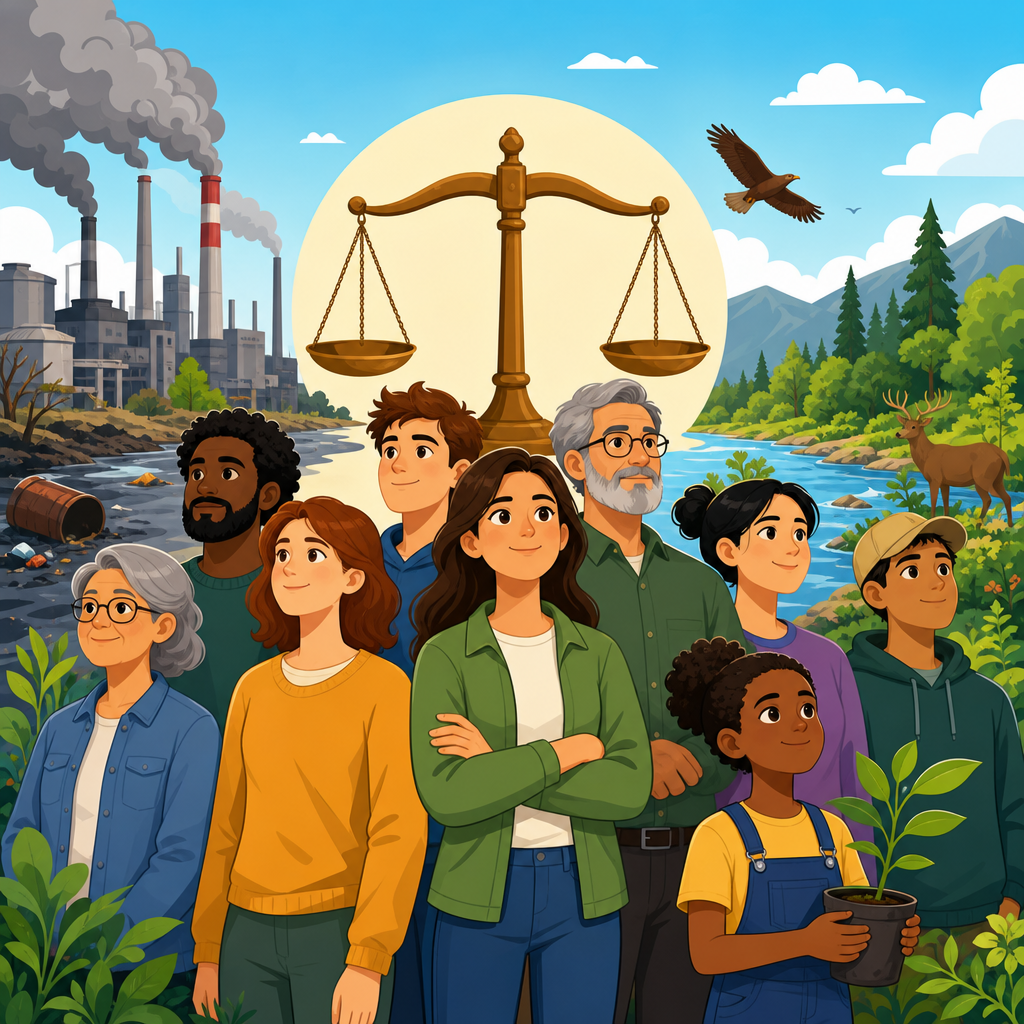

Protecting sacred lands and cultural ecosystems sits at the center of Indigenous environmental rights because land is not only territory, habitat, or an economic resource. It is law, memory, identity, and continuity. Across Indigenous nations, sacred places anchor ceremonies, burial traditions, food systems, oral histories, and governance. Cultural ecosystems include the species, waters, soils, fire regimes, seasonal cycles, and relationships that sustain those practices. When governments or corporations damage these places through mining, pipelines, dams, industrial forestry, or poorly planned conservation, the loss is not merely environmental. It is cultural, legal, spiritual, and intergenerational. I have worked on environmental policy projects where agencies described landscapes in terms of acreage, watershed units, and mitigation ratios, while Indigenous communities described the same places through kinship obligations, sacred responsibilities, and harvest calendars. That gap explains why conventional environmental review often fails.
Indigenous environmental rights are the rights of Indigenous peoples to own, access, use, govern, and restore lands, waters, resources, and ecological knowledge systems according to their laws and lifeways. These rights include land tenure, self-determination, free, prior, and informed consent, cultural practice, subsistence, language continuity, and participation in environmental decision-making. They are recognized unevenly through domestic constitutions, statutes, treaties, court decisions, and international standards such as the United Nations Declaration on the Rights of Indigenous Peoples, International Labour Organization Convention 169, and biodiversity agreements. The issue matters because Indigenous peoples manage or hold tenure rights to lands containing a large share of the world’s remaining biodiversity, yet they are disproportionately exposed to extraction, dispossession, and climate risk. A serious environmental policy framework must therefore treat sacred lands protection as a governance issue, not a narrow heritage issue.
This hub article explains how Indigenous environmental rights operate in practice, why sacred lands need stronger legal protection, where current systems break down, and what effective policy looks like. It covers land rights, consent, cultural impact assessment, co-management, climate adaptation, restoration, and enforcement. It also highlights practical tools used by tribes, First Nations, Native title holders, and Indigenous communities worldwide. If you are researching environmental policy and law, this page provides the foundation for understanding the broader subtopic and for connecting related issues such as tribal sovereignty, biodiversity conservation, water justice, land back initiatives, protected area governance, and climate resilience planning.
Why sacred lands require a different legal and policy approach
Sacred lands cannot be protected adequately through ordinary zoning, museum-style preservation, or site-specific archaeology alone. In policy practice, sacred places are often misclassified as isolated “cultural resources,” even when their meaning depends on an entire living landscape. A mountain used for ceremony may require dark skies, soundscapes free from blasting, intact wildlife corridors, and access to springs many miles away. A river may be sacred because salmon return there, because ancestors traveled there, and because songs name specific bends and confluences. When agencies approve fragmented mitigation, they often preserve an object while destroying the system that gives it meaning. That is why Indigenous environmental rights emphasize relationship, continuity, and governance.
Environmental law already has concepts that support this broader view. Watershed management, ecosystem-based management, cumulative effects assessment, and landscape-scale conservation all recognize that ecological harm is connected across space and time. Indigenous legal traditions often push this logic further by linking ecological integrity to duties of care. In Canada, Australia, New Zealand, the United States, and parts of Latin America, courts and lawmakers have increasingly recognized that consultation limited to a final permit stage is inadequate when land-use plans, exploration licenses, or access roads predetermine outcomes. The strongest protection begins early, before project footprints harden and political commitments make consent difficult to meaningfully obtain.
Another reason for a distinct approach is evidentiary fairness. Sacred knowledge is not always written, public, or reducible to coordinates on a map. Communities may limit disclosure to protect ceremonial privacy or prevent looting. I have seen review processes demand exact site data from communities while allowing companies to submit speculative economic claims with fewer constraints. Better policy allows confidential cultural information, accepts oral histories as evidence, and uses Indigenous-led mapping protocols that distinguish between public, restricted, and highly sensitive knowledge. Without those safeguards, legal processes can force communities to choose between protecting secrecy and proving significance.
Core legal foundations of Indigenous environmental rights
The legal foundation begins with Indigenous peoples’ inherent rights, which predate modern states. Domestic systems vary, but common sources include treaties, reserved rights doctrines, Aboriginal title, Native title, constitutional protections, human rights law, and statutory duties to consult. In the United States, treaty rights often protect hunting, fishing, and gathering in ceded territories, which means habitat destruction can become a treaty violation. In Canada, section 35 of the Constitution Act recognizes and affirms existing Aboriginal and treaty rights, shaping consultation duties and title jurisprudence. In Australia, Native Title recognizes certain traditional rights and interests, though proof burdens remain high. In New Zealand, Te Tiriti o Waitangi and subsequent settlements create frameworks for co-governance and redress. In Latin America, constitutional plurinationalism and Inter-American human rights decisions have strengthened territorial rights in several jurisdictions.
International standards matter because they influence domestic reform, lender policies, and judicial reasoning. The United Nations Declaration on the Rights of Indigenous Peoples states that Indigenous peoples have rights to lands, territories, and resources they have traditionally owned, occupied, used, or acquired, and it requires free, prior, and informed consent before adopting measures that affect them. Consent is more than consultation. It requires timely information, cultural appropriateness, absence of coercion, and a real possibility of saying no or negotiating conditions. Financial institutions such as the International Finance Corporation use performance standards that require Indigenous peoples’ informed participation and, in certain cases, consent. These standards do not solve enforcement gaps, but they create leverage.
Effective protection also depends on procedural rights: access to information, standing to challenge permits, funding for expert review, language access, and monitoring authority after approval. A right that exists only on paper is weak. Communities need enforceable timelines, independent review, injunctive relief, and penalties for unauthorized disturbance. They also need legal recognition that environmental damage to a sacred place can cause cultural harm even when biophysical indicators appear partly recoverable.
How major threats damage cultural ecosystems
The most visible threats come from extractive and infrastructure projects, but the pattern is broader. Open-pit mining can remove entire ceremonial landscapes, contaminate aquifers, and restrict access through blast zones and security fencing. Oil and gas development fragments migration routes, increases roadkill, degrades quiet, and raises spill risk in wetlands and river systems central to subsistence. Hydropower can inundate burial grounds, alter fish runs, and erase place-based knowledge linked to former shorelines. Industrial logging simplifies forests that support medicines, basket materials, and culturally important burning practices. Even tourism can become harmful when trails, drones, and visitor traffic intrude on prayer sites or expose restricted places on social media.
Climate change compounds every existing pressure. Melting permafrost threatens ancestral sites and food storage areas. Sea-level rise erodes shell middens, burial grounds, and village locations. Extreme wildfire can damage rock art, old-growth groves, and traditional food landscapes, especially where fire suppression interrupted cultural burning for decades. Species shifts affect caribou, salmon, herring, wild rice, and pollinators that structure ceremony and diet. When a culturally central species declines, the impact travels through language, youth education, and community health. That is why cultural ecosystems should be treated as adaptive social-ecological systems rather than static heritage objects.
| Threat | Environmental effect | Cultural effect | Policy response |
|---|---|---|---|
| Mining | Habitat loss, acid drainage, groundwater contamination | Destruction of sacred sites and restricted access | No-go zones, consent requirements, long-term water monitoring |
| Dams | Altered flow, fish decline, inundation | Loss of burial grounds and river ceremonies | Basin-wide review, fish passage, decommissioning analysis |
| Industrial forestry | Fragmentation, erosion, biodiversity decline | Loss of medicines, foods, and cultural burning areas | Indigenous forest plans, seasonal protections, co-management |
| Climate change | Fire, erosion, species shifts, sea-level rise | Disrupted subsistence and knowledge transfer | Adaptation funding, relocation support, Indigenous-led restoration |
Consent, consultation, and cultural impact assessment
One of the most common questions in Indigenous environmental rights is simple: what does meaningful consultation actually require? In practice, it means engagement early enough to shape whether a project proceeds, not just how it is modified. It means providing project data in accessible formats, paying for community experts, respecting Indigenous decision calendars, and recognizing representative institutions chosen by the community. It also means addressing cumulative impacts from past and present activity instead of reviewing each permit in isolation. Consultation is meaningful only when decision-makers are willing to deny approvals, relocate projects, or establish no-go areas if cultural survival is at stake.
Cultural impact assessment is increasingly necessary because standard environmental impact assessment often overlooks intangible and relational harms. A strong assessment asks how a project affects access routes, ceremonial privacy, seasonal harvests, language use, intergenerational teaching, and obligations to nonhuman relatives. It should be Indigenous-led or co-designed, with clear control over sensitive knowledge. In New Zealand, cultural impact assessments prepared by iwi and hapū have become an established tool in planning. In Canada, impact assessments increasingly include Indigenous knowledge and health, social, and cultural effects, though implementation remains uneven. In the United States, section 106 review under the National Historic Preservation Act can identify traditional cultural properties, but it is frequently too narrow unless paired with stronger tribal consultation and treaty analysis.
Consent processes work best when they are embedded in land-use planning, not bolted onto individual permits. Regional planning can identify sacred landscapes, migration corridors, and exclusion zones before leasing begins. That reduces conflict, prevents stranded investments, and gives all parties clearer expectations.
Governance models that work in practice
The most effective protection comes from shifting authority, not merely adding advisory roles. Indigenous protected and conserved areas, tribal national parks, co-management boards, and rights-of-nature arrangements linked to Indigenous guardianship all offer promising models. In Australia, Indigenous Protected Areas cover vast landscapes managed according to jointly agreed conservation and cultural objectives. In Canada, Indigenous Guardians programs support on-the-ground monitoring, visitor education, and restoration while creating local employment. In New Zealand, legal personhood for Te Urewera and the Whanganui River reflects a governance philosophy closer to relational stewardship than conventional ownership. In the United States, tribal co-stewardship agreements with federal agencies are growing, though tribes continue to push for stronger decision-making power rather than consultation without control.
Land back initiatives also matter because secure tenure changes everything. When communities regain title or management authority, they can align conservation with ceremony, food sovereignty, and language revitalization. I have seen restoration outcomes improve dramatically when Indigenous ranger or guardian programs had stable funding and enforcement support. Invasive species control became more targeted, fire planning reflected cultural calendars, and monitoring captured changes outsiders had missed for years. These are not symbolic gains. They improve biodiversity indicators, public safety, and compliance.
Good governance requires durable institutions: clear jurisdictional agreements, revenue sharing, dispute resolution processes, and data governance rules. It also requires recognizing that not every sacred place should be promoted as a tourist asset or even publicly mapped. Protection sometimes means controlled access, seasonal closure, or complete confidentiality.
What stronger environmental policy should include
A serious policy agenda for protecting sacred lands and cultural ecosystems has several nonnegotiable elements. First, governments should legally recognize Indigenous land tenure and customary governance wherever unresolved claims continue to undermine protection. Second, laws should require free, prior, and informed consent for projects with significant impacts on lands, waters, sacred places, or subsistence resources. Third, environmental review should include cumulative impacts, climate risk, and Indigenous-led cultural assessment. Fourth, agencies should designate no-go zones for highly sensitive sacred areas and prohibit offsetting when harm is irreversible. Fifth, communities need direct funding for monitoring, legal participation, restoration, and youth knowledge transmission.
Policy must also improve enforcement. Too many systems front-load review and neglect what happens after approval. Permit conditions should trigger automatic work stoppages for unauthorized disturbance, mandatory disclosure of incidents, independent auditing, and accessible complaint channels. Remote sensing, community-based monitoring, and guardian patrols can strengthen compliance, but only if data informs real enforcement decisions. Restoration standards should address ecological function and cultural use, not simply revegetation percentages. A replanted slope is not a restored sacred landscape if springs are contaminated or access remains restricted.
For readers exploring Indigenous environmental rights more deeply, the next step is to examine linked topics such as treaty rights, tribal sovereignty, Indigenous water law, protected areas, environmental justice, climate adaptation, and biodiversity governance. Protecting sacred lands is not a niche issue within environmental policy and law. It is a test of whether legal systems can protect living relationships between peoples and place. When law recognizes those relationships, conservation becomes more durable, conflict decreases, and communities gain the authority needed to sustain cultural ecosystems for future generations. Follow the related articles in this hub to build a fuller understanding and apply these principles in policy, advocacy, research, or project review.
Frequently Asked Questions
Why are sacred lands so important in Indigenous environmental rights?
Sacred lands are central to Indigenous environmental rights because they carry far more meaning than the idea of property or natural resource use. For many Indigenous peoples, land is inseparable from law, kinship, spirituality, governance, and collective memory. Sacred places may include burial grounds, ceremonial sites, migration routes, watersheds, mountains, forests, and harvesting areas that connect communities to ancestors and future generations. These places often hold the stories, responsibilities, and teachings that define a nation’s identity and guide how people care for the world around them.
Protecting sacred lands also protects the living systems that make cultural life possible. Ceremonies may depend on specific plants, animals, water conditions, seasonal patterns, or fire cycles. If those relationships are damaged by extraction, pollution, development, or restricted access, the harm is not only ecological but cultural, legal, and spiritual. In that sense, Indigenous environmental rights are not limited to conserving scenery or preserving heritage in a museum-like way. They are about safeguarding the ongoing ability of communities to practice their laws, care for their territories, and sustain a way of life that is rooted in reciprocal relationships with the land.
What is meant by the term “cultural ecosystems”?
Cultural ecosystems are the interconnected lands, waters, species, climate patterns, and ecological processes that support Indigenous cultural practices and responsibilities. The term recognizes that culture does not exist apart from nature. Food gathering, fishing, hunting, ceremony, language, medicine, oral tradition, and governance often depend on healthy ecosystems functioning in specific ways. A river is not only water; it may be a sacred relative, a travel route, a source of food, and a place where law and story are renewed. A grassland is not only habitat; it may also depend on Indigenous fire stewardship that shapes biodiversity and ceremonial use.
This concept matters because environmental damage can disrupt entire cultural systems, even when a site itself appears untouched. If a mining project contaminates downstream water, if a pipeline fragments migration routes, or if climate change alters seasonal cycles, communities may lose access to species and conditions required for ceremonies and subsistence practices. Cultural ecosystems therefore broaden the conversation beyond isolated sacred sites. They show that protecting Indigenous rights requires protecting relationships: between people and plants, fire and forest, fish and river, memory and place. It is a framework that helps explain why Indigenous stewardship is often holistic, place-based, and attentive to long-term ecological balance.
How do development projects threaten sacred lands and cultural ecosystems?
Development projects can threaten sacred lands and cultural ecosystems in direct and indirect ways. Direct threats include excavation, blasting, road building, drilling, dam construction, deforestation, and industrial traffic that physically damage or destroy places used for ceremony, burial, teaching, and subsistence. Once a sacred site is altered or access is blocked, the loss may be irreversible. Even if a project avoids a single marked location, it can still harm the broader ecosystem that gives that place meaning and function. Noise, dust, pollution, groundwater depletion, habitat fragmentation, and invasive species can all interfere with cultural use and ecological health.
Indirect threats are just as serious. Projects often bring legal restrictions, surveillance, land privatization, and shifts in local power that limit Indigenous access and decision-making. They may disrupt seasonal harvesting, alter fire regimes, reduce the availability of culturally important species, or weaken intergenerational knowledge transfer by making it harder for elders to bring youth onto the land. In many cases, the approval process itself reflects a major problem: governments or corporations treat cultural impacts as secondary to economic gain, or they consult too late and too narrowly. That is why Indigenous advocates emphasize free, prior, and informed consent, cumulative impact review, and Indigenous-led assessment. The issue is not only whether development changes a landscape, but whether it violates the relationships and responsibilities that make that landscape a living cultural homeland.
What legal and policy tools can help protect sacred lands?
A strong protection framework usually combines Indigenous law, domestic legal safeguards, and international human rights standards. One of the most important principles is free, prior, and informed consent, which holds that Indigenous peoples should have a decisive voice before projects affecting their lands, territories, and resources move forward. In addition, legal recognition of land title, treaty rights, cultural heritage protections, water rights, and co-management authority can give communities more power to defend sacred areas and ecological relationships. Environmental review processes can also be improved by requiring cumulative impact analysis, meaningful consultation, and Indigenous knowledge to be treated as authoritative rather than merely symbolic.
International standards such as the United Nations Declaration on the Rights of Indigenous Peoples have also strengthened the argument that sacred lands deserve robust protection. While implementation varies, these standards support rights to culture, religion, self-determination, and traditional territories. At the national and local levels, effective policy often includes buffer zones around sacred places, restrictions on extractive activity, legal standing for tribes or Indigenous nations in environmental cases, and funding for Indigenous guardianship and stewardship programs. Still, legal tools work best when governments recognize that sacred lands are not just historical sites to be documented after the fact. They are living places governed by continuing responsibilities, and real protection depends on Indigenous leadership in decision-making, monitoring, restoration, and enforcement.
How does protecting sacred lands benefit both Indigenous communities and the environment more broadly?
Protecting sacred lands benefits Indigenous communities by preserving the conditions needed for ceremony, language, food security, health, governance, and intergenerational continuity. Access to culturally important places supports teaching, healing, and identity formation, especially for younger generations learning from elders on the land itself. When sacred lands remain intact, communities are better able to maintain traditional ecological knowledge, seasonal practices, and social responsibilities that cannot be separated from specific places. This protection can also strengthen political self-determination by affirming Indigenous authority over land care, planning, and cultural survival.
The environmental benefits are equally significant. Areas protected for cultural reasons often support biodiversity, watershed integrity, fire resilience, and long-term ecosystem balance. Indigenous stewardship practices such as controlled burning, selective harvesting, habitat observation, and seasonal management have sustained landscapes for generations and are increasingly recognized as essential to conservation and climate adaptation. Protecting sacred lands therefore helps conserve not only species and habitats but also the knowledge systems that sustain them. In practice, this means cleaner water, healthier forests and grasslands, stronger resilience to ecological disturbance, and better outcomes than approaches that separate people from nature. Protecting sacred lands is not a niche cultural concern; it is a practical and ethical foundation for environmental justice, biodiversity protection, and enduring stewardship.