
Resources for teaching biodiversity and ecosystems are most useful when they connect scientific accuracy, classroom practicality, and local relevance. In schools, “biodiversity” means the variety of life at genetic, species, and ecosystem levels, while “ecosystems” describes the relationships among organisms and their physical environment. An environmental curriculum for schools brings those ideas into sequenced learning experiences that build knowledge from observation to analysis to action. I have helped teachers map these topics across primary and secondary grades, and the strongest programs always combine field experience, age-appropriate data, and clear assessment criteria. This matters because biodiversity loss, habitat fragmentation, invasive species, pollution, and climate change are no longer abstract issues. Students encounter them in local parks, food systems, and weather patterns, so schools need dependable teaching resources that explain causes, consequences, and responses in plain terms.
A strong hub page on environmental curriculum for schools should answer three questions directly: what to teach, which resources to use, and how to teach the material well. The “what” includes core concepts such as food webs, ecological niches, adaptation, resilience, ecosystem services, conservation, and human impact. The “which resources” includes curriculum frameworks, open datasets, field guides, museum collections, citizen science platforms, videos, maps, and assessment tools. The “how” includes inquiry-based learning, outdoor learning, place-based education, Universal Design for Learning, and project-based assessment. Schools that get this right do not treat biodiversity as a one-off science week topic. They thread it through science, geography, language arts, art, and civics. That approach improves retention because students revisit the same concepts in different contexts, from classifying pollinators to debating land-use choices.
The best biodiversity teaching resources also align with standards and constraints that real schools face. Teachers need materials that fit lesson length, reading level, safeguarding rules, budget limits, and assessment requirements. A five-minute bellringer on invasive species, a 50-minute lab on quadrat sampling, and a six-week restoration project all have value, but they serve different purposes. Reliable resources therefore include scope and sequence guidance, differentiated tasks, answer keys, risk assessments for outdoor work, and suggestions for adaptation when access to green space is limited. When I review materials for schools, I look for scientific credibility first, then usability: are species names correct, are trophic relationships clear, are claims current, and can a non-specialist teacher use the resource confidently tomorrow? That is the standard a hub article should model for every supporting page in the environmental curriculum for schools cluster.
Core concepts every environmental curriculum for schools should cover
An effective environmental curriculum for schools starts with a clear conceptual spine. Students should learn that biodiversity operates at three connected levels. Genetic diversity explains why populations can adapt to disease or environmental change. Species diversity examines richness and evenness within habitats. Ecosystem diversity compares forests, wetlands, grasslands, rivers, coral reefs, and urban green spaces. Those foundations support later learning about stability, disturbance, succession, and conservation planning. If students only memorize species names, they miss the systems thinking that makes ecology useful.
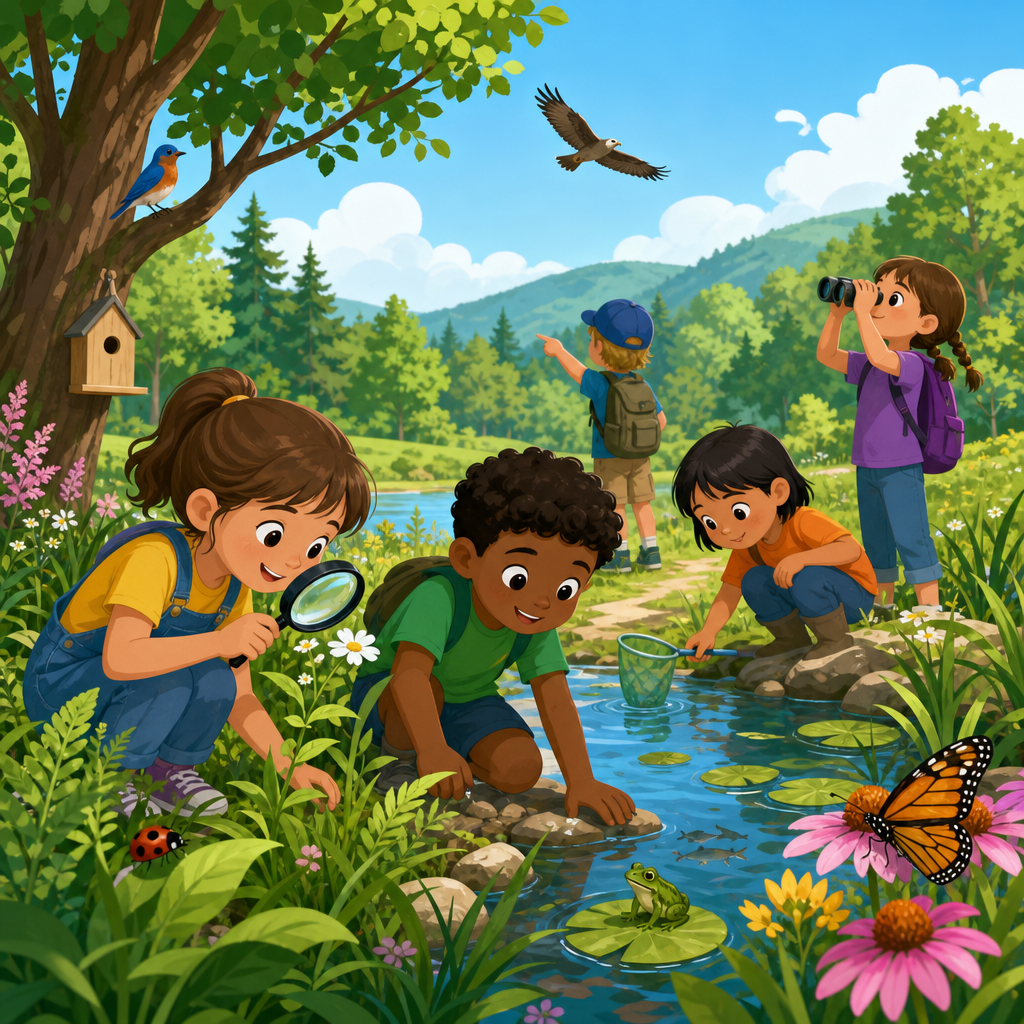
Key ecosystem content should include energy flow, nutrient cycling, interdependence, and limiting factors. In practice, this means teaching producers, consumers, decomposers, food chains, food webs, carrying capacity, and biotic and abiotic factors with concrete examples. A pond study is ideal because students can observe sunlight, water chemistry, aquatic plants, invertebrates, fish, and decomposition in one setting. In an urban school, a tree pit or schoolyard planter can serve the same purpose. The educational point is not scale; it is visible interaction.
Students also need direct instruction on ecosystem services. Pollination, water filtration, carbon storage, soil formation, and flood mitigation are practical concepts that link ecology to economics and public health. When learners understand that wetlands reduce flood risk and diverse soils improve food production, biodiversity becomes a community issue rather than a distant conservation slogan. This is where curriculum planning gains power: schools can connect science lessons to local planning debates, agriculture, or public park management.
Best types of teaching resources and when to use them
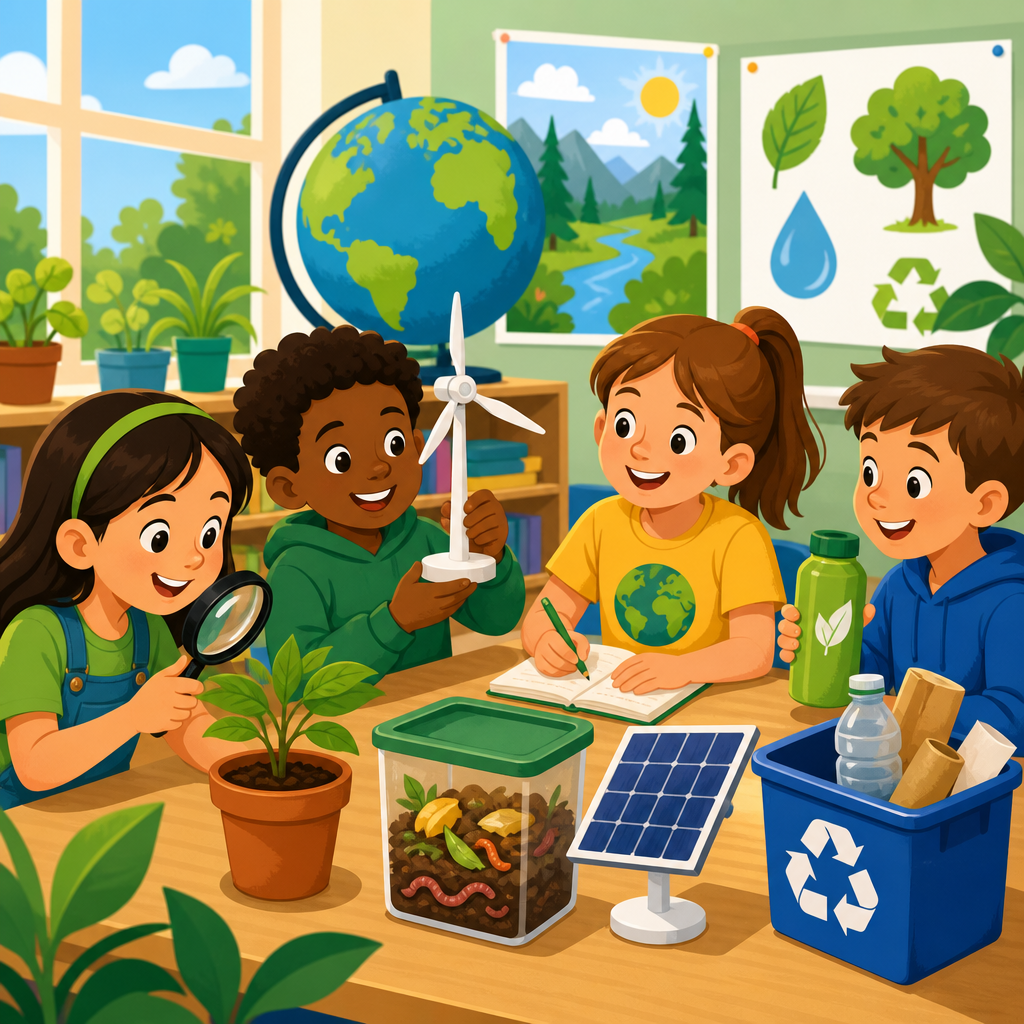
The most dependable biodiversity and ecosystems resources fall into six categories: curriculum frameworks, field-based tools, digital media, data platforms, specimen or image collections, and assessment materials. Frameworks provide coherence. Field-based tools create engagement. Digital media improves access. Data platforms develop analytical skills. Collections strengthen observation. Assessments reveal misconceptions. A balanced program uses all six rather than relying on worksheets alone.
For frameworks, teachers should begin with national or state science standards, then map biodiversity themes across year levels. The Next Generation Science Standards are widely used as a reference point even outside the United States because they emphasize systems, cause and effect, and evidence-based explanation. UNESCO education resources and IUCN Red List materials add global conservation context. For field-based learning, common tools include quadrats, transect tapes, pH strips, thermometers, soil sieves, bug pots, and ID keys. These are inexpensive, durable, and suitable for repeated use across grades.
Digital resources work best when they do more than entertain. BBC Bitesize, National Geographic Education, HHMI BioInteractive, Smithsonian Learning Lab, and NASA Earth Observatory provide vetted multimedia content that can anchor lessons. For biodiversity data, the Global Biodiversity Information Facility, iNaturalist, eBird, and the World Wildlife Fund species pages are especially useful. Students can compare local observations with global records, which introduces scale and data quality in a natural way. In classrooms I have supported, iNaturalist often becomes the bridge between casual noticing and formal ecological investigation because students can upload observations, receive identifications, and discuss habitat patterns.
| Resource type | Best classroom use | Example tools or platforms | Main caution |
|---|---|---|---|
| Curriculum frameworks | Unit planning and progression | NGSS, state standards, UNESCO materials | Need local adaptation |
| Field tools | Hands-on sampling and observation | Quadrats, transects, pH strips, ID keys | Require risk assessment and supervision |
| Digital media | Introducing concepts and revision | BBC Bitesize, BioInteractive, Smithsonian | Can become passive if overused |
| Data platforms | Graphing, analysis, citizen science | iNaturalist, eBird, GBIF | Students need help judging data quality |
| Collections | Identification and comparison | Herbaria, museum image banks, field guides | May lack local species coverage |
| Assessments | Checking understanding and misconceptions | Rubrics, exit tickets, CER prompts | Must match inquiry goals |
Assessment resources deserve special attention because ecology teaching can look engaging while leaving core misunderstandings uncorrected. Students often confuse habitat with niche, think food chains show individual meals rather than energy pathways, or assume any species increase is automatically positive. Good assessment tools ask students to explain relationships, justify claims with evidence, and interpret change over time. Claim-Evidence-Reasoning writing frames, concept maps, retrieval quizzes, and short field notebooks are more revealing than simple matching tasks.
How to teach biodiversity well in real classrooms
The most effective teaching strategy is a sequence that moves from observation to pattern to explanation to action. Start with direct experience. Ask students to document species in a defined area, compare microhabitats, or sketch a food web from visible evidence. Then move to pattern finding through counts, graphs, and maps. Next, introduce scientific explanation using terms such as adaptation, competition, mutualism, and disturbance. Finally, ask students to apply learning through habitat improvement plans, presentations, or policy evaluations. This sequence works because it mirrors how ecological understanding develops.
Place-based learning is especially powerful. A lesson on pollinators becomes more meaningful when students survey flowering plants near the school entrance, identify likely insect visitors, and compare management choices such as mowing frequency. In one school project I supported, students discovered that a rarely used field margin had more invertebrate diversity than a heavily maintained lawn. That single finding changed their view of what a “tidy” school landscape should look like and led to a student-led wildflower strip proposal.
Differentiation matters because environmental curriculum for schools often spans wide reading levels and prior knowledge. Strong resources include visual vocabulary cards, sentence stems for explanation, scaffolded data tables, and extension tasks using authentic datasets. Universal Design for Learning principles help here: multiple ways to access content, multiple ways to demonstrate understanding, and multiple ways to sustain engagement. For example, one student might analyze a biodiversity graph, another might produce an annotated field sketch, and another might record an oral explanation with evidence.
Outdoor learning should be planned carefully rather than treated as enrichment. Teachers need boundaries, timing, role allocation, equipment routines, and contingency plans for weather. A short, repeatable protocol works better than a one-off trip. Ten minutes of weekly observation in the same plot can produce richer ecological insight than a single half-day visit elsewhere because students notice seasonality, succession, and human impact over time. Repetition is what turns nature walks into ecological study.
Building a schoolwide biodiversity curriculum
A hub page on environmental curriculum for schools should help leaders design progression, not just collect activities. In primary years, the emphasis should be noticing, naming, sorting, and describing relationships. Students can classify living things, compare habitats, and observe seasonal change. In lower secondary, the focus should shift to sampling methods, food webs, adaptation, and human impact. In upper secondary, students are ready for population dynamics, biogeochemical cycles, conservation tradeoffs, land management, and data interpretation using real datasets.
Cross-curricular integration strengthens coverage. In geography, students can map land use and habitat fragmentation. In mathematics, they can calculate percentage cover, mean counts, and biodiversity indices at an introductory level. In language arts, they can evaluate environmental arguments or write evidence-based reports. In art, they can study scientific illustration and pattern in nature. In civics, they can examine how protected areas, environmental law, and community consultation shape outcomes. This is how biodiversity education becomes a coherent school experience rather than a narrow science unit.
School leaders should also think about infrastructure. A productive program needs more than enthusiasm. It needs a resource bank, local species lists, seasonal planning notes, data recording templates, and community partnerships. Useful partners include botanic gardens, natural history museums, wildlife trusts, universities, park services, Indigenous knowledge holders, and local environmental nonprofits. These organizations can provide expert talks, site access, loan kits, and volunteer support. The best partnerships are ongoing and tied to curriculum goals, not occasional assemblies.
Evaluation should include both learning outcomes and campus impact. Track whether students can identify species relationships, interpret ecological data, and explain conservation choices. Also track whether the school grounds are improving as a habitat through native planting, reduced pesticide use, deadwood retention, or pollinator areas. When students see that their learning changes the school environment, motivation rises and concepts become durable.
Choosing high-quality resources and avoiding weak materials
Not all biodiversity resources are equal. Weak materials usually show one of four problems: outdated science, vague learning goals, poor local relevance, or superficial activities dressed up as inquiry. A worksheet that asks students to color a rainforest layer may have a place in early learning, but it does not build ecological reasoning on its own. By contrast, a high-quality resource states the objective clearly, uses accurate terminology, includes evidence-rich examples, and shows teachers how to assess understanding.
When selecting materials, check the publication source, date, cited evidence, and species context. Conservation status changes, invasive species ranges shift, and habitat restoration guidance evolves. Resources from recognized institutions such as museums, universities, government environmental agencies, and established nonprofits are generally safer choices. Even then, local adaptation is essential. A brilliant wetland lesson from one country may not fit another region’s species, policies, or seasons without revision.
It is also important to balance urgency with accuracy. Students should understand biodiversity loss honestly, but constant catastrophe framing can create disengagement. The best teaching resources pair threat information with practical responses such as habitat corridors, native planting, protected areas, regenerative agriculture, and community science. That balance supports informed action instead of helplessness.
Resources for teaching biodiversity and ecosystems should help schools do three things well: teach rigorous ecological concepts, connect learning to local places, and turn curiosity into evidence-based action. The strongest environmental curriculum for schools is not built from isolated activities. It is built from a planned sequence of concepts, dependable tools, repeatable fieldwork, meaningful assessment, and partnerships that extend learning beyond the classroom. When schools combine standards-aligned frameworks with direct observation, real data, and place-based projects, students understand biodiversity as a living system rather than a vocabulary list.
The central lesson is simple. Choose resources that are scientifically accurate, practical for teachers, and relevant to the school’s actual environment. Use field guides, sampling tools, citizen science platforms, museum collections, and structured assessments together. Teach from observation to explanation, revisit sites over time, and integrate biodiversity across subjects. If you are building or updating an environmental curriculum for schools, start by auditing your current units, identifying gaps in progression, and selecting one local ecosystem as the anchor for the next term’s learning.
From there, create a shared resource bank, train staff on field methods, and give students regular chances to collect, interpret, and communicate ecological evidence. That is how biodiversity education becomes consistent, credible, and memorable. Explore the supporting articles in this hub, adapt the recommended resources to your context, and build a curriculum that helps students understand and protect the ecosystems around them.
Frequently Asked Questions
What should high-quality resources for teaching biodiversity and ecosystems include?
High-quality resources should balance scientific accuracy with practical classroom use. At a minimum, they should explain biodiversity at the genetic, species, and ecosystem levels, and show how ecosystems function through relationships among living things and their physical environment. Strong materials do more than define terms. They help students observe patterns, ask questions, analyze evidence, and apply what they learn to real environmental issues.
The best resources are also clearly structured for teaching. That means they include age-appropriate explanations, sequenced lessons, discussion prompts, investigations, visual supports, and assessment ideas. Teachers benefit from materials that identify learning goals, key vocabulary, misconceptions to watch for, and ways to adapt lessons for different grade levels or learning needs. When resources are designed this way, they become much easier to use in a real classroom setting rather than remaining purely informational.
Another important quality is local relevance. Students understand biodiversity and ecosystems more deeply when they can connect content to nearby habitats, familiar species, school grounds, community parks, watersheds, or regional environmental issues. Resources that encourage field observation, mapping, species identification, and community-based inquiry tend to make learning more meaningful. In short, the most useful teaching resources are scientifically trustworthy, instructionally practical, and rooted in the places students know.
How can teachers make biodiversity and ecosystems relevant to students’ everyday lives?
Relevance starts with helping students notice that ecosystems are not distant or abstract. They exist in schoolyards, gardens, vacant lots, ponds, forests, farms, coastlines, and even urban neighborhoods. Teachers can begin with direct observation by asking students to document plants, insects, birds, soil conditions, shade, water flow, or seasonal changes in a local space. This makes biodiversity visible and shows that ecosystems are dynamic systems shaped by interactions among organisms and environmental conditions.
Teachers can also connect lessons to issues students already hear about, such as pollinator decline, habitat loss, invasive species, food systems, extreme weather, water quality, and conservation. When students see how biodiversity supports pollination, clean water, soil health, climate resilience, and food webs, the topic becomes immediately more practical and relevant. These connections help move learning from memorizing definitions to understanding why biodiversity matters for human communities as well as natural systems.
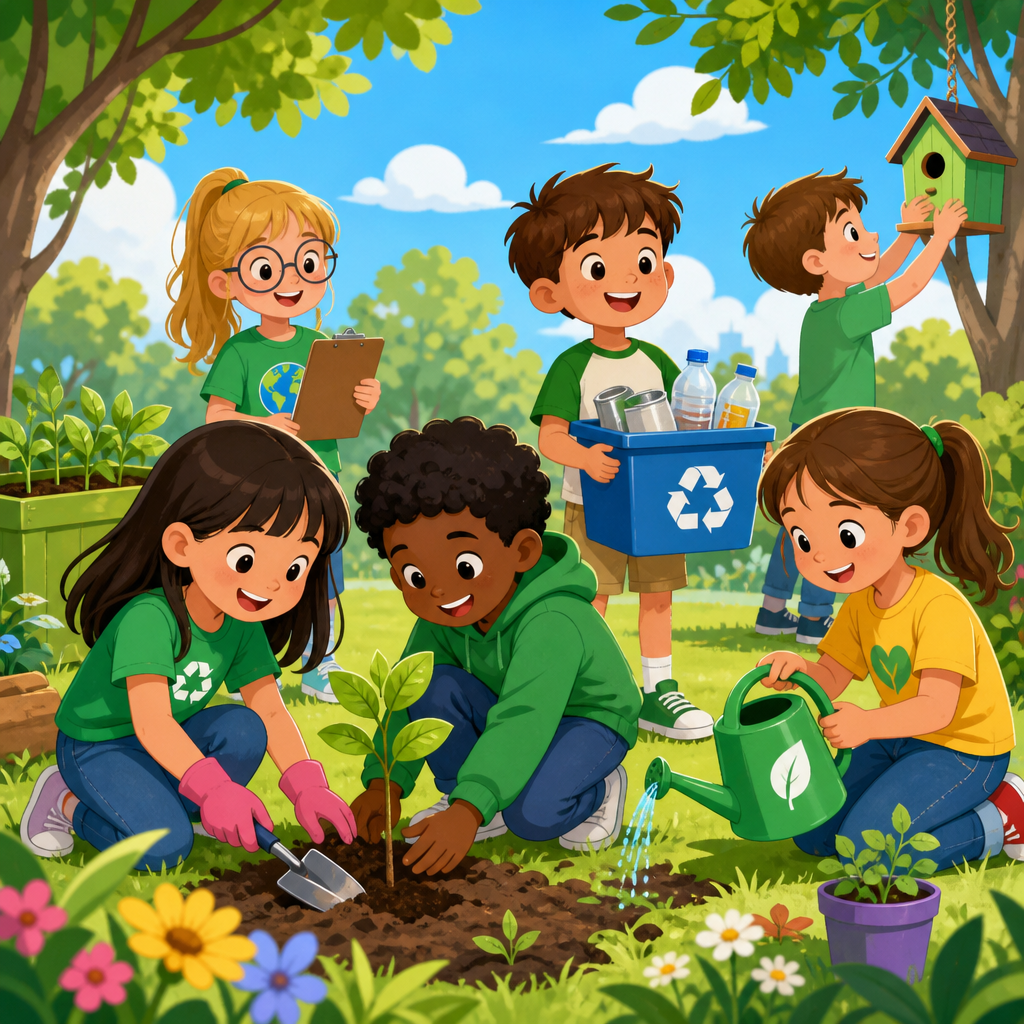
Another effective strategy is to include action-oriented learning. Students might create habitat maps, monitor campus species diversity, design pollinator-friendly gardens, compare local land-use changes, or propose ways to improve biodiversity on school grounds. These kinds of activities support a progression from observation to analysis to action, which is a strong framework for an environmental curriculum in schools. When students can investigate real places and contribute ideas for improvement, their engagement and understanding usually increase significantly.
What types of classroom activities work best for teaching biodiversity and ecosystems?
The most effective activities are those that combine hands-on observation, data collection, and reflection. Field-based learning is especially powerful. Even a brief walk outdoors can become a meaningful ecosystem study if students are recording evidence of species interactions, habitat features, and abiotic factors such as light, moisture, temperature, and soil. Simple biodiversity surveys, quadrat sampling, species counts, and habitat comparisons can introduce scientific practices in a manageable way.
Inquiry-based investigations also work well because they help students move beyond naming organisms to understanding ecological relationships. For example, students might compare biodiversity in two different habitats, study how changes in water availability affect plant growth, or examine how human activity influences local ecosystems. Food web modeling, decomposition studies, schoolyard mapping, and case studies on restoration or conservation can deepen systems thinking and help students understand interdependence, resilience, and environmental change.
Classroom activities are strongest when they include opportunities for analysis and communication. Students should not only gather information but also interpret patterns, discuss cause and effect, and present conclusions. Charts, field journals, ecosystem diagrams, claim-evidence-reasoning responses, and collaborative presentations all support this process. A well-designed sequence often begins with observation, moves into questioning and investigation, and ends with explanation or action. That progression helps students build lasting understanding rather than isolated facts.
How can teachers choose resources that are appropriate for different grade levels?
Choosing the right resources begins with developmental fit. Younger students generally benefit from concrete experiences, visual supports, and simple cause-and-effect relationships. At early grade levels, resources should focus on noticing living and nonliving parts of environments, identifying common species, observing seasonal changes, and understanding basic needs and habitats. Activities should be short, interactive, and rooted in direct experience whenever possible.
Older students are usually ready for greater complexity. Resources for upper elementary and middle grades can introduce food webs, adaptation, ecosystem interactions, biodiversity loss, and human impacts. Secondary students can engage with more sophisticated concepts such as genetic diversity, ecosystem services, resilience, trophic dynamics, data interpretation, land-use change, and conservation policy. At these levels, good materials should include authentic data, primary or secondary sources, opportunities for argumentation, and tasks that require systems-level thinking.
Teachers should also look at language demands, prior knowledge, and instructional goals. A resource may contain accurate science but still be poorly matched to a class if the vocabulary is too advanced or the lesson structure assumes background knowledge students do not yet have. It is helpful to choose materials that can be adapted, scaffolded, or extended. Resources with differentiated readings, guiding questions, visual models, and flexible assessments are often the most useful because they support diverse learners while keeping core ecological ideas intact.
Why is local relevance so important in an environmental curriculum for schools?
Local relevance matters because it turns environmental learning into something students can observe, question, and understand firsthand. Biodiversity and ecosystems are easier to teach when students can connect concepts to real places they know. A lesson about habitat diversity becomes more meaningful when students compare shaded and sunny areas on campus. A discussion of food webs becomes more concrete when they can identify actual producers, consumers, and decomposers in a nearby park, wetland, or garden. Place-based learning gives abstract science a visible context.
It also strengthens retention and engagement. Students are more likely to care about ecological concepts when they relate to local wildlife, regional landscapes, and community concerns. They may recognize changes in bird populations, tree cover, stream conditions, pollinators, or neighborhood green space. These observations help students see that ecosystems are not static textbook examples but living systems affected by weather, land use, and human decisions. That recognition supports deeper inquiry and more thoughtful analysis.
Finally, local relevance supports informed action. An environmental curriculum for schools is especially powerful when it helps students move from awareness to stewardship. By studying local biodiversity and ecosystem health, students can participate in restoration projects, habitat improvement, citizen science, or school sustainability efforts in ways that feel genuine and achievable. This does not just improve engagement; it builds ecological literacy, responsibility, and problem-solving skills. In that sense, local relevance is not an extra feature of strong teaching resources. It is one of the main reasons those resources become effective in the first place.