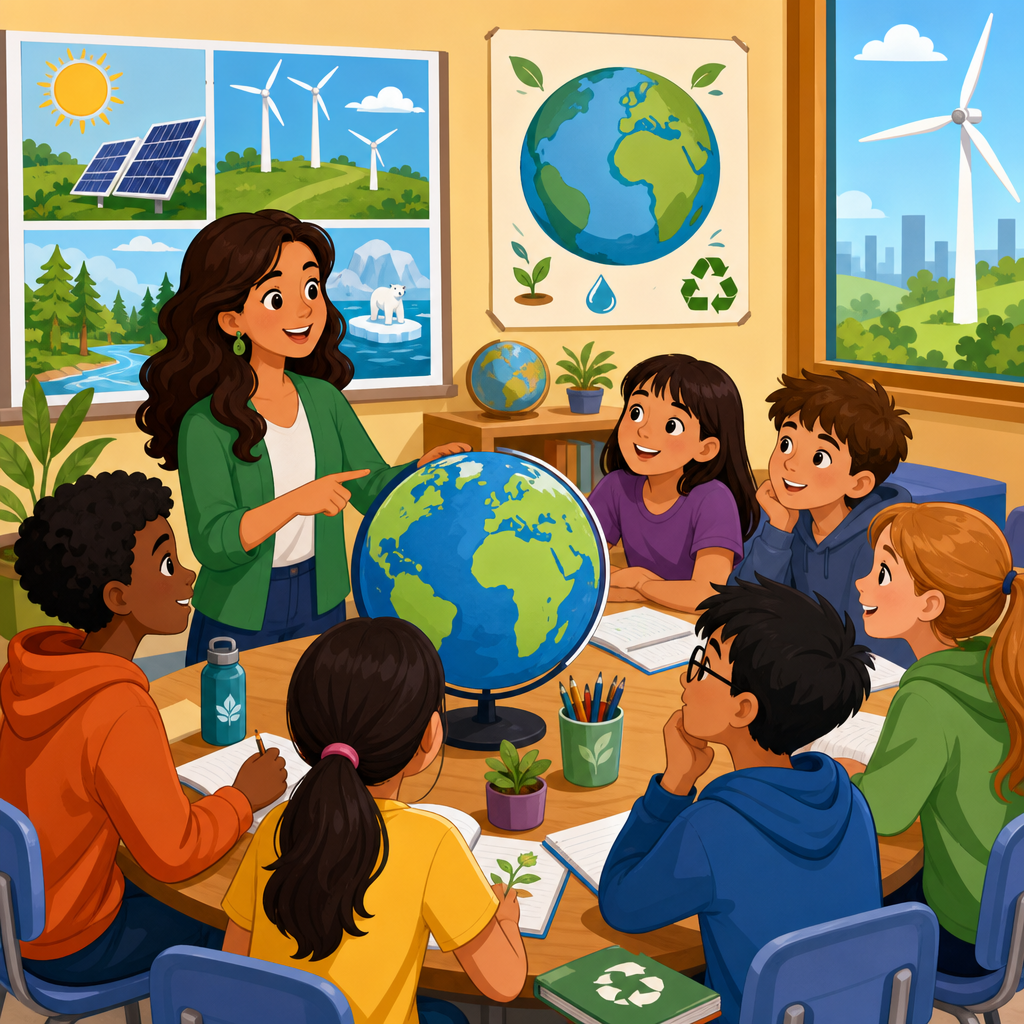
Animated videos are one of the most effective ways to teach children about nature, climate, recycling, and conservation because they turn abstract environmental ideas into stories kids can see, remember, and discuss. In classrooms, libraries, and family learning programs, I have seen students grasp difficult eco concepts much faster when a short animation shows a melting glacier, a polluted river, or a compost bin in action. This matters because environmental literacy now starts early. Children hear terms like climate change, renewable energy, biodiversity, and plastic pollution long before they can read a scientific report. They need explanations built for their age, attention span, and emotional understanding.
In this guide, “best animated videos” means high-quality educational animations that explain eco topics accurately, use age-appropriate language, and encourage curiosity rather than fear. “Eco topics” includes climate science, habitats, recycling, waste reduction, water conservation, energy, food systems, and everyday sustainability habits. As a hub page for educational videos and documentaries, this article does two jobs: it recommends the strongest types of animated content for kids, and it helps parents, teachers, homeschoolers, librarians, and curriculum planners choose the right format for a specific learning goal. Some videos are ideal for a five-minute lesson starter. Others work better as a full-class discussion prompt or as an introduction to a documentary.
The best environmental videos for kids share several traits. They simplify without distorting the science, connect global issues to daily life, and balance urgency with agency. A child should finish a video understanding not only what the problem is, but also what people can do next. Strong animations also support comprehension through narration, visual metaphors, repetition, captions, and memorable characters. When selected carefully, these videos become more than screen time. They become a bridge into experiments, read-alouds, outdoor observation, journaling, and project-based learning. That is why this topic deserves a central resource page that maps the landscape clearly.
What makes an animated eco video effective for kids
An effective animated eco video answers four questions quickly: What is happening, why does it matter, how does it affect living things, and what can kids do about it? If a video cannot do that in a developmentally appropriate way, it may be visually appealing but educationally weak. The strongest titles usually focus on one concept at a time. For example, a recycling animation for ages six to eight should explain sorting, contamination, and reuse with clear examples like paper, cans, and food waste instead of trying to cover the entire circular economy in one lesson.
Accuracy is essential. I always look for content aligned with widely accepted science from organizations such as NASA Climate Kids, NOAA, National Geographic Kids, PBS, BBC Earth, and the World Wildlife Fund. Production style matters too. Fast cuts, loud jokes, or overloaded screens can reduce retention for younger viewers. By contrast, simple motion graphics, consistent terminology, and visual cause-and-effect sequences help children build understanding. A good animation about the water cycle, for instance, should visibly connect evaporation, condensation, precipitation, and collection rather than mention the terms only in narration.
Age fit is another major factor. Preschool viewers benefit from concrete actions such as turning off taps, caring for plants, and not littering. Upper elementary students can handle systems thinking, including how fossil fuels contribute to warming or how habitat fragmentation affects animals. Middle grade audiences are ready for tradeoffs and more nuanced ideas, such as why recycling helps but cannot solve overconsumption by itself. The best educational videos and documentaries sequence these layers well, allowing a child to revisit the topic later at a deeper level.
Best animated video categories for core eco topics
The most useful way to choose environmental videos is by topic and teaching purpose. Over years of building lesson sequences, I have found that different animation styles work better for different concepts. Character-led stories are strong for empathy and habits. Motion graphics work well for processes. Documentary-style animation helps explain systems. The table below shows the categories that consistently perform best for kids.
| Eco topic | Best animation style | Why it works | Example learning outcome |
|---|---|---|---|
| Recycling and waste | Character story with labeled objects | Makes sorting rules concrete and memorable | Kids can identify recyclable, compostable, and landfill items |
| Climate change | Simple motion graphics and narrated diagrams | Shows greenhouse gases, heat trapping, and human causes clearly | Kids can explain warming in basic cause-and-effect terms |
| Habitats and biodiversity | Animated nature documentary | Builds connection to animals and ecosystems | Kids can describe why species need healthy habitats |
| Water conservation | Problem-solution mini story | Links household actions to resource use | Kids can name ways to save water at home and school |
| Energy and electricity | Explainer animation with comparisons | Clarifies renewable versus nonrenewable sources | Kids can compare solar, wind, coal, and gas at a basic level |
| Food systems | Animated journey from farm to plate | Connects choices, waste, transport, and land use | Kids can explain why reducing food waste matters |
Recycling videos are usually the first entry point because children see bins every day. The best ones explain contamination, which many adults still misunderstand. A greasy pizza box, for example, may not belong in standard paper recycling, while a rinsed aluminum can often does. Climate videos need extra care. They should avoid doom-heavy messaging and instead focus on evidence, impacts, and solutions such as clean energy, tree cover, and efficient buildings. Habitat animations work best when they tie animal needs to place: bees need flowering plants, sea turtles need cleaner nesting beaches, and frogs need healthy wetlands.
Water and energy topics become stronger when videos include household examples. Children understand a dripping tap, lights left on, or an air conditioner running with windows open. Food-system animations are especially valuable because they connect lunchroom behavior to wider environmental outcomes. A short visual explanation of how food waste leads to wasted water, fuel, labor, and landfill methane can make a school compost project feel meaningful rather than symbolic.
Recommended sources and standout animated series
Parents and educators often ask for trusted channels, not just topic ideas. Several publishers consistently produce strong environmental content for children. NASA Climate Kids offers concise explainers on weather, climate, atmosphere, and Earth systems, often with interactive support materials. PBS KIDS and PBS LearningMedia provide age-appropriate science clips that fit classroom use and usually come with discussion prompts. National Geographic Kids combines animated explainers with wildlife storytelling, which works especially well for biodiversity and conservation. BBC Teach and BBC Earth can support older elementary learners with polished visual narratives grounded in established science.
TED-Ed also deserves attention for upper elementary and middle school students. Its animated lessons are often more concept-dense, making them suitable for guided viewing rather than passive watching. A TED-Ed style video on oceans, food chains, or energy transfer can anchor a full lesson if the adult pauses to define vocabulary and ask comprehension questions. SciShow Kids is another strong option for younger audiences because it uses direct language, short runtimes, and concrete examples. Although not every video is strictly animated, its visual structure often functions like animation for teaching purposes.
For documentary crossover, many programs now blend animation into longer factual storytelling. That hybrid approach is useful when a topic is too complex for a short cartoon but still needs visual simplification. In practice, I often pair a three-minute animation on the greenhouse effect with a longer documentary segment showing real communities dealing with drought, flooding, or coastal change. The animation builds the model; the documentary provides human context. That pairing is one of the most effective structures in environmental education because it moves from explanation to lived reality without losing children in technical detail.
How to match videos to age, setting, and learning goals
The best animated videos for eco topics are not universal; they depend on who is watching and why. For ages four to six, choose videos under five minutes that focus on one behavior or one simple idea. Good examples include animations about putting trash in the right bin, watering plants carefully, or protecting animals by keeping parks clean. For ages seven to nine, children can follow chains of cause and effect, so videos on the water cycle, renewable energy, or food waste become appropriate. Ages ten to twelve can usually handle terms like emissions, ecosystems, habitat loss, and resource conservation if the visuals remain clear.
Setting matters too. In classrooms, short animated clips work best as lesson starters, transition tools, or recap materials. At home, families often prefer slightly longer videos with a strong story arc. Libraries and museums can use looped animations on displays, especially if captions are included. For homeschool use, a playlist structure is ideal: one short explainer, one hands-on activity, one reflective discussion, and one related documentary segment. This hub article supports that broader educational videos and documentaries approach because no single format fits every learner.
Learning goals should drive selection. If the goal is vocabulary acquisition, choose slow-paced animations with repeated key words on screen. If the goal is behavior change, use narratives that model actions children can copy immediately, such as packing a reusable bottle or reducing lunch waste. If the goal is deeper reasoning, choose animations that compare systems, show feedback loops, or present a problem with multiple solutions. For example, an upper-elementary class studying plastic pollution benefits more from a video that distinguishes reduction, reuse, collection, recycling, and policy than from one that says simply, “Plastic is bad.”
How to use animated videos with documentaries, books, and activities
The strongest environmental learning rarely comes from a single video. It comes from sequencing. A practical and proven approach is preview, watch, discuss, extend. Start with a question such as, “Where does our trash go?” or “Why are some summers getting hotter?” Then show a short animation that introduces the concept. After that, guide a discussion with a few direct questions: What did you notice, what caused the problem, and what solutions were shown? Finally, extend the lesson with a related nonfiction book, mini documentary, experiment, art response, or outdoor observation.
This is where a hub page on educational videos and documentaries becomes especially useful. Animated clips are the front door. Documentaries provide depth, local news segments add relevance, and books reinforce language and facts. For a recycling unit, I might begin with a three-minute animation explaining sorting, follow with a behind-the-scenes video from a materials recovery facility, then finish with a classroom waste audit. For biodiversity, I would start with an animated food-web explainer, show a short wildlife documentary excerpt, and then ask students to map the habitats around their schoolyard.
Adults should also teach active viewing. Pause to define words, replay important moments, and ask children to describe what the pictures showed before relying on the narration. This improves retention and helps identify misconceptions early. Captions are valuable for literacy support and multilingual settings. When possible, connect the video to a real action the same day. If children watch an animation about water conservation, let them measure tap flow, check for leaks, or make reminder signs. The message becomes durable when knowledge and action happen together.
Common mistakes to avoid when choosing eco videos for kids
Not every polished animation is a good educational resource. One common mistake is choosing videos that are emotionally intense but scientifically thin. Children may remember images of sad animals or dirty beaches, yet fail to understand causes, systems, or solutions. Another mistake is using outdated recycling or climate information. Waste rules vary by municipality, and environmental science evolves. Always verify recommendations against local guidance and current scientific consensus. A video that oversimplifies can still be useful, but only if an adult fills in the missing context.
Another problem is overloading children with global problems without showing age-appropriate action. Eco anxiety is real, especially for sensitive students. The best animated environmental videos acknowledge challenges while emphasizing practical responses, collective effort, and progress. It also helps to avoid material that confuses weather with climate, presents individual action as the only solution, or treats every “green” product claim as equally credible. Children deserve honest explanations, including the idea that personal habits matter most when paired with community systems, infrastructure, and informed choices.
The best animated videos that explain eco topics for kids are accurate, age-matched, visually clear, and connected to real learning beyond the screen. As a hub for educational videos and documentaries, this guide highlights the formats, sources, and teaching strategies that consistently work: short explainers for core concepts, story-based animations for habits and empathy, and documentary pairings for depth and real-world relevance. When adults choose carefully, children do not just memorize facts about recycling, habitats, climate, water, or energy. They build understanding that supports better questions, better discussions, and better decisions.
If you are building an environmental learning plan, start with one topic, one strong animated video, and one follow-up activity. Use this page as your hub for selecting the right educational videos and documentaries, then expand into books, projects, and local observation. A well-chosen animation can open the door to lifelong eco literacy.
Frequently Asked Questions
What makes animated videos such an effective way to teach eco topics to kids?
Animated videos work especially well for environmental education because they make complex ideas visible, concrete, and emotionally understandable for children. Many eco topics, such as climate change, water pollution, recycling systems, food waste, and habitat loss, can feel too big or too abstract when explained only through words. Animation helps by turning those concepts into scenes kids can actually follow. A child may not immediately understand a discussion about rising temperatures, but they can understand an animated glacier shrinking, an animal losing its home, or a trash can filling up faster than a recycling bin. Those visual stories create instant meaning.
Another reason animation is so effective is that it supports memory and discussion. Children often remember characters, colors, movement, and short storylines much more easily than textbook definitions. A well-made animated video can show cause and effect in a way that sticks: litter enters a storm drain, travels to a river, affects fish, and then changes the ecosystem. That sequence is far easier for a child to recall later in class or at home. Animated videos also lower the barrier to participation. Kids who may feel unsure about science vocabulary are often more willing to ask questions after watching a short, engaging clip. In practical learning environments like classrooms, libraries, and family programs, animation becomes a bridge between curiosity and understanding, which is exactly what early environmental literacy needs.
Which eco topics are best explained through animated videos for children?
The best eco topics for animated learning are the ones that benefit from strong visuals, simple storytelling, and real-world examples. Recycling is one of the most popular because animation can clearly show what happens to paper, plastic, glass, and metal after they are sorted. Instead of treating recycling as a rule children must memorize, a good video can show the journey of materials and explain why proper sorting matters. Conservation is another excellent fit. Kids respond well when animated stories show animals, forests, oceans, and parks being protected, especially when the message focuses on actions children can understand, such as saving water, turning off lights, planting native flowers, or respecting wildlife habitats.
Climate and weather-related topics also work very well in animation when presented at an age-appropriate level. For example, children can begin to understand greenhouse gases, warming temperatures, melting ice, extreme weather, and energy use when those ideas are connected to everyday experiences. Composting, food waste, pollution, biodiversity, and the water cycle are also strong subjects because animation can reveal processes that children do not normally see. A compost bin turning food scraps into soil, rain moving through the water cycle, or polluted runoff affecting streams are all easier to grasp when shown step by step. The most effective animated eco videos choose one clear topic, explain it visually, and leave children with a practical takeaway they can talk about or try themselves.
How can parents and teachers choose the best animated eco videos for different age groups?
The best approach is to match the video’s language, pace, length, and message to the child’s developmental level. For younger children, especially in early elementary years, the strongest animated videos usually focus on one simple idea at a time and use clear visuals, repetition, and familiar situations. Topics like recycling, caring for animals, saving water, and not littering are often easiest to understand. Videos for this age group should avoid overwhelming detail and instead emphasize recognizable actions and positive habits. Bright visuals, gentle narration, and a short running time usually help children stay focused and absorb the lesson.
Older children can handle more layered explanations and may benefit from videos that introduce systems thinking. They are often ready to explore how pollution travels, how climate affects habitats, why conservation policies matter, or how human choices influence the environment over time. For this group, quality matters more than flashy production alone. Parents and educators should look for videos that are accurate, balanced, and solution-oriented. It is also important to preview videos for tone. Eco education should build awareness without creating unnecessary fear. The strongest videos acknowledge real environmental problems while also showing practical solutions, teamwork, and hope. A helpful rule is to ask three questions before using a video: Is it scientifically sound? Is it age-appropriate? Does it encourage understanding and action rather than confusion or guilt? If the answer is yes to all three, it is likely a strong choice.
How should animated eco videos be used in classrooms, libraries, or family learning programs?
Animated videos are most effective when they are treated as a starting point for learning rather than the entire lesson. In educational settings, a short video can introduce a topic, spark questions, and help children build background knowledge before moving into conversation or hands-on activities. For example, after watching an animation about recycling, children can sort classroom materials into bins. After a video about pollinators, they can identify local flowers or create a small habitat project. When used this way, animation does not replace teaching; it strengthens it by making the first explanation more accessible and memorable.
Discussion after the video is especially important. Asking children what they noticed, what surprised them, and what the characters did helps turn passive watching into active learning. In libraries and family programs, animated eco content can also create shared language between adults and children. A parent and child who watch the same short video about composting or water conservation now have a common reference point for talking about habits at home. The best programs often combine viewing with reading, art, experiments, or community action. A video about ocean plastic might lead to a book display, a cleanup activity, or a craft made from reused materials. This kind of follow-up helps children connect environmental ideas to real choices in their daily lives, which is the ultimate goal of effective eco education.
Can animated videos really help children build long-term environmental awareness and responsible habits?
Yes, they can, especially when they are used consistently and paired with real-world practice. Environmental awareness in children rarely develops from a single lesson. It grows through repeated exposure to understandable ideas, meaningful examples, and small actions that feel achievable. Animated videos contribute to that process by making eco concepts easier to understand early on. When children repeatedly see clear messages about reducing waste, protecting habitats, conserving energy, or caring for water, those ideas become familiar rather than intimidating. Familiarity matters because children are more likely to act on concepts they understand and remember.
Just as important, animated videos often help children feel connected to environmental topics instead of detached from them. A child who watches a story about a polluted river, a threatened animal habitat, or a neighborhood garden may begin to see the environment not as a distant issue, but as something personal and relevant. That emotional connection can motivate habits such as using reusable items, noticing litter, asking questions about where trash goes, or taking interest in nature outdoors. Of course, videos alone are not enough. Long-term environmental learning is strongest when adults reinforce the message through conversation, modeling, and participation. But as a teaching tool, animation is one of the most effective ways to introduce eco topics in a way that children can absorb, discuss, and carry forward into everyday life.