The language used to describe environmental change shapes how people understand risk, assign responsibility, and decide whether action feels urgent. “Global warming” and “climate change” are often treated as interchangeable, yet they trigger different mental images, political reactions, and levels of concern. As someone who has worked on climate content strategy, public-facing education pages, and message testing for mixed audiences, I have seen terminology alter engagement rates, headline performance, and even whether readers continue past the first paragraph. For a hub page under the broader climate change topic, understanding the psychology of climate vs. global warming terminology is essential because the words themselves influence what questions people ask next.
At the scientific level, the distinction is straightforward. Global warming refers specifically to the long-term increase in Earth’s average surface temperature, driven mainly by the buildup of greenhouse gases such as carbon dioxide, methane, and nitrous oxide. Climate change is the broader term. It includes global warming but also covers shifts in precipitation patterns, stronger heat waves, changing storm intensity, sea level rise, ocean warming, glacier loss, drought, wildfire conditions, and ecosystem disruption. Agencies including NASA, NOAA, the Intergovernmental Panel on Climate Change, and the World Meteorological Organization use this broader framing because temperature increase is only one part of the system-wide transformation now being measured.
The psychology matters because people do not process scientific language as neutral data. They interpret it through values, ideology, personal experience, cultural identity, and cognitive shortcuts. “Global warming” often sounds immediate and tangible because warmth is something people feel. “Climate change” can sound broader and more technically accurate, but it may also feel abstract if not paired with concrete examples. In practice, effective communication requires both precision and relevance. This article explains how each term developed, how audiences react to them, why media and policymakers shifted usage over time, and how to choose the right wording when explaining climate science to the public.
What global warming and climate change actually mean
Global warming is the rise in average global temperature caused primarily by human emissions from burning coal, oil, and gas, along with land-use change and certain industrial processes. The greenhouse effect is a real physical mechanism: gases in the atmosphere trap outgoing heat, increasing Earth’s energy imbalance. According to major scientific assessments, the planet has already warmed by roughly 1.1 to 1.3 degrees Celsius above the preindustrial baseline, depending on the dataset and averaging method used. That number may sound small, but at a planetary scale it is enormous, with direct consequences for heat extremes, ice melt, agriculture, and water systems.
Climate change includes that warming signal but goes further. A warmer atmosphere holds more water vapor, changes circulation patterns, and affects oceans, cryosphere, and ecosystems. That is why some regions experience heavier rainfall while others face longer droughts. It is also why rising average temperatures can coexist with severe winter storms in particular places and years. When communicators use climate change correctly, they are not softening the science; they are describing the full range of observed and projected impacts. For readers comparing global warming vs. climate change, the clearest answer is this: global warming is the temperature trend, while climate change is the larger set of long-term planetary changes resulting from that trend.
How terminology evolved in science, politics, and media
Scientists have used both terms for decades, but not always for the same purpose. In research literature, “climate change” became the more comprehensive term because it better captured multiple indicators beyond temperature alone. The United Nations Framework Convention on Climate Change, adopted in 1992, embedded that broader language in global diplomacy. The IPCC likewise focused on climate change because policymakers needed a framework that included impacts, adaptation, mitigation, and attribution, not just warming averages. In scientific practice, the shift was about accuracy and scope.
Public debate followed a different path. In the United States especially, “global warming” became prominent in advocacy and media during the late twentieth century because it was vivid and easy to understand. Later, critics argued that “climate change” sounded less alarming, while others noted that it was simply more precise. I have seen this confusion repeatedly in editorial planning meetings: people assume one term is politically loaded and the other is neutral, when in reality both carry rhetorical baggage depending on audience and context. Media outlets today often use climate change in straight news reporting and global warming when discussing the temperature trend specifically or when quoting historical debates.
The terminology debate persisted because words become identity markers. Once a phrase is associated with a political camp, audiences may respond to the camp before they process the content. That is one reason trusted local framing often performs better than ideological framing. A homeowner worried about flood insurance, crop losses, smoke exposure, or extreme heat may engage more readily with place-based explanations than with abstract label disputes. The most effective communicators do not obsess over one perfect phrase; they match the terminology to the question being answered.
The psychology behind how people hear each term
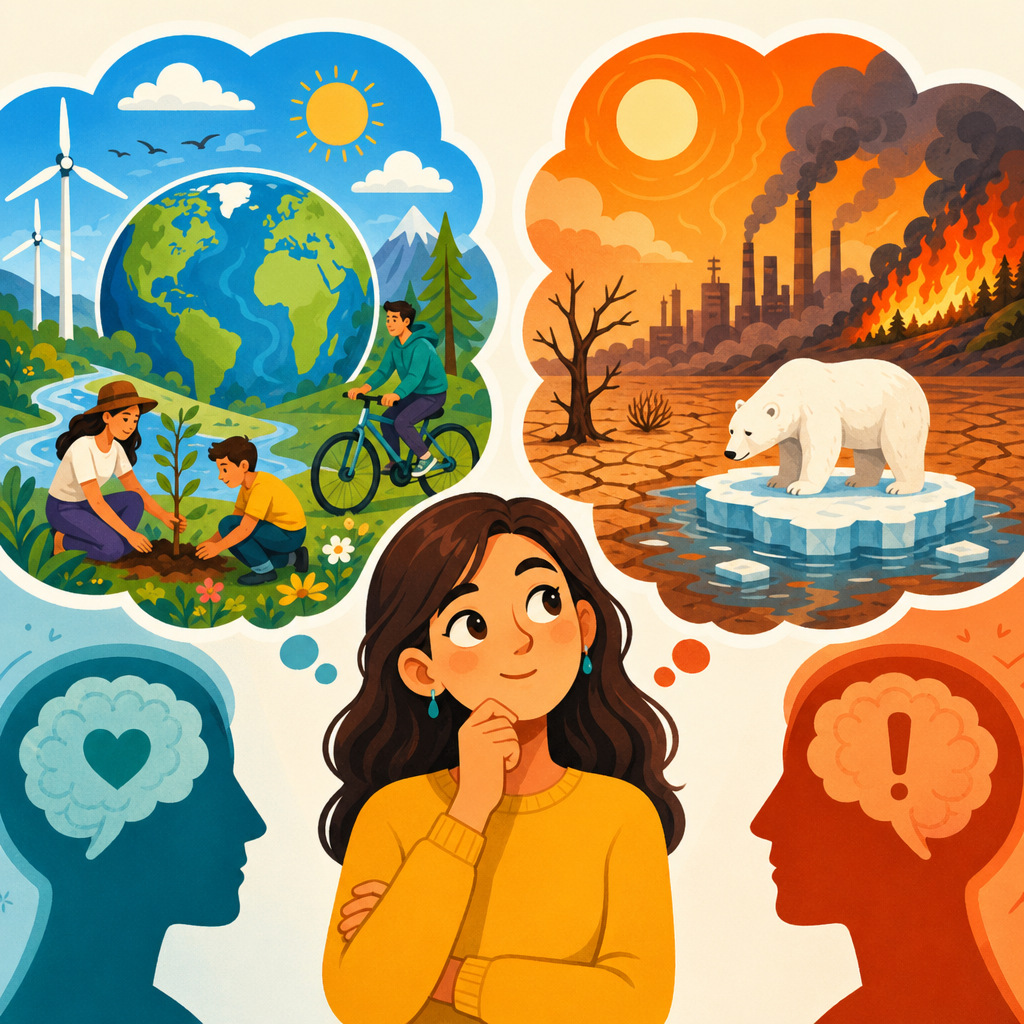
People rely on mental shortcuts, and climate language activates several at once. One is concreteness bias: specific, sensory words feel more real than broad categories. “Global warming” suggests hotter days, melting ice, and a rising thermometer. “Climate change” asks the brain to think in systems, probabilities, and long time horizons. Another is framing effect: the same underlying issue can produce different reactions depending on wording. Surveys and message testing over many years have found that some audiences express more concern when hearing “global warming,” while others respond better to “climate change,” especially when they value technical accuracy or dislike emotionally charged language.
There is also the issue of weather confusion. Because people experience weather daily and climate statistically, they may judge long-term trends through short-term local conditions. A cold week can make “global warming” sound implausible to someone already skeptical, even though scientists are discussing multi-decade global averages. “Climate change” can reduce that false contradiction because it implies variability and shifting patterns, not constant warming everywhere at every moment. In my experience, this single clarification prevents more misunderstandings than almost any other messaging tweak: weather is what happens day to day; climate is the long-term pattern.
Identity-protective reasoning matters too. When environmental language feels like a signal of tribe, profession, or politics, people may resist facts that threaten their group alignment. This is why communication that begins with impacts people already recognize—insurance costs, heat stress, crop timing, coastal flooding, energy reliability, or asthma risk—often outperforms language centered only on moral judgment. Terminology should open the door to understanding, not become the argument itself.
When each term works best for communication
The right term depends on context, audience, and purpose. If you are explaining why average global temperature is rising, “global warming” is the most direct phrase. If you are discussing hurricanes, shifting rainfall, wildfire conditions, ocean acidification, or adaptation planning, “climate change” is more accurate because those topics involve multiple linked processes. On educational pages, I usually define both terms early, then use climate change as the umbrella and reserve global warming for discussions of temperature trends and greenhouse forcing. That structure reduces ambiguity and helps readers navigate related content.
| Communication goal | Best term | Why it works |
|---|---|---|
| Explain rising average temperature | Global warming | Directly names the warming trend caused by greenhouse gases |
| Discuss floods, drought, storms, and sea level rise | Climate change | Covers the full system of long-term environmental shifts |
| Correct confusion between weather and long-term trends | Climate change | Signals variability, patterns, and regional differences |
| Create a vivid introduction for general audiences | Global warming, then define climate change | Starts with a concrete image and quickly expands to scientific scope |
| Write policy, education, or research-oriented content | Climate change | Matches the standard language used by major institutions |
For this sub-pillar hub, readers often arrive with mixed intent. Some want the simple difference between global warming vs. climate change. Others want to know whether one term is more correct, more political, or more persuasive. A strong hub page should answer all of those questions clearly, then guide readers to deeper material on attribution science, extreme weather, climate communication, emissions, adaptation, and misinformation. That internal structure helps search engines and readers alike understand the topical relationship between definitions and downstream impacts.
Common myths, misunderstandings, and the role of precise wording
One persistent myth is that scientists switched from global warming to climate change because warming “stopped” or predictions failed. That is false. Temperature records from NASA, NOAA, Hadley, Berkeley Earth, and other major datasets show a robust long-term warming trend. Year-to-year variability still occurs because of El Niño, La Niña, volcanic activity, aerosols, and natural ocean-atmosphere cycles, but the underlying direction remains clear. The broader term became more common because it better described the full evidence base, not because the science weakened.
Another misunderstanding is that climate change sounds less serious, so using it must reduce urgency. Sometimes that happens if the term appears alone without examples. But urgency comes from specificity, not just intensity. Saying climate change is increasing dangerous heat days, making heavy rainfall more extreme, raising coastal flood frequency, and lengthening wildfire seasons is stronger than simply repeating either label. In risk communication, concrete consequence beats slogan. That is especially true for local government pages, school materials, health systems, and business continuity planning, where audiences need practical implications, not branding wars.
A third myth is that one universally superior term exists for every audience. It does not. Language tests vary by region, ideology, education level, and lived experience. Farmers managing planting windows, urban residents facing heat islands, and coastal homeowners tracking nuisance flooding may all respond to different entry points. What matters is defining the term, connecting it to observed impacts, and maintaining consistency across related pages so users can explore the topic without confusion.
How to talk about the issue without losing accuracy or trust
The most reliable approach is simple. Define the terms early. Use global warming for the long-term rise in average temperature. Use climate change for the wider set of changes driven by that warming. Then translate the science into effects people can verify in their own lives or communities: more dangerous heat, altered rainfall, expanding wildfire risk, stressed infrastructure, changing growing seasons, and higher coastal exposure. When I build climate education pages, I also include attribution language carefully—scientists assess how human-caused warming changes the likelihood or severity of events—because overclaiming damages credibility and underclaiming obscures real risk.
Trust also depends on naming uncertainty correctly. Scientists are highly confident that human activities are warming the planet and altering the climate system. Confidence is lower for some local projections than for global trends, and communicators should say so. That does not weaken the message; it strengthens it. Readers are more likely to trust information that distinguishes between what is well established, what is still being refined, and what depends on emissions pathways, regional geography, and adaptation choices. Precision in terminology is part of that larger discipline of honest explanation.
For anyone building or reading a climate change content hub, the main takeaway is clear: global warming and climate change are related but not identical, and the difference matters because language shapes understanding. Global warming names the temperature increase. Climate change describes the broader disruption to weather patterns, oceans, ice, ecosystems, and human systems. Using the right term at the right moment improves clarity, reduces confusion, and helps people connect scientific evidence to real-world consequences.
The best communicators do more than choose a label. They define it, ground it in observed evidence, and show why it matters locally and globally. If you want stronger public understanding of global warming vs. climate change, focus less on winning a terminology argument and more on explaining the mechanisms, impacts, and choices ahead. Use this hub as your starting point, then explore the related articles in this subtopic to go deeper into causes, impacts, communication, and solutions.
Frequently Asked Questions
Why do the terms “global warming” and “climate change” make people react differently?
The two terms describe related realities, but they do not land the same way psychologically. “Global warming” is concrete and vivid. It points people toward rising temperatures, heat, melting ice, and a planet getting hotter. Because it sounds direct and measurable, many people interpret it as a clear warning. “Climate change,” by contrast, is broader and more abstract. It suggests shifts in long-term weather patterns, systems, and variability, which is scientifically accurate, but it can also feel less immediate to some audiences. In message testing, that difference matters because people do not respond only to facts; they respond to framing, imagery, and emotional cues.
Language activates mental shortcuts. When people hear “global warming,” they may picture summer heat waves or a warming trend. When they hear “climate change,” they may think about storms, floods, droughts, seasonal instability, or environmental disruption more generally. Those are not interchangeable images. Each phrase can change how serious the issue feels, whether people see it as natural or human-driven, and whether they believe action is needed now or later. This is why terminology influences engagement rates, headline performance, and audience trust. The words chosen can shape whether someone reads on, tunes out, or starts connecting environmental change to daily life.
Is one term more scientifically accurate than the other?
Both terms are valid, but they highlight different aspects of the same larger phenomenon. “Global warming” refers specifically to the long-term increase in Earth’s average surface temperature, driven primarily by greenhouse gas emissions from human activity. “Climate change” is the broader term. It includes warming, but also covers changing precipitation patterns, stronger heat extremes, sea-level rise, shifting ecosystems, drought, wildfire conditions, and more intense or disruptive weather-related impacts. In other words, global warming is one major part of climate change.
From a communication standpoint, accuracy is not just about using the technically correct label; it is also about choosing language that matches the point being made. If an article is focused on rising temperatures, heat records, or warming trends, “global warming” may be the clearer phrase. If the topic includes a wider range of environmental and social effects, “climate change” is often the better fit. Strong communicators understand that precision builds credibility. Rather than treating the terms as identical in every sentence, it is more effective to use them intentionally so audiences understand both the cause and the scope of what is happening.
How does terminology affect public opinion and political polarization?
Terminology can strongly influence how people interpret environmental issues through existing beliefs, identities, and political values. Words do not arrive in a vacuum. Over time, certain phrases become associated with specific media narratives, ideological positions, or policy debates. For some audiences, “global warming” sounds like a direct scientific alarm. For others, it may trigger skepticism if they interpret cold weather events as contradicting the phrase. “Climate change” can sometimes feel more neutral or institutional, which may make it more acceptable to some readers, but also less emotionally urgent.
This matters because people often process contested issues through motivated reasoning. They ask, consciously or not, whether a message fits what their group already believes, whether it threatens their worldview, and whether it implies blame or obligation. A term that sounds accusatory, partisan, or overly abstract can increase resistance before the facts are even considered. On the other hand, carefully chosen language can lower defensiveness and increase openness. Effective public education often uses terminology alongside context, examples, and local relevance so people are not left reacting only to labels. In practice, successful messaging is not about finding one magic phrase; it is about choosing words that clarify the issue without unintentionally hardening opposition.
Which term is better to use when trying to motivate action?
There is no single best term for every audience or situation. The better choice depends on what kind of action is being encouraged, who the audience is, and what emotional response the message needs to create. “Global warming” can be useful when the goal is to underscore cause and urgency, especially in discussions of heat, emissions, or temperature records. Its directness can make the problem feel harder to dismiss. “Climate change” may work better when explaining the full range of consequences, connecting environmental shifts to public health, infrastructure, agriculture, insurance, migration, or community resilience.
In practical communication, motivation usually comes from a combination of clarity, relevance, and efficacy. People are more likely to act when they understand what is happening, why it affects them, and what can actually be done. Terminology helps, but it does not work alone. A strong message links the language to tangible stakes: higher energy costs, flood risk, crop losses, wildfire smoke, heat stress, or local preparedness. It also avoids leaving people with fear only. The most effective messaging often pairs a precise term with concrete examples and realistic pathways for action. That is what turns awareness into engagement rather than fatigue.
What should writers, educators, and content strategists keep in mind when choosing between these terms?
The most important principle is audience awareness. Writers should consider what the audience already knows, what misconceptions they may have, and what emotional or political associations the terms might carry. If the goal is education, define the terms clearly and use them consistently. If the goal is public engagement, test headlines and phrasing to see which language improves comprehension and trust without sacrificing accuracy. In many cases, the strongest approach is to use both terms thoughtfully, explaining that global warming refers to rising temperatures while climate change captures the broader system-wide effects.
It is also important to think beyond the label itself. Framing, examples, tone, and context all influence how terminology is received. A phrase that performs well in an academic report may not work as well in a public-facing explainer. Likewise, a headline that drives clicks may not build understanding if it lacks specificity. Good climate communication balances scientific precision with psychological realism. It respects that audiences interpret words through lived experience, media exposure, and social identity. For content strategists and educators, that means terminology should be treated as a deliberate choice, not a casual substitute. The right wording can improve engagement, reduce confusion, and make complex environmental issues feel both understandable and actionable.