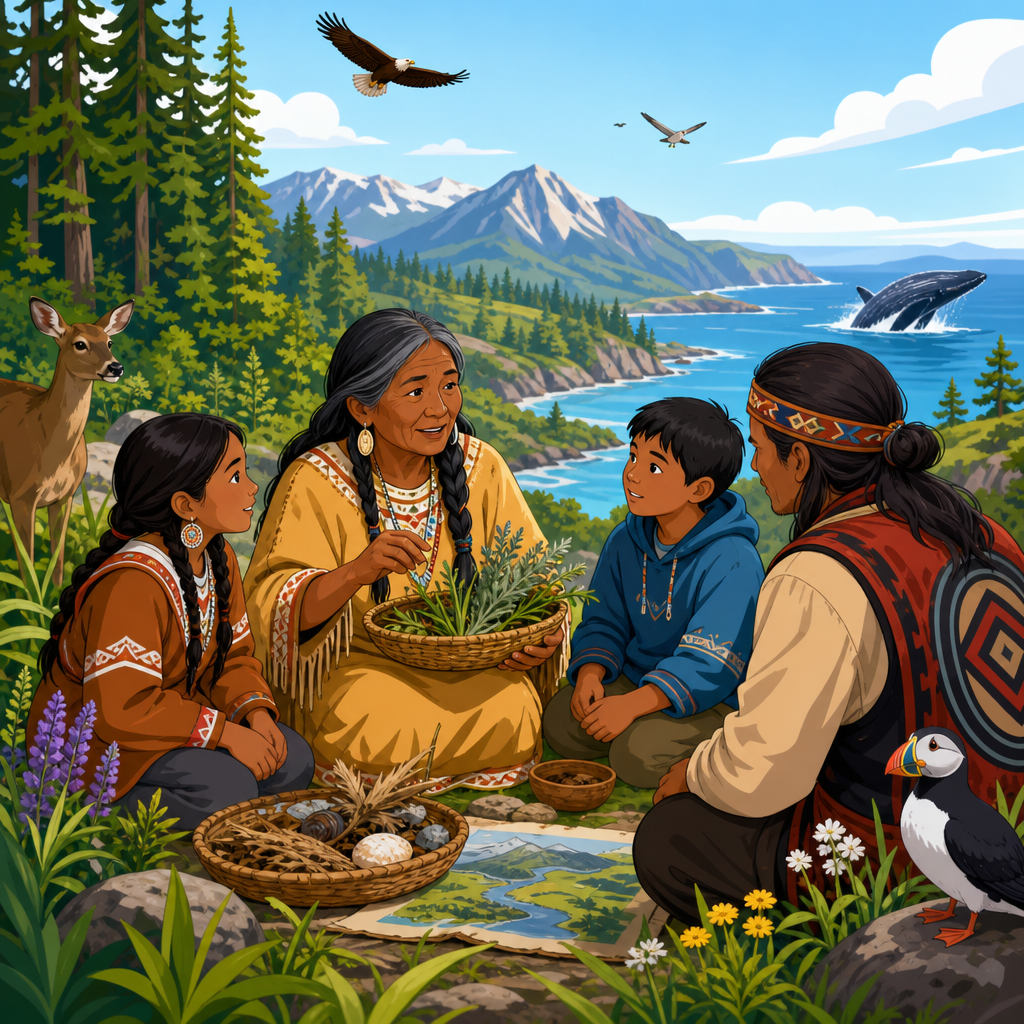
Indigenous knowledge is essential to conservation because it ties ecological stewardship to lived experience, legal rights, and intergenerational responsibility. In environmental policy and law, Indigenous environmental rights refer to the collective rights of Indigenous peoples to land, waters, resources, culture, governance, and free, prior, and informed consent in decisions that affect their territories. Conservation, in turn, is not only the protection of species or landscapes; it is the long-term care of relationships among people, ecosystems, and institutions. After years of working with environmental compliance documents, co-management plans, and protected area consultations, I have seen that conservation succeeds more often when Indigenous communities are partners with authority rather than stakeholders invited after core decisions are already made.
This matters because many of the world’s most intact ecosystems overlap with Indigenous territories. Studies cited by the United Nations, the World Bank, and the Intergovernmental Science-Policy Platform on Biodiversity and Ecosystem Services show that biodiversity outcomes are often stronger where Indigenous land tenure is secure and customary governance remains active. Indigenous knowledge is not folklore or a collection of isolated practices. It is a structured knowledge system built through observation, use, adaptation, oral transmission, ceremony, and law. It includes seasonal indicators, species behavior, fire regimes, water patterns, harvest rules, and place-based ethics. For a hub page on Indigenous environmental rights, the central point is clear: effective conservation depends on respecting Indigenous peoples as rights holders, knowledge holders, and decision makers.
Understanding this subject also helps organize the broader subtopic. Indigenous environmental rights connect directly to land tenure, treaty interpretation, co-management, protected areas, climate adaptation, traditional burning, fisheries governance, mining review, biodiversity law, and benefit sharing. They also shape how agencies conduct environmental impact assessment, how courts assess consultation duties, and how international standards influence domestic policy. A useful starting definition is simple. Indigenous knowledge describes place-based ecological understanding developed over generations. Indigenous environmental rights describe the legal and political powers that protect the use, transmission, and governance of that knowledge. Conservation benefits emerge when both are recognized together, not when knowledge is extracted while rights are ignored.
Why Indigenous knowledge improves conservation outcomes
Indigenous knowledge improves conservation because it is detailed, local, cumulative, and tied to accountability. A satellite image can show vegetation cover, but it cannot easily explain why a wetland stopped attracting birds after a road changed drainage patterns three seasons in a row. Local harvesters, fishers, hunters, and elders often can. In northern Canada, Australia, the Amazon, and parts of East Africa, conservation planning has improved when agencies incorporated Indigenous observations on migration routes, spawning windows, forage quality, invasive species spread, and wildfire behavior. These observations are especially valuable in places with sparse long-term scientific monitoring, because they provide longitudinal insight grounded in continuous use of territory.
The practical value is easy to see in fire management. In Australia, cultural burning has informed programs designed to reduce fuel loads, protect habitat mosaics, and lower the risk of catastrophic late-season fires. In parts of North America, prescribed fire programs increasingly recognize that many forests and grasslands were shaped by regular Indigenous burning long before modern suppression policies disrupted those systems. When policy treated fire as universally harmful, fuel accumulated and ecosystems changed. Reintroducing Indigenous fire stewardship can restore ecological function, but only if communities have decision-making authority, liability protections, and access to their lands.
Fisheries offer another example. Indigenous communities often manage harvest through customary rules about timing, gear, species respect, and no-take periods connected to spawning and habitat recovery. These systems can complement stock assessments and enforcement regimes by adding fine-grained local knowledge. Where governments have recognized community-based monitoring and co-enforcement, compliance usually improves because rules carry social legitimacy. Conservation is stronger when regulations align with ecological reality and community governance, rather than imposing generic restrictions detached from local conditions.
Indigenous environmental rights as the legal foundation
Knowledge alone does not protect ecosystems. Rights do. That is why Indigenous environmental rights are the legal foundation of durable conservation. The most important rights issues include land tenure, access to traditional territories, self-determination, cultural practice, participation in decision making, and free, prior, and informed consent. These principles appear in varying forms across national constitutions, treaty systems, court decisions, and international instruments such as the United Nations Declaration on the Rights of Indigenous Peoples. While implementation differs by country, the common legal lesson is that conservation cannot be legitimate if it excludes the peoples whose territories are being governed.
Historically, many protected areas were created through displacement. Communities were removed, subsistence practices were criminalized, and ecological management systems were interrupted in the name of preservation. This fortress conservation model often damaged both justice and biodiversity. When people lost authority to manage burns, protect spawning sites, or enforce customary harvest limits, ecosystems frequently became less resilient. Modern policy has begun to correct this through Indigenous protected and conserved areas, land claim agreements, treaty-based management boards, and negotiated co-management frameworks. These models do not all look the same, but they work best when Indigenous authority is substantive rather than symbolic.
Free, prior, and informed consent is especially important in environmental review. It means communities must have timely information, meaningful opportunities to shape outcomes, and the ability to say yes or no before projects proceed. In practice, governments often fall short by consulting too late, limiting the scope of review, or treating consent as a procedural box to tick. From experience reviewing impact statements, I can say the difference is obvious: projects with early engagement, Indigenous-led baseline studies, and shared governance structures produce far better conservation planning than projects that seek community input only after routes, footprints, and mitigation assumptions are fixed.
How Indigenous knowledge works in practice
Indigenous knowledge in conservation is often misunderstood as anecdotal input added near the end of planning. In reality, it can shape the full management cycle: baseline assessment, priority setting, monitoring, enforcement, restoration, and adaptive management. A strong process begins by asking the right questions. Which species matter for food security or ceremony? Which habitats indicate ecosystem stress? What seasonal markers signal safe travel, spawning, or plant harvesting? Which sites are culturally sensitive and ecologically significant? These are management questions, not optional cultural notes.
In collaborative projects, I have seen the most effective programs use parallel evidence streams. Scientific surveys may provide population estimates, water chemistry, remote sensing, or habitat modeling. Indigenous knowledge may provide long-term trend interpretation, unusual species interactions, ice or current behavior, predator pressure, and site-specific causes of change. The goal is not to force one system into the language of the other. It is to let each answer the questions it is best suited to answer, then build decisions around the combined picture. This is sometimes called knowledge braiding, and it works because it respects methodological differences while still producing practical management choices.
| Conservation task | Scientific contribution | Indigenous knowledge contribution | Combined benefit |
|---|---|---|---|
| Wildfire planning | Fuel mapping, weather models, burn intensity analysis | Seasonal burning patterns, cultural objectives, local fire behavior | Safer burns and more resilient habitat mosaics |
| Fisheries management | Stock assessment, catch data, habitat surveys | Spawning timing, localized abundance shifts, customary harvest rules | More accurate limits and stronger compliance |
| Protected area design | Species distribution, corridor modeling, threat analysis | Sacred sites, travel routes, culturally important species, long-term land use | Boundaries and rules that fit ecology and community needs |
| Restoration | Soil testing, hydrology, invasive species control methods | Historic site conditions, useful native species, stewardship timing | Higher restoration success and local support |
Monitoring is where these approaches often prove their worth. Community guardian programs, ranger programs, and Indigenous watchmen initiatives generate regular observations that agencies alone could not sustain across remote landscapes. They document illegal harvesting, shoreline erosion, wildlife health, vessel traffic, and cultural site disturbance. Because guardians are present on the land and water, response times improve and data become more continuous. When these programs are properly funded and their authority is recognized, they strengthen both conservation enforcement and local governance.
Governance models that respect rights and knowledge
Several governance models support Indigenous environmental rights in conservation. Co-management is one of the most common. In a strong co-management system, Indigenous nations and government agencies share authority over planning, harvesting rules, research priorities, and compliance. Weak co-management only solicits advice; strong co-management allocates real decision power, budgets, and dispute resolution mechanisms. Land claim boards in northern regions, tribal wildlife commissions in the United States, and joint management arrangements in Australia illustrate different forms this can take.
Another model is Indigenous protected and conserved areas, sometimes called IPCAs. These areas are led by Indigenous peoples and grounded in Indigenous law, while also delivering conservation outcomes. They are not simply parks with improved consultation. Their defining feature is Indigenous leadership in stewardship objectives and governance. In Canada, several IPCA initiatives have become important examples of how cultural continuity, biodiversity protection, and climate resilience can align. Similar approaches appear elsewhere under different names, including Indigenous reserves, community conservancies, and territorial governance zones.
Legal recognition of land rights is still the decisive factor. Where title is insecure, communities may be unable to exclude damaging uses such as logging, mining, road building, or industrial fishing. Where title, treaty rights, or territorial use rights are recognized, conservation planning becomes more stable because long-term stewardship incentives are stronger. Secure rights also reduce conflict. Developers know who must be engaged. Regulators know whose jurisdiction matters. Communities can invest in monitoring, restoration, and enterprise models such as Indigenous tourism or sustainable fisheries without fearing dispossession.
Current challenges and policy priorities
Despite progress, major barriers remain. The first is tokenism. Agencies may invite Indigenous participation while retaining all meaningful authority, extracting knowledge without changing decisions. The second is confidentiality risk. Some ecological knowledge is inseparable from sacred sites, burial areas, or culturally restricted information. Demanding full disclosure in public regulatory records can expose communities to harm. Good policy solves this through data governance agreements, confidential annexes, and community control over sensitive information.
Capacity is another challenge. Governments and companies often expect rapid review of technical documents that run thousands of pages, yet many communities are underfunded. Effective participation requires stable funding for legal counsel, ecological staff, translators, elders, youth training, GIS support, and fieldwork. Without that infrastructure, consultation is structurally unfair. Climate change adds pressure by shifting species ranges, altering fire regimes, changing ice conditions, and intensifying drought and floods. These changes make Indigenous knowledge more valuable, not less, because adaptive decisions depend on close observation of local change over time.
For policymakers, the priorities are straightforward. Recognize land and governance rights. Build consent-based environmental review. Fund Indigenous guardian and monitoring programs. Support Indigenous-led protected areas and restoration. Reform conservation laws that still assume exclusion is the best path to biodiversity protection. For researchers and NGOs, the responsibility is equally clear: form long-term partnerships, respect community protocols, share authorship and data control, and avoid treating knowledge as a resource to be mined. For readers exploring this hub topic, those principles connect every sub-issue in Indigenous environmental rights, from protected areas and fisheries to climate adaptation, extraction conflicts, and environmental justice.
Conclusion
The role of Indigenous knowledge in conservation is not supplementary; it is foundational. Where Indigenous peoples retain rights to land, water, culture, and governance, conservation is usually more adaptive, legitimate, and effective. The evidence is visible in fire stewardship, fisheries, protected area design, restoration, and community-based monitoring. The legal lesson is equally direct: biodiversity policy works better when it recognizes Indigenous peoples as governing authorities, not just information sources. That is the core idea linking the entire Indigenous environmental rights field.
As a hub for this subtopic, this page points to the wider framework readers should use. Start with rights, because rights determine whether knowledge can be practiced. Then examine governance, because governance determines how decisions are made. Finally, assess outcomes, because conservation must protect both ecosystems and the communities who steward them. If you are building policy, reviewing a project, teaching environmental law, or researching conservation, use this lens consistently. Follow the connected articles in this Indigenous environmental rights series to go deeper into land tenure, co-management, protected areas, consultation law, climate resilience, and biodiversity governance.
Frequently Asked Questions
What is Indigenous knowledge, and why is it important in conservation?
Indigenous knowledge refers to the deeply rooted understandings, practices, values, and governance systems developed by Indigenous peoples through long-term relationships with specific lands, waters, plants, animals, and seasonal cycles. It is not simply a collection of observations about nature. It is a living system of knowledge tied to language, cultural responsibilities, spiritual relationships, community law, and intergenerational teaching. In conservation, this matters because ecosystems are not abstract spaces to Indigenous communities; they are homelands shaped by reciprocal care, memory, and duty.
Its importance in conservation comes from both practical and ethical reasons. Practically, Indigenous knowledge often includes fine-grained ecological insight built over centuries, such as understanding migration patterns, fire cycles, watershed behavior, species interactions, and the impacts of environmental change at a local level. These insights can improve habitat restoration, biodiversity protection, climate adaptation, and sustainable resource management. Ethically, recognizing Indigenous knowledge means recognizing Indigenous peoples as rights holders, not just stakeholders. It affirms that conservation is stronger when it respects Indigenous governance, territorial relationships, and the responsibility to protect ecosystems for future generations.
In many places, some of the world’s most biodiverse regions overlap with Indigenous territories. That overlap is not accidental. It reflects long histories of stewardship and governance that have helped sustain ecological health. When conservation policy includes Indigenous knowledge on its own terms, rather than extracting isolated pieces of information, it becomes more adaptive, more just, and more grounded in the realities of place.
How does Indigenous knowledge differ from conventional conservation science?
Indigenous knowledge and conventional conservation science are not opposites, but they often approach environmental understanding in different ways. Conventional conservation science generally relies on formalized methods such as field surveys, statistical analysis, modeling, and peer-reviewed research. It often aims to isolate variables, test hypotheses, and generate findings that can be generalized across contexts. Indigenous knowledge, by contrast, is usually place-based, relational, and embedded in daily life. It is built through continuous observation, lived experience, oral histories, cultural teachings, and responsibilities to the natural world.
One major difference is that Indigenous knowledge tends to view humans as part of ecosystems rather than separate from them. In many Indigenous worldviews, conservation is not only about protecting species or landscapes from human activity; it is about maintaining respectful relationships among people, waters, animals, plants, and ancestral territories. This can shift the focus from narrow preservation toward ongoing stewardship, balance, and accountability. It also means decisions are often guided by obligations to future generations, not just short-term management goals.
Another difference is that Indigenous knowledge is inseparable from governance and rights. It is connected to who has authority to make decisions, how responsibilities are carried out, and what consent is required when land or water is affected. Conventional science can contribute valuable data and tools, but it does not by itself resolve questions of justice, sovereignty, or cultural survival. The strongest conservation approaches often emerge when scientific methods and Indigenous knowledge work together in ways that are respectful, equitable, and led by meaningful partnership rather than token consultation.
What are Indigenous environmental rights, and how do they shape conservation?
Indigenous environmental rights are the collective rights of Indigenous peoples to their lands, waters, resources, cultural practices, governance systems, and participation in decisions that affect their territories. These rights include the right to maintain relationships with traditional ecosystems, the right to protect sacred and culturally significant places, and the right to exercise self-determination in environmental management. A central principle is free, prior, and informed consent, which means Indigenous peoples must be able to make decisions about projects, policies, or conservation initiatives that affect them without coercion and with full information in advance.
These rights shape conservation by changing who has authority, whose knowledge counts, and what conservation is meant to achieve. Historically, many conservation models excluded Indigenous peoples from their own lands in the name of protecting nature, creating parks or protected areas through displacement, criminalization, or restrictions on customary use. That model is increasingly recognized as unjust and often ecologically flawed. When Indigenous environmental rights are respected, conservation becomes less about imposing external control and more about supporting stewardship systems that have long sustained ecological integrity.
In practice, rights-based conservation can include co-management arrangements, legal recognition of Indigenous territories, support for Indigenous Protected and Conserved Areas, and policy frameworks that embed consent, governance, and cultural continuity into environmental decision-making. This approach improves legitimacy and often strengthens outcomes because communities with deep knowledge of local ecosystems are empowered to care for them according to their own laws and responsibilities. In other words, Indigenous environmental rights are not separate from conservation success; they are often foundational to it.
How can Indigenous knowledge improve modern conservation strategies?
Indigenous knowledge can improve modern conservation strategies by making them more locally informed, flexible, and responsive to long-term ecological change. Because this knowledge is grounded in repeated observation across generations, it often captures subtle environmental signals that may be missed by short-term studies alone. Communities may recognize changes in water quality, shifts in animal behavior, alterations in plant growth, or disruptions in seasonal timing well before those changes appear in formal datasets. That kind of knowledge can strengthen early warning systems, adaptive management, and climate resilience planning.
It also improves conservation by expanding the range of management practices available. Examples include cultural burning, rotational harvesting, sacred site protection, seasonal use restrictions, and landscape management based on ecological relationships rather than administrative boundaries. Many of these practices are designed not just to reduce harm, but to actively maintain ecosystem health. In fire-prone landscapes, for example, Indigenous fire stewardship can reduce fuel loads, support biodiversity, and lower the risk of catastrophic wildfires. In marine and freshwater systems, traditional harvesting protocols can reinforce sustainable use and habitat protection.
Just as importantly, Indigenous knowledge improves conservation strategy by reframing success. A modern conservation plan that only counts species numbers or protected acreage may miss whether a place remains culturally alive, accessible to its traditional caretakers, or governed in ways that sustain reciprocal responsibility. Integrating Indigenous knowledge can lead to more complete definitions of ecological well-being, ones that include biodiversity, cultural continuity, governance, and community health together. The result is a form of conservation that is more durable because it is rooted in both evidence and lived responsibility.
What does respectful collaboration with Indigenous communities look like in conservation work?
Respectful collaboration begins with recognizing Indigenous peoples as rights holders, knowledge holders, and governing authorities in their own territories. That means engagement cannot be limited to brief consultation after major decisions have already been made. Instead, collaboration should start early, continue throughout the process, and be structured around free, prior, and informed consent. Indigenous communities must have the power to shape goals, methods, timelines, access to data, and decision-making structures, rather than being invited in only to validate outside agendas.
In practical terms, respectful collaboration includes building long-term relationships, compensating communities fairly for their time and expertise, protecting culturally sensitive information, and honoring Indigenous laws and protocols. It also means understanding that not all knowledge is meant to be shared publicly or translated into scientific categories. Some knowledge is sacred, place-specific, or governed by community rules about access and use. Ethical conservation work respects those boundaries. It does not treat Indigenous knowledge as a resource to be extracted, but as part of a living system connected to identity, governance, and responsibility.
Strong collaboration often involves shared governance models, community-led monitoring, Indigenous-led research design, and legal agreements that clarify authority and accountability. It also requires institutions to confront past harms, including dispossession, exclusion from protected areas, and the misuse of Indigenous knowledge without consent. The most effective partnerships are built on trust, reciprocity, and a willingness to redistribute power, not just share information. When conservation is done in this way, it becomes more legitimate, more equitable, and far more capable of sustaining both ecosystems and the peoples who have long cared for them.