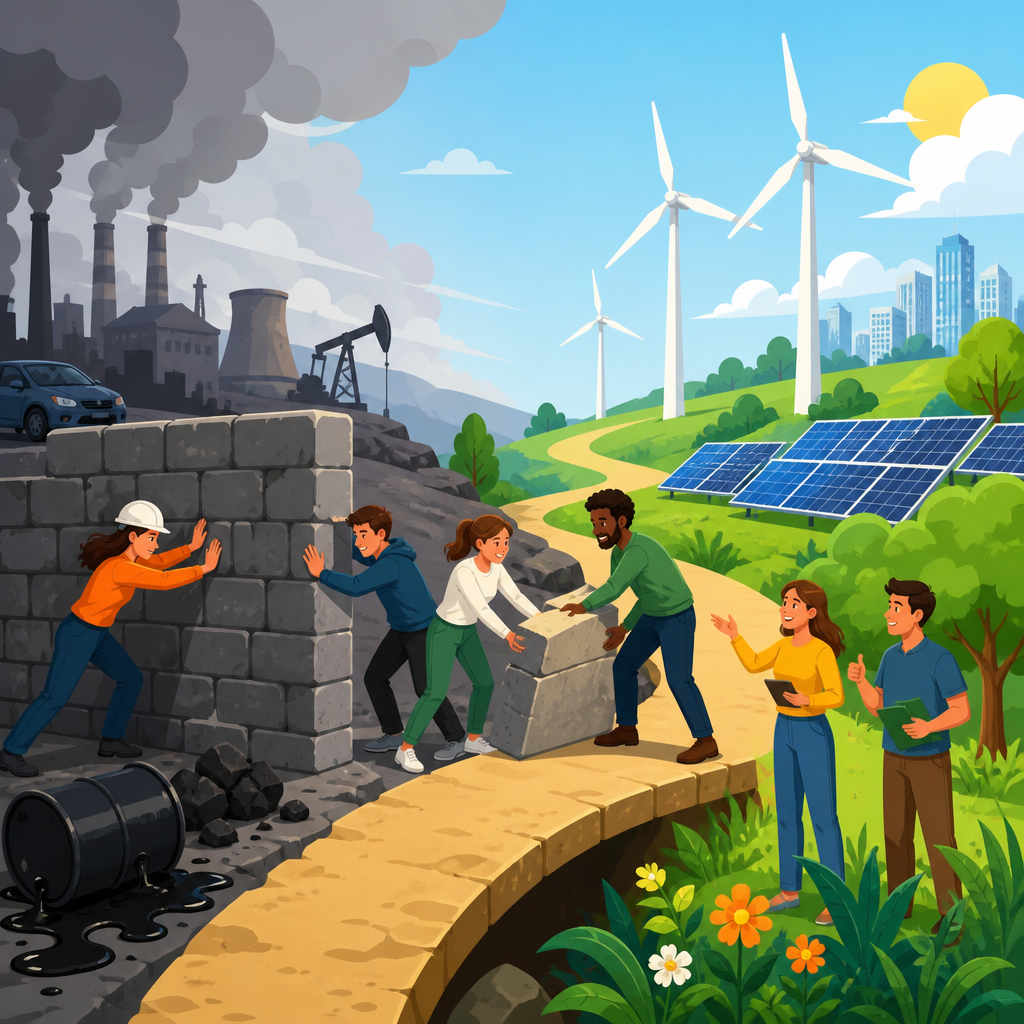
Transitioning to renewable resources is one of the central environmental and economic challenges of this century because energy, materials, water systems, and land use all depend on how societies define, extract, and replace resources. In environmental science, renewable resources are natural assets replenished on a human timescale, including sunlight, wind, flowing water, sustainably managed biomass, and geothermal heat. Nonrenewable resources are finite or regenerate so slowly that practical depletion occurs when use outpaces formation; coal, petroleum, natural gas, uranium, and most metal ores fall into this category. The distinction matters because resource choice shapes climate change, air quality, biodiversity loss, public health, geopolitical risk, and long-term costs.
I have worked with organizations comparing energy portfolios, and the pattern is consistent: leaders often understand that renewable resources reduce fuel dependence, yet they underestimate the infrastructure, policy, and social barriers involved in replacing entrenched nonrenewable systems. A useful starting point is recognizing that renewable versus nonrenewable is not a moral label but a scientific and operational framework. A solar panel is renewable in the energy it captures, but it still requires nonrenewable minerals, land, manufacturing energy, and end-of-life planning. Likewise, natural gas can provide reliable power, but its combustion emits carbon dioxide and its supply chain can leak methane, a greenhouse gas with a much stronger warming effect than carbon dioxide over a twenty-year period.
For readers using this page as a hub, the topic includes electricity generation, transportation fuels, industrial heat, building energy, mining, agriculture, circular material systems, and conservation. The core question is not simply whether renewable resources are cleaner. It is how quickly they can displace nonrenewable resources without compromising affordability, reliability, equity, or ecosystem integrity. Answering that question requires comparing life cycles, understanding grid operations, examining financing constraints, and evaluating policy tools that have worked in real markets. Countries and companies that succeed in transition planning do not rely on one technology. They combine efficiency, electrification, storage, transmission upgrades, demand flexibility, and better resource governance.
This article explains the major barriers to transitioning to renewable resources and the practical solutions available today. It also serves as a comprehensive guide to renewable versus nonrenewable resources by defining the categories, comparing their impacts, and showing where each still fits in modern systems. If a searcher asks which resources are renewable, why fossil fuels remain dominant, whether renewables are truly sustainable, or what policies accelerate adoption, the short answer is this: renewable resources can meet a rising share of human needs, but success depends on system design, not technology headlines alone.
Renewable vs. Nonrenewable Resources: Definitions, Examples, and Environmental Tradeoffs
Renewable resources are replenished through ongoing natural processes fast enough to support continued use when managed responsibly. Solar irradiance reaches Earth daily, wind is driven by atmospheric dynamics, hydropower relies on the water cycle, geothermal taps internal heat, and biomass can be renewed through regrowth. Nonrenewable resources are depleted by extraction because formation occurs over geologic timescales or because recoverable reserves are limited. Fossil fuels are the clearest example. They store ancient solar energy in concentrated chemical form, which makes them portable and historically cheap, but burning them releases carbon accumulated over millions of years.
The environmental tradeoffs differ by resource. Fossil fuels produce air pollutants such as sulfur dioxide, nitrogen oxides, particulate matter, and mercury, depending on the fuel and combustion technology. The World Health Organization has linked air pollution to millions of premature deaths annually, making the public health case for cleaner systems as important as the climate case. Renewable resources generally avoid combustion emissions at the point of use, but they are not impact free. Hydropower dams can alter river ecology and fish migration. Poorly sited wind farms can affect birds and bats. Utility-scale solar can fragment habitat if developed without land-use planning. Biomass can become unsustainable if feedstocks drive deforestation or compete with food crops.
The most reliable way to compare options is life-cycle assessment. Instead of judging a resource by a single stage, life-cycle assessment examines extraction, manufacturing, operation, maintenance, and disposal. This is why wind and solar routinely perform far better than coal and oil on greenhouse gas intensity even after accounting for manufacturing. It is also why the transition conversation now includes battery recycling, responsible mining for lithium and nickel, and low-carbon steel and cement for clean energy infrastructure. In practice, the best resource strategy prioritizes low life-cycle emissions, low ecological disruption, strong labor standards, and efficient use of materials.
Why Nonrenewable Resources Still Dominate
Nonrenewable resources remain dominant because they are embedded in physical infrastructure, market rules, and daily behavior. Power plants, pipelines, refineries, internal combustion vehicles, gas furnaces, and industrial boilers represent decades of capital investment. Utilities and manufacturers often keep these assets running because replacement before the end of expected life can strand capital and raise short-term costs. That lock-in effect is powerful. A region built around cheap coal generation, for example, has transmission layouts, workforces, rail logistics, and rate structures that favor continued coal use even when new wind or solar is cheaper on a levelized cost basis.
Energy density and dispatchability also matter. Petroleum fuels are easy to store and transport, which is why aviation, shipping, heavy trucking, and petrochemicals still depend heavily on oil and gas. Natural gas plants can ramp quickly to meet changing electricity demand, making them operationally convenient in systems that have not yet built enough storage, transmission, or flexible demand. These advantages are real, but they are increasingly overstated when used to imply that renewable resources cannot scale. In grids I have evaluated, the larger issue was not technical impossibility. It was failure to invest early in transmission interconnection, forecasting tools, and market incentives for flexibility.
Policy history helps explain current dominance as well. Fossil fuel industries benefited from a century of infrastructure support, leasing frameworks, tax preferences, military protection of supply routes, and regulations designed around centralized generation. Renewable deployment accelerated only after feed-in tariffs, tax credits, renewable portfolio standards, auctions, and net metering created stable demand signals. Even now, permitting timelines can be longer for new transmission lines than for expanding fossil fuel throughput. When markets treat pollution as an external cost, nonrenewables appear artificially competitive.
Main Barriers to Transitioning to Renewable Resources
The first major barrier is intermittency, more accurately called variability. Solar output changes with daylight and weather, while wind output varies by season and location. Variability is manageable, but it requires system planning. A single solar farm cannot replace a coal plant on a one-to-one basis without support from storage, geographic diversity, or dispatchable backup. The second barrier is transmission capacity. High-quality renewable resources are often far from demand centers, and congested grids can block new projects for years. Interconnection queues in the United States and Europe have become a major bottleneck because projects wait for studies and network upgrades.
A third barrier is materials and supply chains. Solar modules depend on polysilicon, silver, glass, and aluminum. Wind turbines use steel, concrete, copper, and sometimes rare earth elements for permanent magnets. Batteries require lithium, nickel, graphite, and other inputs, each with environmental and geopolitical implications. The challenge is not that these materials are unavailable in absolute terms. It is that mining, refining, and manufacturing capacity must expand responsibly and quickly. Concentrated supply chains increase risk, as seen when trade restrictions or processing bottlenecks raise prices and delay projects.
Fourth, financing and equity barriers slow adoption. Households may save money over time with heat pumps, rooftop solar, or electric vehicles, but upfront costs remain significant. Low-income communities, renters, and small businesses often lack access to credit, property rights, or incentive programs. Fifth, social acceptance and land-use conflicts matter. Communities may support clean energy in principle but oppose specific projects because of visual impact, noise, farmland conversion, cultural sites, or distrust of developers. Sixth, workforce constraints are real. Electricians, lineworkers, power system engineers, permitting specialists, and retrofit contractors are in short supply in many regions.
| Barrier | Why It Slows Transition | Practical Solution |
|---|---|---|
| Variable output | Mismatch between generation and demand | Storage, demand response, regional transmission, forecasting |
| Grid bottlenecks | Projects cannot connect or deliver power | Transmission expansion, faster interconnection reform |
| High upfront cost | Consumers and firms delay investment | Tax credits, green banks, low-interest loans, on-bill financing |
| Supply chain concentration | Price spikes and project delays | Diversified sourcing, recycling, domestic manufacturing |
| Public opposition | Permitting delays and cancellations | Early community engagement, benefit sharing, careful siting |
Proven Solutions: Technology, Policy, and Market Design
The transition succeeds when planners treat renewable resources as part of an integrated system. Storage is the clearest example. Lithium-ion batteries now handle short-duration balancing, frequency regulation, and peak shaving in many grids. Pumped-storage hydropower remains the largest form of grid storage globally and is highly effective for longer-duration shifting where geography allows. Thermal storage, green hydrogen, and emerging long-duration battery chemistries can support industrial heat and seasonal balancing, though costs and deployment readiness vary. No single storage option solves every problem; matching duration and duty cycle to the application is essential.
Transmission expansion is equally important. Connecting diverse wind and solar regions smooths variability because weather patterns differ across large areas. In practice, a larger balancing area lowers reserve needs and reduces curtailment. Grid-enhancing technologies such as dynamic line ratings, advanced conductors, and power flow control can increase capacity faster than building entirely new corridors. At the distribution level, smart inverters, voltage management, and upgraded substations help accommodate rooftop solar, electric vehicles, and electrified heating.
Policy design determines speed. Carbon pricing can internalize pollution costs, but on its own it may not overcome permitting, infrastructure, and financing barriers. Clean electricity standards, competitive renewable energy auctions, production and investment tax credits, building performance standards, and zero-emission vehicle mandates have delivered stronger deployment signals in many jurisdictions. Denmark scaled wind through stable policy and grid planning. China expanded solar, batteries, and electric vehicles by combining industrial policy with large domestic demand. In the United States, state renewable portfolio standards and federal incentives have accelerated utility-scale solar and onshore wind. These are not abstract lessons. Stable policy lowers capital costs because investors trust future revenue.
Efficiency and electrification deserve equal emphasis. The cheapest unit of energy is the one not consumed. Better insulation, heat pumps, efficient motors, LED lighting, and industrial process optimization reduce the amount of generation required. Electrification then shifts end uses from direct combustion to cleaner power. Heat pumps can deliver several units of heat for each unit of electricity under many conditions, outperforming resistance heating and reducing gas dependence. Electric vehicles convert stored energy to motion more efficiently than combustion engines, especially in urban driving.
Managing Tradeoffs: Mining, Land, Water, and Reliability
A credible renewable transition must address its own environmental footprint. Clean technologies require mining, and communities rightly ask whether replacing fossil extraction with mineral extraction simply shifts harm. The answer depends on governance. Strong standards for tailings management, water use, labor protections, community consent, and biodiversity mitigation materially reduce impacts. Recycling also matters. Battery recycling can recover lithium, nickel, cobalt, copper, and graphite, reducing demand for virgin material over time. Designing products for disassembly improves recovery rates and lowers waste.
Land and water tradeoffs require planning at the landscape level. Agrivoltaics allows some solar sites to coexist with grazing or crop production. Rooftop solar, parking canopies, brownfield redevelopment, and floating solar on reservoirs can reduce pressure on undeveloped land. Offshore wind avoids some land conflicts, although it introduces marine siting concerns that must be managed with fisheries and navigation stakeholders. Water use is another overlooked advantage of many renewables. Wind and solar photovoltaics consume far less operational water than thermal power plants with steam cycles, an important factor in drought-prone regions.
Reliability concerns should be answered directly. A grid with high renewable penetration can be reliable if it combines diverse generation, adequate reserves, robust transmission, responsive demand, and clear market rules. Reliability failures are usually system failures, not proof that one technology category cannot work. California’s evening ramp challenge highlighted the need for storage and demand shifting, and subsequent battery deployment significantly improved conditions. Texas has seen both renewable growth and severe grid stress, but the lessons point to winterization, market design, fuel assurance, and transmission planning rather than a simplistic renewable versus gas narrative.
What Transition Looks Like in Practice
In practice, the transition to renewable resources is sector specific. Electricity is moving fastest because wind, solar, and storage are commercially mature and increasingly cost competitive. Buildings follow through heat pumps, better envelopes, and induction cooking in some markets. Transportation advances through electric cars, buses, and rail, while aviation and shipping will likely need efficiency gains, sustainable fuels, and operational changes for longer. Heavy industry is hardest because steel, cement, chemicals, and high-temperature heat depend on processes not easily electrified. There, the near-term toolkit includes efficiency, material substitution, carbon capture in limited applications, green hydrogen for selected uses, and demand reduction through circular economy strategies.
Businesses should start with an energy and material baseline, then rank opportunities by emissions impact, payback period, reliability benefit, and implementation complexity. Municipalities should pair clean power procurement with building retrofit programs, resilient microgrids for critical facilities, and public transit electrification. Households can prioritize insulation, air sealing, heat pump water heaters, efficient appliances, and eventually rooftop solar or community solar where available. The most successful transition plans sequence actions logically: reduce waste first, electrify next, add renewable supply, then optimize with storage and controls.
Renewable versus nonrenewable resources is not a debate that ends with choosing sides. It is a planning discipline grounded in physics, ecology, economics, and public policy. Nonrenewables built the modern economy, but their environmental and geopolitical costs are increasingly unacceptable. Renewable resources offer a path to lower emissions, cleaner air, and greater energy resilience, yet they require new infrastructure, better governance, and honest treatment of tradeoffs. The clearest takeaway is simple: the barrier is no longer whether transition is possible, but whether institutions can move at the speed that science and markets now demand. Use this hub as your starting point, then map the next decision in your home, business, classroom, or community and act on it.
Frequently Asked Questions
1. What makes transitioning to renewable resources so difficult?
Transitioning to renewable resources is challenging because it is not simply a matter of swapping one fuel source for another. Modern economies are deeply built around nonrenewable systems, including fossil fuel extraction, centralized power plants, long-established transportation networks, industrial supply chains, and regulatory frameworks designed for older energy models. These systems involve massive physical infrastructure, long investment cycles, and entrenched financial interests, all of which slow change even when cleaner alternatives are available.
Another major barrier is variability. Renewable resources such as solar and wind are abundant, but they do not produce energy at a constant rate in every location or at every hour. That means power grids must be upgraded to handle distributed generation, storage technologies must improve, and energy demand must be managed more intelligently. In addition, land use conflicts, permitting delays, public opposition to local projects, and shortages of skilled labor can all affect deployment timelines. The difficulty, in other words, is not that renewable resources are ineffective, but that societies must redesign technical, economic, and political systems to use them at scale.
2. How do economic and political barriers slow the shift to renewable resources?
Economic and political barriers are often as significant as technological ones. Renewable energy projects typically require high upfront investment even though they can offer low operating costs over time. For governments, utilities, and businesses working within short budget cycles or facing uncertain policy environments, that initial capital burden can discourage action. Fossil fuel industries also benefit from decades of subsidies, established infrastructure, and mature market structures, which can make conventional energy appear cheaper than it truly is when environmental and health costs are excluded.
On the political side, policy inconsistency is a major obstacle. Investors are more willing to fund renewable projects when there are stable tax credits, long-term procurement programs, clear grid interconnection rules, and reliable carbon reduction targets. When policies change abruptly with elections or regulatory disputes, projects become riskier and financing becomes more expensive. In some regions, lobbying by incumbent industries can delay reform, while in others, weak institutions or limited administrative capacity slow implementation. Effective solutions include phasing out harmful subsidies, pricing pollution more accurately, creating predictable clean energy standards, and investing in public institutions that can coordinate long-term energy planning.
3. Why are energy storage and grid modernization so important in a renewable transition?
Energy storage and grid modernization are essential because a renewable-based system must balance energy supply and demand in real time. Traditional fossil fuel plants can often be ramped up or down as needed, but solar and wind generation depend on weather conditions and time of day. Storage technologies, especially batteries, help capture surplus electricity when production is high and release it when production drops. This improves reliability, reduces curtailment, and makes greater use of clean power that would otherwise go unused.
Grid modernization matters just as much. Many electricity grids were designed for one-way power flow from large centralized plants to consumers, not for a network where households, businesses, and local facilities may also generate electricity. Upgrading transmission lines, deploying smart meters, improving digital grid controls, expanding regional interconnections, and strengthening grid resilience against extreme weather all help renewable systems perform more effectively. Without these improvements, even strong renewable generation capacity can face bottlenecks, congestion, and reliability concerns. In practice, storage and grid upgrades are not optional extras; they are foundational components of a successful renewable transition.
4. Can renewable resources fully replace nonrenewable resources across the economy?
Renewable resources can replace a large share of nonrenewable resource use, but the transition will not look identical across every sector. Electricity generation is one of the most advanced areas because wind, solar, hydropower, and geothermal energy can already provide substantial low-carbon power. Transportation is also changing through electric vehicles, cleaner fuels, and improved public transit. However, sectors such as heavy industry, aviation, shipping, and certain chemical processes are harder to decarbonize because they require very high temperatures, dense energy storage, or specialized feedstocks.
That said, the question is less about whether a single renewable resource can do everything and more about whether a portfolio of solutions can collectively replace most nonrenewable dependence. In many cases, the answer is yes. Electrification, green hydrogen, sustainable biomass, recycled materials, water efficiency, circular economy design, and demand reduction strategies can all work together. Some uses of nonrenewable resources may persist longer than others, especially where alternatives remain expensive or technically immature, but that does not weaken the broader case for transition. It highlights the need for sector-specific planning, innovation, and realistic timelines.
5. What are the most effective solutions for overcoming barriers to renewable resource adoption?
The most effective solutions are integrated rather than isolated. Strong public policy is a starting point: clear renewable energy targets, faster permitting processes, carbon pricing or emissions standards, investment in transmission, and support for research and development all help reduce uncertainty and accelerate deployment. Financial tools are equally important, including green bonds, public-private partnerships, low-interest loans, and incentives that make clean technologies accessible to households, municipalities, and industry. Workforce development also matters, since scaling renewable systems requires engineers, electricians, planners, construction teams, and maintenance specialists.
Beyond policy and finance, successful transitions depend on social legitimacy and practical planning. Communities are more likely to support projects when they see local benefits such as jobs, lower energy costs, cleaner air, and improved resilience. Equitable transition strategies are especially important in regions currently dependent on fossil fuel industries, where retraining, regional investment, and long-term economic diversification can reduce resistance and hardship. At the same time, better building efficiency, smarter water use, sustainable land management, and circular material systems reduce overall resource demand, making renewable adoption easier and more affordable. The most durable solution is therefore a systems approach: modernize infrastructure, align incentives, support innovation, and ensure that the benefits of transition are widely shared.