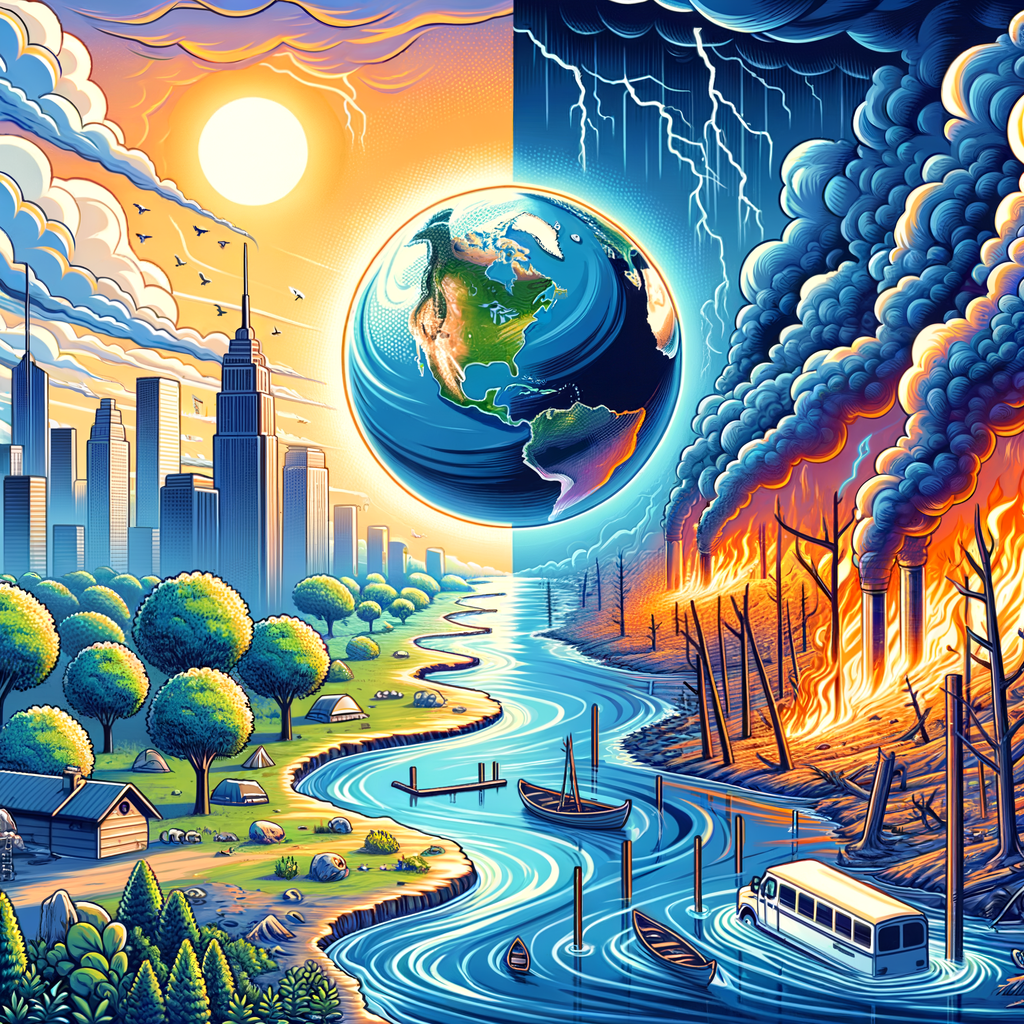
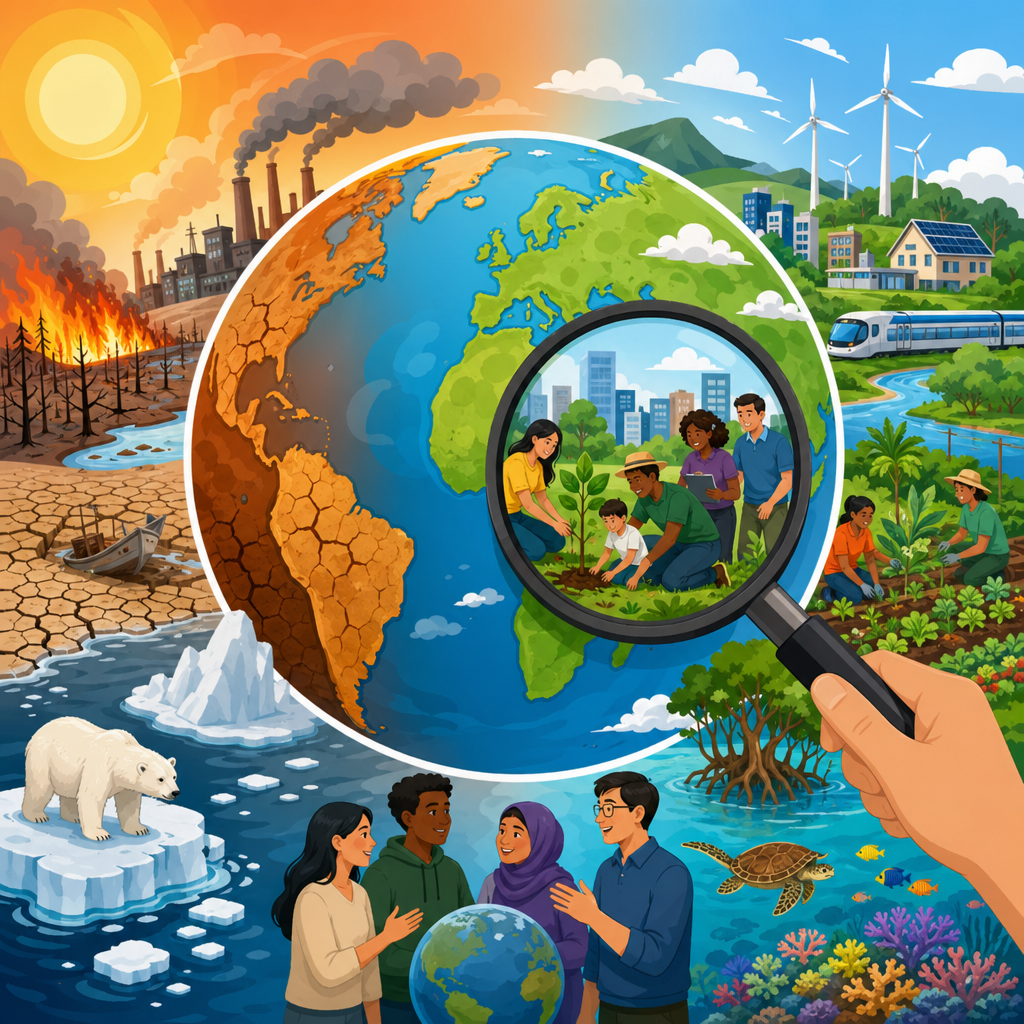
Global warming is real, measurable, and urgent, but it describes only one part of a much larger climate story. Many readers use global warming and climate change as if they mean the same thing, yet they refer to different concepts. Global warming is the long-term rise in Earth’s average surface temperature, driven mainly by human emissions of heat-trapping gases such as carbon dioxide, methane, and nitrous oxide. Climate change includes that warming, but it also covers shifts in rainfall, stronger heat waves, changing storm patterns, sea level rise, melting ice, ocean acidification, ecosystem disruption, and the increasing instability of weather over time.
This distinction matters because policy, business planning, disaster readiness, and public understanding all depend on using the right term. In my own climate content work, I have seen how confusion narrows the conversation. When people hear only global warming, they often picture hotter summers. They may miss why some regions face heavier flooding, why others see longer droughts, or why colder outbreaks can still occur in a warming world. Climate change is the broader framework that connects these seemingly contradictory events into one physical system.
The science is well established. The Intergovernmental Panel on Climate Change, NASA, the National Oceanic and Atmospheric Administration, the World Meteorological Organization, and major national academies all state that human activity is warming the planet and altering the climate system. Carbon dioxide concentrations now exceed 420 parts per million, far above preindustrial levels of about 280 ppm. The planet has already warmed by roughly 1.1 to 1.3 degrees Celsius relative to the late nineteenth century, and that amount is enough to intensify many climate impacts now affecting communities, infrastructure, food systems, and health.
For anyone trying to understand the climate change topic clearly, this hub article explains how global warming fits inside the bigger picture. It defines the terms, shows where they overlap, and outlines the main consequences. It also answers the practical questions people ask most often: Is every extreme event caused by climate change? Why does winter still exist? What makes greenhouse gases so powerful? How should governments, companies, and households respond? By the end, the difference between global warming and climate change will be clear, and the broader climate risk landscape will make more sense.
Global warming is the temperature trend; climate change is the whole system response
The simplest way to explain global warming vs. climate change is this: global warming refers to the increase in average global temperature, while climate change refers to the wide set of long-term changes that result from that warming and from other human influences on the climate system. If Earth’s climate were a patient, global warming would be a key vital sign, but climate change would be the full medical picture, including circulation, metabolism, organ stress, and secondary complications.
Scientists focus on long-term averages because climate is not the same as weather. Weather is what happens today or this week: a thunderstorm, a cold front, a heat spike. Climate is the statistical pattern of weather over decades. The standard baseline for climate analysis is usually thirty years. That matters because a snowstorm in one city says little about the climate trend, while decades of rising temperatures, shrinking glaciers, and shifting rainfall say a great deal.
Global warming is driven largely by the enhanced greenhouse effect. Greenhouse gases absorb outgoing infrared radiation and re-emit part of that energy back toward the surface, raising the lower atmosphere’s heat content. Water vapor amplifies warming, but carbon dioxide is the main long-lived control knob because human emissions directly increase its concentration. Methane is more potent over shorter time frames, and nitrous oxide also contributes meaningfully. Aerosols, land use change, and soot further affect climate by altering reflectivity, clouds, and surface properties.
Climate change includes not just warmer averages but changes in extremes, seasonality, circulation, and chemistry. Oceans absorb more than 90 percent of the excess heat trapped by greenhouse gases. Warmer oceans expand, helping raise sea levels, while land ice loss adds even more water. A warmer atmosphere holds more moisture, roughly 7 percent more per degree Celsius, increasing the potential for heavier rainfall. At the same time, higher evaporation and shifting circulation can worsen drought in vulnerable regions. Those linked responses are why global warming alone is too narrow a term for the challenge societies face.
Why the terminology changed and why precision matters
Both terms have been used for decades, and neither is a political invention. Researchers used global warming widely when discussing temperature rise, but climate change became increasingly important because it captures the broader set of observed and projected changes. The United Nations Framework Convention on Climate Change used climate change in 1992, and the IPCC has long framed the issue in system-wide terms. That shift was scientifically necessary, not cosmetic.
Precision matters because language shapes risk perception. If a mayor hears global warming, the focus may stay on heat preparedness. If that same mayor hears climate change and understands it correctly, planning expands to stormwater design, wildfire smoke, coastal flooding, drought resilience, grid reliability, and insurance stress. I have seen this difference in editorial strategy: pages framed narrowly around warming attract interest, but pages that explain climate change help readers connect the dots between energy, agriculture, transport, housing, and health.
Public confusion often comes from three places. First, cold weather still occurs, so some people assume warming has stopped. Second, climate impacts vary by region, making the problem look inconsistent. Third, natural variability such as El Niño and La Niña can temporarily boost or mask global averages. None of this overturns the long-term trend. It simply shows that the climate system contains short-term variability layered on top of persistent human-driven change.
| Term | What it means | Best example | Why it matters |
|---|---|---|---|
| Global warming | Long-term increase in Earth’s average surface temperature | Rising global temperature records and hotter baseline conditions | Shows the core energy imbalance caused mainly by greenhouse gases |
| Climate change | Broader long-term shifts in temperature, precipitation, ice, oceans, and extremes | Sea level rise, heavier downpours, drought shifts, melting glaciers, stronger heat waves | Explains real-world impacts on people, ecosystems, and infrastructure |
Using the broader term also improves decision-making. A utility planning for climate change will assess heat-driven power demand, transmission line stress, wildfire exposure, flood risk to substations, and water availability for cooling. A farmer will look beyond hotter days to planting windows, pest pressure, soil moisture, crop insurance, and irrigation reliability. In both cases, climate change is the operationally useful concept.
How scientists know human activity is driving both warming and wider climate disruption
The evidence does not rest on a single thermometer or one dramatic storm. It comes from multiple independent records: surface thermometers, ocean heat measurements, satellite observations, glacier mass balance, sea level data, borehole temperatures, atmospheric composition, and basic radiative physics. The signature of greenhouse gas forcing is distinctive. Nights are warming, winters are warming, the lower atmosphere is warming while the stratosphere cools, oceans are accumulating heat, and carbon from fossil fuels carries an isotopic fingerprint that can be measured.
Detection and attribution studies compare observed changes with climate model simulations that include natural factors alone, such as solar variability and volcanic eruptions, versus simulations that include human factors. Natural factors cannot explain the modern warming trend. Human greenhouse gas emissions can. This conclusion has been tested repeatedly across datasets and methods. It is one of the strongest findings in environmental science.
Carbon dioxide remains in the climate system for a very long time, which is why cumulative emissions matter. Methane has a shorter atmospheric lifetime, around a decade, but its near-term warming effect is powerful. That makes methane mitigation especially valuable for slowing warming in the next few decades. Black carbon, deforestation, cement production, and agricultural practices all play roles too, though their effects differ in duration and scale.
Scientists also use event attribution to estimate how climate change altered the likelihood or severity of specific extremes. Not every flood, fire, or hurricane is caused solely by climate change, because weather events arise from many interacting factors. But warming can load the dice. A heat wave that might once have been rare can become common. A heavy rain event can deliver more water because the atmosphere contains more moisture. This probabilistic framing is accurate and more useful than claiming every event has a single cause.
What climate change includes that global warming alone does not capture
The wider climate picture includes physical, ecological, economic, and social effects. Sea level rise is a clear example. Global warming tells you oceans and air are warmer; climate change tells you why coastal nuisance flooding becomes chronic, why saltwater threatens groundwater, and why ports, roads, and wastewater systems need redesign. Thermal expansion and melting glaciers together translate a temperature trend into infrastructure risk.
Another example is precipitation. Some areas are getting wetter on average, others drier, and many are seeing more rainfall variability. In practical terms, that means flood-prone neighborhoods can become more dangerous even where annual rainfall changes little, because more rain now falls in short, intense bursts. At the same time, hotter conditions can dry soils faster between storms, worsening agricultural stress. This combination of intense rain and deeper drying is a hallmark of climate change in many regions.
Oceans show why the broader framing is essential. Roughly a quarter of human carbon dioxide emissions dissolve into seawater, where they form carbonic acid and lower pH. This process, ocean acidification, harms corals, shellfish, and marine food webs. Acidification is not the same as warming, but it stems from the same emissions source. If the conversation stops at global warming, the chemistry crisis in the ocean can disappear from view even though it carries major fisheries and biodiversity consequences.
Ecosystems are shifting as species respond to changing temperatures, snowpack, streamflow, and seasonal cues. Mosquito and tick ranges can expand. Wildfire seasons can lengthen as heat, drought, and fuel conditions align. Public health effects include heat illness, smoke exposure, allergy intensification, and mental stress after disasters. Insurance markets are already reacting to repeated high-loss events in places such as California, Florida, and parts of Australia. These are climate change impacts, not just abstract warming statistics.
Common misconceptions about global warming vs. climate change
A frequent question is, if the planet is warming, why do we still get cold snaps? The answer is that climate change shifts averages and probabilities, not the daily weather in a straight line. Winter has not vanished. Local cold events still happen, but against a warmer background climate. In many regions, extremely cold temperatures are becoming less common over time even though they can still occur.
Another misconception is that climate change means every place gets warmer and wetter in the same way. In reality, impacts differ by geography, elevation, ocean influence, land cover, and existing climate patterns. The Arctic warms much faster than the global average because melting ice reduces reflectivity, exposing darker surfaces that absorb more solar energy. Some subtropical regions face stronger drying pressures, while some high-latitude regions see higher precipitation.
People also ask whether climate change is only an environmental issue. It is not. It is an economic, public health, infrastructure, security, and development issue. Supply chains are disrupted by flood-damaged transport corridors, low river levels, storm-affected ports, and heat-stressed workers. Urban planners now use updated rainfall intensity curves, heat island maps, and resilience standards because climate change affects how cities function.
Finally, some assume that if emissions stopped tomorrow, the climate would immediately return to normal. It would not. Temperatures would stabilize only gradually, and many changes, especially sea level rise, would continue for centuries because oceans and ice sheets respond slowly. That lag is exactly why early action matters. Delay locks in future impacts.
Why this distinction matters for solutions, policy, and everyday decisions
Understanding the difference between global warming and climate change leads to better solutions. Cutting greenhouse gas emissions addresses the root cause of warming. That includes expanding clean electricity, electrifying transport and heating, improving efficiency, reducing methane leaks, protecting forests, and changing industrial processes. But adaptation addresses the wider climate picture: flood defenses, heat action plans, drought management, resilient crops, cooler buildings, and stronger early warning systems.
When organizations confuse the two terms, they often underprepare. A business may install better air conditioning yet ignore floodplain exposure or water scarcity. A city may set a net-zero target but fail to update building codes for heavier rainfall and extreme heat. Effective climate strategy requires both mitigation and adaptation because climate change is broader than temperature alone.
The hub value of this topic is that it connects many subtopics readers explore next: causes of greenhouse gas emissions, evidence of human influence, heat waves, sea level rise, melting glaciers, ocean acidification, extreme weather attribution, climate justice, adaptation planning, and decarbonization pathways. If global warming is the entry point, climate change is the map that shows how all those issues fit together.
The key takeaway is straightforward. Global warming is the rise in average temperature. Climate change is the larger pattern of long-term shifts affecting atmosphere, oceans, ice, ecosystems, economies, and daily life. Knowing the difference improves public understanding and leads to smarter action. If you are building out your knowledge of climate change, use this page as your starting point, then explore the connected topics that explain causes, impacts, and solutions in detail.
Frequently Asked Questions
What is the difference between global warming and climate change?
Global warming and climate change are closely related, but they are not identical terms. Global warming refers specifically to the long-term increase in Earth’s average surface temperature, caused mainly by human activities that release heat-trapping gases such as carbon dioxide, methane, and nitrous oxide into the atmosphere. These gases strengthen the natural greenhouse effect, allowing more heat to remain in the climate system. Scientists can measure this warming directly through temperature records on land, in the oceans, and from satellites, which is why global warming is considered both real and measurable.
Climate change is the broader concept. It includes global warming, but also the many other changes that result from a warming planet. Those changes can include shifts in rainfall patterns, more frequent or intense heat waves, changing drought conditions, stronger downpours, sea level rise, melting glaciers and ice sheets, warmer oceans, and changes in ecosystems and seasons. In other words, global warming is one major driver, while climate change describes the full range of consequences and disruptions unfolding across Earth’s atmosphere, oceans, land, and living systems.
This distinction matters because a warmer average temperature does not simply mean slightly hotter weather everywhere. It means the whole climate system is being altered. Some places may experience more flooding, others more drought, and many will face both at different times. Understanding the bigger picture helps readers see why focusing only on rising temperatures can miss the larger story of how interconnected and far-reaching climate impacts really are.
Why is global warming considered only part of the bigger climate picture?
Global warming is only part of the bigger picture because temperature rise is the starting point, not the final outcome. When excess greenhouse gases trap more heat, that extra energy affects far more than the thermometer. It changes how water moves through the environment, how storms develop, how snow and ice melt, how oceans absorb heat, and how natural and human systems respond over time. The result is a chain reaction across the entire climate system.
For example, warmer air can hold more moisture, which can lead to heavier rainfall and more intense flooding in some regions. At the same time, higher temperatures can dry soils faster and increase evaporation, worsening drought in others. Oceans absorb most of the excess heat created by greenhouse gas emissions, which contributes to marine heat waves, coral bleaching, and rising sea levels through both thermal expansion and melting land ice. A warming Arctic can also influence weather patterns far beyond the polar region. These are all climate effects, but they go beyond the narrow definition of global warming itself.
The bigger picture also includes ecological, economic, and social consequences. Agriculture, water supplies, public health, infrastructure, biodiversity, and food systems are all affected by climate shifts. Wildfire seasons can lengthen, disease patterns can change, and communities may face increased risks from storms, heat, or coastal erosion. So while global warming is central to the problem, climate change captures the full web of physical changes and human impacts that make this issue so urgent.
If winters can still be cold, how do scientists know the planet is warming?
A cold winter day or even a severe snowstorm does not disprove global warming because weather and climate are not the same thing. Weather describes short-term conditions in a particular place, such as today’s temperature, this week’s storm, or this season’s snowfall. Climate refers to long-term patterns measured over decades across regions and the entire planet. Scientists determine whether the planet is warming by examining large datasets collected over long periods, not by looking at isolated local events.
Those datasets show a clear and persistent warming trend. Thermometer records from around the world, ocean temperature measurements, satellite observations, shrinking glaciers, declining Arctic sea ice, earlier spring timing, and rising sea levels all point in the same direction. The oceans in particular provide strong evidence, because they store enormous amounts of heat. Even if a certain area experiences an unusually cold spell, the planet as a whole can still be accumulating heat year after year.
In fact, climate change can sometimes influence the kinds of cold extremes people notice. Changes in atmospheric circulation and shifting patterns in the jet stream may affect how cold air moves, though these relationships can be complex and are still studied in detail. The key point is that local cold events occur within a broader warming climate. Scientists rely on long-term global evidence, and that evidence overwhelmingly shows that Earth is warming.
What are the main human causes behind global warming and wider climate change?
The main human cause is the large-scale release of greenhouse gases into the atmosphere, especially from burning fossil fuels such as coal, oil, and natural gas. These fuels power electricity generation, transportation, manufacturing, and heating, but they also emit carbon dioxide, the most significant long-lived greenhouse gas produced by human activity. Methane from agriculture, fossil fuel operations, and waste, along with nitrous oxide from fertilizers and industrial processes, also contributes substantially to warming. Together, these gases trap additional heat and disrupt Earth’s energy balance.
Deforestation and land-use change are also major factors. Forests naturally absorb carbon dioxide, so when they are cut down or burned, two things happen at once: stored carbon is released, and the planet loses part of its ability to absorb future emissions. Industrial agriculture, cement production, refrigerants, and other sectors add to the problem as well. Climate change is therefore not caused by one single source, but by a wide range of human systems that have built up over many decades.
Scientists are confident about these causes because the evidence is strong and consistent. Atmospheric measurements show rising greenhouse gas concentrations. The chemical fingerprint of much of the added carbon dioxide points directly to fossil fuel combustion. Climate models that include human emissions match observed warming trends far better than models based only on natural influences such as volcanic activity or changes in solar output. In short, the science does not just show that the climate is changing; it shows why it is changing, and human activity is the primary reason.
Why does it matter to understand the full climate story instead of focusing only on warming?
It matters because better understanding leads to better decisions. If people think the issue is only about average temperatures increasing, they may underestimate the scale, speed, and variety of risks involved. The full climate story includes extreme rainfall, drought, sea level rise, wildfire conditions, ecosystem disruption, agricultural stress, health threats, and infrastructure damage. These impacts do not all look the same in every place, which is why a broader view is essential for communities, businesses, and governments trying to prepare for what lies ahead.
This wider perspective also helps shape more effective responses. Cutting greenhouse gas emissions is critical because it addresses the root cause of global warming and many related climate disruptions. But societies also need adaptation strategies that reflect the broader reality of climate change. That can include improving flood defenses, redesigning cities for extreme heat, protecting water resources, strengthening power grids, restoring wetlands, adjusting farming practices, and preparing health systems for climate-related emergencies. Focusing only on temperature alone would leave many of these urgent needs out of view.
Just as important, understanding the bigger picture improves public communication. It helps explain why climate change can produce both hotter heat waves and more intense rainfall, why coastal cities worry about sea level rise even if inland areas focus on drought, and why the consequences reach far beyond the environment into the economy, security, and daily life. Global warming is a vital part of the story, but seeing it as one piece of a much larger climate system gives readers a clearer, more accurate understanding of the challenge.