Agricultural chemicals have transformed food production, but their long-term ecological costs are now too large to treat as side effects. In environmental toxicology, these substances are studied not only for immediate poisoning but for how they move through soil, water, air, plants, wildlife, and human communities over years or decades. The term agricultural chemicals includes synthetic pesticides, herbicides, fungicides, insecticides, seed treatments, fumigants, growth regulators, and commercial fertilizers containing nitrogen, phosphorus, potassium, and trace metals. Long-term ecosystem damage refers to persistent disruption of biodiversity, nutrient cycling, food webs, habitat quality, and ecological resilience after repeated exposure. I have worked on contaminated site reviews where the initial concern was a single pesticide application, yet the real problem turned out to be cumulative loading across seasons, interacting with drought, erosion, and drainage. That pattern is common. A field is never just a field; it is part of a watershed, an insect habitat, a microbial reservoir, and often a migration corridor. When chemicals enter that system repeatedly, the ecological response is rarely isolated or temporary.
This topic matters because agriculture occupies vast land area and because many chemicals are designed to kill, suppress, or alter biological processes. Even when a product is used according to label directions, environmental exposure can still occur through spray drift, runoff, volatilization, leaching, dust generation, and residues on crop debris. Environmental toxicology asks practical questions: what organisms are exposed, at what concentration, for how long, and with what biological effect? It also asks harder questions about chronic low-dose exposure, mixture toxicity, endocrine disruption, bioaccumulation, and multigenerational impacts that standard short-term testing can miss. Regulatory systems in the United States, European Union, and elsewhere rely on risk assessment, but real landscapes introduce variability that laboratory conditions cannot fully capture. Understanding agricultural chemicals and long-term ecosystem damage is therefore essential for farmers, land managers, environmental scientists, and policymakers who need to protect yields without degrading the natural systems that make agriculture possible in the first place.
How Agricultural Chemicals Move Through Ecosystems
The first rule of environmental toxicology is that hazard alone does not determine damage; exposure pathways do. A compound may be highly toxic in the laboratory yet cause limited field harm if it binds tightly and degrades quickly, while a moderately toxic compound can create broad ecological stress if it is mobile, persistent, and widely applied. In agricultural settings, chemicals travel through five main routes: surface runoff into ditches and streams, leaching through soil into groundwater, atmospheric drift during or after application, uptake into plants and crop residues, and sediment transport attached to eroded particles. Each route exposes different organisms. Aquatic invertebrates may be hit by a storm pulse of pyrethroids in suspended sediment. Soil fungi may experience repeated fungicide residues after seed treatment and foliar use. Pollinators may encounter insecticides through contaminated pollen, nectar, guttation droplets, and adjacent flowering weeds.
Persistence is a central concept. Half-life estimates are useful, but field persistence depends on temperature, sunlight, pH, moisture, soil texture, and microbial activity. Atrazine, glyphosate, chlorpyrifos, neonicotinoids, and nitrate all behave differently in the environment because their sorption coefficients, degradation pathways, and solubility differ. Nitrate is highly mobile and can travel rapidly into groundwater. Phosphorus often binds to soil but moves with erosion into lakes, where it drives eutrophication. Neonicotinoid insecticides are water soluble enough to move into puddles and wetlands, exposing non-target insects and aquatic larvae. In actual monitoring programs, the most damaging event is often not the application day but the first heavy rainfall after treatment, when residues are transported beyond field boundaries into receiving ecosystems.
Soil Toxicity, Microbial Disruption, and Declining Fertility
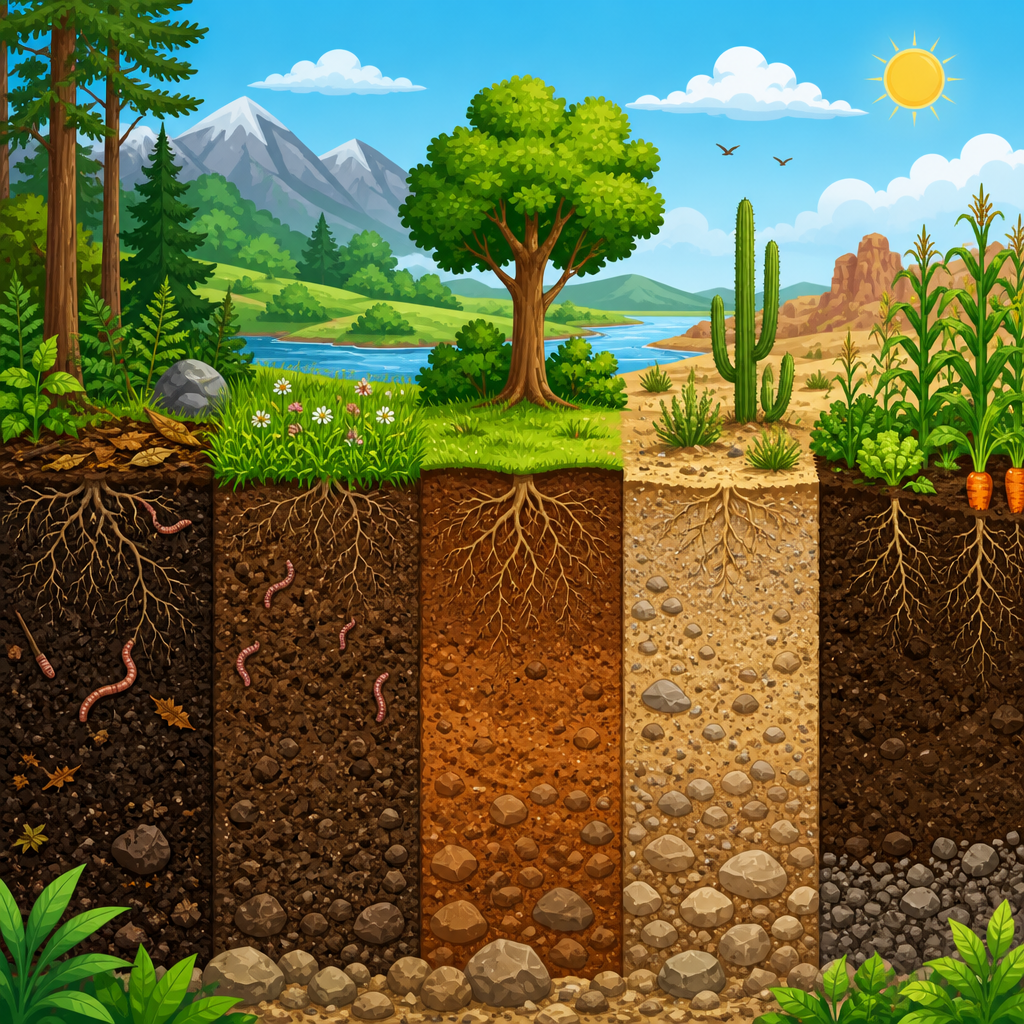
Long-term ecosystem damage frequently begins belowground. Healthy agricultural soil is a living matrix of bacteria, archaea, fungi, nematodes, microarthropods, earthworms, roots, organic matter, mineral particles, water, and air. Many agricultural chemicals alter this community even when crops show no visible injury. Repeated fungicide use can reduce beneficial mycorrhizal associations that help plants acquire phosphorus and tolerate drought. Some herbicides change rhizosphere microbial composition, which affects decomposition rates and nitrogen mineralization. Insecticides can reduce soil invertebrates that shred residue and maintain pore structure. Ammonium-based fertilizers can acidify soils over time, especially where liming is inadequate, shifting microbial communities and increasing metal mobility.
I have seen fields with acceptable yield maps but worsening soil function, where infiltration declined and compaction increased because the biological engine of the soil was weakening. That matters ecologically and economically. When earthworm abundance falls, residue breakdown slows and macropores become less common, which increases runoff. When microbial diversity narrows, the soil becomes less resilient to drought and pathogen pressure. Copper-based fungicides, still used in some conventional and organic systems, can accumulate in topsoil and harm microbial enzymes at elevated concentrations. Environmental toxicology therefore looks beyond acute mortality to sublethal indicators such as respiration, enzyme activity, community composition, and nutrient cycling rates. Those metrics reveal that a chemically managed field can remain productive for years while quietly losing the ecological capacity that productivity depends on.
Water Contamination, Eutrophication, and Aquatic Food Web Effects
Agricultural chemicals are among the most important nonpoint sources of freshwater contamination. Nitrogen and phosphorus fertilizers fuel algal blooms when they wash into rivers, reservoirs, estuaries, and lakes. The classic sequence is well established: nutrient enrichment increases algal growth, bloom collapse drives microbial decomposition, dissolved oxygen falls, and fish and benthic invertebrates experience hypoxia or die-offs. The Gulf of Mexico seasonal hypoxic zone, largely linked to nutrient loading from the Mississippi River basin, is one of the best known examples. Similar patterns occur in Lake Erie, the Baltic Sea, and countless smaller watersheds. These are not isolated water quality problems; they represent food web disruption at regional scale.
Pesticides add another layer of risk. Herbicides can suppress aquatic plants and algae that support invertebrates and juvenile fish. Insecticides are especially hazardous to aquatic arthropods because many target the nervous system pathways shared across insects and crustaceans. Organophosphates inhibit acetylcholinesterase. Pyrethroids alter sodium channel function. Neonicotinoids activate nicotinic acetylcholine receptors and can affect aquatic insect emergence at concentrations measured in surface water near treated fields. When insect larvae decline, fish lose prey and birds lose seasonal feeding pulses. Wetland amphibians also face complex exposures from fungicides, herbicides, and nitrate, which can impair development, immune function, and predator avoidance. Because watersheds integrate everything happening upstream, aquatic ecosystems often reveal cumulative agricultural toxicity earlier and more clearly than terrestrial monitoring does.
Pollinators, Birds, and the Hidden Cost to Biodiversity
Biodiversity loss tied to agricultural chemicals rarely results from a single dramatic poisoning event. More often, it develops through chronic sublethal exposure combined with habitat simplification. Pollinators illustrate this clearly. Bees may not die immediately after encountering field-realistic residues, yet they can suffer impaired navigation, reduced foraging efficiency, weakened queen production, and higher susceptibility to disease. Seed treatments containing clothianidin, imidacloprid, or thiamethoxam have been intensely studied because they move systemically into plant tissues and can persist in soil long enough to affect subsequent flowering plants. Risk depends on crop, timing, landscape context, and alternative forage, but the ecological concern is justified and well documented.
Birds are affected both directly and indirectly. Granivorous birds can ingest treated seeds during planting. Insectivorous birds may lose prey where insect biomass declines after broad-spectrum pesticide use. Herbicides remove weedy field margins that once supplied seeds, nectar, and nesting cover. The result is not simply fewer species in one field; it is reduced landscape connectivity for already stressed populations. Environmental toxicology tracks these outcomes through biomarkers, population surveys, residue analysis, and trophic assessment. The key insight is that biodiversity impacts often emerge from interacting stressors: a low insecticide dose, a hotter season, a fragmented hedgerow, and reduced floral resources can together push a population below recovery threshold.
| Chemical group | Common environmental pathway | Typical long-term ecosystem effect |
|---|---|---|
| Nitrogen fertilizers | Leaching and runoff | Groundwater contamination, algal blooms, hypoxia |
| Phosphorus fertilizers | Erosion and sediment transport | Eutrophication in lakes and reservoirs |
| Neonicotinoid insecticides | Soil persistence and water movement | Pollinator stress, aquatic insect decline |
| Pyrethroid insecticides | Sediment-bound runoff | Toxicity to aquatic invertebrates |
| Copper fungicides | Soil accumulation | Microbial disruption and reduced soil health |
| Herbicides | Drift and runoff | Non-target plant loss and habitat simplification |
Bioaccumulation, Mixture Toxicity, and Delayed Ecological Harm
One reason agricultural chemicals can cause long-term ecosystem damage is that ecosystems are exposed to mixtures, not single compounds in isolation. Risk assessments commonly evaluate active ingredients one at a time, yet field conditions include adjuvants, metabolites, tank mixes, fertilizer interactions, and legacy contaminants already present in soil or sediment. Toxic effects may be additive, synergistic, or antagonistic. For example, a fungicide that inhibits detoxification enzymes can increase the sensitivity of bees or aquatic organisms to an insecticide present at the same time. Nutrient enrichment can also intensify the effects of pesticide exposure by changing oxygen levels, pH, or community structure.
Bioaccumulation is another major concern, especially for persistent compounds and for food webs with long-lived predators. Although many older organochlorine pesticides were restricted or banned because of well-known persistence and biomagnification, the lesson remains relevant: low environmental concentrations can still become ecologically important when residues concentrate over time in tissues or sediments. Even where current-use pesticides are less bioaccumulative, repeated exposure can create chronic stress that does not appear in short tests. Endocrine disruption, reproductive impairment, altered behavior, and immune suppression may not be visible until breeding success declines or a population fails to recover after a disturbance. Delayed harm is common in environmental toxicology because ecosystems have buffering capacity, and by the time visible damage appears, the underlying chemical pressure has often been present for years.
Monitoring, Regulation, and Practical Ways to Reduce Damage
Effective management starts with measurement. The best environmental monitoring combines chemical analysis with biological indicators. Water sampling should capture storm events, not just baseflow, because peak transport often happens during runoff pulses. Soil testing should include organic matter, pH, texture, and, where relevant, residue screening for metals or persistent pesticides. Biological monitoring can include macroinvertebrate indices, pollinator surveys, bird counts, enzyme assays, and microbial community sequencing. Recognized methods from the US Environmental Protection Agency, the European Food Safety Authority, OECD test guidelines, and integrated pest management programs provide standardized frameworks, but local interpretation remains essential because risk is landscape specific.
Reducing long-term ecosystem damage does not require abandoning crop protection; it requires choosing lower-risk strategies and using them with precision. Integrated pest management is the strongest practical framework because it prioritizes scouting, economic thresholds, resistant varieties, crop rotation, biological control, and targeted applications over routine prophylactic treatment. Vegetated buffer strips reduce sediment and phosphorus runoff. Controlled drainage and cover crops cut nitrate losses. Precision agriculture tools, including variable-rate application and weather-aware spraying, lower off-target movement. Reformulation also matters: granules, drift-reducing nozzles, and timing adjustments can reduce exposure. The most successful farms I have assessed were not the ones using the most chemistry or the least chemistry. They were the ones treating chemicals as one tool within an ecological system they were actively trying to preserve.
Agricultural chemicals and long-term ecosystem damage should be understood as a management challenge shaped by toxicology, hydrology, soil science, and biodiversity conservation. The central lesson is straightforward: repeated chemical inputs do not stay confined to target pests or field boundaries. They move through soil, water, sediments, food webs, and seasons, often producing chronic effects before obvious damage appears. Fertilizers can trigger eutrophication and hypoxia. Pesticides can suppress non-target insects, alter microbial communities, and simplify habitat. Mixtures and sublethal exposures complicate prediction, while climate stress can amplify toxicity. That is why environmental toxicology focuses on exposure pathways, persistence, organism sensitivity, and ecological function rather than on label claims alone.
For readers using this page as a hub for environmental toxicology, the most useful takeaway is that prevention is more effective than cleanup. Once groundwater is contaminated, wetlands lose invertebrates, or soil biology is depleted, recovery is slow and expensive. Better outcomes come from integrated pest management, careful nutrient stewardship, edge-of-field protections, and monitoring that links chemical residues to biological response. If you manage land, study local watershed data, review pesticide and fertilizer practices, and prioritize methods that protect both production and ecosystem resilience. That is how agriculture remains productive without steadily eroding the environmental systems it depends on.
Frequently Asked Questions
What counts as an agricultural chemical, and why are these substances such a long-term environmental concern?
Agricultural chemicals include a wide range of products used to increase crop yields, control pests, manage weeds, prevent disease, regulate plant growth, and protect stored harvests. This category commonly includes herbicides, insecticides, fungicides, fumigants, seed treatments, growth regulators, and other commercial formulations made with both active ingredients and so-called inert ingredients. While many of these products are designed to solve immediate farming problems, their environmental importance goes far beyond their intended targets. In environmental toxicology, the central question is not just whether a product kills a pest quickly, but what happens after application: where it moves, how long it persists, what it breaks down into, and which organisms are exposed over time.
The long-term concern comes from the fact that agricultural chemicals rarely stay neatly confined to a single field or a single season. They can bind to soil, leach into groundwater, wash into streams, volatilize into the air, settle onto nearby habitats, accumulate in sediments, or be taken up by plants and food webs. Some degrade rapidly, but others persist long enough to create chronic, low-level exposure across ecosystems. Even when the original compound breaks down, its byproducts can remain biologically active or become toxic in different ways. Over years or decades, repeated applications can reshape microbial communities, reduce insect diversity, alter nutrient cycling, affect amphibians and birds, and place long-term stress on ecosystems that may not show immediate collapse but gradually lose resilience.
That is why these substances are now viewed not simply as farm inputs, but as landscape-scale environmental agents. The issue is not only direct poisoning. It is also cumulative exposure, chemical mixtures, seasonal repetition, and ecological disruption that unfolds slowly enough to be missed if we only look for acute die-offs. Long-term ecosystem damage often comes from many small exposures adding up across time, species, and environmental compartments.
How do agricultural chemicals move through ecosystems after they are applied?
Once applied, agricultural chemicals can move through multiple environmental pathways, and that movement largely determines their long-term ecological impact. Some remain on plant surfaces for a period of time, where they can affect pollinators, beneficial insects, and animals feeding in treated areas. Others are absorbed into plant tissues, which can extend pest control but also create exposure routes for herbivores, nectar-feeding insects, seed-eating birds, and soil organisms interacting with plant roots and residues. Chemicals that land on bare ground may bind tightly to soil particles or remain dissolved in soil moisture, depending on their chemical properties.
Rainfall and irrigation are major drivers of transport. Water can carry residues off fields in surface runoff into ditches, wetlands, ponds, streams, and rivers. Eroded soil particles can also transport chemicals into aquatic systems, where they may settle into sediments and remain available to bottom-dwelling organisms for long periods. At the same time, some compounds leach downward through soil profiles and contaminate groundwater, creating a slower but often more persistent exposure route for ecosystems and human communities that rely on wells. Air movement matters too. Spray drift can expose nearby vegetation, wildlife habitat, and rural residences at the time of application, while volatilization can allow certain chemicals to evaporate and travel beyond the treated area after application is complete.
This movement is ecologically important because it creates exposure in places that were never intended to be treated. A field application can become a watershed issue, a pollinator issue, a soil biodiversity issue, or a public health issue depending on where residues travel and how long they remain active. Environmental conditions such as temperature, soil type, organic matter, slope, wind, rainfall timing, and farming practices all influence this process. In practical terms, agricultural chemicals do not act as isolated inputs. They become part of a larger environmental circulation system that connects farms to surrounding ecosystems.
What kinds of long-term ecosystem damage can agricultural chemicals cause?
Long-term ecosystem damage can appear in many forms, and it is often less dramatic than a visible fish kill or a sudden wildlife die-off. One of the most important effects is the gradual erosion of biodiversity. Insecticides may reduce not only pest species but also beneficial predators, pollinators, decomposers, and other non-target insects that support food webs. Herbicides can simplify plant communities by removing flowering weeds and non-crop vegetation, which in turn reduces food and shelter for insects, birds, and small mammals. Fungicides can interfere with beneficial fungi in soils and on plants, disrupting nutrient exchange and decomposition processes that healthy ecosystems depend on.
Soil systems are especially vulnerable because they are constantly exposed and biologically complex. Repeated chemical use can alter microbial composition, suppress earthworms and other invertebrates, reduce organic matter processing, and affect nutrient cycling. When soil biology is damaged, the consequences extend beyond the field itself: poorer water infiltration, greater erosion, lower resilience to drought, and weaker natural disease suppression. Aquatic ecosystems face their own risks. Chronic low-level contamination can impair fish reproduction, amphibian development, invertebrate survival, and algal or plankton communities that form the base of aquatic food webs. These changes may not cause immediate collapse, but they can weaken ecosystem function year after year.
Another serious issue is sublethal and cumulative harm. Wildlife may survive exposure without dying outright but still experience reduced fertility, altered behavior, immune dysfunction, endocrine disruption, or developmental abnormalities. Birds may have fewer successful nesting seasons. Amphibians may become more vulnerable to disease. Pollinators may lose navigation ability or reproductive capacity. Over time, these effects can reduce population stability even when individual exposure events seem minor. This is why long-term damage is often described as a resilience problem: ecosystems become less able to recover from stress, more dependent on artificial inputs, and more vulnerable to climate extremes, invasive species, and disease outbreaks.
Why is it difficult to measure the full ecological impact of agricultural chemicals?
Measuring the full ecological impact is difficult because real-world exposure is far more complex than controlled laboratory testing. Many regulatory assessments begin with single chemicals tested on a limited number of species under standardized conditions. That approach is useful, but ecosystems do not operate under single-chemical, single-species conditions. In actual agricultural landscapes, organisms are exposed to mixtures of pesticides, adjuvants, fertilizer interactions, breakdown products, and repeating application cycles across multiple seasons. A frog in a drainage ditch, for example, may encounter herbicides in spring runoff, insecticides during summer, fungicide residues in sediments, and nutrient stress from adjacent land use all at once.
Timing also complicates measurement. Acute poisoning can be documented quickly, but chronic harm may take years to become visible. Population declines, reproductive impairment, food web simplification, and shifts in soil microbial communities can develop gradually and may only be detected through long-term monitoring. In addition, ecological effects are often indirect. A chemical may not kill a bird directly, but if it reduces insect prey or removes nesting vegetation, the bird population may decline anyway. Those indirect pathways are scientifically real but harder to attribute in a simple cause-and-effect framework.
Another challenge is environmental variability. Weather, topography, soil composition, crop rotation, water flow, and habitat fragmentation all influence how chemicals behave and whom they affect. The same product can produce different ecological outcomes in different regions or under different climate conditions. There is also the problem of hidden exposure. Residues may persist in sediments, groundwater, plant tissues, or non-crop vegetation where they are not routinely monitored. For all of these reasons, the absence of obvious short-term damage should not be mistaken for proof of safety. The ecological footprint of agricultural chemicals often becomes clearest only when scientists look across long timescales and across the full connected system of soil, water, air, plants, wildlife, and people.
Can food production remain productive while reducing long-term ecosystem damage from agricultural chemicals?
Yes, but it requires moving away from the assumption that chemical intensity is the only reliable path to productivity. Reducing long-term ecosystem damage does not mean abandoning crop protection altogether. It means using a broader, more strategic approach that treats chemicals as one tool among many rather than the foundation of the entire system. Integrated pest management is a strong example. Instead of routine, preventive spraying, it relies on monitoring pest pressure, establishing action thresholds, using targeted interventions, rotating control methods, and protecting beneficial organisms that naturally suppress pests. This can lower total chemical use while maintaining effective crop protection.
Other important strategies include crop rotation, cover cropping, habitat buffers, diversified planting systems, resistant crop varieties, improved soil management, precision application technology, and better timing of treatments to reduce drift and runoff. Farms can also reduce ecological risk by selecting compounds with lower persistence, narrower target profiles, and lower toxicity to non-target organisms when alternatives are available. Vegetated filter strips, wetlands, and riparian buffers can help intercept residues before they enter waterways. Building healthier soils is especially important because biologically active, well-structured soils often improve nutrient retention, reduce erosion, and support stronger plant resilience, which can lessen dependence on repeated chemical inputs.
The larger point is that productivity and ecological protection do not have to be framed as opposites. In the long run, agriculture depends on functioning ecosystems: pollinators, fertile soil, clean water, microbial diversity, natural pest control, and climate resilience. When chemical practices undermine those systems, apparent short-term efficiency