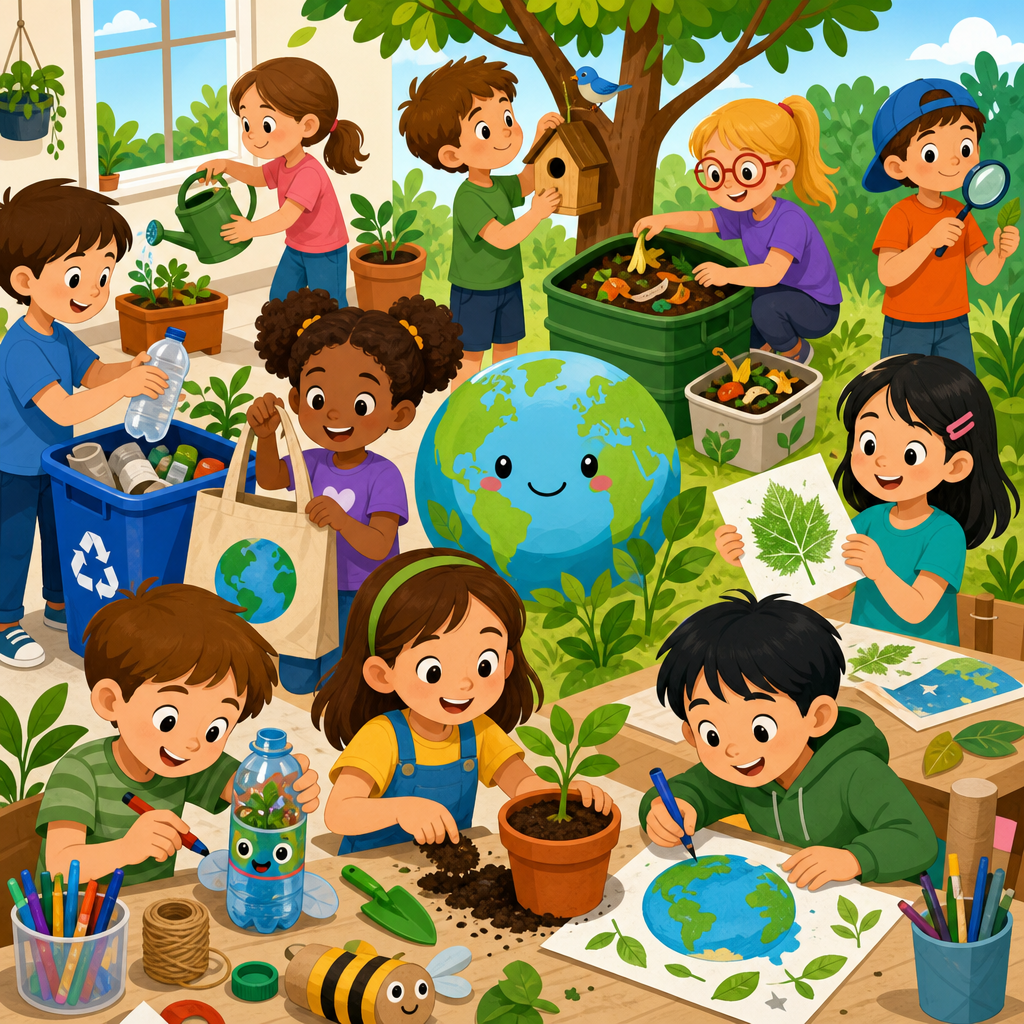

Eco-friendly crafts for children using recycled materials turn everyday waste into hands-on lessons about environmental science for kids. At their best, these projects do more than keep children busy on a rainy afternoon. They show how paper, cardboard, plastic bottles, fabric scraps, and food containers move through a material life cycle, why waste reduction matters, and how small design choices affect the planet. As someone who has run classroom craft stations, museum workshops, and family sustainability events, I have seen recycled art projects succeed when they are framed not simply as “cute crafts,” but as practical experiments in reuse, resource conservation, and creative problem solving.
Environmental science for kids is the study of how living things, natural systems, and human activities interact, explained in ways children can observe directly. That includes ecosystems, pollution, climate, water, soil, energy, and waste. Recycled crafts are a strong entry point because children already understand objects such as cereal boxes, milk cartons, and bottle caps. When those familiar items become bird feeders, seed starters, mini greenhouses, or model habitats, abstract ideas become concrete. A child can see that materials have value after first use, and that disposal is not the only possible outcome.
This matters at home and in school because environmental learning sticks when children touch, test, build, and ask questions. Research from the U.S. Environmental Protection Agency and widely used educational frameworks such as project-based learning both support active investigation over passive memorization. A lesson about landfill waste is memorable; constructing a sorting game from packaging makes it usable knowledge. Parents and educators also benefit because recycled-material crafts are low-cost, adaptable across age groups, and easy to connect with reading, math, and science standards. When planned well, they build fine motor skills, observation, collaboration, and environmental responsibility at the same time.
As a hub topic, eco-friendly crafts can connect nearly every major area within environmental science for kids. A plastic bottle planter can introduce plant biology and compost. A cardboard watershed model can explain erosion and stormwater runoff. Tin can wind chimes can lead into weather, sound, and material durability. The key is to choose projects that teach a scientific concept clearly, use safe and clean materials, and include reflection questions that help children link the activity to real environmental systems.
Why recycled crafts are an effective way to teach environmental science for kids
Recycled crafts work because they combine visible transformation with immediate relevance. Children understand that a jar, tube, or box was once used for something else. Reusing it teaches the waste hierarchy in a simple order: reduce first, reuse second, recycle when necessary. That distinction matters. Many adults say “recycling” when they mean any green action, but in practice, reuse often saves more energy and processing than sending an item through a recycling stream. When children make a desk organizer from cans or a puppet theater from a shipping box, they learn that extending product life is a real environmental strategy.
These activities also support systems thinking, which is central to environmental science. A child making a pollinator feeder from a shallow lid can discuss flowers, insects, seasons, and habitat loss in one lesson. A cardboard city built with roads, parks, and drains can spark conversation about urban heat, transportation, and water pollution. In workshops, I have found that children ask stronger questions when they build first and discuss second. They want to know why some plastics are harder to recycle, why birds need clean nesting areas, or why paper gets soggy outdoors. Those questions create natural pathways into scientific reasoning.
Another advantage is accessibility. Effective environmental education does not require expensive lab equipment. Clean packaging, glue, scissors, string, markers, and tape can support dozens of concept-rich projects. Schools with limited budgets can still create strong science experiences using materials families already have. That practical accessibility makes recycled crafting a durable hub topic within education and resources, especially for teachers building thematic units around Earth Day, school gardens, weather, ecosystems, or community cleanups.
Best recycled materials to use and the safety rules that matter
The best recycled materials for children’s crafts are clean, dry, durable, and easy to cut or assemble. Cardboard is the most versatile because it can become models, signs, habitats, mazes, and engineering prototypes. Paper towel tubes work well for binoculars, bird feeders, marble runs, and seed paper rolls. Plastic bottles and caps are useful for planters, sensory tools, scoops, and sorting games, though they often require adult help for cutting. Egg cartons are ideal for seed starts, insect models, and life cycle displays. Fabric scraps, corks, newspaper, magazines, jars, and metal cans also have strong educational uses if edges are made safe.
Safety should be explicit, not assumed. Containers that held chemicals, strong cleaners, or medicines should not be used. Food containers must be washed thoroughly to prevent mold and odors. Glass can be excellent for teacher-led demonstrations, but for younger children it is usually better replaced with plastic or metal alternatives. Sharp tools should be reserved for adults, especially when cutting bottle openings or drilling drainage holes. Non-toxic glue, child-safe paint, and washable markers are standard. If a project will go outdoors, explain that not every material belongs in nature; attaching plastic decorations to a tree may create litter rather than habitat support.
It also helps to sort materials by function before crafting. I recommend setting up bins labeled structure, decoration, fasteners, and science extras. Structure might include boxes and tubes. Decoration can include paper scraps and bottle caps. Fasteners may be tape, string, brass fasteners, or glue. Science extras can be soil, seeds, rulers, magnets, or water droppers. This simple prep method reduces chaos and teaches classification, a basic scientific skill children use in biology and earth science.
Craft ideas that teach core environmental science concepts
The strongest eco-friendly crafts for children are tied to a clear scientific idea. A recycled bottle planter is an excellent example. Children cut a bottle, add drainage material and soil, then plant herbs or beans. Through that one project they learn about plant needs, water flow, decomposition if compost is added, and the reason containers must drain properly. If seedlings are placed in sun and shade, the craft becomes an experiment. If growth is measured weekly, it adds data collection.
A cardboard compost model is another high-value activity. Children build layers using brown paper, dried leaves, and food-scrap illustrations to represent carbon-rich and nitrogen-rich inputs. This makes decomposition visible, and it opens discussion about microorganisms, soil health, methane from landfills, and why composting can reduce household waste. In classes I have led, children quickly grasp the difference between “trash” and “organic matter” when they physically sort pictures or sample materials into compost, recycling, and landfill bins.
Habitat dioramas made from shoeboxes or shipping boxes can teach ecosystems, food webs, and biodiversity. A wetland scene might include reeds from paper strips, frogs from caps, and a water area from blue packaging. The educator can then ask what happens if pollution enters the system or if one species disappears. Weather stations can be built from reused containers too. A simple rain gauge from a straight-sided bottle introduces measurement and precipitation. Wind socks from fabric scraps demonstrate airflow and local weather observation.
| Craft project | Recycled materials | Environmental science concept | Best age range |
|---|---|---|---|
| Bottle planter | Plastic bottle, cap, soil scoop from packaging | Plant growth, water cycle, reuse | 6–12 |
| Cardboard watershed model | Boxes, paper scraps, foil packaging | Runoff, erosion, pollution pathways | 8–13 |
| Egg carton seed starter | Egg carton, newspaper, food-safe spray bottle | Germination, soil, life cycles | 5–10 |
| Shoebox habitat diorama | Shoebox, bottle caps, magazine pictures | Ecosystems, adaptation, biodiversity | 7–12 |
| Tin can wind chime | Clean cans, string, scrap metal pieces | Weather, sound, material reuse | 8–14 |
Pollinator-friendly crafts can extend learning beyond the table. For example, children can make seed bombs using scrap paper pulp and native wildflower seeds, though educators should stress that seeds must be regionally appropriate and not tossed into protected or unmanaged land. Another useful project is a bee watering station from a shallow lid with pebbles. That simple build teaches habitat support and responsible wildlife assistance. The science is stronger when children observe which insects visit and record patterns over time.
How to turn crafts into real investigations at home or in the classroom
A craft becomes environmental science when it includes a question, a prediction, observation, and a conclusion. The process can stay age-appropriate while still being rigorous. Start with a question such as: Which planter material keeps soil moist longest? Which bird feeder design attracts the most visitors? Does mulch reduce water evaporation in a bottle garden? Ask children to predict the answer, then measure what happens. This mirrors the scientific method without making the activity feel formal or intimidating.
Simple tools improve results. Use rulers for plant growth, kitchen scales for compost mass, thermometers for sun-versus-shade studies, and notebooks or printable observation sheets for records. Photos taken on the same day each week help children notice changes they might otherwise miss. If a project fails, that is still useful data. I often tell students that mold, drooping leaves, or collapsed cardboard are not mistakes to hide; they are evidence. Why did the material break down? Was it too wet? Was the structure poorly supported? Environmental science depends on noticing these interactions.
Real-world context also matters. Connect the craft to local conditions whenever possible. If your city has curbside recycling, discuss what numbers are accepted and why contamination causes problems. If your area faces drought, focus on water-saving projects such as self-watering containers made from bottles. If there is a nearby wetland, forest, coastline, or community garden, use those examples to explain habitat, stormwater, invasive species, or conservation efforts. Children learn faster when the project reflects the world around them.
Building a full environmental science for kids learning hub from recycled crafts
Because this topic sits within education and resources, it should guide readers toward a broader learning pathway. Recycled crafts can anchor a complete environmental science for kids sequence. Start with waste and materials: what is reused, recyclable, compostable, or landfill-bound. Then move to plants and soil with seed starters, mini compost systems, and planters. Next explore water using watershed models, rain gauges, and filtration demonstrations built from bottles, sand, and gravel. After that, study ecosystems through habitat dioramas, bird feeders, and pollinator supports. Finally, connect to climate and energy with solar oven models from pizza boxes, insulation tests using packaging, or wind indicators from scraps.
Each stage should include direct questions and linked next steps. After a planter project, readers may want activities on photosynthesis for children, composting basics, or easy garden science experiments. After a watershed craft, they may need a guide to the water cycle for kids, storm drain pollution, or conservation habits at home. In practice, this hub structure helps families and teachers move from one project to another while building a coherent understanding of environmental systems instead of collecting disconnected activities.
Assessment can stay simple. Ask children to explain what material they reused, what natural process the craft represented, and what environmental problem it helps them understand. If they can say, in their own words, that a bottle planter shows how plants need sunlight and drainage, or that a watershed model shows how litter can travel into streams, the lesson is working. That combination of making, observing, and explaining is what gives recycled crafts lasting educational value.
Eco-friendly crafts for children using recycled materials are one of the most practical ways to teach environmental science for kids. They transform low-cost household items into models of real systems, from plant growth and decomposition to habitats, weather, and water movement. More importantly, they help children understand that environmental responsibility is not a distant concept. It begins with noticing materials, asking where they go, and choosing to extend their usefulness before throwing them away.
The most effective projects share a few traits. They use safe, clean recycled supplies. They teach one clear scientific concept at a time. They invite observation, measurement, and discussion. They also acknowledge tradeoffs honestly: not every material can be reused forever, not every “green” craft belongs outdoors, and recycling alone does not solve waste. Children are capable of understanding those nuances when adults explain them plainly and let them test ideas through building.
If you are creating an environmental science learning plan, start with one recycled craft that connects directly to your child’s interests or your classroom unit. Build a planter, a habitat box, or a watershed model, then extend it with questions, observations, and follow-up activities. Done well, these projects do more than produce art. They build scientific thinking, environmental awareness, and everyday habits that last long after the glue dries.
Frequently Asked Questions
What are the best recycled materials to use for eco-friendly crafts with children?
The best recycled materials are the ones that are easy to clean, safe to handle, and versatile enough for many different projects. In most homes and classrooms, that means cardboard tubes, cereal boxes, shipping boxes, egg cartons, paper scraps, newspaper, magazines, fabric remnants, jar lids, plastic bottles, milk cartons, and clean food containers. These items are ideal because children can cut, fold, stack, paint, sort, and redesign them into something new while also learning that “waste” is often just a material waiting for a second use.
Cardboard is especially useful because it is sturdy, widely available, and simple for kids to manipulate with basic tools. Paper materials work well for collages, papier-mache, weaving, and model building. Plastic bottles and caps can become planters, sensory toys, scoops, stampers, or parts for simple engineering challenges. Fabric scraps are excellent for soft crafts, texture exploration, patchwork, and beginner sewing. Even small items like corks, buttons, lids, and packaging inserts can support counting activities, mosaics, and imaginative design work.
The most important rule is to choose materials that are age-appropriate and free from sharp edges, broken glass, heavy metal parts, or residue from hazardous products. Wash containers thoroughly, remove labels if needed, and inspect everything before offering it to children. If a material once held cleaning chemicals, medication, or anything potentially unsafe, it should not be reused for children’s crafts. With a little sorting and preparation, everyday recyclables become a rich supply of craft materials that support creativity, environmental awareness, and problem-solving all at once.
How do recycled-material crafts help children learn about environmental science?
Recycled-material crafts are a practical way to make environmental science visible and understandable. Instead of talking about waste reduction in abstract terms, these activities let children physically handle the materials that pass through daily life. A cardboard box, bottle cap, or yogurt container becomes evidence that products are made from resources, used for a short time, and then either thrown away, recycled, or reused. That simple shift helps children understand the material life cycle in a hands-on, memorable way.
These projects also open the door to conversations about natural resources, manufacturing, energy use, transportation, landfill space, and pollution. For example, when children turn paper scraps into handmade collages or paper beads, they can begin to connect paper products to trees, water use, and production processes. When they reuse plastic bottles for garden planters or bird feeders, they can discuss how long plastics last in the environment and why reducing single-use items matters. A craft project becomes more than an art activity; it becomes a model of systems thinking at a child-friendly level.
Just as importantly, eco-friendly crafts teach that individual choices have environmental effects. Children learn that repairing, reusing, repurposing, and designing thoughtfully are meaningful actions, not just nice ideas. They begin to ask better questions: Where did this come from? What is it made of? Can it be used again? Could I choose something with less packaging next time? Those are foundational environmental science habits. By connecting creativity with observation and responsibility, recycled crafts help children develop both knowledge and values they can carry into everyday life.
How can I make recycled crafts safe and age-appropriate for kids?
Safety starts with careful material selection and realistic expectations for a child’s age and ability. For younger children, choose large, lightweight items that are easy to grip and unlikely to break, such as cardboard tubes, paper scraps, egg cartons, and clean plastic containers with smooth edges. Avoid anything small enough to become a choking hazard, especially bottle caps, buttons, beads, or tiny hardware for toddlers and preschoolers. Older children can work with more complex materials and tools, but they still need supervision when using scissors, hole punchers, staplers, or low-temperature glue guns.
Preparation matters just as much as material choice. Wash all containers thoroughly, let them dry completely, and remove sharp lids, staples, or metal rims before setting up the activity. Check cardboard for heavy tape, broken staples, or rough edges. If you are using cans, they should only be included if the edges have been professionally smoothed, though in most child-centered settings it is better to avoid them altogether. It is also wise to keep a clear separation between food-safe items and anything used only for crafting, especially in group environments like classrooms or camps.
Age-appropriateness also means matching the project to a child’s developmental stage. Young children benefit from open-ended making, sensory exploration, and simple assembly, while older children can handle planning, measuring, and structural design. A preschooler might glue shapes onto a cardboard collage, while an older child could build a mini town from boxes and discuss renewable energy, transportation, and waste systems. When adults adapt the project to the child rather than forcing a perfect outcome, the experience stays safe, positive, and educational. The goal is not just to make something attractive, but to support creativity, confidence, and good environmental habits in a way children can genuinely enjoy.
What are some easy eco-friendly craft ideas children can make from household waste?
Some of the most effective eco-friendly crafts are also the simplest. Cardboard tube binoculars, cereal-box puppets, egg-carton caterpillars, newspaper collage art, and bottle planters are all easy to set up and highly adaptable for different ages. These projects require minimal supplies beyond basic child-safe scissors, glue, tape, paint, and markers, and they naturally encourage children to see everyday packaging as a building material rather than immediate trash.
For children who enjoy imaginative play, try making robots, castles, vehicles, or animal habitats from small boxes, bottle caps, and paper scraps. These kinds of builds strengthen fine motor skills and problem-solving because kids have to decide how pieces connect, what shapes work best, and how to stabilize their designs. If you want to bring in more environmental learning, have them sort materials by type before crafting and talk about which items are recyclable, reusable, or compostable. That small step turns the activity into both an art project and a sustainability lesson.
Nature-connected projects also work especially well. A cleaned yogurt cup can become a seed starter, a milk carton can be turned into a bird feeder, and scrap paper can be used to create plant labels or nature journals. Fabric leftovers can be braided into bookmarks or sewn into small sachets. Magazine pages can become mosaics, greeting cards, or paper weaving strips. The best ideas are usually the ones that stay flexible: instead of giving children one rigid model to copy, provide a basket of safe reclaimed materials and invite them to invent something useful, decorative, or imaginative. That approach keeps the craft experience creative while reinforcing the core message that reusing materials is both practical and meaningful.
How can parents and teachers use recycled crafts to build long-term eco-friendly habits?
Recycled crafts have the most lasting impact when they become part of a broader routine rather than a one-time activity. Parents and teachers can start by creating a simple system for collecting clean, reusable materials such as cardboard, paper scraps, lids, fabric pieces, and containers. When children help sort and store these materials, they begin to recognize categories of waste and understand that not everything belongs in the trash. Even that basic habit teaches observation, responsibility, and resourcefulness.
It also helps to connect craft time with regular environmental conversations. Before beginning a project, ask children where a material came from, what it was used for, and what might happen if it were thrown away. After the craft is finished, talk about what was saved from the waste stream and whether the new object is decorative, practical, or both. These small discussions build environmental vocabulary and encourage children to think through the consequences of everyday choices. Over time, they learn that sustainability is not just about recycling after the fact, but about reducing consumption, reusing what they already have, and making thoughtful decisions from the start.
Adults can deepen the lesson by modeling eco-friendly behavior consistently. Use reused containers to organize supplies, choose non-toxic craft materials when possible, repair items instead of replacing them, and involve children in donation, composting, and recycling routines. In classrooms, recycled crafts can support science, art, and social studies at the same time. At home, they can become a way to slow down and notice the hidden value in ordinary objects. When children repeatedly experience the idea that creativity can solve problems and reduce waste, they develop habits that extend far beyond the craft table. That is the real long-term benefit: not just making art from recyclables, but helping children grow into thoughtful stewards of the environment.