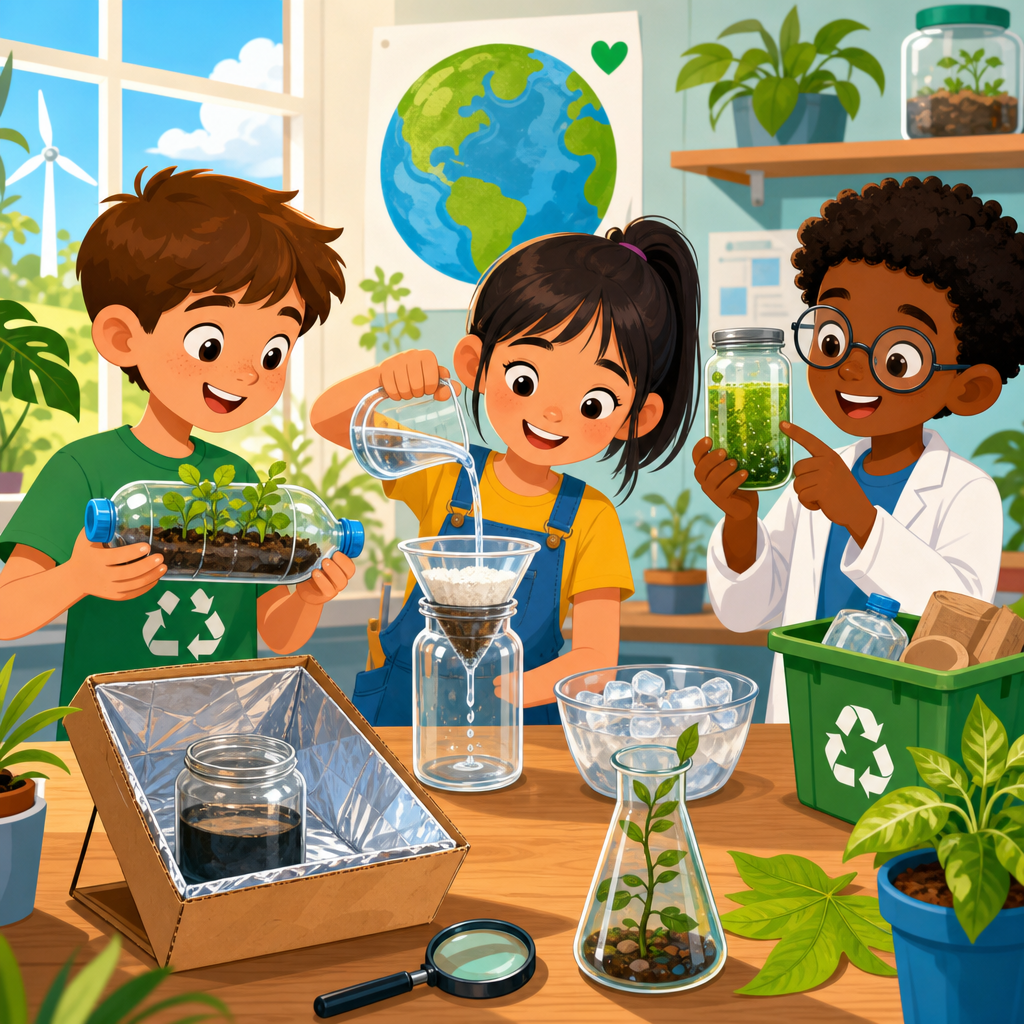
Easy science experiments that teach sustainability give children a practical way to understand how natural systems work, why resources are limited, and how everyday choices affect air, water, soil, and energy use. Environmental science for kids is the study of living things, ecosystems, weather, pollution, conservation, and the cycles that keep Earth habitable, explained through age-appropriate observation and hands-on testing. In classrooms, after-school programs, museums, and kitchen-table lessons, I have seen one pattern repeatedly: children remember sustainability concepts far better when they build, measure, compare, and discuss real results instead of only reading definitions. A seed that sprouts in homemade compost, a solar oven that warms a snack, or a jar of cloudy water that becomes cleaner through filtration turns an abstract issue into evidence a child can see.
This matters because sustainability is not a single topic. It connects waste reduction, energy efficiency, biodiversity, climate, water stewardship, and responsible consumption. Children encounter these issues early, from recycling bins at school to drought notices, heat waves, and news about plastic pollution. A well-designed experiment helps them ask the right questions: What happens when resources are wasted? How can materials be reused? Why does habitat matter? Which solutions work best, and under what conditions? Those questions build scientific literacy and civic awareness at the same time. As a hub for environmental science for kids, this guide brings the core experiments, concepts, materials, safety practices, and teaching links together so parents and educators can move from simple demonstrations to deeper investigations with confidence.
What makes a sustainability experiment effective for kids
The best sustainability experiments are simple to set up, safe to repeat, and tied to a clear environmental principle. In practice, that means using familiar materials, controlling one variable at a time, and asking children to predict outcomes before they observe them. A compost test shows decomposition and nutrient cycling. A water filtration activity shows how particles move and how treatment improves water quality, while also explaining that homemade filters do not guarantee drinking safety. A mini greenhouse built from jars or bottles demonstrates heat retention and plant microclimates. These activities work because they combine physical evidence with cause-and-effect reasoning.
Good environmental science for kids also depends on measurement. Even very young learners can compare before and after, count days to germination, note temperature changes, or record which material absorbs more water. Older children can weigh trash, calculate percentage reduction, or graph energy output from a small solar panel. When children collect data, they stop treating sustainability as a slogan and start treating it as a testable system. That shift is the foundation of science education and the reason hands-on work produces stronger understanding than lectures alone.
Composting, decomposition, and the science of waste
Composting is one of the easiest sustainability experiments because it makes waste visible. Set up two containers: one with fruit scraps, leaves, and shredded paper; another with plastic, foil, or heavily processed packaging. Over several weeks, children can observe moisture, smell, texture, heat, and breakdown. The key lesson is that organic matter returns nutrients to soil through decomposers such as bacteria, fungi, and invertebrates, while many manufactured materials persist much longer. This experiment naturally introduces landfill pressure, methane formation under low-oxygen conditions, and the value of separating food scraps from general trash.
To deepen the activity, compare “greens” and “browns.” Greens include vegetable scraps and fresh grass clippings, which contribute nitrogen. Browns include dry leaves and cardboard, which contribute carbon. When the ratio is reasonably balanced and the pile has moisture and air, decomposition speeds up. I often have children monitor temperature with a compost thermometer or standard probe. When they feel warmth inside a pile, they understand that microbes are active, not imaginary. Follow this with a planting test using finished compost versus plain soil. Seedlings grown with mature compost often show better vigor, making the nutrient cycle visible in a second stage.
Water experiments that explain pollution, filtration, and conservation
Water is ideal for environmental science for kids because every household uses it and every child can observe its movement. A simple pollution model starts with clear water in several jars. Add soil to one jar, cooking oil to another, and small paper bits or glitter to a third. Children can discuss which pollutants mix, float, settle, or spread. Then create a basic filter with gravel, sand, and cotton or a coffee filter. Pour the dirty water through and compare clarity. The crucial teaching point is accuracy: filtration can improve appearance and remove some particles, but it does not reliably remove dissolved chemicals, pathogens, or all contaminants without proper treatment methods such as disinfection, activated carbon, membranes, or municipal processes.
Conservation experiments can be just as powerful. Put a bucket in the shower for one minute before the water warms, or measure the flow from a faucet in thirty seconds, then calculate daily waste if the tap runs during brushing. Children quickly understand why low-flow fixtures matter and why behavior changes can save gallons. If possible, compare absorbent surfaces outdoors by pouring equal amounts of water onto soil, mulch, grass, and pavement. The runoff difference opens a larger conversation about stormwater, erosion, flooding, and why cities use rain gardens, permeable pavement, and retention basins.
Energy experiments that show efficiency and renewable power
Energy can feel abstract until children build devices that convert or conserve it. A classic example is a solar oven made from a pizza box, aluminum foil, black paper, and clear plastic wrap. On a sunny day, children can measure internal temperature every ten minutes and see how reflected light and trapped heat increase warming. This leads naturally to a discussion of solar panels, passive solar design, insulation, and the difference between generating energy and reducing energy demand. In my experience, pairing the oven with a comparison box that lacks reflective surfaces creates a stronger lesson because children can attribute the temperature gap to specific design choices.
Another effective experiment compares insulation materials. Wrap identical containers of warm water with cotton, bubble wrap, wool, paper, or no covering at all, then record temperature drop over time. Children discover that the cleanest energy is often the energy never wasted. This is the core of home efficiency: sealing leaks, adding insulation, using efficient appliances, and reducing standby power. If you have access to small solar panels, hand cranks, or classroom energy meters such as Kill A Watt devices, students can also compare electricity use directly and connect household habits to larger climate and resource questions.
| Experiment | Main concept | Recommended ages | What kids can measure | Real-world link |
|---|---|---|---|---|
| Compost bin comparison | Decomposition and nutrient cycling | 6–14 | Temperature, mass change, days to breakdown | Food waste reduction and soil health |
| DIY water filtration | Pollution and treatment limits | 7–14 | Clarity, settling time, filter layers used | Clean water systems and watershed protection |
| Solar oven | Renewable energy and heat transfer | 8–14 | Internal temperature, cook time, weather effects | Solar design and fuel savings |
| Insulation test | Energy efficiency | 8–14 | Temperature loss over time | Building performance and lower emissions |
| Seed growth in different soils | Soil quality and plant needs | 5–12 | Germination rate, height, leaf count | Gardening, farming, and land stewardship |
Soil, plants, and biodiversity experiments children can repeat
Environmental science for kids should include living systems, not only recycling and energy. One dependable experiment compares seed growth in different conditions: potting soil, compacted soil, sand-heavy soil, and soil amended with compost. Keep water, light, and seed type the same. Children can measure germination, height, leaf number, and color. They quickly see that healthy soil is more than dirt. It contains organic matter, air spaces, moisture, microbes, and nutrients that support roots. This opens the door to explaining erosion, overwatering, monoculture, and why pollinator-friendly gardens and diverse plantings support resilience.
Biodiversity experiments can be surprisingly simple. Place equal pieces of fruit outdoors in two locations, one near flowering plants and one on a paved area, then observe which insects visit. Or conduct a habitat survey by counting plant and insect types in a schoolyard patch, under logs, or near a pond edge. The point is not perfect taxonomy. It is learning that richer habitats support more life and that small changes such as native plants, leaf litter, and shallow water sources can increase species presence. If children build a mini worm bin or observe pill bugs, they also learn that overlooked organisms are essential to decomposition and soil formation.
How to turn simple activities into full scientific investigations
A sustainability experiment becomes stronger when children follow a repeatable process. Start with a question such as, “Which material keeps water warm longest?” or “Does compost help beans grow faster?” Next, form a prediction based on prior knowledge. Then identify variables: what changes, what stays the same, and what will be measured. Use data sheets, photos, and labeled containers so results can be checked later. This structure mirrors the scientific method without making the lesson rigid. In classrooms, I have found that one well-run experiment with good notes teaches more than four rushed activities with no record of what happened.
Encourage children to repeat tests and explain anomalies. A cloudy day may reduce solar oven temperature. Uneven watering may affect seed growth. A filter packed too tightly may slow flow. These are not failures; they are openings to discuss reliability, error, and fair testing. Older learners can average repeated measurements, create bar graphs, and distinguish observation from inference. They can also connect results to broader systems, such as municipal composting, green building standards, watershed management, or habitat restoration. That progression transforms environmental science for kids from a set of crafts into a foundation for evidence-based thinking.
Materials, safety, and age-appropriate teaching choices
Most sustainability activities can be done with low-cost supplies: jars, bottles, soil, seeds, food scraps, sand, gravel, paper, thermometers, and measuring cups. Reused materials are appropriate when they are clean and safe, but avoid creating a mixed message by using hazardous waste or pretending polluted water is harmless. Children should wash hands after handling soil, compost, or outdoor samples. Supervise any activity involving heat, sharp tools, glass containers, or outdoor collection near roads and waterways. If an experiment uses sunlight and food, explain clearly whether the food is only for demonstration or safe to eat. Accuracy builds trust.
Age matters. Children ages five to seven usually do best with short timelines, visible changes, and simple comparisons. Ages eight to ten can begin recording numerical data and identifying variables. Middle school learners are ready for graphing, controls, and system-level thinking about carbon, water treatment, and land use. The same experiment can scale across levels. A kindergartener may sort compostables and non-compostables. A twelve-year-old can calculate decomposition rates or compare aerobic and low-oxygen conditions. Teachers and parents should choose one core idea per activity so sustainability remains concrete rather than overwhelming.
Building a strong learning pathway within environmental science for kids
As a hub page, this topic works best when each experiment points to a larger strand of learning. Composting should lead to food waste, soil health, and gardening. Water filtration should lead to watersheds, sanitation, and conservation. Solar ovens and insulation tests should lead to renewable energy, efficient buildings, and climate solutions. Seed and biodiversity studies should lead to pollination, habitats, and ecosystem balance. That sequence matters because children need both individual activities and a map showing how those activities fit together. Without that map, lessons feel disconnected; with it, they build durable understanding.
For educators creating a full unit, begin with local observations. Audit classroom waste, inspect storm drains, map sunny and shaded areas, or survey schoolyard plants and insects. Then choose experiments that answer what children noticed. This keeps learning grounded in place and increases retention. It also creates natural paths to related lessons on recycling, climate, weather, ecosystems, oceans, and sustainable agriculture. When environmental science for kids is taught as connected evidence rather than isolated facts, children develop curiosity, practical skills, and a sense that solutions are testable and within reach.
Easy science experiments that teach sustainability work because they turn big environmental issues into direct experience. Children can watch waste decompose, test how water changes, measure heat loss, and see plants respond to healthier soil. Those moments create understanding that sticks: resources are finite, ecosystems are interconnected, and smart design can reduce harm. Just as important, these experiments teach habits of mind—asking questions, measuring carefully, comparing results, and revising ideas when evidence changes. That combination of environmental awareness and scientific thinking is the real value of hands-on learning.
If you are building an education plan under environmental science for kids, start with one experiment from each major theme: waste, water, energy, and living systems. Keep the setup simple, record real data, and connect every result to an everyday decision or community issue. From there, expand into deeper lessons and related activities across the broader Education & Resources section. Choose one project this week, gather the materials, and let children investigate sustainability with their own eyes.
Frequently Asked Questions
What are some easy science experiments that teach sustainability at home or in the classroom?
Some of the best sustainability science experiments are simple, low-cost, and built around everyday materials children already recognize. A seed-growing comparison is a strong example: children can plant the same type of seed in healthy soil, sandy soil, and compacted soil to observe how soil quality affects plant growth. This helps explain why healthy ecosystems matter and why protecting land from erosion and pollution is important. Another effective activity is a water filtration experiment using gravel, sand, cotton, and dirty water. While it does not create safe drinking water, it clearly demonstrates how natural layers in the environment can help remove visible particles and why clean water systems are valuable.
Energy experiments also work especially well. Children can compare how quickly ice melts in direct sunlight versus shade, or test how different-colored materials absorb heat. These activities introduce the idea that design choices influence energy use and temperature control. Waste-focused experiments, such as observing how food scraps, paper, plastic, and leaves break down over time, help children understand decomposition, landfill issues, and composting. Even a simple “reuse challenge” can become a science lesson when students test which repurposed materials are strongest, most water-resistant, or best at insulating heat. The most effective experiments are hands-on, visible, and connected to real environmental systems, because they help children see sustainability not as an abstract idea, but as something measurable in daily life.
How do sustainability experiments help children understand environmental science?
Sustainability experiments make environmental science concrete. Instead of only hearing that resources are limited or that pollution harms ecosystems, children can watch evidence unfold in real time. When they measure plant growth, compare clean and contaminated water, or observe the difference between compostable and non-compostable materials, they begin to understand cause and effect. That connection is central to environmental science for kids. It shows them that air, water, soil, sunlight, and living things are linked, and that changes in one part of a system often affect many others.
These experiments also support scientific thinking. Children learn to ask questions, make predictions, record observations, compare results, and draw conclusions. For example, if they test how much water is wasted by a dripping faucet over time, they are not just learning about conservation; they are practicing measurement, estimation, and data interpretation. If they build mini ecosystems in jars, they start noticing cycles such as evaporation, condensation, plant growth, and decomposition. These kinds of activities encourage curiosity while building environmental literacy. Over time, children begin to understand that sustainability is about balance: using resources in ways that protect ecosystems, reduce waste, and support life now and in the future.
What materials are usually needed for sustainable science experiments, and should they be eco-friendly?
Most sustainability experiments can be done with basic household or classroom supplies, and whenever possible, it is a good idea to choose reusable or recycled materials. Common items include clear jars or cups, measuring spoons, soil, seeds, paper, cardboard, food scraps, leaves, water, string, thermometers, and simple craft supplies. Recycled containers are especially useful for planting experiments, water investigations, and waste-sorting activities. Teachers and parents often use old yogurt cups, glass jars, cereal boxes, or plastic bottles to avoid buying new materials for a lesson about conservation.
Using eco-friendly materials strengthens the message of the experiment, but perfection is not necessary. The main goal is to help children learn how systems work and how thoughtful choices reduce environmental impact. For example, washable tools are usually better than disposable ones, and natural or reclaimed items often work just as well as brand-new supplies. It is also helpful to avoid creating unnecessary waste during the activity. That might mean setting up experiments in small batches, reusing containers for future lessons, or composting plant-based materials afterward. When adults model these decisions during the experiment, children see that sustainability is not just the topic being studied; it is also a practical approach to how the activity is carried out.
Are these sustainability science experiments suitable for different age groups?
Yes, most sustainability science experiments can be adapted for a wide range of ages, from early elementary learners to middle school students and beyond. For younger children, the focus should be on observation, vocabulary, and simple patterns. They might sort items into “reusable,” “recyclable,” and “trash,” grow beans in different light conditions, or observe what happens when rainwater runs over bare soil versus soil covered with grass. These activities introduce big environmental ideas in ways that are visual and easy to grasp.
Older children can take the same core concepts much further by collecting data, controlling variables, graphing results, and discussing long-term environmental impacts. A younger child might simply notice that one plant grew taller than another, while an older student can measure growth over two weeks and connect the results to soil health, water access, or sunlight exposure. In energy lessons, younger students may compare warm and cool surfaces by touch, while older learners can use a thermometer and track temperature changes over time. The key is matching the complexity of the procedure and the explanation to the child’s developmental level. With the right adjustments, sustainability experiments remain engaging, educational, and meaningful across many learning settings, including classrooms, after-school programs, museums, and kitchen-table lessons at home.
What are the best ways to connect these experiments to everyday sustainable habits?
The strongest connection happens when children can link what they observed in the experiment to choices they make every day. If they study water waste, adults can follow up by checking for dripping faucets, timing showers, or using collected rainwater for plants where appropriate. If they test decomposition, that naturally leads to conversations about composting food scraps, reducing single-use packaging, and choosing reusable containers. A plant growth experiment can connect to gardening, pollinator-friendly spaces, or the importance of protecting soil and not wasting food. These real-life extensions help children understand that science is not separate from daily routines; it explains why those routines matter.
It also helps to ask practical follow-up questions after each activity. For example: What did we learn? What surprised us? What could we do differently at home or school because of these results? Children may suggest turning off lights, reusing materials for art projects, packing less waste in lunches, or being more careful about litter and runoff. Those small actions are valuable because they build habits and responsibility. Sustainability education is most effective when it combines discovery with action. Experiments give children evidence, and daily habits give them a way to respond to that evidence in meaningful, age-appropriate ways.