Deforestation reshapes landscapes from the canopy down, and its most immediate, measurable damage often appears in soil and water resources long before the full loss of biodiversity is counted. In environmental science, deforestation means the permanent removal of forest cover and conversion of land to another use, such as cattle pasture, cropland, mining, roads, or urban expansion. Soil resources include the physical structure, organic matter, nutrients, microbial life, and erosion resistance that allow land to remain productive. Water resources include streamflow, groundwater recharge, water quality, wetland function, and the timing of floods and droughts within a watershed. Together, soil and water science explains how land cover controls infiltration, runoff, sediment transport, nutrient cycling, and storage of moisture across seasons.
This topic matters because forests are not simply collections of trees; they are hydrologic and biogeochemical systems that regulate how rain interacts with land. I have worked on land restoration planning where the first warning signs of deforestation were not satellite images but muddy streams, compacted topsoil, and wells that became less reliable after seasonal storms. When forests are cleared, the protective litter layer disappears, roots decay, soil aggregates weaken, and rainfall hits bare ground with far greater force. That shift affects farms downstream, reservoirs upstream, municipal water treatment budgets, and the resilience of communities facing climate extremes. Understanding how deforestation impacts soil and water resources is therefore central to environmental science, watershed management, agriculture, and climate adaptation.
As a hub for soil and water science, this article connects the main mechanisms and questions readers usually ask: Why does tree loss increase erosion? How does deforestation change streamflow and groundwater recharge? What happens to sediment, nutrients, and pollutants after clearing? Are all forests and all soils affected the same way? And what management practices can reduce damage once forests are disturbed? Answering those questions requires looking at the entire system, from canopy interception and evapotranspiration to slope stability, river turbidity, and the chemistry of freshwater supplies.
How forests protect soil structure and fertility
Forests protect soil first by reducing the energy of rainfall. Leaves and branches intercept precipitation, slowing how quickly water reaches the ground. The forest floor then absorbs that water through leaf litter, decaying wood, roots, fungi, and pore spaces formed by soil organisms. In intact systems, this layered structure acts like a sponge and shock absorber. It limits surface sealing, maintains infiltration, and preserves soil aggregates, which are clusters of mineral particles bound together by organic matter and microbial activity. Those aggregates matter because stable soil resists crusting, stores air and water effectively, and supports root growth.
When trees are removed, that protection weakens almost immediately. Raindrops strike exposed ground directly, detach fine particles, and break apart aggregates. Machinery used for logging or land conversion can compact the upper horizons, reducing porosity and making runoff more likely. Nutrient losses also accelerate. Forest soils hold carbon, nitrogen, phosphorus, calcium, and micronutrients in organic layers and root networks; once those layers are burned, scraped, or washed away, fertility declines. In tropical regions with highly weathered soils, such as Oxisols and Ultisols, nutrients are often concentrated in biomass and surface organic matter rather than deep mineral reserves. Clearing can therefore trigger rapid exhaustion of productive capacity within a few seasons if replacement management is poor.
One reason this process is often underestimated is that newly cleared land may look productive for a short period. Ash from burning can temporarily raise pH and release nutrients, and the first crops may benefit from a brief fertility pulse. I have seen this pattern in restoration assessments: the initial gains create a false sense of sustainability, while measurements of bulk density, infiltration rate, and topsoil depth already show decline. Once heavy rains arrive, the losses become visible in rills, gullies, and sediment fans downslope. At that stage, rebuilding soil organic matter is much more expensive than protecting the forest floor in the first place.
Why deforestation accelerates erosion and sedimentation
Deforestation increases erosion because it removes the mechanical and biological defenses that keep soil in place. Roots reinforce slopes, especially on shallow or fractured substrates. Surface cover reduces overland flow velocity, while roughness from vegetation slows water and promotes infiltration. After clearing, sheet erosion can remove a thin but significant layer of topsoil across broad areas. On steeper land, concentrated runoff cuts rills and gullies, which can expand quickly into channels that are difficult to stabilize. Landslides also become more likely where roots decay and hillsides are saturated during intense rainfall events.
Sediment does not disappear once it leaves a hillside; it moves through the watershed. Streams receiving sediment from deforested catchments become more turbid, shallower, and less stable. Fine particles stay suspended and reduce light penetration, affecting aquatic plants and food webs. Coarser material settles in channels and reservoirs, reducing storage capacity and increasing dredging costs. The Food and Agriculture Organization and many watershed agencies consistently identify erosion from land cover removal as a leading source of nonpoint sediment pollution.
| Deforestation change | Soil effect | Water effect | Practical example |
|---|---|---|---|
| Canopy removal | Raindrop impact breaks aggregates | Higher surface runoff and turbidity | Brown streams after storms in newly logged hills |
| Root loss | Lower slope cohesion | More landslides and sediment pulses | Road cuts failing during monsoon rain |
| Machinery compaction | Reduced porosity and infiltration | Flashier streamflow and puddling | Skid trails channeling runoff into creeks |
| Burning or litter removal | Organic matter decline | Nutrient-rich runoff and ash transport | Reservoir sedimentation after slash-and-burn clearing |
Real-world examples are well documented. In the Amazon basin, roads, cattle pasture expansion, and selective logging have exposed large areas to erosion, especially where repeated disturbance follows initial clearing. In Southeast Asia, deforestation on steep slopes for plantations has contributed to sediment loads that affect rivers, estuaries, and coral ecosystems downstream. In temperate mountain regions, poorly designed forest roads often become the dominant sediment source because they intercept subsurface flow and route it directly into streams. These examples show that the pattern is global even though the rate and severity depend on rainfall intensity, slope, soil texture, and post-clearing land use.
How deforestation changes the water cycle in a watershed
Forests influence every major part of the water cycle. Tree canopies intercept rainfall, roots draw water from depth, and transpiration returns large volumes of moisture to the atmosphere. Forested soils also promote infiltration, groundwater recharge, and gradual release of water to streams through baseflow. This creates more moderated hydrographs, meaning stream levels rise and fall less abruptly. When forests are removed, the balance changes. In the short term, water yield in some catchments may increase because fewer trees are transpiring water. However, that does not mean water security improves. The increase often comes as rapid runoff rather than dependable storage.
Over time, deforestation commonly produces flashier flows: higher peak discharge during storms, lower dry-season baseflow, and more variable stream conditions. The mechanism is straightforward. Compacted or exposed soils absorb less water, so more rainfall runs off the surface quickly. Reduced root depth and organic matter also lower the soil’s capacity to store moisture between storms. In regions dependent on steady spring and summer flow for irrigation, drinking water, or hydropower, this shift can be costly. Reservoirs fill with sediment while downstream users face wider swings between flood and scarcity.
Large-scale forest loss can also influence regional rainfall. In major tropical systems, including the Amazon, forests recycle atmospheric moisture through evapotranspiration and help sustain downwind precipitation. That means deforestation is not only a local watershed issue; beyond certain thresholds, it can alter rainfall patterns across broad agricultural and urban regions. The exact tipping points remain debated, but the core principle is established: less forest cover can reduce moisture recycling and intensify drying in already stressed climates. For environmental science readers, this is where hydrology, climatology, and land management intersect most clearly.
Water quality impacts: sediment, nutrients, temperature, and contaminants
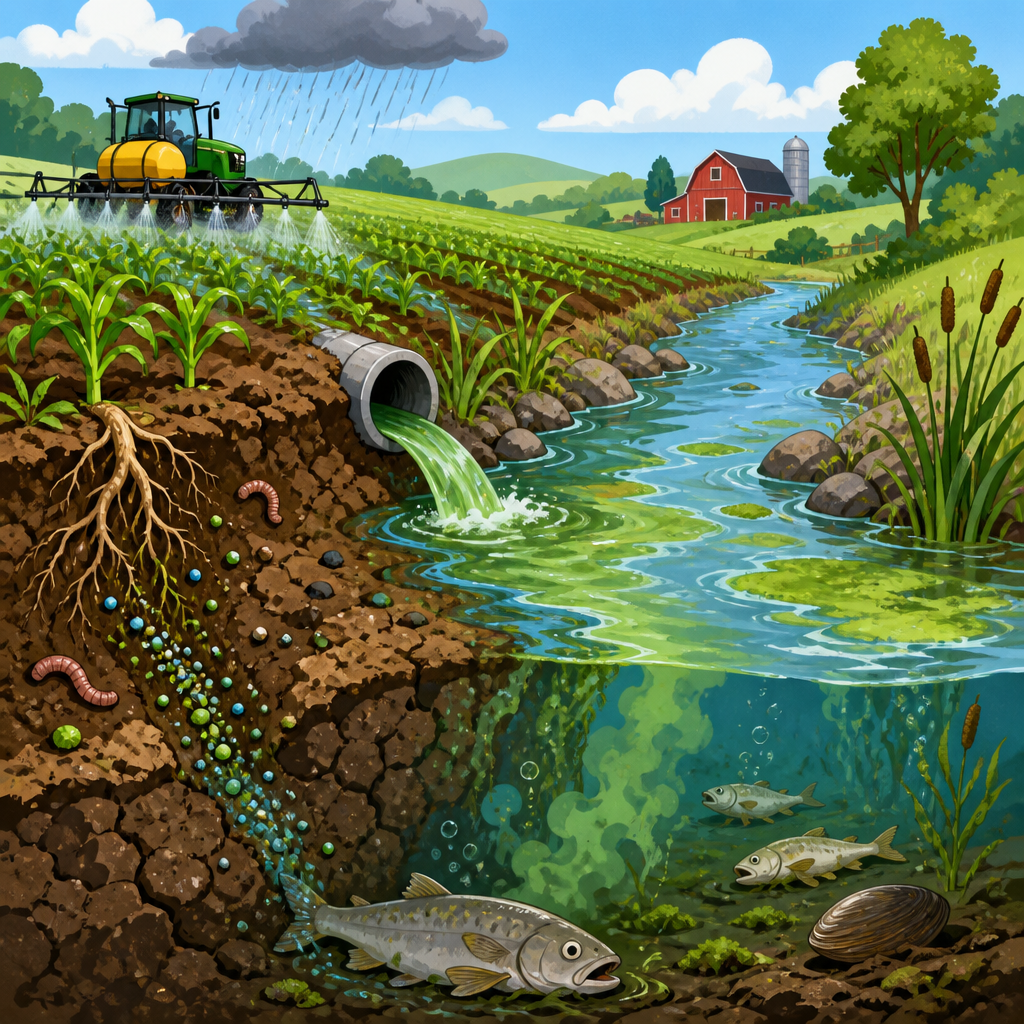
Water quality usually declines after deforestation because physical, chemical, and thermal conditions all change at once. Sediment is the most visible problem, but it is not the only one. Soil particles carry phosphorus, organic carbon, and trace metals into waterways. If land conversion leads to fertilizer use, grazing, or settlement, runoff may also contain nitrate, pathogens, pesticides, and petroleum residues from roads and equipment. In drinking water systems, higher sediment and nutrient loads increase treatment complexity and cost. Utilities must spend more on coagulation, filtration, sludge handling, and in some cases algal control.
Stream temperature rises when riparian forests are removed. Shade is a critical ecosystem service provided by streamside vegetation, especially in smaller channels. Warmer water holds less dissolved oxygen and can stress fish, macroinvertebrates, and amphibians. Salmonids in temperate regions are especially sensitive, but tropical species are also affected when combined with turbidity and lower habitat complexity. Fine sediment can smother spawning gravels, clog fish gills, and bury benthic habitat. In lowland rivers, excess sediment and nutrients may promote eutrophication, especially where flow slows in reservoirs or floodplain lakes.
Another overlooked effect is the transport of dissolved organic matter and altered stream chemistry after burning or intensive disturbance. Ash can temporarily increase pH and conductivity, while exposed mineral soils may release aluminum or other ions under certain conditions. Where mining follows deforestation, the risks become more severe, including acid drainage and metal contamination. These are not universal outcomes, but they show why forest removal must be evaluated alongside the land use that follows. Deforestation for low-input agroforestry creates a very different water quality profile from deforestation for open-pit extraction or heavily fertilized row crops.
Differences by biome, soil type, and land use after clearing
Not all deforestation has identical effects because forest type, soil properties, topography, and management determine the outcome. Tropical rainforests often show rapid nutrient depletion after clearing because intense rainfall and deeply weathered soils accelerate leaching and erosion. Boreal forests may respond differently, with concerns that include peat degradation, altered snowmelt timing, and thermokarst where permafrost is involved. Temperate forests on steep terrain may show dramatic sediment pulses after road building or wildfire, even if annual nutrient loss is less extreme than in the humid tropics.
Soil texture matters as well. Sandy soils usually infiltrate water quickly but may lose nutrients through leaching once protective vegetation is gone. Silty soils are highly erodible when bare. Clay-rich soils can seal at the surface and generate heavy runoff when compacted, yet may also crack deeply in dry seasons. The land use after clearing often determines whether damage stabilizes or worsens. Carefully managed agroforestry, contour planting, mulching, and riparian buffers can retain much of the soil and water function of a forested system. By contrast, overgrazed pasture, repeated tillage, and dense road networks amplify degradation year after year.
This is why soil and water science should guide land conversion decisions before clearing begins. Baseline surveys of slope, infiltration, erodibility, drainage, and stream sensitivity can identify areas where forest removal would create disproportionate harm. Tools such as the Universal Soil Loss Equation, SWAT watershed modeling, LiDAR terrain analysis, and turbidity monitoring help translate field observations into practical planning. The central lesson from both research and field management is consistent: once deforestation disrupts soil structure and hydrology, prevention is cheaper and more effective than remediation.
What reduces damage and supports recovery
The best way to protect soil and water resources is to avoid unnecessary deforestation, especially on steep slopes, headwaters, riparian corridors, wetlands, and highly erodible soils. Where land use change does occur, damage can be reduced through phased clearing, retaining ground cover, minimizing road density, controlling skid trails, and preserving streamside buffers. Erosion control measures such as contour wattles, sediment basins, check dams, and immediate revegetation are useful, but they work best as part of a broader watershed plan rather than as isolated fixes after severe disturbance.
Recovery depends on rebuilding both vegetation and soil function. Reforestation, assisted natural regeneration, cover crops, mulching, compost amendments, and exclusion of grazing from vulnerable slopes can improve infiltration and stabilize topsoil. In compacted areas, ripping or subsoiling may help, but only if followed by organic matter recovery and careful water management. Monitoring should include suspended sediment, turbidity, stream temperature, infiltration rate, and soil organic carbon, because visible greening alone can hide ongoing hydrologic problems. If you manage land, design projects, or study environmental science, treat forests as infrastructure for soil and water security and prioritize conservation and restoration where the watershed is most sensitive.
Frequently Asked Questions
How does deforestation affect soil quality?
Deforestation affects soil quality by removing the living protective system that keeps soil stable, fertile, and biologically active. Forests do much more than simply cover the ground. Tree canopies soften the impact of rain, roots bind soil particles together, and leaf litter creates a steady layer of organic matter that feeds microbes and improves soil structure. When trees are cleared, that entire support system is disrupted. Bare or exposed soil is then hit directly by rainfall and sun, which speeds up compaction, crusting, and the breakdown of soil aggregates.
Over time, soil loses organic matter, which is essential for holding nutrients and moisture. Important nutrients such as nitrogen, phosphorus, and potassium can be washed away more easily once the forest floor is disturbed. The microbial communities that help decompose organic material and recycle nutrients also decline when shade, moisture, and root inputs disappear. In many deforested areas, this leads to a sharp drop in soil fertility and productivity, especially if the land is converted to intensive agriculture or grazing without proper conservation practices. In short, deforestation does not just remove trees; it weakens the entire soil system from its structure to its nutrient cycle.
Why does deforestation increase soil erosion?
Deforestation increases soil erosion because forests act as a natural barrier against the forces that detach and move soil. In an intact forest, the canopy intercepts rainfall, branches reduce its speed, and roots anchor the ground. The forest floor, covered in leaves and organic debris, also absorbs water and slows surface runoff. Once trees are removed, rainfall strikes the soil directly with greater force, breaking apart the topsoil and making it easier for water to carry it away.
This process can become severe very quickly, especially on slopes, in tropical regions with intense rain, or where logging roads and heavy machinery disturb the land. Topsoil is the most nutrient-rich and biologically active layer, so losing it has major consequences for agriculture, vegetation recovery, and watershed health. Eroded soil often ends up in streams, rivers, and reservoirs, where it contributes to sedimentation and water quality problems. That is why deforestation is often linked not only to land degradation on-site, but also to broader downstream impacts that affect farms, fisheries, drinking water systems, and infrastructure.
What happens to water resources when forests are cleared?
When forests are cleared, water resources are affected both in quantity and quality. Forests regulate how water moves through a landscape. Their roots help water infiltrate into the ground, replenishing groundwater and maintaining steady streamflow over time. Their canopies and forest soils also slow runoff, reducing flood peaks after storms. Without this cover, more rainwater flows rapidly over the surface instead of soaking into the soil. That often means flashier floods during wet periods and reduced base flow in rivers and streams during dry periods.
Water quality also declines because exposed soils, ash from land clearing, fertilizers from newly converted farmland, and other pollutants can enter nearby waterways more easily. Sediment loads often rise after deforestation, making water turbid and increasing treatment costs for drinking water supplies. Warmer water temperatures can also occur when streamside trees are removed, since there is less shade to protect rivers and creeks. That temperature shift can reduce oxygen levels and stress aquatic life. In practical terms, deforestation can make water systems less reliable, less clean, and more vulnerable to both drought and flood damage.
Can deforestation contribute to flooding and drought at the same time?
Yes, and this is one of the most important but often misunderstood effects of deforestation. Forests help balance the water cycle by capturing rainfall, storing moisture in soils, releasing water vapor through transpiration, and slowing the movement of water across the land. When those functions are lost, rain that once infiltrated gradually into the ground is more likely to rush across the surface. That increases the risk of flooding, especially after heavy storms, because rivers receive larger volumes of runoff over shorter periods.
At the same time, reduced infiltration means less groundwater recharge and less stored soil moisture. As a result, water that would have supported springs, streams, crops, and communities during dry periods is no longer available at the same level. In some regions, widespread deforestation can even alter local and regional rainfall patterns by reducing evapotranspiration, which is the process by which water returns to the atmosphere from vegetation and soils. So while flooding and drought may seem like opposite problems, deforestation can intensify both by making the landscape less capable of storing, filtering, and gradually releasing water.
Is it possible to restore soil and water resources after deforestation?
Yes, but recovery depends on how severely the land has been degraded, what it was converted to, and how quickly restoration begins. In many cases, soil and water resources can improve through reforestation, assisted natural regeneration, riparian buffer restoration, erosion control structures, and better land management. Planting native trees and protecting regenerating vegetation can gradually rebuild root systems, organic matter, and habitat for soil organisms. As vegetation returns, infiltration often improves, runoff declines, and streams may become clearer and more stable.
However, restoration is rarely immediate. Severely eroded soils may take years or decades to recover, and some nutrient losses can be difficult to reverse without active intervention. Compacted soils may need mechanical loosening or cover crops, while polluted waterways may require broader watershed-scale management. The most effective strategy is usually prevention: conserving forests before they are cleared is far easier and less costly than trying to rebuild damaged soil and water systems afterward. Still, where deforestation has already occurred, science-based restoration can significantly improve land resilience, water regulation, and long-term ecosystem health.