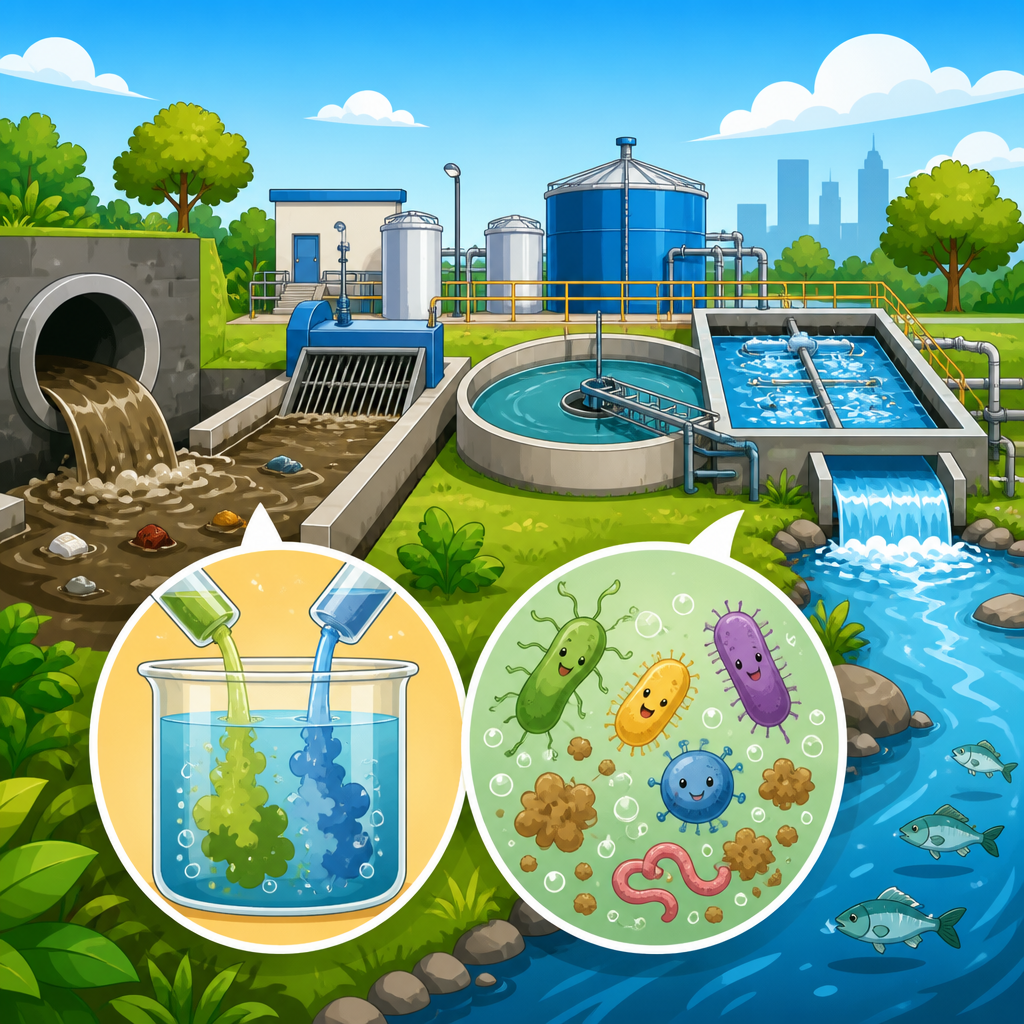

Natural vs. artificial water filtration systems shape how communities secure safe drinking water, protect ecosystems, and manage pollution across farms, cities, and industrial sites. In soil and water science, filtration means the physical, chemical, and biological processes that remove sediment, nutrients, pathogens, metals, and organic contaminants as water moves through soil, rock, plants, engineered media, or treatment equipment. Natural filtration happens in landscapes such as wetlands, riparian buffers, forest soils, riverbanks, and aquifers. Artificial filtration uses designed systems including rapid sand filters, membrane units, activated carbon beds, cartridge filters, and reverse osmosis plants. I have worked with both field restoration projects and treatment operators, and the central lesson is consistent: neither approach is universally better. Each works within clear limits set by source water quality, land availability, energy use, climate, hydraulic loading, and public health standards.
This topic matters because water quality failures are rarely caused by a single pollutant or a single bad decision. They emerge from linked processes across watersheds and built infrastructure. A farm field with compacted soil can increase runoff, which raises turbidity in a reservoir, which then reduces disinfection performance at a treatment plant. A healthy floodplain can trap sediment and transform nitrate before it reaches a well field, lowering treatment costs downstream. Understanding natural versus artificial water filtration systems therefore requires more than comparing devices. It requires looking at particle transport, sorption, microbial activity, infiltration rates, residence time, redox conditions, and maintenance practices. For anyone studying soil and water science, this hub article provides that foundation and shows how land management and engineered treatment fit together.
How natural water filtration works in soils, wetlands, and aquifers
Natural water filtration systems rely on the landscape itself to improve water quality. As water moves through soil pores, plant roots, leaf litter, streambanks, and saturated sediments, suspended particles are strained out, dissolved contaminants adsorb onto mineral surfaces, and microbes transform pollutants into less harmful forms. In field conditions, the most important variables are soil texture, organic matter, permeability, depth to groundwater, vegetation cover, and the length of time water remains in contact with the filtering medium. Sandy soils allow fast infiltration but may provide less adsorption for phosphorus than fine-textured soils rich in iron and aluminum oxides. Clay soils can retain more nutrients and contaminants but may become compacted, reducing infiltration and increasing surface runoff.
Wetlands are one of the best known natural filtration systems because they combine hydrology, vegetation, and microbial activity in one setting. A constructed or restored marsh can slow flow, settle sediment, and support denitrification, the bacterial conversion of nitrate into nitrogen gas under low-oxygen conditions. Riparian buffers work differently but complement wetlands well. Strips of grasses, shrubs, and trees beside streams reduce erosion, intercept sediment, and stabilize banks while roots improve soil structure. Riverbank filtration, used in parts of Europe and the United States, draws river water through sand and gravel into nearby wells, naturally lowering turbidity and pathogen levels before final treatment. Aquifers can also attenuate contamination, although they are not immune. Once nitrate, solvents, or saltwater reach groundwater, cleanup is slow and expensive.
The strength of natural filtration is that it treats water while supporting habitat, groundwater recharge, and flood mitigation. The weakness is variability. Performance changes with season, storm intensity, antecedent moisture, and pollutant load. A wetland may remove nitrate efficiently yet release phosphorus under prolonged anoxic conditions. A forested watershed usually produces low turbidity water, but after wildfire, ash and hydrophobic soils can sharply reduce filtration and increase runoff. Natural systems are powerful, but they must be understood as living, dynamic treatment environments rather than passive scenery.
How artificial water filtration systems remove contaminants
Artificial water filtration systems are engineered to deliver predictable treatment under controlled operating conditions. In municipal plants, the conventional train often includes coagulation, flocculation, sedimentation, filtration, and disinfection. Coagulants such as alum or ferric chloride destabilize fine particles, allowing them to agglomerate into flocs that settle or are captured in media filters. Rapid sand filters then remove remaining suspended solids. For taste, odor, pesticides, and industrial organics, operators often add granular activated carbon, which adsorbs many dissolved compounds onto a high-surface-area medium. When dissolved salts, fluoride, nitrate, arsenic, or very small pathogens must be removed, membrane processes such as nanofiltration, ultrafiltration, and reverse osmosis become essential.
In my experience, engineered systems excel when source water changes quickly or compliance targets are strict. A membrane plant can consistently reduce turbidity to very low levels, while a cartridge-based point-of-use system can protect a household using a private well with variable sediment. Industrial facilities also depend on specialized treatment. A semiconductor plant may require ultrapure water produced through reverse osmosis, ion exchange, degasification, and ultraviolet oxidation. Wastewater reuse projects commonly combine membrane bioreactors, advanced oxidation, and activated carbon to remove trace contaminants before irrigation or potable reuse. These systems are measurable, adjustable, and documentable, which matters when operators must meet enforceable standards every day.
Artificial filtration is not a simple cure-all. It requires capital investment, skilled operation, replacement media or membranes, residual management, and energy. Reverse osmosis concentrates brine that must be handled safely. Sand filters need backwashing, which uses water and creates waste streams. Activated carbon eventually exhausts and must be regenerated or replaced. The key benefit is reliability, but that reliability depends on disciplined maintenance and informed design.
Natural vs. artificial water filtration systems: direct comparison
The most useful comparison between natural and artificial water filtration systems is not which is superior in theory, but which performs best against specific contaminants, flows, and site constraints. Natural systems usually offer broader ecosystem services and lower operating energy. Artificial systems usually offer tighter control and faster response. For hub-level understanding in soil and water science, the comparison below captures the decision factors practitioners use most often.
| Factor | Natural filtration systems | Artificial filtration systems |
|---|---|---|
| Typical examples | Wetlands, riparian buffers, forest soils, aquifer recharge zones, riverbank filtration | Sand filters, activated carbon, membranes, cartridge filters, reverse osmosis |
| Best at removing | Sediment, some nutrients, some pathogens, runoff-associated pollutants | Fine particles, pathogens, dissolved salts, metals, synthetic organics |
| Consistency | Variable by season, storm, and land condition | High when properly operated |
| Land requirement | Usually large | Usually small to moderate |
| Energy demand | Low | Moderate to high |
| Maintenance | Ecological management, sediment removal, vegetation care | Operator oversight, backwashing, media replacement, membrane cleaning |
| Co-benefits | Habitat, recharge, flood storage, cooling, erosion control | Compliance control, compact footprint, rapid deployment |
| Main limitation | Performance variability and slower response | Cost, energy use, residual disposal |
In practice, the strongest projects combine both approaches. Upstream wetland restoration can reduce sediment and nutrient loads entering a reservoir, while downstream treatment upgrades manage pathogens and dissolved contaminants that landscape measures cannot reliably remove. That layered approach is more resilient than expecting one system to solve every water quality problem alone.
Soil and water science principles behind filtration performance
Soil and water science explains why one filtration system succeeds where another struggles. First is particle size. Large suspended solids settle or strain out relatively easily, while colloids remain stable and often require coagulation or long residence time to remove. Second is hydraulic conductivity, the rate at which water moves through soil or media. High conductivity supports infiltration, but if water moves too quickly, contact time becomes too short for adsorption or biodegradation. Third is cation exchange capacity and mineralogy. Clays and organic matter can hold certain dissolved ions, while iron-rich soils often bind phosphorus strongly. Fourth is redox chemistry. In oxygen-poor conditions, microbes can drive denitrification, yet those same conditions may mobilize iron, manganese, or phosphorus.
Temperature, pH, and organic carbon also matter. Cold water slows biological processes, which is one reason wetlands in temperate climates often remove nutrients less efficiently in winter. pH affects metal solubility and the surface charge of both soils and engineered media. Dissolved organic carbon can help microbial treatment but can also compete for adsorption sites and increase disinfection byproduct precursors in drinking water treatment. Hydrologists also focus on residence time distribution rather than average detention alone. Short-circuiting in a wetland or filter bed can let a portion of water pass through too quickly, sharply lowering overall treatment.
These principles are why field assessment and pilot testing are indispensable. A sandy riparian zone may be excellent for infiltrating stormwater but poor at retaining nitrate without sufficient carbon for microbial transformation. A membrane specified for pathogen control may foul rapidly if pretreatment does not remove algal material or iron first. The science is not abstract. It directly determines costs, risks, and achievable performance.
Applications in agriculture, cities, and industry
Agriculture depends heavily on natural filtration because farms operate across large landscapes where point treatment alone cannot control runoff. Cover crops, contour farming, grassed waterways, saturated buffers, and restored wetlands all improve infiltration and reduce sediment and nutrient export. In the U.S. Midwest, edge-of-field practices are widely used to reduce nitrate losses from tile-drained fields, but they work best when paired with nutrient timing and realistic fertilizer rates. No wetland can offset chronic overapplication indefinitely. Soil health practices matter because stable aggregates and higher organic matter improve infiltration and reduce erosive runoff at the source.
Urban areas rely more on hybrid systems. Green infrastructure such as bioswales, rain gardens, permeable pavements, and urban tree pits mimics natural filtration by routing stormwater through engineered soils. These features reduce peak flow and remove sediments, hydrocarbons, and some metals. Yet dense cities also need conventional treatment plants, storm sewer controls, and industrial pretreatment because urban runoff can contain road salt, tire wear particles, solvents, and pathogens at concentrations natural systems alone cannot consistently manage. Drinking water utilities often protect source watersheds while also investing in ozone, biologically active filtration, or granular activated carbon when reservoirs face algal blooms and taste-and-odor compounds such as geosmin and MIB.
Industry generally favors artificial systems because process requirements are precise and liabilities are high. Food processors, power plants, mines, and pharmaceutical facilities use tailored treatment trains based on contaminant profiles and discharge permits. Even so, industrial sites increasingly use natural features for polishing and resilience. Treatment wetlands can follow active treatment to reduce metals or nutrients before discharge, and stormwater detention basins with planted margins can lower sediment loads from yards and access roads. Across sectors, the pattern is consistent: use land-based filtration to lower incoming loads, then apply engineered treatment where certainty is nonnegotiable.
Choosing the right system and building an integrated strategy
The right filtration system starts with a source-water assessment, not a product catalog. Decision makers need to identify contaminants of concern, flow variability, land area, regulatory targets, treatment goals, budget, and the consequences of failure. If the problem is seasonal turbidity in a rural reservoir, watershed erosion control and riparian restoration may be more cost-effective than oversized advanced treatment. If the problem is arsenic in groundwater, natural attenuation is not an adequate primary strategy; adsorption media, ion exchange, or reverse osmosis is usually required. Private well owners should test for bacteria, nitrate, arsenic, pH, hardness, and local risk factors before choosing any filter, because one device rarely treats every issue.
Integrated design also means planning for maintenance from day one. Wetlands need sediment forebays, invasive species control, and hydraulic monitoring. Bioswales fail when curb cuts clog and underdrains are ignored. Activated carbon beds need breakthrough monitoring. Membrane systems need cleaning protocols, spare parts, and pretreatment that matches fouling potential. The most successful projects I have seen treat filtration as a managed system with performance verification, not a one-time installation. Monitoring should include influent and effluent quality, flow, seasonal trends, and basic soil or media condition. Without those data, underperformance is often discovered only after ecological damage or a compliance violation.
The central takeaway is simple. Natural vs. artificial water filtration systems is not an either-or debate; it is a design choice within a broader watershed strategy. Natural systems provide filtration plus habitat, recharge, and flood reduction. Artificial systems provide precision, compactness, and dependable compliance. Soil and water science shows exactly why each performs as it does, and that knowledge helps communities spend money where it has the greatest long-term effect. If you are building out an environmental science resource, use this hub as the starting point, then explore related topics such as wetlands, groundwater, stormwater, irrigation water quality, and drinking water treatment to create a complete picture of how clean water is protected.
Frequently Asked Questions
What is the difference between natural and artificial water filtration systems?
Natural and artificial water filtration systems both improve water quality, but they do so in very different ways. Natural filtration happens as water moves through landscapes and ecological systems such as wetlands, riverbanks, floodplains, forest soils, aquifers, and vegetated buffers. In these settings, water is cleaned through a combination of physical straining, sediment settling, chemical adsorption, microbial breakdown, plant uptake, and soil-mineral interactions. These processes can remove suspended solids, excess nutrients such as nitrogen and phosphorus, some pathogens, and certain metals or organic contaminants, depending on local conditions.
Artificial filtration systems are engineered technologies designed to treat water more quickly, predictably, and at a controlled scale. These include sand filters, activated carbon units, membrane systems like reverse osmosis, ultraviolet disinfection, ion exchange, and full treatment plants that combine multiple steps. Unlike natural systems, engineered filtration is built to target specific contaminants and meet defined water-quality standards, especially for municipal drinking water, industrial reuse, or wastewater treatment.
The most important practical difference is control. Natural filtration is passive, landscape-based, and often slower, while artificial filtration is active, measurable, and easier to optimize for consistent performance. That said, the two are not opposites in a strict sense. Many of the best water-management strategies combine them. For example, wetlands may reduce sediment and nutrient loads before water enters a treatment plant, lowering treatment costs and improving overall system resilience.
How effective are natural water filtration systems at removing contaminants?
Natural water filtration systems can be highly effective, but their performance depends on the contaminant type, climate, soil composition, vegetation, hydrology, residence time, and overall ecosystem health. Wetlands and riparian zones are especially valuable for slowing runoff, trapping sediment, and reducing nutrient pollution from agriculture and urban stormwater. As water spreads out and moves more slowly, particles settle, microbes transform nitrogen compounds, organic matter binds some pollutants, and plants absorb part of the nutrient load.
These systems are often very good at reducing sediment, turbidity, and some nutrient concentrations, and they can also help lower certain pathogen levels and break down some organic contaminants over time. Soil and subsurface layers may remove pollutants through filtration, sorption, biodegradation, and redox reactions. In aquifers or riverbank filtration systems, water can become significantly cleaner as it passes through sand, gravel, and biologically active sediments.
However, natural filtration has limits. It may not reliably remove all viruses, dissolved salts, PFAS, pesticides, pharmaceuticals, or high concentrations of industrial chemicals. Performance can also vary seasonally or decline if the ecosystem is overloaded with pollution or physically degraded. For that reason, natural filtration is often best viewed as a foundational water-protection strategy rather than a guaranteed stand-alone treatment solution for every drinking-water application. It works best when pollutant loads are managed at the source and when natural systems are protected, restored, and monitored over time.
When are artificial water filtration systems the better choice?
Artificial water filtration systems are the better choice when water must meet strict safety standards, when contaminant levels are high or complex, or when treatment performance needs to be rapid and consistent. Municipal drinking water treatment is a clear example. Public systems must reliably remove pathogens, particles, chemicals, and taste-and-odor compounds regardless of weather, season, or fluctuations in source-water quality. Engineered treatment makes that level of control possible.
They are also essential in industrial settings, mining operations, food processing, hospitals, laboratories, and communities dealing with contamination from heavy metals, nitrates, solvents, or emerging pollutants. Membranes, activated carbon, coagulation, advanced oxidation, and disinfection technologies can be selected and combined to target very specific water-quality problems. That precision is something natural systems alone usually cannot guarantee.
Another major advantage is footprint and speed. An engineered system can treat large volumes of water in a relatively compact area and produce results within minutes or hours rather than days, weeks, or months. This matters in densely populated urban areas and in emergency response situations. The tradeoff is that artificial systems generally require more energy, maintenance, technical oversight, replacement media, and capital investment. In other words, they offer control and reliability, but at a higher operational cost than many passive natural approaches.
Are natural water filtration systems more sustainable than artificial ones?
In many cases, yes, natural water filtration systems are more sustainable from an ecological and long-term land-management perspective. Wetlands, floodplains, forested watersheds, and healthy soils can improve water quality while also delivering co-benefits that engineered systems do not provide. These include habitat creation, groundwater recharge, carbon storage, erosion control, biodiversity support, flood mitigation, and temperature regulation for streams and rivers. When protected and functioning well, natural systems can reduce pollution before it reaches treatment facilities, which lowers downstream costs and environmental stress.
That said, sustainability is not just about lower energy use or being “natural.” It also depends on effectiveness, land availability, durability, maintenance needs, and whether the system can actually meet the intended water-quality goals. A wetland that lacks enough area or receives excessive nutrient or chemical loading may become less effective over time. Similarly, a poorly maintained engineered system can waste energy and materials while underperforming. Sustainability has to be measured in terms of both environmental benefits and dependable outcomes.
In practice, the most sustainable strategy is often a hybrid one. Protecting watersheds, restoring riparian buffers, and using green infrastructure can reduce the burden on treatment plants, while engineered systems provide the final polishing and disinfection needed for public health. This layered approach supports ecosystems, strengthens climate resilience, and improves water security without depending entirely on a single method. So while natural filtration is often more sustainable in principle, the smartest real-world solution frequently combines natural processes with carefully designed technology.
Can natural and artificial filtration systems work together in modern water management?
Yes, and in many cases they should. Modern water management increasingly relies on integrated systems that use natural filtration to reduce pollution loads upstream and artificial treatment to ensure water meets final quality standards. This approach recognizes that landscapes and treatment plants serve different but complementary roles. Natural systems can slow, store, and partially cleanse water before it enters reservoirs, rivers, or intake structures. Artificial systems can then remove the remaining contaminants with greater precision and consistency.
Examples are easy to find. Cities use constructed wetlands, bioswales, permeable surfaces, and detention basins to manage stormwater before it reaches pipes and treatment facilities. Riverbank filtration can serve as a pretreatment step for drinking water utilities, reducing turbidity and microbial loads before mechanical treatment begins. Agricultural regions may use vegetated buffer strips and restored wetlands to cut nutrient and sediment runoff, helping downstream utilities avoid higher treatment costs and harmful algal bloom risks.
This combined model is especially valuable as communities face population growth, aging infrastructure, stricter water regulations, and climate-related extremes such as floods and droughts. Natural systems build resilience and improve source-water quality, while artificial systems deliver the reliability required for health protection and regulatory compliance. Rather than asking which is universally better, water professionals increasingly ask how both can be designed together for the best environmental, economic, and public-health outcome.