
Minimalist living is the practice of intentionally owning, buying, and using less, and it has become one of the most practical ways households can reduce environmental impact while improving daily life. In sustainability work, I have repeatedly seen the same pattern: homes filled with underused products consume more energy, demand more raw materials, create more waste, and often deliver less comfort than simpler spaces managed with purpose. For a hub on sustainable living at home, minimalism matters because the average home sits at the center of major environmental pressures, including residential energy use, water demand, packaging waste, furniture turnover, food waste, and the constant flow of new consumer goods. When people ask whether individual action really helps, the clearest answer is yes, especially when choices affect what is manufactured, shipped, cleaned, powered, stored, repaired, and discarded. Minimalist living does not mean deprivation, stark rooms, or a single aesthetic. It means reducing excess so that every object, habit, and purchase serves a clear function. In practical terms, that includes buying durable items, choosing reusable products, planning meals, limiting fast decor, reducing duplicate tools, keeping efficient appliances longer, and designing routines that prevent unnecessary consumption. The environmental logic is straightforward: less stuff means fewer extracted resources, fewer emissions from production and transport, fewer toxins from finishes and plastics, and less material entering landfill or incineration. It also supports better home sustainability decisions because a simplified household is easier to clean with lower-impact products, easier to organize for reuse and repair, and easier to retrofit for efficiency. This article maps the full home picture, from decluttering and conscious consumption to energy, water, food, materials, and maintenance, so readers can use minimalist living as a foundation for durable, measurable sustainability at home.
Why minimalist living reduces a household’s environmental footprint
Minimalist living lowers environmental impact because most household emissions and waste begin long before an item reaches the front door. Every new purchase carries embedded carbon from raw material extraction, manufacturing, packaging, warehousing, and transport. A cheap storage bin, trendy side table, or bundle of kitchen gadgets may look minor in isolation, but multiplied across millions of homes, these purchases drive significant material throughput. The United Nations Environment Programme has tied resource extraction and processing to substantial biodiversity loss, climate impact, and water stress, which means reducing demand is not symbolic; it directly addresses upstream pressure on ecosystems. In homes I have audited for sustainability planning, the fastest reductions rarely come from perfect recycling habits alone. They come from avoiding low-value purchases, extending product life, and preventing clutter that triggers more storage furniture, larger homes, and replacement buying.
Minimalism also changes behavior in ways that compound over time. A household with fewer possessions typically spends less time managing inventory, less money on duplicates, and less energy heating, cooling, and lighting excess space used to store underused goods. Fewer textiles mean fewer laundry cycles. Fewer decorative electronics mean fewer standby loads. Fewer single-use convenience products mean less trash handling and fewer emergency purchases. This is why minimalist living fits naturally within sustainable living at home: it reduces the need for downstream fixes by shrinking the volume of things entering the home in the first place. The most sustainable product is often the one you never had to buy.
Decluttering with a sustainability lens, not a landfill mindset
Decluttering is often treated as the first step toward minimalist living, but sustainable decluttering is not about moving household excess from closets to trash bags. The goal is to interrupt overconsumption while responsibly redistributing what already exists. A useful rule is to sort by condition, safety, and realistic next use. Durable furniture, cookware, tools, unopened toiletries, and seasonal gear can often be sold, donated, or passed through community networks. Textiles in poor condition may go to local fabric recovery programs where available. Electronics should be handled through certified e-waste channels, especially because they contain metals, plastics, and sometimes hazardous components. Mattresses, paint, batteries, and chemicals need special disposal routes.
In practice, I advise people to declutter by category rather than room because it reveals duplicate buying patterns. Seeing eight water bottles together or three sets of baking tools makes future restraint easier. It also helps to document why items accumulated: impulse sales, aspirational hobbies, poor storage, bulk buying, or social media-driven decor trends. That insight is more valuable than the clean shelf at the end. A home becomes more sustainable when decluttering is paired with a replacement rule, such as one-in-one-out, a mandatory waiting period before nonessential purchases, or a list of approved durable brands and secondhand sources. Without that behavioral layer, clutter returns quickly.
Buying less but buying better: the core consumption strategy
Sustainable minimalist living depends less on no-buy perfection and more on procurement standards. When something is necessary, choose the option that lasts, can be repaired, and does not force ongoing waste through proprietary refills or fragile construction. For household staples, better buying means checking material quality, warranty terms, spare-part availability, energy or water efficiency labels, and whether the item performs multiple functions. A solid stainless steel pan can replace several low-grade nonstick pans over time. A repairable vacuum from a brand with replacement filters and belts is usually a better environmental choice than repeatedly replacing cheap units. LED lighting, induction-compatible cookware, durable glass food containers, and washable cleaning cloths are typical examples of purchases that reduce ongoing resource use.
Secondhand should be part of this strategy whenever hygiene and safety permit. Furniture, shelving, cast iron cookware, hand tools, planters, picture frames, and many home office items often have excellent secondhand availability. Buying used reduces demand for virgin materials and often yields higher quality than new budget alternatives. There are exceptions. Safety-critical products such as older cribs, car seats, damaged electrical devices, or appliances with poor efficiency can undermine the goal. Minimalist living is not anti-purchase; it is pro-intentionality. The key question is not “Can I afford this?” but “Will this item reduce total consumption over its useful life?”
Home systems where less creates measurable sustainability gains
Once consumption is under control, minimalist living strengthens the major home systems that determine day-to-day environmental performance. Energy, water, food, cleaning, and maintenance all become easier to optimize when there is less clutter, fewer disposables, and clearer routines. In busy households, complexity is the enemy of consistency. If reusable containers are buried behind novelty gadgets, food spoils. If HVAC vents are blocked by excess furniture, rooms heat and cool unevenly. If cleaning supplies are redundant and scattered, people buy more chemicals than they need. Simplifying the household makes efficient behavior the default rather than a recurring project.
| Home area | Common excess pattern | Minimalist alternative | Environmental benefit |
|---|---|---|---|
| Kitchen | Duplicate gadgets, single-use wraps, overbuying groceries | Multiuse tools, reusable containers, meal planning | Less food waste, less packaging, fewer manufactured goods |
| Laundry | Large wardrobes, frequent washing, multiple specialty products | Smaller durable wardrobe, full loads, concentrated detergent | Lower water use, lower energy use, reduced chemical volume |
| Living spaces | Decor turnover, extra electronics, oversized furniture | Fewer high-quality pieces, efficient lighting, repair first | Lower material demand and reduced electricity use |
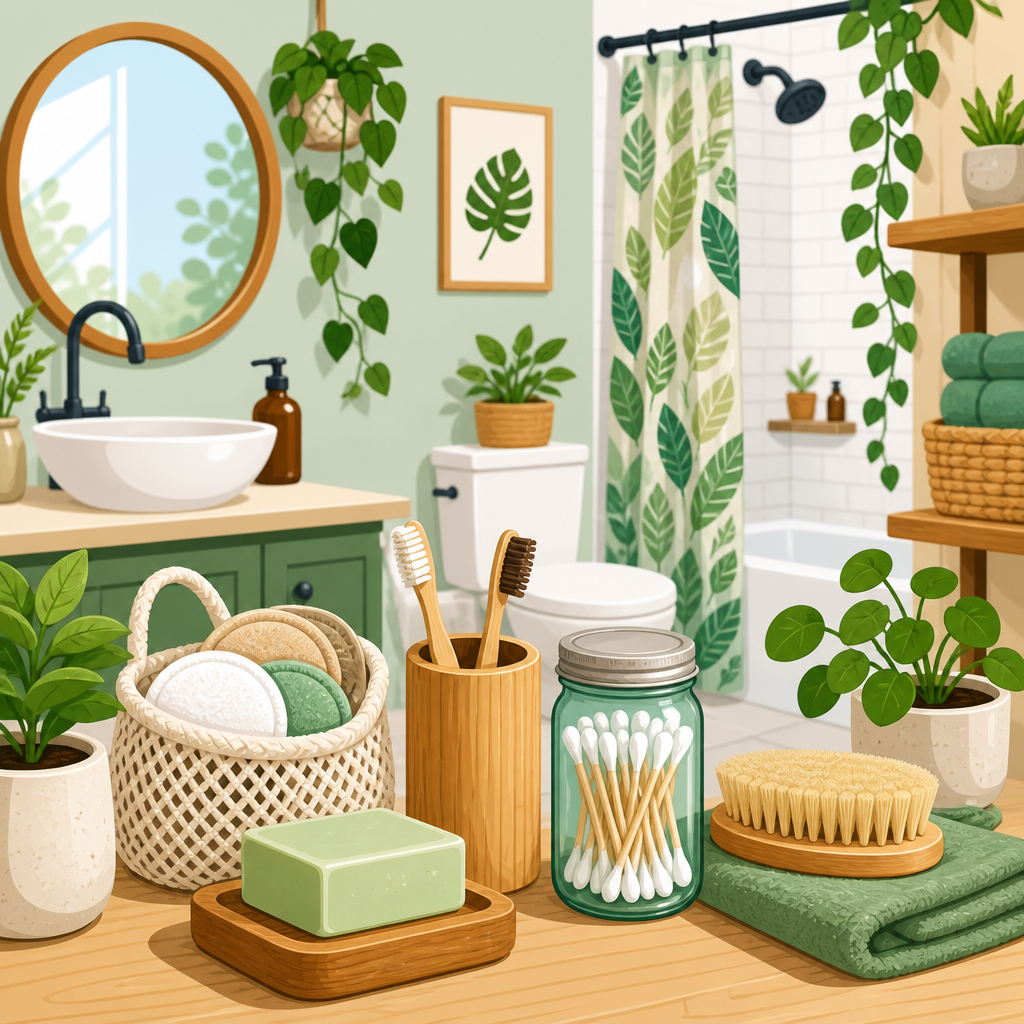
| Bathroom | Half-used products, disposables, impulse bulk purchases | Finish-before-replace rule, refillables, simple routines | Less plastic waste and fewer wasted formulations |
| Storage areas | Holding broken or low-value items indefinitely | Repair, donate, recycle, or refuse replacement | Prevents rebound clutter and unnecessary buying |
These changes are measurable. Residential energy use can fall when households switch to LEDs, reduce plug loads, maintain clear airflow, and avoid oversized appliance fleets such as extra refrigerators or unused freezers. Water use drops when lower laundry frequency, efficient fixtures, and better kitchen planning reduce unnecessary cycles. Waste hauling decreases when fewer packaged goods enter the home. Minimalism succeeds here because it is operational. It turns sustainability from a collection of ideals into a manageable set of systems.
Minimalist kitchens: food waste, packaging, and everyday efficiency
The kitchen is often the most important room for sustainable living at home because it concentrates food waste, packaging waste, water use, and a large share of daily energy consumption. Minimalist kitchens work well because they remove friction from planning, cooking, storing, and using leftovers. In my experience, households waste less food when counters are clear, pantry inventory is visible, and there are not five versions of the same staple hidden in different cabinets. The simplest effective system is a weekly meal plan, a short shopping list tied to that plan, transparent storage containers, and one designated shelf for foods that need to be eaten first.
Minimalism also improves equipment choices. A few durable knives, pans, utensils, and storage containers outperform drawers full of novelty tools that are hard to clean and rarely used. Batch cooking, freezing portions, and cooking from staple ingredients reduce dependence on individually packaged convenience items. Composting can help with unavoidable scraps, but prevention is better than diversion. The same goes for water and energy. Using lids on pots, matching burner size to pan size, running full dishwasher loads, and maintaining refrigerator seals all matter more when the kitchen is organized enough for people to use it well. For many households, the most effective sustainability upgrade is not a dramatic renovation but a simpler kitchen that supports consistent habits.
Minimalist wardrobes, cleaning routines, and maintenance habits
Clothing and household care are major but often underestimated parts of home sustainability. A minimalist wardrobe reduces the churn of fast fashion, one of the most resource-intensive consumer sectors due to fiber production, dyeing, finishing, shipping, and short wear cycles. A smaller wardrobe built around durable fabrics, repeat wear, basic repairs, and careful laundering cuts impact substantially. Washing cold, air drying when practical, and avoiding unnecessary cycles protect garments and lower utility use. Natural fibers are not automatically low impact, and synthetics can shed microfibers, so the better principle is longevity: wear what you own longer and buy fewer, better pieces.
The same mindset applies to cleaning. Instead of ten specialized bottles, most homes can function with a limited set of effective products, reusable cloths, a scrub brush, and clear safety knowledge about what should not be mixed. Concentrated products often reduce packaging and shipping weight. Refill systems can help if the formulas work reliably and the packaging is truly reused. Maintenance is where minimalism delivers hidden sustainability gains. A home with fewer possessions is easier to inspect, repair, and keep dry, ventilated, and pest free. Catching a small leak early avoids mold, material replacement, and water waste. Cleaning refrigerator coils, replacing HVAC filters on schedule, and sealing drafts all become more manageable in a simplified home. Preventive care is one of the least glamorous but highest-value forms of sustainable living.
The limits of minimalism and how to avoid common mistakes
Minimalist living is powerful, but it is not a universal cure and it can be misunderstood. The biggest mistake is treating minimalism as a shopping identity, where people discard usable items only to buy matching containers, new neutral decor, or premium “eco” products. That behavior simply shifts consumption rather than reducing it. Another mistake is applying minimalism without considering household realities. Families with children, caregivers, home workers, and people with disabilities may need backups, adaptive tools, medical supplies, or more storage. A sustainable home must serve real life, not an image of aesthetic purity.
There are also tradeoffs in product choice. Durable materials can have higher upfront impacts, but they often outperform disposable alternatives across years of use. Secondhand is usually beneficial, but not when an item is unsafe, inefficient, or impossible to repair. Reusables generally reduce waste, yet they only deliver full benefit when used consistently enough to offset production impacts. The practical solution is to focus on frequency and lifespan. Keep what is useful, maintain what you own, borrow or rent infrequent-use items, and avoid replacing functioning goods for style alone. Minimalism works best when paired with realism, not rigidity.
Minimalist living shows that sustainable living at home is not mainly about adding more products, apps, and rules. It is about removing unnecessary consumption so the home runs with less waste, less energy, less confusion, and more intention. The central lesson is simple: every item you do not buy avoids extraction, manufacturing, packaging, transport, storage, and eventual disposal. Every durable item you keep in service a little longer spreads its environmental cost across more years of use. Every simplified routine, from meal planning to laundry to maintenance, makes lower-impact choices easier to repeat. That is why minimalism works so well as the hub for sustainable living at home. It connects decluttering, conscious shopping, secondhand sourcing, energy efficiency, water savings, waste prevention, repair, and long-term home care into one practical framework.
If you want to start, begin with one visible category this week: the kitchen, cleaning supplies, clothing, or storage bins. Remove duplicates, finish what you already have, set rules for future purchases, and track the difference in waste, spending, and daily effort. Small changes reveal the core truth quickly. Less really can be more for the planet, and for the people living at home every day.
Frequently Asked Questions
What does minimalist living really mean in an environmental context?
Minimalist living, from a sustainability perspective, is not about owning as little as possible or creating a home that feels empty. It is about being intentional with what you bring into your life, what you keep, and how you use it. When households buy fewer, better, and more useful items, they reduce demand for raw materials, manufacturing, packaging, shipping, storage, and disposal. That matters because every product has an environmental footprint long before it enters the home and long after it leaves.
In practical terms, minimalism helps the planet by interrupting the cycle of overconsumption. A home full of duplicate tools, rarely worn clothing, impulse purchases, and convenience items typically represents wasted resources, wasted money, and eventually wasted landfill space. A more minimalist home tends to rely on durable products, thoughtful purchasing, regular maintenance, and multi-use items that stay useful for longer. This lowers waste and often reduces energy use as well, since fewer possessions generally mean less cleaning, less heating and cooling demand in crowded spaces, and less need for storage solutions.
Just as important, environmental minimalism is about function over volume. The goal is not perfection or strict deprivation. It is to create a household where everything serves a purpose and supports a lower-impact way of living. For many people, that shift also improves comfort, reduces stress, and makes sustainable habits easier to maintain over time.
How does owning less actually reduce a household’s environmental footprint?
Owning less reduces environmental impact at multiple stages of the consumption cycle. The most obvious benefit is reduced purchasing. If you buy fewer products, fewer resources are extracted, fewer goods are manufactured, and fewer items are transported across supply chains. That means lower emissions, less water use, less packaging waste, and less pollution associated with production.
There is also a less visible but very important household effect. More possessions usually require more space, more organization products, more cleaning supplies, and more ongoing maintenance. Closets packed with clothing, kitchens crowded with gadgets, and garages full of infrequently used items all create hidden environmental costs. They can lead people to expand storage, buy additional containers and shelving, or even move into larger homes than they truly need. Larger homes generally require more energy for heating, cooling, lighting, and upkeep, so excessive accumulation can indirectly drive higher resource use.
Minimalist households often become more efficient because they know what they own and use it more fully. Food is less likely to expire unnoticed, duplicate purchases happen less often, and repairs are easier when belongings are manageable. The result is a home that wastes less in both obvious and subtle ways. Over time, that combination of reduced consumption, improved use, and lower waste can make a meaningful difference in a household’s environmental footprint.
Is minimalist living only about decluttering, or does it also change buying habits?
Decluttering is often the most visible part of minimalism, but it is only the beginning. If minimalism stops at clearing out closets while buying habits stay the same, the environmental benefits are limited. The more powerful shift happens when people start questioning what they purchase, why they purchase it, and whether it will truly add lasting value to their daily lives.
In that sense, minimalist living is closely tied to conscious consumption. Instead of shopping out of habit, boredom, convenience, or social pressure, minimalist households tend to pause before buying. They ask practical questions: Do I already own something that does this job? Can I borrow it? Will I use it often enough to justify owning it? Is there a durable, repairable, secondhand, or lower-impact option available? Those small decisions significantly reduce waste and help prevent clutter from returning.
This mindset also supports better product choices. People often move away from disposable goods and toward long-lasting essentials. They may choose quality over quantity, avoid trend-based purchases, and prioritize products with minimal packaging or responsible materials. Over time, those habits reduce the volume of goods entering the home and increase the usefulness of what remains. So while decluttering can create immediate relief, the real environmental value of minimalism comes from changing the flow of consumption itself.
Can minimalist living improve quality of life as well as sustainability?
Yes, and that is one of the reasons minimalist living tends to be so effective over the long term. Sustainable habits are easier to maintain when they also make everyday life better. A home with fewer unnecessary possessions is often easier to clean, easier to organize, and easier to manage. People spend less time searching for things, less money replacing lost duplicates, and less energy maintaining items they do not actually use or enjoy.
Minimalism can also reduce mental overload. Visual clutter and crowded storage often create a low-level sense of stress, even when people are used to it. Simpler spaces tend to feel calmer and more functional, which can support better routines and more thoughtful choices. For example, an organized kitchen makes home cooking easier, a manageable wardrobe reduces unnecessary shopping, and a less crowded living space may encourage repair, care, and reuse rather than constant replacement.
Financially, owning less often means spending less on impulse purchases, decor turnover, novelty items, and duplicate household goods. Those savings can be redirected toward experiences, home efficiency upgrades, quality essentials, or emergency resilience. In that way, minimalism is not simply an aesthetic preference. It can be a practical framework that helps households align environmental goals with comfort, clarity, and long-term well-being.
What are the best ways to start practicing minimalist living for the planet?
The best place to start is with behavior, not appearance. You do not need to transform your home overnight or aim for a stripped-down look. Begin by identifying the areas where overconsumption shows up most clearly in your household. For many people, that means clothing, kitchen tools, paper goods, beauty products, storage bins, hobby supplies, or seasonal decor. Choose one category, review what you already have, and separate what is useful from what is simply taking up space.
At the same time, focus on slowing the inflow of new items. A simple waiting period before nonessential purchases can dramatically cut impulse buying. Keeping a list instead of buying immediately, unsubscribing from marketing emails, and avoiding recreational browsing can all help. When you do need something, look first at what you can borrow, repair, repurpose, or buy secondhand. If a new purchase is necessary, choose the most durable and versatile option you can reasonably afford.
It also helps to build systems that support long-term simplicity. Keep an inventory of staples so you do not overbuy. Store frequently used items where they are easy to access. Maintain what you own so it lasts longer. Donate or pass along usable items responsibly rather than sending them straight to the trash. Most importantly, define minimalism in a way that serves your real life. A sustainable minimalist home is not one with the fewest possessions; it is one where each item has a purpose, resources are used carefully, and consumption is guided by intention rather than habit.