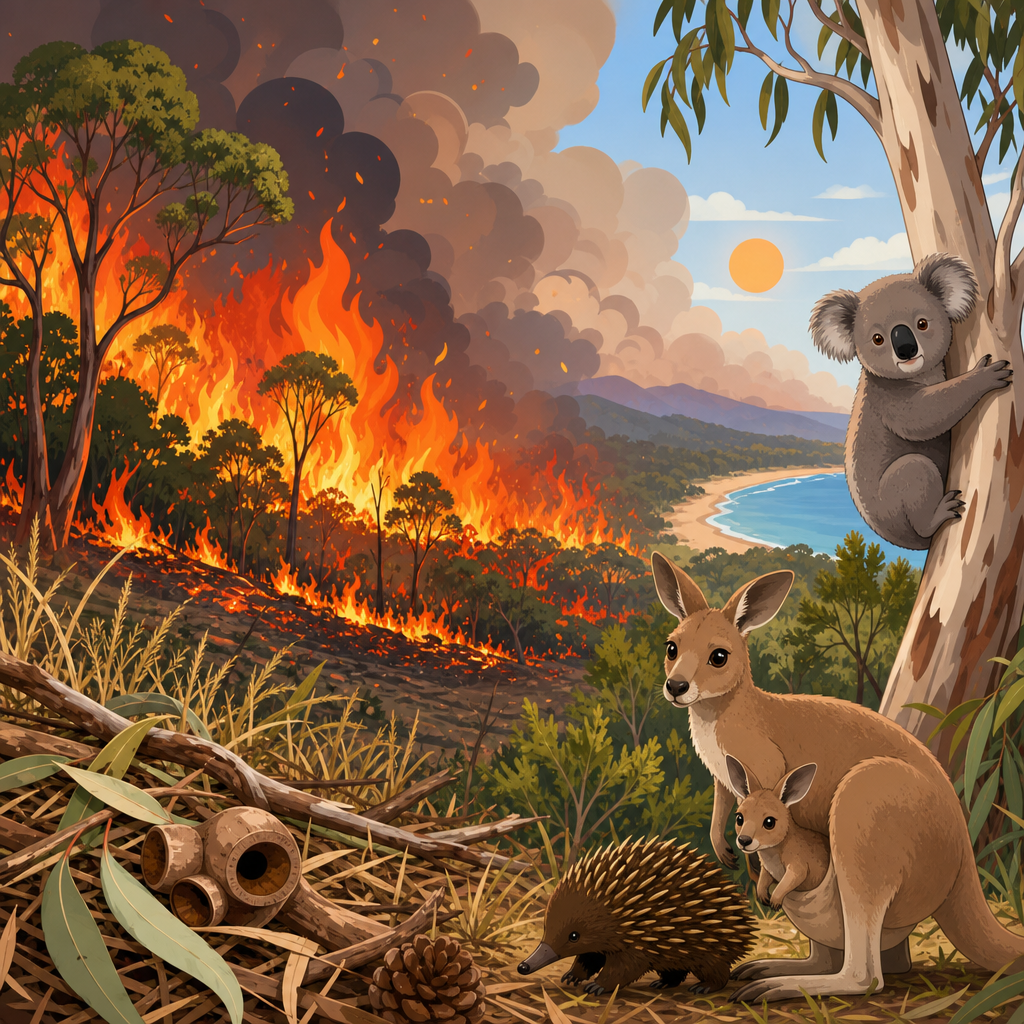
Wildfires have shaped landscapes for millions of years, but the worst wildfires in history reveal what happens when natural fire regimes collide with deforestation, drought, invasive fuels, and rapid human expansion. In environmental science, a wildfire is an uncontrolled fire burning vegetation, while deforestation is the permanent removal or severe degradation of forest cover for logging, agriculture, mining, roads, or settlement. When these forces overlap, forests lose moisture, shade, biodiversity, and structural resilience, making fire spread faster, burn hotter, and leave deeper ecological scars.
I have worked on environmental content and post-fire land management research summaries for years, and one lesson is consistent: catastrophic wildfire is rarely just a weather story. It is usually the final stage of accumulated risk. Clear-cut areas can dry surrounding stands, fragmented forests create windy edges, drained peatlands ignite below ground, and repeated burning can convert forests into shrubland or grassland. That matters because forests regulate rainfall, store carbon, protect soils, and support livelihoods. A severe forest fire is not only a local disaster. It can alter watersheds, damage regional air quality, accelerate climate warming, and undermine recovery for decades.
As a hub page on deforestation and wildfires, this article explains how historic fires became so destructive, what environmental toll they imposed, and why forest loss before and after fire is central to understanding modern disaster risk. It also answers practical questions searchers often ask: Which wildfires were the deadliest or largest? How does deforestation make wildfires worse? What happens to carbon, water, wildlife, and soil after a mega-fire? The details matter, because the same patterns appear from North America to Australia, the Mediterranean, Siberia, Indonesia, and the Amazon.
History offers stark examples. The 1871 Peshtigo Fire in Wisconsin killed well over 1,000 people after drought, slash from logging, and strong winds turned the landscape into a firestorm. The 1910 Great Fire of the Northwest burned about 3 million acres across Idaho, Montana, and Washington. Indonesia’s 1997 peat and forest fires blanketed Southeast Asia in haze after vast areas were drained and cleared. Australia’s 2019-2020 Black Summer burned an estimated 24 million hectares, with exceptional impacts on wildlife and forests. Canada’s 2023 wildfire season set modern records for area burned, showing how warming and forest stress can push fire seasons beyond historical norms.
Why Deforestation and Wildfires Reinforce Each Other
Deforestation and wildfire interact through fuel, microclimate, ignition, and land-use change. In intact forests, closed canopies retain humidity, reduce wind speeds, and shade the forest floor. Remove that cover and temperatures rise, fine fuels dry sooner, and edge effects spread inward. Logging debris, often called slash, can create dense beds of combustible material. New roads increase human access, which increases ignitions from machinery, vehicles, campfires, utility failures, and intentional burning. In tropical regions, forests that evolved with little fire can become highly vulnerable once fragmented and dried.
The relationship is cyclical. Deforestation raises fire risk, and wildfire then drives further forest loss. After severe burning, dead trees, erosion, and invasive grasses can make regeneration difficult. Repeated fires may lock ecosystems into degraded states. I have seen this pattern repeatedly in case studies from the Amazon and Indonesia, where cleared or selectively logged forests burn more readily than primary forests. Researchers have documented that canopy opening reduces moisture recycling and increases susceptibility to drought, especially during El Niño years. That is why deforestation is not merely a separate environmental problem; it is a force multiplier for extreme wildfire behavior.
Peatlands deserve special attention. Peat soils store enormous amounts of carbon accumulated over thousands of years. When peat swamp forests are drained for plantations or agriculture, oxygen enters the soil, decomposition accelerates, and the ground becomes flammable. Fires then burn underground for weeks or months, releasing carbon dioxide, methane, and toxic particulate matter. Indonesia’s recurring peat fires demonstrate this clearly. Unlike a surface fire that passes quickly, peat combustion can survive rainfall, re-emerge later, and devastate both climate and public health on a regional scale.
The Worst Wildfires in History: Major Events and Lasting Damage
Historic wildfire records are imperfect, especially before satellites, but several events stand out for death toll, area burned, and environmental impact. The examples below show that extreme fire disasters often involve preexisting forest degradation, prolonged dryness, and strong winds acting together rather than in isolation.
| Wildfire event | Year | Region | Scale and significance | Environmental toll |
|---|---|---|---|---|
| Peshtigo Fire | 1871 | Wisconsin, United States | Deadliest recorded U.S. wildfire; fueled by drought and logging slash | Forest loss, soil damage, watershed disruption, massive smoke emissions |
| Great Fire of 1910 | 1910 | Idaho, Montana, Washington | About 3 million acres burned in two days under extreme winds | Severe timber loss, erosion, stream sedimentation, habitat destruction |
| Indonesian peat and forest fires | 1997 | Indonesia | Millions of hectares affected during El Niño after drainage and clearing | Gigantic carbon release, transboundary haze, peat collapse, biodiversity loss |
| Black Saturday | 2009 | Victoria, Australia | One of Australia’s deadliest fire disasters under extreme heat and wind | Forest mortality, wildlife losses, water catchment damage, smoke pollution |
| Black Summer | 2019-2020 | Australia | Roughly 24 million hectares burned nationwide | An estimated billions of animals affected, forest canopy loss, carbon emissions |
| Canadian wildfire season | 2023 | Canada | Record modern area burned across multiple provinces | Major boreal carbon emissions, smoke across North America, peat and forest damage |
The Peshtigo Fire remains a defining lesson in how deforestation and wildfire can combine lethally. Nineteenth-century logging operations left vast quantities of dry branches and stumps on the ground. Farmers and land clearers also used fire routinely. After a period of drought, several fires merged under powerful winds, creating temperatures and fire behavior far beyond what communities could escape. Environmentally, the fire stripped vegetation, damaged soils, and likely transformed local hydrology by removing tree cover that stabilized moisture and moderated runoff.
The Great Fire of 1910 reshaped U.S. forest policy. It burned through heavily logged and drought-stressed landscapes and led to an aggressive suppression doctrine for decades. While suppression reduced some immediate threats, it also contributed in some regions to fuel accumulation and denser forests that later became vulnerable to severe fire. This historical lesson is important: preventing every fire is not the same as creating resilient forests. In many dry forest systems, prescribed burning and thinning can reduce ladder fuels and restore lower-intensity fire patterns.
Indonesia’s 1997 fires had one of the largest atmospheric footprints of any wildfire disaster. Studies have estimated that the event released a substantial fraction of annual global fossil fuel emissions at the time because peat combustion is so carbon dense. The haze affected Indonesia, Malaysia, Singapore, and beyond, disrupting transportation, schools, and health systems. Orangutan habitat was heavily damaged in parts of Borneo and Sumatra, and peat swamp ecosystems that took millennia to form were burned and oxidized within a single season.
Australia’s Black Summer illustrated the scale of modern compound fire risk. Exceptional heat, long-term drought in many regions, accumulated fuels, and difficult firefighting conditions produced enormous burned areas across New South Wales, Victoria, and other states. Scientists reported widespread impacts on eucalyptus forests, alpine systems, and species already under stress. Some ecosystems are adapted to periodic fire, but not necessarily to repeated high-severity fires occurring too close together for full recovery. That distinction is central to evaluating environmental toll: fire can be ecological, but mega-fire can be transformative.
Environmental Toll: Carbon, Air, Water, Soil, and Biodiversity
The environmental toll of the worst wildfires extends well beyond the flames. First is carbon. Forests and peatlands act as major carbon sinks, storing carbon in trunks, roots, litter, and soils. Severe wildfire rapidly transfers part of that stored carbon into the atmosphere as carbon dioxide, carbon monoxide, methane, and black carbon. When mature forests are replaced by grass or scrub after repeated burns, future carbon storage declines. In boreal regions, fire can also thaw permafrost indirectly by removing insulating vegetation and darkening surfaces, which can release even more greenhouse gases.
Second is air quality. Fine particulate matter, especially PM2.5, penetrates deep into the lungs and is linked to asthma attacks, heart strain, stroke risk, and premature death. During major fire seasons, smoke can travel thousands of miles. Canada’s 2023 fires caused hazardous air across large parts of North America, while Indonesian haze episodes repeatedly produced public health emergencies across Southeast Asia. The environmental issue is not only human exposure. Smoke reduces solar radiation at the surface, affects plant productivity, and deposits pollutants into land and water systems.
Third is water. After intense forest fire, soils may become water repellent, reducing infiltration and increasing flash runoff. Without roots and canopy cover, erosion accelerates. Ash, sediment, nutrients, and heavy metals can enter streams and reservoirs, degrading drinking water and aquatic habitat. I have reviewed post-fire watershed assessments showing treatment plants overwhelmed by turbidity after severe burns. Fish suffer when sediment smothers spawning beds and when warmer, shallower streams lose shade. Municipalities often focus on flames, but the watershed damage that follows can be more expensive and longer lasting.
Fourth is soil. High-intensity fire can consume organic layers, kill soil microbes, volatilize nutrients, and destabilize slopes. In some forests, low-severity fire recycles nutrients beneficially. In severe events, however, nutrient losses and topsoil erosion can slow regeneration for years. Fifth is biodiversity. Animals may escape the fire front, but many die later from starvation, heat stress, predation, or habitat collapse. Nesting hollows, understory cover, and seed sources disappear. Species with restricted ranges are especially vulnerable, as seen in Australia when already threatened fauna lost critical habitat across contiguous burned landscapes.
How Forest Loss Before and After Fire Changes Recovery
Recovery depends on what was removed before the fire and what survives after it. Intact forests typically retain seed banks, moist refuges, unburned patches, and connected habitat that help ecosystems rebound. Deforested or fragmented landscapes recover more slowly because seed sources are scarce, edges are hotter and drier, and invasive species establish quickly. Salvage logging after severe fire is also contested. It can recover economic value and reduce hazards near roads, but if done broadly it may compact soil, remove wildlife snags, and hinder natural regeneration. The right approach depends on slope, soil condition, habitat needs, and future fire risk.
In tropical frontiers, post-fire land conversion is a major concern. Once forests burn, they are often recategorized as degraded and cleared for ranching, palm oil, soy, or speculative land claims. This creates a feedback loop in which fire becomes a tool of deforestation rather than merely a consequence. In the Amazon, researchers have shown that drought, logging, and ignition along roads can push moist forest toward recurring fire. That transition threatens one of the planet’s most important carbon and rainfall systems. Protecting recovery therefore means protecting land tenure, enforcing anti-burning laws, and restoring forest structure, not simply waiting for regrowth.
What Reduces Risk: Proven Strategies for Forest and Fire Management
No single policy eliminates extreme wildfire, but a layered approach reduces both fire severity and environmental damage. The most effective strategies include limiting deforestation, restoring degraded forests, managing fuels near communities, protecting peatlands, and improving early detection. In dry forests, prescribed burning and mechanical thinning can reduce ladder fuels and crown fire potential when applied carefully. In tropical peatlands, rewetting through canal blocking is essential because wet peat does not burn easily. Satellite systems such as NASA FIRMS, Copernicus, and Global Forest Watch now allow near-real-time monitoring of hotspots and forest loss, making enforcement and rapid response far more effective than in past decades.
Community planning matters too. Fire-resilient building materials, defensible space, evacuation routes, and utility maintenance reduce the chance that a forest fire becomes a mass casualty event. But landscape policy is the deeper solution. Intact forests are generally more humid, cooler, and less ignition prone than fragmented working frontiers. Where I have seen the most convincing results in case studies, governments paired science-based fuel management with strong restrictions on illegal clearing, watershed protection, and restoration of native vegetation. If you want fewer catastrophic wildfires, keep forests standing, keep peatlands wet, and use fire where appropriate under controlled conditions rather than letting it govern the system.
The worst wildfires in history show a consistent pattern: extreme fire is most destructive when climate stress meets deforestation, fragmented landscapes, heavy fuels, and unplanned human exposure. From Peshtigo to Indonesia, from Black Summer to recent Canadian fires, the environmental toll reaches far beyond burned trees. Carbon stored over centuries is released in days, smoke harms regions far from the flame front, watersheds erode, soils weaken, and wildlife loses the habitat needed to recover. Severe wildfire is therefore both a disaster and a land management signal, showing where ecosystems have been pushed past resilience.
For readers exploring environmental disasters, the central takeaway is simple. Deforestation and wildfires are not separate topics; they are tightly linked drivers of ecological damage. Forest loss increases fire risk, and catastrophic fire accelerates further forest loss unless recovery is protected. The practical benefit of understanding this link is that prevention becomes clearer: conserve intact forests, manage fuels intelligently, restore degraded land, protect peat, and plan communities around realistic fire behavior. Use this hub as your starting point for deeper research into forest degradation, peat fires, post-fire recovery, smoke impacts, and climate-driven fire risk, then apply those lessons to the landscapes you care about most.
Frequently Asked Questions
What made the worst wildfires in history so environmentally destructive?
The most devastating wildfires in history were not simply large fires; they were fires that burned under extreme conditions and across ecosystems already under stress. Prolonged drought, heat waves, strong winds, and low humidity can turn forests, grasslands, and shrublands into highly flammable landscapes. When those natural factors are intensified by deforestation, land clearing, road building, logging debris, invasive grasses, and expanding human settlement, fire behavior can become far more intense, fast-moving, and difficult to control. In many of the worst historical events, flames did not just consume surface vegetation. They also burned tree canopies, peat soils, seed banks, wildlife habitat, and the organic layers that help forests retain moisture and nutrients.
The environmental toll becomes especially severe when a wildfire overwhelms an ecosystem’s natural recovery capacity. Some landscapes evolved with frequent, low-intensity fire and can recover relatively well when burns remain within those patterns. But mega-fires can sterilize soils, increase erosion, destroy watersheds, and release enormous quantities of carbon dioxide, methane, and fine particulate pollution into the atmosphere. They can also fragment habitat, kill slow-moving wildlife, alter river chemistry, and create long-term feedback loops in which burned land becomes hotter, drier, and more vulnerable to future fires. In that sense, the worst wildfires are environmentally destructive not only because of the area they burn, but because they push ecosystems beyond historical fire regimes and leave behind damage that can last for decades.
How does deforestation increase wildfire risk and worsen the damage after a fire?
Deforestation raises wildfire risk in several connected ways. When forests are cleared or heavily degraded for agriculture, mining, roads, or settlement, the landscape usually becomes hotter, drier, and more exposed to wind. Intact forests help regulate temperature, humidity, and soil moisture by providing shade and cycling water through vegetation. Once that cover is removed, sunlight reaches the ground more directly, fuels dry out faster, and fires can spread more easily. Logging operations may also leave behind branches, stumps, and other debris that act as additional fuel. In some regions, cleared land is then invaded by highly flammable grasses or shrubs, which can create continuous fuel beds that ignite readily and carry fire quickly across large areas.
The damage after a fire is often worse in deforested or fragmented landscapes because those areas have already lost much of their ecological resilience. Soil that is no longer protected by roots and leaf litter is more vulnerable to erosion, runoff, and landslides after intense burning. Streams and rivers can fill with ash, sediment, and nutrients, harming aquatic life and reducing water quality for downstream communities. Wildlife faces a double blow: first from habitat loss caused by deforestation, and then from the fire itself. Recovery also slows because seed sources, canopy cover, and biodiversity have already been reduced. In effect, deforestation does not just make wildfire more likely; it weakens the very systems that would normally help a landscape absorb, survive, and recover from fire.
What are some of the most serious long-term environmental impacts of historic wildfires?
The long-term consequences of major wildfires often extend far beyond the burn period. One of the most important impacts is the loss of forest structure and biodiversity. When severe fires kill mature trees across huge areas, species that depend on old-growth habitat, shaded understories, nesting cavities, or specialized food sources may decline sharply. Some plants and animals recover slowly, and others may not return if the burned landscape shifts into a different ecological state, such as grassland or shrubland. This kind of ecological transformation can permanently alter food webs, pollination patterns, migration routes, and predator-prey relationships.
Historic wildfires also have major effects on climate, air quality, soil health, and water systems. Large fires release stored carbon from trees, vegetation, and sometimes peat soils, contributing to greenhouse gas accumulation. Smoke can travel across continents, exposing populations and ecosystems far from the fire zone to harmful particulates and chemicals. On the ground, intense heat can reduce soil fertility, damage microbial communities, and create water-repellent layers that increase flooding and erosion. Watersheds may remain unstable for years, leading to sediment-choked rivers, warmer stream temperatures, and degraded fish habitat. In the most severe cases, repeated wildfire can lock landscapes into a cycle of decline in which carbon storage drops, regeneration weakens, and future fires become even more likely and more damaging.
Are all wildfires environmentally harmful, or do some fires play a natural role in ecosystems?
Not all wildfires are environmentally harmful. Fire is a natural ecological process in many parts of the world, and numerous ecosystems evolved with periodic burning. In fire-adapted forests, savannas, and grasslands, lower-intensity fires can clear dead vegetation, recycle nutrients, maintain habitat diversity, and help certain plant species germinate or reproduce. Some pine species, for example, rely on heat to open cones, while some grassland systems remain healthy only when fire prevents woody plants from taking over. In those cases, fire is not simply a destructive force; it is part of how the ecosystem renews itself and maintains balance.
The problem arises when wildfire behavior no longer matches the natural fire regime of a landscape. Human-driven climate change, fire suppression policies, deforestation, invasive fuels, and development in fire-prone areas can all contribute to fires that are hotter, larger, and more frequent than ecosystems are adapted to handle. A naturally beneficial fire regime might involve regular, patchy burns, whereas modern extreme wildfire can produce crown fires, deep soil combustion, and vast contiguous burn scars. So the key distinction is not whether fire exists, but whether it occurs at the right intensity, frequency, season, and scale for that ecosystem. Understanding that difference is essential for sound environmental management, because it helps separate ecologically useful fire from catastrophic wildfire that causes widespread and lasting harm.
What lessons have scientists and land managers learned from the worst wildfires in history?
One of the clearest lessons is that wildfire disasters are rarely caused by a single factor. The worst fires tend to emerge from a combination of climate conditions, fuel buildup, land-use change, ecosystem degradation, and human exposure. Scientists and land managers now recognize that preventing catastrophic wildfire requires more than emergency response. It also requires long-term landscape stewardship. That can include restoring forests, reducing hazardous fuel loads, managing logging residues, protecting wetlands and peatlands, limiting development in high-risk zones, and using prescribed burns where appropriate to reduce the chance of uncontrolled extreme fire. In many regions, Indigenous fire knowledge has also become increasingly important, because cultural burning practices often reflect deep understanding of local ecosystems and how to maintain them safely over time.
Another major lesson is that wildfire policy must be closely tied to environmental resilience. Healthy, connected ecosystems are generally better able to withstand and recover from fire than fragmented, overexploited ones. That means wildfire management should be linked with biodiversity conservation, watershed protection, climate adaptation, and sustainable land use. Early warning systems, better building practices, community evacuation planning, and stronger air quality protections also matter, but they are only part of the solution. The broader lesson from historic wildfire catastrophes is that environmental damage grows when societies ignore the relationship between forests, climate, land management, and human expansion. Reducing future losses depends on treating wildfire not just as a disaster to suppress, but as a signal of deeper ecological imbalance that must be addressed at its source.