Wildlife conservation films for all ages do more than entertain: they teach ecological relationships, build empathy for species under pressure, and give families, teachers, and lifelong learners a practical entry point into environmental education. In this hub for educational videos and documentaries, the goal is not simply to list titles, but to explain how wildlife films work as learning tools across age groups, settings, and subjects. A good conservation film combines scientific accuracy, strong storytelling, and age-appropriate framing. It helps a child understand migration, lets a teenager grasp habitat fragmentation, and gives adults enough context to connect policy, consumer choices, and biodiversity loss. That broad usefulness matters because media literacy and environmental literacy now overlap. Many people first encounter topics like poaching, coral bleaching, rewilding, or endangered species recovery through film before they ever read a report from the International Union for Conservation of Nature, the World Wildlife Fund, or a national park service.
I have used wildlife documentaries in classroom planning, community workshops, and family viewing guides, and the same pattern appears every time: people remember stories far better than isolated facts. A sequence showing sea turtle hatchlings crossing a beach can anchor lessons on predator-prey dynamics, light pollution, and coastal development in a way a textbook paragraph rarely can. That is why educational videos and documentaries deserve a central place inside Education & Resources. They support science instruction, social studies, ethics discussions, language development, and digital citizenship. They also create a bridge to deeper resources such as field guides, lesson plans, citizen science apps, museum exhibits, and local conservation groups. When chosen carefully, these films help viewers of all ages understand not only what wildlife conservation is, but why informed action matters.
What makes a wildlife conservation film educational
An educational wildlife conservation film does three things well. First, it presents reliable information about species, habitats, and threats. Second, it organizes that information into a narrative that a viewer can follow without prior expertise. Third, it leaves the audience with a clearer understanding of causes, consequences, and possible responses. That last point separates conservation films from general nature footage. Beautiful cinematography is valuable, but education requires context. If a film shows orangutans in a shrinking forest, it should explain palm oil expansion, land-use change, and the long time horizon required for ape population recovery. If it profiles wolves, it should address ecosystem function, ranching concerns, and the realities of coexistence rather than relying on myth.
Age appropriateness is equally important. For early elementary viewers, the best films emphasize animal behavior, habitats, and simple stewardship actions such as reducing litter or respecting nesting sites. For middle grades, films can introduce food webs, adaptation, invasive species, and human impact. Teen and adult viewers can handle more complex material, including environmental law, Indigenous land stewardship, fisheries management, climate modeling, and the economics behind conservation outcomes. In practice, the strongest educational documentaries scaffold complexity. They begin with something concrete, such as a single elephant family or reef ecosystem, then widen the frame toward science, culture, and policy. That structure keeps the content understandable while preserving accuracy.
Production choices also affect educational value. Clear narration, labeled locations, species names, timelines, maps, and expert interviews improve comprehension. So do transparent distinctions between observation and interpretation. I trust a film more when it signals what researchers know, what remains uncertain, and how evidence was gathered. Documentaries that cite camera trap data, satellite tracking, acoustic monitoring, or long-term field studies tend to provide stronger learning foundations than films that only rely on dramatic narration. For families and teachers building a wildlife documentary watchlist, these markers help identify titles that can support discussion, assignments, or follow-up activities rather than passive viewing alone.
How to choose films for children, teens, and adults
The best way to choose wildlife conservation films for all ages is to match the film to the viewer’s developmental stage and learning goal. A preschool or early elementary audience usually responds best to short formats, a limited number of focal animals, and reassuring emotional tone. Titles centered on migration, nesting, family behavior, or seasonal change work well because they make patterns in nature visible without overwhelming children with distressing imagery. For this age group, adults should preview anything involving predation, poaching, wildfire, or visible animal injury. Even accurate conservation content can be too intense if it lacks careful framing.
For older children and middle school students, selection can be more theme-driven. This is the ideal stage for documentaries about habitat loss, marine pollution, wetlands restoration, and species reintroduction because viewers can begin linking cause and effect. I have found that students engage most when films include a problem-solving dimension: scientists tracking snow leopards, communities protecting sea turtles, or park rangers restoring grasslands. They want to know who is doing the work, how success is measured, and what obstacles remain. Films that answer those questions often lead naturally into research projects and service learning.
Teenagers and adults are ready for nuance, which means stronger films should not flatten difficult tradeoffs. Conservation frequently involves competing land uses, limited budgets, and legitimate community concerns. A documentary on elephants and agriculture, for example, should address crop damage and farmer livelihoods alongside species protection. A film on marine reserves should explain how restrictions affect local fishing communities and how co-management can improve outcomes. When educators choose films that present these tradeoffs honestly, viewers learn to think critically rather than reducing conservation to heroes and villains.
| Audience | Best Film Traits | Key Topics | Viewing Tip |
|---|---|---|---|
| Ages 4–7 | Short runtime, gentle narration, clear animal focus | Habitats, animal families, seasons, caring for nature | Watch together and pause for simple questions |
| Ages 8–12 | Problem-solving stories, visible science methods | Food webs, pollution, endangered species, restoration | Use a worksheet or discussion prompt afterward |
| Teens | Longer documentaries, multiple viewpoints, data-rich content | Climate impacts, policy, land use, environmental justice | Compare film claims with outside sources |
| Adults | Nuanced analysis, expert interviews, historical context | Conservation finance, governance, coexistence, ethics | Pair with articles, reports, or local action options |
Core categories in educational videos and documentaries
As the hub page for educational videos and documentaries, this topic is easiest to navigate when divided into clear categories. Species-focused films are often the entry point. These documentaries follow a single animal or taxonomic group, such as big cats, whales, pollinators, or amphibians. They are effective because they give viewers a memorable focal point while introducing broader ecological concepts. A film about monarch butterflies, for instance, can cover migration, native plants, pesticide exposure, and transnational conservation in one coherent story. Species-focused titles are often the most accessible starting point for children and families.
Habitat and ecosystem documentaries zoom out from one species to a whole living system. Forest, reef, wetland, desert, tundra, and river films help viewers understand interdependence. These documentaries are especially useful in formal education because they support standards-based lessons on biomes, nutrient cycles, biodiversity, and resilience. A well-made coral reef documentary can connect reef fish behavior with ocean warming, acidification, tourism, and coastal economies. That makes ecosystem films ideal for middle school through adult learners who need both scientific grounding and real-world relevance.
Issue-based conservation films focus on a defined challenge: illegal wildlife trade, plastic pollution, overfishing, wildfire recovery, urban sprawl, or climate-driven range shifts. These are usually the strongest choice when the educational goal is civic understanding. They explain systems, incentives, enforcement gaps, and policy responses. Some of the most useful documentaries I have worked with feature not just scientists, but Indigenous leaders, fishers, farmers, veterinarians, and community organizers. That mix of voices helps audiences see conservation as a social process, not just a biological one.
There is also a crucial place for behind-the-scenes science and fieldwork videos. Short educational films on camera trapping, radio collars, drone surveys, habitat mapping with GIS, or animal rehabilitation can demystify how conservation evidence is produced. These pieces are highly effective in classrooms because they show methods, not just outcomes. Students often become more interested in ecology after seeing what field biologists, park managers, and wildlife veterinarians actually do. For a sub-pillar hub, linking outward to dedicated guides on species films, ecosystem documentaries, issue-based titles, and field-method videos creates a structure that serves both casual browsers and serious researchers.
Using wildlife films in homes, classrooms, and community learning
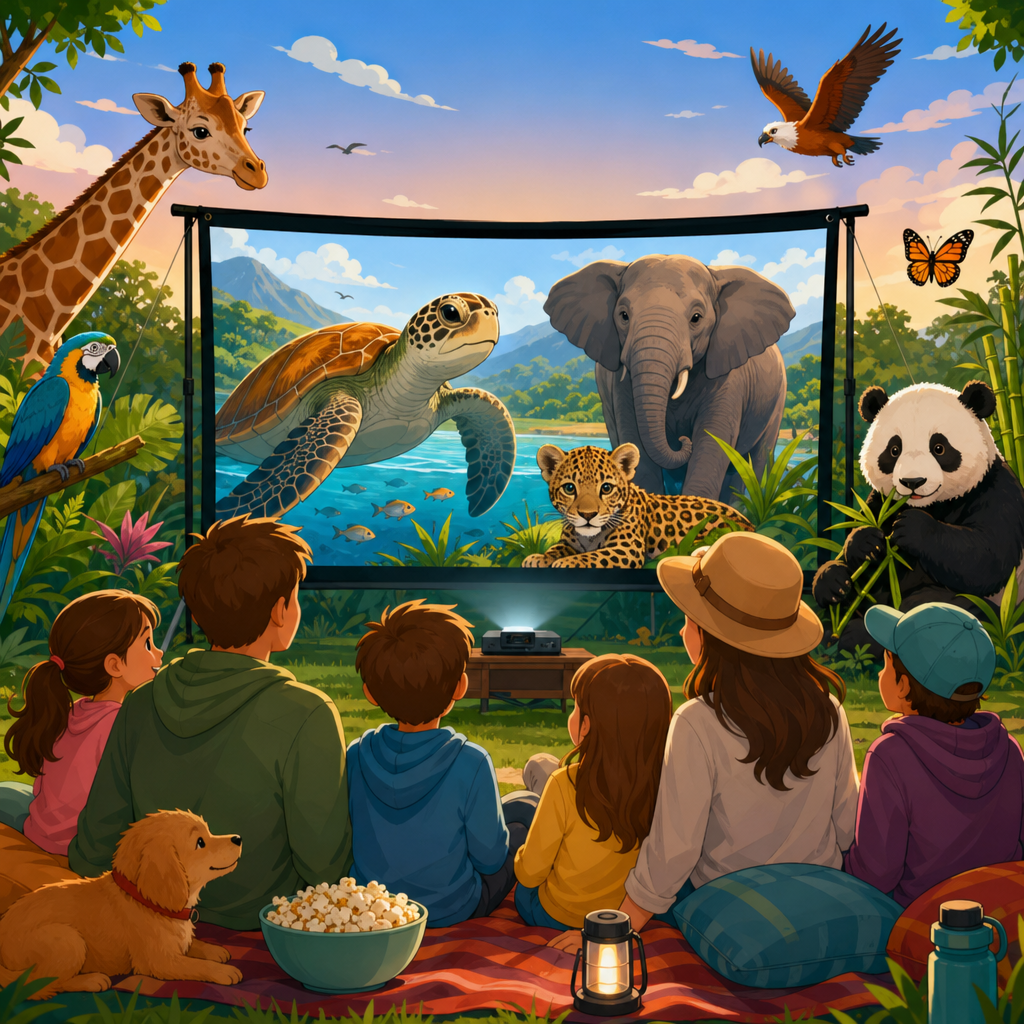
Wildlife documentaries become far more educational when they are framed before and after viewing. In homes, that can be simple: ask what animal the viewer noticed most, what challenge it faced, and what helped it survive. These questions strengthen observation and recall. Families can then extend the lesson with a walk, library book, zoo program, or native planting activity. The point is not to turn every movie night into formal instruction, but to connect screen learning with lived experience. Children retain more when a documentary on birds is followed by actual birdwatching, even for fifteen minutes.
In classrooms, film should support a learning objective rather than fill time. Teachers get better results by showing selected clips tied to one concept than by assigning a full documentary without structure. A ten-minute segment on wolf reintroduction can anchor lessons on trophic cascades and ecosystem management more effectively than a ninety-minute screening with no guiding questions. I have seen strong outcomes when students track claim, evidence, and unanswered questions while watching. That approach teaches both science content and source evaluation. Closed captions, transcripts, and pause points also improve accessibility and comprehension.
Libraries, museums, nature centers, and community groups can use wildlife conservation films to create shared learning environments across generations. Public screenings work best when paired with expert discussion, local context, or an action step. A documentary on pollinators followed by a native garden workshop is more memorable than the film alone. A wetland restoration film paired with a visit from a watershed group makes conservation tangible. Community learning succeeds when people see how global themes connect to local habitats, local species, and local choices. That is one reason hub content under Education & Resources should emphasize companion materials such as study guides, discussion questions, glossary pages, and beginner-friendly explanations of recurring terms.
Evaluating accuracy, ethics, and real conservation impact
Not every wildlife film labeled educational is equally reliable. Accuracy starts with source quality. Strong documentaries align with established research, identify experts, and avoid exaggerated claims about extinction timelines, animal behavior, or intervention success. Viewers should be cautious with films that anthropomorphize heavily, present one anecdote as proof, or imply that a single rescue solved a systemic problem. Conservation is usually slow, data-driven work. Honest films show incremental progress, setbacks, and the need for long-term monitoring. When I evaluate a documentary, I look for links to research institutions, conservation organizations, or official management plans, then compare key claims with independent sources.
Ethics matter too. Wildlife filmmaking can disturb animals if done irresponsibly, especially during breeding, denning, or migration. Reputable productions follow permitting rules, distance guidelines, and species-specific welfare protocols. They also handle sensitive conservation issues carefully, particularly when showing locations of rare species vulnerable to poaching or disturbance. Ethical films respect local communities, acknowledge Indigenous knowledge appropriately, and avoid framing people living near wildlife as obstacles by default. The best documentaries show that durable conservation depends on trust, participation, and fairness.
Finally, it is worth asking what impact a film actually has. Awareness is useful, but educational value rises when documentaries direct viewers toward meaningful next steps: citizen science platforms such as eBird or iNaturalist, habitat restoration volunteering, sustainable seafood guides, policy engagement, or donations to credible organizations with measurable programs. The strongest wildlife conservation films for all ages leave audiences informed, emotionally engaged, and equipped to continue learning. Explore the related guides in this educational videos and documentaries hub, build a watchlist by age and topic, and use each film as a starting point for deeper conservation action in your home, classroom, or community.
Frequently Asked Questions
What makes wildlife conservation films valuable for viewers of all ages?
Wildlife conservation films are valuable because they do much more than showcase beautiful animals or dramatic landscapes. At their best, they explain how ecosystems function, show how species depend on one another, and connect environmental changes to real-world human decisions. For children, these films can spark curiosity and build early empathy for living things. For teens, they can introduce more complex ideas such as habitat loss, biodiversity decline, climate change, and sustainable resource use. For adults, they often provide a deeper understanding of environmental policy, conservation science, and the social challenges involved in protecting wildlife.
What makes these films especially effective across age groups is their ability to turn abstract environmental issues into visible, memorable stories. A textbook might define food webs or migration patterns, but a film can show them in motion. Viewers can watch predators and prey interact, observe seasonal changes, and see the consequences of deforestation, pollution, or poaching unfold in ways that feel immediate and understandable. That combination of visual storytelling and scientific context helps learners retain information more effectively.
Another key strength is accessibility. Families can watch together at home, teachers can use selected clips in the classroom, and lifelong learners can explore advanced topics through full-length documentaries. A well-made conservation film offers multiple points of entry, meaning younger viewers can connect with the animals and settings while older viewers engage with the science, ethics, and policy questions underneath the story. That flexibility is what makes wildlife conservation films such powerful educational tools for all ages.
How can families and educators choose age-appropriate wildlife conservation films?
Choosing the right wildlife conservation film starts with understanding both the developmental level of the audience and the educational goal. For younger children, the best films usually emphasize wonder, animal behavior, and clear ecological relationships without overwhelming them with distressing imagery or overly technical explanations. Films for this age group often work best when they use straightforward narration, strong visuals, and hopeful conservation messages. The goal is to build interest and respect for wildlife without causing confusion or fear.
For middle-grade viewers and teens, families and educators can begin introducing more detailed themes such as endangered species, habitat fragmentation, ocean health, climate impacts, and the role of scientific research. At these ages, students are often ready to think critically about cause and effect. They can understand that conservation is not only about saving individual animals, but also about protecting ecosystems, supporting communities, and making informed choices about land, water, and consumption. Films that include researchers, fieldwork, and problem-solving strategies are especially useful because they show conservation as an active, evidence-based effort.
Adults and mixed-age audiences often benefit from films that balance emotional storytelling with factual depth. When selecting a film for a classroom, family movie night, or community group, it helps to preview the content for tone, pacing, and potentially sensitive scenes involving predation, injury, or environmental destruction. It is also wise to look for productions that are scientifically credible, current, and transparent about their sources or expert interviews. The most effective choices do not simply entertain; they encourage discussion, raise meaningful questions, and leave viewers with a clearer understanding of what conservation involves in practice.
How do wildlife conservation films support learning in schools and informal education settings?
Wildlife conservation films are highly effective in schools because they can support science, geography, social studies, environmental education, and even language arts. In science lessons, they help students visualize ecological concepts such as adaptation, food chains, symbiosis, migration, and population dynamics. In geography, they can show how climate, terrain, and human land use affect species distribution. In social studies, they can introduce topics like indigenous stewardship, conservation law, sustainable development, and the economic pressures that shape environmental decisions. Because they are rich in both information and narrative, they fit naturally into interdisciplinary learning.
In informal education settings such as museums, nature centers, homeschool environments, libraries, and family living rooms, these films offer a flexible way to explore environmental topics without requiring advanced prior knowledge. A short documentary segment can serve as a conversation starter, while a feature-length film can anchor a larger unit on biodiversity or habitat conservation. Educators often use follow-up activities to deepen learning, including species research projects, ecosystem mapping, reflective writing, discussion prompts, and citizen science participation. The film becomes not the end of the lesson, but the beginning of broader engagement.
Perhaps most importantly, conservation films support emotional as well as intellectual learning. They help viewers connect facts to living systems and real conservation challenges. When students see the behavior of a threatened species, the work of field scientists, or the recovery of a damaged habitat, they are more likely to understand why conservation matters. That emotional connection can increase motivation, strengthen memory, and encourage active participation in environmental learning long after the screen goes dark.
What should viewers look for in a high-quality wildlife conservation documentary?
A high-quality wildlife conservation documentary should combine scientific accuracy, strong storytelling, and a clear educational purpose. The most trustworthy films present information in a way that is engaging but not misleading. They rely on current research, credible expert voices, and careful explanations of animal behavior and environmental processes. Rather than exaggerating danger or oversimplifying complex issues, they help viewers understand both the beauty of wildlife and the real pressures species face in a changing world.
Good conservation films also provide context. They do not isolate animals from the ecosystems, communities, and environmental systems around them. Instead, they show how habitat, climate, food availability, human activity, and policy decisions all influence wildlife survival. This broader perspective is essential because conservation is rarely about one species alone. It is usually about ecological relationships, long-term stewardship, and balancing environmental needs with social and economic realities. Films that acknowledge these complexities tend to be more educational and more credible.
Another important marker of quality is whether the documentary leaves viewers informed and empowered rather than merely alarmed. Effective films often include examples of restoration, community action, scientific monitoring, protected areas, or practical conservation strategies. They show that while environmental problems are serious, they are not beyond response. This balance matters for all audiences, especially younger viewers, because it supports informed concern instead of helplessness. A strong wildlife conservation documentary should inspire curiosity, deepen understanding, and encourage thoughtful action based on evidence rather than emotion alone.
Can watching wildlife conservation films really inspire people to take action?
Yes, wildlife conservation films can absolutely inspire action, especially when they connect compelling stories with practical next steps. Visual storytelling has a unique ability to make environmental issues feel real and personal. When viewers witness the struggles of endangered species, the loss of critical habitats, or the success of recovery efforts, they often move from passive awareness to active concern. That emotional shift is important because people are more likely to act when they understand both what is happening and why it matters.
The action inspired by these films does not have to be dramatic to be meaningful. For families, it might mean supporting conservation organizations, reducing single-use plastics, visiting protected natural areas responsibly, or learning more about local wildlife. For students, it could lead to school projects, habitat gardens, recycling initiatives, or participation in community science programs. For educators and community leaders, a film may become the foundation for broader discussions about environmental responsibility, sustainability, and civic engagement. In this way, a single documentary can serve as a bridge between learning and real-world behavior.
That said, the strongest films do more than stir emotion. They explain solutions, highlight credible conservation work, and show that progress is possible through science, policy, education, and community involvement. This practical dimension is what turns inspiration into action. Viewers come away not just with admiration for wildlife, but with a clearer sense of how individual choices and collective efforts can help protect species and ecosystems. When that happens, wildlife conservation films become more than educational media; they become catalysts for lasting environmental awareness and participation.