Educational YouTube channels that teach sustainability have become one of the most practical ways to learn how environmental systems work, why climate and resource issues matter, and what actions individuals, schools, and communities can realistically take. In this context, sustainability means meeting present needs without undermining the ability of future generations to meet theirs. It includes environmental protection, responsible resource use, climate resilience, circular economy thinking, food systems, energy, waste reduction, and social equity. Educational videos and documentaries matter because they translate complex research into accessible stories, visuals, and demonstrations. I have used these channels in workshops, curriculum planning, and staff training, and the best ones consistently do three things well: they explain systems clearly, they cite evidence, and they connect global problems to daily decisions. As a hub within Education & Resources, this guide covers the main types of sustainability video content, which YouTube channels stand out, how to evaluate credibility, and how to use documentaries and short-form explainers as part of a larger learning path.
What makes a sustainability YouTube channel genuinely educational
A strong sustainability channel does more than promote eco-friendly habits or repeat headlines about climate change. It teaches cause and effect. When I assess channels for students or professional development, I look for accurate terminology, transparent sourcing, strong visual explanation, and a willingness to discuss tradeoffs. For example, a credible video about renewable energy should explain intermittency, storage, grid balancing, land use, and lifecycle emissions rather than treating solar and wind as magic fixes. A reliable channel should also distinguish among mitigation, adaptation, conservation, and restoration. These terms are not interchangeable. Mitigation reduces the drivers of climate change, adaptation prepares societies for its impacts, conservation protects ecosystems and resources, and restoration repairs degraded systems.
Educational value also comes from format. Short explainers are useful for introducing concepts such as biodiversity loss or carbon footprints, while documentary-style videos build emotional understanding by showing affected communities, infrastructure, and policy decisions. Channels that interview scientists, planners, farmers, engineers, and indigenous leaders usually provide more depth than channels built entirely around opinion. Another important sign is whether the channel updates older claims. Sustainability science evolves quickly, especially in areas like battery storage, carbon accounting, regenerative agriculture, and green building materials. Channels that revise outdated assumptions tend to be more dependable for long-term learning.
Best educational YouTube channels for sustainability fundamentals
Several established channels do an excellent job teaching core sustainability concepts. CrashCourse has accessible series on ecology, climate, geography, and economics that help viewers understand systems thinking. Its strength is scaffolding: videos define terms, show relationships, and move from basic concepts to policy implications. TED-Ed is useful for concise animated lessons on water scarcity, oceans, consumer waste, and urban design. These videos are especially effective for middle school, high school, and adult beginners because they pair a single question with a clear answer.
For viewers who want deeper environmental science, PBS Terra and PBS Eons regularly publish thoughtful, well-produced videos about ecosystems, extinction, environmental change, and earth systems. National Geographic offers shorter documentary segments that connect wildlife, conservation, and human activity in ways that are visually compelling without sacrificing substance. DW Planet A is one of the best channels for current sustainability issues because it blends journalism with explainers on fast fashion, greenwashing, transport, plastic waste, and energy transitions. Bloomberg Originals and the Financial Times also produce strong sustainability reporting, particularly on clean technology, climate finance, cities, and industrial decarbonization.
Not every good channel is broad. Some specialize. Just Have a Think focuses on climate solutions, energy systems, transport, carbon removal, and policy choices, often summarizing new research or industry developments with unusual clarity. Our Changing Climate combines essay-style analysis with practical discussion of infrastructure, consumption, and public policy. Climate Town uses humor, but the research foundation is serious, making it useful for older students and adult learners who engage with media criticism. For food systems and agriculture, channels featuring soil health, agroecology, and supply chains help audiences see that sustainability is not just about recycling or electricity; it is also about land use, water, labor, and biodiversity.
How documentaries and long-form videos deepen sustainability learning
Documentaries remain essential because many sustainability issues cannot be understood in five minutes. Long-form videos create space for context, historical drivers, and competing interests. A documentary on deforestation, for instance, can show commodity markets, local livelihoods, habitat fragmentation, government enforcement, and international demand in one narrative. That is far more educational than a simple message to buy less paper. The best documentary channels and producers present landscapes, institutions, and incentives together, which is how sustainability problems actually work.
Well-known documentary sources on YouTube include BBC Earth, Al Jazeera English, DW Documentary, and PBS Frontline segments when environmental investigations are covered. These sources often examine energy infrastructure, water access, waste trade, air pollution, industrial farming, and climate adaptation. A useful documentary does not simply identify villains and victims. It shows constraints. Coal regions may depend on a single industry. Farmers may overuse groundwater because incentives reward yield over resilience. Cities may struggle to build transit because land use was planned around cars for decades. When viewers see the structural forces, they understand why durable sustainability solutions require policy, finance, engineering, and behavior change together.
For educators, documentaries work best when paired with guiding questions. Ask viewers to identify stakeholders, externalities, short-term benefits, long-term costs, and policy alternatives. That turns passive watching into analysis. In practice, I have found that a thirty-minute documentary followed by a short discussion often produces better retention than assigning several disconnected clips. The narrative arc helps learners remember the facts.
Channels by topic: energy, food, cities, waste, and conservation
Because this hub covers educational videos and documentaries broadly, it helps to organize channels by sustainability topic. Learners rarely start with an abstract interest in sustainability. More often, they start with a concrete question: How do electric grids handle renewables? Why is food waste such a large emissions issue? What makes a city walkable? Why is plastic recycling so limited? The right channel depends on that question.
| Topic | Useful Channels | What They Teach Well |
|---|---|---|
| Energy and climate | Just Have a Think, Bloomberg Originals, DW Planet A | Grid systems, storage, hydrogen, transport, industrial decarbonization, policy tradeoffs |
| Ecology and conservation | PBS Terra, National Geographic, BBC Earth | Biodiversity, habitat loss, ecosystems, restoration, species interactions |
| Food and agriculture | TED-Ed, documentary channels, specialist farm educators | Soil, water use, livestock impacts, regenerative practices, supply chains |
| Cities and design | Our Changing Climate, Bloomberg Originals, urbanist channels | Transit, density, buildings, public space, heat islands, resilience planning |
| Waste and materials | DW Planet A, Climate Town, investigative media channels | Plastic systems, e-waste, circular economy, repair, reuse, greenwashing |
This topic-based approach matters because sustainability is interdisciplinary. A learner watching a city-planning video may quickly discover embedded carbon in buildings, stormwater management, and equity in access to transit. A viewer focused on food may end up learning about methane, fertilizer runoff, pollinator decline, and packaging waste. Good hub content should encourage those connections, which is why related resources across Education & Resources should link naturally from each topic page.
How to judge whether a sustainability video is credible
Viewers should be selective. Sustainability attracts excellent educators, but it also attracts oversimplification, brand-led messaging, and ideological content dressed up as science. The fastest credibility check is sources. Does the video cite peer-reviewed research, the Intergovernmental Panel on Climate Change, the International Energy Agency, the United Nations Environment Programme, NASA, NOAA, the World Resources Institute, or recognized academic institutions? Named sources do not guarantee perfect conclusions, but they show the creator is working from established evidence.
Next, check for precision. If a creator says a product is “carbon neutral,” do they explain whether that means direct emission cuts, offsets, lifecycle analysis, or a marketing label? If a documentary claims electric vehicles are worse than conventional cars, does it compare full lifecycle emissions in regions with different electricity mixes, or does it rely on mining footage without context? Sound educational content acknowledges complexity. Recycling helps, but reduction and reuse often matter more. Plant-based diets generally reduce environmental impact, but crop choice, transport, waste, and local water conditions still matter. Hydropower can reduce fossil fuel use, yet dam construction can damage ecosystems and communities.
Presentation style also reveals credibility. Strong channels avoid false balance, but they do represent legitimate uncertainty. They separate what is well established from what is still contested. For classroom or public resource use, I also recommend checking publication date, comments from subject experts, and whether the channel corrects errors. In sustainability education, confidence should come from evidence, not certainty theater.
Using YouTube sustainability channels in classrooms, libraries, and self-study
The best educational YouTube channels become far more useful when they are curated into pathways. For beginners, start with a foundation sequence: one video on climate science, one on ecosystems, one on energy systems, one on food systems, and one on circular economy principles. This prevents the common mistake of treating sustainability as a collection of isolated consumer tips. Once the basics are in place, learners can move into documentaries and sector-specific topics such as green buildings, water governance, or environmental justice.
In classrooms, short videos work well as anticipatory sets, concept reinforcement, or revision tools. A teacher might use a TED-Ed animation to introduce the carbon cycle, then assign a longer PBS Terra or DW Planet A video to explore land use or industrial emissions. Libraries and community centers can build playlists around local priorities such as drought, coastal flooding, waste management, or urban mobility. For self-study, I recommend a notes-based approach: write down the main claim, evidence used, unresolved questions, and one practical implication after each video. That simple habit improves retention and critical thinking.
Accessibility matters too. Captions, transcripts, visual clarity, and plain language make sustainability education more usable across age groups and language backgrounds. Channels with consistent terminology and strong graphics are especially helpful for multilingual audiences. When videos are embedded in broader resource collections with related articles, glossaries, and reading lists, learners can move from awareness to real understanding.
Limits of video learning and how this hub should guide the next step
Even the best educational videos and documentaries have limits. Video is excellent for explanation and motivation, but weaker for hands-on practice, local data interpretation, and technical application. Watching a documentary about composting does not teach a school how to manage contamination rates. A beautifully edited video about green architecture does not replace reading a building standard such as LEED criteria, Passive House principles, or local energy codes. Likewise, a channel explaining regenerative agriculture cannot substitute for field observation, soil testing, or extension guidance specific to climate and crop type.
That is why a sub-pillar hub on educational videos and documentaries should point readers toward deeper resources. After learning from YouTube, the next step might be scientific reports, classroom lesson plans, sustainability books, data dashboards, local government guidance, or nonprofit toolkits. For example, a viewer inspired by videos on urban trees should move toward canopy mapping data, municipal forestry plans, and heat vulnerability studies. Someone interested in zero waste should look at local materials recovery data and producer responsibility policies. Video starts the learning process; it should not be the endpoint.
Educational YouTube channels that teach sustainability are most valuable when they combine clear explanation, credible sources, and real-world examples that show how environmental systems connect to policy, technology, and daily life. The strongest channels help viewers understand not only what the problems are, but why they persist and which solutions are realistic under actual economic and social conditions. Across educational videos and documentaries, the most useful creators are the ones who define terms carefully, show tradeoffs honestly, and update their analysis as science and policy evolve.
As the hub page for this subtopic within Education & Resources, this guide highlights the most effective starting points: broad channels for sustainability fundamentals, documentary sources for deeper context, topic-specific channels for energy, food, cities, waste, and conservation, and practical criteria for judging credibility. It also makes a crucial point that is often missed online: sustainability learning works best as a pathway. Short explainers introduce concepts, long-form documentaries build systems understanding, and follow-up articles, reports, and local resources turn attention into informed action.
If you are building your own learning plan, start with one trusted general channel, one documentary source, and one topic-specific creator aligned with your interests. Then use the rest of this Education & Resources section to go deeper into the issues those videos raise. That simple structure will give you a stronger, more accurate foundation for understanding sustainability and acting on it.
Frequently Asked Questions
What can viewers learn from educational YouTube channels that teach sustainability?
Educational YouTube channels that focus on sustainability can teach far more than simple eco-friendly tips. The best channels explain how natural systems, energy use, food production, transportation, waste, water, climate, and economics all connect. Viewers often learn the basic principles of sustainability, including how societies can meet present needs without damaging the ability of future generations to do the same. That means understanding topics such as renewable energy, biodiversity, pollution, carbon emissions, responsible consumption, regenerative agriculture, circular economy models, and climate resilience.
Many channels also make complex environmental issues easier to understand by breaking them into practical, visual lessons. For example, a channel may explain what happens to plastic after it is thrown away, how electricity grids integrate solar and wind power, why fast fashion creates environmental strain, or how cities can reduce emissions through public transit and better building design. This kind of content helps viewers move from vague concern to informed understanding. Instead of seeing sustainability as a buzzword, they begin to understand it as a system of choices, trade-offs, and long-term planning that affects daily life, public policy, education, and business.
Another major benefit is that these channels often connect global problems to realistic action. Viewers can learn how individual habits matter, but they also gain a clearer picture of institutional and community-level change. A strong sustainability channel will often emphasize that meaningful progress comes from both personal responsibility and larger structural improvements, such as cleaner infrastructure, smarter regulations, and more efficient supply chains. This balanced perspective is especially valuable because it prevents oversimplification and gives learners a more accurate, actionable understanding of environmental progress.
How do I know whether a sustainability YouTube channel is credible and worth following?
Credibility matters because sustainability is a field where science, policy, economics, and advocacy often overlap. A trustworthy YouTube channel typically shows where its information comes from. Look for creators who reference scientific studies, reports from recognized institutions, interviews with experts, or data from universities, government agencies, and respected international organizations. Credible channels are also careful about uncertainty. They do not present every environmental issue as simple, and they avoid sensational claims that sound dramatic but lack evidence.
It is also a good sign when a channel explains trade-offs instead of pretending every solution is perfect. For example, a reliable sustainability educator may discuss the benefits of electric vehicles while also acknowledging battery supply chain challenges, or promote recycling while clarifying that reducing waste upstream is often more effective. This kind of nuance shows the creator understands the topic in a serious way. Channels that only rely on fear, guilt, or oversimplified “one easy fix” messaging are usually less dependable.
You should also pay attention to consistency and transparency. Strong channels tend to define key terms clearly, update older assumptions when new information becomes available, and separate opinion from evidence-based explanation. Reading comments, checking video descriptions for sources, and comparing claims across multiple educational channels can also help. In general, the best sustainability channels leave viewers feeling better informed, not manipulated. They encourage critical thinking, provide context, and help audiences understand both the scale of environmental challenges and the realistic pathways for improvement.
Why are YouTube channels such an effective way to teach sustainability compared with other learning formats?
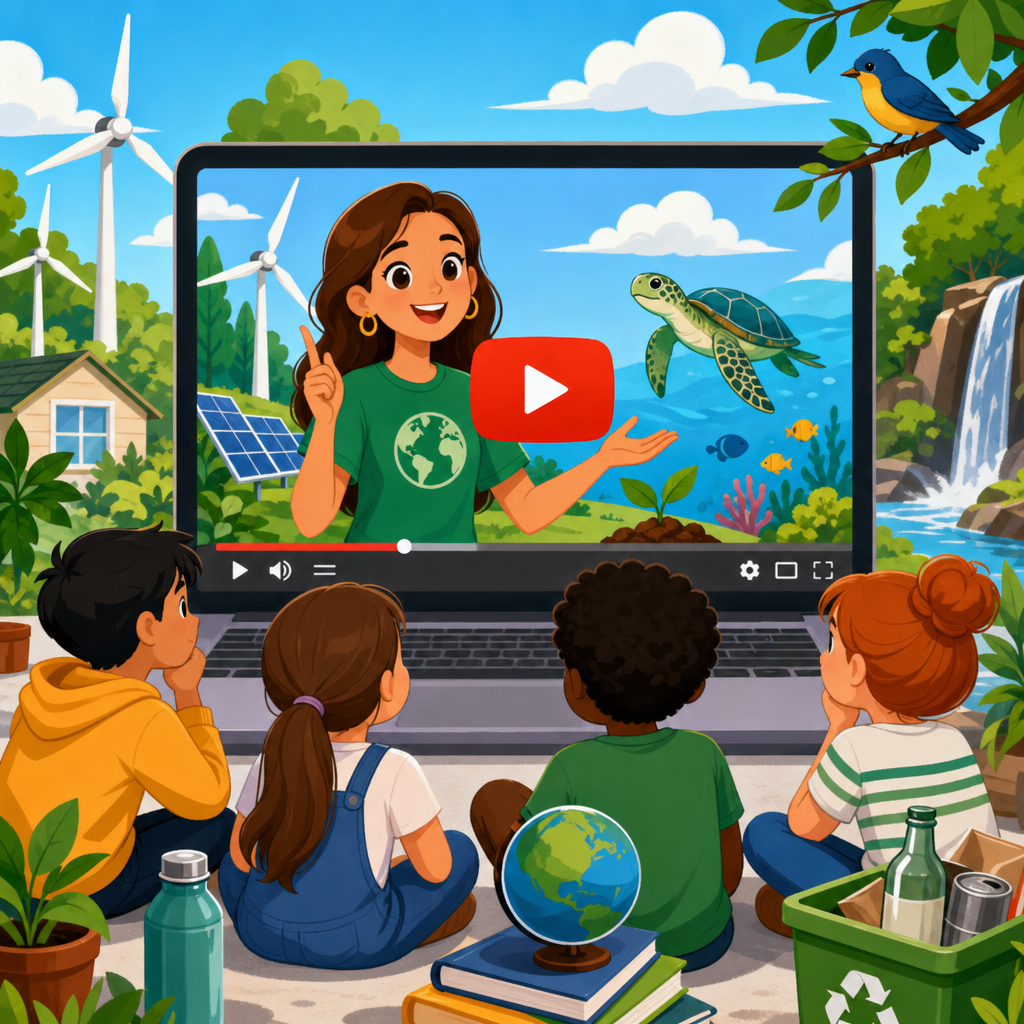
YouTube is especially effective for sustainability education because many environmental topics are easier to understand visually. Systems such as water cycles, carbon flows, waste streams, renewable energy infrastructure, food networks, and urban planning can be abstract when described only in text. Video allows educators to combine animation, charts, field footage, interviews, demonstrations, and case studies in a way that makes these systems more concrete. That format helps viewers grasp not only what sustainability means, but how it operates in the real world.
Another advantage is accessibility. People can learn at their own pace, revisit difficult concepts, and explore topics according to their interests, whether that means zero-waste living, climate science, green technology, ethical consumption, sustainable architecture, or environmental justice. Educational YouTube channels also make expert knowledge more available to students, teachers, parents, and lifelong learners who may not have access to formal environmental courses. For many viewers, these channels serve as a bridge between academic knowledge and everyday understanding.
Just as importantly, YouTube can show sustainability in action. A textbook may define composting, passive house design, or regenerative farming, but a video can show how those practices actually work, what tools they require, and what results they produce over time. This makes learning feel immediate and practical. The platform also supports ongoing education. Because environmental issues evolve with new technology, policy changes, and scientific findings, creators can continually publish updated content. That makes YouTube a dynamic learning environment for a topic that is constantly developing.
Can sustainability YouTube channels help students, teachers, and schools with environmental education?
Yes, sustainability YouTube channels can be extremely valuable for students, teachers, and schools because they offer flexible, engaging content that supports both structured lessons and independent learning. For students, these videos can make topics such as climate change, ecosystems, resource management, waste reduction, and renewable energy easier to understand by connecting them to familiar experiences. A well-made video can turn a broad idea like sustainable development into something relatable by showing how food choices, transportation systems, product design, and local infrastructure affect environmental outcomes.
For teachers, YouTube channels can serve as useful classroom supplements. Short explainers can introduce a topic, longer documentaries can deepen discussion, and creator-led breakdowns can provide fresh examples for assignments or group projects. Sustainability is inherently interdisciplinary, which makes these channels especially useful across science, geography, economics, civics, and social studies. A teacher might use one video to explain carbon footprints, another to discuss water scarcity, and another to explore how policy and innovation influence community resilience. This variety helps students see sustainability as a real-world framework rather than a single isolated subject.
Schools can also use these channels to support broader environmental initiatives beyond the classroom. Videos can inspire recycling programs, school garden projects, energy-saving campaigns, waste audits, or student-led sustainability clubs. Because many creators present both problems and solutions, students are more likely to feel empowered rather than overwhelmed. That is an important educational outcome. Effective sustainability education should not only inform learners about environmental risks; it should also help them understand practical responses and encourage thoughtful participation in their communities.
What kinds of actions can viewers realistically take after learning from sustainability YouTube channels?
One of the biggest strengths of educational sustainability channels is that they often translate broad environmental ideas into realistic next steps. After learning from these videos, viewers may begin by improving everyday habits such as reducing food waste, cutting unnecessary consumption, using energy more efficiently, repairing items instead of replacing them, choosing lower-impact transportation when possible, and paying closer attention to product materials and packaging. These actions may seem small, but they build awareness and often lead to more informed decisions over time.
However, the most useful channels usually go beyond individual lifestyle changes. They help viewers understand that sustainability also involves collective action, community planning, and systemic improvement. Someone who starts by watching videos about waste reduction may later support local composting efforts, advocate for better public transit, participate in neighborhood cleanups, encourage energy upgrades in schools or workplaces, or become more engaged in local environmental policy. In this way, YouTube can help people move from passive interest to active participation.
Perhaps most importantly, sustainability education can improve the quality of decision-making. Viewers become better equipped to ask practical questions: Is this product designed to last? Where does this energy come from? What happens to this material at the end of its life? Does this solution reduce harm in one area while creating problems in another? That mindset is one of the most valuable outcomes of learning from educational YouTube channels. Sustainability is not just about adopting a checklist of green habits; it is about developing informed judgment, understanding long-term consequences, and supporting choices that protect environmental systems while strengthening communities and future resilience.