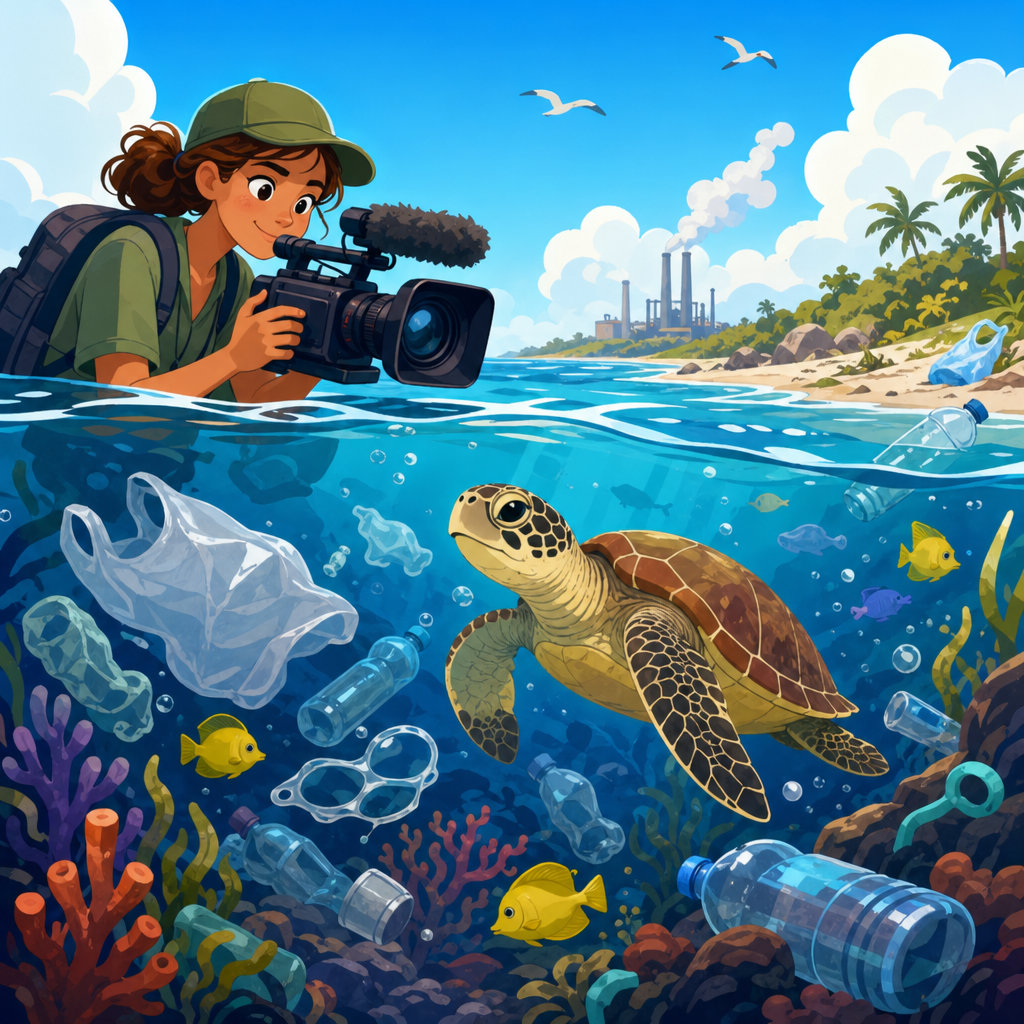
Plastic pollution has moved from a distant environmental concern to an everyday reality visible on beaches, city streets, farmland, and even inside the human body. A strong list of must-watch documentaries about plastic pollution does more than recommend films for an evening watchlist; it gives educators, students, campaigners, and curious viewers a structured entry point into one of the defining waste crises of the modern economy. In my work reviewing environmental education materials, I have found that documentaries often accomplish what reports alone cannot: they connect polymer chemistry, packaging design, waste policy, public health, and consumer culture in ways people immediately understand. This hub page on educational videos and documentaries is designed to help readers choose the right film for their goals, whether they want a classroom discussion starter, a policy-focused explainer, or a deeply personal story about communities living with plastic waste.
Plastic pollution refers to the accumulation of synthetic polymer materials in natural and built environments, including macroplastics such as bottles and fishing gear, microplastics smaller than five millimeters, and nanoplastics that are smaller still. The issue matters because plastic does not simply disappear; it fragments, travels, absorbs and releases chemicals, harms wildlife, burdens municipal waste systems, and exposes weaknesses in global trade and recycling infrastructure. Documentary filmmaking has become one of the most effective educational tools for explaining this complexity. The best titles combine field reporting, interviews with scientists and waste workers, supply-chain investigation, and visual evidence from rivers, oceans, landfills, and petrochemical corridors. As a hub under Education & Resources, this guide covers educational videos and documentaries comprehensively, helping readers understand which films are best for awareness, teaching, advocacy, and deeper research.
What makes a plastic pollution documentary worth watching
A worthwhile plastic pollution documentary should answer five questions clearly. What kinds of plastic are causing the problem? Where do they come from? Why do current waste systems fail to contain them? Who is most affected? What solutions show measurable promise? Films that stay at the level of emotional imagery alone can raise awareness, but they often leave viewers without a practical understanding of sources, responsibility, or next steps. By contrast, stronger documentaries explain resin codes, single-use packaging, export markets, marine leakage, extended producer responsibility, deposit return systems, reuse models, and the limits of mechanical recycling. They also show the human side: waste pickers sorting material by hand, coastal residents losing fisheries, and neighborhoods coping with incinerators or petrochemical expansion.
From an educational perspective, the most useful documentaries are those that make specific claims viewers can verify. Look for films that feature marine biologists, toxicologists, municipal waste managers, journalists, and policy specialists rather than relying only on celebrity narration. Good documentaries also acknowledge tradeoffs. Plastic has legitimate uses in medicine, food safety, and infrastructure, so the question is not whether all plastic is inherently bad. The real issue is the scale of disposable plastics, weak product design, low-value packaging formats, underfunded collection systems, and policy frameworks that treat downstream cleanup as a substitute for upstream prevention. The titles below stand out because they help viewers understand those distinctions.
Must-watch documentaries about plastic pollution
A Plastic Ocean remains one of the most widely recommended starting points. Released in 2016, it follows journalist Craig Leeson and a global team documenting marine debris across multiple regions. Its strength is accessibility: viewers quickly grasp how plastic reaches the ocean, how wildlife encounters it, and why fragments are harder to solve than visible litter. For general audiences and secondary school settings, it is often the film that turns abstract concern into concrete understanding. I have seen it work especially well as an introductory screening before lessons on waste systems, because it gives students visual examples they can connect to later topics such as microplastic pathways and packaging design.
Plastic China, directed by Jiu-Liang Wang, is essential for anyone trying to understand the international waste trade. Rather than speaking in broad terms about recycling, it shows daily life around imported plastic waste in rural China before major policy shifts restricted those imports. The documentary is powerful because it does not let viewers imagine recycling as a clean, frictionless process. It reveals contamination, labor intensity, toxic exposure, and inequality. For educators, this film is one of the clearest examples of why recycling statistics can mislead when they ignore quality, contamination rates, and the actual conditions under which discarded material is processed.
The Story of Plastic is one of the strongest hub documentaries because it connects extraction, manufacturing, consumption, and disposal. Produced with policy and movement-building in mind, it traces plastic back to fossil fuel feedstocks and follows it forward into landfills, incinerators, waterways, and environmental justice communities. This systems view is exactly what many viewers need after watching ocean-focused films. It explains why beach cleanups matter but cannot solve overproduction. For university courses, nonprofit workshops, and community discussion groups, it is especially valuable because it frames plastic pollution as an economic and political problem, not merely a consumer litter problem.
Albatross approaches the issue through wildlife storytelling, focusing on Laysan albatrosses on Midway Atoll. The imagery is difficult but unforgettable. This is not the best first documentary for every audience, yet it is one of the most effective at showing how plastic moves through food webs and into living bodies. In classroom practice, I would pair this film with a guided discussion and scientific background on seabird foraging behavior, ingestion pathways, and trophic transfer. Used carefully, it shifts plastic pollution from a waste management topic to a biodiversity topic, which broadens student understanding.
Bag It offers a practical, consumer-facing perspective centered on single-use plastics, especially plastic bags and food-contact materials. Compared with broader investigative films, it is more conversational and behavior-oriented, making it useful for middle school audiences, community groups, and local campaigns. What it does well is show how everyday convenience became structurally embedded in retail and household life. That makes it a strong entry point for discussions about bans, fees, reusable systems, and habit change. For municipalities considering bag policies, it provides language and examples that are easy for the public to follow.
| Documentary | Best for | Main focus | Teaching value |
|---|---|---|---|
| A Plastic Ocean | Beginners, schools | Marine debris and global awareness | Strong visual introduction to ocean leakage |
| Plastic China | Policy, ethics, waste trade | Imported recycling waste and labor | Excellent for discussing limits of recycling |
| The Story of Plastic | Universities, advocates | Full life cycle of plastic | Best systems-level overview |
| Albatross | Wildlife and conservation audiences | Seabird ingestion of plastic | Powerful biodiversity case study |
| Bag It | Community engagement | Single-use plastic in daily life | Accessible behavior-change framing |
How these films explain the real sources of plastic pollution
One reason people search for educational videos and documentaries on plastic pollution is simple: they want to know where the waste actually comes from. The strongest films explain that leakage is not caused by one bad actor or one careless habit. It comes from a chain of decisions. Producers choose low-cost polymers and complex multilayer packaging. Brands prioritize shelf appeal, low shipping weight, and short-term convenience. Retail systems normalize disposability. Municipal collection may be incomplete or underfunded. Sorting facilities reject contaminated or low-value plastics. When collection fails, material is burned, buried, dumped, or carried by wind and rain into drainage systems and rivers.
Documentaries also help correct common misconceptions about recycling. Many viewers assume that if a package has a chasing-arrows symbol, it is widely recyclable. In practice, recyclability depends on local infrastructure, polymer type, color, additives, food contamination, and end-market demand. A clear PET bottle may have higher recycling value than a black plastic tray, multilayer snack pouch, or flexible film, but even PET can be rejected if contaminated. Films such as Plastic China and The Story of Plastic show why collection alone is not enough. This is one of the most important lessons for educators: plastic pollution is a design and systems problem before it becomes a litter problem.
Several documentaries go further by linking plastic production to petrochemicals and climate strategy. As energy systems shift, oil and gas companies increasingly view petrochemicals as a growth area. That means plastic production can expand even as public concern about waste rises. This insight matters because it explains why cleanup campaigns, while useful, cannot solve the crisis on their own. Viewers need to understand upstream controls such as packaging reduction targets, reuse infrastructure, producer responsibility laws, minimum recycled content standards, and restrictions on problematic materials. The best films make this policy connection without losing the human story.
Choosing the right documentary for classrooms, training, and community events
Not every documentary serves the same audience. For primary and secondary education, choose films with clear structure, manageable runtime, and content that can be contextualized with age-appropriate discussion. A Plastic Ocean and selected clips from Bag It often work well because they explain visible impacts without requiring too much prior policy knowledge. For higher education, public administration courses, and sustainability training, The Story of Plastic provides a stronger foundation because it addresses feedstocks, regulation, environmental justice, and international governance. For journalism, ethics, and supply-chain discussions, Plastic China is especially effective because it exposes hidden labor and the consequences of exporting low-value waste.
In community settings, I recommend matching the film to the action you want the audience to take afterward. If the goal is a beach cleanup or local awareness event, a marine-focused documentary creates immediate emotional engagement. If the goal is support for refill systems, school procurement changes, or city policy, choose a film that goes beyond oceans and shows production, packaging decisions, and disposal economics. The post-screening discussion matters as much as the film itself. Prepare a short guide with questions such as: Which products are most problematic locally? What materials are accepted in our recycling program? Where are nearby refill or reuse options? Which local ordinances are under consideration?
This hub page on educational videos and documentaries works best when paired with related resources such as articles on microplastics, recycling myths, zero-waste teaching materials, and policy explainers. Internal topic clusters help readers move from awareness to action. A visitor may begin by searching for must-watch documentaries about plastic pollution, but their next questions are usually practical: What should I watch first? Which film is best for students? Are there documentaries about microplastics, ocean plastic, or plastic recycling? By answering those follow-up questions directly, this page supports both discovery and deeper learning.
What documentaries cannot do on their own
Even the best documentary has limits. Films compress timelines, simplify uncertainty, and emphasize compelling stories over comprehensive datasets. That is not a flaw so much as a format constraint. A documentary can show a dead seabird filled with plastic, but it usually cannot fully explain polymer degradation kinetics, chemical migration, life-cycle assessment methodology, or the economics of materials recovery facilities in the same depth as a technical report. For that reason, strong educational use means pairing films with supporting materials from recognized sources such as the United Nations Environment Programme, OECD analyses, peer-reviewed journals, and local waste authority guidance.
It is also important to avoid the trap of making plastic pollution feel unsolvable. Some viewers leave these films overwhelmed, assuming that personal choices are meaningless or that recycling never works. The more accurate message is balanced: individual choices matter most when they align with better systems, and some recycling streams perform better than others, especially when products are designed for recovery and supported by deposit return schemes or stable end markets. Documentary viewing should lead to informed action, not despair. The most effective educators and campaigners use these films to build literacy, sharpen questions, and motivate participation in practical solutions.
Why this hub matters and where to go next
Must-watch documentaries about plastic pollution matter because they turn a sprawling global issue into something people can see, discuss, and act on. The strongest films do not merely shock viewers with floating debris. They explain how fossil fuel feedstocks become packaging, how packaging becomes waste, why waste escapes into ecosystems, and which communities carry the heaviest burden. As a hub for educational videos and documentaries, this page helps readers navigate those layers instead of treating every title as interchangeable. If you need one starting point for systems thinking, choose The Story of Plastic. If you need a broad visual introduction, start with A Plastic Ocean. If you want to confront the hidden reality of recycling markets, watch Plastic China. If wildlife impact is your focus, Albatross is unforgettable. If you need an accessible community discussion starter, Bag It remains useful.
The main benefit of using documentaries in plastic pollution education is that they connect evidence with memory. People remember stories, images, and voices, and that makes later learning more effective. Use this page as your launch point into the wider Education & Resources library, then continue with deeper articles on microplastics, packaging policy, recycling systems, and reuse strategies. Pick one documentary, schedule a screening, and pair it with a focused discussion guide. That simple next step can turn awareness into informed action.
Frequently Asked Questions
What makes a documentary about plastic pollution worth watching?
A strong plastic pollution documentary does more than present upsetting images of littered coastlines or marine animals harmed by waste. The most worthwhile films connect the visible problem of discarded plastic to the larger systems that produce it: consumer culture, fossil-fuel-based manufacturing, weak waste management, global trade in scrap materials, and policy failures that allow disposable packaging to dominate everyday life. In other words, the best documentaries explain not just what plastic pollution looks like, but why it keeps happening.
Another important quality is balance between evidence and storytelling. A must-watch documentary should be grounded in credible reporting, interviews with scientists, community leaders, waste workers, and policy experts, while still being engaging enough to hold the attention of general viewers. The strongest films often move between personal stories and broader analysis, showing how plastic waste affects coastal communities, urban neighborhoods, food systems, public health, and wildlife. This helps viewers understand that plastic pollution is not a niche environmental issue; it is a social, economic, and political issue as well.
It also helps when a documentary gives viewers a sense of scale without becoming overwhelming. Plastic pollution is a massive global crisis, and some films fall into the trap of presenting it as too big for anyone to influence. The most effective titles are honest about the severity of the problem while also introducing practical responses, such as reduction strategies, refill systems, producer responsibility laws, deposit return schemes, and community-led cleanups. A documentary becomes especially valuable when it leaves audiences better informed, more motivated, and more capable of discussing solutions in a meaningful way.
Are documentaries about plastic pollution educational enough for students and classrooms?
Yes, many documentaries about plastic pollution are highly useful in educational settings, especially when paired with discussion questions, reading materials, or project-based activities. These films can make abstract environmental concepts far more concrete by showing where plastic comes from, how it is used, where it ends up, and who is most affected by its accumulation. For students, that visual and narrative context can be much more memorable than statistics alone. A well-chosen documentary can support lessons in environmental science, geography, economics, public policy, media literacy, and even ethics.
That said, not every documentary fits every age group or learning objective. Some films are broad introductions suitable for secondary school or general audiences, while others are more investigative and better suited for older students, university courses, or adult education. Teachers and facilitators should consider the film’s tone, complexity, geographic focus, and whether it includes distressing imagery. It is often useful to preview the documentary first and select clips if the full runtime is too long or too intense for the intended audience.
What makes these documentaries especially effective in classrooms is their ability to spark informed conversation. Students can compare individual behavior change with corporate accountability, examine the role of packaging design, evaluate recycling claims, or debate proposed policy solutions. In that sense, plastic pollution documentaries are not just educational because they provide facts; they are educational because they encourage critical thinking. They help learners ask better questions about waste, consumption, responsibility, and environmental justice.
Do these documentaries focus only on ocean plastic, or do they cover the bigger picture?
While ocean plastic remains one of the most recognizable entry points into the issue, many of the most insightful documentaries go well beyond marine pollution. They examine how plastic moves through the entire economy and environment, from extraction and production to consumption, disposal, incineration, landfilling, export, and leakage into rivers, soils, and air. This broader perspective matters because the plastic crisis does not begin when waste reaches the sea. It begins much earlier, in how products are designed, marketed, and managed after use.
Good documentaries increasingly explore lesser-discussed dimensions of the problem, including plastic waste in cities, agricultural plastics, synthetic fibers from clothing, microplastics in food and water, and the growing concern about plastic particles entering human bodies. They may also look at the communities living near petrochemical facilities or waste processing sites, drawing attention to the unequal burden placed on lower-income populations and communities of color. This wider lens helps viewers understand that plastic pollution is not only about protecting marine life, important though that is; it is also about public health, labor, land use, infrastructure, and environmental justice.
For readers looking for must-watch recommendations, this is often the difference between a visually striking film and a truly informative one. A documentary that focuses only on beach cleanups may be inspiring, but a documentary that explains the full life cycle of plastic will usually offer deeper insight. The best watchlists include both types: films that make the crisis emotionally immediate and films that reveal the systemic causes behind it.
Can watching documentaries about plastic pollution actually help people take meaningful action?
They can, especially when the documentary is paired with clear next steps. On their own, films do not solve environmental problems, but they are powerful tools for building awareness, changing public conversation, and helping people move from vague concern to informed engagement. Many viewers know plastic pollution is “bad” in a general sense, yet they may not understand the role of single-use packaging, the limits of recycling systems, or the policy mechanisms that could reduce waste at scale. A well-made documentary can close that gap by showing where intervention is most effective.
Meaningful action can happen at several levels. For individuals, a documentary may encourage reduced reliance on disposable plastics, better purchasing choices, or participation in local cleanup and advocacy efforts. For educators, it can become the starting point for lessons, campaigns, or student-led audits of school waste. For community groups and campaigners, it can help frame public events, petitions, or discussions with local officials. And for policymakers or business leaders, documentary evidence and public pressure can reinforce the need for redesign, reuse systems, extended producer responsibility, and stronger regulation.
The key is not to treat documentaries as the endpoint. The most useful films inspire follow-up: reading more deeply, supporting local organizations, questioning greenwashing, and recognizing that systemic problems require systemic solutions. In that way, documentaries are often most impactful when they shift audiences away from guilt and toward informed participation. They help people see that plastic pollution is not inevitable, and that public pressure, policy reform, and better design can all make a measurable difference.
How should I choose the best plastic pollution documentaries from a long recommendation list?
The best approach is to match the documentary to your purpose. If you are new to the topic, start with a film that offers a broad overview of how plastic pollution became such a widespread crisis. Look for titles that explain the basics clearly, include a range of expert voices, and connect everyday consumption to global waste systems. If you already understand the fundamentals, you may prefer documentaries that go deeper into specific themes such as microplastics, recycling myths, environmental justice, ocean ecosystems, or the politics of petrochemical expansion.
You should also pay attention to perspective and credibility. A high-quality recommendation list should include documentaries with strong reporting, transparent sourcing, and a willingness to examine both personal behavior and institutional responsibility. It is useful to read a short synopsis before watching so you know whether the film is science-focused, campaign-oriented, investigative, or character-driven. That can help set expectations and ensure the documentary fits your interests, whether you are watching for education, activism, classroom use, or general background knowledge.
Finally, consider building a varied watchlist rather than relying on one definitive film. Plastic pollution is a complex subject, and no single documentary covers every angle equally well. One film may excel at introducing the crisis, another may focus on the failures of recycling, and another may highlight frontline communities dealing with toxic exposure and waste imports. A thoughtful article on must-watch documentaries about plastic pollution should therefore serve as a guided pathway, helping viewers choose films that together create a fuller, more nuanced understanding of the issue.