
Sustainable living at home means making everyday household choices that reduce waste, conserve resources, lower pollution, and support long-term environmental health without sacrificing comfort or practicality. In my work helping households and small organizations build realistic sustainability plans, the biggest misconception I see is that living sustainably requires expensive upgrades or a zero-waste lifestyle. It does not. The most effective changes are usually simple, repeatable habits: using less energy, buying less disposable stuff, wasting less food, and choosing durable products that last. These actions matter because homes are major sources of energy use, water consumption, packaging waste, and avoidable emissions. According to the U.S. Energy Information Administration, residential buildings account for a substantial share of total energy use, while the EPA consistently identifies food waste and paper products as major components of household trash. When millions of households improve small routines, the combined impact is significant.
This guide to sustainable living at home is designed as a practical hub article, covering ten easy ways to practice sustainability at home and explaining why each one works. “Sustainability” in a home context means meeting present needs while reducing strain on future resources. That includes efficiency, waste prevention, healthier material choices, and smarter consumption. A useful distinction is that eco-friendly products alone do not equal a sustainable home; sustainable living also depends on systems, habits, and maintenance. For example, a reusable bottle only helps if you actually use it, and an efficient washing machine only saves water when loads are full and settings are appropriate. The goal is not perfection. The goal is to build a household that uses less, wastes less, and functions better over time. If you want a clear starting point for sustainable living at home, begin with the ten actions below and improve them steadily.
1. Cut Home Energy Waste First
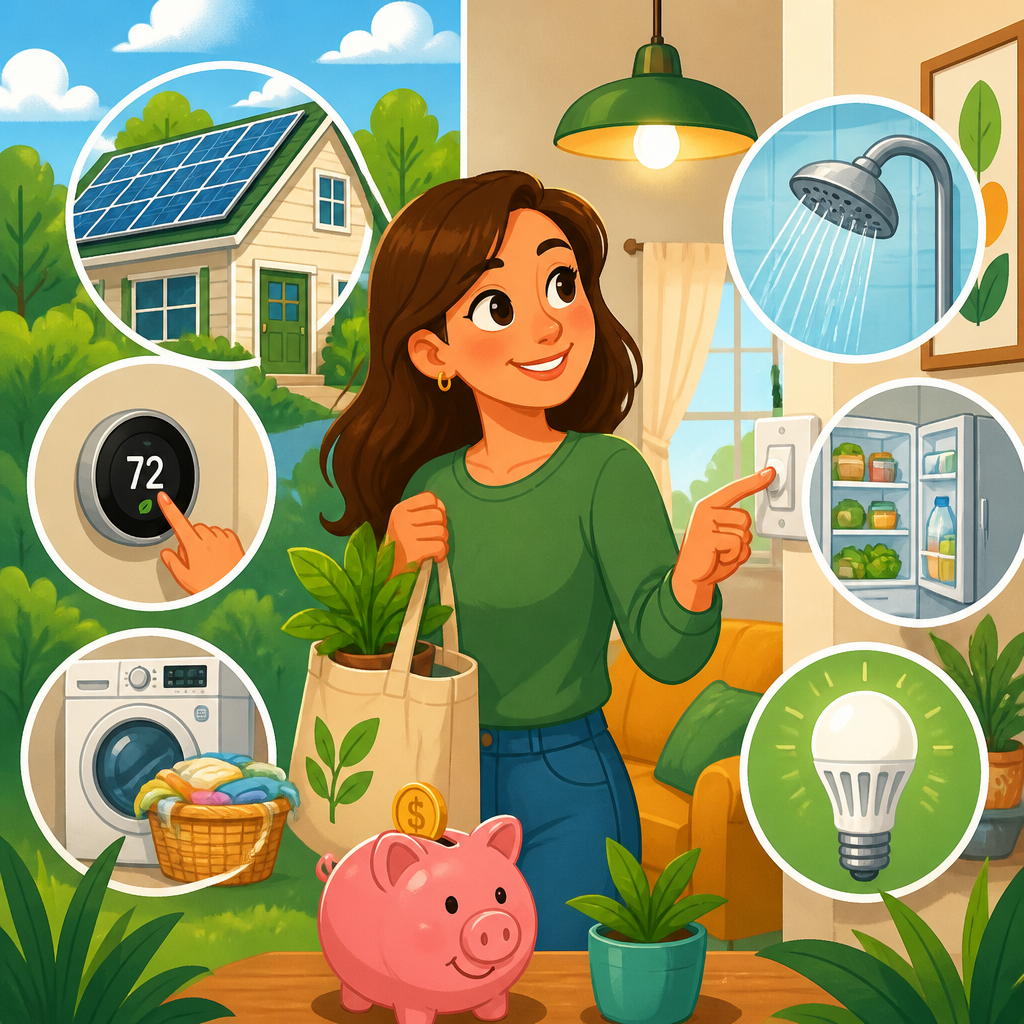
The fastest path to a more sustainable home is reducing wasted electricity and heating or cooling energy. Start with lighting, standby power, insulation gaps, and thermostat behavior. LED bulbs typically use at least 75 percent less energy than incandescent bulbs and last much longer, which cuts both utility costs and material waste. Smart power strips help control phantom loads from electronics that draw power when “off,” including televisions, game consoles, printers, and chargers. In older homes I have audited, these small standby loads added up more than people expected. Weather-stripping doors, sealing window leaks, and closing attic bypasses often deliver better returns than buying trendy gadgets. If your thermostat is programmable, create schedules that reduce heating and cooling when the house is empty or everyone is asleep. The easiest sustainability win is using less energy you never needed in the first place.
2. Use Water More Efficiently Every Day
Water conservation is a core part of sustainable living at home because saving water also reduces the energy needed to heat, pump, and treat it. Low-flow showerheads, faucet aerators, and WaterSense-labeled fixtures can reduce water use without making daily routines inconvenient. Shorter showers, full dishwasher loads, and turning off the tap while brushing teeth still matter because habits compound. Leaks deserve immediate attention: a dripping faucet or running toilet can waste surprising amounts of water over time. Outdoors, watering early in the morning reduces evaporation, while mulch helps soil retain moisture. Native or climate-appropriate plants usually need less irrigation than thirsty ornamental lawns. In drought-prone areas, replacing part of a lawn with groundcover, permeable hardscaping, or pollinator-friendly landscaping can lower water demand dramatically while improving resilience. Water efficiency is not deprivation; it is simply using a valuable resource with intention.
3. Prevent Food Waste and Plan Meals Better
Food waste is one of the most overlooked sustainability problems in the home. When food is thrown away, all the water, fertilizer, energy, labor, transport, and packaging behind it are wasted too. In landfills, food scraps generate methane, a potent greenhouse gas. The most effective fix is not composting alone; it is preventing waste before it happens. Meal planning, checking the pantry before shopping, understanding date labels, and storing produce correctly make a measurable difference. “Best by” usually refers to quality, not safety, yet many households discard perfectly edible food because the wording is misunderstood. I advise families to create an “eat first” zone in the refrigerator for leftovers and produce that needs attention soon. Freezing bread, herbs, cooked grains, and extra portions extends usefulness and reduces impulse takeout spending. Sustainable living at home gets easier when the kitchen runs on planning instead of guesswork.
4. Switch from Disposable Products to Reusables
One of the easiest ways to practice sustainability at home is replacing high-turnover disposable items with durable reusables. Paper towels, bottled water, single-use food storage bags, disposable mop pads, and plastic wrap are common examples. Swapping in cloth towels, refillable bottles, glass or stainless steel containers, washable cleaning cloths, and reusable shopping bags lowers both household waste and repeat spending. The sustainability advantage is strongest when the reusable item is actually durable and used many times. A cheap reusable product that breaks quickly may be worse than a well-designed disposable used sparingly, so material quality matters. For food storage, clear reusable containers also improve visibility and help reduce forgotten leftovers. This is where convenience supports sustainability rather than competing with it. Households stick with low-waste habits when the reusable option is easy to wash, easy to store, and easier to reach than the disposable alternative.
5. Build a Smarter Home Recycling System
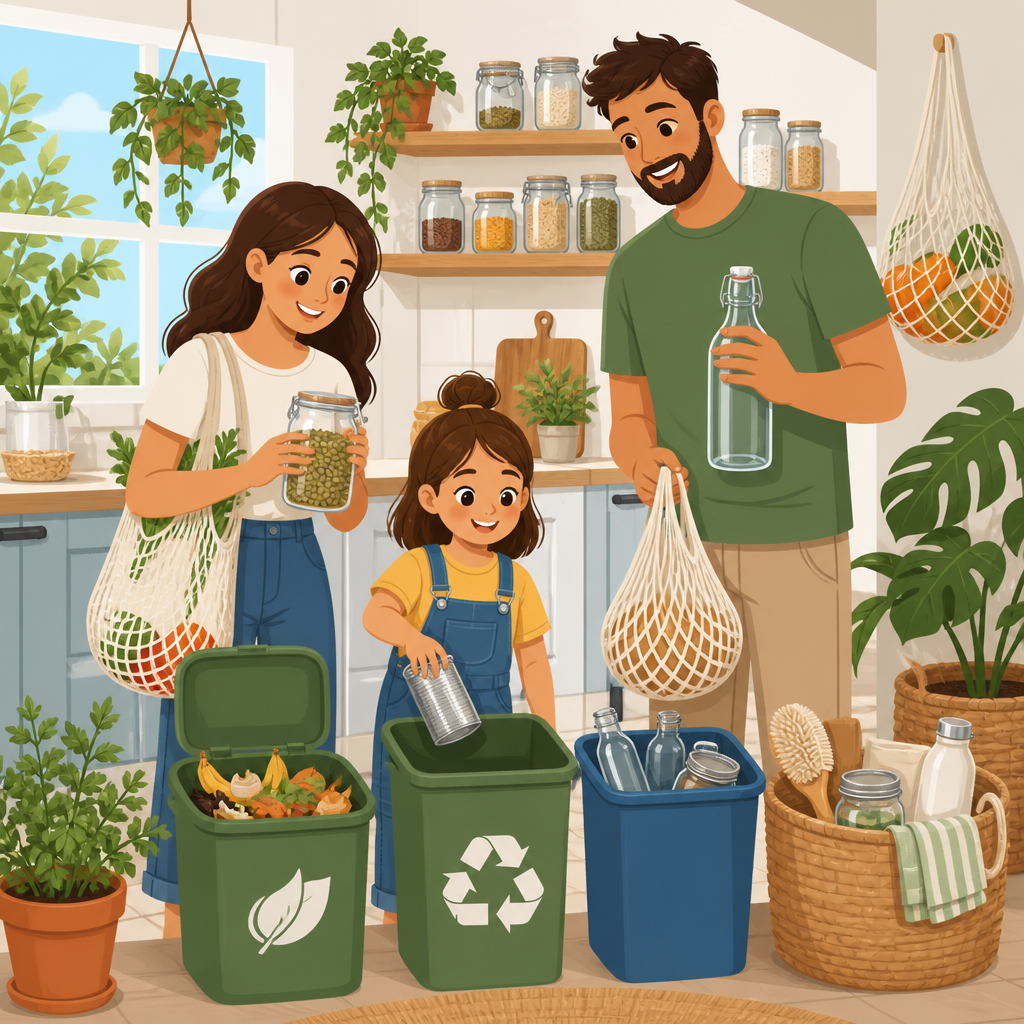
Recycling helps, but only when it is done correctly. “Wishcycling,” or tossing questionable items into the bin in hopes they are recyclable, often contaminates loads and undermines the system. Sustainable living at home requires knowing your local recycling rules because accepted materials vary by municipality and processor. Cardboard, aluminum cans, steel cans, and certain plastics are common, but film plastics, greasy pizza boxes, and mixed materials frequently cause problems. Rinsing containers lightly, flattening boxes, and keeping recyclables dry improves the chance they will be processed. Place clearly labeled bins where waste is actually generated, especially in kitchens, offices, and garages. If your area offers drop-off programs for batteries, electronics, textiles, or plastic bags, use them intentionally rather than putting those items in curbside bins. Recycling is not the first priority; reducing and reusing come first. But a simple, accurate home recycling system still plays an important supporting role.
6. Choose Safer, Longer-Lasting Household Products
Sustainable home choices extend beyond waste bins into what you bring into the house. Durable goods with repairable parts usually outperform cheap, short-lived products environmentally because manufacturing and shipping have their own resource costs. When buying furniture, cookware, storage, or appliances, look for materials and designs that last: solid wood instead of flimsy composites where feasible, stainless steel over brittle plastic for heavy-use items, and appliances with strong efficiency ratings and available replacement parts. For cleaning and personal care products, concentrated formulas and refill systems can reduce packaging significantly. Fragrance-heavy or overly harsh chemical products are not automatically more effective; many daily cleaning tasks can be handled with simpler formulations approved for household use. Certifications can help, but they are not all equal. ENERGY STAR for appliances and WaterSense for fixtures are generally reliable signals. The best sustainable product is often the one you do not need to replace for years.
7. Compost What You Cannot Eat
Composting is a practical next step after reducing food waste. It turns fruit peels, vegetable scraps, coffee grounds, tea leaves, and yard trimmings into a soil-enriching material instead of sending them to landfill. For homeowners with outdoor space, a basic backyard bin works well if you balance “greens” such as food scraps and fresh grass with “browns” such as dry leaves, shredded paper, and cardboard. For apartments or colder climates, countertop collection bins combined with municipal compost pickup or community drop-off sites can be effective. Composting should be selective: meat, dairy, oily foods, and compostable packaging are not suitable for every system, especially small backyard piles. The benefit is not just waste diversion. Finished compost improves soil structure, supports moisture retention, and can reduce the need for synthetic fertilizers in gardens. In sustainable living at home, composting closes the loop by returning nutrients to use instead of treating them as garbage.
| Practice | Main Household Benefit | Best First Step |
|---|---|---|
| Energy efficiency | Lower bills and emissions | Replace old bulbs with LEDs |
| Water efficiency | Reduced water and hot water use | Install a low-flow showerhead |
| Food waste prevention | Less trash and lower grocery spending | Create a weekly meal plan |
| Reusables | Fewer disposable purchases | Set out washable cloths and bottles |
| Recycling and composting | Better waste diversion | Label bins clearly by material type |
8. Wash, Dry, and Clean More Efficiently
Laundry and cleaning routines offer several easy sustainability gains. Washing clothes in cold water can reduce energy demand substantially because heating water is the most energy-intensive part of many wash cycles. Full loads are more efficient than half loads, provided the machine is not overloaded. High-spin settings remove more water before drying, which shortens dryer time. If possible, line drying or rack drying some loads reduces wear on fabrics and extends garment life. Dryer lint filters should be cleaned regularly so airflow stays efficient. In cleaning routines, using the right amount of product matters; more detergent does not necessarily clean better and can create residue or require extra rinsing. Microfiber shedding is also worth noting: synthetic fabrics can release microplastics during washing, so using gentler cycles, fuller loads, and a lint-catching filter or wash bag can help. Sustainable living at home often comes from tuning ordinary chores, not reinventing them.
9. Make Your Home More Sustainable Through Repair and Maintenance
Maintenance is one of the least glamorous but most important sustainability habits. A well-maintained home wastes fewer resources, avoids premature replacement, and performs more safely. HVAC filters should be replaced on schedule because clogged filters reduce airflow and strain equipment. Refrigerator coils, when accessible, should be cleaned periodically to improve efficiency. Caulk and grout around sinks, tubs, and windows need inspection to prevent moisture damage that can lead to mold, rot, and material replacement. Sharpening tools, mending clothing, resealing decks, and repairing small appliances all extend useful life. In my experience, households save the most money sustainably when they stop treating breakdown as normal. Repair culture also changes buying behavior: once you expect to maintain items, you start choosing products with screws instead of glue, standard parts instead of proprietary ones, and clear manufacturer support. Sustainability at home is as much about stewardship as it is about consumption.
10. Buy Less, Borrow More, and Shop with Intention
The final habit ties everything together: consume more deliberately. Many sustainability problems begin before an item enters your home, during extraction, manufacturing, packaging, and transport. Buying less is therefore not a sacrifice-based message; it is a high-impact efficiency strategy. Before purchasing, ask whether the item solves a repeated need, whether you can borrow it, whether a secondhand option exists, and whether a higher-quality version will outlast a cheaper one. This is especially relevant for tools, party supplies, children’s gear, furniture, and seasonal décor. Community libraries of things, neighborhood sharing groups, and resale marketplaces make low-impact access easier than it used to be. When you do buy new, support products with transparent material information, minimal packaging, and established durability. Intentional purchasing also reduces clutter, which in turn makes household systems easier to maintain. A sustainable home is not filled with green-branded stuff; it is organized around enough, used well.
Practicing sustainability at home becomes manageable when you stop viewing it as a single lifestyle identity and start treating it as a set of daily operating decisions. The ten methods in this guide work because they target the biggest household pressure points: energy, water, food waste, disposables, product lifespan, and overconsumption. If you only remember one principle, make it this: the most sustainable home usually uses fewer resources by default. That means efficient systems, durable products, preventive maintenance, and habits that avoid waste before it starts. You do not need to do everything at once. In fact, the best results usually come from choosing two or three changes, measuring progress, and then adding more. Start with an energy audit, a meal plan, and a reusable swap, then build from there.
As a hub for sustainable living at home, this article gives you the foundation for deeper topics such as home energy efficiency, low-waste kitchens, water-saving landscaping, green cleaning, home composting, and sustainable product selection. Each of those areas can become a meaningful improvement project on its own, but the core strategy remains the same: reduce what you use, reuse what you can, repair what you own, and recycle or compost what remains. That approach lowers environmental impact, often cuts household costs, and creates a home that runs more smoothly. Pick one room, one routine, or one utility bill this week and make a measurable change. Small household actions, repeated consistently, are how sustainable living at home becomes real.
Frequently Asked Questions
1. Do I need to spend a lot of money to practice sustainability at home?
No. One of the most common myths about sustainable living is that it only works if you can afford solar panels, brand-new efficient appliances, or a fully zero-waste kitchen. In reality, the most effective home sustainability habits are often the least expensive. Simple actions like turning off unused lights, washing clothes in cold water, fixing leaks, using reusable containers, planning meals to reduce food waste, and buying less overall can make a meaningful difference over time. These habits lower energy and water use without requiring major upfront investment.
A practical approach is to start with what you already have. Use items longer, repair instead of replace when possible, and avoid throwing away products that still work. For example, keeping appliances clean and well maintained can improve efficiency, and reusing jars, bags, and cloth towels can reduce both waste and recurring costs. Sustainable living is not about achieving perfection or buying an entirely new lifestyle. It is about making better everyday decisions that are realistic for your household and easier to maintain long term.
2. What are the easiest sustainability changes to make at home first?
The best place to start is with easy, repeatable habits that fit naturally into your routine. Focus on areas where households use the most resources: energy, water, food, and disposable products. For many people, the simplest first steps include switching off electronics when not in use, shortening showers, running full loads in the dishwasher and washing machine, using reusable shopping bags and water bottles, and reducing food waste through meal planning. These actions are manageable, immediately practical, and often save money as well.
Another smart strategy is to choose one habit from each area of the home. In the kitchen, store food properly and use leftovers before they spoil. In the laundry room, wash with cold water and air dry when possible. In the bathroom, install a low-flow showerhead or simply reduce water use with shorter routines. In shared spaces, rely on natural light when available and use power strips to cut phantom energy use. Starting small helps build consistency, and consistency matters more than trying to overhaul your entire home all at once.
3. How can I reduce waste at home without trying to live completely zero-waste?
You do not need to pursue a strict zero-waste lifestyle to make a substantial impact. For most households, waste reduction is more practical when it focuses on lowering unnecessary consumption and replacing the most disposable items first. Start by noticing what you throw away most often. Common examples include paper towels, plastic wrap, single-use bottles, takeout containers, food packaging, and spoiled groceries. Once you identify the main sources, look for realistic substitutes such as cloth towels, reusable containers, refillable water bottles, bulk buying where practical, and better meal planning.
It also helps to follow a simple order of priorities: reduce, reuse, then recycle. Reducing means buying only what you need and choosing products with less packaging. Reusing means extending the life of what you already have through repair, repurposing, and refill systems. Recycling is still valuable, but it works best after the first two steps. Composting food scraps, donating usable household items, and avoiding impulse purchases are all effective ways to cut down on waste without making your life more complicated. The goal is not to eliminate every piece of trash. It is to steadily create less of it through smarter daily choices.
4. Can sustainable living at home really make a noticeable environmental difference?
Yes, especially when sustainable habits are repeated consistently and adopted across millions of households. Home energy use, water consumption, food waste, and everyday purchasing decisions all contribute to larger environmental issues such as greenhouse gas emissions, landfill growth, and resource depletion. When a household reduces electricity use, wastes less food, avoids unnecessary packaging, and conserves water, it lowers its environmental footprint in measurable ways. Even modest actions, when done regularly, add up over months and years.
There is also a broader effect that people often overlook. Sustainable household habits influence family members, children, neighbors, and communities. They can shape purchasing trends and increase demand for durable, repairable, and lower-impact products. In my experience, the most meaningful environmental progress often comes from practical habits people can actually stick with, not extreme changes they abandon after a few weeks. A household that consistently uses less, wastes less, and plans better is contributing to long-term environmental health in a very real way.
5. How do I make sustainable habits stick for the long term?
The key is to make sustainability convenient, visible, and tied to routines you already have. Many people fail because they try to change too much too quickly. A better method is to choose a few habits that feel easy enough to repeat without constant effort. For example, place reusable bags near the door, keep a water bottle in your car or bag, set up labeled bins for recycling and compost, and create a weekly meal plan before grocery shopping. When sustainable choices are the easiest choices, they become far more likely to last.
Tracking progress can also help. You might monitor your utility bills, note how often you throw away food, or set simple monthly goals such as reducing disposable purchases or air drying laundry twice a week. It is also important to involve everyone in the household so the responsibility does not fall on one person. Long-term sustainability is not about perfection, guilt, or dramatic lifestyle changes. It is about building practical systems and habits that reduce waste and conserve resources in ways your household can maintain comfortably over time.