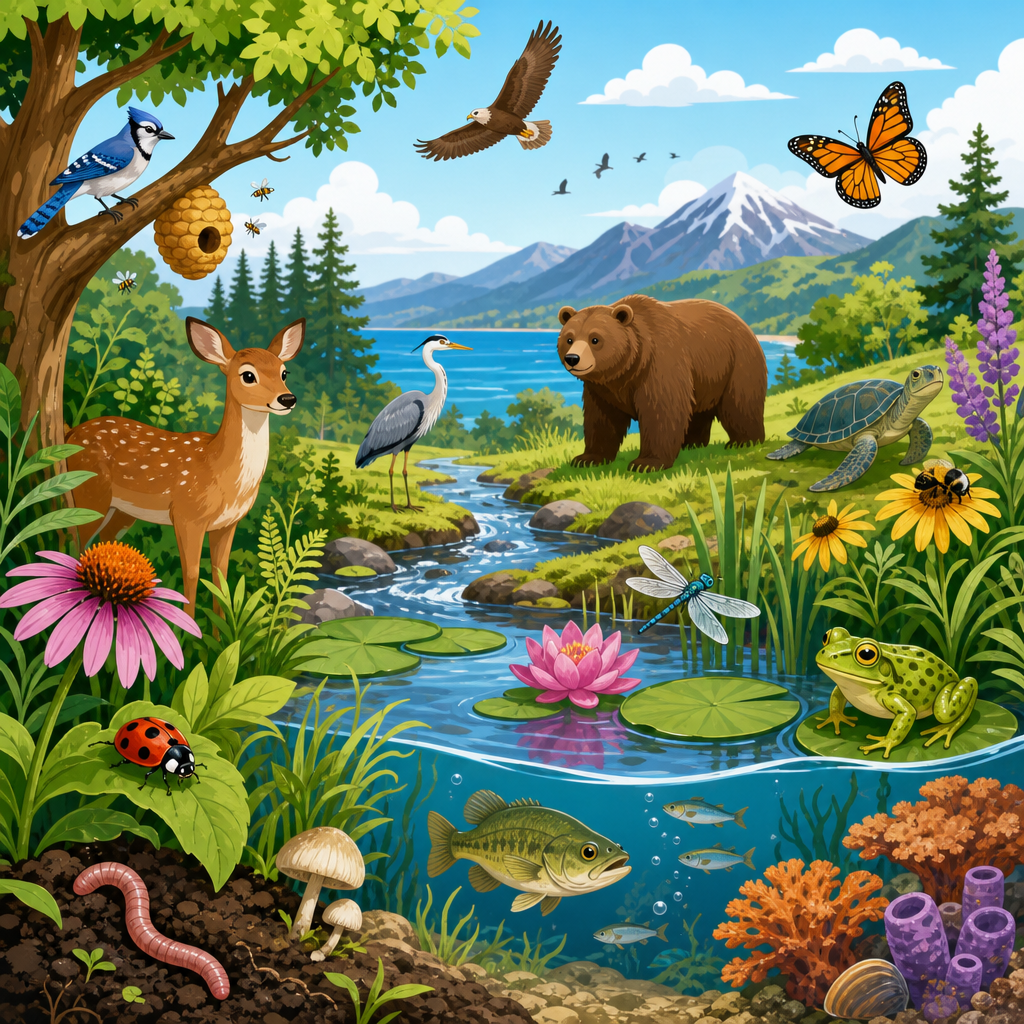

Environmental science worksheets and printables for teachers give structure to one of the most important subjects children can learn: how natural systems work, how human activity affects them, and what practical choices protect air, water, soil, plants, and animals. In classrooms, after-school programs, museums, and homeschool settings, I have seen well-designed printable resources turn abstract concepts like ecosystems, pollution, conservation, and climate into concrete tasks students can complete, discuss, and remember. For a sub-pillar hub on environmental science for kids, the goal is broader than offering a single activity. This page should help teachers understand what environmental science includes, which worksheet types fit each age group, how to connect lessons to standards, and where printable materials add the most value alongside experiments, outdoor observation, and discussion-based learning.
Environmental science for kids blends life science, earth science, physical science, and civics. Students learn food chains, habitats, water cycles, weather patterns, renewable and nonrenewable resources, waste reduction, recycling systems, biodiversity, and stewardship. Worksheets and printables matter because they support repetition, guided practice, and assessment without requiring expensive equipment. A labeling page can reinforce parts of a plant; a sorting activity can teach recyclable versus landfill waste; a field journal printable can improve observation skills during a schoolyard habitat walk. When these materials are organized clearly, teachers can build a full progression from foundational vocabulary to real-world problem solving. That makes this hub useful not only for lesson planning, but also for linking to deeper articles on ecosystems, conservation activities, Earth Day lessons, water pollution projects, and climate education for elementary and middle school learners.
What Environmental Science for Kids Should Cover
Environmental science for kids should cover the relationships between living things, nonliving systems, and human behavior. The core topics are ecosystems, habitats, food webs, natural resources, pollution, weather and climate, energy use, conservation, and environmental responsibility. In elementary grades, the emphasis is usually observation and simple cause-and-effect. Students identify living and nonliving things, compare habitats, trace where trash goes, and learn why clean water matters. By upper elementary and middle school, they can analyze resource use, compare renewable energy sources, study invasive species, and evaluate how local actions affect broader ecosystems.
Teachers often get the best results when they organize environmental science into essential questions. What do living things need to survive? How does water move through the environment? What happens when habitats change? How do people reduce waste? Why does energy source choice matter? Worksheets become more effective when they answer one specific question rather than trying to cover an entire unit at once. For example, a single printable food chain activity works better than a crowded page mixing predators, decomposers, and the carbon cycle. Clear focus reduces cognitive load and helps students retain terminology accurately.
As a hub topic, environmental science for kids also benefits from cross-curricular design. Reading passages build literacy. Graphing daily temperature or rainfall integrates math. Poster templates support speaking and presentation skills. Community clean-up reflection pages connect science to social studies and citizenship. This breadth is one reason teachers keep searching for environmental science worksheets and printables: the subject touches nearly every part of a school day while remaining timely and meaningful.
Best Types of Environmental Science Worksheets and Printables
The most useful environmental science worksheets and printables fall into several repeatable formats. Vocabulary sheets help students learn terms such as ecosystem, erosion, adaptation, renewable resource, and biodegradable material. Diagram labeling pages work well for water cycles, plant structures, compost systems, and layers of the atmosphere. Sorting cards and cut-and-paste printables are especially effective in kindergarten through grade 3 because they require active classification. Reading comprehension pages support content acquisition when paired with short nonfiction passages about forests, oceans, deserts, recycling facilities, or endangered species.
Interactive printables are often more valuable than passive ones. In my own curriculum planning, I rely most on observation logs, compare-and-contrast charts, cause-and-effect organizers, and claim-evidence-reasoning templates. These formats mirror how scientists think. A schoolyard biodiversity tally sheet, for instance, asks students to record insects, birds, plants, and signs of human impact. A pollution scenario worksheet can ask students to identify the problem, predict consequences, and propose one realistic solution. Those tasks move students beyond memorization and toward environmental reasoning.
Assessment printables also matter. Exit tickets, quick quizzes, and short constructed-response pages let teachers check misconceptions early. If students believe all plastic is recyclable everywhere, or confuse weather with climate, a targeted printable can reveal the gap before a larger project begins. The strongest worksheet sets include teacher directions, answer keys, and extension options so materials remain practical in real classrooms with limited prep time.
Choosing the Right Printable by Grade Level and Learning Goal
Not every environmental science worksheet fits every age group. Younger students need short directions, visual supports, large writing spaces, and concrete examples from everyday life. A first grader can sort pictures of items that belong in a recycling bin, but may struggle to explain municipal waste stream contamination. A second grader can match animals to habitats and identify what plants need, while a fifth grader can analyze how drought affects a food web. Middle school students are ready for data interpretation, short research tasks, and evidence-based arguments about land use, energy, and conservation.
Learning goal should drive resource choice. If the goal is vocabulary acquisition, use matching, labeling, and illustrated word banks. If the goal is scientific observation, choose field journals, tally charts, and nature scavenger sheets. If the goal is systems thinking, select graphic organizers showing inputs, outputs, and interactions. If the goal is action, assign home energy audits, waste tracking sheets, or school garden planning pages. Printables work best when they support a clear instructional purpose instead of filling time.
| Grade Band | Best Printable Types | Strong Topic Matches | Teacher Goal |
|---|---|---|---|
| K-2 | Coloring labels, sorting cards, simple cut-and-paste, picture journals | Plants, animals, habitats, recycling, weather | Build vocabulary and observation habits |
| 3-5 | Reading passages, cause-and-effect charts, diagrams, mini-project sheets | Water cycle, pollution, food chains, conservation, natural resources | Develop content understanding and connections |
| 6-8 | Data tables, CER templates, research organizers, issue analysis pages | Climate, biodiversity, energy, ecosystems, human impact | Strengthen analysis, evidence use, and solutions thinking |
This progression aligns well with widely used standards frameworks, including the Next Generation Science Standards, because it moves from observable patterns to system interactions and human impacts. Teachers should also consider reading level, attention span, and whether a printable will be used independently, in pairs, or as part of a station rotation.
Core Topic Areas Every Teacher Resource Hub Should Include
A strong hub for environmental science worksheets and printables should organize resources by topic so teachers can quickly find the right lesson support. Ecosystems and habitats are foundational because they explain how organisms depend on one another and on physical conditions. Worksheets here should include biome comparisons, producer-consumer-decomposer charts, habitat matching, and food web builders. These are reliable entry points for elementary classrooms and connect naturally to later study of biodiversity and conservation.
Water is another essential category. Teachers repeatedly need printables on the water cycle, watersheds, freshwater versus saltwater, water conservation, and water pollution. A useful sequence starts with a water cycle diagram, moves to a reading passage on drinking water sources, and then adds a local stewardship activity such as a storm drain awareness page. Waste and recycling deserve their own section because students encounter these systems every day. Effective printables include landfill versus recycling sorts, composting diagrams, classroom waste audits, and product life cycle reflections.
Energy resources should cover solar, wind, hydroelectric, geothermal, fossil fuels, and energy efficiency. Many students know solar panels by sight but do not understand the difference between energy generation and energy conservation. Printables can clarify this through scenario analysis and home or school energy checklists. Climate and weather should be separated carefully: weather describes short-term atmospheric conditions, while climate refers to long-term patterns. When worksheets blur that distinction, confusion follows. Finally, every hub should include outdoor learning pages such as nature journals, schoolyard ecosystem maps, seasonal observation logs, and citizen science recording forms. Those resources help teachers move environmental science off the worksheet and into the world students can see.
How to Use Worksheets Without Making the Subject Feel Flat
Printables are valuable, but environmental science should never become a stack of disconnected pages. The best teaching sequence is engage, investigate, record, discuss, and apply. A worksheet usually belongs in the middle, not at the beginning and not as the whole lesson. If students are learning about decomposition, start with a compost bin image, outdoor observation, or sealed bag comparison of organic and non-organic waste. Then use a printable to classify materials, sketch changes over time, or explain the role of decomposers. End with reflection on what could be composted in the cafeteria or at home.
In practice, I have found that one printable paired with one hands-on or local example is more effective than three printables in a row. A school grounds litter survey gives meaning to a data chart. A rainfall tracker becomes more memorable when students compare printed graphs with the weather outside. A habitat worksheet becomes stronger after students observe birds, insects, and plant cover around the playground. This pairing respects how children learn environmental science: through patterns they can witness and name.
Teachers should also use printables for discussion, not just seatwork. Think-pair-share prompts, small-group evidence sorting, and class anchor charts based on worksheet findings improve comprehension. If a printable asks students to identify causes of water pollution, the next step should be conversation about local examples, not immediate collection and grading. Environmental science is ultimately about understanding systems and making informed decisions, and those skills develop through dialogue as much as through writing.
Features of High-Quality Environmental Science Printables
High-quality environmental science printables are accurate, age-appropriate, visually clear, and instructionally purposeful. Accuracy comes first. Diagrams should use accepted terminology, and claims should reflect current scientific understanding. For example, a resource should not imply that recycling alone solves waste issues; source reduction and reuse are also central. Nor should a climate worksheet present established findings as evenly split opinion. Balanced teaching acknowledges uncertainty where it exists, but it does not create false equivalence.
Good design matters more than many publishers admit. Clean spacing, readable fonts, uncluttered diagrams, and clear response prompts improve completion quality. Young learners especially benefit from picture cues and sentence frames such as “I observed ___” or “This habitat supports ___ because ___.” Older students need resources that do not feel childish; neutral graphics and authentic data sets make a difference. When I audit educational printables, the strongest ones always make the task obvious within seconds, reducing teacher explanation time.
Another hallmark is transferability. A strong printable can be used in classrooms, homeschool environments, tutoring sessions, nature centers, or substitute plans. It should also support differentiation. Look for materials with optional challenge questions, modified reading passages, and extension prompts for fast finishers. Teacher notes, standards alignment, and answer keys increase usability, especially for interdisciplinary teams or educators who do not specialize in science. In a crowded resource market, practical classroom fit is what separates a printable teachers save from one they use once and forget.
Building a Complete Environmental Science for Kids Resource Library
For this hub to serve teachers well, it should point toward a complete library rather than a random collection of downloads. Start by grouping articles and printable sets into beginner, intermediate, and advanced pathways. Beginner resources might include habitats, plant needs, recycling basics, and weather observation. Intermediate topics can expand into food webs, pollution, water conservation, renewable energy, and biomes. Advanced resources should address biodiversity loss, climate systems, human land use, and evidence-based environmental solutions. This layered structure helps teachers scaffold content across a school year instead of treating environmental science as a one-week event around Earth Day.
Internal organization also matters. Each topic page should link naturally to related lessons. A recycling worksheet page should connect to waste reduction activities and compost printables. A water cycle page should lead to water pollution experiments, conservation posters, and watershed mapping. A habitats article should connect to biodiversity, endangered species, and adaptation resources. These pathways help teachers build coherent units and help families find the next logical activity when learning at home.
Keep the library current. Environmental education evolves as standards, local policies, and scientific communication change. Update examples, data points, and terminology periodically, especially for energy, climate, plastics, and conservation practices. When teachers trust a hub to be accurate, well organized, and classroom ready, it becomes the go-to source for environmental science worksheets and printables.
Environmental science worksheets and printables for teachers are most powerful when they do more than occupy time. They help children understand ecosystems, practice observation, organize evidence, and connect daily choices to the health of the planet. A strong environmental science for kids hub should cover habitats, water, waste, energy, weather, climate, conservation, and outdoor learning through resources matched to grade level and learning goal. The best printables are clear, scientifically accurate, and designed to support real instruction, not just isolated practice.
For teachers, the main benefit is efficiency without sacrificing depth. With the right mix of worksheets, field journals, diagrams, assessments, and project pages, you can teach complex environmental concepts in ways students can grasp and apply. For students, the benefit is lasting understanding. They begin to see that science is not separate from their lunch trash, the trees outside school, the water from the tap, or the energy powering the classroom. That awareness is the foundation of environmental literacy.
Use this hub as your starting point for building a complete environmental science resource collection. Choose one topic, match it to your grade level, and pair a printable with a hands-on experience this week. That simple step can turn environmental science from a lesson students complete into a subject they notice everywhere.
Frequently Asked Questions
What are environmental science worksheets and printables, and how do they help teachers?
Environmental science worksheets and printables are ready-to-use learning materials that help teachers present complex topics in a structured, age-appropriate way. They can include reading passages, vocabulary pages, labeling activities, graphic organizers, experiments, data tables, sorting cards, discussion prompts, quizzes, and project templates focused on themes like ecosystems, pollution, recycling, conservation, weather, climate, water cycles, habitats, and human impact on the planet. For teachers, these resources save planning time while making lessons more consistent and easier to manage across different grade levels and learning environments.
They are especially helpful because environmental science often involves systems and cause-and-effect relationships that can feel abstract to students at first. A well-designed printable turns those big ideas into concrete tasks students can complete, discuss, and revisit. For example, instead of only talking about food webs, a worksheet might ask students to connect producers, consumers, and decomposers. Instead of only defining pollution, a printable might have them sort examples of air, land, and water pollution and identify practical solutions. This kind of guided practice improves comprehension, supports classroom discussion, and gives teachers useful evidence of student understanding.
Another major benefit is flexibility. Teachers can use printables for whole-group instruction, small groups, centers, early finishers, homework, substitute plans, review days, or assessment. They also work well in classrooms, after-school programs, museums, and homeschool settings. When chosen carefully, environmental science worksheets do more than fill time; they reinforce scientific thinking, build vocabulary, encourage observation, and help students connect what they learn in class to real environmental choices in everyday life.
How can teachers choose the best environmental science worksheets for their grade level and learning goals?
The best environmental science worksheets match both the age of the students and the specific objective of the lesson. Teachers should start by asking what they want students to know or do by the end of the activity. If the goal is introducing vocabulary, a simple matching or labeling page may be enough. If the goal is deeper understanding, teachers may want printables that require comparing ecosystems, interpreting data, explaining human impact, or proposing conservation strategies. Strong resources align with lesson standards, use clear instructions, and focus on meaningful thinking rather than busywork.
Grade level matters a great deal. Younger students usually benefit from visual tasks, short reading passages, cut-and-paste sorting, coloring with purpose, and simple observation-based questions. Upper elementary students can usually handle more multi-step activities such as identifying parts of cycles, reading charts, and applying concepts to local environmental examples. Middle school and older learners often need printables that go beyond recognition and ask them to analyze evidence, explain interactions in natural systems, evaluate environmental problems, and support their conclusions with reasoning. Choosing the right level keeps students challenged without making the content frustrating or inaccessible.
It is also important to look for accuracy, relevance, and usability. Environmental science changes as new data and public conversations evolve, so printables should reflect current, scientifically sound information. The strongest materials use realistic examples, readable formatting, and inclusive language. They should also be easy to integrate into instruction, whether a teacher is building a full unit on conservation or just adding a quick activity on natural resources. When worksheets are well aligned to learning goals and student readiness, they become an effective teaching tool rather than an extra stack of paper.
What topics should be included in environmental science printables for students?
A strong set of environmental science printables should cover the foundational ideas students need in order to understand how the natural world works and how people influence it. Core topics often include ecosystems, habitats, food chains and food webs, biodiversity, natural resources, recycling, pollution, conservation, weather, climate, renewable and nonrenewable energy, water systems, soil, plants, animals, and the relationship between human choices and environmental health. These topics help students build scientific literacy while also showing them that environmental science is connected to daily life, not just textbooks.
It is helpful to include both broad concepts and practical, real-world applications. For example, students might first learn what an ecosystem is and then complete a printable about how litter, deforestation, or runoff affects that ecosystem. They might study the water cycle and then examine why clean water matters for communities, agriculture, and wildlife. They might learn about energy sources and then compare solar, wind, fossil fuels, and hydropower. This progression from concept to application makes the subject more relevant and memorable.
The best topic coverage also encourages action and responsibility without overwhelming students. Environmental education should be honest about challenges, but it should also show that informed choices matter. Printables that include conservation habits, school recycling ideas, habitat protection, and local environmental stewardship can help students move from awareness to participation. When children see that environmental science involves observation, problem-solving, and practical decisions, they are more likely to stay engaged and carry those lessons beyond the classroom.
How can environmental science worksheets be used in interactive and hands-on lessons?
Worksheets are most effective when they are part of active learning rather than the entire lesson. Teachers can use a printable as a launch activity before an experiment, as a recording sheet during an outdoor observation, or as a reflection tool after a discussion, video, lab, or field experience. For example, students might complete a habitat checklist during a nature walk, fill in a data chart while testing water filtration methods, or use a cause-and-effect organizer after studying pollution in a local river or park. In these situations, the worksheet supports inquiry instead of replacing it.
Printables also work well in stations and collaborative learning. One station might include a reading and response page about ecosystems, another a sorting activity on renewable and nonrenewable resources, and another a graphing task using recycling data. Small groups can compare answers, defend their reasoning, and build shared understanding. Teachers can also pair worksheets with classroom demonstrations, maps, photographs, seed planting, weather tracking, or waste audits to make abstract environmental concepts visible and measurable.
Another effective strategy is to use printables as part of project-based learning. Students might begin with background worksheets on biodiversity or conservation, gather observations from their school grounds, analyze a local issue, and then create posters, presentations, or action plans. This gives the printable a clear purpose in a larger learning sequence. When environmental science worksheets are integrated into discussion, observation, and problem-solving, they become powerful tools for helping students think like scientists and responsible community members.
Are environmental science printables useful for assessment, review, and differentiated instruction?
Yes, environmental science printables are extremely useful for assessment, review, and differentiation when they are designed thoughtfully. Teachers can use them for quick checks of understanding, exit tickets, formative assessments during a unit, or more complete review packets before a quiz or project. A worksheet can reveal whether students can identify vocabulary, explain relationships in ecosystems, read environmental data, or apply concepts such as conservation and pollution prevention. Because student responses are visible on paper, teachers can quickly spot misconceptions and decide what needs reteaching.
They are also valuable for differentiation because not every student learns environmental science in the same way or at the same pace. Some students need simplified text, visual supports, word banks, and shorter response tasks. Others benefit from extension questions that require analysis, research, or written explanation. Teachers can provide different versions of the same topic, such as a basic habitat-identification page for one group and a food web analysis sheet for another. This allows all students to engage with the core concept while receiving the right level of support or challenge.
For review, printables help organize information in a manageable format. Students can revisit key terms, compare ideas, complete concept maps, and synthesize what they have learned across a full unit on topics like ecosystems, climate, or natural resources. They are also helpful in homeschool settings, tutoring, and independent practice because they create a clear path through the material. When used intentionally, environmental science worksheets are not just paper-based tasks; they are practical tools for measuring progress, reinforcing learning, and making instruction more responsive to student needs.