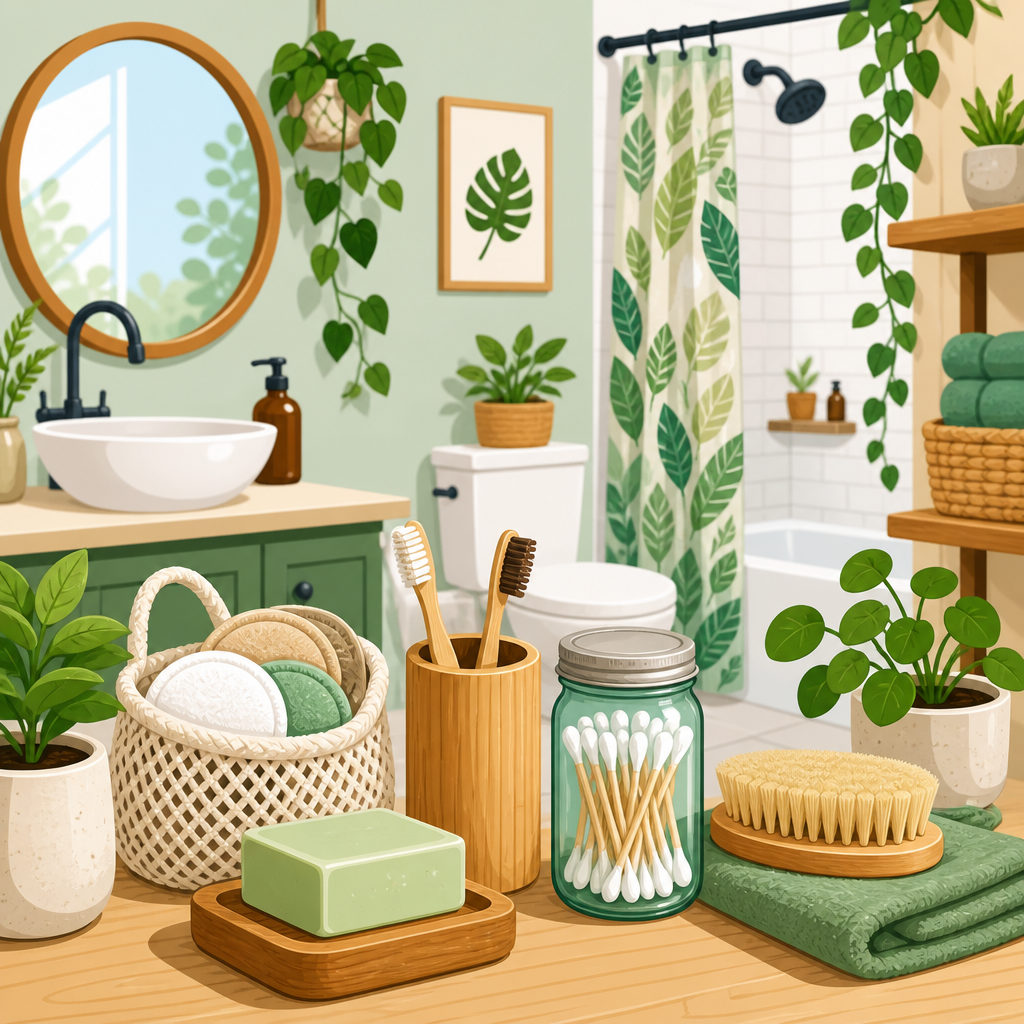
The bathroom is one of the smallest rooms in most homes, yet it can generate an outsized environmental footprint through daily water use, single-use plastics, energy consumption, and chemical-heavy products. Eco-friendly bathroom swaps are practical replacements that reduce waste, conserve resources, and support healthier indoor environments without making the space less functional or comfortable. When I audit household sustainability habits, bathrooms routinely reveal easy wins: disposable razors, bottled products, inefficient showerheads, virgin paper goods, and harsh cleaners are common, and each has a lower-impact alternative. For households building a broader sustainable living at home plan, the bathroom is an ideal starting point because routines are consistent, measurable, and easy to improve incrementally.
Sustainable living at home means meeting everyday needs while using fewer finite resources, creating less pollution, and choosing products designed for durability, refillability, and responsible disposal. In bathroom terms, that translates into reducing water demand, cutting packaging waste, avoiding unnecessary toxins, and selecting materials with longer service lives. It also means looking beyond the purchase itself. A bamboo toothbrush is not automatically the best option if it is shipped individually in excess packaging and replaced too frequently. A truly greener home balances lifecycle impact, product performance, hygiene, and cost over time. That practical perspective matters because sustainable habits only last when they fit real life.
This hub article covers the core areas of sustainable living at home through the lens of the bathroom: water efficiency, low-waste personal care, reusable alternatives, safer cleaning methods, energy-smart upgrades, and buying standards that help separate meaningful improvements from green marketing. It matters because residential water use accounts for a major share of household consumption, and bathrooms drive much of it through toilets, showers, and faucets. The U.S. Environmental Protection Agency estimates that WaterSense labeled fixtures can save thousands of gallons annually in a typical home. Similar gains come from reducing disposables and choosing concentrated or refillable products. The result is lower utility bills, less trash, and a home that aligns daily habits with long-term environmental goals.
Most importantly, eco-friendly bathroom swaps are not about perfection. They are about replacing high-impact defaults with better systems. Start with what you use every day, keep what already works until it reaches the end of its life, and upgrade in a way that delivers measurable savings. That approach makes this page a practical hub for sustainable living at home: it connects the most common bathroom decisions to the bigger picture of reducing household impact while maintaining cleanliness, convenience, and good design.
Water-saving bathroom upgrades that make the biggest difference
If you want the highest-impact bathroom swap, start with water. Toilets, showers, and faucets are the main drivers, and proven standards already exist for each. Older toilets can use 3.5 to 7 gallons per flush, while modern high-efficiency models use 1.28 gallons or less. If replacing a toilet is not realistic yet, check for silent leaks with dye tablets and adjust the fill valve and flapper. I have seen homes waste hundreds of gallons a week from a toilet leak that nobody noticed because the sound was faint. Fixing leaks is often the fastest sustainability win in the room.
Showerheads are another strong opportunity. Standard federal limits in the United States are 2.5 gallons per minute, but WaterSense showerheads use no more than 2.0 gallons per minute and are tested for spray force and user satisfaction. In practice, that difference adds up quickly in homes with multiple people. Pair the fixture with shorter showers and a thermostatic valve if possible, since reducing warm-up waste is as important as reducing flow rate. Faucet aerators are even simpler. A low-flow aerator can reduce sink use while maintaining handwashing performance, and installation usually takes minutes without a plumber.
Daily habits matter as much as hardware. Turning off the tap while brushing teeth, shaving with a basin instead of a running faucet, and capturing warm-up water for plants or cleaning can noticeably reduce waste over a month. These are not glamorous changes, but they are consistent. Sustainable living at home works best when the greener choice becomes the easier default. Keep a small watering can in the bathroom, use visible reminders near the mirror, and track one month of water use before and after upgrades to confirm the impact.
Low-waste personal care products that cut plastic and clutter
Bathroom trash often comes from packaging, not the product itself. Shampoo bottles, body wash containers, toothpaste tubes, disposable cotton rounds, and blister-packed razors create a steady stream of waste. The strongest low-waste swap is moving from single-use plastic packaging to refillable, concentrated, or package-light formats. Shampoo and conditioner bars are a common example. High-quality bars are long-lasting, travel well, and eliminate the pump bottle entirely. The same principle applies to bar soap, refill pouches, and concentrated hand soap tablets that dissolve in reusable dispensers.
Not every low-waste product works for every person, and that nuance matters. Hair type, skin sensitivity, fragrance tolerance, and storage conditions affect performance. In my experience, households stick with sustainable bathroom products when they test one category at a time rather than overhauling everything in a weekend. If someone has hard water, for example, a shampoo bar may leave buildup unless paired with an occasional clarifying rinse. If a refill pouch cannot be recycled locally, a durable bottle with in-store refill access may be the better option. The best swap is the one you will actually keep using.
Toothpaste tablets and powders reduce tube waste, but they vary in texture and fluoride content. For cavity prevention, fluoride matters, so check the active ingredients rather than assuming all tablets are equivalent to standard toothpaste. The same careful approach applies to deodorants, lotions, and sunscreens. Choose formulas that meet your functional needs first, then compare packaging and ingredient profiles. Sustainability is not improved by buying products that fail and end up unused under the sink. A greener bathroom is usually a simpler bathroom, built around fewer products that perform well and come in better formats.
Reusable bathroom essentials that replace everyday disposables
Some of the easiest eco-friendly bathroom swaps involve replacing disposable items with durable alternatives. Reusable cotton rounds, washable cleaning cloths, safety razors, refillable floss picks, and menstrual cups or period underwear can drastically cut waste over time. Safety razors deserve special attention because they solve two problems at once: plastic reduction and product quality. A well-made metal handle can last for decades, and standard stainless steel blades are inexpensive, compact, and often recyclable through blade banks or scrap programs when handled safely.
Paper reduction also matters. Recycled-content toilet paper, facial tissue, and paper towels can lower reliance on virgin fiber, especially when certified by organizations such as FSC. In homes comfortable with bidet attachments, toilet paper use can drop substantially while improving hygiene for many users. Bidets also support people with sensitive skin and can reduce irritation caused by dry wiping. Installation is usually straightforward, though households should check compatibility with existing toilets and hot water access if they want advanced features.
The key with reusables is hygiene and maintenance. Washable items must be cleaned thoroughly, dried fully, and stored properly. That is not a drawback; it is simply part of choosing systems instead of disposables. The tradeoff is usually clear: a bit more care in exchange for far less waste and lower long-term cost. The table below summarizes common swaps and where they deliver the most value.
| Bathroom item | Conventional option | Eco-friendly swap | Main benefit | Watch-out |
|---|---|---|---|---|
| Shower use | Standard 2.5 GPM showerhead | WaterSense 2.0 GPM showerhead | Lower water and hot water energy use | Choose a model tested for spray comfort |
| Toothbrushing | Plastic toothbrush | Replaceable-head or bamboo toothbrush | Less plastic waste | Check durability and local composting limits |
| Shaving | Disposable cartridge razor | Metal safety razor | Long lifespan and cheaper blades | Short learning curve for technique |
| Skin care | Single-use cotton pads | Reusable cotton rounds | Less recurring waste | Needs regular laundering |
| Toilet hygiene | High toilet paper use | Bidet attachment | Reduced paper consumption | Verify toilet fit and water connection |
| Soap and shampoo | Plastic bottles | Bars or refill systems | Less packaging and clutter | Product performance varies by water type |
Safer cleaning routines for a healthier bathroom environment
A sustainable bathroom is not only about waste. It is also about indoor air quality and chemical exposure. Many conventional bathroom cleaners rely on strong fragrances, unnecessary dyes, and ingredients that can irritate skin or lungs in poorly ventilated spaces. The greener swap is to use targeted, simpler products for specific jobs: a detergent-based all-purpose cleaner for surfaces, an acid-based cleaner for limescale, and disinfectants only when they are truly needed. This approach reduces chemical overload and often works better than relying on a single harsh product for everything.
There is a persistent myth that natural always means safe or effective. It does not. Vinegar can help dissolve mineral deposits on some surfaces, but it should not be used on natural stone such as marble or travertine because acid etches the finish. Baking soda is useful as a mild abrasive, but it is not a disinfectant. Bleach can sanitize, but it should never be mixed with ammonia, vinegar, or many toilet bowl products because dangerous gases can form. Good sustainable cleaning is based on material compatibility, ventilation, dilution instructions, and using the least aggressive option that still gets the job done.
Microfiber cloths, scrub brushes with replaceable heads, and concentrated cleaners in refill bottles reduce waste while improving control over product use. I recommend labeling spray bottles clearly and storing only what will be used within a reasonable period. For mold prevention, the most effective eco-friendly action is moisture management: run an exhaust fan vented outdoors, wipe down wet surfaces, fix grout cracks, and keep relative humidity in check. Preventing mildew is far less resource-intensive than repeatedly treating it after growth appears.
Energy-smart choices for lighting, ventilation, and hot water
Bathroom sustainability is closely tied to energy because hot water demand, lighting, and ventilation all affect utility use. Swapping incandescent or halogen vanity bulbs for LEDs is one of the simplest upgrades, and modern LEDs now offer high color rendering suitable for grooming tasks. Look for bulbs in the 2700K to 3000K range for warm, flattering light, or around 4000K if you prefer a cleaner, brighter appearance. LEDs also last much longer, reducing replacement frequency and packaging waste.
Ventilation is often overlooked, but it directly affects durability and health. An efficient exhaust fan with an appropriate cubic-feet-per-minute rating helps control humidity, protects paint and caulk, and reduces the conditions mold needs to grow. Timers or humidity-sensing switches prevent fans from running longer than necessary while ensuring they run long enough after showers. This is a classic sustainable living at home principle: use energy deliberately to prevent larger material losses later. Repainting a mold-damaged bathroom or replacing warped cabinetry has a much bigger footprint than operating an efficient fan correctly.
Hot water is another major factor. Insulating accessible hot water pipes can reduce heat loss and shorten wait times. If your water heater is aging, high-efficiency heat pump water heaters can cut electricity use significantly compared with standard electric resistance models, though space, climate, and upfront cost need consideration. Even without replacing equipment, setting realistic water temperatures, fixing drips, and washing reusable bathroom textiles in cold water where appropriate can trim energy demand. Small adjustments compound because bathrooms are used every single day.
How to buy better: certifications, materials, and realistic priorities
The most reliable way to build a greener bathroom is to prioritize fewer, better products and verify claims with recognized standards. For water fixtures, WaterSense is the clearest benchmark in the United States. For paper goods and wood-based items, FSC certification helps indicate responsible forestry practices. For energy-related products, ENERGY STAR can be useful where applicable. Material selection also matters. Stainless steel, glass, durable ceramics, and high-quality refillable plastics often outperform trendy alternatives because they survive years of daily use and repeated cleaning.
Be cautious with broad claims such as eco-friendly, non-toxic, biodegradable, or natural when there is no supporting detail. Ask practical questions instead. Is the product refillable? Is it repairable? Does it use post-consumer recycled content? Is the packaging widely recyclable where you live? Can the company provide ingredient disclosure or performance data? In bathroom projects, I also advise people to keep service life front and center. Replacing a working fixture purely for aesthetics can undermine the environmental benefit unless the new product delivers a substantial efficiency gain and the old one is responsibly reused or recycled.
For most households, the priority order is simple: reduce leaks and water waste first, replace disposables you buy repeatedly, improve ventilation and cleaning systems, then make material upgrades as items wear out. That sequence protects both budget and momentum. Eco-friendly bathroom swaps work because they transform ordinary routines into lower-impact defaults. Review one category this week, choose the most wasteful or inefficient item you use daily, and make a better replacement that you can sustain for years.
Frequently Asked Questions
1. What are the easiest eco-friendly bathroom swaps to start with?
The easiest place to begin is with the items you use and throw away most often. In many bathrooms, that means swapping disposable products for reusable or lower-waste alternatives. A bamboo toothbrush, refillable hand soap, bar soap instead of body wash in plastic bottles, shampoo bars, reusable cotton rounds, and a safety razor are all practical first steps. These swaps are simple because they usually do not require remodeling, special tools, or major behavior changes. You are still brushing your teeth, washing your hands, and showering as usual, but with products that create less packaging waste and often last longer.
Another smart starting point is toilet paper and paper goods. Recycled toilet paper or bamboo toilet paper can reduce pressure on virgin forests, and washable cleaning cloths can replace some paper towels used for bathroom wipe-downs. If you want a bigger impact with minimal effort, look at your water use. Installing a low-flow showerhead or faucet aerator is often inexpensive and can reduce water consumption without making the bathroom feel less comfortable. These are ideal beginner swaps because they save resources daily, not just occasionally.
The best strategy is to avoid changing everything at once. Use up what you already have, then replace items one by one with better alternatives as they run out. That approach prevents unnecessary waste, keeps costs manageable, and makes the transition more realistic for most households. A greener bathroom is usually built through steady improvements, not a single shopping trip.
2. Do eco-friendly bathroom products actually work as well as conventional ones?
In many cases, yes. Eco-friendly bathroom products can perform just as well as conventional versions, but choosing the right ones matters. For example, a well-made shampoo bar can clean hair effectively, last a long time, and eliminate the need for plastic bottles. Refillable soaps and plant-based cleaners can also work extremely well when they are formulated for the specific task, whether that is cutting soap scum, cleaning mirrors, or freshening surfaces. The key is not to assume that “eco-friendly” automatically means weaker. Many modern sustainable products are designed to compete directly with mainstream options in performance, convenience, and comfort.
That said, not every product works equally well for every person. Hair type, skin sensitivity, water hardness, and personal routine all affect results. A shampoo bar that works beautifully for one person may take another a few tries to adjust to, especially if they are transitioning from silicone-heavy hair products. The same is true for natural deodorants, toothpastes, and cleaning products. It helps to read ingredient lists, check reviews, and give a product a fair trial before deciding whether it fits your needs.
When evaluating performance, think long term as well as day to day. A safety razor, for example, may feel unfamiliar at first, but once you learn the technique, many people find it provides an excellent shave with less waste and lower ongoing cost. Reusable cleaning cloths may require laundering, but they often clean better than thin disposable wipes. Eco-friendly bathroom swaps work best when they are chosen thoughtfully, matched to your lifestyle, and given a realistic adjustment period.
3. How can I reduce water use in the bathroom without sacrificing comfort?
Reducing bathroom water use does not have to mean enduring weak showers or inconvenient routines. One of the most effective upgrades is a high-efficiency showerhead designed to maintain strong pressure while using less water. Modern low-flow models are much better than older versions and can deliver a satisfying shower experience while significantly lowering consumption. Faucet aerators are another easy improvement. They reduce the amount of water flowing through the tap without making handwashing or face washing feel difficult.
Toilets are another major opportunity. If your home has an older toilet, replacing it with a high-efficiency or dual-flush model can make a noticeable difference over time. If replacement is not realistic right now, checking for silent leaks is essential because a leaking toilet can waste a surprising amount of water. Small daily habits matter too. Turning off the tap while brushing teeth, shortening shower time by a few minutes, and only running bathwater when you truly want a bath all help reduce waste without making the bathroom feel less functional.
If you want to be more intentional, track where your household uses the most water. Sometimes the problem is not one dramatic source, but repeated everyday use that adds up. A greener bathroom balances efficiency and comfort by improving fixtures, maintaining plumbing, and adjusting routines in realistic ways. The goal is not deprivation. It is using water carefully while still keeping the bathroom convenient and pleasant to use.
4. What should I do with the bathroom products I already own before switching to greener options?
In most cases, the most sustainable choice is to use what you already have before buying replacements. Throwing away half-used shampoo, body wash, lotion, or cleaning products just to buy greener versions often creates unnecessary waste. A better approach is to finish current products, then replace them with more sustainable alternatives when the time comes. This method also gives you a chance to evaluate what you actually use regularly, which can prevent overbuying and simplify your bathroom routine.
If you have unopened or lightly used items that you know you will not use, consider whether they can be donated or given to someone else, depending on the product and local donation rules. Shelters and community organizations may accept unopened toiletries. For packaging, follow your local recycling guidelines carefully, since pumps, mixed materials, and small caps are not always accepted curbside. If you are choosing refillable systems going forward, look for brands with take-back programs or concentrated refills that minimize packaging from the start.
This is also a good time to audit clutter and habits. Many bathrooms contain duplicate products, expired items, or impulse purchases that go mostly unused. By identifying what genuinely serves your household, you can make better eco-friendly swaps that reduce both waste and spending. Sustainable change is not only about buying “green” products. It is also about consuming more intentionally, maintaining what you already own, and avoiding the cycle of replacing things before they need replacing.
5. Which eco-friendly bathroom swaps make the biggest long-term impact?
The biggest long-term impact usually comes from swaps that address everyday resource use at scale: water, energy, and repeated disposable waste. A low-flow showerhead, faucet aerators, and an efficient toilet can reduce water use every single day for years. Because bathrooms are high-frequency spaces, even modest savings per use can add up significantly over time. If your bathroom has inefficient lighting or poor ventilation habits, switching to LED bulbs and using ventilation fans wisely can also reduce energy use and help maintain healthier indoor air quality.
On the product side, replacing frequently discarded items with durable alternatives can dramatically cut waste. Safety razors, refillable soap dispensers, reusable washcloths, menstrual cups or reusable period products, and reusable makeup remover pads all reduce the steady stream of single-use items leaving the bathroom. These swaps often have a stronger cumulative effect than niche “green” products because they tackle habits that happen weekly or even daily. Choosing concentrated or package-light cleaning and personal care products can further reduce plastic consumption and shipping-related impacts.
It is also worth paying attention to ingredients and indoor health. Bathroom cleaners, air fresheners, and heavily fragranced products can affect indoor air quality and increase exposure to unnecessary chemicals. Swapping to simpler, lower-toxicity products can support a healthier home while reducing environmental burden. The most meaningful eco-friendly bathroom changes are the ones you can stick with consistently. Lasting impact comes from combining efficient fixtures, reusable essentials, and more mindful purchasing habits into a bathroom routine that is both practical and sustainable.