
An environmental glossary is more than a list of definitions; it is the shared language that helps students, professionals, policymakers, and households understand how natural systems work and how human activity affects them. In practice, I have seen meetings stall because terms like biodiversity, carbon neutrality, mitigation, resilience, and circular economy were used loosely, with each person assuming a different meaning. A strong glossary of environmental terms solves that problem by giving readers clear, usable definitions they can carry into research, compliance work, classroom learning, purchasing decisions, and public debate.
This hub article explains 100 must-know environmental terms in plain language while keeping the scientific meaning intact. The goal is not to turn every reader into a specialist. It is to build enough fluency that you can read climate reports, sustainability plans, product labels, environmental impact assessments, and conservation news without getting lost. Environmental language matters because regulations rely on exact wording, corporate claims are often judged against technical definitions, and effective action depends on understanding what a term actually measures. For example, carbon neutral does not mean the same thing as net zero, renewable does not automatically mean low impact, and biodegradable says nothing about whether something breaks down safely in the ocean.
Because this is a hub for the broader glossary of environmental terms topic, it is organized around the concepts that appear most often across climate science, ecology, energy, pollution control, conservation, waste management, water, food systems, and sustainable business. Each section groups related vocabulary so readers can quickly find a definition and understand how terms connect. If you are building internal training materials, studying environmental science, writing a school paper, or comparing standards such as ISO 14001, the Greenhouse Gas Protocol, LEED, and Science Based Targets, this glossary gives you a practical foundation.
Climate and atmospheric terms
Climate is the long-term pattern of temperature, rainfall, wind, and seasonal conditions in a place, usually measured over decades, while weather describes short-term conditions such as today’s rain or tomorrow’s heat. Climate change is the long-term shift in these patterns, driven today mainly by human greenhouse gas emissions. Global warming is the rise in Earth’s average surface temperature, one major result of climate change rather than a complete synonym for it.
The greenhouse effect is the natural process in which gases in the atmosphere trap some heat and keep Earth habitable. Greenhouse gases, often shortened to GHGs, include carbon dioxide, methane, nitrous oxide, and fluorinated gases. Carbon dioxide, or CO2, is released through fossil fuel combustion, cement production, and land-use change. Methane, or CH4, is a much more potent heat-trapping gas over shorter timeframes and is commonly emitted from oil and gas systems, landfills, and livestock. Nitrous oxide, or N2O, comes largely from agricultural soils and fertilizer use.
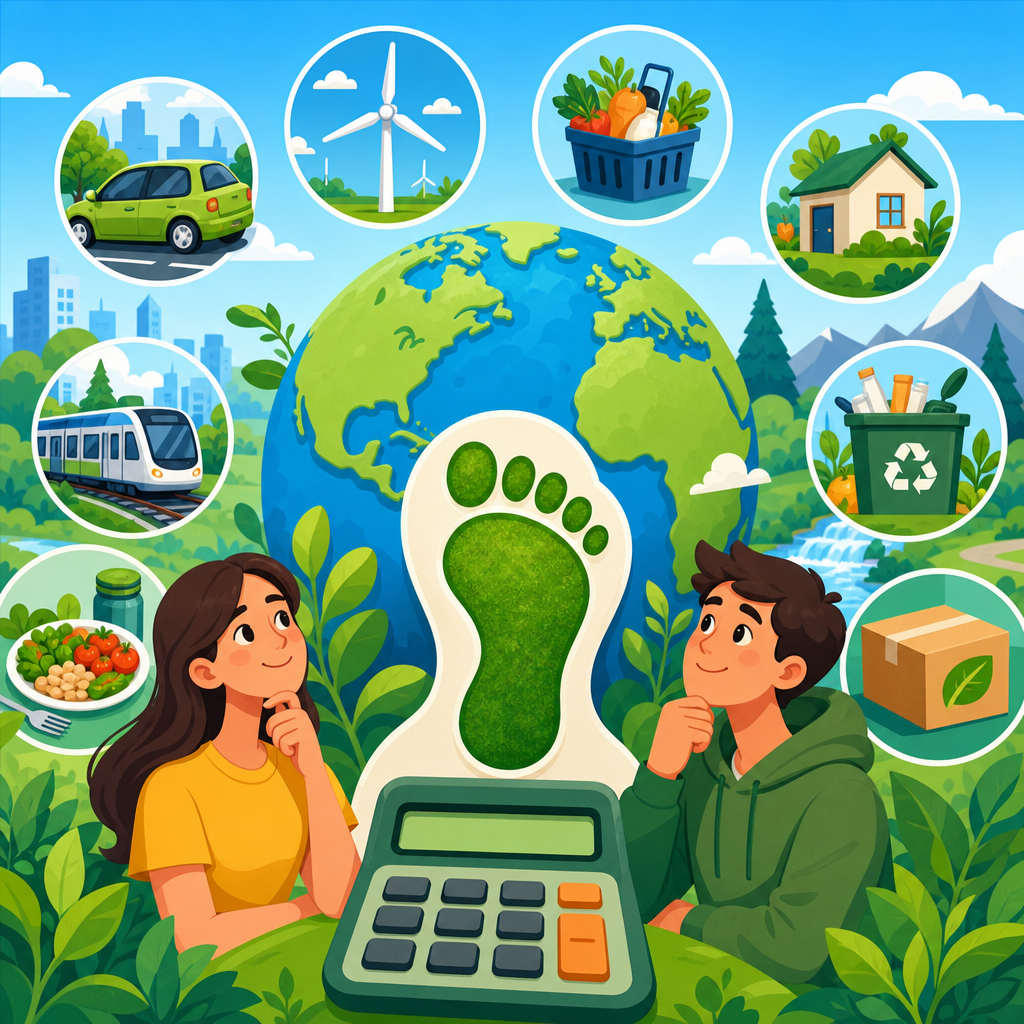
Emissions are releases of gases or pollutants into the air. A carbon footprint is the total greenhouse gas emissions associated with an activity, person, product, or organization, usually expressed in carbon dioxide equivalent, written as CO2e. CO2e converts different greenhouse gases into one comparable metric based on warming effect. Net zero means reducing emissions as close to zero as possible and balancing only the small remainder with durable removals. Carbon neutral usually means emissions are balanced through reductions and offsets, but the term is broader and often less rigorous.
Mitigation refers to actions that reduce the causes of climate change, such as switching to clean power or improving efficiency. Adaptation means adjusting systems and communities to live with current or expected climate impacts, such as building flood defenses or changing crop varieties. Climate resilience is the capacity of a system to prepare for, absorb, recover from, and adapt to shocks like heat waves, wildfire, drought, or sea-level rise. A climate model is a scientific tool that simulates Earth systems to project future conditions under different emissions pathways.
Energy, resources, and systems terms
Renewable energy comes from sources that naturally replenish on a human timescale, including solar, wind, hydroelectric, geothermal, and sustainably managed biomass. Fossil fuels are coal, oil, and natural gas formed from ancient organic matter; they are finite and major sources of greenhouse gas emissions. Clean energy usually refers to energy sources with low operational emissions, though exact definitions vary by policy context. Energy efficiency means delivering the same service with less energy, such as better insulation or LED lighting. Energy conservation means using less energy overall, such as lowering thermostat settings or reducing unnecessary travel.
Electrification is the replacement of fossil-fuel-based equipment with electric alternatives, including heat pumps, electric vehicles, and induction cooking. Decarbonization means reducing carbon emissions across energy, industry, transport, and buildings. A power purchase agreement, commonly called a PPA, is a contract to buy electricity from a specific generation project, often used by companies to support renewable energy procurement. A renewable energy certificate, or REC, represents the environmental attributes of one megawatt-hour of renewable electricity generated and delivered to the grid. Baseload power is electricity supplied consistently to meet minimum demand, while peak demand refers to the highest level of electricity use during a period.
Natural resources are materials and ecosystem functions people rely on, such as timber, water, soil, minerals, and fisheries. Resource depletion is the exhaustion or degradation of these assets faster than they can recover. Circular economy describes a system designed to keep materials in use through durability, repair, reuse, remanufacturing, and recycling, reducing waste and virgin extraction. Life cycle assessment, or LCA, evaluates environmental impacts across a product’s full life cycle, from raw material extraction to manufacturing, transport, use, and end-of-life disposal. In procurement work, LCA often reveals tradeoffs hidden by simple labels.
Pollution, waste, and materials terms
Pollution is the introduction of harmful substances or energy into the environment. Air pollution includes contaminants such as particulate matter, nitrogen oxides, sulfur dioxide, ozone at ground level, and volatile organic compounds. Particulate matter, especially PM2.5, consists of tiny particles small enough to enter the lungs and bloodstream, making it a major public health risk. Water pollution occurs when chemicals, pathogens, nutrients, plastics, or sediment degrade water quality. Soil contamination happens when hazardous substances alter soil chemistry and threaten ecosystems or human health.
Hazardous waste is waste that is ignitable, corrosive, reactive, or toxic under regulatory definitions. Municipal solid waste is everyday waste collected from homes, businesses, and institutions. Recycling is the processing of discarded materials into new products, but it only works when materials are collected, sorted, and sold into viable end markets. Reuse means using an item again without major reprocessing, often producing better environmental outcomes than recycling. Composting is the controlled biological decomposition of organic waste into a soil-like amendment. Anaerobic digestion breaks down organic material without oxygen, producing biogas and digestate.
Biodegradable means a material can be broken down by microorganisms, but the term is incomplete without conditions and timeframe. Compostable is narrower and usually means a material breaks down under specific composting conditions into substances that do not leave harmful residue. Landfill is a regulated site for waste disposal, engineered to control leachate and gas, although performance varies widely. Incineration is waste burning, sometimes paired with energy recovery, but it can create air emissions and ash management challenges. Leachate is liquid that drains through waste and can carry pollutants into soil and water if not properly contained.
| Term | What it means | Common misconception |
|---|---|---|
| Biodegradable | Can be broken down by microorganisms under certain conditions | It will quickly disappear anywhere, including oceans or landfills |
| Compostable | Breaks down into usable organic matter under defined composting conditions | It will decompose properly in a backyard pile or natural environment |
| Recyclable | Technically capable of being recycled | If the label says recyclable, local systems definitely recycle it |
| Recycled content | Contains material recovered from waste streams | It is always lower impact than every virgin alternative |
Ecology, biodiversity, and conservation terms
Ecology is the study of relationships between organisms and their environment. An ecosystem is a community of living organisms interacting with soil, water, air, and energy flows in a defined area. Biodiversity refers to the variety of life at genetic, species, and ecosystem levels. Species richness is simply the number of species in a given area, while abundance describes how many individuals of each species are present. A habitat is the place where a species lives and finds food, water, and shelter. A niche is the role a species plays in an ecosystem, including how it uses resources and interacts with others.
An endangered species faces a very high risk of extinction in the wild, while threatened species are likely to become endangered in the foreseeable future under many legal frameworks. Native species occur naturally in an area. Invasive species are non-native organisms that spread and cause ecological, economic, or health harm. Keystone species have a disproportionately large effect on ecosystem structure relative to their abundance; sea otters controlling sea urchins in kelp forests are a classic example. Indicator species reflect environmental conditions and can reveal pollution or habitat decline before broader damage becomes obvious.
Conservation is the protection and careful management of natural resources and biodiversity. Restoration aims to assist the recovery of degraded ecosystems, such as rewetting drained peatlands or removing dams to restore fish passage. Reforestation is planting trees in areas recently forested, while afforestation establishes forest where there was not forest recently. Deforestation is the conversion of forest to non-forest land uses. Ecosystem services are the benefits people obtain from nature, including pollination, water filtration, flood control, carbon storage, and cultural value. When these services decline, communities often feel the cost before they recognize the ecological cause.
Water, agriculture, and land-use terms
A watershed is the land area that drains rainfall and snowmelt to a common outlet such as a river, lake, estuary, or ocean. Aquifers are underground layers of rock or sediment that store and transmit groundwater. Groundwater is water stored below the surface, while surface water includes rivers, lakes, reservoirs, and wetlands. Water scarcity refers to insufficient available water relative to demand, whether from physical shortage, poor infrastructure, or weak governance. Water stress is the pressure placed on water resources when withdrawals approach or exceed available supply.
Eutrophication is the over-enrichment of water with nutrients, mainly nitrogen and phosphorus, causing algal blooms and oxygen depletion. Runoff is water that flows over land, often carrying soil, fertilizer, oil, and other pollutants into waterways. A wetland is land saturated with water long enough to support water-adapted soils and vegetation; wetlands buffer floods, filter pollutants, and provide habitat. Desertification is land degradation in dry areas caused by climate variability and human activity, reducing productivity and resilience. Soil erosion is the removal of topsoil by wind or water, often accelerated by deforestation, overgrazing, and poor tillage practices.
Sustainable agriculture seeks to maintain productivity while protecting soil, water, biodiversity, and farm viability. Regenerative agriculture focuses on restoring soil health, increasing organic matter, improving water retention, and often integrating cover crops, reduced tillage, crop rotation, and managed grazing. Organic farming follows regulated production standards that restrict most synthetic fertilizers and pesticides, but organic does not automatically mean low carbon or local. Pesticides are substances used to control pests; herbicides target plants, insecticides target insects, and fungicides target fungi. Fertilizer supplies nutrients to crops, yet excessive application can worsen nitrous oxide emissions and water pollution.
Policy, reporting, and corporate sustainability terms
Environmental impact assessment, or EIA, is a formal process used to predict and evaluate the likely environmental effects of a proposed project before decisions are made. Materiality identifies which environmental issues are significant enough to influence decisions, risk, or stakeholder value. Scope 1 emissions are direct emissions from owned or controlled sources, Scope 2 covers purchased electricity, steam, heating, and cooling, and Scope 3 includes indirect emissions across the value chain. In corporate work, Scope 3 is usually the largest and hardest category because it includes purchased goods, travel, product use, and end-of-life treatment.
Offsets are credits representing emissions reductions or removals claimed to compensate for emissions elsewhere. Additionality means the credited reduction would not have happened without the project; this is the central quality test for offsets. Greenwashing is the practice of making environmental claims that are misleading, vague, or unsupported by evidence. Environmental management systems, especially those aligned with ISO 14001, provide structured processes for setting objectives, assigning responsibilities, auditing performance, and improving compliance. Environmental justice addresses the unequal environmental burdens faced by communities, particularly low-income neighborhoods and communities of color that often experience more pollution exposure and fewer environmental benefits.
Sustainability means meeting present needs without undermining the ability of future generations to meet theirs, balancing environmental, social, and economic considerations. Sustainable development applies that principle to policy, infrastructure, and business strategy. Stewardship is the responsible care and management of resources over time. Transparency means disclosing methods, assumptions, boundaries, and results clearly enough for others to evaluate claims. If you are using this environmental glossary as a starting point, the next step is simple: apply these terms when reading reports, labels, and news coverage, and keep this hub open as your reference point for deeper topic pages across Education & Resources.
Frequently Asked Questions
Why is an environmental glossary important beyond simple definitions?
An environmental glossary matters because environmental work depends on precision. Many commonly used terms sound familiar, but they often carry specific scientific, legal, or policy meanings that are easy to blur in everyday conversation. When people use words like sustainability, mitigation, adaptation, biodiversity, resilience, or carbon neutrality loosely, they may believe they agree when they actually mean very different things. That confusion can slow planning, weaken decisions, and create misunderstandings between researchers, businesses, governments, educators, and the public.
A strong glossary creates a shared language. It helps students build foundational knowledge, gives professionals consistent terminology for reports and compliance work, supports policymakers drafting regulations, and helps households make sense of environmental news and product claims. It also improves communication across disciplines, which is especially important because environmental issues are rarely confined to one field. Climate change, waste management, conservation, water quality, and energy systems all overlap. A glossary brings clarity to those connections and makes complex subjects more accessible, accurate, and actionable.
What are the most essential environmental terms people should understand first?
If someone is new to environmental topics, the most useful terms to learn first are the ones that appear repeatedly in public discussion and shape how larger issues are understood. These often include climate change, greenhouse gases, carbon footprint, biodiversity, ecosystem, renewable energy, pollution, conservation, mitigation, adaptation, resilience, sustainability, circular economy, environmental justice, and net zero. Each of these terms acts like a building block. Once their meanings are clear, it becomes much easier to understand reports, policy debates, classroom materials, and sustainability claims from companies or institutions.
For example, biodiversity is not just a general idea about nature; it refers to the variety of life at genetic, species, and ecosystem levels. Mitigation usually means reducing the causes of environmental harm, while adaptation means adjusting to impacts that are already happening or expected. Carbon neutrality and net zero are related but not always identical in practice, and that distinction matters when evaluating climate strategies. Learning these core terms first gives readers a practical framework. From there, more specialized vocabulary such as eutrophication, sequestration, life-cycle assessment, watershed, or bioremediation becomes much easier to place in context.
How can a glossary help people spot misleading environmental claims or greenwashing?
A well-built environmental glossary is one of the best tools for identifying vague, exaggerated, or misleading sustainability language. Greenwashing often relies on terms that sound positive but are undefined, weakly supported, or used in ways that obscure the real environmental impact of a product, service, or organization. If readers understand the actual meaning of terms like recyclable, biodegradable, compostable, carbon neutral, renewable, non-toxic, or sustainable, they are much better equipped to ask the right questions and look for evidence instead of accepting claims at face value.
For instance, a product described as biodegradable may only break down under certain industrial conditions, not in a backyard compost pile or landfill. A company claiming carbon neutrality may rely heavily on offsets rather than direct emissions reductions. A package labeled recyclable may technically be recyclable in theory, but not accepted by most local recycling systems. A glossary helps people separate marketing language from measurable standards. It encourages closer attention to scope, timelines, certification, methodology, and real-world outcomes. In that sense, environmental vocabulary is not just educational; it is a practical consumer and decision-making skill.
What is the difference between commonly confused environmental terms?
Many environmental terms are closely related, which is why they are often mixed up. A glossary is especially useful because it explains where those boundaries are. For example, weather refers to short-term atmospheric conditions, while climate describes long-term patterns. Global warming specifically refers to rising average global temperatures, while climate change includes broader shifts in temperature, precipitation, storms, sea levels, and ecological systems. Similarly, preservation generally means protecting nature from use or disturbance, while conservation often allows for careful management and sustainable use.
Other distinctions are equally important. Renewable energy comes from sources that naturally replenish, such as solar or wind, but that does not automatically mean every renewable project has zero environmental impact. Carbon neutral usually means emissions are balanced by reductions or offsets, while net zero typically emphasizes deep emissions cuts across an entire system before relying on limited residual balancing. Mitigation focuses on reducing causes of harm, whereas adaptation focuses on responding to consequences. Understanding these differences improves not only general knowledge but also policy literacy, media literacy, and the ability to participate meaningfully in environmental discussions without talking past others.
Who benefits most from using an environmental glossary, and how should it be used?
An environmental glossary benefits almost everyone because environmental language now appears in education, business strategy, government policy, construction, agriculture, energy, product design, finance, and daily household decisions. Students use glossaries to build confidence with unfamiliar terms. Professionals use them to keep reports, presentations, and compliance documents accurate and consistent. Policymakers and advocates use them to reduce ambiguity in public communication. Consumers use them to evaluate claims about packaging, food systems, transportation, and energy choices. In short, anyone trying to understand environmental issues more clearly can benefit from having reliable definitions in one place.
The best way to use a glossary is not as a one-time reference, but as an ongoing tool for interpretation. When reading an article, reviewing a sustainability report, or participating in a meeting, readers can check whether a term is being used correctly and whether it has a technical meaning in that context. It also helps to compare related terms rather than learning each in isolation. Environmental concepts are interconnected, and real understanding comes from seeing those relationships. A strong glossary supports that process by offering not just definitions, but the clarity needed to think critically, communicate accurately, and make more informed environmental decisions.