Habitat loss is the leading cause of biodiversity decline because it removes the food, shelter, breeding space, and ecological connections that species need to survive. In conservation biology, habitat means the physical environment where an organism lives, while biodiversity refers to the variety of life at genetic, species, and ecosystem levels. When forests are cleared, wetlands drained, grasslands converted, or coral reefs damaged, the result is not only fewer wild places but also smaller, more isolated populations that are less able to recover from drought, disease, predation, and climate stress. I have seen this pattern repeated across environmental assessments: once land conversion begins, species decline rarely happens in a single dramatic collapse. It usually starts with fragmentation, edge effects, invasive species pressure, and disrupted breeding success, then compounds over time.
This topic matters because biodiversity supports ecosystem services that economies and societies depend on every day. Pollination, water filtration, soil formation, flood buffering, carbon storage, fisheries productivity, and disease regulation all rely on functioning ecosystems. The Intergovernmental Science-Policy Platform on Biodiversity and Ecosystem Services has identified land and sea use change as the largest direct driver of nature loss globally, ahead of many other pressures in most terrestrial systems. Conservation biology therefore treats habitat protection as a first principle. If species are to persist, they need enough suitable area, enough quality, and enough connectivity. This hub article explains the core concepts of biodiversity and conservation biology, why habitat loss dominates modern extinction risk, how it interacts with climate change and other threats, and which strategies are most effective for protecting and restoring ecosystems at meaningful scale.
Understanding habitat loss also helps explain why some conservation efforts succeed while others underperform. Saving a single species in isolation can matter, but if the surrounding ecosystem continues to shrink or degrade, gains are often temporary. Effective conservation works at multiple scales: a nesting site, a watershed, a migration corridor, a protected area network, and the regional land-use system around them. That is why biodiversity and conservation biology increasingly combine field ecology, population genetics, remote sensing, landscape planning, environmental law, and community governance. The central question is practical: how much intact, connected, and resilient habitat must remain for species and ecosystems to endure?
What biodiversity includes and why conservation biology starts with habitat
Biodiversity is broader than a species count. It includes genetic diversity within populations, species diversity within communities, and ecosystem diversity across landscapes and seascapes. Conservation biology uses this layered view because declines can begin long before a species is formally listed as threatened. A forest may still contain its headline mammals and birds while having already lost understory plants, amphibians, pollinators, large old trees, and the genetic variation needed for adaptation. In field practice, habitat condition often gives the earliest warning. Canopy structure, hydrology, deadwood, native plant cover, patch size, and disturbance regime usually reveal whether an ecosystem is still functioning.
Habitat quality matters as much as habitat area. A nominally protected forest fragmented by roads, selective logging, and invasive plants may support far fewer species than an intact forest of the same size. Ecologists often describe this using the species-area relationship: as available habitat shrinks, the number of species a landscape can support declines predictably, though not always immediately. This time lag is sometimes called extinction debt. I have seen environmental impact studies underestimate this effect by treating all green cover as equivalent. It is not. A monoculture plantation, a suburban park, and an old-growth forest can all appear vegetated in satellite imagery while offering radically different resources for wildlife.
Conservation biology starts with habitat because habitat determines carrying capacity, movement, reproduction, and ecological interactions. Predators need prey-rich territories, pollinators need sequential flowering resources, amphibians need clean water and moisture refuges, and migratory birds need stopover sites spaced across flyways. If those requirements are interrupted, populations decline even when direct killing is limited. This is why the most durable conservation outcomes come from securing ecosystems, not just individual organisms.
How habitat loss drives biodiversity decline
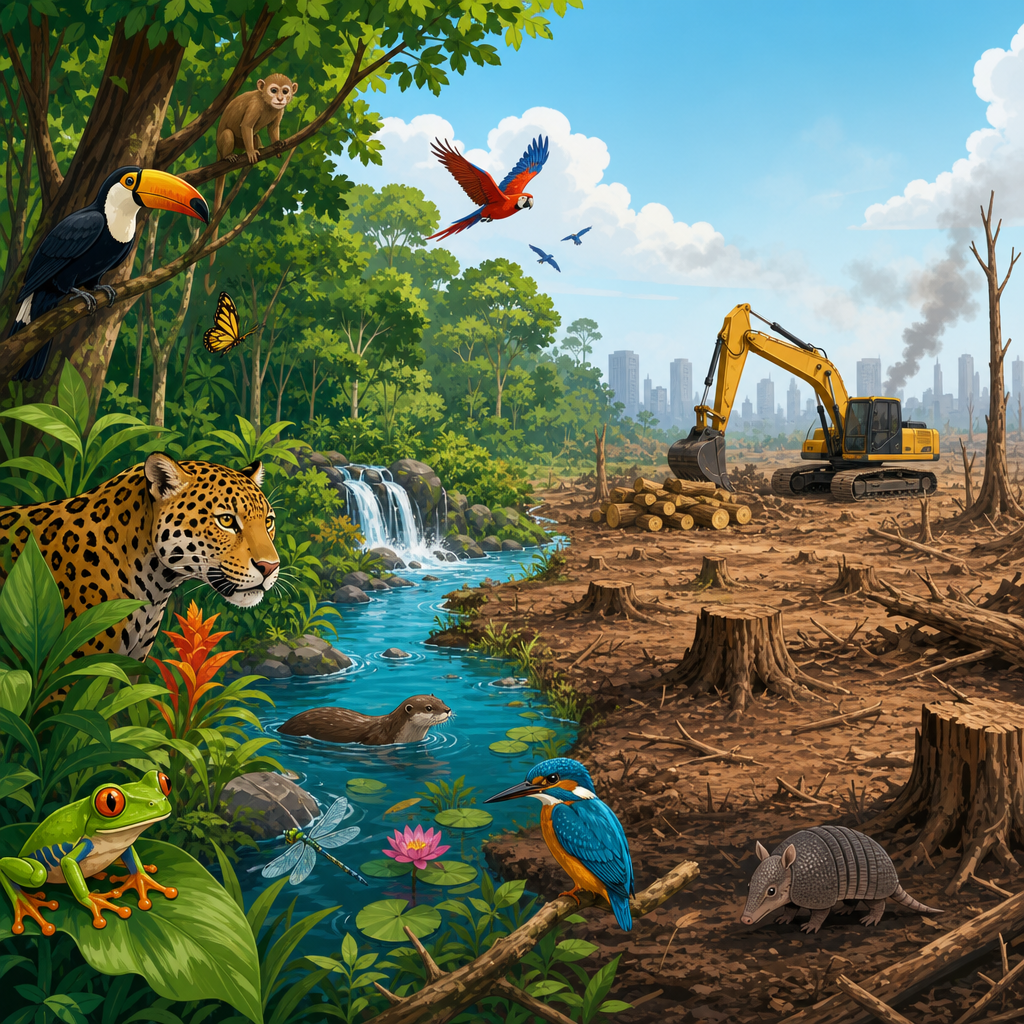
Habitat loss happens through deforestation, agricultural expansion, urbanization, mining, dam construction, infrastructure corridors, bottom trawling, wetland drainage, and coastal development. The immediate effect is a reduction in total living space, but the deeper damage comes from fragmentation and simplification. Large continuous habitats are broken into smaller patches separated by roads, fields, or settlements. Species that once dispersed freely become isolated. Small populations then face inbreeding, lower reproductive success, and higher vulnerability to random events. A single wildfire, pathogen outbreak, or dry season can eliminate a patch that would have been recolonized if connectivity remained intact.
Edge effects intensify this process. Conditions near a habitat boundary differ from the interior: more light, wind, heat, noise, invasive species, domestic predators, and human disturbance. In tropical forests, edges can penetrate tens or even hundreds of meters, drying leaf litter, changing tree mortality, and reducing habitat for interior specialists. Fragmentation therefore causes ecological loss beyond the footprint of clearing itself. For species with large home ranges such as jaguars, elephants, wolves, or many raptors, patchy landscapes may no longer provide enough territory to maintain viable populations.
Freshwater systems show the same principle in linear form. Dams and channelization break river connectivity, alter flow regimes, trap sediment, and block fish migration. Wetland filling removes breeding sites for amphibians and waterbirds while reducing flood storage and water purification. In marine systems, seagrass beds, mangroves, oyster reefs, and coral reefs function as nursery habitat. When coastal construction, dredging, destructive fishing, or pollution degrades them, fisheries decline because juvenile survival drops. Habitat loss is therefore not an abstract conservation concern; it directly affects food security, disaster resilience, and economic stability.
| Habitat type | Main form of loss | Typical biodiversity impact | Example consequence |
|---|---|---|---|
| Tropical forest | Clearing for cattle, soy, logging, roads | Fragmentation, edge effects, local extirpations | Declines in primates, birds, and forest pollinators |
| Wetlands | Drainage, filling, levees, water diversion | Loss of breeding and feeding habitat | Reduced amphibian populations and poorer water quality |
| Grasslands | Conversion to cropland and development | Loss of native plants and ground-nesting fauna | Fewer pollinators and grassland birds |
| Rivers | Dams, channelization, extraction | Blocked migration and altered flow ecology | Falling salmon or sturgeon recruitment |
| Coral reefs | Coastal damage, warming, destructive use | Structural collapse and species turnover | Lower reef fish abundance and shoreline protection |
Major ecosystems under pressure
Forests remain central to the biodiversity crisis because they contain a large share of terrestrial species and regulate climate and hydrology. In the Amazon, road building often triggers a fishbone pattern of deforestation that opens access for logging, settlement, and fire. In Southeast Asia, lowland forests have been heavily converted to oil palm and pulpwood, threatening orangutans, hornbills, and countless less visible species such as orchids, frogs, and invertebrates. Temperate forests face a different mix of risks: parcelization, exurban development, deer overbrowsing, and the loss of old-growth structure. The lesson across regions is consistent. Forest cover alone is an incomplete metric; composition, age diversity, and connectivity determine biodiversity value.
Grasslands are often overlooked because they can appear empty to non-specialists, yet they support exceptional plant diversity, migratory herbivores, burrowing mammals, predatory birds, and pollinator networks. Prairie conversion in North America and steppe degradation elsewhere have removed much of the original habitat. Once native grasslands are plowed, the seed bank, soil biota, and hydrology can be difficult to restore fully. Similar concerns apply to savannas, which are frequently mischaracterized as degraded forests rather than distinct ecosystems shaped by fire and grazing.
Wetlands, estuaries, mangroves, and peatlands deserve special attention because they provide disproportionate benefits relative to their area. They store carbon, buffer storms, support fisheries, and filter water while sustaining migratory birds, fish, reptiles, and plants adapted to highly specific conditions. Yet they are routinely filled, diked, drained, or cut off from natural water flow. Coral reefs, despite covering a tiny fraction of the ocean floor, support immense marine biodiversity. Their decline illustrates how habitat loss can be structural as well as spatial: when live coral cover is reduced, the three-dimensional architecture that shelters fish and invertebrates also disappears.
How habitat loss interacts with other drivers of decline
Habitat loss is the leading driver of biodiversity decline, but it rarely acts alone. Climate change amplifies it by shifting temperature and rainfall patterns, intensifying fire, bleaching coral, altering snowpack, and moving suitable climate zones faster than many species can disperse. In fragmented landscapes, species cannot easily track those changes. A butterfly or small mammal may need to move uphill or poleward, but highways, farms, and urban areas block movement. Connectivity therefore becomes a climate adaptation tool as much as a conservation objective.
Pollution compounds habitat degradation by reducing habitat quality. Nutrient runoff causes eutrophication and dead zones in freshwater and coastal systems. Pesticides can remove insect prey and directly affect pollinators, birds, and amphibians. Plastic pollution alters marine and shoreline habitats. Overexploitation adds further stress when hunting, fishing, or plant harvesting continues in habitats already reduced in size. Invasive species often spread most aggressively in disturbed places, where native communities have been disrupted and edge conditions favor colonizers.
These interactions explain why conservation planning must address cumulative effects. For example, a river basin may still retain forest patches, but if dams alter seasonal flow, mines increase sediment, roads block wildlife movement, and rising temperatures reduce dissolved oxygen, the biological outcome can be severe. The same logic applies to coastal marshes squeezed between sea-level rise and hard infrastructure. Protecting biodiversity means reducing pressure stacks, not managing threats one at a time in isolation.
Conservation strategies that work
The most effective response to habitat loss follows a mitigation hierarchy: avoid impacts where possible, minimize unavoidable damage, restore disturbed areas, and offset only as a last resort under strict standards. In practice, avoidance is far more reliable than later compensation. Ancient woodland, old-growth forest, species-rich prairie, and intact peatland cannot be recreated quickly, and some features cannot be replaced at all on policy timescales. Strategic land-use planning is therefore the foundation of biodiversity conservation. High-value habitats, key biodiversity areas, riparian buffers, spawning grounds, and migration corridors should be identified before permits are issued, not after damage occurs.
Protected areas remain essential, but location and management quality matter more than headline acreage alone. A protected area that excludes critical breeding sites or is isolated by intensive development will deliver limited results. Networks of reserves linked by ecological corridors are more effective, especially for wide-ranging mammals, migratory birds, and climate-driven range shifts. Indigenous-managed lands and community-conserved areas are also vital. In many regions, they overlap with high biodiversity and lower deforestation rates because long-term stewardship systems remain intact.
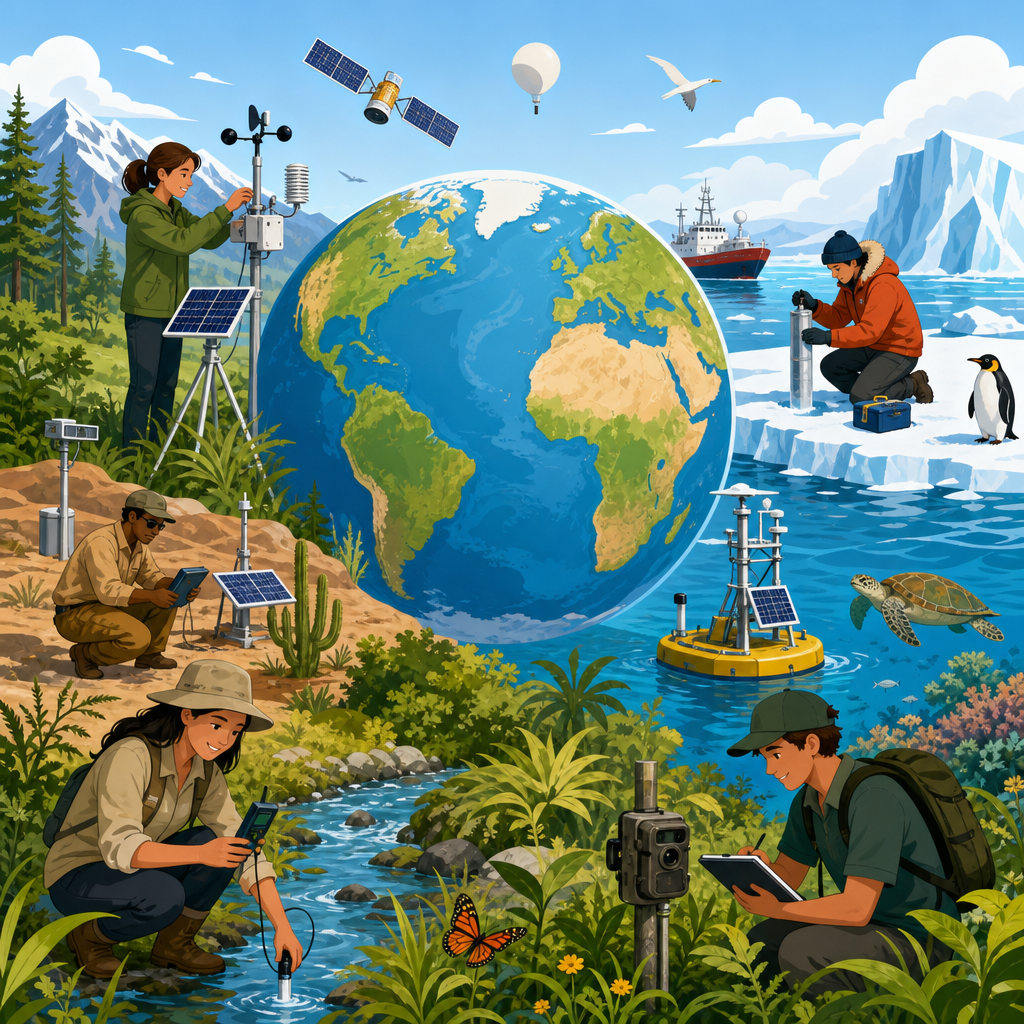
Restoration has an important role when it is realistic and well designed. Rewetting peatlands, removing obsolete dams, reconnecting floodplains, replanting native vegetation, restoring oyster reefs, and converting drainage channels back into functioning wetlands can rapidly improve ecological function. However, restoration should aim for process recovery, not cosmetic greening. Success metrics need to include native species recruitment, hydrology, structural complexity, and long-term resilience. Tools such as satellite monitoring, camera traps, acoustic surveys, environmental DNA, and GIS-based connectivity models now make it easier to measure whether habitats are truly recovering.
What this means for biodiversity and conservation biology
As a hub for biodiversity and conservation biology, this topic connects population viability analysis, island biogeography, metapopulation theory, landscape ecology, restoration ecology, protected area design, conservation genetics, ecosystem services, and environmental policy. The unifying principle is straightforward: species persist when habitats are sufficient in area, quality, and connectivity across time. Conservation action becomes stronger when it is evidence-based, spatially explicit, and tied to enforceable governance. That means monitoring land-cover change, protecting representative ecosystems, maintaining ecological processes, and integrating nature goals into agriculture, infrastructure, water management, and urban planning.
The key takeaway is that habitat loss is not simply one threat among many. It is the pressure that most often sets biodiversity decline in motion and makes other threats harder to survive. Protecting intact ecosystems delivers the highest return because it preserves species, ecological interactions, carbon stocks, and natural resilience at once. If you are building out your understanding of environmental science, start here: learn how habitats function, how fragmentation changes them, and which conservation tools protect them most effectively. Then explore the connected topics within biodiversity and conservation biology with the same question in mind: what does life need from place in order to endure?
Frequently Asked Questions
Why is habitat loss considered the leading cause of biodiversity decline?
Habitat loss is considered the leading cause of biodiversity decline because it directly removes the places where organisms live, feed, reproduce, and interact with other species. Every plant, animal, fungus, and microbe depends on a specific physical environment with the right conditions for survival. When forests are cut down, wetlands are drained, grasslands are plowed, rivers are dammed, or coral reefs are damaged, species do not simply relocate without consequence. Many lose access to food sources, nesting areas, breeding grounds, seasonal migration routes, and shelter from predators or extreme weather.
The impact extends beyond individual species. Biodiversity includes variation at the genetic, species, and ecosystem levels, and habitat loss disrupts all three. Small, isolated populations often become less genetically diverse, making them more vulnerable to disease, climate stress, and reproductive failure. At the species level, populations decline or disappear entirely when they can no longer find suitable living conditions. At the ecosystem level, the loss of one habitat can unravel ecological relationships such as pollination, seed dispersal, nutrient cycling, and predator-prey balance. That is why conservation biologists view habitat loss not as a single problem, but as a cascading force that weakens the entire web of life.
How does habitat fragmentation make biodiversity loss worse?
Habitat fragmentation happens when a large, continuous habitat is broken into smaller, disconnected patches by roads, farms, cities, logging operations, dams, or other forms of land conversion. Even if some habitat remains, fragmentation can severely reduce its ecological value. Many species need large territories, access to multiple habitat types, or safe movement corridors to find mates, hunt, migrate, or respond to seasonal changes. Once a habitat is split apart, those basic life processes become harder or impossible to maintain.
Fragmentation also creates what ecologists call “edge effects.” The edges of habitat patches often experience more sunlight, wind, heat, pollution, invasive species, and human disturbance than interior areas. This changes temperature, moisture, vegetation structure, and predator patterns, making the remaining habitat less suitable for species that rely on stable interior conditions. Small populations trapped in isolated patches may also suffer from inbreeding, reduced genetic diversity, and a greater risk of local extinction after fires, storms, droughts, or disease outbreaks. In other words, fragmentation means that habitat loss is not only about how much habitat disappears, but also about how much of what remains still functions as healthy, connected ecosystem space.
What kinds of human activities cause the most habitat loss?
The biggest drivers of habitat loss are land-use changes linked to agriculture, urban expansion, infrastructure development, resource extraction, and coastal alteration. Agriculture is one of the most significant causes worldwide. Forests are cleared for crops and cattle pasture, grasslands are converted into monocultures, and wetlands are drained to create usable farmland. While these changes may support short-term economic production, they often replace complex natural ecosystems with simplified landscapes that support far fewer species.
Urbanization is another major factor. As cities spread outward, housing, roads, industrial zones, and commercial areas cover natural land and divide remaining habitats into isolated fragments. Infrastructure such as highways, rail corridors, pipelines, and dams can block migration routes and alter water flow. Logging, mining, and oil and gas development can remove vegetation, contaminate surrounding environments, and leave behind landscapes that no longer support native wildlife in the same way. In marine systems, coral reefs and coastal habitats are harmed by dredging, destructive fishing practices, pollution, and warming-related stress. Across all of these examples, the pattern is similar: human activities replace diverse, functioning ecosystems with built or heavily altered environments that cannot sustain the same richness of life.
Can species adapt to habitat loss by moving somewhere else?
Some species can shift their range, use altered environments, or survive in human-dominated landscapes, but many cannot. The ability to move depends on how specialized a species is, how far it can travel, whether suitable habitat still exists elsewhere, and whether barriers such as roads, farms, fences, cities, or dams block its path. Generalist species, such as some birds, rodents, or insects, may tolerate disturbance better than specialists. By contrast, species that depend on a very specific forest structure, wetland condition, host plant, breeding site, or water temperature often have limited options when their habitat is lost.
Even when relocation is possible, it is rarely simple. A species may need not just a new physical space, but also the right food web, soil conditions, nesting sites, pollinators, prey species, or symbiotic partners. Moving to a new area may also increase competition with species already there or expose the newcomer to predators, diseases, or unsuitable climate conditions. For migratory animals, habitat loss at any point in the migration route can be devastating, even if breeding habitat remains intact. So while movement and adaptation do happen, they are not reliable solutions at the scale needed to offset widespread habitat destruction. Protecting and reconnecting habitats is usually far more effective than assuming species can simply relocate on their own.
What can be done to reduce habitat loss and protect biodiversity?
Reducing habitat loss requires a combination of protection, restoration, better land-use planning, and long-term policy commitment. One of the most effective strategies is to conserve intact ecosystems before they are degraded. Protected areas, Indigenous-managed lands, wildlife reserves, marine protected areas, and conservation easements can all help safeguard critical habitats when they are well designed and properly enforced. Equally important is maintaining connectivity through wildlife corridors, river restoration, and landscape planning that allows species to move between habitat patches.
Restoration also plays a major role. Reforesting cleared land, rebuilding wetlands, restoring grasslands, protecting mangroves, and improving coral reef resilience can help recover ecological functions over time. In working landscapes, more biodiversity-friendly practices matter as well, including sustainable forestry, regenerative agriculture, reduced pesticide use, better watershed management, and urban planning that preserves green space. At the policy level, strong environmental laws, careful development review, and incentives that value ecosystem services can reduce unnecessary destruction. For the public, supporting conservation organizations, reducing demand for products linked to deforestation, and advocating for science-based land management can make a meaningful difference. The core principle is straightforward: biodiversity is most likely to persist when habitats remain large, connected, functional, and protected from further degradation.