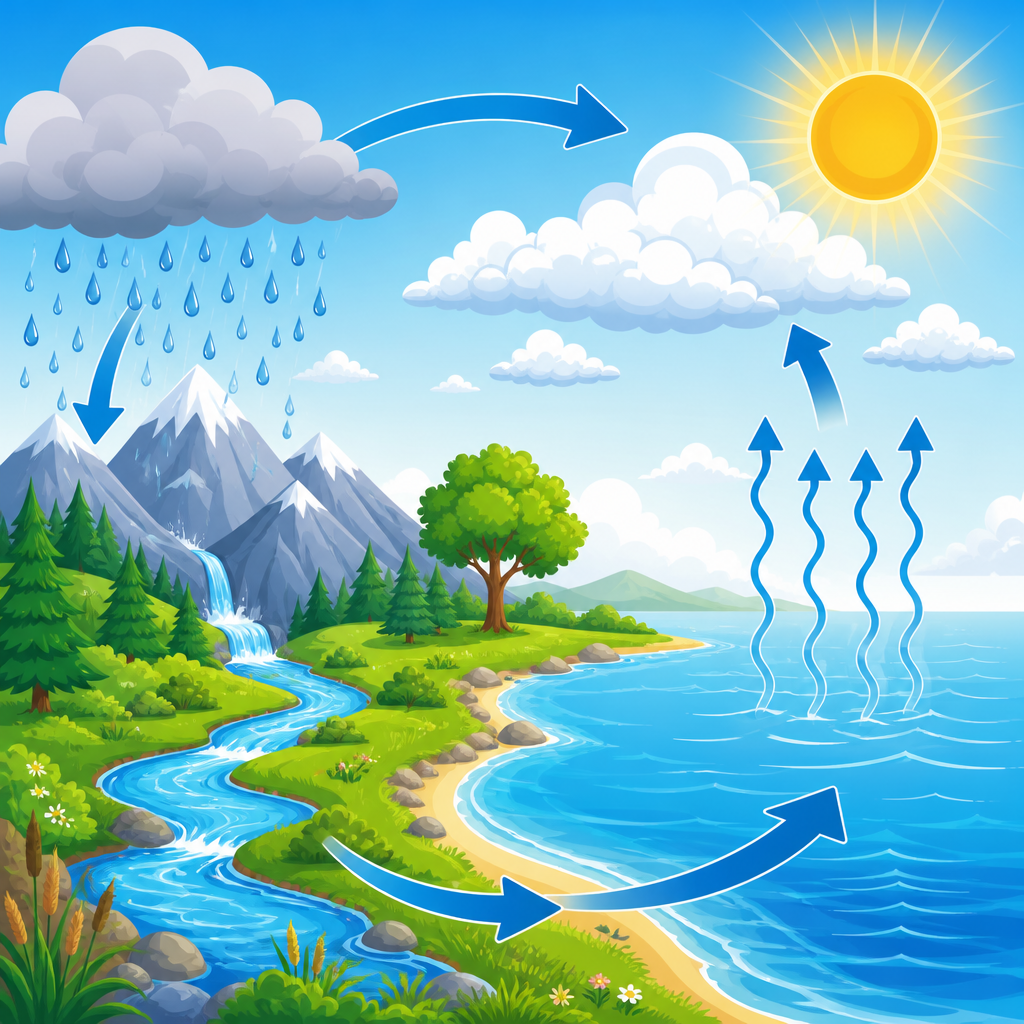

Environmental chemistry is the study of chemical processes that occur in air, water, soil, sediments, and living systems, especially when human activity changes those processes. It asks practical questions with high stakes: What happens to nitrogen fertilizer after rain? Why does wildfire smoke travel across states? How do mercury, lead, and PFAS move through rivers, aquifers, and food webs? In my work reviewing site assessments and water quality reports, I have seen that these are never abstract questions. They affect drinking water treatment costs, crop productivity, urban planning, fisheries, and public health.
To define the field clearly, environmental chemistry combines analytical chemistry, organic chemistry, inorganic chemistry, physical chemistry, and biogeochemistry. It examines the sources, reactions, transport, fate, and effects of chemical species in the environment. “Sources” means where substances come from, such as vehicle exhaust, wastewater effluent, mining waste, pesticides, sea spray, or volcanic emissions. “Transport” explains how they move through wind, runoff, groundwater flow, sorption to particles, or uptake by organisms. “Fate” describes what they become over time through degradation, oxidation, reduction, photolysis, hydrolysis, complexation, or bioaccumulation.
Environmental chemistry matters because modern society depends on chemicals while ecosystems depend on balance. Fertilizers increase yields but can trigger eutrophication. Disinfectants prevent disease but can form byproducts such as trihalomethanes. Plastics deliver convenience yet fragment into microplastics that persist in waters and sediments. Climate change adds another layer by altering temperature, pH, wildfire frequency, precipitation, and ocean circulation, which in turn changes reaction rates and pollutant pathways. As the hub for environmental chemistry within environmental science, this article explains the concepts, methods, contaminants, and decisions that shape the field, so readers can understand both the science and why it guides regulation, industry practice, and everyday risk management.
What environmental chemistry studies
Environmental chemistry studies chemicals in natural and built environments and the transformations that determine exposure and impact. The field covers major cycles of carbon, nitrogen, phosphorus, and sulfur, plus trace metals, synthetic organics, radionuclides, and emerging contaminants. A central principle is speciation: the form of a chemical often matters more than the total amount. For example, chromium(III) is an essential trace nutrient in small amounts, while chromium(VI) is far more mobile and toxic. Ammonia, ammonium, nitrate, and organic nitrogen all behave differently in water and soil, so accurate interpretation requires identifying the species present, not just reporting “nitrogen.”
Another core idea is partitioning, the way compounds distribute between air, water, soil, sediment, and organisms. Henry’s law helps predict whether a substance volatilizes from water into air. The octanol-water partition coefficient, often written as Kow, signals whether an organic contaminant is likely to dissolve in water or accumulate in fatty tissues. Sorption coefficients such as Kd and Koc indicate how strongly chemicals attach to soils and organic matter. These parameters are not academic trivia. They help explain why benzene can move quickly in groundwater, why PCBs persist in sediment, and why some herbicides wash into streams after storms.
Environmental chemistry also studies reactions controlled by pH, redox potential, sunlight, minerals, and microbes. Acid mine drainage is a classic example: sulfide minerals exposed during mining oxidize to produce sulfuric acid, which dissolves metals such as iron, aluminum, and manganese. In lakes and coastal waters, excess nutrients can fuel algal blooms; when algae die and decompose, oxygen drops, changing redox conditions and releasing phosphorus or metals from sediments. These feedbacks show why environmental problems rarely involve one pollutant in one place. They involve interconnected media and cascading reactions.
How chemicals move and change in air, water, and soil
Chemicals move through the environment by advection, dispersion, diffusion, deposition, volatilization, infiltration, and biological uptake. In air, gases and particles can travel locally or across continents depending on wind patterns, atmospheric stability, and particle size. Fine particulate matter, PM2.5, remains suspended longer than coarse particles and penetrates deep into the lungs. Sulfur dioxide and nitrogen oxides emitted from combustion can oxidize to sulfuric and nitric acids, contributing to acid deposition. Ground-level ozone forms secondarily when nitrogen oxides react with volatile organic compounds in sunlight, which is why hot urban afternoons often produce worse smog than morning rush hour alone would suggest.
In water, movement depends on flow velocity, temperature, suspended solids, salinity, and residence time. Rivers transport dissolved ions and particle-bound contaminants downstream; estuaries add complexity because salinity changes metal speciation and flocculation behavior. Groundwater introduces slower but often more persistent pathways. I have reviewed chlorinated solvent plumes where trichloroethylene migrated hundreds of meters through sandy aquifers, while biodegradation differed sharply between oxygen-rich and oxygen-poor zones. In soils, texture, clay content, organic matter, and moisture influence whether chemicals sorb, leach, or degrade. Sandy soils permit rapid infiltration, while soils rich in organic matter can retain hydrophobic compounds longer.
Transformation is as important as transport. Sunlight can break down pesticides in surface waters through photolysis. Hydrolysis can deactivate some organophosphate compounds. Microbes can convert nitrate to nitrogen gas through denitrification in low-oxygen wetlands, reducing nutrient pollution. They can also methylate mercury under certain conditions, producing methylmercury, a neurotoxin that bioaccumulates in fish. Because transformation can either reduce or increase hazard, environmental chemistry always asks two linked questions: where does a pollutant go, and what does it become?
Major pollutants and why they matter
The field pays close attention to pollutants that are toxic, persistent, mobile, or widespread. Nutrients such as nitrogen and phosphorus are essential for life but harmful in excess. The Mississippi River basin demonstrates this clearly: runoff from agriculture contributes nutrients to the Gulf of Mexico, where seasonal hypoxia creates a “dead zone” with too little oxygen for many marine organisms. Heavy metals are another major category. Lead can impair neurological development in children. Arsenic occurs naturally in some aquifers and also results from mining and industry; in drinking water, chronic exposure raises cancer and cardiovascular risks. Mercury emitted from coal combustion and artisanal gold mining can deposit far from its source and biomagnify in aquatic food webs.
Organic contaminants include petroleum hydrocarbons, solvents, pesticides, dioxins, PCBs, pharmaceuticals, and per- and polyfluoroalkyl substances, commonly called PFAS. Their behavior varies widely. BTEX compounds from gasoline are relatively mobile and some biodegrade under favorable conditions. PCBs are hydrophobic, persistent, and strongly associated with sediments and fatty tissues. PFAS are notable because many resist heat, water, and oil, making them useful in products but difficult to destroy in the environment. Certain PFAS are linked to immune, developmental, and metabolic effects, and they have been detected in drinking water near airports, military bases, and manufacturing sites where firefighting foams or industrial processes were used.
| Pollutant group | Typical sources | Main environmental concern | Example |
|---|---|---|---|
| Nutrients | Fertilizer, manure, wastewater | Eutrophication, hypoxia | Nitrate in groundwater |
| Metals | Mining, smelting, pipes, natural geology | Toxicity, persistence | Lead in drinking water |
| Volatile organics | Fuel spills, solvents, industry | Air and groundwater contamination | Benzene plume |
| Persistent organics | Legacy industrial chemicals, combustion | Bioaccumulation | PCBs in sediment |
| PFAS | Foams, coatings, manufacturing | Extreme persistence, difficult treatment | PFOA in municipal wells |
Microplastics and engineered nanomaterials are newer concerns. Microplastics can sorb other contaminants, though the magnitude and health relevance depend on polymer type, size, aging, and local conditions. Nanomaterials may behave differently from bulk materials because surface area and reactivity increase sharply at small scales. The important point is that environmental chemistry does not treat all contaminants alike. It evaluates each substance through persistence, bioavailability, exposure route, and transformation pathway.
How scientists measure environmental chemistry
Reliable measurement is the backbone of the field. Environmental chemists collect samples from air, water, soils, sediments, and biota using protocols designed to avoid contamination and preserve chemical integrity. For trace metals, acid-washed containers and filtration choices matter. For volatile organic compounds, headspace in sample vials can cause losses, so methods often require zero headspace and rapid cooling. For PFAS, even common field materials can contaminate samples, so fluoropolymer equipment may be restricted. These details determine whether results are defensible.
Laboratories use a range of analytical tools. Gas chromatography-mass spectrometry is common for volatile and semi-volatile organics. Liquid chromatography-tandem mass spectrometry is widely used for PFAS, pharmaceuticals, and polar compounds. Inductively coupled plasma mass spectrometry measures metals at very low concentrations. Ion chromatography quantifies anions such as nitrate, sulfate, and fluoride. Spectrophotometric methods support routine parameters including phosphate and ammonia. Quality assurance includes blanks, duplicates, calibration checks, matrix spikes, surrogate recoveries, and method detection limits. When I evaluate datasets, poor quality control usually reveals itself through inconsistent recoveries, unexpected blank contamination, or holding times that were exceeded.
Monitoring alone is not enough; interpretation requires context. A concentration exceeding a regulatory standard has different implications depending on exposure duration, background geology, seasonal flow, and whether the analyte is dissolved or total. Trend analysis often matters more than a single sample. For instance, storm-event monitoring may show phosphorus spikes that routine monthly sampling misses. Isotope techniques can distinguish nitrate sources from fertilizer, manure, or wastewater. Passive samplers, remote sensing, and high-resolution mass spectrometry are expanding the field’s ability to detect both known and previously unrecognized compounds.
Why environmental chemistry is important for health, ecosystems, and policy
Environmental chemistry is important because it links contamination to consequences and solutions. In public health, it informs drinking water standards, air quality rules, fish consumption advisories, and cleanup targets. The Flint water crisis is a stark lesson in chemistry and governance: changes in water source and corrosion control altered lead release from pipes, showing that infrastructure decisions can trigger serious exposure when water chemistry is misunderstood. In ecosystems, chemical imbalances can shift species composition, reduce biodiversity, and destabilize food webs. Acidification in lakes once damaged fisheries in parts of North America and Europe; emission controls on sulfur dioxide helped reverse many of those trends.
The field also underpins remediation and prevention. If a contaminant is volatile, soil vapor extraction may work. If it is strongly sorbed to sediment, dredging, capping, or monitored natural recovery may be more appropriate. Nitrate in groundwater may call for source reduction, cover crops, denitrifying bioreactors, or wellhead treatment such as ion exchange or reverse osmosis. No single technology fits every site because chemistry controls effectiveness. Policymakers rely on this evidence to set discharge permits, hazardous waste rules, product restrictions, and monitoring requirements. Industry relies on it to redesign processes, reduce emissions, and avoid liabilities.
For readers exploring environmental science, environmental chemistry is the hub that connects atmospheric science, hydrology, toxicology, ecology, geology, and engineering. It explains why pollution problems emerge, how they are measured, and which interventions actually work. The biggest benefit of understanding environmental chemistry is practical clarity: you can evaluate claims about contamination, treatment, sustainability, and risk using mechanisms rather than slogans. If you want to go deeper, continue with related topics such as water quality, soil contamination, air pollution, toxicology, and remediation methods, then use this foundation to interpret environmental issues with far more confidence.
Frequently Asked Questions
What is environmental chemistry in simple terms?
Environmental chemistry is the study of how chemicals behave in the natural world and how human activity changes that behavior. It looks at what happens in air, water, soil, sediment, and living organisms when substances are released, transformed, transported, or stored. In practical terms, it helps explain why fertilizer runs off after heavy rain, how wildfire smoke can affect air quality far from the fire itself, and why contaminants such as lead, mercury, or PFAS can persist and move through rivers, groundwater, and food webs.
What makes environmental chemistry especially important is that it focuses on real-world systems rather than isolated laboratory conditions. A chemical does not act the same way everywhere. Its behavior depends on pH, temperature, sunlight, oxygen levels, soil type, organic matter, and the presence of other compounds. Environmental chemistry connects those variables to outcomes that matter for health, ecosystems, agriculture, drinking water, and cleanup decisions. In that sense, it is both a scientific field and a practical tool for understanding environmental risk.
Why is environmental chemistry important for public health and the environment?
Environmental chemistry is important because it helps identify where contaminants come from, how they move, what they turn into, and who or what may be exposed. That information is essential for protecting drinking water supplies, managing air quality, reducing soil contamination, and preventing harmful exposures in communities. Without environmental chemistry, it would be much harder to determine whether a pollutant will break down quickly, accumulate over time, travel long distances, or become more toxic after reacting with sunlight, microbes, or other chemicals in the environment.
Its importance is especially clear when decisions have immediate consequences. If nitrate from fertilizer enters streams or groundwater, environmental chemistry helps predict whether it will dilute, transform, or contribute to algal blooms and drinking water concerns. If metals such as mercury or lead are present at a site, it helps determine whether they are tightly bound in soil or likely to dissolve and migrate. If smoke, industrial emissions, or volatile chemicals are released into the air, it helps explain how far they may travel and what secondary pollutants may form. In short, environmental chemistry provides the evidence needed to assess risk, prioritize action, and make better choices for both people and ecosystems.
What kinds of problems does environmental chemistry help solve?
Environmental chemistry helps solve a wide range of environmental and regulatory problems, from routine water quality issues to complex contamination cases. It is used to investigate nutrient pollution, acid rain, groundwater contamination, sediment impacts, industrial spills, mining-related drainage, pesticide fate, and emerging contaminants such as PFAS. It also supports the interpretation of site assessments, monitoring data, and laboratory reports by showing how measured concentrations relate to actual environmental behavior.
For example, when nitrogen fertilizer washes off farmland after a storm, environmental chemistry helps determine whether it will remain in surface water, infiltrate into groundwater, or transform into other nitrogen compounds through biological and chemical reactions. In wildfire events, it helps explain how particles and gases move through the atmosphere and why smoke can affect communities far from the source. In contaminated sites, it helps answer practical questions such as whether a pollutant is dissolving into groundwater, attaching to soil, volatilizing into indoor air, or accumulating in fish and wildlife. These are high-stakes questions because the answers shape cleanup strategies, land use decisions, permitting, and long-term monitoring plans.
How do chemicals move through air, water, soil, and living systems?
Chemicals move through the environment through a combination of transport and transformation processes. Transport includes runoff, leaching, evaporation, atmospheric dispersion, deposition, erosion, and uptake by plants or animals. Transformation includes reactions driven by sunlight, oxygen, microbes, acidity, minerals, and other environmental conditions. Together, these processes determine whether a substance stays near its source, spreads widely, changes into something else, or builds up over time.
Take PFAS, mercury, or lead as examples. Their movement depends heavily on the medium they enter and the chemistry around them. In water, some compounds remain dissolved while others attach to suspended particles or sediments. In soil, chemicals may bind strongly to organic matter or clay, or they may leach downward into aquifers. In air, certain pollutants can travel across regions before settling back to land or water. In living systems, some substances are metabolized and excreted, while others bioaccumulate in tissues and biomagnify up the food chain. Environmental chemistry studies these pathways in detail so scientists and decision-makers can predict exposure, understand long-term impacts, and choose the most effective prevention or remediation measures.
How is environmental chemistry used in real-world decision-making?
Environmental chemistry is used every day in environmental consulting, public health, regulation, engineering, and resource management. It informs how professionals interpret water quality reports, review site investigations, evaluate industrial discharges, assess cleanup options, and determine whether environmental standards are being met. Rather than treating test results as isolated numbers, environmental chemistry helps place those results in context by asking what the contaminant is, where it came from, how stable it is, and what conditions might change its behavior over time.
That practical value is one reason the field matters so much. In reviewing site assessments or monitoring reports, the key issue is rarely just whether a chemical was detected. The more important question is what that detection means. Is the contaminant likely to migrate? Is it naturally attenuating, or is it persisting? Could seasonal conditions, rainfall, redox changes, or groundwater flow alter the risk? Environmental chemistry helps answer those questions with scientific rigor. It supports smarter remediation plans, more defensible regulatory decisions, and better communication with property owners, agencies, and affected communities. Ultimately, it turns complex chemical data into information that can guide action.