Project-based learning ideas in environmental education give schools a practical way to turn abstract science standards into meaningful work that students can see, measure, and improve. In an environmental curriculum for schools, project-based learning means students investigate a real ecological issue, create a solution or recommendation, and present evidence to an authentic audience such as families, school leaders, local officials, or community partners. Environmental education, in this context, is not limited to recycling posters or Earth Day activities. It includes climate literacy, biodiversity, water systems, waste reduction, energy use, food systems, environmental justice, and stewardship habits that shape daily decisions.
I have seen the difference this approach makes when compared with textbook-only instruction. Students who struggle to engage with lectures often become highly focused when they are testing soil health in the school garden, auditing cafeteria waste, or mapping stormwater runoff around campus. Teachers benefit as well because strong environmental projects naturally integrate science, literacy, math, civics, art, and technology. That cross-curricular value is why an environmental curriculum for schools increasingly appears in district sustainability plans, STEM initiatives, and whole-child education models.
This hub article explains how to design project-based learning for environmental education, which project types work best across grade levels, and how schools can align hands-on work with academic standards and community goals. It also serves as a central resource for the broader environmental curriculum for schools, helping educators connect field investigations, sustainability initiatives, student action projects, and assessment methods into one coherent framework. The key principle is simple: students learn environmental concepts more deeply when they use them to solve real problems.
What High-Quality Environmental Project-Based Learning Looks Like
High-quality project-based learning in environmental education starts with a driving question that is relevant, researchable, and connected to a place students know. Good examples include: How can our school reduce food waste by 30 percent this semester? Which native plants would improve pollinator habitat on campus? How does stormwater move through our neighborhood after heavy rain? These questions are concrete enough for investigation but open enough to support inquiry, revision, and evidence-based conclusions.
In practice, the strongest projects share several features. They begin with a local issue, require sustained inquiry over multiple weeks, use credible data collection methods, and lead to a product that matters outside the classroom. In my experience, projects fail when they become craft activities with environmental themes but no genuine problem solving. A poster about ocean plastics is not project-based learning by itself. A student campaign that audits single-use plastic in school events, compares alternatives by cost and waste volume, and presents a procurement recommendation to administrators is.
Schools should also distinguish between activity, project, and system. An activity is testing water pH once. A project is monitoring a stream for six weeks and reporting trends. A system-level curriculum uses that project to teach watershed science, graphing, persuasive writing, public speaking, and local policy. That distinction matters because an effective environmental curriculum for schools is not a collection of isolated green lessons. It is a planned sequence that builds knowledge, skills, and civic agency over time.
Core Themes for an Environmental Curriculum for Schools
An environmental curriculum for schools should cover the major systems that shape ecological understanding and student action. The most useful themes are ecosystems and biodiversity, climate and weather, water resources, waste and materials, energy, agriculture and food systems, environmental health, and environmental justice. These themes align well with Next Generation Science Standards concepts such as systems, cause and effect, energy and matter, stability and change, and human impacts on Earth systems.
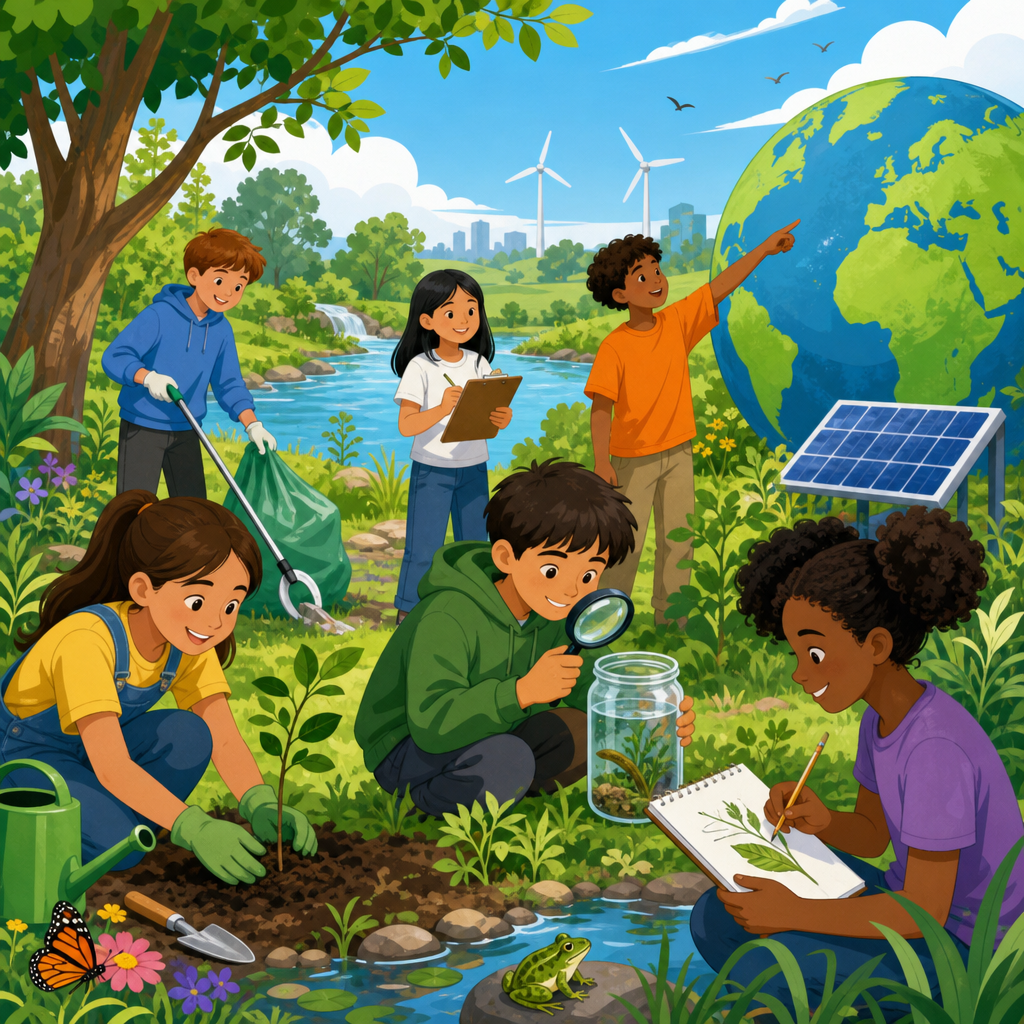
Each theme can anchor multiple project-based learning ideas. Biodiversity projects might involve bird counts, native habitat design, or invasive species surveys. Water projects can include schoolyard runoff mapping, rain barrel design, or testing local water quality with probeware from Vernier or Pasco. Waste projects often work well because data collection is visible and immediate; students can weigh cafeteria waste, sort landfill and compost streams, and calculate diversion rates. Energy projects can use utility bill analysis, light meter readings, and thermal imaging to identify efficiency opportunities.
Environmental justice should not be treated as an optional extension. Students need to understand that environmental benefits and burdens are unevenly distributed. Air quality near highways, tree canopy gaps, flood vulnerability, and heat island exposure are all examples that connect ecology with public health and civic decision-making. When students examine who is affected, who has influence, and what tradeoffs are involved, environmental education becomes more accurate and more relevant.
Project Ideas by Grade Band and Learning Goal
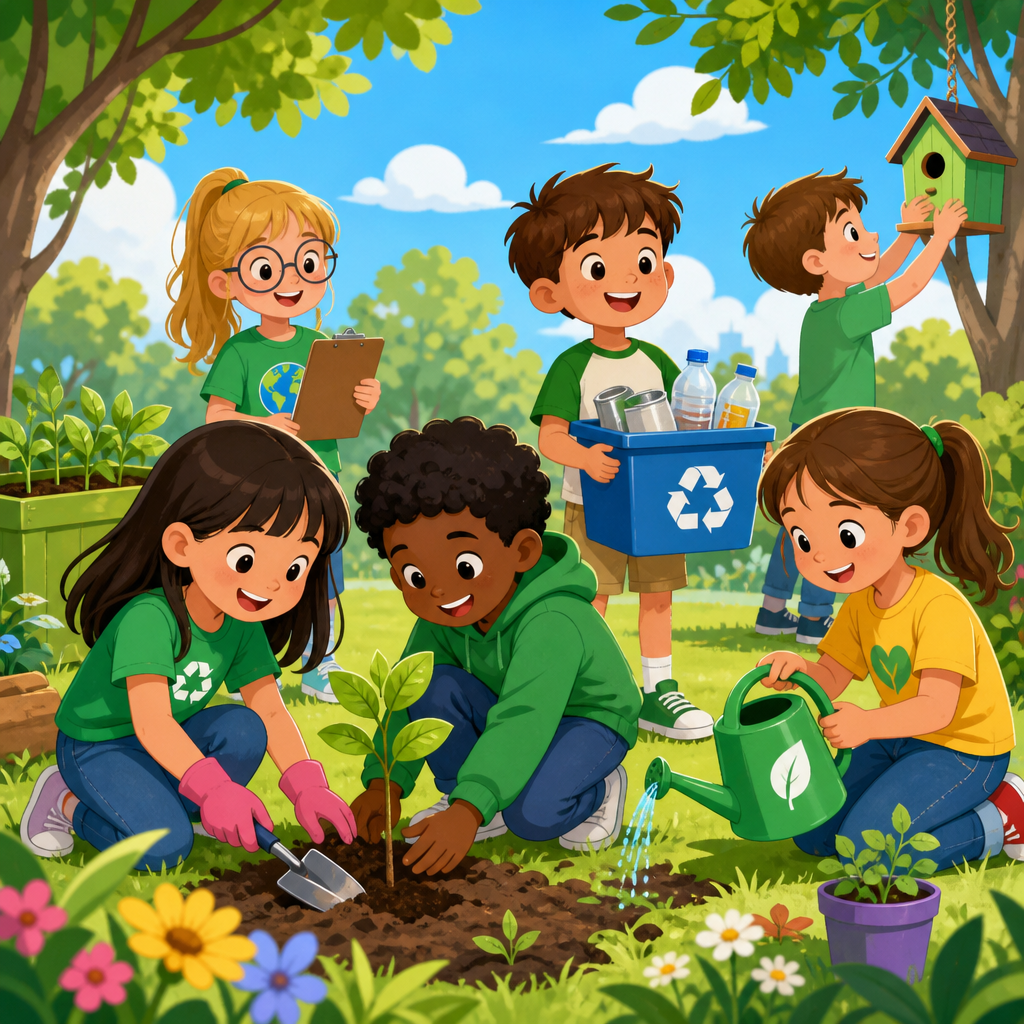
Elementary students do best with visible, place-based projects that produce quick feedback. School garden investigations, pollinator patches, classroom composting, litter mapping, and weather observation stations all build foundational habits of noticing, recording, and caring for living systems. A strong elementary project asks students to observe a change, measure it simply, and explain it clearly. For example, students might compare plant growth in sunny and shaded areas, then share recommendations for where to place native flowers on campus.
Middle school students are ready for more structured data collection and systems thinking. This is the ideal stage for waste audits, cafeteria tray studies, watershed models, energy conservation campaigns, and biodiversity transects. Students can calculate percentages, graph trends, and evaluate interventions. One middle school I supported reduced lunch waste after students measured unopened food, interviewed cafeteria staff, and proposed a share table aligned with local food safety rules. The project worked because students used evidence, not assumptions.
High school students can handle projects that involve policy, design constraints, and stakeholder analysis. They can conduct greenhouse gas inventories, compare transportation emissions, assess campus irrigation efficiency, design citizen science studies, or develop proposals for solar installations using actual consumption data. They can also work with GIS tools, spreadsheet modeling, and public datasets from EPA, NOAA, or local agencies. At this level, project quality rises when students must defend methods, interpret limitations, and justify recommendations to adults who can act on them.
| Grade band | Project idea | Main skills | Authentic audience |
|---|---|---|---|
| Elementary | Pollinator garden design | Observation, measurement, explanatory writing | Families and grounds staff |
| Middle school | Cafeteria waste audit | Data analysis, teamwork, persuasive speaking | Principal and nutrition services |
| High school | Campus energy reduction plan | Spreadsheet modeling, research, presentation | District operations team |
| K-12 adaptable | Stormwater mapping | Field notes, systems thinking, visual communication | Local public works or community groups |
How to Plan, Assess, and Manage Environmental Projects
Teachers often ask how to keep environmental projects rigorous instead of letting them drift into enthusiasm without learning. The answer is backward design. Start with standards, determine what evidence will show mastery, and then build the project path. If students must analyze data, define the dataset and graph types in advance. If they must write an argument, set criteria for claims, evidence, reasoning, and source quality. Rubrics should assess both content knowledge and process skills such as collaboration, revision, and communication.
Project management matters just as much as the idea itself. I recommend breaking work into phases: launch, inquiry, fieldwork, analysis, prototype or action, presentation, and reflection. Public checkpoints prevent last-minute scrambling. Student teams need assigned roles, but those roles should rotate so one student does not become the permanent organizer while another avoids technical work. Shared templates for field logs, consent forms, material lists, and data tables save time and improve consistency.
Assessment should include formative and summative measures. Formative checks can include notebook reviews, mini-conferences, draft data displays, and oral rehearsals. Summative products might be a technical report, design proposal, community presentation, or implementation plan. Where possible, include external feedback from facilities managers, local scientists, parks staff, or nonprofit partners. Authentic critique improves quality because students know their work will be used, not just graded.
Safety and logistics are part of instructional quality. Outdoor investigations require clear boundaries, weather procedures, allergy awareness, handwashing routines, and tool protocols. Water testing and soil sampling may involve district permissions. Garden and compost projects need maintenance plans for weekends and breaks. These details are easy to overlook, but they determine whether a promising project becomes sustainable within a school program.
Building a Schoolwide Environmental Curriculum That Lasts
For schools that want more than isolated classroom projects, the goal should be a coherent environmental curriculum for schools across grade levels. That means mapping concepts and skills vertically. In early grades, students observe habitats and seasonal change. Later, they analyze resource flows and human impacts. By secondary school, they evaluate tradeoffs, policy options, and long-term sustainability strategies. This sequence prevents repetition and ensures that project-based learning becomes more sophisticated each year.
Schoolwide success also depends on operational alignment. Facilities, food service, transportation, and grounds teams hold valuable data and often welcome student help when projects are well organized. A waste audit can inform custodial practices. A biodiversity plan can shape landscaping choices. An energy investigation can support district efficiency goals. When classroom projects connect with campus operations, students see that environmental learning is not separate from how a school functions.
Partnerships expand what schools can do. Nature centers, conservation districts, universities, museums, extension offices, and local environmental nonprofits can provide guest experts, field sites, equipment, and authentic review of student work. Digital tools also help scale access. ArcGIS StoryMaps supports place-based storytelling, iNaturalist enables species documentation, and Google Sheets or Excel make longitudinal data analysis manageable. The best tools are not the flashiest ones; they are the ones students and teachers can use reliably.
Long-term programs need evidence of impact. Track student outcomes such as science proficiency, attendance during project periods, quality of writing, and civic participation. Track environmental outcomes too: pounds of waste diverted, native species planted, gallons of water saved, or kilowatt-hours reduced. These measures help school leaders justify time, funding, and staffing. They also show students that careful inquiry can produce visible change.
Project-based learning ideas in environmental education work best when they are treated as core curriculum, not enrichment for a small club of already motivated students. A strong environmental curriculum for schools gives every learner repeated chances to investigate local systems, use evidence, and contribute to practical solutions. That approach builds scientific understanding, communication skills, and civic confidence at the same time.
The most effective programs share a clear structure: meaningful local questions, standards-aligned inquiry, credible data collection, authentic audiences, and reflection on results. Schools do not need a perfect campus or a large budget to begin. They need a manageable starting point, a real problem students can study, and a plan for turning findings into action. One well-run waste audit, habitat project, or water investigation can become the foundation for a broader program.
If you are building or improving an environmental curriculum for schools, start by identifying one campus issue students can measure this term and one community partner who can respond to their work. Then map how that project connects to science, literacy, math, and civic learning. Done well, environmental project-based learning does more than teach about the world. It teaches students how to improve it.
Frequently Asked Questions
What is project-based learning in environmental education, and why is it so effective?
Project-based learning in environmental education is an instructional approach in which students explore a real environmental issue, investigate its causes and effects, develop a solution or recommendation, and share their findings with an authentic audience. Instead of learning only through textbooks or lectures, students apply science, research, data analysis, communication, and problem-solving skills to issues they can observe in their school or community. This might include reducing cafeteria waste, improving schoolyard biodiversity, studying water quality, or designing a campus energy conservation plan.
It is especially effective because environmental topics are naturally connected to students’ daily lives. When learners can measure litter on school grounds, monitor pollinators in a garden, or compare classroom energy use, abstract standards become visible and meaningful. Students are not just memorizing concepts such as ecosystems, human impact, or resource conservation; they are seeing those concepts in action and testing ways to make a difference. That combination of relevance, inquiry, and action tends to increase motivation, deepen content understanding, and build long-term retention.
Another reason project-based learning works so well in this area is that environmental issues are interdisciplinary by nature. A strong project can integrate science with math, writing, civics, technology, and even art. Students may collect and graph data, write persuasive recommendations, create presentations for school leaders, and evaluate trade-offs among different solutions. Because the work is authentic, students also build collaboration, critical thinking, and public speaking skills. In short, project-based learning helps environmental education move from awareness to evidence-based action.
What are some strong project-based learning ideas for environmental education in schools?
There are many practical project-based learning ideas that fit an environmental curriculum for schools, and the strongest ones usually begin with a local issue students can observe, investigate, and influence. A school waste audit is a classic example. Students can sort and measure waste from classrooms or the cafeteria, identify patterns, calculate how much could be recycled or composted, and recommend specific improvements. This kind of project connects directly to standards about materials, systems, and human environmental impact while producing data that school leaders can use.
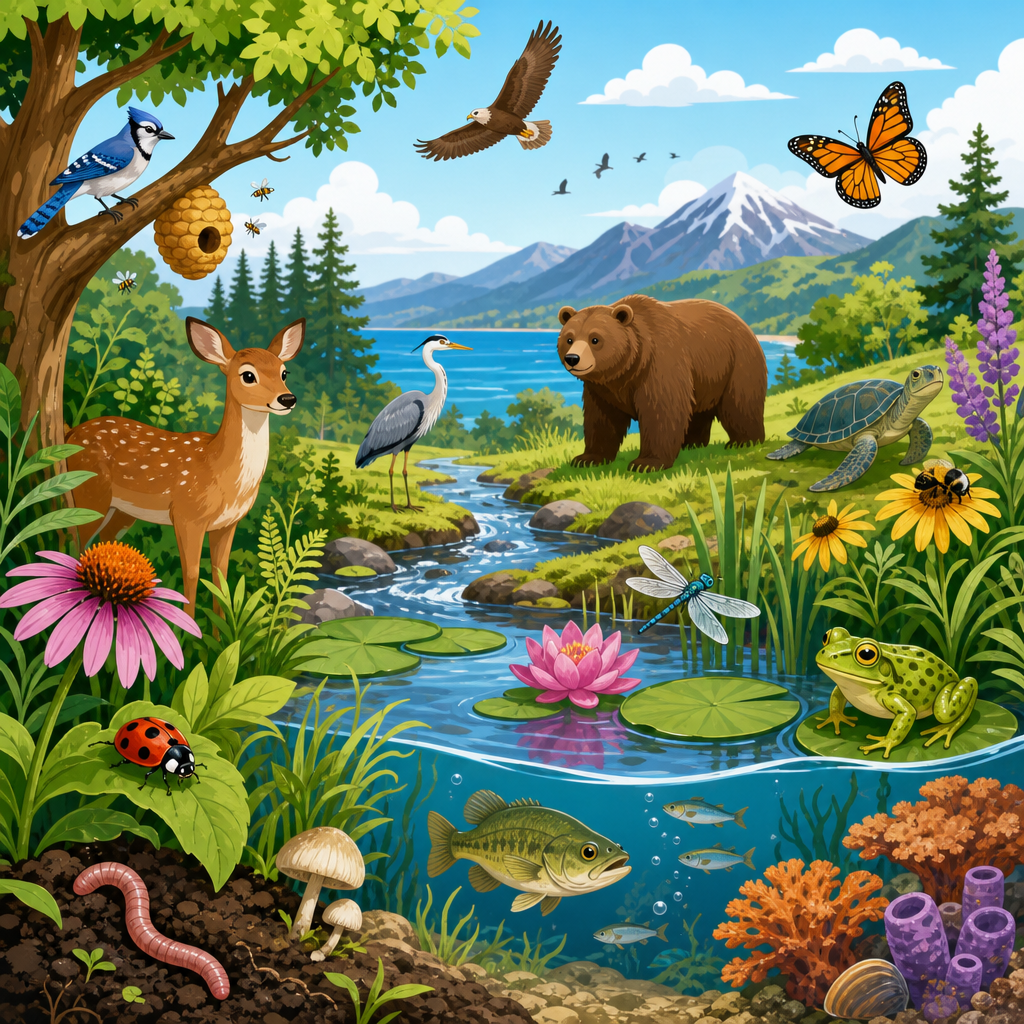
Another effective option is a schoolyard habitat or biodiversity project. Students can assess the current state of green spaces on campus, document plant and animal species, identify areas with low biodiversity, and design improvements such as pollinator gardens, native plant beds, or bird habitats. They can research which species are native to the area, explain why biodiversity matters, and present a plan to families or administrators. This project makes ecology tangible and gives students a visible way to improve their surroundings.
Water-focused projects are also highly valuable. Students can investigate stormwater runoff, test local water quality where appropriate and safe, map drainage patterns on campus, or propose ways to reduce pollution and water waste. Energy conservation projects are another strong fit. Students can monitor electricity use, observe heating and cooling habits, conduct light and appliance audits, and create a behavior-change campaign or an efficiency proposal. Other possibilities include school composting programs, sustainable transportation studies, food system and cafeteria sourcing projects, tree canopy investigations, urban heat island mapping, and community recycling education campaigns.
The best project is not necessarily the most complex. It is the one that gives students a meaningful question, access to evidence, and a real audience for their work. When students can collect data, analyze results, test solutions, and present recommendations that may actually be implemented, the learning becomes both rigorous and memorable.
How can teachers align environmental project-based learning with academic standards?
Teachers can align environmental project-based learning with academic standards by designing the project around clear learning goals first and then building authentic tasks that require students to demonstrate those skills and understandings. In science, environmental projects often connect naturally to standards related to ecosystems, matter and energy flow, Earth systems, biodiversity, human impacts, resource use, and engineering design. A well-planned project gives students repeated opportunities to ask questions, conduct investigations, analyze data, construct explanations, and design solutions based on evidence.
Alignment becomes even stronger when teachers intentionally include literacy and math outcomes. Students can read informational texts, evaluate sources, cite evidence, write explanatory or argumentative pieces, and present findings to an audience. In math, they can measure, calculate percentages, graph trends, compare variables, and interpret data sets. Social studies and civic learning also fit well, especially when students examine local policies, community decision-making, land use, public health, or environmental justice. This cross-curricular structure helps schools maximize instructional time while making learning more coherent.
A practical way to plan is to start with a driving question such as, “How can our school reduce food waste?” or “How can we improve biodiversity on campus?” From there, teachers can map specific standards to each phase of the project: inquiry, research, field observations, data collection, solution design, revision, and public presentation. Rubrics, checkpoints, science notebooks, and presentation criteria help ensure the work stays academically rigorous. When done well, project-based environmental learning does not sit outside the curriculum; it becomes a powerful way to deliver it.
How do you make environmental education projects meaningful for students and the community?
The most meaningful environmental education projects are rooted in real conditions that students can observe and influence. Relevance matters. If students are studying an issue that affects their own campus, neighborhood, or daily routines, they are more likely to care about the outcome and persist through challenges. That means teachers should choose topics that are local, visible, and actionable. Litter, waste, water use, habitat loss, energy consumption, air quality, and food systems are all examples of issues students can connect to quickly.
Meaning also grows when students have a genuine role in decision-making. Rather than handing them a predetermined solution, teachers can guide students to investigate the problem, gather evidence, compare possible responses, and justify their recommendations. This creates ownership. Students begin to see themselves not just as learners, but as researchers, designers, and contributors. Even small actions, such as presenting a composting proposal to the principal or creating signage based on audit data, can help students feel that their work matters.
Community connection is another key factor. Projects become more authentic when students share their findings with people who can respond, such as families, facilities staff, local environmental organizations, parks departments, municipal officials, or school boards. Partnerships can provide expertise, data sources, fieldwork opportunities, and feedback. They also show students that environmental problem-solving is collaborative and civic in nature. When a project ends with a presentation, implementation plan, or public product that serves a real audience, students gain a stronger sense of purpose and accountability.
Finally, meaningful projects include reflection. Students should have time to consider what they learned, what changed, what obstacles remained, and how their thinking evolved. That reflection helps connect academic content to personal growth and civic responsibility. In environmental education, the goal is not only knowledge of ecological systems, but also the capacity to participate thoughtfully in improving them.
What are the biggest challenges in using project-based learning for environmental education, and how can schools overcome them?
One of the biggest challenges is time. High-quality project-based learning requires investigation, discussion, revision, and presentation, which can feel difficult to fit into a packed schedule. Schools can address this by choosing focused projects with clear boundaries, integrating multiple subject areas into one project, and using structured milestones to keep work moving. A project does not need to last an entire semester to be powerful. Even a well-designed short-term investigation with a public product can deliver strong results if it is anchored in standards and authentic inquiry.
Another common challenge is access to resources, including outdoor spaces, materials, data collection tools, or community partners. The good news is that many effective environmental projects require relatively simple resources. Students can conduct visual surveys, waste counts, biodiversity observations, energy behavior audits, or school mapping activities with basic materials. Teachers can also use free local data sets, virtual field resources, and partnerships with municipal agencies, nature centers, universities, or nonprofit groups. Starting small is often the best strategy. A successful pilot project can build momentum for broader support later.
Assessment can also be a concern. Because projects involve collaboration and multiple products, teachers sometimes worry about how to evaluate student learning fairly and rigorously. The solution is to use a combination of tools: individual reflections, research notes, lab or field journals, quizzes on key concepts, data analysis tasks, rubrics for presentations, and checkpoints for collaboration and revision. Clear criteria help students understand that the project is not just about creating something attractive; it is about demonstrating evidence-based thinking and disciplinary understanding.
Finally, schools may hesitate if they are unsure whether students can make a real impact. In practice, success should not be measured only by whether a project solves a large environmental problem. Success can also mean that students learned how to investigate a complex issue, interpret data, communicate clearly, and propose realistic actions. When schools frame environmental project-based learning as a way to build knowledge, agency, and civic participation, the value becomes clear. Over time, even modest projects can lead to lasting improvements in school culture, sustainability practices, and student engagement.