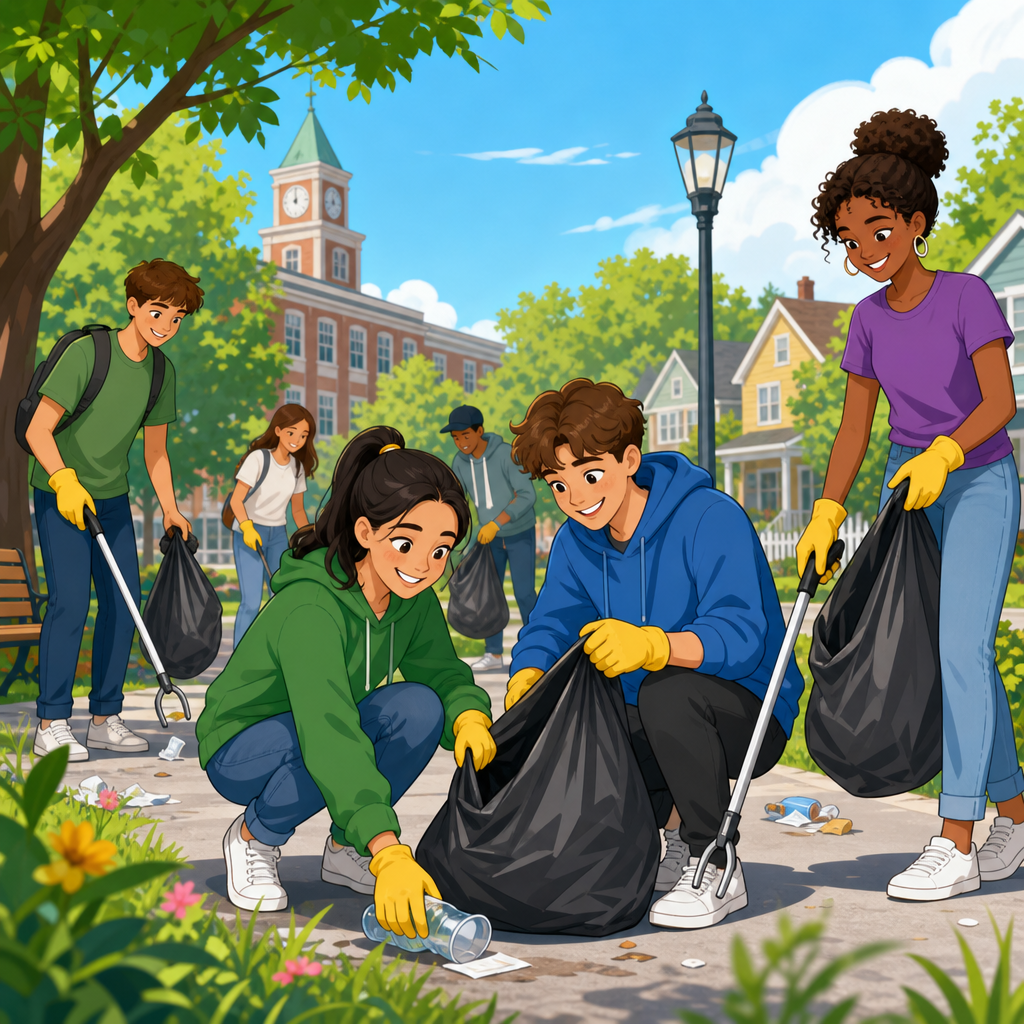
Starting a school green club is one of the most practical ways to turn student concern about climate change, waste, biodiversity, and energy use into visible action on campus. A green club is a student-led group focused on improving environmental performance at school and building habits that reduce waste, conserve resources, and strengthen environmental literacy. In most schools, that means organizing recycling drives, campus cleanups, garden projects, energy-saving campaigns, compost systems, and awareness events tied to Earth Day or local sustainability goals. When I have helped schools launch clubs from scratch, the difference between a short-lived group and a lasting program has almost always come down to structure: clear goals, adult support, student ownership, and projects sized to fit the school calendar.
This matters because schools are ideal laboratories for sustainability. Students can measure cafeteria waste, track electricity use, improve recycling quality, and influence peers faster than many organizations can change employee behavior. A well-run green club also teaches project management, public speaking, budgeting, data collection, and civic engagement. Those skills are as valuable as the environmental outcomes. For administrators and teachers, a green club can support science standards, service-learning requirements, and campus improvement plans. For students, it creates a place to act instead of feeling stuck. If you are asking how to start a green club, the best answer is to treat it like a real school initiative: define the mission, recruit a broad team, choose achievable projects, document results, and build systems that survive graduation and staff turnover.
The most effective clubs begin with a simple definition of success. Instead of saying the group will “help the planet,” decide what change you want to see in the first year. Examples include cutting landfill waste at lunch by 20 percent, planting a pollinator garden, eliminating single-use plastic bottles at school events, or teaching every ninth-grade homeroom how to sort recycling correctly. Specific goals make recruitment easier because students understand what they are joining. They also help when you ask for approval, funding, or partnership from school leaders, custodians, cafeteria managers, or local nonprofits. A green club can start small and still be credible. In fact, beginning with one measurable win is usually smarter than launching five disconnected campaigns at once.
Build the foundation: mission, approval, and adult support
The first step in starting a school green club is confirming how student organizations are approved in your building or district. Some schools require a faculty sponsor, a written constitution, a minimum number of student members, and approval from student activities staff or the principal. Get those rules first. It saves time and shows that the club understands school processes. The faculty sponsor should be reliable, not just enthusiastic. In practice, the best advisors are teachers, librarians, counselors, or operations staff who answer email consistently, understand school logistics, and can stay involved for more than one year.
Next, write a short mission statement and charter. Keep the language plain. A strong mission might read: “The Green Club helps our school reduce waste, conserve energy, protect local habitats, and educate students through measurable projects.” Then define officer roles, election timing, meeting frequency, attendance expectations, and how projects are approved. This is not paperwork for its own sake. Clubs that skip governance often stall when leadership changes or when disagreements arise over priorities. A basic charter also makes the club easier for new members to understand.
Before your first public meeting, identify the adults who control the systems you hope to improve. That usually includes custodial staff, facilities personnel, cafeteria managers, school garden coordinators, and parent volunteers. In every school I have worked with, clubs were more successful when these people were treated as partners from day one. Custodians can tell you whether recycling bins are contaminated. Cafeteria staff know where food waste is created. Facilities teams know whether outdoor planting is realistic and what irrigation limits exist. Their operational knowledge prevents the club from proposing projects that sound good but fail in practice.
Recruit members and define leadership early
Recruitment works best when students can picture concrete activities, not abstract ideals. Announce the club through morning notices, posters, science classes, advisory periods, social media, and club fairs, but always include examples of what members will actually do. Say “audit trash in the cafeteria, design Earth Month events, plant native species, run a battery recycling drive, and present ideas to administrators.” That list attracts students who like science, design, organizing, communications, or hands-on service. A strong club is interdisciplinary. You want athletes, artists, engineers, writers, and students who are simply dependable.
At the first meeting, explain the mission, ask members what environmental problems they notice at school, and identify skills people can contribute. Then establish leadership quickly. Typical roles include president, vice president, secretary, treasurer, communications lead, and project leads for waste, energy, gardening, or outreach. In smaller schools, combine roles. Leadership should not mean one student does everything. Good clubs distribute responsibility so projects continue even during exam periods or sports seasons.
It helps to create a meeting rhythm. Many clubs meet biweekly for planning and use separate work sessions for projects. Publish an agenda in advance and end each meeting with assigned tasks, deadlines, and a clear owner for every action. That level of organization sounds formal, but it is what turns enthusiasm into progress. Students are busy. If the next step is vague, momentum disappears.
Audit your campus before choosing projects
The smartest green clubs start with a simple environmental audit. This means gathering basic data about waste, energy, water, transportation, grounds, and purchasing before deciding where to focus. You do not need advanced equipment to begin. Walk the campus with clipboards and phones. Count the number and placement of landfill, recycling, and compost bins. Check whether signage is clear. Observe lunch periods and note what students throw away most often. Ask facilities staff for utility trends if they can share them. Survey students about transportation habits and interest in sustainability projects.
An audit prevents guesswork. For example, a club may assume recycling is the top issue, then discover the bigger problem is food waste from unopened milk cartons or excessive printing in classrooms. Another school may want a garden but learn that the site lacks sun, summer watering, or maintenance coverage. Data makes the club credible with administrators because recommendations are based on observed conditions rather than opinion.
| Audit Area | What to Check | Useful Evidence | Potential First Project |
|---|---|---|---|
| Waste | Bin placement, contamination, lunch trash volume | Photos, bag counts, student observations | Recycling signage and cafeteria sorting station |
| Energy | Lights left on, device charging habits, HVAC complaints | Room-by-room checklist, staff input | Switch-off campaign |
| Water | Leaky fixtures, bottle filling station use | Maintenance reports, usage counts | Refill awareness campaign |
| Grounds | Unused green space, native habitat opportunities | Site map, sun exposure notes | Pollinator garden |
Keep the audit manageable. One or two weeks is enough to identify patterns. Summarize findings in a one-page report with photos and three recommended priorities. That report becomes the foundation for funding requests, announcements, and future articles linked from this hub topic on school sustainability.
Choose projects that are visible, measurable, and realistic
When selecting first projects, use three filters: visibility, measurability, and realism. Visibility matters because students support what they can see. A cleanup day, garden bed, or new sorting station signals that the club is active. Measurability matters because results build credibility. Realism matters because schools run on tight schedules, limited budgets, and shared spaces. Start with one quick win and one longer project. That mix keeps morale high while building depth.
Common first-year projects include waste sorting education, reusable bottle campaigns, classroom energy reminders, native planting, schoolyard habitat creation, and e-waste or battery collection drives. If your school has composting infrastructure or a municipal organics program, cafeteria compost can be effective, but only if staff support, clear signage, and contamination controls are in place. Without those, compost initiatives often fail. Likewise, gardening projects are excellent for engagement, but they need a maintenance plan for summer, weekends, and breaks.
Use SMART goals: specific, measurable, achievable, relevant, and time-bound. “Reduce landfill waste from the cafeteria by 15 percent over one semester” is stronger than “improve recycling.” Pair each goal with a baseline, an action plan, a responsible team, and a review date. If possible, connect projects to recognized frameworks such as the U.S. EPA waste hierarchy, ENERGY STAR best practices, Project Learning Tree activities, or local municipal recycling guidelines. Referencing established standards improves the quality of decisions and helps students learn the difference between symbolic action and effective action.
Fund the club and build partnerships
Most school green clubs can begin with almost no money, but even simple projects benefit from a budget. Likely expenses include poster printing, gloves, grabbers, garden tools, native plants, compost bins, event supplies, and replacement recycling signage. Start by asking student government, parent-teacher organizations, education foundations, or school mini-grant programs. Many local businesses will donate supplies if the request is specific. A hardware store may provide gloves and tools. A native plant nursery may discount seedlings. A waste hauler or utility provider may have school outreach materials or grant programs.
Partnerships are often more valuable than cash. Municipal recycling coordinators can provide accurate sorting information. Cooperative Extension offices can advise on gardens and compost. Parks departments, watershed groups, and native plant societies may offer volunteers or speakers. Universities sometimes connect service-learning students with K–12 schools for audits or data analysis. Build these partnerships carefully. Ask for one concrete form of help, explain the school context, and show that the club has adult supervision and a realistic plan.
Document every donation and thank supporters publicly. Recognition builds goodwill and makes future asks easier. It also teaches students a professional skill many never practice in class: stewardship of community relationships.
Run effective meetings, campaigns, and events
Good green clubs are not just event clubs. They combine education, operations, and advocacy. That means meetings should alternate between planning, learning, and action. One meeting may review waste audit data. The next may assign outreach tasks for a plastic reduction campaign. Another may host a guest speaker from the local water utility. Keep sessions active. Students stay engaged when they analyze real problems, make decisions, and see results within weeks.
For campaigns, focus on one behavior at a time. If students are confused about recycling, do not launch recycling, composting, and energy conservation messaging simultaneously. Choose the highest-impact behavior and repeat the message across posters, announcements, homerooms, and lunch demonstrations. Use plain language and visual cues. For example, instead of “promote circularity,” say “empty liquids, keep food out of recycling, and place clean paper, bottles, and cans in the blue bin.” Specific instructions beat slogans.
Events should support strategy, not replace it. Earth Day fairs, cleanup days, thrift swaps, and documentary screenings can recruit members and raise awareness, but lasting change usually comes from system improvements such as better bin placement, teacher routines for lights and screens, or garden care schedules. Treat events as entry points into longer projects.
Measure results and make the club sustainable year after year
A school green club becomes durable when it measures outcomes and preserves institutional memory. Track participation, volunteer hours, pounds of waste diverted, number of classrooms reached, garden harvests, or reductions in single-use items purchased. Not every metric will be precise, and that is fine. What matters is consistency. Use shared folders, a simple spreadsheet, and a year-end report. Include before-and-after photos, costs, partners, challenges, and recommendations for the next team.
Succession planning is essential. Elect younger students into deputy roles, keep passwords in a secure advisor-managed file, and maintain templates for permission slips, posters, grant requests, and meeting agendas. If the club runs a garden or compost system, write standard operating procedures. I have seen strong programs disappear simply because key knowledge lived in one senior’s notebook. A documented process protects the club from that problem.
Finally, connect the club to curriculum and school identity. Offer teachers short classroom presentations. Share data with administrators. Publish updates in the school newsletter. Link projects to science, art, civics, and math. When the club helps the school meet academic and operational goals, it stops being seen as an extracurricular add-on and becomes part of how the campus works.
Starting a school green club is not complicated, but it does require deliberate planning. Begin with approval procedures, a reliable advisor, and a mission students can explain in one sentence. Recruit a broad team, assign roles early, and run a short campus audit before choosing projects. Then focus on visible, measurable actions that match the school’s actual needs and capacity. Build partnerships with custodians, cafeteria staff, families, nonprofits, and local agencies because environmental improvement at school is always a shared effort.
The main benefit of a green club is not just cleaner grounds or better recycling, although those matter. The deeper value is that students learn how change happens in real institutions: through data, teamwork, persuasion, logistics, and persistence. That experience prepares them to solve problems far beyond campus. If you want to know how to start a green club successfully, start small, document everything, and aim for one concrete win in the first semester. Then use that success to expand. Gather your advisor, schedule the first meeting, and turn student interest into a program your school can sustain.
Frequently Asked Questions
1. What is a school green club, and why is it worth starting one?
A school green club is a student-led group that helps a school reduce its environmental impact while teaching practical sustainability skills. Instead of keeping environmental concerns at the level of classroom discussion, a green club turns ideas into visible action. Students can identify problems on campus, propose solutions, organize projects, and encourage long-term habits that reduce waste, save energy, protect biodiversity, and improve environmental literacy across the school community.
Starting a green club is worth it because it creates a structured way for students to make a real difference. Many students care deeply about climate change, litter, food waste, plastic use, and resource conservation, but they often do not know where to begin. A green club gives them a team, a mission, and a process for turning concern into measurable progress. That might include launching recycling drives, organizing campus cleanups, planting pollinator gardens, setting up compost systems, running energy-saving campaigns, or encouraging reusable lunch and water habits.
It also benefits the school beyond environmental outcomes. Green clubs build leadership, teamwork, project management, communication, and problem-solving skills. Students learn how to work with teachers, custodial staff, administrators, and community partners. Over time, the club can help shape school culture by making sustainability part of everyday decision-making rather than an occasional event. In other words, a green club is not just an extracurricular activity; it can become a practical engine for campus improvement and student leadership.
2. What are the first steps to starting a school green club successfully?
The most effective way to start a school green club is to begin with a clear purpose, a small core team, and one supportive adult advisor. Start by talking with a few students who are genuinely interested in environmental action. You do not need a large membership on day one. A committed group of three to ten students is often enough to launch a successful club. From there, identify a teacher, librarian, counselor, or administrator who is willing to serve as the club advisor and help navigate school procedures.
Next, check your school’s requirements for creating a new student organization. Many schools ask for a club name, mission statement, advisor approval, meeting schedule, and a short description of planned activities. Keep the mission simple and action-oriented. For example, your club might focus on reducing waste, conserving energy, supporting campus biodiversity, and educating the school community about sustainability. A strong mission makes it easier to recruit members and explain the club’s purpose to school leadership.
Once the club is approved, hold an interest meeting and make it easy for students to join. Announce the meeting in morning notices, put up posters, ask teachers to share it in class, and post details through school communication channels. At the first meeting, focus on three things: why the club matters, what issues students want to tackle, and what realistic first project the group should take on. It is smart to start with a project that is visible, manageable, and likely to succeed, such as a cleanup day, recycling awareness campaign, or waste audit in the cafeteria.
Finally, create a simple structure so the club can stay organized. Decide when meetings will happen, who will handle communications, who will track projects, and how decisions will be made. Some clubs elect officers right away, while others wait until membership grows. Either approach can work as long as responsibilities are clear. The key is to build early momentum with achievable goals, because small wins make it much easier to earn support and keep students engaged.
3. What kinds of projects should a new school green club start with?
A new school green club should begin with projects that are practical, visible, and aligned with campus needs. The best first projects are usually the ones students can understand quickly, implement with limited resources, and measure easily. That is why recycling drives, litter cleanups, waste-reduction campaigns, school garden beds, compost collection, and simple energy-saving efforts are common starting points. These projects help students see results and show the wider school community that the club is producing meaningful action.
One strong option is to start with a campus environmental audit. Students can observe where waste builds up, whether recycling bins are clearly labeled, where lights are left on unnecessarily, or which outdoor areas could support trees, native plants, or pollinator habitat. An audit gives the club evidence, and evidence makes projects more credible. Instead of saying, “We should do something about waste,” the club can say, “We found that most cafeteria waste is recyclable or compostable, and bins are not placed where students need them.”
Another excellent starting point is a focused awareness campaign tied to a specific behavior. For example, students might promote reusable water bottles, encourage lights-off habits after class, reduce paper waste, or improve lunchroom sorting practices. Campaigns work best when they are simple, repeated, and easy to act on. Pair posters with announcements, classroom presentations, lunchtime outreach, and short challenges between grades or homerooms. If possible, track the outcome so the club can report results later.
Garden and biodiversity projects are also valuable, especially if the school has outdoor space and staff support. A native plant bed, pollinator garden, or small vegetable plot can combine sustainability, science, and community engagement. These projects tend to attract students who may not be drawn to recycling or policy work but enjoy hands-on outdoor activity. The main caution is maintenance. Before planting anything, the club should plan who will water, weed, and care for the space over time.
In general, avoid trying to do too much too soon. A new club does not need to solve every environmental issue on campus in its first semester. It is far better to complete one or two projects well than to launch five and finish none. Successful early projects build trust, attract members, and create a foundation for bigger initiatives later.
4. How can a school green club get support from teachers, administrators, and students?
Support grows when the club is organized, respectful, and solution-focused. Teachers and administrators are much more likely to back a green club when they see that students have a clear plan, realistic goals, and a willingness to collaborate. Start by explaining how the club will benefit the school, not just club members. Emphasize outcomes such as cleaner campus spaces, reduced waste, lower supply costs, stronger school pride, student leadership development, and opportunities to connect sustainability to science, social studies, health, and service learning.
It is also important to involve the right people early. If the club wants to improve recycling, talk with custodial staff and whoever manages waste collection. If the goal is a garden, connect with facilities staff and science teachers. If the club wants to reduce energy use, speak with administrators or operations staff. These conversations help students understand what is possible, what rules apply, and what systems are already in place. They also prevent the club from proposing ideas that are difficult to implement without operational support.
To gain student support, make the club welcoming and action-oriented. Many students are interested in environmental issues, but not all want to attend long planning meetings. Offer multiple ways to participate: leadership roles, event volunteering, creative design work, social media promotion, data collection, garden care, or short-term campaign help. When students can contribute in different ways, the club becomes more inclusive and resilient. Keep meetings purposeful, celebrate progress, and show how each person’s effort matters.
Visibility matters too. Share success stories through school announcements, bulletin boards, newsletters, assemblies, and student media. Use photos, short updates, and clear results. For example, report how many bags of litter were collected, how much compost was diverted, how many classrooms joined an energy challenge, or how many native plants were added to campus. Specific achievements help others take the club seriously.
If funding is needed, start small and be specific. Ask for support tied to a defined project, such as labels for recycling bins, gloves for a cleanup, seeds for a garden, or containers for composting. Schools, parent groups, local businesses, and community nonprofits are often willing to help when the request is practical and the expected benefit is clear. Consistent communication and visible results are what turn initial interest into lasting support.
5. How do you keep a school green club active and effective over time?
Keeping a school green club active over time depends on leadership continuity, realistic planning, and a strong sense of purpose. Many clubs start with enthusiasm but lose momentum when meetings become unfocused or projects are too ambitious. The solution is to create a simple system that helps the club operate from month to month and year to year. That includes setting goals, assigning responsibilities, tracking progress, and making sure new students are always being invited into leadership.
One of the smartest things a club can do is create an annual rhythm. For example, the club might spend the first month recruiting members and identifying priorities, the next few months running one or two major projects, and the end of the term reviewing results and planning improvements. Repeatable events such as Earth Day activities, monthly cleanups, garden workdays, recycling awareness weeks, or seasonal energy campaigns can help build consistency. A predictable calendar makes the club easier to manage and easier for students to join.
Documentation is just as important as enthusiasm. Keep notes on what