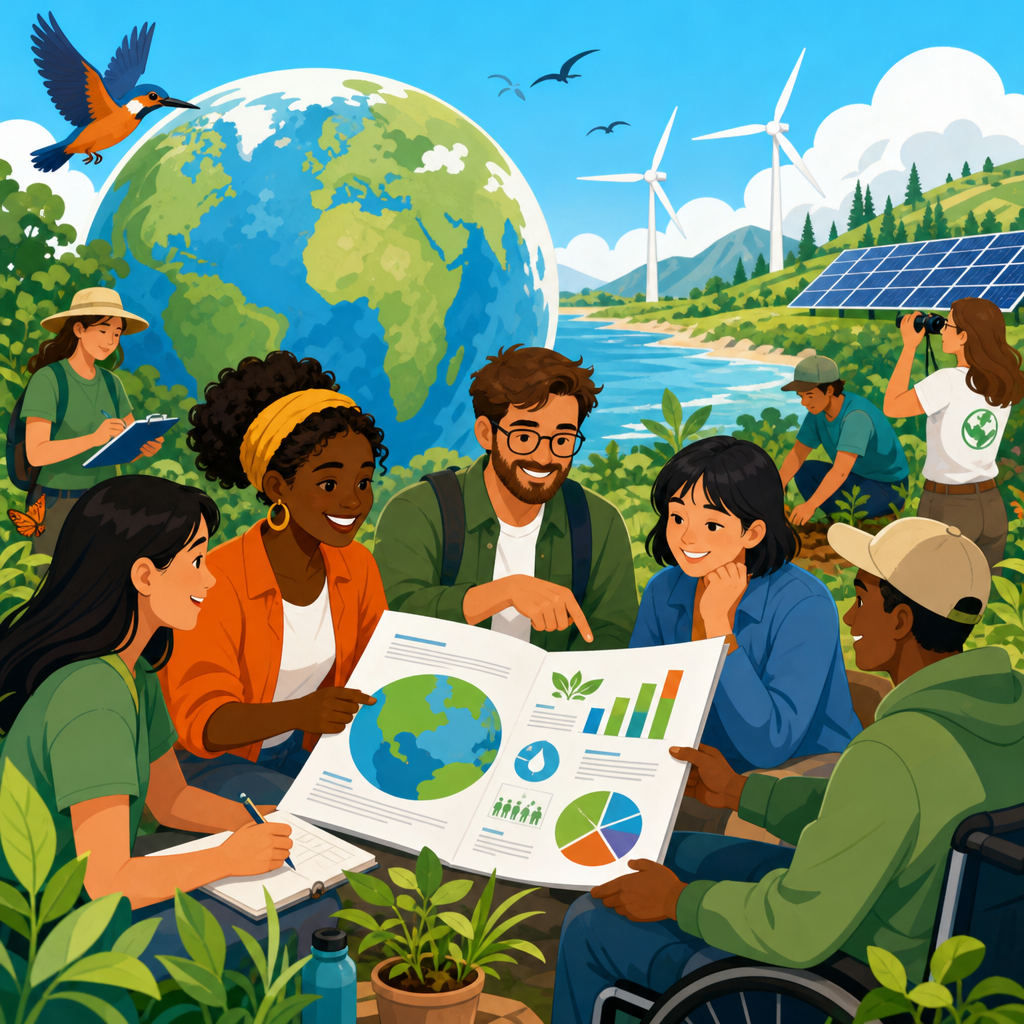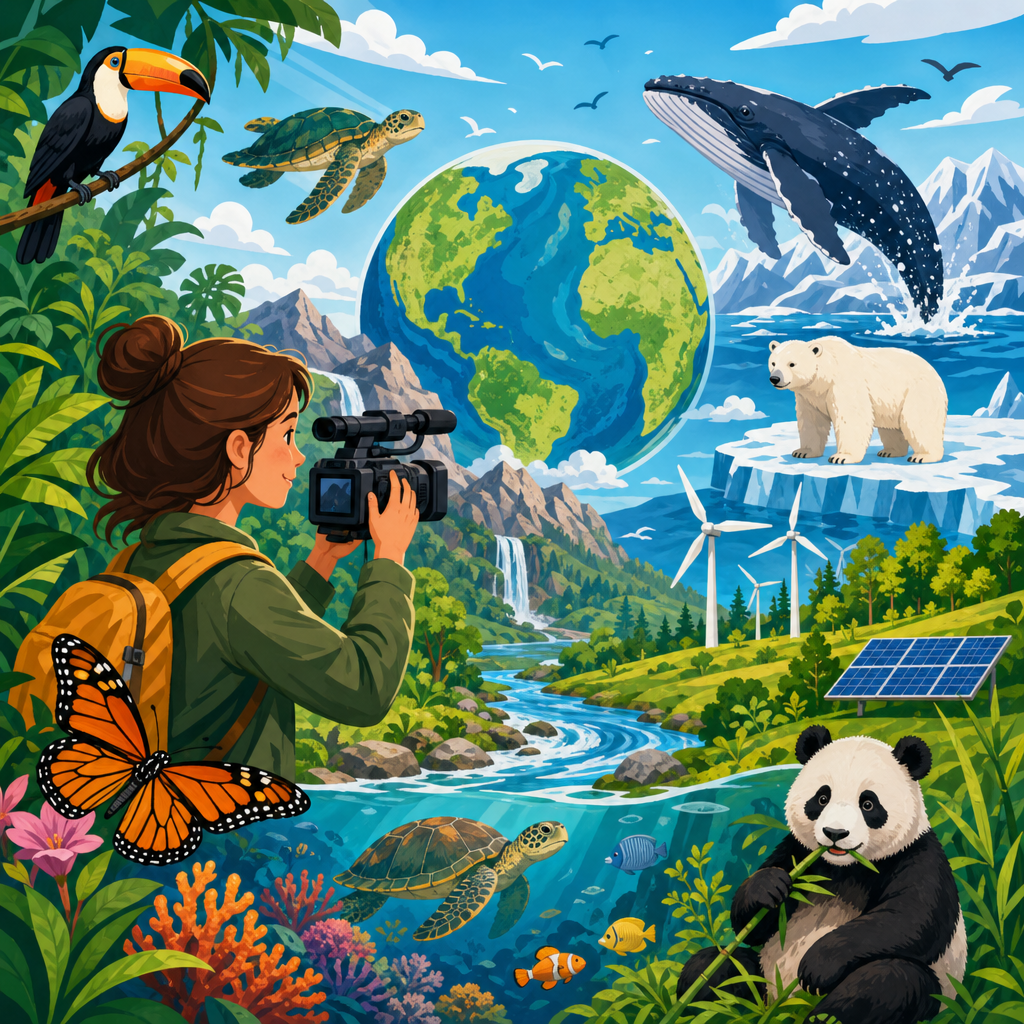
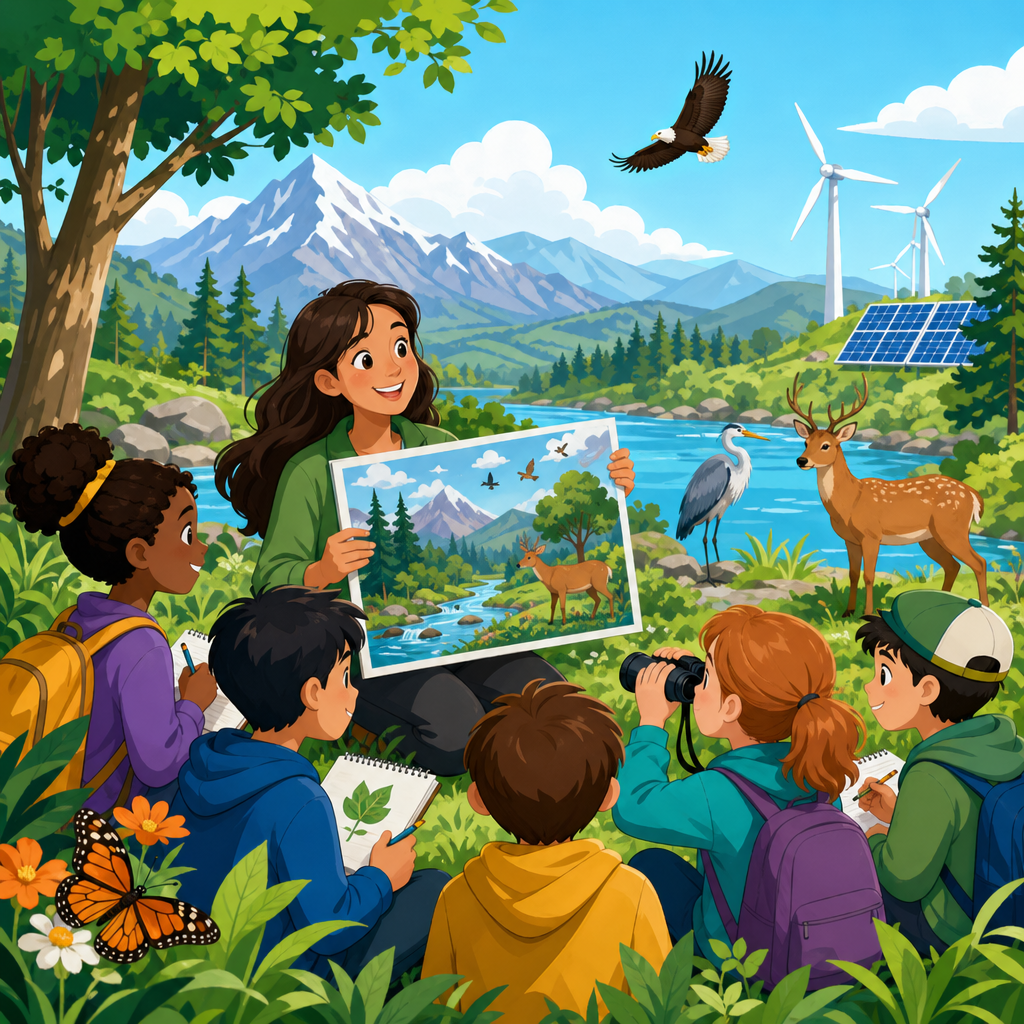
Visual storytelling turns abstract environmental problems into experiences people can see, feel, and remember. In environmental education, that shift matters because most ecological systems are complex, distant, and slow moving. Climate change unfolds over decades, biodiversity loss happens across regions, and pollution often remains invisible until damage becomes obvious. Educational videos and documentaries bridge that gap by making hidden processes visible, connecting data to lived reality, and giving learners a narrative structure that improves attention and recall. As the hub page for educational videos and documentaries within Education & Resources, this article explains how visual storytelling works, why it is effective, and how educators can use it responsibly.
Visual storytelling means communicating information through moving images, sound, sequencing, and narrative framing rather than relying only on text or lecture. In practice, it includes short classroom videos, long-form nature documentaries, animated explainers, livestreams from field sites, student-made films, and interactive video lessons. Environmental education refers to teaching people how natural systems function, how human activity affects them, and what informed stewardship looks like. When those two fields meet, the result can be unusually powerful. I have seen students who ignored textbook chapters on watersheds immediately grasp runoff after watching colored dye move through storm drains into a local creek. A well-built visual sequence can compress months of observation into minutes without losing meaning.
The importance goes beyond engagement. Strong environmental media supports comprehension, discussion, and action. Learners can watch coral bleaching progress through time-lapse footage, compare healthy and degraded habitats side by side, and hear directly from scientists, farmers, Indigenous leaders, fishers, and community organizers. That combination of evidence and human voice gives context that static content rarely achieves alone. It also supports different learning needs. English language learners, younger students, and adult audiences new to environmental science often understand visual explanations faster than technical text. Used well, educational videos and documentaries become not just supplements but central teaching tools that help audiences interpret science, evaluate claims, and connect local choices to planetary systems.
Why educational videos and documentaries work so well
Educational videos and documentaries are effective because they combine cognitive clarity with emotional relevance. Research in multimedia learning, especially work associated with Richard Mayer, shows that people learn better from words and pictures together when the material is organized carefully. In environmental topics, that principle is especially valuable because many core ideas are spatial, temporal, and systemic. It is easier to understand coastal erosion when drone footage shows shoreline retreat over time, or to understand food webs when animation traces energy transfer across species. Audio narration can guide attention while images reduce the burden of mentally constructing the process from text alone.
Documentaries add another advantage: narrative. A narrative gives environmental information a beginning, middle, and consequence. Instead of listing facts about deforestation, a film can follow one forest, one community, and one policy decision, showing how causes and impacts interact. That structure improves retention because learners remember stories better than isolated data points. It also helps with transfer. After viewing a strong case study about one river basin, learners often recognize similar patterns in another watershed, such as upstream land use, downstream pollution, and uneven policy enforcement. Good storytelling does not replace scientific rigor; it gives rigor a form people can process.
There is also a motivational benefit. Environmental issues can feel overwhelming when presented only as crisis statistics. Visual media can still present urgency, but it can also show solutions in action: regenerative agriculture, wetland restoration, community solar, urban tree planting, and circular economy practices. That balance reduces paralysis. In workshops I have run, learners respond best when a documentary segment moves from problem diagnosis to visible intervention, such as oyster reef restoration that improves water quality and shoreline resilience. Seeing restoration work happen makes environmental action feel concrete and replicable rather than symbolic.
Core formats within environmental visual storytelling
Educational videos and documentaries are not one category; they include several formats, each suited to a different teaching goal. Short explainer videos, often three to eight minutes, work best for introducing a concept like the carbon cycle, environmental justice, or microplastics. They are useful before discussion because they establish shared vocabulary quickly. Long-form documentaries are better for complexity. A ninety-minute film can explore policy tradeoffs, conflicting stakeholders, historical context, and scientific uncertainty in a way a short clip cannot. Series-based documentaries are especially effective for hub learning because each episode can anchor a subtopic such as oceans, forests, energy, food systems, or waste.
Field-based educational video is another important format. This includes ranger recordings from national parks, lab demonstrations, farm tours, underwater footage, and citizen science walkthroughs. These formats increase credibility because viewers see real methods, places, and conditions. A water testing demonstration showing turbidity tubes, dissolved oxygen meters, and macroinvertebrate sampling teaches process, not just conclusions. Animated and data-driven visuals serve a different role. They clarify mechanisms that cameras cannot capture directly, such as atmospheric circulation, ocean acidification chemistry, or species migration shifts under warming scenarios. The strongest environmental education programs typically mix all of these forms rather than relying on one style exclusively.
| Format | Best use | Strength | Example application |
|---|---|---|---|
| Short explainer video | Introduce one concept quickly | High clarity and easy classroom integration | Explaining how greenhouse gases trap heat |
| Feature documentary | Explore complex systems and stakeholders | Deep context and emotional engagement | Tracing the social and ecological effects of overfishing |
| Field demonstration video | Show methods and real environments | Builds trust through visible practice | Wetland biodiversity survey with sampling tools |
| Animated data visualization | Explain invisible or long-term processes | Makes abstract change understandable | Mapping sea level rise projections by decade |
What makes a documentary educational instead of merely dramatic
Not every environmental film teaches well. Some productions are visually stunning but thin on explanation, while others push a message so hard that they flatten nuance. Educational value comes from specific design choices. First, the central question must be clear. Viewers should know whether the film is asking how a system works, what caused a crisis, which solutions are viable, or why communities are affected differently. Second, evidence must be legible. Good environmental documentaries identify sources, visualize data honestly, and separate observation from inference. When a film presents declining pollinator populations, for example, it should connect habitat loss, pesticide exposure, disease pressure, and climate stress rather than implying a single simple cause.
Third, an educational documentary includes multiple perspectives without creating false balance. A film about wildfire management should include ecologists, firefighters, land managers, residents, and, where relevant, Indigenous fire stewardship knowledge. It should not frame settled science as a debate simply for tension. Fourth, pacing matters. Learners need moments to process maps, diagrams, and testimony. In classroom use, the best segments are often those with a clean explanation sequence followed by a concrete example. Finally, strong educational media leaves room for inquiry. Rather than treating viewers as passive recipients, it prompts questions about evidence quality, scale, uncertainty, and implications for policy or behavior.
Real-world examples that show the method in action
Several established productions illustrate how visual storytelling can deepen environmental education. David Attenborough’s major series, including Planet Earth, Blue Planet, and A Life on Our Planet, demonstrate the power of combining cinematic footage with clear ecological framing. The footage alone captures attention, but the educational value comes from linking animal behavior, habitat conditions, and human pressure with disciplined narration. For marine education, Chasing Coral remains one of the strongest examples of making a scientifically documented process emotionally immediate. By using underwater imaging and time-lapse methods to record reef bleaching, it translates ocean warming from an abstract metric into visible ecosystem loss.
For climate communication, films such as Before the Flood and many PBS and BBC productions show the value of structured interviews with scientists and affected communities. They help viewers connect emissions, land use, economics, and governance without losing the human scale. In K–12 and informal learning settings, organizations such as National Geographic Education, NASA Earth Observatory, NOAA, and TED-Ed provide shorter video resources that are often easier to segment for lessons. I have used NASA visualizations of atmospheric carbon and wildfire smoke movement to explain scale because students can literally watch global circulation patterns unfold. That kind of visual sequence shortens the path from confusion to understanding.
Local storytelling can be even more effective than global media. A short documentary about a city river cleanup, community composting project, or coastal resilience plan often produces stronger discussion because learners recognize the places involved. When students see their own watershed, transit corridor, or shoreline, the topic becomes civic rather than distant. That is why this hub should connect not only to famous documentaries but also to practical guides on classroom video use, documentary discussion frameworks, student film projects, and curated environmental media libraries.
How educators can use visual storytelling strategically
The most effective environmental educators do not simply play a documentary and hope for impact. They frame, pause, question, and extend. Before viewing, define the learning objective in one sentence. Are learners identifying causes of desertification, evaluating renewable energy tradeoffs, or analyzing environmental justice? Pre-teaching two or three essential terms prevents overload. During viewing, use guided questions that focus attention on evidence and claims. Ask what the filmmaker shows directly, what experts conclude, and what remains uncertain. This keeps students from confusing compelling imagery with complete proof.
After viewing, move quickly into application. Learners should summarize the main argument, identify the strongest evidence, and connect the issue to a local case. For example, after a documentary segment on plastic waste, students can audit single-use plastics in their school or workplace, compare findings with municipal recycling rules, and evaluate where behavior change alone is insufficient without policy redesign. This step matters because environmental education is strongest when it links perception, analysis, and decision-making. Videos open the door, but discussion, writing, mapping, and fieldwork deepen the learning.
Accessibility and media literacy also belong in the strategy. Use captions, transcripts, and pause points. Choose age-appropriate pacing and language. When possible, provide source lists or companion readings from organizations such as the Intergovernmental Panel on Climate Change, the United Nations Environment Programme, the U.S. Environmental Protection Agency, or peer-reviewed journals. Students should learn to ask who made the film, which evidence is emphasized, which voices are missing, and whether visuals are representative or exceptional. That approach makes documentaries more useful, not less. Critical viewing turns media from persuasion alone into a teachable object of analysis.
Limits, risks, and the standards for responsible use
Visual storytelling is powerful, but it is not automatically accurate or ethical. Environmental documentaries can oversimplify causation, exaggerate certainty, or rely on fear without agency. They may also privilege charismatic species and dramatic landscapes while underrepresenting soil health, sanitation systems, labor conditions, or slow violence in marginalized communities. Educators should check publication date, scientific alignment, funding context, and whether claims match current evidence. A film released before major policy changes or scientific updates may still be valuable, but it needs framing.
There are also practical constraints. High-quality documentaries require time, licensing, bandwidth, and sometimes institutional access. Shorter clips may solve logistics but lose context. Emotional intensity can motivate some learners and shut down others. I have found that the safest standard is balance: pair compelling footage with grounded explanation, pair global scale with local relevance, and pair problem narratives with realistic solution pathways. When educational videos and documentaries are chosen with care, they do more than capture attention. They build environmental literacy that is visual, critical, and durable.
The power of visual storytelling in environmental education lies in its ability to make systems visible, evidence memorable, and action imaginable. Educational videos and documentaries help learners grasp complex processes, hear credible voices, and connect science to places and decisions that matter. They work best when educators match format to objective, use media actively rather than passively, and maintain standards for accuracy, balance, and accessibility. For an Education & Resources hub, that makes this subtopic foundational: every related article can branch from the same core question of how moving images teach environmental understanding more effectively than text alone.
If you are building a curriculum, media library, or learning pathway, start with a clear sequence: one short explainer for concepts, one documentary for depth, and one local video for relevance. Then add discussion guides, source checks, and extension activities that turn viewing into inquiry. Explore the supporting articles in this subtopic to choose formats, evaluate documentary quality, and integrate visual media into stronger environmental education.
Frequently Asked Questions
Why is visual storytelling so effective in environmental education?
Visual storytelling is effective because it helps people understand environmental issues that are often too large, too slow, or too complex to grasp through facts alone. Many ecological problems unfold over long periods of time, happen in distant places, or involve systems that cannot be seen directly. A well-crafted visual narrative makes those hidden connections easier to follow by showing cause and effect in a clear, memorable way. Instead of asking learners to imagine rising temperatures, habitat disruption, or polluted waterways from statistics alone, visual storytelling presents these realities through images, sequences, and human-centered examples that make the information feel immediate and relevant.
It also improves retention. People are more likely to remember stories than isolated data points, especially when visuals reinforce the message. When viewers see a changing coastline, a shrinking forest, or the before-and-after impact of conservation efforts, they are not just processing information intellectually; they are building emotional and cognitive connections. That combination is especially valuable in environmental education, where the goal is not only awareness but also deeper understanding, empathy, and long-term engagement.
How do videos and documentaries make complex environmental issues easier to understand?
Videos and documentaries break down complexity by combining visuals, narration, sound, and structure into an experience that guides the audience through difficult topics step by step. Environmental systems are interconnected, and that can be hard to communicate through text alone. A documentary can show how deforestation affects rainfall patterns, wildlife habitats, soil quality, and local communities within a single narrative arc. It can move from aerial footage to expert explanation to community testimony, helping viewers see how one issue influences many others.
They are also especially useful for making invisible or slow-moving processes visible. Time-lapse footage can reveal glacier melt, coastal erosion, or forest decline in a way that instantly communicates change over time. Animation can explain carbon cycles, ocean acidification, or the movement of pollutants through ecosystems. Interviews with scientists, educators, and affected communities add context and credibility, while real-world footage grounds the issue in lived experience. Together, these tools turn abstract environmental concepts into something concrete, understandable, and emotionally resonant.
What role does emotion play in visual storytelling about the environment?
Emotion plays a central role because it helps transform environmental education from passive information intake into meaningful engagement. Many environmental topics can feel distant or overwhelming when presented only as reports, charts, or policy discussions. Visual storytelling adds a human dimension. It can show the family affected by water contamination, the community adapting to wildfire risk, or the species struggling to survive in a changing habitat. These stories create emotional entry points that help people care about the issue rather than simply know about it.
That said, effective environmental storytelling does not rely on emotion alone. The strongest educational content balances feeling with accuracy, context, and actionable insight. Fear without explanation can lead to helplessness, while hope without evidence can feel superficial. Good visual storytelling uses emotion to open attention, then supports that response with clear information, expert framing, and realistic pathways forward. In environmental education, this balance matters because the aim is to inspire informed concern, critical thinking, and sustained action rather than momentary reaction.
Can visual storytelling influence environmental behavior and action?
Yes, visual storytelling can influence behavior because it helps people connect environmental issues to everyday decisions, community outcomes, and personal responsibility. When audiences see how environmental damage develops and who it affects, the issue becomes less abstract and more actionable. A powerful visual story can clarify why reducing waste matters, how habitat restoration works, or what climate resilience looks like in practice. It gives people a clearer sense of the consequences of inaction and the benefits of meaningful response.
Its impact is strongest when the story goes beyond raising awareness and shows achievable next steps. For example, educational media that highlights local conservation programs, sustainable farming methods, renewable energy solutions, or youth-led environmental initiatives can increase a viewer’s sense of agency. Rather than leaving the audience with a vague feeling of concern, strong visual storytelling helps them understand where they fit into the solution. In classrooms, campaigns, and public education efforts, that shift from awareness to participation is one of the most valuable outcomes visual media can produce.
What makes visual storytelling credible and educational rather than just dramatic?
Credibility comes from accuracy, context, and responsible storytelling. Environmental topics are emotionally charged, and visuals can be powerful enough to persuade even when they are incomplete or misleading. That is why educational visual storytelling must be grounded in reliable evidence, expert input, and clear explanation. Strong environmental content uses trusted sources, presents data honestly, avoids exaggeration, and explains uncertainty where it exists. It also connects individual stories to broader ecological and social systems so that viewers understand not just what happened, but why it happened and what it means.
Educational value also depends on balance. A credible story does not simplify a complex issue to the point of distortion, and it does not use dramatic imagery without helping the audience interpret it. The most effective environmental videos and documentaries combine compelling visuals with thoughtful narration, scientific perspective, and real-world examples. They engage attention without sacrificing nuance. For educators and communicators, that balance is essential because lasting trust is built when audiences feel both moved and well informed.