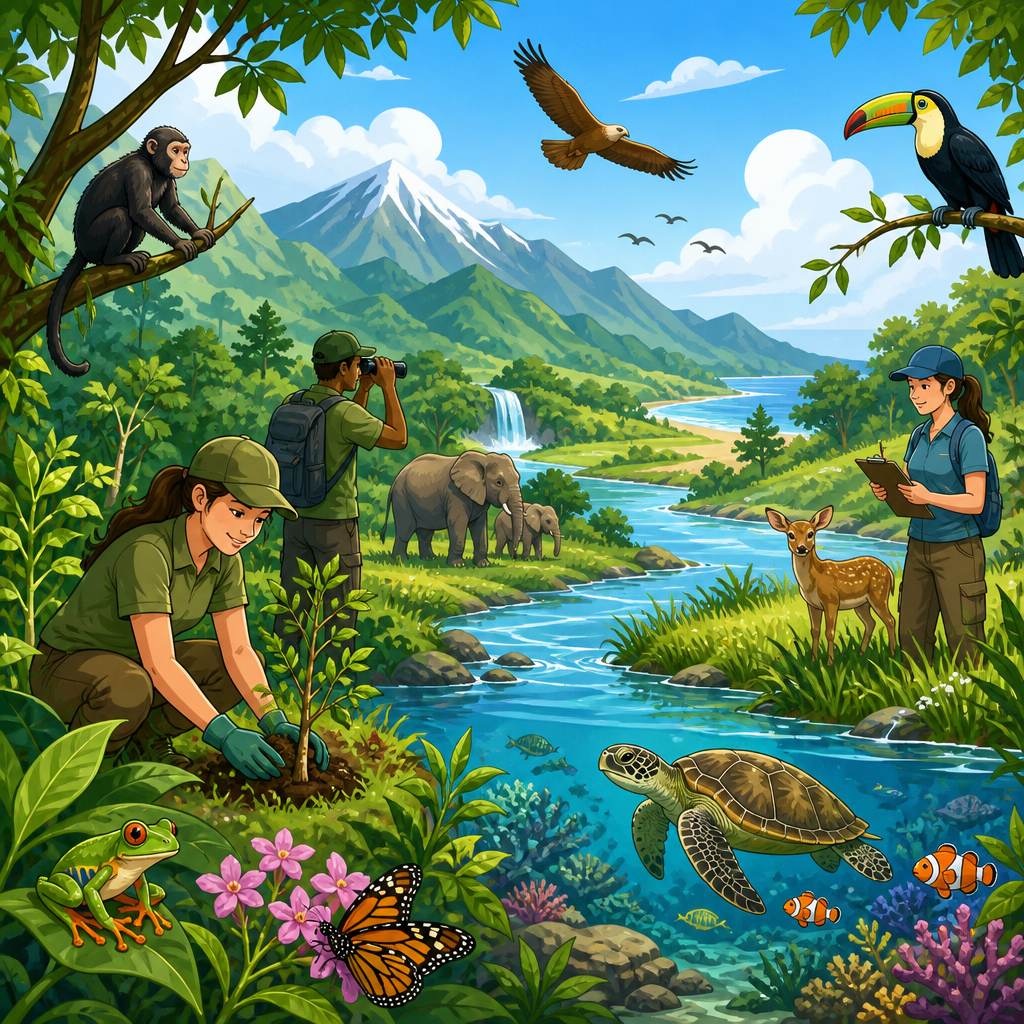

Biodiversity is the variety of life on Earth, from genes within a single species to the full range of ecosystems across forests, oceans, grasslands, wetlands, and cities. In environmental science, the term includes three connected levels: genetic diversity, species diversity, and ecosystem diversity. Genetic diversity refers to variation in DNA within a population, such as disease resistance among wheat varieties or coat patterns in wolves. Species diversity describes the number of species and their relative abundance in a place. Ecosystem diversity covers the different habitats, ecological processes, and communities that sustain life. Together, these levels explain how living systems function, adapt, and recover.
Biodiversity matters because human societies depend on it every day, whether people notice it or not. Food production relies on pollinators, healthy soils, wild crop relatives, and stable water cycles. Medicine depends on natural compounds first discovered in plants, fungi, and marine organisms. Economies depend on fisheries, forests, tourism, and climate regulation. In my work reviewing conservation plans and environmental assessments, the strongest proposals always move beyond simply counting species. They ask a more important question: what ecological roles are being protected, and what happens if those roles disappear? That practical lens is why biodiversity is central to conservation biology.
Conservation biology is the scientific field focused on understanding, protecting, and restoring biodiversity. It combines ecology, genetics, evolution, geography, policy, and resource management. Its core purpose is not only to document loss but also to guide decisions that prevent extinction, maintain ecosystem function, and support long term resilience. The field grew rapidly during the late twentieth century as scientists recognized that habitat destruction, overexploitation, invasive species, pollution, and climate change were causing declines at rates far above background extinction levels. Today, conservation biology also addresses social questions, including Indigenous stewardship, land use planning, environmental justice, and sustainable development.
This hub article explains what biodiversity is, why it is important, how scientists measure it, what threatens it, and which conservation strategies work best. It also serves as a foundation for deeper reading on endangered species, habitat fragmentation, ecological restoration, protected areas, ecosystem services, and climate adaptation. If you understand biodiversity clearly, many topics in environmental science become easier to connect. You can see why a mangrove forest protects coastlines, why amphibian declines warn of wider ecosystem stress, and why preserving genetic variation in crops matters for food security under drought and heat.
Levels of biodiversity and how they shape living systems
The three main levels of biodiversity are genetic, species, and ecosystem diversity, and each one supports the others. Genetic diversity gives populations the raw material for adaptation through natural selection. A population with wider genetic variation is more likely to contain traits that help it survive disease, heat, salinity, or changing rainfall. This is why conservationists worry when populations become small and isolated. Inbreeding can reduce fitness, lower fertility, and increase vulnerability to stress. The case of the Florida panther is often cited: genetic rescue through managed introduction of individuals from a related population helped reduce inbreeding related defects and improved population health.
Species diversity includes both richness, the number of species present, and evenness, how evenly individuals are distributed among those species. A forest with fifty species dominated almost entirely by one tree is different from a forest where those species are more balanced. High species diversity often improves ecosystem stability because multiple organisms can perform overlapping functions. If one pollinator declines, another may partly fill the gap. If one decomposer is lost, nutrient cycling may continue through others. This functional redundancy is not a guarantee against collapse, but it increases resilience. Coral reefs illustrate the point well: their astonishing species diversity underpins fisheries, coastal protection, and tourism, yet that value is tightly linked to the persistence of many interacting organisms, not only corals themselves.
Ecosystem diversity refers to the range of habitats and ecological interactions across landscapes and seascapes. Wetlands store floodwater and filter pollutants. Grasslands support grazing species, carbon storage in soils, and pollinators. Kelp forests provide nursery grounds for fish and dampen wave energy. When ecosystem diversity declines, ecological functions become simplified. I have seen planning documents treat a secondary plantation and an old growth forest as interchangeable because both are called forest. They are not. Old growth systems often contain layered canopies, dead wood, microhabitats, and specialist species that younger managed stands cannot replace for decades, if ever.
How scientists measure biodiversity in the field and through data
Scientists measure biodiversity using complementary methods because no single number captures life’s full complexity. Species richness is the simplest metric, but it misses abundance and function. Indices such as Shannon and Simpson incorporate richness and evenness, helping ecologists compare communities more realistically. Functional diversity looks at traits, such as body size, diet, seed dispersal strategy, or nitrogen fixation, to understand what organisms do in ecosystems. Phylogenetic diversity measures how evolutionarily distinct species are from one another. Protecting ten closely related species is different from protecting ten species spread across distant branches of the tree of life.
Field methods vary by habitat and taxonomic group. Botanists use quadrats and transects to sample vegetation. Bird surveys often rely on point counts. Camera traps detect mammals that are hard to observe directly. Acoustic monitoring helps track frogs, bats, and birds through their calls. In freshwater systems, macroinvertebrate sampling reveals stream health because some insect larvae tolerate pollution while others do not. Genetic tools now extend monitoring far beyond traditional methods. Environmental DNA, often shortened to eDNA, allows researchers to detect organisms from traces of genetic material left in water, soil, or air. It is especially useful for rare, elusive, or invasive species.
Scale matters in biodiversity measurement. Alpha diversity describes diversity within one site, beta diversity compares differences between sites, and gamma diversity refers to total diversity across a broader region. This framework helps explain why two areas with similar species counts may still deserve separate protection if they contain different species compositions. A single protected park does not automatically conserve regional biodiversity if unique habitats outside its boundary are lost. That is why modern conservation planning uses landscape scale analysis, connectivity mapping, remote sensing, and geographic information systems alongside local surveys.
| Method | What it measures | Common use | Example |
|---|---|---|---|
| Quadrat sampling | Plant abundance and cover | Vegetation surveys | Estimating meadow species richness |
| Camera traps | Presence and activity of mammals | Wildlife monitoring | Detecting jaguars in tropical forests |
| eDNA analysis | Genetic traces in environment | Rare or aquatic species detection | Finding invasive carp in rivers |
| Acoustic monitoring | Species calls and timing | Bird, bat, and frog surveys | Tracking owl populations at night |
Why biodiversity is important for ecosystems, economies, and health
Biodiversity is important because it supports ecosystem services, the benefits people receive from nature. These services are usually grouped into provisioning, regulating, supporting, and cultural categories. Provisioning services include food, timber, fiber, and medicines. Regulating services include pollination, water purification, climate regulation, erosion control, and pest suppression. Supporting services include soil formation, nutrient cycling, and primary production. Cultural services include recreation, spiritual values, education, and identity. These categories are useful, but in practice they overlap. A wetland that filters water also supports fisheries, stores carbon, and holds cultural meaning for nearby communities.
Pollination is one of the clearest examples of biodiversity’s practical value. Many crops benefit from animal pollinators, including bees, butterflies, moths, flies, beetles, and some birds and bats. When pollinator communities become less diverse, crop yields can become less reliable, especially under changing weather conditions. Soil biodiversity is equally important and often overlooked. Bacteria, fungi, earthworms, nematodes, and arthropods break down organic matter, cycle nutrients, improve soil structure, and influence water retention. Farmers who protect hedgerows, reduce unnecessary pesticide use, and maintain cover crops often see these hidden ecological processes working in their favor.
Human health is linked to biodiversity in several ways. Diverse diets depend on diverse crops and wild food sources. Many pharmaceuticals trace their origins to natural compounds, including drugs derived from plants and marine organisms. Healthy ecosystems can also reduce disease risk by regulating vectors and maintaining balanced food webs, although the relationship is complex and context specific. Biodiversity loss can increase exposure to hazards when ecosystems fail to buffer floods, heat, or poor water quality. Urban biodiversity matters too. Trees cool neighborhoods, green spaces support mental health, and varied habitats increase opportunities for environmental education close to where people live.
Major threats to biodiversity and why losses accelerate
The main threats to biodiversity are habitat loss, overexploitation, invasive species, pollution, and climate change, often interacting at the same time. Habitat loss remains the dominant driver in many regions. Forest conversion for agriculture, road construction, mining, dam building, and urban expansion remove or fragment the places species need to feed, breed, migrate, and shelter. Fragmentation is especially damaging because small isolated patches support fewer species and interrupt movement between populations. Edge effects change temperature, light, humidity, and predator pressure, often degrading habitat beyond the area directly cleared.
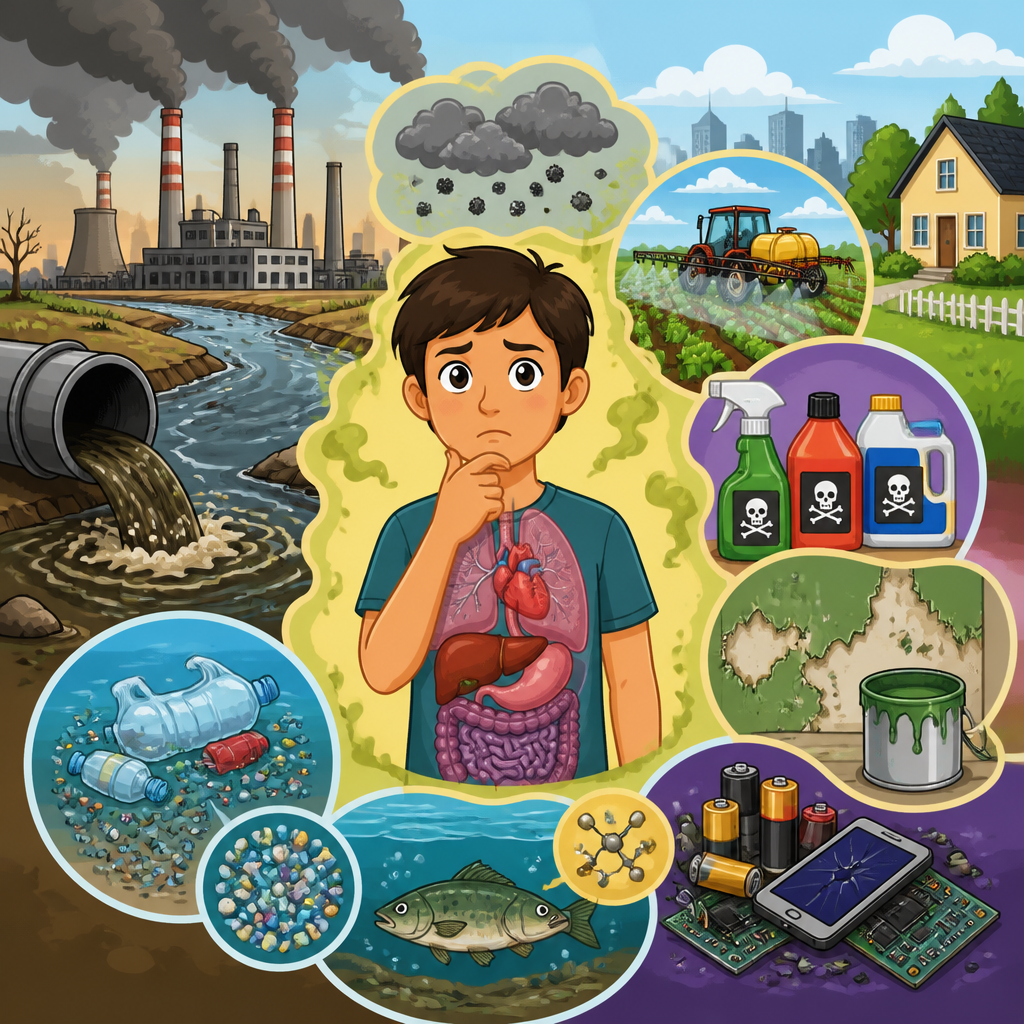
Overexploitation occurs when species are harvested faster than they can recover. Examples include overfishing, illegal wildlife trade, unsustainable logging, and excessive hunting. Even legal use can become unsustainable when monitoring is weak or quotas ignore ecological complexity. Invasive species can outcompete native organisms, spread disease, alter fire regimes, and transform ecosystems. Brown tree snakes devastated native birds on Guam. Zebra mussels changed freshwater systems in North America. Pollution adds another layer of stress through pesticides, plastics, heavy metals, nutrient runoff, and industrial contaminants. Excess nitrogen and phosphorus can trigger algal blooms and oxygen depletion, creating dead zones in lakes and coastal waters.
Climate change intensifies every other pressure. Rising temperatures shift species ranges, alter breeding timing, increase wildfire risk, warm oceans, and drive coral bleaching. Some species can move or adapt, but many cannot move fast enough, especially where landscapes are fragmented. Alpine species, island endemics, and organisms tied to narrow climate conditions are particularly vulnerable. Extinction risk rises sharply when multiple threats combine. For example, a fish population already stressed by dams and pollution may fail completely during a marine heatwave or drought. That cumulative reality is why conservation decisions must be proactive rather than reactive.
Conservation biology in practice: strategies that protect and restore nature
Effective conservation biology combines species protection, habitat conservation, restoration, and governance. Protected areas remain essential, but their design matters as much as their size. A park that exists only on paper or excludes key breeding grounds may do little. Good protected area planning considers representation, connectivity, management capacity, and local support. Marine protected areas show this clearly. Where no take zones are well enforced, fish biomass often increases, spillover can benefit nearby fisheries, and habitats recover. Where rules are weak, results are limited. Quality of management is not a secondary issue; it is the outcome driver.
Connectivity conservation is increasingly important in a warming world. Wildlife corridors, river restoration, road crossings, and landscape mosaics help species move between habitats. Ecological restoration goes further by assisting recovery in degraded systems. This can include rewetting drained peatlands, removing invasive plants, replanting native vegetation, restoring natural fire regimes, and reconnecting floodplains. Restoration is not a substitute for protecting intact ecosystems, because old and complex habitats cannot be recreated quickly. Still, when done well and monitored properly, restoration can rebuild function and improve resilience. The most successful projects set measurable goals, use reference ecosystems, and plan for long timeframes.
Species focused tools also play a role. Captive breeding, translocation, seed banking, gene banking, and assisted reproduction can prevent extinction for highly threatened organisms. The Millennium Seed Bank and similar programs preserve plant genetic resources that may be critical for future restoration and crop resilience. Yet these interventions are costly and rarely solve root causes on their own. Conservation works best when science, policy, and community knowledge align. Support a credible conservation effort locally, and use this hub to explore the wider science behind protecting biodiversity.
Frequently Asked Questions
What is biodiversity in simple terms?
Biodiversity is the full variety of life on Earth and the natural patterns that connect living things to one another. In simple terms, it includes all plants, animals, fungi, and microorganisms, as well as the habitats they live in and the genetic differences that make each population unique. Environmental science typically explains biodiversity at three linked levels: genetic diversity, species diversity, and ecosystem diversity. Genetic diversity refers to differences in DNA within a species, such as traits that help certain crops resist disease or allow some animals to adapt better to changing conditions. Species diversity looks at how many different species exist in a place and how evenly they are represented. Ecosystem diversity includes the range of environments where life exists, such as forests, rivers, coral reefs, wetlands, grasslands, deserts, and even urban green spaces. Together, these layers help scientists understand not just how much life exists, but how resilient and functional nature is as a whole.
Why is biodiversity important for ecosystems and people?
Biodiversity is important because it supports the health, stability, and productivity of ecosystems, and those ecosystems directly support human life. When biodiversity is strong, ecosystems are generally better able to withstand stress, recover from disturbances, and continue providing essential services. These services include pollination of crops, purification of water, healthy soil formation, nutrient cycling, carbon storage, flood control, and natural pest regulation. For people, biodiversity is closely tied to food security, medicine, livelihoods, and climate resilience. Many of the foods we eat depend on diverse plant varieties and pollinators, while many medicines are derived from natural compounds found in plants, fungi, and other organisms. Biodiversity also has cultural, recreational, and spiritual value, shaping traditions and enriching everyday life. In short, biodiversity is not just about protecting wildlife for its own sake; it is also about maintaining the natural systems that make human societies possible and sustainable over the long term.
What are the three main types of biodiversity?
The three main types of biodiversity are genetic diversity, species diversity, and ecosystem diversity, and each one plays a different role in the functioning of life on Earth. Genetic diversity is the variation in genes within a species or population. This matters because it affects how well organisms can adapt to disease, environmental change, and other pressures. For example, differences among wheat varieties can influence resistance to drought or infection, and genetic variation in wild animal populations can improve survival over time. Species diversity refers to the number of species in an area and the balance among them. A habitat with many species that perform different ecological roles is often more stable and resilient than one dominated by only a few. Ecosystem diversity refers to the variety of habitats, ecological communities, and natural processes across a region or the planet. Forests, wetlands, oceans, tundra, and grasslands each support different forms of life and ecological interactions. These three levels are interconnected, so a loss at one level can weaken the others and reduce the overall resilience of nature.
What causes biodiversity loss?
Biodiversity loss is caused by a combination of human-driven pressures that disrupt species, habitats, and ecological processes. The leading causes include habitat destruction, climate change, pollution, overexploitation of natural resources, and invasive species. Habitat destruction happens when forests are cleared, wetlands are drained, rivers are altered, or land is converted for agriculture, infrastructure, or urban development. Climate change shifts temperatures, rainfall patterns, and seasonal cycles, making it harder for many species to survive where they evolved. Pollution from chemicals, plastics, excess nutrients, and industrial waste can damage water, soil, and air quality, often harming organisms directly or indirectly through the food web. Overexploitation includes overfishing, unsustainable logging, and poaching, all of which reduce populations faster than they can recover. Invasive species can outcompete native organisms, spread disease, or alter habitats in ways that destabilize ecosystems. These threats often work together, which is why biodiversity loss can happen quickly and affect both local environments and global ecological balance.
How can biodiversity be protected and restored?
Protecting and restoring biodiversity requires action at multiple levels, from individual choices to national policy and international cooperation. One of the most effective strategies is conserving habitats by creating and properly managing protected areas, restoring damaged ecosystems, and connecting fragmented landscapes so species can move and reproduce more easily. Sustainable farming, fishing, and forestry practices can reduce pressure on ecosystems while still supporting human needs. Reducing pollution, limiting greenhouse gas emissions, and addressing climate change are also essential, since a warming planet intensifies many other threats to biodiversity. Strong laws and enforcement can help prevent illegal wildlife trade, overharvesting, and destructive land use. Supporting native species, controlling invasive species, and using science-based conservation planning also make a major difference. At the community level, people can help by planting native vegetation, protecting local waterways, reducing waste, choosing sustainably sourced products, and supporting conservation organizations. Biodiversity recovery is possible when ecosystems are given the chance to regenerate, and long-term protection works best when environmental goals are linked with economic stability, local knowledge, and public participation.