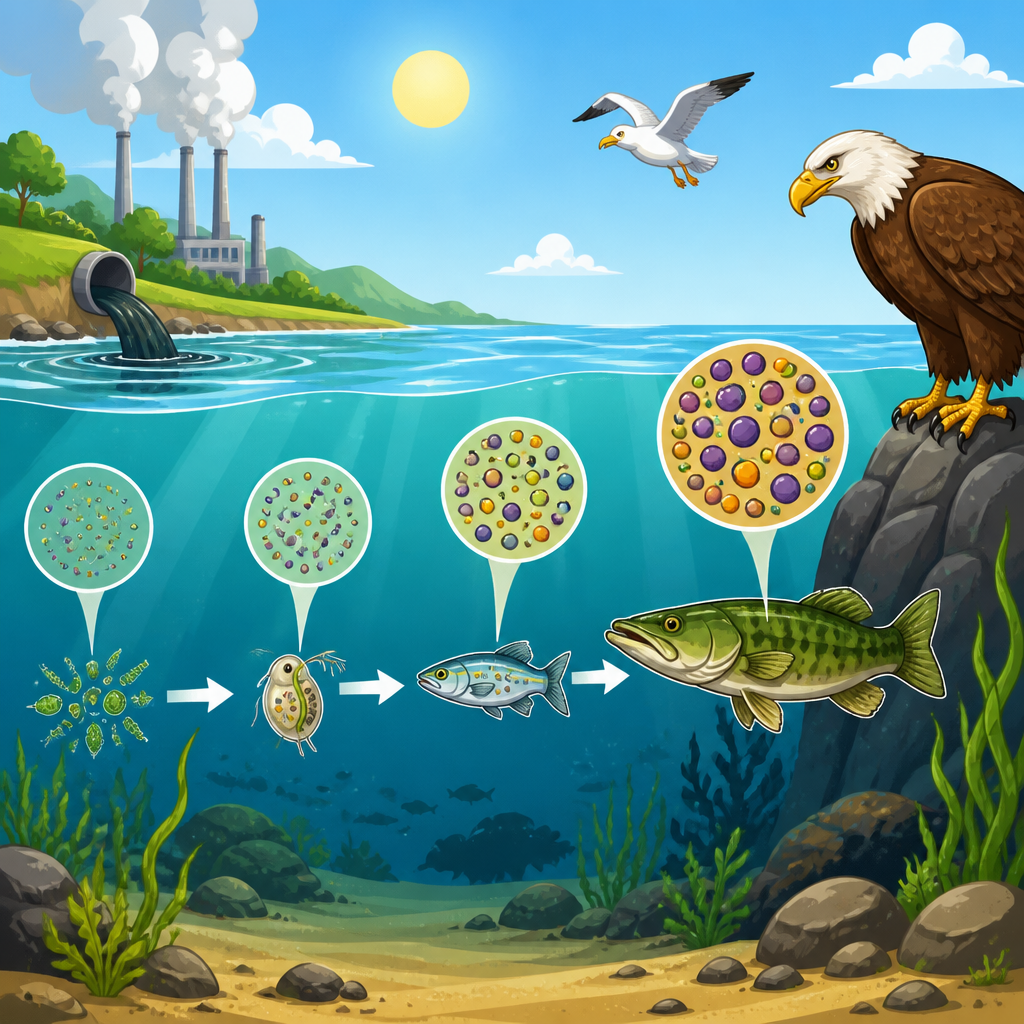
Bioaccumulation and biomagnification explain how pollutants move through living systems, why tiny concentrations can become dangerous, and why environmental toxicology matters far beyond contaminated water or soil. In environmental science, toxicology studies how chemicals affect organisms, populations, and ecosystems, including how exposure occurs, what dose causes harm, and which species face the greatest risk. I have worked with monitoring reports, fish tissue advisories, and contaminated sediment assessments, and the same pattern appears repeatedly: pollutants that seem negligible in the environment can become concentrated inside organisms and intensified across food webs. That is the core distinction. Bioaccumulation is the buildup of a substance within a single organism over time because uptake exceeds elimination. Biomagnification is the increase in concentration of that substance at successively higher trophic levels, meaning predators often carry the heaviest burden.
These concepts are central to environmental toxicology because they connect chemistry, ecology, public health, and regulation. They help explain why a pesticide applied on land can later appear in birds of prey, why mercury in lake sediments matters to people who eat fish, and why persistent chemicals remain a policy issue decades after use declines. They also shape how agencies set fish consumption advisories, evaluate contaminated sites, and prioritize cleanup. Understanding them requires a few key terms. Persistence describes how long a chemical resists degradation in water, soil, sediment, or tissue. Lipophilicity refers to a chemical’s tendency to dissolve in fats rather than water, often expressed by an octanol-water partition coefficient, or Kow. Trophic level describes an organism’s feeding position in a food chain or food web. Together, persistence, lipophilicity, and trophic transfer determine whether a substance simply disperses, accumulates in tissues, or magnifies from plankton to fish to humans.
This article serves as a hub for environmental toxicology by covering the mechanisms behind accumulation, the pollutants most often involved, the ecological and human consequences, and the tools scientists use to assess risk. If you understand these foundations, related topics such as endocrine disruption, aquatic toxicity testing, sediment contamination, dose-response assessment, and exposure pathways become much easier to interpret. The practical value is immediate. Communities rely on these principles when deciding whether a river is safe for fishing, whether a landfill plume threatens wetlands, or whether remediation should target source soils, sediments, or food web exposure. In short, bioaccumulation and biomagnification are not niche textbook ideas; they are operational concepts that guide environmental monitoring, toxic substance regulation, and real-world decisions about ecosystem protection.
What bioaccumulation and biomagnification mean in practice
Bioaccumulation happens when an organism takes in a chemical faster than it can metabolize or excrete it. Uptake can occur through direct contact with water, ingestion of food, inhalation, or absorption from sediment. Elimination occurs through excretion, growth dilution, metabolic transformation, and reproduction. When uptake stays higher than elimination, the internal concentration rises. In fish, this may occur through gill uptake from water and through diet. In earthworms, it often occurs through contaminated soil and organic matter. In people, it happens mainly through food, drinking water, occupational exposure, or contact with consumer products. The process is especially important for persistent organic pollutants and certain metals because they do not break down quickly and may bind strongly to tissues.
Biomagnification is different because it describes a food web pattern, not just what happens in one body. A small aquatic organism may contain a low concentration of methylmercury, but when many such organisms are eaten by a small fish, and many small fish are eaten by a larger predator, the predator receives repeated doses. If the substance is efficiently assimilated and poorly eliminated, its concentration rises at each trophic step. That is why top predators such as tuna, swordfish, eagles, seals, and polar bears often show the highest levels of certain contaminants. In field assessments, scientists look for trophic magnification using stable isotopes, tissue chemistry, and food web models rather than assuming every chemical will magnify. Many substances bioaccumulate without strongly biomagnifying, especially if organisms can metabolize them or if exposure is diluted across trophic transfers.
The distinction matters in regulation and communication. A chemical that bioaccumulates in mussels may indicate local contamination and potential ecological risk even if it does not strongly magnify in fish-eating birds. Conversely, a contaminant that biomagnifies can create major human and wildlife exposure despite low ambient concentrations in water. This is one reason water measurements alone often understate risk. I have seen lakes with low dissolved pollutant readings still trigger fish tissue advisories because sediment and dietary pathways dominated exposure. Environmental toxicology therefore evaluates not only environmental concentrations but also bioavailability, tissue partitioning, food habits, metabolic capacity, and life stage sensitivity.
Which pollutants are most likely to accumulate and magnify
The chemicals most associated with bioaccumulation and biomagnification share several traits. They are persistent, resist metabolic breakdown, and often partition into lipids or bind strongly to proteins. Classic examples include DDT and its metabolite DDE, polychlorinated biphenyls or PCBs, dioxins, furans, methylmercury, and some brominated flame retardants such as PBDEs. More recent concern has focused on PFAS, a large class of per- and polyfluoroalkyl substances, although their behavior varies because many bind to proteins rather than fat. Not every PFAS bioaccumulates the same way, which is why chain length, functional group, and species physiology matter.
Mercury is one of the clearest real-world examples. Inorganic mercury released from coal combustion, mining, or industrial sources can settle into aquatic systems. Under low-oxygen conditions, certain microorganisms convert it to methylmercury, the form that readily enters food webs and binds strongly to proteins in muscle tissue. Because methylmercury is efficiently absorbed and slowly eliminated, it biomagnifies strongly. This is why predatory fish such as walleye, pike, largemouth bass, shark, and king mackerel can contain levels high enough to prompt consumption advice, particularly for pregnant women and children because developing nervous systems are highly sensitive.
Persistent organic pollutants show a somewhat different pattern. PCBs and DDT-related compounds are hydrophobic and accumulate in fatty tissues. Marine mammals, birds of prey, and long-lived fish have historically carried high burdens because these chemicals persist, move long distances atmospherically, and concentrate through diet. DDE thinning eggshells in raptors is a landmark example from toxicology and conservation history. Bald eagles, peregrine falcons, and brown pelicans declined sharply in the mid twentieth century partly because reproductive success fell when eggshells became too thin to withstand incubation. The eventual restrictions on DDT demonstrated that source control can reverse ecological damage, but recovery took years because residues remained in sediments and food webs long after use ended.
| Pollutant | Main source examples | Why it accumulates | Common concern |
|---|---|---|---|
| Methylmercury | Atmospheric deposition, mining legacy, industrial release | Strong uptake from diet, slow elimination, trophic transfer | Neurotoxicity in wildlife and humans |
| PCBs | Older electrical equipment, sediments, industrial sites | Persistent, lipophilic, stored in fatty tissue | Fish advisories, developmental and immune effects |
| DDE | Legacy breakdown product of DDT | Persistent and lipophilic | Eggshell thinning in birds |
| PBDEs | Flame retardants in older products and waste streams | Persistent, hydrophobic, dietary uptake | Wildlife exposure and endocrine concerns |
| PFAS | Firefighting foams, industrial uses, consumer products | Persistent, protein binding, some compounds have long half-lives | Drinking water and fish contamination |
How contaminants move through food webs and ecosystems
Environmental toxicology treats exposure as a pathway problem. A pollutant must be released, transported, become bioavailable, enter an organism, and persist long enough to cause harm. In aquatic systems, the path often begins with deposition to water or sediment. Phytoplankton and benthic invertebrates take up contaminants directly from water, porewater, or food particles. Small fish then consume those organisms, and larger predators consume the fish. Each step can increase body burden if assimilation efficiency is high and depuration is low. Sediments are especially important because they store hydrophobic contaminants and create chronic exposure for bottom-feeding species.
Terrestrial systems follow parallel rules but different routes. Grazing animals can ingest metals from forage grown on contaminated soils. Insectivorous birds may receive pesticides from prey living in treated fields. Mammalian predators can accumulate rodenticides when they feed on poisoned rodents. Forest food webs can also receive airborne contaminants deposited far from the original source. This long-range transport explains why Arctic ecosystems contain pollutants despite limited local industrial activity. Cold temperatures slow degradation, and compounds that evaporate in warmer regions can condense and deposit in colder ones, a pattern often called global distillation.
Food web structure changes outcomes. Long, predator-heavy food webs usually magnify certain contaminants more strongly than short ones. Species traits matter too. Fast-growing fish may show lower tissue concentrations through growth dilution, while long-lived species usually accumulate more over time. Seasonal feeding shifts, migration, and reproductive cycles also affect body burdens. When I review monitoring data, interpreting tissue results without ecology almost always leads to mistakes. A contaminated fish may not reflect only local water quality; it may reflect age, prey choice, lipid content, or migration history.
Effects on wildlife, ecosystems, and human health
The biological effects of accumulated pollutants depend on dose, chemical form, exposure timing, and species sensitivity. Acute toxicity is sometimes obvious, but many bioaccumulative substances cause chronic, sublethal harm that spreads across populations. Reproductive failure, impaired growth, altered behavior, immune suppression, endocrine disruption, and developmental abnormalities are common endpoints. In fish, contaminants may reduce spawning success or larval survival. In birds, they can interfere with hormones, nesting success, or chick development. In mammals, they can impair immunity or neurological function. These are not isolated laboratory concerns; field studies have documented them in contaminated estuaries, Great Lakes food webs, and Arctic marine ecosystems.
Human health effects depend heavily on exposure route, and for bioaccumulative contaminants diet is often dominant. Fish and shellfish are nutritionally valuable, yet they can also be significant exposure sources for methylmercury, PCBs, dioxins, and some PFAS in certain waters. Public health agencies therefore issue species-specific and location-specific advice rather than blanket bans. This balance matters. Advisories aim to reduce contaminant intake while preserving nutritional benefits such as omega-3 fatty acids and high-quality protein. The most protective messages target pregnant women, nursing mothers, and children because early-life exposure can affect brain development, behavior, and learning. Adults with high subsistence fishing rates or cultural reliance on local catch may also face disproportionate risk, making environmental justice a critical part of toxicology practice.
Ecosystem effects can persist even when emissions decline. Predators with low reproductive rates recover slowly, and contaminants stored in sediments or floodplain soils can reenter food webs for decades. Cleanup decisions therefore weigh not just current concentrations but future exposure potential. A site may look stable chemically while remaining unstable biologically if storms, dredging, wildfires, or land-use change remobilize contaminants. Long-term stewardship is often as important as initial remediation.
How scientists measure, assess, and reduce bioaccumulative risk
Assessment starts with sound sampling design. Environmental toxicologists collect water, sediment, soil, and tissue samples, but tissue data usually carry the most direct relevance for exposure. Common matrices include fish fillet, whole fish, bird eggs, shellfish, and mammal liver or blood. Laboratories use methods such as gas chromatography mass spectrometry for organic pollutants and cold vapor or inductively coupled plasma techniques for metals, depending on analyte. Quality assurance is nonnegotiable: field blanks, duplicates, matrix spikes, certified reference materials, and chain-of-custody procedures protect data integrity.
Interpreting results requires more than comparing numbers to a single threshold. Scientists use bioconcentration factor, bioaccumulation factor, and biomagnification factor to describe different pathways. They may model trophic magnification factors across a food web using stable nitrogen isotopes to estimate trophic position. Risk assessors then combine tissue concentrations with toxicity reference values, consumption rates, exposure duration, and body weight assumptions. Agencies such as the US Environmental Protection Agency, European Chemicals Agency, and national public health departments provide frameworks for screening and management, but local ecology always matters.
Reducing risk follows a hierarchy. The most effective action is source control: phase out the chemical, stop releases, and prevent new loading. That strategy worked for DDT and PCBs, even though legacy contamination remains. Site-level actions may include dredging contaminated sediment, capping hotspots, stabilizing mine waste, treating industrial effluent, or restoring wetlands that interrupt exposure pathways. For communities, practical reduction often means following fish consumption advisories, trimming fatty tissue where appropriate for lipophilic contaminants, and choosing lower-trophic fish when mercury is a concern. The broader lesson of environmental toxicology is straightforward: preventing persistent contamination is far cheaper, safer, and more reliable than trying to clean up a biomagnifying pollutant after it enters a food web.
Bioaccumulation and biomagnification are foundational ideas in environmental toxicology because they reveal how pollutants become more dangerous as they move through organisms and ecosystems. A chemical does not need to be abundant in water or soil to create serious risk. If it persists, enters tissues efficiently, and is eliminated slowly, it can build up within organisms; if predators repeatedly ingest contaminated prey, it can intensify across trophic levels. That is why mercury, PCBs, DDT residues, some flame retardants, and several PFAS remain central concerns in environmental science, monitoring, and regulation.
The most important takeaway is practical. To understand toxic risk, ask four questions: where the chemical comes from, how it moves, whether it accumulates in tissue, and who eats whom. Those questions connect laboratory chemistry with fish advisories, wildlife declines, cleanup decisions, and long-term public health protection. They also link this hub topic to related environmental toxicology subjects such as exposure pathways, ecological risk assessment, endocrine disruption, sediment quality, and remediation strategy. If you are building deeper knowledge in environmental science, use this article as your starting point and continue into those connected topics with food webs, persistence, and tissue exposure in mind.
Frequently Asked Questions
What is the difference between bioaccumulation and biomagnification?
Bioaccumulation happens within a single organism. It describes the process by which a chemical builds up in an animal, plant, or person over time because the substance enters the body faster than it can be broken down, excreted, or otherwise eliminated. This can occur through direct contact with contaminated water, soil, sediment, or air, and also through diet. For example, a fish may slowly accumulate mercury or PCBs in its tissues throughout its life, even when those chemicals are present in the environment at very low concentrations.
Biomagnification, by contrast, happens across a food web. It refers to the increasing concentration of certain pollutants as they move from prey to predator at higher trophic levels. A small aquatic organism may contain a low amount of a contaminant, but if many of those organisms are eaten by small fish, and many small fish are then eaten by larger fish, the chemical concentration can become much higher in the top predator. This is why large predatory fish, fish-eating birds, marine mammals, and other apex consumers often show the greatest contaminant burdens. In simple terms, bioaccumulation is buildup in one organism, while biomagnification is amplification through the food chain.
Why can tiny concentrations of pollutants become dangerous in ecosystems?
Tiny concentrations matter because not all chemicals behave the same way once they enter living systems. Some pollutants are persistent, meaning they do not degrade quickly in the environment. Others are lipophilic, meaning they are attracted to and stored in fatty tissues rather than remaining dissolved in water. When a chemical is both persistent and stored in tissues, even a very small environmental concentration can become significant over time as organisms continue to absorb it from food, water, or sediment.
That long-term buildup is what makes environmental toxicology so important. A pollutant does not need to be present at an obviously high level in water or soil to cause harm. Repeated low-level exposure can gradually produce tissue concentrations linked to impaired growth, reproductive failure, behavioral changes, immune suppression, developmental defects, or mortality. The risk becomes even greater when contaminated organisms are prey for other species. In that case, what starts as a trace concentration at the base of the food web can become a biologically meaningful and potentially dangerous dose in higher-level consumers, including wildlife and humans who eat contaminated fish or shellfish.
Which pollutants are most likely to bioaccumulate or biomagnify?
The substances most likely to bioaccumulate or biomagnify are typically persistent, resistant to metabolism, and able to bind to tissues, especially fat. Classic examples include methylmercury, PCBs, dioxins, DDT and related organochlorine pesticides, and certain flame retardants such as PBDEs. These contaminants do not simply disappear after entering the environment. Instead, they can remain in sediments, wetlands, lakes, rivers, estuaries, and marine systems for years or even decades, where they continue to cycle through food webs.
Metals and organic chemicals can behave differently, so context matters. Mercury is especially important because it can be transformed into methylmercury, a highly bioavailable form that readily enters aquatic food chains and strongly biomagnifies. PCBs and similar compounds are well known for accumulating in fatty tissues and becoming more concentrated in predatory species. Not every contaminant biomagnifies, however. Some substances may be toxic without showing strong food-web amplification, while others may be more easily excreted or metabolized. That is why toxicologists evaluate not just the presence of a pollutant, but also its chemical form, persistence, exposure pathway, and tendency to move through organisms and ecosystems.
How do scientists determine whether a species or ecosystem is at risk from these pollutants?
Scientists assess risk by combining environmental measurements with toxicological evidence. They look at where contaminants are found, how organisms are exposed, what doses are associated with harmful effects, and which species are most sensitive. Monitoring can include water samples, soil and sediment testing, fish tissue analysis, benthic invertebrate surveys, and wildlife sampling. In aquatic systems, sediment is especially important because many pollutants settle there and become a long-term source of exposure for bottom-dwelling organisms and the animals that feed on them.
Risk assessment also depends on ecology. Species differ in diet, lifespan, metabolism, habitat use, and trophic level, all of which influence contaminant uptake. A short-lived organism may experience lower lifetime accumulation than a long-lived predator. A bottom-feeding fish may face more exposure to sediment-associated contaminants than a species feeding higher in the water column. Scientists compare measured concentrations to known toxicity thresholds, field observations, and advisory benchmarks. When fish tissue levels are high enough to threaten wildlife or human health, agencies may issue consumption advisories or pursue cleanup actions. In practice, the goal is not just to ask whether contamination exists, but whether exposure is sufficient to cause real biological harm at the individual, population, or ecosystem level.
Why does understanding bioaccumulation and biomagnification matter for people, not just wildlife?
These processes matter to people because humans are part of food webs too. When contaminants build up in fish, shellfish, game animals, livestock, or even crops exposed to polluted environments, human consumers can also be exposed. In many regions, fish consumption advisories are based specifically on bioaccumulative chemicals such as mercury or PCBs. The concern is not always a one-time exposure event. More often, it is repeated dietary intake over months or years that increases health risk, particularly for pregnant people, developing fetuses, children, and communities that rely heavily on local fish or subsistence harvests.
Understanding these concepts also shapes environmental decision-making. It influences how contaminated sites are investigated, how cleanup priorities are set, how discharge permits are evaluated, and how public health guidance is communicated. A waterbody may appear visually clean while still producing fish with unsafe tissue concentrations. Likewise, contaminated sediment can remain a hidden but important source of long-term ecological and human exposure. That is why environmental toxicology reaches far beyond obvious spills or polluted shorelines. It helps explain how chemicals move through living systems, why low-level contamination can still be serious, and why protecting ecosystems is inseparable from protecting public health.