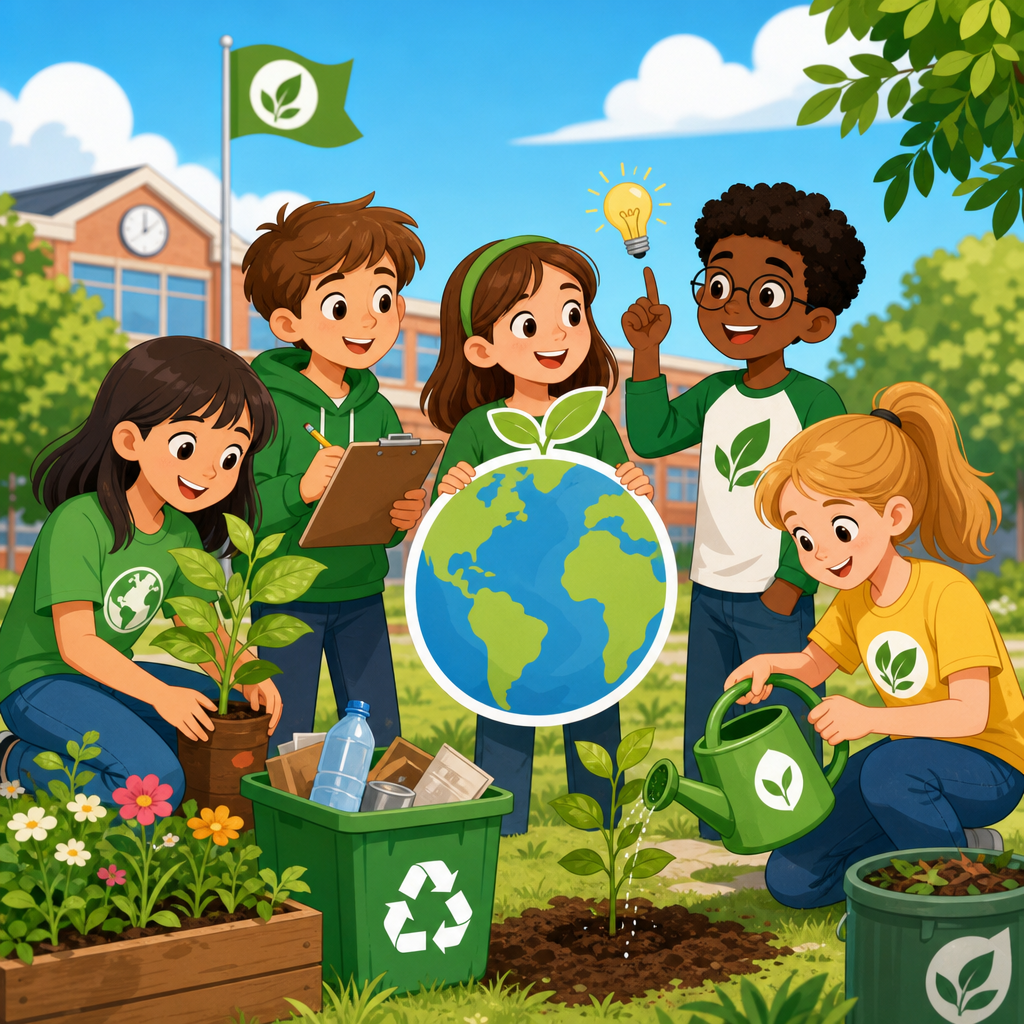

Starting a green club at school is one of the most practical ways students can turn environmental concern into visible action, and it also creates a reliable base for year-round fundraising ideas for eco clubs and student groups. A green club is a student-led organization focused on sustainability, conservation, waste reduction, climate awareness, and community improvement. In practice, the strongest clubs combine education, service, advocacy, and fundraising so members can support projects such as campus recycling, school gardens, composting systems, native plant restoration, refill stations, and awareness events. I have helped student groups launch environmental programs from scratch, and the same pattern appears every time: clubs that define a mission early, recruit committed members, secure school support, and choose realistic fundraising activities gain momentum faster and keep it longer. This matters because enthusiasm alone does not fund tools, seeds, transport, signage, event permits, or outreach materials. Schools also increasingly expect student organizations to show measurable impact, safe operations, and clear leadership. A well-run eco club can deliver all three while giving students experience in project management, budgeting, public speaking, and civic engagement. If your goal is to learn how to start a green club comprehensively, the answer is not simply “gather students and hold meetings.” You need a framework that links mission, structure, money, and community partnerships. This hub article explains that framework in plain terms and highlights the fundraising approaches that work best for environmental groups.
The first question most students ask is simple: what should a green club actually do? The most useful answer is that it should solve visible environmental problems inside the school community while teaching members how systems work. That can mean reducing landfill waste in the cafeteria, organizing clothing swaps, planting pollinator gardens, auditing classroom energy use, or leading Earth Day campaigns. The second question is usually about funding, because even low-cost projects need some budget. Fundraising ideas for eco clubs and student groups are most effective when they match the club’s mission. A reusable bottle sale supports waste reduction. A native plant sale supports biodiversity. A repair workshop supports circular economy principles. When fundraising doubles as education, schools and families are far more likely to participate. As a hub page for this subtopic, this article covers the full startup path: defining purpose, forming leadership, getting approval, planning projects, choosing fundraising methods, managing money, promoting events, and measuring results. Each section is designed to answer the questions students, teachers, and parents usually have before a club becomes active.
Define the club’s purpose, scope, and first-year goals
The strongest eco clubs begin with a narrow, concrete purpose instead of a vague promise to “help the environment.” In the first planning meeting, write a one-sentence mission that states who you serve, what environmental issue you will address, and how you will act. For example: “Our club helps our school reduce waste and build sustainability habits through education, reuse programs, and community projects.” That sentence immediately shapes decisions about events, members, and budget. Next, decide your scope. Some clubs focus on campus operations, such as recycling contamination, water bottle waste, or energy use. Others focus on community service, such as river cleanups or tree planting. Many do both, but trying to tackle everything at once causes burnout. I advise student groups to choose one operational goal and one outreach goal for the first semester. Good examples include installing clearly labeled recycling signage and hosting a schoolwide swap event. Both are manageable, visible, and measurable.
Set goals using simple metrics. A goal like “raise awareness” is too soft to guide action. Better goals look like this: recruit fifteen active members by October, run two educational events, raise five hundred dollars, and divert two hundred pounds of reusable goods from disposal. Schools respond well to numbers because numbers show planning. They also help with future grant applications. If your club later seeks support from local businesses, city sustainability offices, or youth service programs, baseline data makes your case stronger. At this stage, draft a basic constitution or charter covering mission, officer roles, meeting frequency, voting rules, and financial procedures. Most schools require this for approval. Even if they do not, it prevents confusion later. A club that knows what it exists to do can fundraise with credibility.
Build a leadership team and secure school approval
To start a green club formally, you usually need a faculty advisor, student officers, and an application through the student activities office. Choose an advisor who is organized and responsive, not just environmentally interested. Science teachers are common choices, but librarians, social studies teachers, art teachers, and facilities staff can be excellent partners because sustainability projects cross disciplines. Officer roles should be specific. A president coordinates agendas and administration. A vice president manages projects and volunteers. A treasurer handles budgets, receipts, and reimbursement rules. A communications lead manages posters, announcements, email, and social media. A data or impact lead tracks outcomes such as pounds recycled, attendance, or funds raised. In larger schools, add committee leads for garden projects, events, and partnerships.
When applying for recognition, present the club as a practical asset to the school. Administrators care about supervision, safety, inclusivity, and student demand. Bring a member interest list, a draft calendar, and one low-risk starter project. For example, propose a lunchtime waste audit with custodian coordination, or a campus cleanup with gloves, waivers, and supervision. If fundraising is part of the plan, ask early about district rules. Many schools restrict cash handling, use of online payment platforms, food sales, raffles, or external donations. I have seen great student ideas stall because no one checked whether proceeds had to pass through the school bookkeeper or whether plant sales needed preapproval. Clarify those policies before announcing events. Early compliance saves reputational damage later.
Choose projects that make the club visible and useful
New clubs need quick wins. The best first projects are visible, low cost, and easy for nonmembers to understand. Campus cleanups work because everyone can see the before-and-after result. Recycling station relabeling works because contamination is a common school problem and signs are inexpensive. A thrift swap works because students immediately understand the value: free or low-cost clothing, lower waste, and community participation. A school garden can be powerful, but it requires long-term maintenance, water access, summer care, and permission from facilities. Composting is valuable but also operationally complex because it depends on contamination control and hauling or onsite processing. Start with projects the club can maintain consistently. Momentum matters more than ambition in the first year.
Pair each project with an educational message and a funding angle. If the club runs a refill campaign to reduce single-use plastic, sell branded reusable bottles or stickers. If the club promotes biodiversity, host a native seedling sale in partnership with a local nursery. If the club teaches repair and reuse, organize a mending workshop and accept donations. This alignment is what makes fundraising ideas for eco clubs and student groups feel authentic rather than transactional. People support causes more readily when they can see the environmental logic behind the fundraiser. They also remember the club for a specific contribution, not just for posters about climate change.
Use mission-aligned fundraising methods that students will actually support
Not every fundraiser fits a green club. Traditional candy sales can raise money, but they do little to reinforce sustainability values and may create packaging waste. Mission-aligned options usually produce better engagement because they tell a story. In my experience, the most effective school eco fundraisers are plant sales, reusable product sales, clothing swaps with entry donations, upcycled craft markets, bottle and can drives where legal, repair cafés, eco workshops, and sponsorships tied to measurable campus improvements. Car washes can work, but in drought-prone regions they conflict with conservation messaging unless you use water-efficient methods. Bake sales are acceptable for specific occasions, yet they are rarely distinctive enough to build a green identity.
| Fundraiser | Why it works | Typical needs | Main caution |
|---|---|---|---|
| Native plant sale | Links directly to habitat and pollinator education | Supplier, preorder system, pickup space | Avoid invasive species and wrong-season timing |
| Clothing swap | Promotes reuse and attracts high participation | Sorting team, tables, donation rules | Needs clear quality standards and leftovers plan |
| Reusable bottle or utensil sale | Supports waste reduction message | Upfront inventory, branding approval | Margins shrink if order quantities are low |
| Repair workshop | Teaches circular economy skills | Skilled volunteers, tools, safety plan | Set limits on what items can be repaired |
| Can and bottle drive | Simple and community friendly where redemption exists | Storage, transport, local recycling rules | Check hygiene and redemption laws |
Choose one fundraiser with low logistical risk for the first semester and one signature event for later. A preorder plant sale is often ideal because it limits unsold inventory and can be paired with care guides. A clothing swap works well if the school has strong student foot traffic and enough volunteers to sort items by size and condition. Seek in-kind support wherever possible. Local hardware stores may donate gloves or soil. Nurseries may discount plugs or herbs. Print shops may sponsor signage. Ask for precise items rather than generic “support.” Businesses respond better to clear requests and visible recognition, such as logos on event flyers approved by the school.
Manage budget, logistics, and promotion like a real organization
A student club becomes durable when it treats money and operations seriously. Create a simple annual budget with projected income, project costs, and a reserve. Common expenses include poster printing, bins, gardening supplies, event permits, tablecloths, volunteer refreshments, and speaker honoraria. Use shared spreadsheets or approved school accounting tools to track every transaction. Keep receipts. Record donor names, item values, and restrictions. If the school uses activity accounts, learn the reimbursement timeline before promising purchases. I have seen clubs lose momentum because student leaders paid out of pocket and waited weeks to be repaid. Transparent systems protect both the club and its members.
Promotion should answer four questions immediately: what is happening, why it matters, who can join, and what action to take now. For a fundraiser, include the environmental outcome. “Buy a native plant to help our campus pollinator garden” is stronger than “Plant sale Friday.” Use morning announcements, email newsletters, advisory slides, posters in high-traffic areas, and social media if allowed. Ask teachers for thirty-second classroom mentions. Visual consistency helps; use the same club name, colors, and slogan across materials. On event day, make participation easy with clear signage, simple prices, mobile payment if permitted, and volunteers who can explain the mission in one sentence. Friction reduces conversion. Clarity increases it.
Measure impact, retain members, and connect this hub to future growth
If you want a green club to survive leadership turnover, document results and make members feel useful quickly. After each project or fundraiser, record attendance, money raised, materials diverted, volunteer hours, and lessons learned. Turn those into short impact updates for administrators, families, and potential sponsors. Specific reporting earns trust. “Our swap kept 320 items in use and raised $412 for refill stations” is more persuasive than “The event went well.” Data also helps recruit members because students want to join clubs that accomplish visible things. Give new members manageable roles fast: tabling, photography, inventory counts, poster design, or outreach to local partners. People stay involved when they can see their contribution.
As the hub for learning how to start a green club, this page should lead naturally into deeper topics your group may need next: writing a club constitution, recruiting members, planning Earth Day events, running a waste audit, building a school garden, applying for mini-grants, and choosing the best fundraising ideas for eco clubs and student groups. Over time, the club’s greatest benefit is not only the money it raises but the culture it builds. Students begin to notice waste, ask better questions about sourcing and disposal, and test solutions that improve the school in measurable ways. Start small, choose projects that fit your capacity, and fundraise in ways that reflect your mission. If you are launching a club this semester, draft your mission, recruit your advisor, and schedule your first practical project this week.
Frequently Asked Questions
What are the best fundraising ideas for eco clubs and student groups?
The best fundraising ideas for eco clubs and student groups are the ones that align with the club’s mission while still being easy for students, families, and the broader community to support. In most schools, the strongest options combine visibility, education, and practicality. Popular examples include plant sales, reusable water bottle or tote bag campaigns, thrift swaps, recycling drives, upcycled craft sales, seedling sales, eco fairs, community clean-up sponsorships, and workshops on composting or waste reduction with a small entry fee. These ideas work well because they do more than raise money. They also show the club’s values in action and help students build awareness around sustainability.
It is also smart to choose fundraisers based on your school calendar, local resources, and the amount of volunteer support available. A spring plant sale may be ideal if students have access to a garden or greenhouse, while a used clothing drive or zero-waste lunch challenge may work better during colder months. The most effective eco club fundraisers usually have a clear purpose attached to them, such as funding a school garden, buying recycling stations, supporting pollinator habitats, or covering transportation for environmental service projects. When people understand exactly what their support will accomplish, they are more likely to participate. For that reason, the best fundraiser is not always the most creative one. It is the one that is realistic, mission-driven, and clearly connected to an outcome the school community cares about.
How can a school eco club raise money without creating extra waste?
Eco clubs can raise money without creating extra waste by designing fundraisers that reflect low-waste or zero-waste principles from the beginning. That means avoiding single-use plastics, excessive packaging, disposable decorations, and products that are likely to be thrown away quickly. Instead of selling novelty items, student groups can focus on reusable, practical, or experience-based fundraising activities. Good examples include selling refillable bottles, organizing a secondhand swap, hosting a repair clinic, offering a community workshop, running a recycling collection drive, or planning a native plant sale. These options reduce environmental impact while reinforcing the club’s educational message.
Another important strategy is to think through sourcing, packaging, and event setup before launching the fundraiser. If the club sells products, it should prioritize local suppliers, bulk ordering, recycled materials, and minimal packaging. If it hosts an event, students can use digital promotion instead of excessive printed flyers, borrow tables and signs rather than buying new ones, and encourage attendees to bring their own bags, cups, or containers when appropriate. Even food-based fundraisers can be improved by using compostable materials or reusable serving items. In many cases, the fundraising process itself can become a teaching opportunity. Students can explain why they chose a low-waste approach, how much waste was avoided, and what sustainable habits supporters can adopt in everyday life. That combination of fundraising and public education is what makes eco club efforts especially effective.
How do student groups choose a fundraising idea that fits their goals?
Choosing the right fundraising idea starts with identifying the club’s immediate needs, long-term goals, and available resources. Some eco clubs need money for specific projects, such as starting a composting system, building raised garden beds, buying energy-saving equipment, or attending environmental conferences. Others want flexible funding for year-round programming, advocacy campaigns, or community outreach. Before selecting any fundraiser, student leaders should decide how much money they need, how quickly they need it, and what level of volunteer time they can realistically commit. A fundraiser that looks exciting on paper may not be the best fit if it requires too many materials, too much adult supervision, or more planning than the group can manage during the school year.
It also helps to match the fundraiser to the club’s identity and strengths. If the group is especially good at public speaking and outreach, an educational event, sustainability fair, or workshop may be a strong choice. If members enjoy hands-on projects, they may do better with upcycled crafts, a garden sale, or a recycling drive. If the school community is highly supportive of service projects, a sponsored clean-up or community challenge can generate both donations and participation. Student groups should also consider what has worked in the past, what the local community is likely to support, and whether the fundraiser creates positive visibility for the club. The best choice is usually one that is manageable, mission-consistent, and easy to explain. When a fundraiser clearly reflects the club’s environmental values, it builds trust and makes supporters feel that their money is going toward something meaningful and well organized.
What are some easy fundraising ideas for a new green club at school?
For a new green club, the easiest fundraising ideas are simple to organize, low-cost to start, and easy for students and staff to understand right away. Recycling drives are often a strong first step because they connect directly to the club’s mission and can be organized with limited materials. A reusable bottle or tote campaign can also work well if the school has a clear need for branded merchandise that students will actually use. Other beginner-friendly options include a plant or seed sale, a used book swap, a thrift-themed donation day, a classroom competition to reduce waste, or a “green week” event with small fundraising activities throughout the week. These ideas are approachable and can help a new club build momentum without taking on too much at once.
New clubs should focus on success, visibility, and credibility in their first fundraising efforts. It is often better to run one smaller fundraiser extremely well than to attempt a large event that becomes difficult to manage. A successful early fundraiser helps the club recruit new members, prove its value to school administrators, and establish trust with families and teachers. It also gives students experience in planning, budgeting, promotion, and follow-up. To make the most of a first fundraiser, student leaders should clearly state where the money will go, keep logistics simple, assign specific roles, and evaluate the results afterward. Starting with easy, mission-related fundraising ideas allows a green club to grow sustainably and build the foundation for larger projects later in the year.
How can eco clubs promote their fundraisers and get more students involved?
Eco clubs can promote their fundraisers more effectively by connecting the event or campaign to a clear purpose that students, teachers, and families can immediately understand. People are much more likely to participate when they know exactly what their support will fund, whether that is a school garden, litter cleanup supplies, compost bins, tree planting, or sustainability education programs. Messaging should be simple, specific, and repeated consistently across school announcements, posters, email newsletters, social media, and classroom outreach. Instead of only saying that the club is raising money, it helps to explain the impact: how much the goal is, what the project will accomplish, and why it matters for the school community.
Getting more students involved also depends on making participation feel accessible and meaningful. Clubs can create friendly competitions between homerooms, grades, or student organizations, offer volunteer roles for students who may not want leadership positions, and invite teachers or school staff to help champion the cause. Visual progress trackers, event countdowns, and regular updates can keep momentum high. It is also helpful to tie fundraising into club culture by showing that members are part of something active, positive, and solution-focused. Students are often more motivated when they see tangible results, such as a newly planted garden bed, cleaner campus spaces, or a successful sustainability event funded by their efforts. The most effective promotion does not just advertise a fundraiser. It builds a sense of shared ownership, community pride, and excitement around taking environmental action together.