Hosting a zero-waste party or event means planning food, décor, serving ware, energy use, and cleanup so that as little material as possible ends up in landfill. In practice, that usually means refusing unnecessary single-use items, reducing what you buy, reusing what already exists, recycling correctly, and composting food scraps. I have planned home dinners, birthday parties, school gatherings, and community workshops using this approach, and the biggest lesson is simple: waste is mostly decided before guests arrive. The invitations you send, the menu you choose, the plates you set out, and the bins you label will shape the outcome far more than last-minute cleanup.
This topic matters because parties compress many household habits into one short window. A typical event can generate bags of disposable cups, plastic cutlery, half-eaten food, decorations used once, and contamination that makes recycling impossible. By contrast, a well-designed low-waste event can show how sustainable living at home works in real life. It turns abstract goals into visible actions: borrowing instead of buying, cooking realistic portions, choosing durable goods, and creating systems that guests can follow without confusion. That is why this guide also works as a hub for sustainable living at home. The same principles used for a party apply to everyday shopping, cooking, cleaning, storage, and home routines.
Zero-waste does not mean producing absolutely nothing, and it does not require perfection. The practical goal is waste prevention first, then material recovery where prevention is not possible. That distinction matters. Recycling is useful, but it is a weaker option than avoiding disposables altogether. Composting is valuable, but it is better to prevent excess food from being cooked in the first place. A successful zero-waste event is therefore less about aesthetic minimalism and more about systems thinking. You design an event so resources stay in use, contamination stays low, and convenience does not depend on throwaway products.
For households trying to build a more sustainable lifestyle, events are an ideal starting point because they reveal hidden friction. Do you own enough dishes for a crowd, or can you borrow extras? Can your local compost service accept certified compostable products, or only food and paper? Do guests understand your waste stations, or do labels need images? Once you solve these questions for one gathering, you can reuse the solution across birthdays, holidays, potlucks, and weeknight meals. The result is lower trash volume, lower replacement spending, and a home that runs with more intention.
Start with a waste audit and a realistic event plan
The fastest way to host a zero-waste party is to identify where waste would normally happen and design around those points. In my planning process, I audit six categories: invitations, food and drink, serving equipment, decorations, transport, and disposal. This takes twenty minutes and prevents expensive mistakes. If the event is for thirty people and half will stand, finger foods may reduce breakage and dishwashing compared with a plated meal. If children are attending, durable cups with name labels work better than opening stacks of disposables. If guests are traveling far, a daytime event may reduce lighting and heating demand.
Guest count is the first sustainability decision. Overinviting usually leads to food overbuying, extra rentals, and stress purchasing. Underestimating attendance creates panic buying of disposable supplies. Ask for responses by a specific date, then build a menu around expected attendance plus a modest buffer. For home events, I usually plan ten percent extra for food, not thirty percent. For beverages, serve a small number of well-chosen options rather than a sprawling assortment of individual containers. Water, one nonalcoholic batch drink, and one other drink often outperform coolers filled with single-use bottles and cans.
Invitations should also fit the waste goal. Digital invites are usually the best option because they eliminate paper, envelopes, and transport emissions while making updates easy. For formal events where printed invitations matter, use recycled paper with minimal inserts and avoid glitter, foil, and plastic sleeves. The same principle applies across sustainable living at home: the most sustainable item is often the one you never have to produce, ship, store, or discard.
Build your party around reusables, borrowing, and smart purchasing
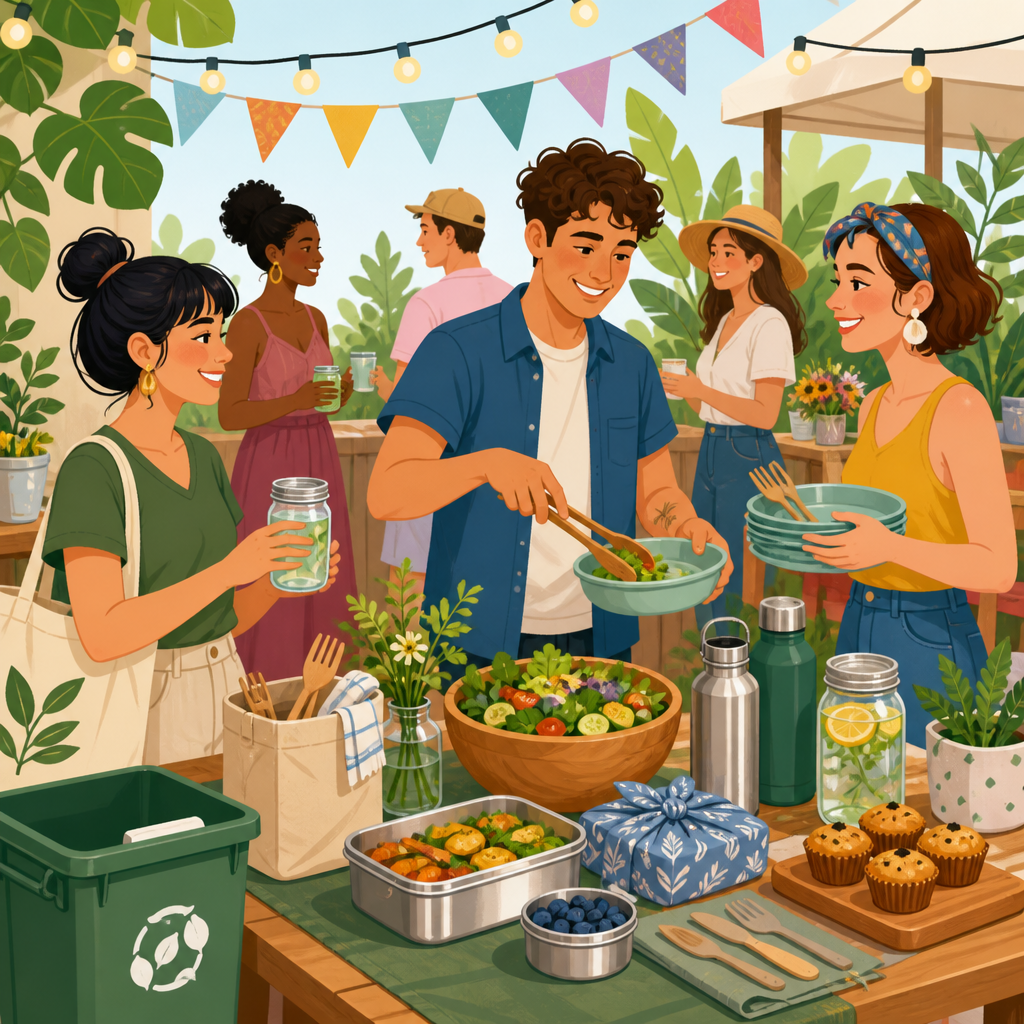
Reusable systems are the backbone of a zero-waste event. Plates, cutlery, cloth napkins, serving bowls, drink dispensers, and washable cups should be the default choice for home gatherings. Many people assume this creates more work, but in practice it shifts effort from hauling out trash to loading a dishwasher or organizing a wash station. For larger groups, borrowing is often better than buying. Ask neighbors, friends, family, or a community center for extra chairs, platters, coolers, and table linens. Some neighborhoods even maintain informal “party libraries” of durable event supplies.
When borrowing is not enough, rent instead of purchasing low-use items. Rental companies often carry durable glassware, flatware, tables, and linens designed for repeated use. That repeated-use model usually has a lower lifecycle impact than cheap party goods used once and thrown away. The same thinking belongs at the center of sustainable living at home. Before buying any household item, ask how often it will be used, whether it can be shared, and whether a durable version will replace many disposable ones over time.
Some products marketed as eco-friendly need scrutiny. Compostable cups and plates are not a universal solution. Many require commercial composting conditions and will not break down properly in backyard piles or landfill. If your municipality lacks industrial compost collection, those products may simply become expensive trash. Recycled-content paper napkins can be useful, especially for messy foods, but use cloth wherever practical. Real sustainability comes from matching materials to the disposal infrastructure you actually have, not the one a package implies.
| Event Need | Common Disposable Choice | Lower-Waste Alternative | Why It Works Better |
|---|---|---|---|
| Invitations | Printed cards with inserts | Digital invite or simple recycled card | Less material use and easier RSVP tracking |
| Drinks | Single-use bottles and cups | Pitchers, dispensers, labeled reusable cups | Cuts packaging waste and lowers cost per serving |
| Table setting | Plastic plates and cutlery | Ceramic plates and metal cutlery | Higher reuse value and cleaner guest experience |
| Decorations | Balloon kits and themed plastics | Fabric bunting, plants, candles, reused jars | Reusable, repairable, and easier to store |
| Cleanup | Trash-only disposal | Labeled landfill, recycling, and compost stations | Reduces contamination and captures materials correctly |
Plan a low-waste menu that guests will actually eat
Food waste is often the largest hidden issue at events, so menu design deserves more attention than décor. Start with dishes that scale well, hold safely, and create usable leftovers. Soups, grain salads, roasted vegetables, pasta bakes, tacos, curries, and sheet-pan dishes are more controllable than highly individualized servings. Batch drinks such as infused water, iced tea, lemonade, or punch also reduce packaging and simplify service. If you serve meat, treat it as one option rather than the automatic center of every dish. Plant-forward menus generally lower environmental impact and often hold better over several hours.
Packaging matters too. Buy in bulk where possible, especially for grains, beans, snacks, and baking ingredients. Farmers markets and refill stores can help, but ordinary supermarkets also offer low-waste wins through larger formats and unpackaged produce. For home sustainability, this is a key principle: shop for the container and the quantity, not just the product. A five-kilogram tub of yogurt for a breakfast gathering may create far less waste than dozens of single-serve cups, provided you can serve it safely and finish the remainder.
Portion planning should be evidence-based. For mixed-age home parties, adults usually consume more beverages than food during the first hour, while children often leave partial servings. That means smaller plates and self-serve stations can reduce waste significantly. Keep backup food in the kitchen instead of putting everything out at once. This improves food safety and preserves leftovers. If you expect dietary restrictions, ask in advance rather than overbuying specialty items “just in case.” Direct planning is more sustainable than broad overaccommodation that sends untouched food to compost.
Leftover management should be arranged before cooking starts. Set aside reusable containers, label dishes with dates, and decide what can be frozen, sent home, or repurposed. I often place a container station near the end of the event so guests can take food with them. If you do this, use containers you already own, ask guests to bring their own, or save clean jars and takeaway tubs ahead of time. This single habit connects party planning to everyday frugal, sustainable kitchen management.
Use décor, cleaning, and energy choices that support sustainable living at home
Low-waste décor works best when it comes from your home, garden, or storage rather than a seasonal retail aisle. Fabric tablecloths, potted herbs, branches, candles, books, baskets, string lights, and framed signs can create atmosphere without generating a bag of trash the next morning. Natural materials can be excellent if they are responsibly sourced and genuinely compostable, but avoid buying large amounts of cut greenery or flowers if they will be discarded immediately. Reusable décor stored flat and used across multiple events usually delivers the strongest practical result.
Balloons deserve a direct mention because they remain common and problematic. Latex balloons are often marketed as biodegradable, but degradation time varies, and balloon litter harms wildlife and creates cleanup issues. Foil balloons are worse because they combine plastic and metalized materials that are difficult to recycle. A fabric backdrop, paper garland kept for reuse, or simple lighting plan is almost always a better environmental choice. If you host children’s parties, interactive activities such as craft tables, scavenger hunts, or music often create more memorable experiences than disposable décor ever will.
Cleaning supplies also matter. Refillable hand soap, washable dishcloths, concentrated cleaners, and durable scrub brushes reduce event waste while supporting normal home routines. For post-event cleanup, avoid harsh overuse of disposable wipes and paper towels. Microfiber cloths, cellulose sponges, and cotton rags handle most spills effectively. If you use a dishwasher, run full loads and use a recognized detergent brand with clear dosing guidance. If you hand-wash, set up a rinse-and-stack system during the event so dishes do not pile into an unmanageable mountain.
Energy use can be reduced without making guests uncomfortable. Use daylight where possible, consolidate oven use, keep refrigerator doors closed, and choose induction, electric kettles, or pressure cookers for efficient cooking tasks. If heating or cooling is necessary, condition the rooms guests will occupy rather than the entire house. For outdoor evening events, LED string lights use far less electricity than older incandescent strands and last longer. Sustainable living at home is rarely about one dramatic technology switch; it is about many small operating choices that add up.
Make disposal easy for guests and measure what you learned
Even a well-planned event fails its waste goals if guests cannot tell where items belong. Set up clearly labeled stations for landfill, recycling, and compost only if those streams are actually available to you. Use large signs with words and pictures. Better yet, place example items on the table: a napkin in compost, a bottle in recycling, a chip bag in landfill. Keep stations together so guests choose among options rather than hunting for a single bin and giving up. At larger gatherings, assign one person to monitor the area during peak use. That role prevents contamination better than any sign alone.
Local recycling rules vary significantly, and contamination can send an entire bag to disposal. Learn your municipality’s accepted materials before the event. In many areas, greasy cardboard, black plastic, plastic film, and compostable bioplastics are common problem items. If an item is likely to confuse guests, do not use it. Simplicity is an environmental strategy. This is one of the most transferable home sustainability lessons: a system only works if ordinary people can follow it consistently without needing specialist knowledge in the moment.
After the event, do a quick review. Count trash bags, note what was left over, and record what guests used most. This is how you improve from one gathering to the next. I keep a short event checklist with lines for cup count, extra ice, food leftovers, contamination issues, and borrowed items to return. Over time, this creates a home operating manual for low-waste hosting. You stop rebuying mistakes and start repeating systems that work.
Hosting a zero-waste party or event is ultimately a practical exercise in sustainable living at home. You reduce waste most effectively by planning ahead, choosing reusables, serving realistic amounts of food, using simple décor, and making disposal obvious. None of those actions requires perfection or expensive specialty products. They require attention, a little coordination, and a willingness to design for reuse instead of convenience built on waste.
The broader benefit goes beyond one party. Once you learn to borrow instead of buy, batch-cook instead of overpackage, label bins clearly, and keep durable supplies on hand, your whole household becomes easier to run with less trash and less unnecessary spending. That is why zero-waste hosting is such a strong entry point into sustainable living at home: it turns values into repeatable systems.
Start with your next gathering. Audit the likely waste, replace disposables with reusables, plan leftovers before you cook, and review the results afterward. One well-run event can reset the way your home handles celebration, consumption, and waste for years.
Frequently Asked Questions
What does it really mean to host a zero-waste party or event?
Hosting a zero-waste party or event means making intentional choices at every stage so that as little as possible ends up in the trash. The goal is not perfection. It is to prevent waste before it is created by refusing unnecessary single-use items, reducing what you buy, reusing what you already have, recycling properly, and composting food scraps when possible. In practical terms, that affects invitations, decorations, food planning, serving ware, drinks, transportation, energy use, and cleanup.
A zero-waste event usually looks surprisingly normal to guests. You might use real plates and cups, cloth napkins, pitchers instead of bottled drinks, bulk snacks instead of individually wrapped items, and simple décor made from items you already own. You plan portions carefully to avoid excess, set up clearly labeled recycling and compost bins, and think ahead about what will happen to leftovers. The biggest shift is mindset: instead of asking, “What do I need to buy for this event?” you ask, “What can I borrow, reuse, simplify, or skip?” That is often where the largest waste reductions happen.
How can I reduce waste when planning food and drinks for a party?
Food and drink choices are one of the biggest opportunities to cut waste. Start with a realistic guest count and serve a menu that is easy to portion. Overbuying is one of the most common forms of event waste, so estimate carefully and choose dishes that can be repurposed as leftovers. Buffets can work well if quantities are planned thoughtfully, while plated or pre-portioned options can help reduce food that gets touched but not eaten. If you are serving snacks, buying in bulk or making food from scratch usually creates much less packaging waste than individually wrapped items.
For drinks, avoid single-serve bottles, cans, and disposable pods when possible. Large beverage dispensers, pitchers, or refill stations are usually the best option. Water can be served in jugs or infused dispensers instead of plastic bottles. If you are serving coffee or tea, use mugs or durable cups and loose tea or larger-format coffee supplies rather than one-use portions. If you expect leftovers, plan for them in advance with reusable containers on hand or a strategy for sending food home with guests. Also think about composting food scraps such as peels, coffee grounds, and leftovers that cannot be eaten. When you plan food and drinks with the end in mind, waste drops dramatically.
What are the best alternatives to disposable plates, cups, napkins, and utensils?
The best alternative is almost always reusable serving ware. Real plates, metal cutlery, glasses, mugs, and cloth napkins create far less waste than disposable items and often make the event feel more welcoming and polished. Many hosts already have enough at home when they mix and match rather than trying to create a perfectly uniform look. If you do not have enough, borrowing from friends, family, neighbors, a workplace, a school, or a community group is often easier and cheaper than people expect.
If fully reusable options are not realistic, choose the lowest-waste backup carefully. Compostable items can help in some situations, but only if they are accepted by your local composting system and actually collected separately after the event. Otherwise, many compostable products still end up in landfill. That is why it is important not to assume that “eco-friendly” labels automatically solve the problem. Reuse first whenever you can. For larger gatherings, setting up a washing station or assigning a cleanup team can make reusable service surprisingly manageable. A little planning before the event prevents a mountain of trash afterward.
How do I decorate a zero-waste party without making it look boring?
Zero-waste décor does not have to be plain. In fact, it often feels more personal and creative because it relies on thoughtful choices rather than throwaway decorations. Start by using what you already own: tablecloths, candles, string lights, baskets, houseplants, books, jars, fabric scraps, seasonal items, and serving pieces can all become part of the look. Reusable décor usually has more texture and character than disposable party supplies, and it can be adapted for birthdays, dinners, school events, and community gatherings.
Focus on high-impact elements rather than lots of small items. A well-set table, natural greenery, homemade signage, or a few reused centerpieces can do more visually than balloons, plastic banners, and themed throwaways. If you print signs or labels, keep them simple enough to save and use again. Flowers and branches can work beautifully if they are seasonal and composted afterward. Fabric bunting, chalkboards, and reusable backdrops are great options for events you host regularly. The key is to decorate with things that have a future use, not just a short life of a few hours. That approach usually saves money, reduces clutter, and still creates a warm, memorable atmosphere.
What should I do during cleanup to make sure as little as possible goes to landfill?
Cleanup is where good zero-waste planning either succeeds or falls apart. The most effective approach is to plan waste stations before guests arrive. Set up clearly labeled bins for landfill, recycling, and compost, and place them where people can actually use them. If possible, add simple picture-based signs showing what goes where. Guests are much more likely to sort correctly when the system is visible and easy to understand. For larger events, having one person monitor the station can make a huge difference and prevent contamination.
After the event, deal with materials in order of value. First, save and store anything reusable, including decorations, serving items, and unopened food. Next, pack leftovers for your household, guests, or donation if that is appropriate and safe. Then separate recyclables according to local rules, because recycling only works when items are clean and accepted in your area. Compost food scraps, napkins, and certified compostables only if your local compost system allows them. Finally, review what ended up in the trash and ask why. That last step is one of the most useful habits for future events because it shows you exactly where waste came from. In most cases, landfill waste is the result of decisions made before the party began, so each cleanup teaches you how to host more efficiently next time.